

Patient leaflet - Betahistine Dihydrochloride 24 mg orodispersible Films
1. What Betahistine Dihydrochloride is and what it is used for
Betahistine belongs to a group of medicines known as histamine analogues. It is used to treat:
- Dizziness (vertigo)
- Ringing in the ears (tinnitus)
- Hearing loss suffered by people with Ménière's syndrome
This medicine works by improving blood flow in the inner ear. This lowers the build up of pressure.
2. What you need to know before you take Betahistine Dihydrochloride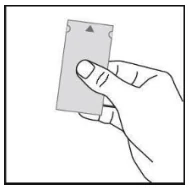
Do not take Betahistine Dihydrochloride if:
- you are allergic to betahistine or any of the other ingredients of this medicine (listed in section 6).
- you have high blood pressure due to an adrenal tumour (phaeochromocytoma).
If any of the above applies to you, do not take this medicine and talk to your doctor.
Warnings and precautions
Take special care and tell your doctor if:
- you have a stomach ulcer
- you have asthma
- you are pregnant or planning to become pregnant
- you are breast-feeding
If any of the above applies to you, talk to your doctor before taking this medicine.
Your doctor will tell you whether it is safe for you to start taking this medicine.
Your doctor may also want to monitor your asthma while you take Betahistine Dihydrochloride.
Other medicines and Betahistine Dihydrochloride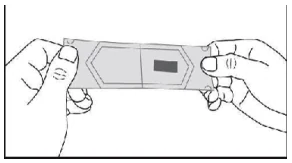
Tell your doctor or pharmacist if you are taking, have recently taken or might take any other medicines.
In particular, tell your doctor or pharmacist if you are taking any of the following medicines:
- Antihistamines – these may (in theory) lower the effect of Betahistine Dihydrochloride. Also, Betahistine Dihydrochloride may lower the effect of antihistamines.
Monoamine-oxidase inhibitors (MAOIs) – used to treat depression or Parkinson's Disease. These may increase the exposure of Betahistine
Dihydrochloride.
Betahistine Dihydrochloride with food and drink
You can take Betahistine Dihydrochloride with or without food.
Pregnancy and breast-feeding
If you are pregnant or breast-feeding, think you may be pregnant or are planning to have a baby, ask your doctor or pharmacist for advice before taking this medicine.
Do not take Betahistine Dihydrochloride during pregnancy unless your doctor has decided that it is absolutely necessary.
It is not known if Betahistine Dihydrochloride passes into breast milk.
Driving and using machines
Betahistine Dihydrochloride is not likely to affect your ability to drive and use tools or machinery. However, remember that diseases for which you are being treated with Betahistine Dihydrochloride (vertigo, tinnitus and hearing loss associated with Ménière's syndrome) can make you feel dizzy or be sick and can affect your ability to drive or use machines.
3. How to take Betahistine Dihydrochloride
Always take this medicine exactly as your doctor or pharmacist has told you. Check with your doctor or pharmacist if you are not sure.
The recommended dose is:
Adults (including the elderly)
Initial oral treatment is 8 mg to 16 mg three times daily, taken preferably with a meal. Maintenance doses are generally in the range of 24 - 48 mg daily. The 24 mg strength is used twice per day (1 orodispersible film in the morning and 1 in the evening), for the patients who need a dose of 48 mg a day. In other cases, lower strengths can be used.
Use in children and adolescents
Betahistine Dihydrochloride is not recommended for those under 18 years old.
How to take Betahistine
Prior to taking Betahistine dihydrochloride 24 mg orodispersible film on the tongue, you should take approximately 20 ml of water to wet the mouth.
Instructions for use
Important: Do not handle the orodispersible film with wet hands!
- a) Take the sachet, locate the arrow mark at one of the shorter sides and hold the sachet with this side facing up. The sachet is not sealed here.
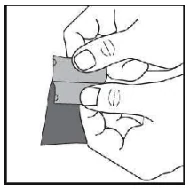
- b) Gently peel both parts of the sachet apart at the arrow mark. Now you can hold each between your thumb and your index finger using one hand for each part.
- c) Carefully tear both parts of the sachet into opposite directions until they are separated. The orodispersible film is now visible and placed on one of the separated sachet parts.
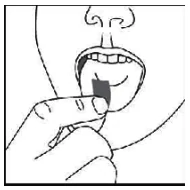
- d) Take the orodispersible film with dry fingers out of the sachet and put it in your mouth directly on your tongue. It will dissolve rapidly, so that it can be easily swallowed.
If you take more Betahistine than you should
If you or someone else takes too much Betahistine Dihydrochloride (an overdose), talk to a doctor or go to a hospital straight away. Take the medicine pack with you.
If you forget to take Betahistine Dihydrochloride
If you miss a dose, wait until the next dose is due. Do not take a double dose to make up for a forgotten dose. Betahistine Dihydrochloride 24 mg orodispersible films
betahistine dihydrochloride
Area for
Keep taking your medicine until your doctor tells you to stop.
Even when you start feeling better, your doctor may want you to carry on taking this medicine for some time to make sure it has worked completely.
If you have any further questions on the use of this medicine, ask your doctor or pharmacist.
4. Possible side effects
Like all medicines, this medicine can cause side effects, although not everybody gets them.
The following serious side effects may occur during treatment with Betahistine Dihydrochloride:
Allergic reactions such as:
- Swelling of your face, lips, tongue or neck. This may cause difficulty breathing.
- A red skin rash, inflamed itchy skin.
If any of these side effects occur, you should stop treatment immediately and contact your doctor.
Common side effects (at least 1 in 100 and less than 1 in 10 patients):
Nausea, indigestion, headaches.
Other side effects
Itching, rash, hives, mild gastric complaints such as vomiting, stomach pain and bloating. Taking Betahistine Dihydrochloride with food can help reduce any stomach problems.
Reporting of side effects
If you get any side effects, talk to your doctor, pharmacist or nurse. This includes any possible side effects not listed in this leaflet. You can also report side effects directly via Yellow Card Scheme Website at www.mhra.gov.uk/yellowcard or search for MHRA Yellow Card in the Google Play or Apple App Store. By reporting side effects you can help provide more information on the safety of this medicine.
5. How to store Betahistine Dihydrochloride
Keep this medicine out of the sight and reach of children.
Store in the original package in order to protect from light and moisture.
Do not use this medicine after the expiry date which is stated on the pouch and carton after EXP. The expiry date refers to the last day of that month.
Do not throw away any medicines via wastewater or household waste. Ask your pharmacist how to throw away medicines you no longer use. These measures will help protect the environment.
6. Contents of the pack and other information
What Betahistine Dihydrochloride contains
- The active substance is betahistine dihydrochloride. Each orodispersible film contains 24 mg betahistine dihydrochloride.
- The other ingredients are Hypromellose, maltodextrin, povidone, masking flavour 501521 Firmenich (Flavour masking 501521 T), powdarome lemon premium Firmenich, colloidal hydrated silica, sucralose, titanium dioxide, glycerol and peppermint flavour 501500 TP0504 Firmenich (Mint flavour 501500 TP0504).
What Betahistine Dihydrochloride looks like and contents of the pack
Betahistine Dihydrochloride 24 mg orodispersible films are off-white to yellow, square shaped films. Each film is approximately 32 X 32 ±1 mm.
Each orodispersible film is packed in 4 ply laminate packs (i.e. paper/PET/Alu/PE-sachet).
Betahistine Dihydrochloride 24 mg orodispersible films are available in packs of 84 or 120 orodispersible films. Not all pack sizes may be marketed.
Marketing Authorisation Holder
Dawa Limited,
5 Sandridge Close,
Harrow, Middlesex,
HA1 1XD, United Kingdom.
Manufacturer
Drugsrus Limited,
5 Sandridge Close,
Harrow, Middlesex,
HA1 1XD, United Kingdom.
This leaflet was last revised in August 2026.
Blind or partially sighted? Is this leaflet hard to see or read?
Call 020 8423 2111 to obtain the leaflet in a format suitable for you.
0504/L-5