

Summary of Product Characteristics (SmPC) - Betahistine Dihydrochloride 24 mg orodispersible Films
1 NAME OF THE MEDICINAL PRODUCT
Betahistine Dihydrochloride 24 mg orodispersible films
2 QUALITATIVE AND QUANTITATIVE COMPOSITION
Each orodispersible film contains 24 mg betahistine dihydrochloride equivalent to 15.63mg betahistine.
For the full list of excipients, see section 6.1.
3 PHARMACEUTICAL FORM
Orodispersible films.
Betahistine Dihydrochloride 24 mg orodispersible film is off-white to yellow and square shaped. Each film is approximately 32 x 32 mm.
4 CLINICAL PARTICULARS
4.1 Therapeutic indications
Betahistine is indicated for the treatment of vertigo, tinnitus and hearing loss associated with Ménière's syndrome.
4.2 Posology and method of administration
Posology
This medicinal product is only for the patients who need a dose of 48 mg a day. In other cases, lower strengths can be used.
Adults (including the elderly)
Initial oral treatment is 8 mg to 16 mg three times daily taken preferably with meals. Maintenance doses are generally in the range 24 - 48 mg daily.
The 24 mg strength is used twice per day (1 orodispersible film in the morning and 1 in the evening).
Paediatric population
Not recommended for use in children below 18 years due to insufficient data on safety and efficacy.
Geriatric population
Although there are limited data from clinical studies in this patient group, extensive post marketing experience suggests that no dose adjustment is necessary in this patient population.
Renal impairment
There are no specific clinical trials available in this patient group, but according to post-marketing experience no dose adjustment appears to be necessary.
Hepatic impairment
There are no specific clinical trials available in this patient group, but according to post-marketing experience no dose adjustment appears to be necessary.
Method of administration
For oral use. Preferably with meals or after meals.
Prior to taking Betahistine dihydrochloride 24 mg orodispersible film on the tongue, patient should take approximately 20 ml of water to wet the mouth.
For instructions on administration of the medicinal product, see section 6.6.
4.3 Contraindications
Hypersensitivity to the active substance or to any of the excipients listed in section 6.1.
Phaeochromocytoma.
4.4 Special warnings and precautions for use
Caution is advised in the treatment of patients with a history of peptic ulcer. Clinical intolerance to betahistine in bronchial asthma patients has been shown in a relatively few patients. These patients need to be carefully monitored during the therapy.
4.5 Interaction with other medicinal products and other forms of interaction
No in vivo interaction studies have been performed. Based on in vitro data no in vivo inhibition on Cytochrome P450 enzymes is expected.
In vitro data indicate an inhibition of betahistine metabolism by drugs that inhibit monoamino-oxidase (MAO) including MAO subtype B (e.g. selegiline). Caution is recommended when using betahistine and MAO inhibitors (including MAO-B selective) concomitantly.
As betahistine is an analogue of histamine, interaction of betahistine with antihistamines may in theory affect the efficacy of one of these drugs.
4.6 Fertility, pregnancy and lactation
Pregnancy
There are no adequate data from the use of betahistine in pregnant women.
Animal studies do not indicate direct or indirect harmful effects with respect to reproductive toxicity at clinically relevant therapeutic exposure. As a precautionary measure, it is preferable to avoid the use of betahistine during pregnancy.
Breast-feeding
It is not known whether betahistine is excreted in human milk.
Betahistine is excreted in rat milk. Effects seen post-partum in animal studies were limited to very high doses. The importance of the drug to the mother should be weighed against the benefits of nursing and the potential risks for the child.
Fertility
Animal studies did not show effects on fertility in rats.
4.7 Effects on ability to drive and use machines
Vertigo, tinnitus and hearing loss associated with Ménière’s syndrome can negatively affect the ability to drive and use machines. In clinical studies specifically designed to investigate the ability to drive and use machines betahistine had no or negligible effects.
4.8 Undesirable effects
The following undesirable effects have been experienced with the below indicated frequencies in betahistine-treated patients in placebo-controlled clinical trials [very common (≥1/10); common (≥1/100 to <1/10); uncommon (≥1/1,000 to <1/100); rare (≥1/10,000 to <1/1,000); very rare (<1/10,000)].
Gastrointestinal disorders
Common: nausea and dyspepsia
Nervous system disorders
Common: headache
In addition to those events reported during clinical trials, the following undesirable effects have been reported spontaneously during post-marketing use and in scientific literature. A frequency cannot be estimated from the available data and is therefore classified as “not known”.
Immune system disorders
Hypersensitivity reactions e.g. anaphylaxis have been reported.
Gastrointestinal disorders
Mild gastric complaints (e.g. vomiting, gastrointestinal pain, abdominal distension and bloating) have been observed. These can normally be dealt with by taking the dose during meals or by lowering the dose.
Skin and subcutaneous tissue disorders
Cutaneous and subcutaneous hypersensitivity reactions have been reported, in particular angioneurotic oedema, urticaria, rash and pruritus.
Reporting of suspected adverse reactions
Reporting suspected adverse reactions after authorisation of the medicinal product is important. It allows continued monitoring of the benefit/risk balance of the medicinal product. Healthcare professionals are asked to report any suspected adverse reactions via the Yellow Card Scheme Website: www.mhra.gov.uk/yellowcard or search for MHRA Yellow Card in the Google Play or Apple App Store.
4.9 Overdose
A few overdose cases have been reported. Some patients experienced mild to moderate symptoms with doses up to 640 mg (e.g. nausea, somnolence, abdominal pain).
More serious complications (e.g. convulsion, pulmonary or cardiac complications) were observed in cases of intentional overdose of betahistine especially in combination with other overdosed drugs.
Treatment of overdose should include standard supportive measures.
5 PHARMACOLOGICAL PROPERTIES
5.1 Pharmacodynamic properties
Pharmacotherapeutic group: Anti-vertigo preparations, ATC code: N07CA01
Mechanism of action
The mechanism of action of betahistine is only partly understood. There are several plausible hypotheses that are supported by animal studies and human data:
- Betahistine affects the histaminergic system:
Betahistine acts both as a partial histamine H1receptor agonist and histamine H3-receptor antagonist also in neuronal tissue, and has negligible H2-receptor activity. Betahistine increases histamine turnover and release by blocking presynaptic H3-receptors and inducing H3-receptor downregulation.
- Betahistine may increase blood flow to the cochlear region as well as to the whole brain:
Pharmacological testing in animals has shown that the blood circulation in the striae vascularis of the inner ear improves, probably by means of a relaxation of the precapillary sphincters of the microcirculation of the inner ear. Betahistine was also shown to increase cerebral blood flow in humans.
- Betahistine facilitates vestibular compensation:
Betahistine accelerates the vestibular recovery after unilateral neurectomy in animals, by promoting and facilitating central vestibular compensation; this effect characterised by an up-regulation of histamine turnover and release, is mediated via the H3-Receptor antagonism. In human subjects, recovery time after vestibular neurectomy was also reduced when treated with betahistine.
- Betahistine alters neuronal firing in the vestibular nuclei:
Betahistine was also found to have a dose dependent inhibiting effect on spike generation of neurons in lateral and medial vestibular nuclei.
The pharmacodynamic properties as demonstrated in animals may contribute to the therapeutic benefit of betahistine in the vestibular system.
The efficacy of betahistine was shown in studies in patients with vestibular vertigo and with Ménière’s disease as was demonstrated by improvements in severity and frequency of vertigo attacks.
5.2 Pharmacokinetic properties
Absorption
Orally administered betahistine is readily and almost completely absorbed from all parts of the gastro-intestinal tract. After absorption, the drug is rapidly and almost completely metabolised into 2-pyridylacetic acid. Plasma levels of betahistine are very low. Pharmacokinetic analyses are therefore based on 2-PAA measurements in plasma and urine.
Under fed conditions Cmax is lower compared to fasted conditions. However, total absorption of betahistine is similar under both conditions, indicating that food intake only slows down the absorption of betahistine.
Distribution
The percentage of betahistine that is bound by blood plasma proteins is less than 5 %.
Biotransformation
After absorption, betahistine is rapidly and almost completely metabolized into 2-PAA (which has no pharmacological activity).
After oral administration of betahistine the plasma (and urinary) concentration of 2-PAA reaches its maximum 1 hour after intake and declines with a half-life of about 3.5 hours.
Elimination
2-PAA is readily excreted in the urine. In the dose range between 8 and 48 mg, about 85% of the original dose is recovered in the urine. Renal or fecal excretion of betahistine itself is of minor importance.
Linearity
Recovery rates are constant over the oral dose range of 8 – 48 mg indicating that the pharmacokinetics of betahistine are linear, and suggesting that the involved metabolic pathway is not saturated.
5.3 Preclinical safety data
Chronic toxicity
Adverse effects in the nervous system were seen in dogs and baboons after intravenous doses at and above 120 mg/kg.
Chronic oral toxicity testing for 18 months in rats at a dose of 500 mg/kg and 6 months in dogs at a dose of 25 mg/kg showed betahistine to be well tolerated with no definitive toxicities.
Mutagenic and carcinogenic potential
Betahistine does not have mutagenic potential.
In an 18 months chronic toxicity study in rats betahistine up to a dose of 500 mg/kg did not show any evidence for carcinogenic potential.
Reproduction toxicity
Effects in reproductive toxicity studies were observed only at exposures considered sufficiently in excess of the maximum human exposure indicating little relevance to clinical use.
6 PHARMACEUTICAL PARTICULARS
6.1 List of excipients
Hypromellose
Povidone
Masking flavor 501521 Firmenich (Flavour masking 501521 T)
Powdarome Lemon premium Firmenich
Colloidal hydrated silica
Sucralose
Maltodextrin
Titanium Dioxide
Glycerol
Peppermint flavour 501500 TP0504 Firmenich (Mint flovor 501500 TP0504)
6.2 Incompatibilities
Not applicable.
6.3 Shelf life
2 years
6.4 Special precautions for storage
This medicinal product does not require any special storage conditions. Store in the original package in order to protect from light and moisture
6.5 Nature and contents of container
Each orodispersible film is packed in 4 ply laminate pack (i.e paper/PET/Alu/PE-sachet)
Pack size
Betahistine Dihydrochloride 24 mg orodispersible films
84 orodispersible films
120 orodispersible films
Not all pack sizes may be marketed.
6.6 Special precautions for disposal
Important: Do not handle the orodispersible film with wet hands.
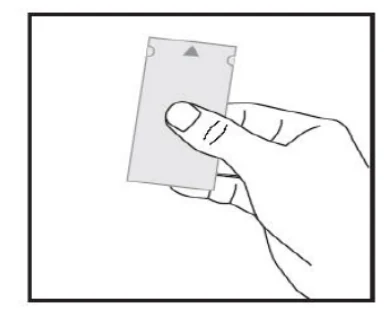
- a) Take a sachet, locate the arrow mark at one of the shorter sides and hold the sachet with this side facing up. The sachet is not sealed here
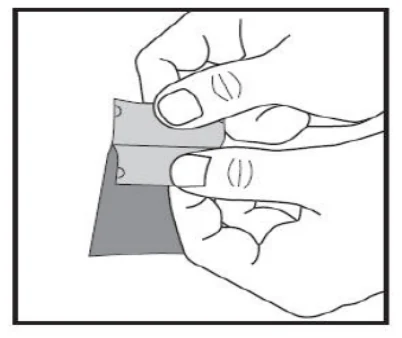
- b) Gently peel both parts of the sachet apart at the arrow mark. Now you can hold each between your thumb and your index finger using one hand for each part.
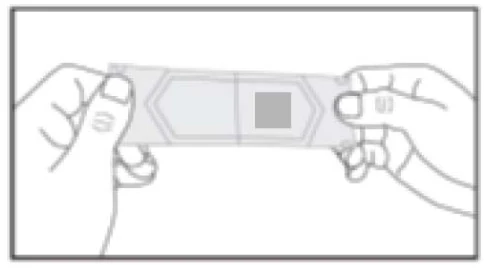
- c) Carefully tear both parts of the sachet into opposite directions until they are separated. The orodispersiable film is now visible and placed on one of the separated sachet parts.
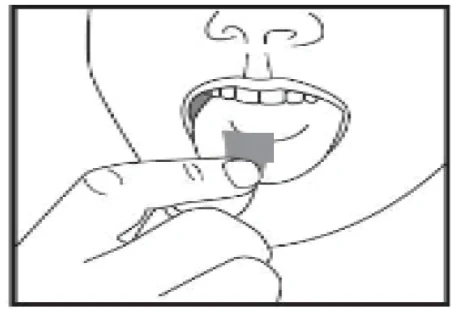
- d) Take the orodispersiable film with dry fingers out of the sachet and put it in your mouth directly on your tongue. It will dissolve rapidly, so that it can be easily swallowed.
Any unused medicinal product or waste material should be disposed of in accordance with local requirements.
7 MARKETING AUTHORISATION HOLDER
Dawa Limited
5 Sandridge Close,
Harrow, Middlesex
HA1 1XD
United Kingdom.
8 MARKETING AUTHORISATION NUMBER(S)
PL 30684/0504
9 DATE OF FIRST AUTHORISATION/RENEWAL OF THE
AUTHORISATION
31/08/2023
10 DATE OF REVISION OF THE TEXT
06/07/2026