

Summary of Product Characteristics (SmPC) - Vyjuvek 5X10^9 Plaque Forming units/ml suspension and gel for gel
1 NAME OF THE MEDICINAL PRODUCT
Vyjuvek 5×10⁹ plaque forming units/mL suspension and gel for gel
2 QUALITATIVE AND QUANTITATIVE COMPOSITION
2.1 General description
Beremagene geperpavec is a replication-defective Herpes Simplex Type-1 HSV-1-based gene therapy vector that has been genetically modified to express the human type VII collagen (COL7) protein under the control of the human cytomegalovirus (hCMV) promoter.
Beremagene geperpavec is produced in Vero cells by recombinant DNA technology.
2.
2 Qualitative and quantitative composition
Each vial contains 1 mL extractable volume of suspension containing 5×10⁹ plaque forming units (PFU) of beremagene geperpavec.
After mixing 1 mL of the suspension with the gel, Vyjuvek contains 5×10⁹ PFU in 2.5 mL. Extractable volume is 2.0 mL (4×10⁹ PFU).
For the full list of excipients, see section 6.1.
3 PHARMACEUTICAL FORM
Suspension and gel for gel.
The suspension is opalescent yellow to colourless following thaw from its frozen state.
The gel is a clear viscous gel following thaw from its frozen state.
4 CLINICAL PARTICULARS
4.1 Therapeutic indications
Vyjuvek is indicated for the treatment of wounds in patients with dystrophic epidermolysis bullosa (DEB) with mutation(s) in the collagen type VII alpha 1 chain (COL7A1) gene, from birth.
4.2 Posology and method of administration
Vyjuvek should be initiated by healthcare professionals experienced in the management of patients with dystrophic epidermolysis bullosa.
Posology
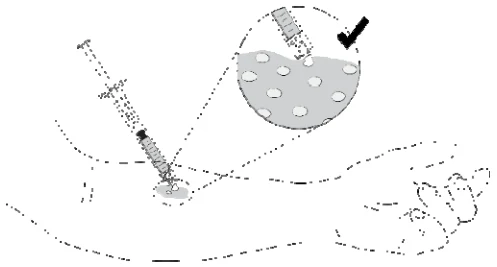
Vyjuvek is applied cutaneously to wound(s) once a week in small droplets in a grid-like pattern, approximately 1-cm by 1-cm apart. All wounds may not be possible to be treated at each treatment visit.
The recommended total maximum weekly dosing for children from birth up to 3 years old is 1 mL (2×10⁹ PFU). The recommended total maximum weekly dosing for children above 3 years of age, adolescents, and adults is 2 mL (4×10⁹ PFU).
Vyjuvek should be applied to wounds until they are closed before selecting new wound(s) to treat. Weekly treatment of previously treated wounds should be prioritised if they re-open. If no wounds are present, Vyjuvek should not be administered.
The table below provides a reference on dose per approximate size of the wound in children, adolescents, and adults.
Table 1. Dose by wound area
| Wound area (cm2)* | Dose (PFU)a | Volume (mL) |
| < 20 | < 4×10⁸ | < 0.2 |
| 20 to < 40 | 4×10⁸ to < 8×10⁸ | 0.2 to < 0.4 |
| 40 to 60 | 8×10⁸ to < 1.2×10⁹ | 0.4 to < 0.6 |
| 60 to < 200 | 1.2×10⁹ to < 4×10⁹ | 0.6 to < 2 |
PFU= plaque forming units.
a: The maximum dose in children below 3 years of age is 1 mL (2×10⁹ PFU)
If a dose is missed, Vyjuvek should be administered as soon as possible, and weekly dosing should be resumed thereafter.
Special populations
Elderly population
No dose adjustment is required in patients ≥ 65 years old.
Method of administration
Precaution to be taken before manipulating or administering the product
This medicine contains genetically modified organisms (see section 4.4). During preparation, administration, and disposal, appropriate precautions must be taken. Personal protective equipment (e.g. gloves, mask, and eye protection) should be worn when handling Vyjuvek.
Pregnant women should not prepare or administer Vyjuvek and should avoid direct contact with the treated wounds, or dressings from the treated wounds (see section 6.6).
Administration
For cutaneous use on wounds only.
Prior to cutaneous use the suspension and gel must be thawed, and the suspension must be mixed into the gel in a pharmacy setting. For detailed instructions on preparation, shelf life after mixing, administration, measures to take in case of accidental exposure, logistics, and disposal of Vyjuvek, see sections 6.3 and 6.6.
A health care professional (HCP) should apply Vyjuvek, either at a healthcare professional setting (e.g. clinic) or the home setting. If deemed appropriate by the healthcare professional, trained patients or caregivers may also apply Vyjuvek.
Wounds should be gently cleaned prior to cutaneous administration using a product that does not contain a virucidal agent. Medicinal products and ointments at the wound area should be removed and the wound should be cleansed prior to Vyjuvek administration to ensure no reduction in its activity (see section 4.5).
Table 2. Steps for administration
| Step 1. The Vyjuvek syringe should be primed prior to the initial application by pulling the plunger down and pushing it upwards, so that a small droplet of Vyjuvek forms at the tip of the syringe. | |
Step 2. Vyjuvek should be applied to the selected wound, in small droplets approximately 1-cm by 1-cm apart (width of a fingertip) with only the droplet touching the wound. Only the gel should contact the skin. The tip of the syringe should not touch the skin to prevent the contamination of the gel in the syringe. | |
Step 3. Once Vyjuvek has been administered to the wound, a hydrophobic dressing should be applied. The dressing should be cut to a size slightly larger than the wound but may vary upon patient preference. Once the Vyjuvek droplets are covered by the hydrophobic dressing, a thin even layer of Vyjuvek will form within the wound. | |
Step 4. The standard dressing should be cut to a size larger than the hydrophobic dressing. The standard dressing will be placed over the hydrophobic dressing to prevent dissemination of the gel to other areas of the body or close contacts. | |
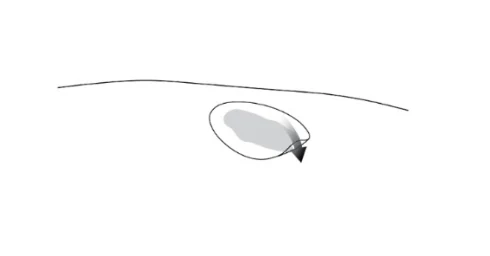
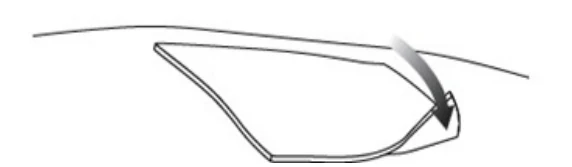
The dressing should be left in place for approximately 24 hours after Vyjuvek application. Once the Vyjuvek dressings are removed, the patient may continue with their standard of care.
Vyjuvek should continue to be administered weekly until the wounds are closed. If previously treated wounds re-open, Vyjuvek should be applied again. If no wounds are present, Vyjuvek should not be administered.
4.3 Contraindications
Hypersensitivity to the active substance or to any of the excipients listed in section 6.1.
4.4 Special warnings and precautions for use
Traceability
In order to improve the traceability of the biological medicinal product, the name and the batch number of the administered medicinal product should be clearly recorded.
Squamous cell carcinoma
Vyjuvek should not be applied to wounds with a confirmed or suspicious diagnosis of squamous cell carcinoma (SCC). Vyjuvek may still be applied to other wounds in patients who develop SCC.
Transmission of an infectious agent
Beremagene geperpavec will not replicate in cells and does not integrate into or otherwise interact with the native DNA.
Although beremagene geperpavec is tested for sterility, a risk of transmission of infectious agents exists. Healthcare professionals administering Vyjuvek must, therefore, monitor patients for signs and symptoms of infections after treatment and treat appropriately, if needed.
Individuals handling beremagene geperpavec or assisting with dressing changes should wear protective equipment (see section 6.6).
Pregnant women should not handle dressing waste. Carers or HCPs applying the gel should comply with the requirement to cover wounds with dressings. Patients should also be advised to avoid touching or scratching wound sites to avoid contamination of other areas of the body or close contacts.
Long-term follow-up
Patients are expected to enroll in a non-interventional multi-country study, to assess the long-term safety of beremagene geperpavec in a real-life setting.
4.5 Interaction with other medicinal products and other forms of interaction
No interaction studies have been conducted with Vyjuvek. Interactions with topical medicinal products have not been investigated in clinical trials. Other topical medicinal products should not be concomitantly administered with Vyjuvek.
The safety of immunisation with live viral vaccines during or following Vyjuvek treatment has not been studied. There is no data to suggest that Vyjuvek may interfere with the body’s ability to appropriately respond to a live virus vaccines.
4.6 Fertility, pregnancy and lactation
Pregnancy
There are no data from the use of beremagene geperpavec in pregnant women. Animal studies are insufficient with respect to reproductive toxicity (see section 5.3).
The use of Vyjuvek is not recommended during pregnancy.
Breast-feeding
It is unknown whether beremagene geperpavec is excreted in human milk.
A risk to the newborns/infants cannot be excluded.
A decision must be made whether to discontinue breast-feeding or to discontinue/abstain from Vyjuvek therapy taking into account the benefit of breast feeding for the child and the benefit of therapy for the woman.
Fertility
No nonclinical or clinical studies have been performed to evaluate the effect of beremagene geperpavec on fertility.
4.7 Effects on ability to drive and use machines
Vyjuvek has no or negligible influence on the ability to drive or use machines.
4.8 Undesirable effects
Summary of the safety profile
Eighteen patients (58%) in the clinical trial reported at least one adverse reaction. The most commonly reported adverse reactions were chills (9.7%) and pruritus (9.7%)..
No adverse reactions led to discontinuation.
Tabulated list of adverse reactions
Unless otherwise stated, the frequencies of adverse reactions are based on all causal adverse event frequencies identified in 31 patients exposed to beremagene geperpavec during a median duration of 25 weeks in the Phase 3 randomised, intra-subject placebo-controlled study. See section 5.1 for information on the main characteristics of patients in clinical trial.
In the following table, adverse reactions are listed by MedDRA system organ class (SOC), preferred term, and by frequency. Within each frequency grouping, adverse reactions are presented in order of decreasing seriousness.
The frequency of adverse reactions is defined as follows: very common (≥ 1/10); common (≥ 1/100 to < 1/10); uncommon (≥ 1/1 000 to < 1/100); rare (≥ 1/10 000 to < 1/1 000); very rare (< 1/10 000), not known (cannot be estimated from the available data).
Table 3. Adverse reactions
Paediatric population
Of the 31 subjects in the Phase 3 study, 19 (61%) were paediatric subjects (17 years of age or less), including 3 (9.7%) aged 3 years or less. Of the 19 paediatric subjects, 8 were female (42%).
Given the identity of the product, and its route of administration and localized containment, frequency, type and severity of adverse reactions in children are expected to be the same as in adults.
Immunogenicity
There was minimal evidence of systemic vector exposure after cutaneous application of Vyjuvek. Antibodies against the viral vector (HSV-1) and transgene protein (COL7) were evaluated in a subset of subjects in the randomised, intra-subject placebo-controlled clinical study. A total of 64% of evaluated subjects (14/22) were anti-HSV-1 antibody positive at baseline. Six of the 8 anti-HSV-1 seronegative subjects seroconverted by week 26 following treatment with Vyjuvek. For subjects with available matched baseline and end-of-study serum samples, anti-drug antibodies (ADAs) to COL7 were detected in 72% (13/18) of subjects treated with Vyjuvek for up to 26 weeks. Neutralizing immunity was not observed at first or repeated Vyjuvek exposure. The impact of seroconversion on maintenance of treatment effect is unknown as data are not available after 26 weeks.
Reporting of suspected adverse reactions
System organ class Preferred term | All s ubjects (N=31) |
| Respiratory, thoracic and mediastinal disorders | |
| Cough | Common |
| Rhinorrhea | Common |
| Skin and subcutaneous tissue disorders | |
| P ruritus’ | Common |
| Erythema | Common |
| Rash | Common |
General disorders and administration site conditions | |
| Chills | Common |
Reporting suspected adverse reactions after authorisation of the medicinal product is important. It allows continued monitoring of the benefit/risk balance of the medicinal product. Healthcare professionals are asked to report any suspected adverse reactions via the Yellow Card Scheme Website: www.mhra.gov.uk/yellowcard or search for MHRA Yellow Card in the Google Play or Apple App Store.
4.9 Overdose
No case of overdose of Vyjuvek has been reported. Symptomatic and supportive treatment, as deemed necessary by the treating healthcare professional, is advised in case of overdose.
5 PHARMACOLOGICAL PROPERTIES
5.1 Pharmacodynamic properties
Pharmacotherapeutic group: Preparations for the treatment of wounds and ulcers, cicatrizants,
ATC code: D03AX16
Mechanism of action
Beremagene geperpavec is a gene therapy based on an engineered, replication-defective herpes simplex virus 1 (HSV-1) encoded with COL7A1 gene, addressing the underlying genetic cause of dystrophic epidermolysis bullosa. The HSV-1 vector belongs to the human herpes virus (HHV) family of double-stranded DNA viruses. Upon cutaneous application to the wounds, beremagene geperpavec can transduce both keratinocytes and fibroblasts. Following entry of beremagene geperpavec into the cells, the vector genome is deposited in the nucleus without integrating into, or otherwise disrupting, host cell DNA. Once in the nucleus, transcription of the encoded human COL7A1 is initiated. The resulting transcripts allow for production and secretion of COL7 by the cell in its mature form. These COL7 molecules arrange themselves into long, thin bundles that form anchoring fibrils. The anchoring fibrils hold the epidermis and dermis together and are essential for maintaining the integrity of the skin.
Clinical efficacy and safety
The efficacy of Vyjuvek in subjects one year of age and older with DEB with mutation(s) in the COL7A1 gene was evaluated in a randomised controlled trial. All study subjects had DEB with genetically confirmed mutation(s) in the COL7A1 gene. Two comparable wounds in each subject were selected and randomised to receive either cutaneous application of beremagene geperpavec or placebo (gel only) weekly for 26 weeks. The total maximum weekly dose was defined based on age category: subjects ≥ 6 months to < 3 years received 1.6×10⁹ PFU/week, subjects ≥ 3 years to < 6 years received 2.4×10⁹ PFU/week, and subjects ≥ 6 years received 3.2×10⁹ PFU/week.
The study enrolled 31 subjects (20 males and 11 females), including 30 subjects with autosomal recessive DEB and one subject with autosomal dominant DEB. The size of the beremagene geperpavec-treated primary wounds ranged from 2 to 57 cm2, with 74% of wounds < 20 cm2 and 19% from 20 to < 40 cm2. The size of the placebo gel-treated wounds ranged from 2 to 52 cm2, with 71% of wounds < 20 cm2 and 26% from 20 to < 40 cm2. The largest size secondary wound treated was ≥ 130 cm2. The mean age of the subjects was 17 years (1 year to 44 years), including 61% paediatric subjects (n=19, age 1 to < 17 years) and 9.7% subjects less than 3 years. Sixty-four percent of subjects were White; 19% were Asian, and the remainder were American Indian or Alaska Native.
Efficacy was assessed on the basis of improved wound healing defined as the difference in the proportion of complete (100%) wound closure at 24 weeks confirmed at two consecutive study visits 2 weeks apart, assessed at weeks 22 and 24 or at weeks 24 and 26, between the beremagene geperpavec -treated and the placebo gel-treated wounds. Efficacy was also assessed by the difference in the proportion of complete wound closure assessed at weeks 8 and 10 or at both weeks 10 and 12 between the beremagene geperpavec-treated and the placebo gel-treated wounds. Complete wound healing was defined as 100% wound closure from the exact wound area selected at baseline, specified as skin re-epithelialization without drainage, evaluated at two consecutive visits two weeks apart. The efficacy results are summarised in Table 4.
Table 4. Primary end point and key secondary end point*
Wound closure assessment timepoints | Primary wounds exposed to beremagene geperpavec (N=31) | Primary wounds exposed to placebo (N=31) | Absolute difference (95% CI) | p value |
Primary end point: complete wound healing at 6 months†‡ | 20.9 (67%) | 6.7 (22%) | 46 (24-68%) | 0.002 |
| Key secondary end point: complete wound healing at 3months‡ | 21.9 (71%) | 6.1 (20%) | 51 (29-73%) | <0.001 |
*The primary and key secondary end points were analysed in the intention-to-treat population. Multiple-imputation methods were used to account for missing data.
Fractional counts are due to the multiple-imputation procedure used for analysis. Hypothesis testing was performed with the use of exact McNemar’s test.
†Primary wounds were assessed at weeks 22 and 24 or weeks 24 and 26. ‡Primary wounds were assessed at weeks 8 and 10 or weeks 10 and 12.
5.2 Pharmacokinetic properties
In the confirmatory trial, systemic exposure assessments were conducted at weekly clinical site visits via quantification of beremagene geperpavec genomes in blood and urine samples (vector shedding) using a validated qPCR assay. All blood samples and all but one urine sample collected throughout the study were below the limit of detection/quantification for all subjects, indicating no significant systemic exposure of the subjects to the vector.
Clinical pharmacokinetics and shedding
Biodistribution and vector shedding studies were supportive and indicated a lack of systemic exposure after localised, cutaneous administration of beremagene geperpavec.
5.3 Preclinical safety data
Non-clinical data revealed no special hazard for humans based on conventional studies of single and repeated dose administration in toxicology studies.
Animal developmental and reproductive toxicity studies have not been conducted.
No studies have been conducted to evaluate the effects of beremagene geperpavec on carcinogenesis, mutagenesis, or impairment of fertility.
6 PHARMACEUTICAL PARTICULARS
6.1 List of excipients
Suspension
Glycerol (E422)
Sodium chloride
Disodium phosphate (E339)
Potassium chloride (E508)
Dipotassium phosphate (E340)
Gel
Hypromellose (E464)
Trometamol
Sodium chloride
Disodium phosphate (E339)
Dipotassium phosphate (E340)
6.2 Incompatibilities
In the absence of compatibility studies, this medicinal product must not be mixed with other medicinal products
6.3 Shelf life
Unopened cartons
3 years when stored in the freezer.
After thawing
If a freezer is not available, the carton(s) may be stored in a refrigerator (2 °C to 8 °C) for up to 3 months.
Once stored in the refrigerator, the medicinal product should not be re-frozen.
After mixing
Chemical and physical in-use stability has been demonstrated for 168 hours (7 days) at 2-8 °C or up to 42 days at -15 °C to -25 °C.
From a microbiological point of view, the product should be used immediately. If not used immediately, in-use storage times and conditions prior to use are the responsibility of the user and would normally not be longer than 24 hours at 2 to 8 °C, unless mixing has taken place in controlled and validated aseptic conditions.
Syringes can be stored at room temperature for up to 8 hours.
Transport conditions for mixed product
Transport mixed product at 2-8 °C to site of administration.
6.4 Special precautions for storage
Unopened cartons
Store frozen at -15 °C to -25 °C. Transport frozen (< -20 °C).
Keep the vials in the carton prior to thawing in order to protect from light.
After thawing and mixing
For storage conditions after thawing and after mixing of the medicinal product, see section 6.3.
6.5 Nature and contents of container
Each carton of Vyjuvek contains one vial of suspension and one vial of gel.
Suspension
1 mL extractable volume containing 5×10⁹ PFU in a cyclo-olefin copolymer vial with a thermoplastic elastomer closure and green cap.
Gel
1.5 mL fill volume in a separate Type-1 glass vial with a bromobutyl elastomer stopper and blue cap.
6.6 Special precautions for disposal
Precautions to be taken before handling or administering the medicinal product
This medicine contains genetically modified organisms (see section 4.4). During preparation, administration, and disposal, appropriate precautions must be taken. Personal protective equipment (e.g. gloves, mask, and eye protection) should be worn when handling Vyjuvek.
HCPs or carers who are pregnant should not administer Vyjuvek and should not come into direct contact with treated wounds, or all material that has been in contact with treated wounds.
Preparation prior to administration
Follow the steps below for Vyjuvek preparation.
Each carton contains one vial of suspension (1 mL extractable volume containing 5×10⁹ PFU) and one vial of excipient gel (1.5 mL).
Concentration of the medicinal product is 2×10⁹ PFU/mL after mixing.
Table 5. Preparation steps prior to administration
| Step 1 | Step 2 |
Before use, vials must be removed from the carton and left at room
temperature. (Step
1).
Once the vials are thawed (for
approximately 30 minutes), they
cannot be re-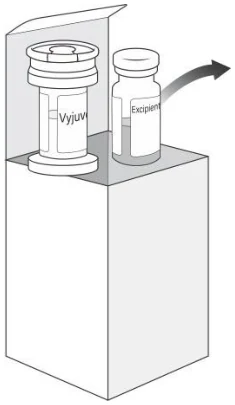
frozen. (Step 2)
Visually inspect the suspension vial. The suspension may contain white to off-white 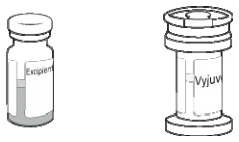
particulates that are inherent to the
product.
The suspension
may vary in colour from opalescent yellow to
colourless. Do not use this medication if you notice any discolouration.
Visually inspect the gel vial. The gel is a clear, colourless, viscous gel. Do not use the gel if you notice any
particulates or
discolouration.
Gently invert the suspension vial 4-5 times to mix the contents.
Remove the caps from the vials and clean each vial stopper with an alcohol pad. Allow them to dry.
| Gel vial (left) | Vyjuvek suspension vial (right) | |||
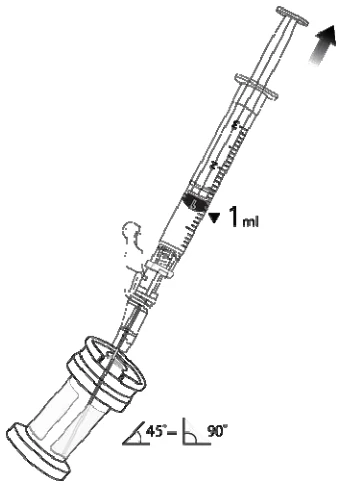
Using an aseptic technique, withdraw 1 mL of thawed suspension (Step 1) using a 3 mL syringe and needle (e.g. 16G or 18G). Transfer 1 mL of thawed suspension into the thawed gel vial. (Step 2). | Step 1 | Step 2 | ||
| Vyjuvek suspension vial | Gel vial | |||
Without removing the needle from the gel vial, pull the needle so it is above the liquid, remove 1 mL of air (air pocket) to vent the gel vial following the addition of the 1 mL of Vyjuvek suspension, and only then remove the syringe and needle and discard them. The vial with the combined suspension and gel will be referred to as the Vyjuvek vial for the remainder of these instructions. | Air pocket |
| Vyjuvek vial |
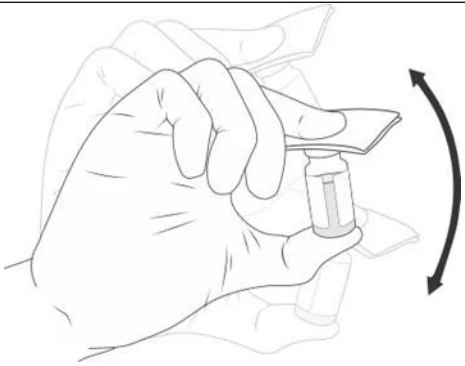
Place an alcohol pad on the gel vial stopper and shake the vial vigorously by hand for at least 10 seconds. The excipient gel should incorporate the suspension to form a homogeneous gel. Visually inspect the Vyjuvek vial. The gel containing the active substance may contain white to off- white | |
| Vyjuvek vial |

particulates that are inherent to the product. The mixed
product, like the suspension, may vary in colour from opalescent yellow to
colourless. Do not use this
medication if you notice any discolouration.
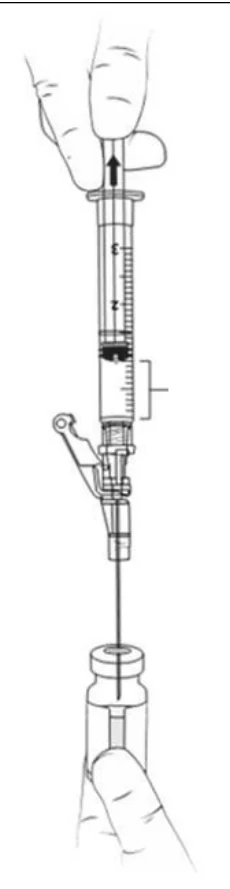
Connect a new needle (e.g. 16G or 18G) to a 1 mL syringe and slowly withdraw 0.5 mL of Vyjuvek (Step 1). Do not invert the vial to withdraw the Vyjuvek syringe. Without removing the needle from the vial, lift the tip of the needle above the Vyjuvek and disconnect the syringe, leaving | Step 1 | Step 2 | ||
| Vyjuvek vial | ||||
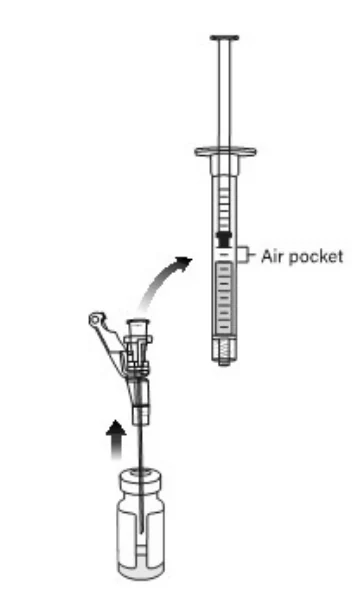
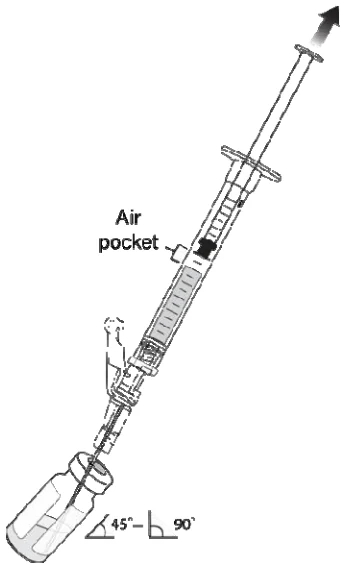
the needle
within the
vial
stopper
(Step 2).
An air
may form,
this is
normal.
Gently
manipulate the 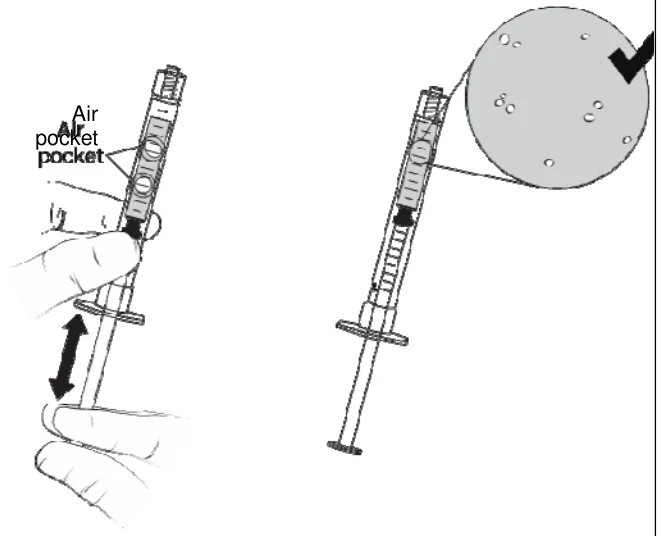 plunger up and down to remove the air pocket.
DO NOT flick the syringe to remove the air pocket.
Small bubbles may remain, this is normal.
Cap the syringe 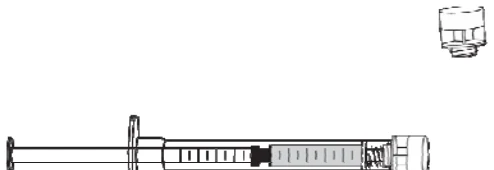 and set aside.
Air pocket Obtain the next 1 mL syringe and connect it to the needle in the gel vial stopper and withdraw 0.5 mL of

Vyjuvek, remove the air pocket and cap the syringe.
Extractable volume is 2.0 mL (4×10⁹ PFU).
Repeat as applicable based on the recommended
posology.
Label the syringe with patient’s ID, name of the product, lot number, EXP date, and storage conditions. Avoid covering the syringe marks needed for
administration.
Place the capped Vyjuvek syringes into a sealable 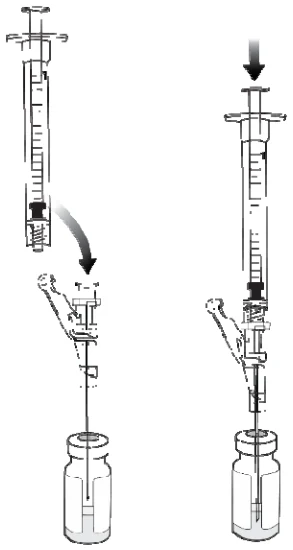 plastic bag .
Label the plastic bag with patient’s
ID, name of the product, lot number, EXP date, and storage conditions.
No more than 2 mL (four 0.5 mL syringes) can be used in the same week as this is the maximum weekly dose.
Place a sealable plastic bag with Vyjuvek syringes into an appropriate insulated tertiary container (“outer container”) to maintain a transport temperature of 2 °C to 8 °C suitable for transport and in order to protect from light.
The outer container needs to be fully closed for transportation.
Open the outer container designed for transportation of prepared Vyjuvek syringes only at the site of administration.).
Reception and storage at administration site
After receipt of the outer container, store the outer container in a secure, room-temperature location that is clean, out of reach of children, and free from potential contamination.
Only the person responsible for the administration should open the outer container.
The person responsible for the administration should check that the outer container is intact and there are no signs of leakage before use (see section 4.2).
Measures to take in case of accidental exposure
In case of accidental exposure local guidance for pharmaceutical waste must be followed.
All surfaces that may have come in contact with beremagene geperpavec must be cleaned and all spills must be disinfected with a virucidal agent such as 70% isopropyl alcohol, 6% hydrogen peroxide or < 0.4% ammonium chloride.
In the event of an accidental exposure through a splash to the eyes or mucous membranes, flush with clean water for at least 5 minutes.
In the event of exposure to intact skin or needlestick injury, clean the affected area thoroughly with soap and water and/or a disinfectant.
Precautions to be taken for the disposal of the medicinal product
Any unused medicinal product or waste material (e.g. vial, syringe, needle, cleaning materials) that that may have come in contact with Vyjuvek should be disposed of in compliance with local guidance for pharmaceutical waste.
Disinfect dressings with a virucidal agent, such as 70% isopropyl alcohol, 6% hydrogen peroxide or < 0.4% ammonium chloride, and dispose of the disinfected dressings in a separate sealed plastic bag in household waste or according to local requirements.
7 MARKETING AUTHORISATION HOLDER
Krystal Biotech Netherlands, B.V.
Atrium Gebouw
Strawinskylaan 3051
Amsterdam 1077 ZX
Netherlands
8 MARKETING AUTHORISATION NUMBER(S)
PL 61095/0001
9 DATE OF FIRST AUTHORISATION/RENEWAL OF THE
AUTHORISATION
15/05/2026
10 DATE OF REVISION OF THE TEXT
21/09/2026