

Patient leaflet - Vyjuvek 5X10^9 Plaque Forming units/ml suspension and gel for gel
1 What Vyjuvek is and what it is used for
Vyjuvek is a modified viral gene therapy. It contains the active substance beremagene geperpavec, a genetically modified virus encoding for the human protein COL7.
Vyjuvek is used to treat wounds in patients with a rare genetic disorder called dystrophic epidermolysis bullosa (DEB) with mutation(s) in the collagen type VII alpha 1 chain (COL7A1) gene, which primarily affects the skin. It can be used from birth onward. DEB is caused by a faulty gene that affects the production of the COL7 protein, which glues the skin layers together. If this protein is missing or does not function appropriately, the layers of the skin will not join properly. This makes the skin very fragile and likely to blister.
Vyjuvek has been modified to make the virus contain working copies of the faulty gene found in patients with DEB. The medicine delivers these working copies of the gene into the cells of the wound to help the skin heal. The modified virus and genetic material in this medicine do not change your own DNA.
2 What you need to know before you are given Vyjuvek
You must not be given Vyjuvek: - if you are allergic to beremagene geperpavec or any of the other ingredients of this medicine (listed in section 6).
Warnings and precautions
Talk to your doctor or nurse before you administer or you are administered Vyjuvek if you have a type of skin cancer called squamous cell carcinoma. Vyjuvek should not be applied to wounds with a confirmed or suspected diagnosis of squamous cell carcinoma. In people who develop squamous cell carcinoma, Vyjuvek may still be applied to wounds on skin that has no confirmed or suspected squamous cell carcinoma.
Accidental contact with Vyjuvek
This medicine contains genetically modified organisms. Although it will not integrate with your own DNA, accidental exposure of areas other than wounded skin should be avoided.
You and/or your doctor or nurse should: • Avoid direct contact with treated wounds
(e.g. touching or scratching) and dressings of treated wounds for approximately 24 hours following treatment.
Your doctor or nurse and your carer
should wear personal protective equipment (e.g. gloves, mask, eye protection) when administering Vyjuvek and assisting with changing wound dressings and handling their disposal (e.g. gloves), see section 3 “How Vyjuvek is given”.
Long-term follow-up
Patients taking this medicine may take part in a study that looks at the long-term safety of this medicine. Talk to your doctor or nurse about this study and how you can participate.
Other medicines and Vyjuvek
Tell your doctor or nurse if you are taking, have recently taken, or might take any other medicines.
There is no information on how Vyjuvek could react with other medicines applied to your wounds. Do not apply other medicines to your wounds along with Vyjuvek. Once Vyjuvek has been cleaned from the wounds, routine care may resume.
If you have any further questions on the use of this medicine with other medicines, ask your doctor or nurse.
Pregnancy and breast-feeding If you are pregnant or breast-feeding, think you might be pregnant, or are planning to have a baby, ask your doctor or nurse for advice before being treated with Vyjuvek or handling Vyjuvek.
The effects of this medicine on pregnancy and the unborn child are not known. The use of Vyjuvek is not recommended while you are pregnant.
Vyjuvek has not been studied in
breast-feeding women. It is not known whether it passes into breast milk. It is important to tell your doctor or nurse if you are breastfeeding or plan to do so. They will then help you decide whether to stop breast-feeding, or whether to stop taking Vyjuvek, taking into account the benefit of breast-feeding to the baby and the benefit of Vyjuvek to you.
Driving and using machines
Vyjuvek is expected to have little to no effect on the ability to drive or use machines.
3 How Vyjuvek is given
Vyjuvek is for cutaneous use on wounds only. Vyjuvek is given once a week by a doctor or nurse either in a clinic or at home. If your doctor or nurse considers it appropriate, you or your carer may also apply the medicine after you/your carer have been properly trained.
Always use this medicine exactly as your doctor or nurse has told you. Check with your doctor or nurse if you are not sure.
The maximum recommended weekly dose of Vyjuvek for children less than 3 years is up to 1 mL (2×10⁹ PFU).
The maximum recommended weekly dose of Vyjuvek for adults and children aged 3 years and above is up to 2 mL (4×10⁹ PFU).
*Vyjuvek should be applied to the selected wound, in small droplets approximately 1-cm by 1-cm apart (width of a fingertip).
All wounds may not be possible to be treated at each treatment visit. Vyjuvek should be applied to wounds until they are closed before selecting new wound(s) to treat. Weekly treatment of previously treated wounds should be prioritised if they re-open. If no wounds are present, Vyjuvek should not be administered.
How to apply Vyjuvek
Your pharmacist will prepare Vyjuvek for you. Vyjuvek will be supplied to you in capped syringes. Make sure you have the correct number of syringes according to your recommended dosage.
Wound preparation
The wounds should be gently cleaned before applying Vyjuvek.
- Gently remove any medicines and ointments at the wound area.
- Do not use products that may contain anti-viral agents. If you are unsure if something you use contains these agents, ask your doctor or nurse.
Syringe supply and storage in the home The Vyjuvek syringes will be dispensed from the pharmacy in a plastic bag within an appropriate insulated container for transport to the setting of administration (e.g. to the clinical setting or home setting) (see section 5 How Vyjuvek is stored).
After you receive the insulated container, you must store the container in a secure, room-temperature location that is clean and free from potential contamination.
The container can be left at room temperature for up to 8 hours.
- Only the person responsible for the administration should open the container.
- The person responsible for the administration should check that the container is intact and there are no signs of leakage before use.
Pregnant women should not prepare or give Vyjuvek and should avoid direct contact with the skin where the medicine is applied or with dressings that have been in contact with the medicine.
Personal protective equipment e.g. gloves, mask, and eye protection) should be worn when handling Vyjuvek.
Get the syringe ready.
- With each new syringe, before initial use, begin by pulling the plunger of the syringe down slightly, then gently pushing the plunger upwards toward the tip of the syringe.
A small droplet of Vyjuvek should form at the tip of the syringe.
All dressings that may have come into contact with Vyjuvek should be disinfected with an anti-viral agent, such as bleach. The disinfected bandages can be disposed in a separate sealed plastic bag in household waste or in accordance with local
requirements.
Ask your doctor or nurse if you have questions after reading this package leaflet.
How long should you take Vyjuvek
You should continue using the medicine weekly until the wounds are closed. If previously treated wounds re-open, the medicine will be applied again. It may not be possible to apply Vyjuvek to all wounds at each treatment. If you do not have wounds, you should not receive treatment with Vyjuvek.
If you are given more Vyjuvek than you should have
There is limited clinical experience with overdose of Vyjuvek. In case of overdose, your doctor or nurse will treat the symptoms as necessary.
If you miss a dose of Vyjuvek
If a dose is missed, Vyjuvek should be administered as soon as possible, and weekly treatments will continue. It is not
recommended to stop your treatment without first consulting your doctor or nurse.
If you have any further questions on the use of this medicine, ask your doctor or nurse.
4 Possible side effects
Like all medicines, this medicine can cause side effects, although not everybody gets them.
The most frequently occurring adverse reactions reported in the clinical study were:
Common (may affect up to 1 in 10 people) • Itching of the skin
- Chills
- Reddening of the skin
- Rash of the skin
- Cough
- Runny nose
Reporting of side effects
If you get any side effects, talk to your doctor or nurse. This includes any possible side effects not listed in this leaflet. You can also report side effects directly via the Yellow Card Scheme Website:
www.mhra.gov.uk/yellowcard or search for MHRA Yellow Card in the Google Play or Apple App Store. By reporting side effects, you can help provide more information on the safety of this medicine.
5 How Vyjuvek is stored
You will receive the medicine in capped syringes within a sealable plastic bag, in an appropriate insulated container (“outer container”) for transport. Store this medicine as recommended by your pharmacist.
Keep this medicine out of the sight and reach of children.
Your pharmacist is responsible for the adequate storage of the medicine. The following information is provided for your pharmacist.
Store frozen at -15 °C to -25 °C.
Keep the vials in the carton prior to thawing in order to protect from light.
After thawing the carton(s) may be stored in a refrigerator (2 °C to 8 °C) for up to 3 months.
After mixing chemical and physical in-use stability has been demonstrated for 168 hours (7 days) at 2 to 8 °C or up to 42 days at -15 °C to -25 °C. From a microbiological point of view, the product should be used immediately. If not used immediately, in-use storage times and conditions prior to use are the responsibility of the user and would normally not be longer than 24 hours at 2 to 8 °C, unless mixing has taken place in controlled and validated aseptic conditions.
The syringes may be left at room temperature for up to 8 hours.
Do not use this medicine after the expiry date. The syringes may vary in colour from opalescent yellow to colourless. Do not use this medicine if you notice any discolouration.
Check with your doctor or nurse if you have any questions.
6 Contents of the pack and other information
What Vyjuvek contains
- The active substance is beremagene geperpavec. One vial contains 5×10⁹ PFU of beremagene geperpavec suspension in 1 mL.
The other ingredients are:
- Suspension: glycerol (E422), sodium chloride, disodium phosphate (E339), potassium chloride (E508), dipotassium phosphate (E340).
- Gel: hypromellose(E464), trometamol, sodium chloride, disodium phosphate (E339), dipotassium phosphate (E340).
What Vyjuvek looks like and contents of the pack
Vyjuvek 5×10⁹ PFU/mL is a suspension and gel for gel.
Suspension
Opalescent yellow to colourless suspension following thaw from its frozen state. It is supplied in a cyclo-olefin copolymer vial with a thermoplastic elastomer closure and a green cap containing 1 mL of suspension.
Gel
Clear viscous gel, following thaw from its frozen state. It is supplied in a Type-1 glass vial with a bromobutyl elastomer stopper and a blue cap containing 1.5 mL of gel.
Each carton contains one vial of suspension and one vial of gel.
Marketing Authorisation Holder
Krystal Biotech Netherlands, B.V.
Atrium Gebouw
Strawinskylaan 3051
Amsterdam 1077 ZX
Netherlands
Manufacturer
Krystal Biotech Switzerland GMBH Atrium Gebouw
Strawinskylaan 3051
Amsterdam 1077 ZX
Netherlands
This leaflet was last revised in June 2026
Other sources of information
Detailed information on administration of this product is also available by scanning the QR code included below or on the outer carton with a smart phone.
The same information is also available on the following URL and QR code:
http://ema.krystallabel.com/ QR code to be included
| Wound area (cm2)* | Volume (mL) |
| <20 | <0.2 |
| 20 to <40 | 0.2 to <0.4 |
| 40 to 60 | 0.4 to <0.6 |
| 60 to <200 | 0.6 to <2 |
PFU=plaque forming units
Leave the dressing for approximately 24 hours after treatment.
Avoid touching or scratching treated wound areas or dressings.
Following the Vyjuvek dressing change, your routine care may resume.
Measures to take in case of accidental exposure In the event of an accidental exposure (e.g. through a splash to the eyes or mucous membranes), flush with clean water for at least 5 minutes.
In the event of exposure to intact skin, clean the affected area thoroughly with soap and water and/or a disinfectant.
All working surfaces that may have come in contact with beremagene geperpavec must be cleaned and all spills must be disinfected with a virucidal agent such as bleach.
Syringe disposal
Any used or unused Vyjuvek syringe or material that that may have come in contact with Vyjuvek (e.g. gloves) should be disposed of in compliance with local guidance for pharmaceutical waste.
Changing and disposing of wound dressings People changing (or assisting with changing) Vyjuvek wound dressings and handling their disposal should wear protective gloves. ® Apply Vyjuvek to the selected wound, in small
droplets approximately 1-cm by 1-cm apart (width of a fingertip) with only the Vyjuvek droplet touching the wound.
The tip of the syringe should not touch the skin to prevent the contamination of the gel in the syringe.
The resulting droplet pattern should loosely resemble a grid.
The amount of Vyjuvek applied may vary as the wound decreases or increases in size.
Once Vyjuvek has been administered to the wound, cover the wound with a
non-absorbent, water-repellent dressing (a dressing that will not absorb Vyjuvek). The dressing should be cut to a size slightly larger than the wound but may vary upon your preference.
Once the Vyjuvek droplets are covered by the water-repellent dressing, a thin even layer of Vyjuvek will form within the wound.
The standard wound care dressing should be cut to a size larger than the non-absorbent, water-repellent dressing. Cover the non-absorbent dressing with the standard dressing.
The following information is intended for healthcare professionals (HCPs) only:
Refer to the Summary of Product Characteristics (SmPC) before using.
Preparation and administration of Vyjuvek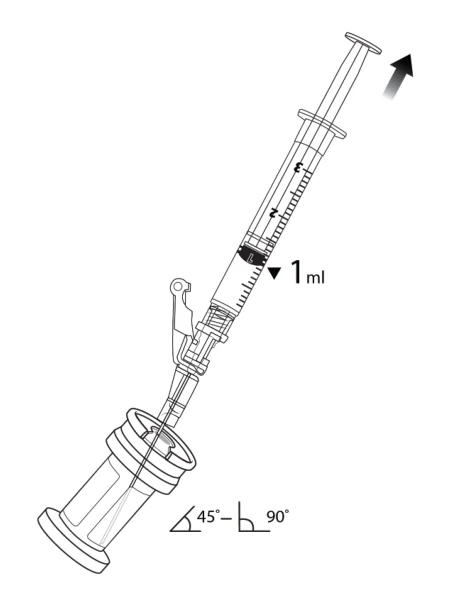
This medicine contains genetically modified 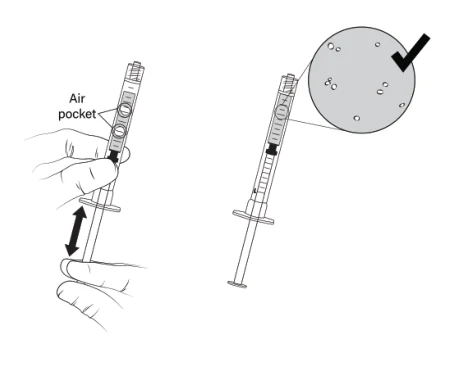 organisms.
During preparation, administration, and disposal, appropriate precautions must be taken. Personal protective equipment (e.g. gloves, mask, and eye protection) should be 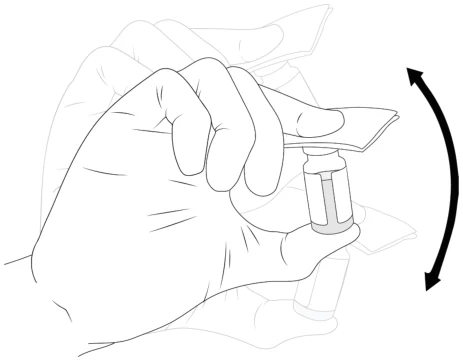 worn when handling Vyjuvek.
HCPs or carers who are pregnant should not administer Vyjuvek and should not come into direct contact with treated wounds, or all material that has been in contact with treated wounds.
Preparation prior to administration
Follow the steps below for Vyjuvek 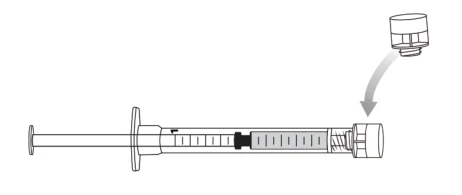 preparation.
Each carton contains one vial of suspension (1 mL) and one vial of gel (1.5 mL)
Concentration of the medicinal product is 2×10⁹ PFU/mL after mixing.
Place a sealable plastic bag with Vyjuvek syringes into an appropriate insulated tertiary container (“outer container”) to maintain a transport temperature of 2 °C to 8 °C suitable for transport and in order to protect from light.
The outer container needs to be fully closed for transportation.
Open the outer container designed for transportation of prepared Vyjuvek syringes only at the site of administration.
Measures to take in case of accidental exposure
All surfaces that may have come in contact with beremagene geperpavec must be cleaned and all spills must be disinfected with a virucidal agent such as 70% isopropyl alcohol, 6% hydrogen peroxide or <0.4% ammonium chloride.
In the event of an accidental exposure (e.g. through the splash to the eyes or mucous membranes), flush with clean water for at least 5 minutes.
In the event of exposure to intact skin or needlestick injury, clean the affected area thoroughly with soap and water and/or a disinfectant.
Precautions to be taken for the disposal of the medicinal product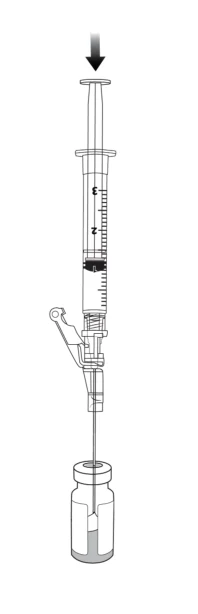
Disinfect bandages from the first dressing change with a virucidal agent, such as 70% isopropyl alcohol, 6% hydrogen peroxide or <0.4% ammonium chloride, and dispose of 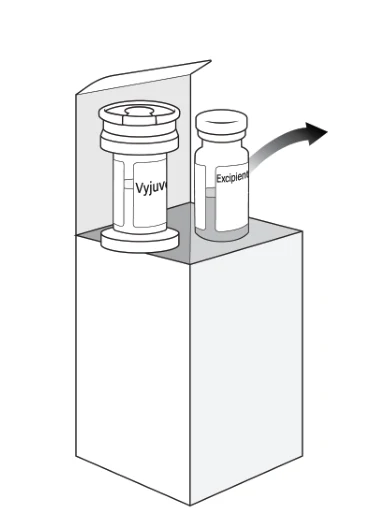
 the disinfected bandages in a separate sealed plastic bag in household waste or according to local requirements.
Any used or unused Vyjuvek syringe or material that that may have come in contact with Vyjuvek (e.g. needles, syringes, gloves, etc.) should be disposed of in compliance with local guidance for pharmaceutical waste.
Cap the syringe and set aside.
Before use, vials must be removed from the carton and left at room temperature. (Step 1).
Step 1
Once the vials are thawed (for approximately 30 minutes), they cannot be re-frozen. (Step 2)
Step 2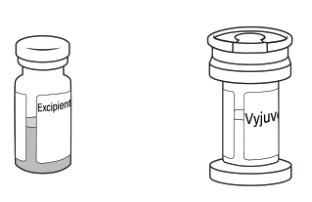
Visually inspect the suspension vial. The suspension may contain white to off-white particulates that are inherent to the product.
The suspension may vary in colour from opalescent yellow to colourless. Do not use this medication if you notice any particulates or discolouration.
Visually inspect the gel vial. The gel is a clear, colourless, viscous gel. Do not use the gel if you notice any particulates or discolouration.
Gently invert the suspension vial 4-5 times to mix the contents.
Remove the caps from the vials and clean each vial stopper with an alcohol pad. Allow them to dry.
Gel vial
(left)
Vyjuvek suspension vial
(right)
Using an aseptic technique, withdraw 1 mL of thawed suspension (Step 1) using a 3 mL syringe and needle (e.g. 16G or 18G).
Step 1
Vyjuvek suspension vial
Transfer 1 mL of thawed suspension into the thawed gel vial (Step 2).
Step 2
Gel vial
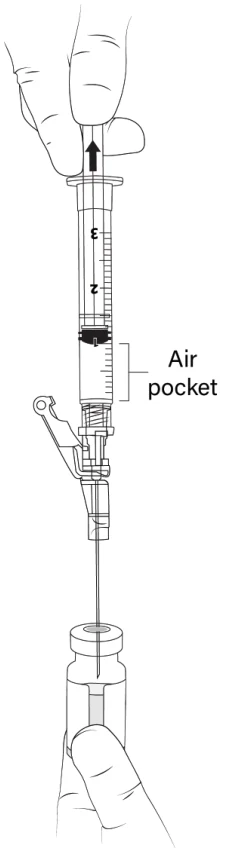
Without removing the needle from the gel vial, pull the needle so it is above the liquid, remove 1 mL of air (air pocket) to vent the gel vial following the addition of the 1 mL of Vyjuvek suspension, and only then remove the syringe and needle and discard them.
The vial with the combined suspension and gel will be referred to as the Vyjuvek vial for the remainder of these instructions.
Vyjuvek vial
Place an alcohol pad on the gel vial stopper and shake the vial vigorously by hand for at least 10 seconds. The excipient gel should incorporate the suspension to form a homogeneous gel.
Visually inspect the Vyjuvek vial. The gel containing the active substance may contain white to off-white particulates that are inherent to the product. The mixed product, like the suspension, may vary in colour from opalescent yellow to colourless. Do not use this medicine if you notice any particulates or discolouration.
Vyjuvek vial
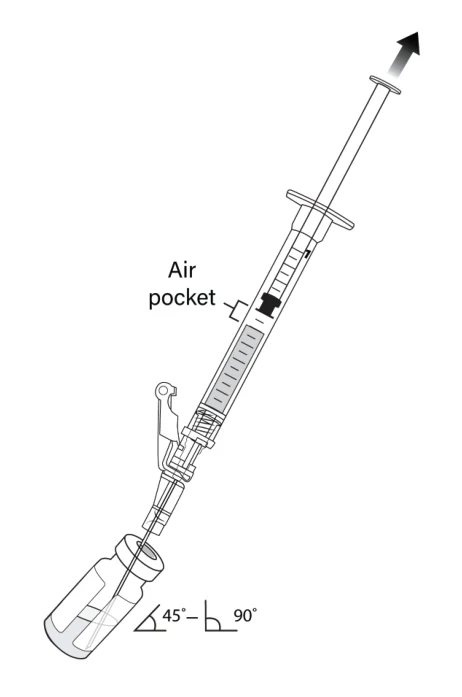
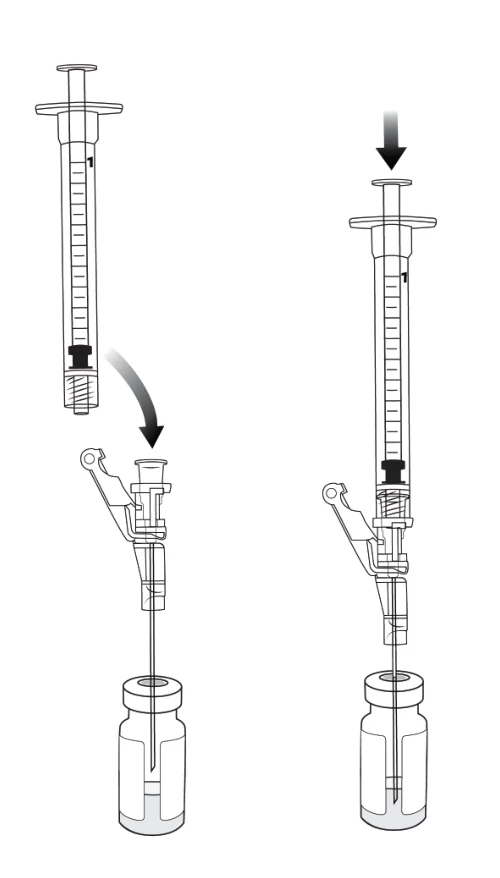
Connect a new needle (e.g. 16G or 18G) to a 1 mL syringe and slowly withdraw 0.5 mL of Vyjuvek (Step 1). Do not invert the vial to withdraw the Vyjuvek syringe.
Step 1
Vyjuvek vial
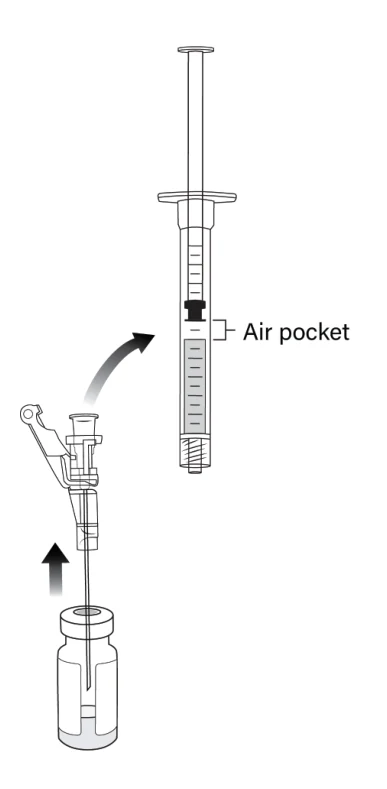
Without removing the needle from the vial, lift the tip of the needle above the Vyjuvek and disconnect the syringe, leaving the needle within the vial stopper (Step 2).
An air pocket may form, this is normal.
Step 2
Vyjuvek vial
Gently manipulate the plunger up and down to remove the air pocket.
DO NOT flick the syringe to remove the air pocket.
Small bubbles may remain, this is normal.
Obtain the next 1 mL syringe and connect it to the needle in the gel vial stopper and withdraw 0.5 mL of Vyjuvek, remove the air pocket and cap the syringe.
Extractable volume is 2.0 mL (4×10⁹ PFU).
Repeat as applicable based on the recommended dosage.
Label the syringe with patient’s ID, name of the product, lot number, EXP date, and storage conditions. Avoid covering the syringe marks needed for administration.
Place the capped Vyjuvek syringes into a sealable plastic bag.
Label the plastic bag with patient’s ID, name of the product, Lot number, EXP date, and storage conditions.
No more than 2 mL (four 0.5 mL syringes) can be used in the same week as this is the maximum weekly dose.
®