

Patient leaflet - Ropivacaine 2 mg / ml solution for infusion in Administration System
1. What Ropivacaine is and what it is used for
The name of your medicine is “Ropivacaine 2 mg/ml solution for infusion in administration system”. It contains an active substance called ropivacaine hydrochloride. It belongs to a group of medicines called local anaesthetics.
Ropivacaine is used in adults for acute pain management. It numbs (anaesthetises) parts of the body, e.g. after surgery.
2. What you need to know before Ropivacaine is given to you
You must not be given Ropivacaine:
- If you are allergic to ropivacaine hydrochloride or any of the other ingredients of this medicine (listed in section 6).
- If you are allergic to any other local anaesthetics of the same class (such as lidocaine or bupivacaine).
- Into a blood vessel, spine, or joint to numb a specific area of your body, or into the neck of the womb to relieve pain during childbirth.
If you are not sure if any of the above applies to you, talk to your doctor before you are given Ropivacaine.
Warnings and precautions
Talk to your doctor or nurse before Ropivacaine is given to you, especially:
- If you have heart, liver or kidney problems.
- If you have ever been told that you have a rare disease of the blood pigment called “porphyria” or if anyone in your family has it, because your doctor may need to give you a different medicine.
- If you have any diseases or medical conditions.
Other medicines and Ropivacaine
Tell your doctor if you are taking, or have recently taken, any other medicines. This is because Ropivacaine can affect the way some medicines work and some medicines can have an effect on Ropivacaine.
In particular, tell your doctor if you are taking any of the following medicines:
- Other local anaesthetics.
- Strong pain killers, such as morphine or codeine.
- Drugs used to treat an uneven heart beat (arrhythmia), such as lidocaine and mexiletine.
Your doctor needs to know about these medicines to be able to assess if Ropivacaine may be administered to you.
Also tell your doctor if you are taking any of the following medicines:
- Medicines to treat depression (such as fluvoxamine).
- Antibiotics to treat infections caused by bacteria (such as enoxacin).
This is because your body takes longer to get rid of Ropivacaine if you are taking these medicines.
If you are taking either of these medicines, prolonged use of Ropivacaine should be avoided.
Pregnancy and breast-feeding
If you are pregnant or breast-feeding, think you may be pregnant or are planning to have a baby, ask your doctor for advice before using this medicine.
It is not known if ropivacaine hydrochloride affects pregnancy or passes into breast milk.
As a precautionary measure, it is preferable to avoid the use of Ropivacaine during pregnancy.
The following information is intended for healthcare professionals only:
Ropivacaine is preservative-free and is intended for single use only.
The solution should be visually inspected prior to use. The solution should only be used if it is clear, practically free from particles and if the container is undamaged.
The Ropivacaine ReadyfusOR infusion pump
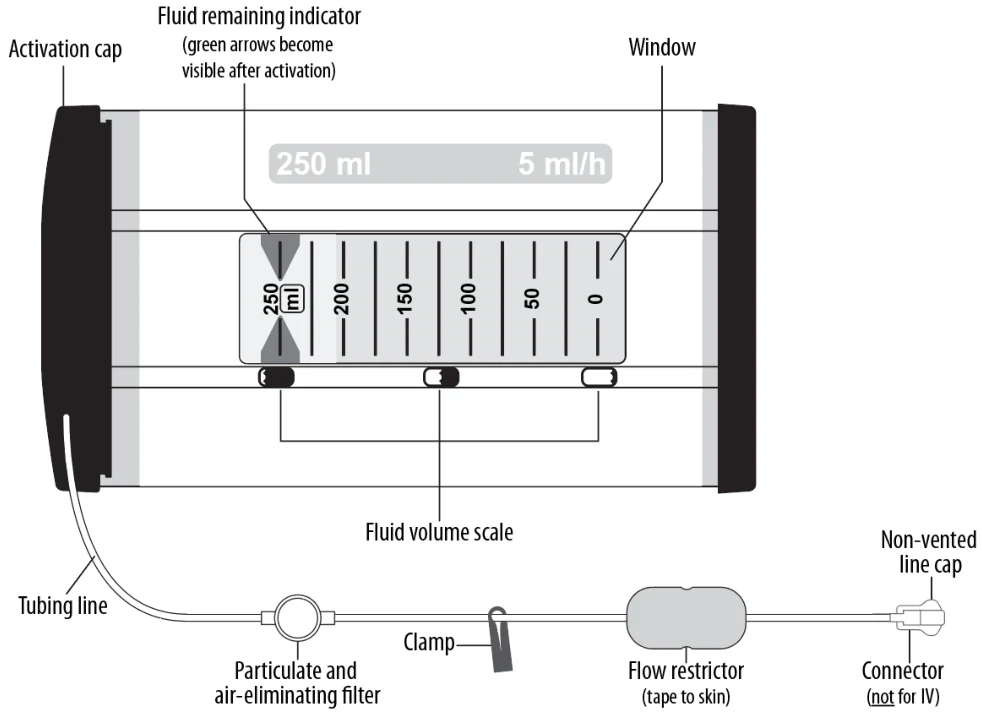
The Ropivacaine ReadyfusOR infusion pump (hereinafter referred to as “dispenser”) is a non-electric medication dispenser that has been designed for point of care use.
The dispenser contains a bellows bottle with 250 ml ropivacaine hydrochloride monohydrate solution for infusion. A tubing line with connector (Luer lock) is permanently attached. The tubing line, connector, and the sterile fenestrated catheter (when enclosed in the set, see section 6) are latex free.
For wound infiltration, a fenestrated catheter should be placed in the wound during surgery according to clinical guidelines specific to the procedure location. The catheter (when enclosed in the set) uniformly distributes Ropivacaine along the length of the wound in a 360° radius.
The fluid remaining indicator is a set of green arrows that indicates the amount of fluid which remains to be delivered.
Breast-feeding should be temporarily interrupted during treatment with Ropivacaine. The milk should be pumped and discarded for this period.
Driving and using machines
Ropivacaine may make you feel sleepy and affect the speed of your reactions. After you have been given Ropivacaine, you should not drive or use tools or machines until the next day.
Ropivacaine contains sodium
This medicine contains 3.4 mg of sodium (main component of cooking/table salt) in each millilitre. This is equivalent to 0.17 % of the recommended maximum daily dietary intake of sodium for an adult.
3. How Ropivacaine is given to you
Ropivacaine will be given to you by a doctor.
Ropivacaine will be given to you as an infusion to reduce pain after surgery. It will be given to you either as an infusion into the surrounding of a nerve (perineurally) or into a surgical wound (infiltration). For wound infiltration, your doctor will place a catheter in the wound during surgery, which can be connected to the Ropivacaine ReadyfusOR infusion pump (hereinafter also referred to as “dispenser”).
The dispenser is a dispensing device that contains the solution for infusion and has a tubing line with connector permanently attached to it that can be connected to the catheter in the wound or port near the nerve.
Your doctor or nurse will activate the dispenser and connect it to the catheter/port. You will not need to do anything to the dispenser.
After its activation the dispenser will continuously administer a defined dose of the active substance, sufficient for the relief of your pain.
Warnings
- Kinking of the tubing line must be avoided as this could result in an improper fluid delivery rate.
- Do not place tight wrappings around the tubing line.
- Do not use the dispenser if any part has been damaged or cracked, or if the connector on the tubing line appears broken, cracked, or damaged in any way.
- The flow restrictor (clear rectangle) must remain taped to your skin. Removing the tape or allowing the flow restrictor to lose contact with your skin may result in an improper fluid delivery rate.
- Do not place hot or cold packs over the flow restrictor as this could result in an improper fluid delivery rate.
- Do not reconnect the dispenser if it is accidentally disconnected from the catheter/port during medication delivery, as this may cause an infection. Contact your doctor or nurse and let them know the dispenser has become disconnected.
- Do not bathe or shower with the dispenser, or while the catheter/port is still in place, as this could cause an infection.
- Do not tamper with the wound dressings or with the catheter/port as this could cause an infection.
If you have been given too much Ropivacaine
As the dispenser continuously administers a defined dose of the active substance, serious side effects from getting too much Ropivacaine are very unlikely.
Should the dose be too high, you will need special treatment and the doctor treating you is trained to deal with these situations. The first signs of being given too much Ropivacaine are usually as follows:
- Feeling dizzy or light-headed.
- Numbness of the lips and around the mouth.
- Numbness of the tongue.
- Hearing problems.
- Problems with your sight (vision).
To reduce the risk of serious side effects, your doctor will stop the administration of Ropivacaine as soon as these signs appear. This means that if any of these happen to you, or you think you have received too much Ropivacaine, tell your doctor immediately.
If you have any further questions on the use of this medicine, ask your doctor or nurse.
4. Possible side effects
Like all medicines, this medicine can cause side effects, although not everybody gets them.
Important side effects to look out for
Sudden life-threatening allergic reactions (such as anaphylaxis, including anaphylactic shock) are rare, affecting 1 to 10 users in 10 000. Possible symptoms include sudden onset of rash, itching or lumpy rash (hives); swelling of the face, lips, tongue or other parts of the body; shortness of breath, wheezing or difficulty breathing; a feeling of loss of consciousness. If you think that Ropivacaine is causing an allergic reaction, tell your doctor immediately.
Instructions for use
- 1.
Inspect the dispenser, flow restrictor, and tubing line for damage or tampering.
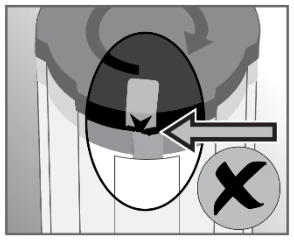
☐ Verify that the orange sticker seal on the activation cap is intact.
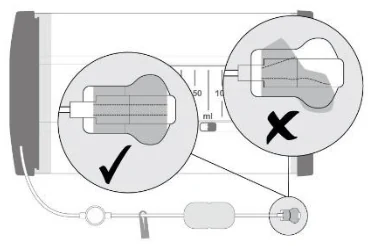
☐ Verify that the orange tamper seal over the line cap is intact.
If damage is observed, or either seal has been removed or compromised, do not use this dispenser.
- 2.
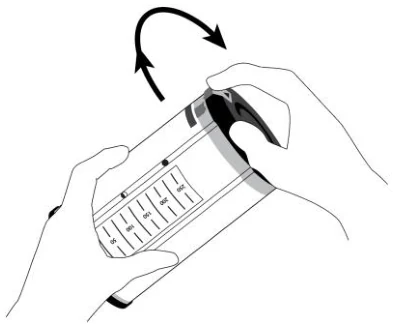
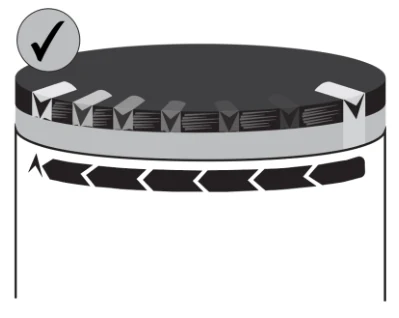
Initiate fluid delivery by turning the activation cap clockwise until the arrow on the orange sticker seal roughly lines up with the arrow on the label. High force is required. This is normal and prevents accidental activation. Parts inside the dispenser will move during activation.
The dispenser is activated when the green fluid remaining indicator arrows become visible in the window. Fluid flow can be seen upstream of the filter within seconds, but flow will stop until the non-vented cap is removed.
Other possible side effects
Very common (may affect more than 1 in 10 people)
- Low blood pressure (hypotension). This might make you feel dizzy or light-headed.
- Feeling sick (nausea).
Common (may affect up to 1 in 10 people)
- Pins and needles.
- Feeling dizzy.
- Headache.
- Slow or fast heartbeat (bradycardia, tachycardia).
- High blood pressure (hypertension).
- Being sick (vomiting).
- Difficulty in passing urine.
- High temperature (fever) or shivering (chills).
- Back pain.
Uncommon (may affect up to 1 in 100 people)
- Anxiety.
- Decreased sensitivity or feeling in the skin.
- Fainting.
- Difficulty breathing.
- Low body temperature (hypothermia).
- Some symptoms can happen if you have been given too much Ropivacaine (see also “If you have been given too much Ropivacaine” above). These include fits (seizures), feeling dizzy or light-headed, numbness of the lips and around the mouth, numbness of the tongue, hearing problems, problems with your sight (vision), problems with your speech, stiff muscles, and trembling.
Rare (may affect up to 1 in 1 000 people)
- Heart attack (cardiac arrest).
- Uneven heart beat (arrhythmias).
Not known (cannot be estimated from the available data)
- Involuntary muscle movements (dyskinesia).
Possible side effects seen with other local anaesthetics which might also be caused by Ropivacaine
Rare (may affect up to 1 in 1 000 people)
- Damaged nerves. This may cause permanent problems.
Reporting of side effects
If you get any side effects, talk to your doctor, nurse or pharmacist. This includes any possible side effects not listed in this leaflet. You can also report side effects directly via Yellow Card Scheme website: www.mhra.gov.uk/yellowcard or search for MHRA Yellow Card in the Google Play or Apple App Store. By reporting side effects you can help provide more information on the safety of this medicine.
5. How to store Ropivacaine
Keep this medicine out of the sight and reach of children.
Do not use this medicine after the expiry date which is stated on the label after “EXP”. The expiry date refers to the last day of that month.
This medicine does not require any special storage conditions.
Your doctor or the hospital will normally store Ropivacaine and they are responsible for the quality of the product. The medicine should be visually inspected prior to use. The solution should only be used if it is clear, practically free from particles and if the container is undamaged.
They are also responsible for disposing of any unused Ropivacaine correctly.
6. Contents of the pack and other information
What Ropivacaine contains
- The active substance is ropivacaine hydrochloride. Each ml contains 2 mg ropivacaine hydrochloride.
- The other ingredients are sodium chloride, sodium hydroxide solution or hydrochloric acid for pH adjustment, and water for injections.
- 3.
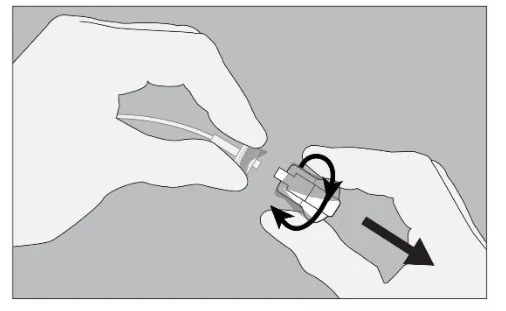
Twist off the tubing line cap to break the tamper seal.
Check that the clamp is not engaged and ensure that fluid delivery has started by observing fluid flowing through the tubing line and the flow restrictor.
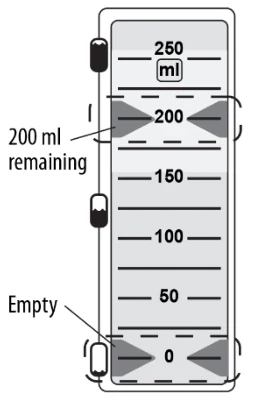
After 1-2 minutes, fluid will start to drip very slowly from the end of the tubing line.
- 4. Connect the tubing line of the dispenser to the patient’s port/catheter. Do not connect to an IV line.
- 5.
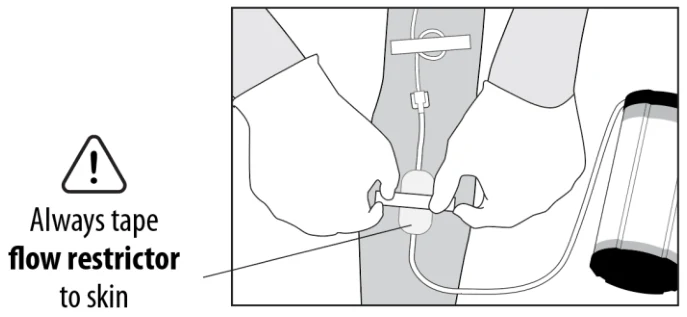
Tape the flow restrictor (clear rectangle) to the patient’s skin. Apply tape directly over the flow restrictor as shown, away from the wound site, and make sure you do not pull at the tubing line or disturb the catheter/port placement. Finally, secure tubing line and connections with tape.
Warning: The flow restrictor must remain taped in contact with the patient’s skin. If it loses contact, an improper fluid delivery rate may result.
- 6.
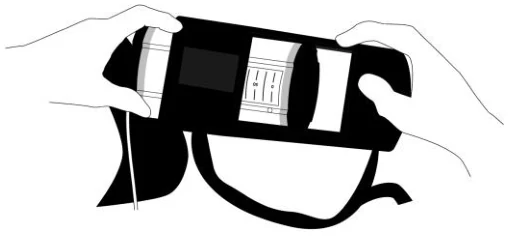
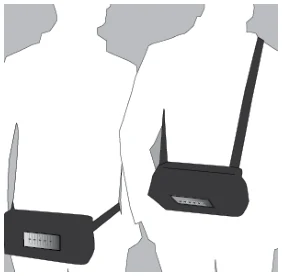
Place the dispenser in the carrying pouch provided. The carrying pouch may either be attached to the patient as a sling around the shoulder or around the waist as a belt.
To prevent the catheter/port from being pulled out, it is recommended to keep the pouch attached to the patient with the dispenser inside at all times.
What Ropivacaine looks like and contents of the pack
Ropivacaine is a clear, colourless solution for infusion.
The Ropivacaine ReadyfusOR infusion pump is an orange cylinder with black caps on each side. It is designed to contain a transparent high-density polyethylene (HDPE) bellows bottle with 250 ml ropivacaine hydrochloride monohydrate solution for infusion. A latex free tubing line with connector (Luer lock) is permanently attached to it.
Each pack contains one Ropivacaine ReadyfusOR infusion pump and a carrying pouch. Sets further including a sterile latex free fenestrated catheter for placement in the wound (length 6.5 or 15 cm) are also available.
Marketing Authorisation Holder
BioQ Pharma Ltd
Paddock Cottage, Sandy Lane
Milford, Godalming GU8 5BL
United Kingdom
Manufacturer
Copea Pharma Limited
Compass West
Spindus Road
Liverpool L24 1YA
United Kingdom
Distributed by
Piramal Critical Care Limited
Suite 4, Ground Floor
Heathrow Boulevard – East Wing,
280 Bath Road, West Drayton
UB7 0DQ, United Kingdom
This medicine is authorised in the Member States of the European Economic Area and in the United Kingdom (Northern Ireland) under the following names:
| Austria | Ropivacain ReadyfusOR 2 mg/ml Infusionslösung im Applikationssystem |
|---|---|
| Belgium | Ropivacaine Readyfusor 2 mg/ml solution pour perfusion en système d’administration |
| Czech Republic | Ropivacaine BioQ 2 mg/ml infuzní roztok v aplikačním systému |
| Denmark | Ropivacaine BioQ 2 mg/ml infusionsvæske, opløsning i administrationssystem |
| Finland | Ropivacaine BioQ 2 mg/ml infuusioneste, liuos, antovälineistö |
| France | Ropivacaine Readyfusor 2 mg/ml solution pour perfusion en système d’administration |
| Italy | Ropivacaina BioQ ReadyfusOR 2 mg/ml soluzione per infusione in sistema di somministrazione |
| Luxembourg | Ropivacaine ReadyfusOR 2 mg/ml solution pour perfusion en système d'administration |
| Norway | Ropivacaine BioQ 2 mg/ml infusjonsvæske, oppløsning i administreringssystem |
| Poland | Ropivacaine BioQ, 2 mg/ml, roztwór do infuzji w zestawie do podawania |
| Portugal | Ropivacaína BioQ 2 mg/ml solução para perfusão em sistema de administração |
| Slovak Republic | Ropivacaine Readyfusor 2 mg/ml infúzny roztok v aplikačnom systéme |
| Spain | Ropivacaína Readyfusor 2 mg/ml solución para perfusión en sistema de administración |
| Sweden | Ropivacaine BioQ 2 mg/ml infusionsvätska, lösning i administreringssats |
| United Kingdom (Northern Ireland) | Ropivacaine 2 mg/ml solution for infusion in administration system |
This leaflet was last revised in 09/2023.
- 7.
Fluid delivery can be observed through the window of the dispenser.
The dispenser will deliver approximately 5 ml of fluid per hour.
The green arrows in the window indicate the amount of fluid remaining (in ml) in the dispenser.
Monitor the position of the fluid indicator arrows periodically for excessive flow rate. For symptoms of an overdose see ‘If you have been given too much Ropivacaine’ (section 3).
- 8. Delivery is complete when the unit is empty, as shown by the green fluid remaining indicator arrows reaching zero in the window.
- 9. Remove the dispenser from the patient after delivery is complete.
- 10. After use, discard the empty dispenser, including any unused solution, in accordance with local requirements.
Warnings
- The dispenser is only intended for single use. Do not reuse or reconnect the dispenser.
- The dispenser must not be autoclaved. The fluid path in the dispensing system has been sterilised.
- The dispenser must not be connected to an IV line.
- Kinking of the tubing line must be avoided, as this could result in an improper fluid delivery rate.
- No tight wrappings should be placed around the tubing line.
- The dispenser should not be used if any part has been damaged or cracked, or if the connector on the tubing line appears broken, cracked, or damaged in any way.
- The flow restrictor (clear rectangle) must remain taped to the patient’s skin. Removing the tape or allowing the flow restrictor to lose contact with the skin may result in an improper fluid delivery rate.
- Do not place hot or cold packs over the flow restrictor as this could result in an improper fluid delivery rate.
- The dispenser should not be reconnected if it is accidentally disconnected from the catheter/port during medication delivery, as this may cause an infection.
- The patient should not bathe or shower with the dispenser, or while the catheter/port is still in place, as this could cause an infection.
- The patient should not tamper with the wound dressings or with the catheter/port as this could cause an infection.