

Patient leaflet - Pradaxa 150 mg hard capsules
1. What Pradaxa is and what it is used for
Pradaxa contains the active substance dabigatran etexilate and belongs to a group of medicines called anticoagulants. It works by blocking a substance in the body which is involved in blood clot formation.
Pradaxa is used in adults to:
- prevent blood clots in the brain (stroke) and other blood vessels in the body if you have a form of irregular heart rhythm called nonvalvular atrial fibrillation and at least one additional risk factor.
- treat blood clots in the veins of your legs and lungs and to prevent blood clots from re-occurring in the vein of your legs and lungs.
Pradaxa is used in children to:
- treat blood clots and to prevent blood clots from reoccurring.
2. What you need to know before you take Pradaxa
Do not take Pradaxa
- if you are allergic to dabigatran etexilate or any of the other ingredients of this medicine (listed in section 6).
- if you have severely reduced kidney function.
- if you are currently bleeding.
- if you have a disease in an organ of the body that increases the risk of serious bleeding (e.g. stomach ulcer, injury or bleeding in the brain, recent surgery of the brain or eyes).
- if you have an increased tendency to bleed. This may be inborn, of unknown cause or due to other medicines.
- if you are taking medicines to prevent blood clotting (e.g. warfarin, rivaroxaban, apixaban or heparin), except when changing anticoagulant treatment, while having a venous or arterial line and you get heparin through this line to keep it open or while your heart beat is being restored to normal by a procedure called catheter ablation for atrial fibrillation.
- if you have a severely reduced liver function or liver disease which could possibly cause death.
- if you are taking oral ketoconazole or itraconazole, medicines to treat fungal infections.
- if you are taking oral cyclosporine, a medicine to prevent organ rejection after transplantation.
- if you are taking dronedarone, a medicine used to treat abnormal heart beat.
- if you are taking a combination product of glecaprevir and pibrentasvir, an antiviral medicine used to treat hepatitis C.
- if you have received an artificial heart valve which requires permanent blood thinning.
Warnings and precautions
Talk to your doctor before taking Pradaxa. You may also need to talk to your doctor during treatment with this medicine if you experience symptoms or if you have to undergo surgery.
Tell your doctor if you have or have had any medical conditions or illnesses, in particular any of those included in the following list:
if you have an increased bleeding risk, such as:
- if you have been recently bleeding.
- if you have had a surgical tissue removal (biopsy) in the past month.
- if you have had a serious injury (e.g. a bone fracture, head injury or any injury requiring surgical treatment).
if you are suffering from an inflammation of the gullet or stomach.
- if you have problems with reflux of gastric juice into the gullet.
- if you are receiving medicines which could increase the risk of bleeding. See ‘Other medicines and Pradaxa’ below.
- if you are taking anti-inflammatory medicines such as diclofenac, ibuprofen, piroxicam.
- if you are suffering from an infection of the heart (bacterial endocarditis).
- if you know you have decreased kidney function, or you are suffering from dehydration (symptoms include feeling thirsty and passing reduced amounts of dark-coloured (concentrated) / foaming urine).
- if you are older than 75 years.
- if you are an adult patient and weigh 50 kg or less.
- only if used for children: if the child has an infection around or within the brain.
- if you have had a heart attack or if you have been diagnosed with conditions that increase the risk to develop a heart attack.
- if you have a liver disease that is associated with changes in the blood tests. The use of this medicine is not recommended in this case.
Take special care with Pradaxa
if you need to have an operation:
In this case Pradaxa will need to be stopped temporarily due to an increased bleeding risk during and shortly after an operation. It is very important to take Pradaxa before and after the operation exactly at the times you have been told by your doctor.
if an operation involves a catheter or injection into your spinal column (e.g. for epidural or spinal anaesthesia or pain reduction):
- it is very important to take Pradaxa before and after the operation exactly at the times you have been told by your doctor.
- tell your doctor immediately if you get numbness or weakness of your legs or problems with your bowel or bladder after the end of anaesthesia, because urgent care is necessary.
- if you know that you have a disease called antiphospholipid syndrome (a disorder of the immune system that causes an increased risk of blood clots), tell your doctor who will decide if the treatment may need to be changed.
Other medicines and Pradaxa
Tell your doctor or pharmacist if you are taking, have recently taken or might take any other medicines. In particular you should tell your doctor before taking Pradaxa, if you are taking one of the medicines listed below:
- Medicines to reduce blood clotting (e.g. warfarin, phenprocoumon, acenocoumarol, heparin, clopidogrel, prasugrel, ticagrelor, rivaroxaban, acetylsalicylic acid)
- Medicines to treat fungal infections (e.g. ketoconazole, itraconazole), unless they are only applied to the skin
Medicines to treat abnormal heart beats (e.g. amiodarone, dronedarone, quinidine, verapamil).
If you are taking verapamil containing medicines, your doctor may tell you to use a reduced dose of Pradaxa depending on the condition for which it is prescribed to you. See section 3.
- Medicines to prevent organ rejection after transplantation (e.g. tacrolimus, cyclosporine)
- A combination product of glecaprevir and pibrentasvir (an antiviral medicine used to treat hepatitis C)
- Anti-inflammatory and pain reliever medicines (e.g. acetylsalicylic acid, ibuprofen, diclofenac)
- St. John´s wort, a herbal medicine for depression
- Antidepressant medicines called selective serotonin re-uptake inhibitors or serotonin-norepinephrine re-uptake inhibitors
- Rifampicin or clarithromycin (two antibiotics)
- Anti-viral medicines for AIDS (e.g. ritonavir)
- Certain medicines for treatment of epilepsy (e.g. carbamazepine, phenytoin)
Pregnancy and breast-feeding
The effects of Pradaxa on pregnancy and the unborn child are not known. You should not take this medicine if you are pregnant unless your doctor advises you that it is safe to do so.
If you are a woman of child-bearing age, you should avoid becoming pregnant while you are taking Pradaxa. You should not breast-feed while you are taking Pradaxa.
Driving and using machines
Pradaxa has no known effects on the ability to drive or use machines.
3. How to take Pradaxa
Pradaxa capsules can be used in adults and children aged 8 years or older who are able to swallow the capsules whole. Pradaxa coated granules are available for the treatment of children below 12 years as soon as they are able to swallow soft food.
Always take this medicine exactly as your doctor has told you. Check with your doctor if you are not sure.
Take Pradaxa as recommended for the following conditions:
Prevention of brain or body vessel obstruction by blood clot formation developing after abnormal heart beats and Treatment of blood clots in the veins of your legs and lungs including prevention of blood clots from re-occurring in the vein of your legs and lungs
The recommended dose is 300 mg taken as one 150 mg capsule twice a day.
If you are 80 years or older, the recommended dose is 220 mg taken as one 110 mg capsule twice daily.
If you are taking verapamil containing medicines, you should be treated with a reduced Pradaxa dose of 220 mg taken as one 110 mg capsule twice a day, because your bleeding risk may be increased.
If you have a potentially higher risk for bleeding, your doctor may decide to prescribe a dose of 220 mg taken as one 110 mg capsule twice a day.
You can continue to take this medicine if your heart beat needs to be restored to normal by a procedure called cardioversion or by a procedure called catheter ablation for atrial fibrillation. Take Pradaxa as your physician has told you.
If a medical device (stent) has been deployed in a blood vessel to keep it open in a procedure called percutaneous coronary intervention with stenting, you can be treated with Pradaxa after your physician has decided that normal control of blood coagulation is achieved. Take Pradaxa as your physician has told you.
Treatment of blood clots and prevention of blood clots from reoccurring in children
Pradaxa should be taken twice daily, one dose in the morning and one dose in the evening, at approximately the same time every day. The dosing interval should be as close to 12 hours as possible.
The recommended dose depends on weight and age. Your doctor will determine the correct dose. Your doctor may adjust the dose as treatment progresses. Keep using all other medicines, unless your doctor tells you to stop using any.
Table 1 shows single and total daily Pradaxa doses in milligrams (mg). The doses depend on weight in kilograms (kg) and age in years of the patient.
Table 1: Dosing table for Pradaxa capsules
| Single dose | Total daily dose | ||
|---|---|---|---|
| Weight in kg | Age in years | in mg | in mg |
| 11 to less than 13 kg | 8 to less than 9 years | 75 | 150 |
| 13 to less than 16 kg | 8 to less than 11 years | 110 | 220 |
| 16 to less than 21 kg | 8 to less than 14 years | 110 | 220 |
| 21 to less than 26 kg | 8 to less than 16 years | 150 | 300 |
| 26 to less than 31 kg | 8 to less than 18 years | 150 | 300 |
| 31 to less than 41 kg | 8 to less than 18 years | 185 | 370 |
| 41 to less than 51 kg | 8 to less than 18 years | 220 | 440 |
| 51 to less than 61 kg | 8 to less than 18 years | 260 | 520 |
| 61 to less than 71 kg | 8 to less than 18 years | 300 | 600 |
| 71 to less than 81 kg | 8 to less than 18 years | 300 | 600 |
| 81 kg or greater | 10 to less than 18 years | 300 | 600 |
Single doses requiring combinations of more than one capsule:
300 mg: two 150 mg capsules or
four 75 mg capsules
260 mg: one 110 mg plus one 150 mg capsule or
one 110 mg plus two 75 mg capsules
220 mg: two 110 mg capsules
185 mg: one 75 mg plus one 110 mg capsule
150 mg: one 150 mg capsule or
two 75 mg capsules
How to take Pradaxa
Pradaxa can be taken with or without food. The capsule should be swallowed whole with a glass of water, to ensure delivery to the stomach. Do not break, chew, or empty the pellets from the capsule since this may increase the risk of bleeding.
Instructions for opening the blisters
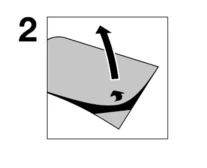
The following pictogram illustrates how to take Pradaxa capsules out of the blister
Tear off one individual blister from the blister card along the perforated line
Peel off the backing foil and remove the capsule.
- Do not push the capsules through the
- blister foil.
- Do not peel off the blister foil until a capsule is required.
Change of anticoagulant treatment
Without specific guidance from your doctor do not change your anticoagulant treatment.
If you take more Pradaxa than you should
Taking too much of this medicine increases the risk of bleeding. Contact your doctor immediately if you have taken too many capsules. Specific treatment options are available.
If you forget to take Pradaxa
A forgotten dose can still be taken up to 6 hours prior to the next due dose.
A missed dose should be omitted if the remaining time is below 6 hours prior to the next due dose.
Do not double a dose to make up for a forgotten dose.
If you stop taking Pradaxa
Take Pradaxa exactly as prescribed. Do not stop taking this medicine without talking to your doctor first, because the risk of developing a blood clot could be higher if you stop treatment too early. Contact your doctor if you experience indigestion after taking Pradaxa.
If you have any further questions on the use of this medicine, ask your doctor or pharmacist.
4. Possible side effects
Like all medicines, this medicine can cause side effects, although not everybody gets them.
Pradaxa affects blood clotting, so most side effects are related to signs such as bruising or bleeding. Major or severe bleeding may occur, these constitute the most serious side effects and, regardless of location, may become disabling, life-threatening or even lead to death. In some cases these bleedings may not be obvious.
If you experience any bleeding event that does not stop by itself or if you experience signs of excessive bleeding (exceptional weakness, tiredness, paleness, dizziness, headache or unexplained swelling) consult your doctor immediately. Your doctor may decide to keep you under closer observation or change your medicine.
Tell your doctor immediately, if you experience a serious allergic reaction which causes difficulty in breathing or dizziness.
Possible side effects are listed below, grouped by how likely they are to happen.
Prevention of brain or body vessel obstruction by blood clot formation developing after abnormal heart beats
Common (may affect up to 1 in 10 people):
- Bleeding may happen from the nose, into the stomach or bowel, from penis/vagina or urinary tract (incl. blood in the urine that stains the urine pink or red), or under the skin
- A fall in the number of red cells in the blood
- Belly ache or stomach ache
- Indigestion
- Frequent loose or liquid bowel movements
- Feeling sick
Uncommon (may affect up to 1 in 100 people):
- Bleeding
- Bleeding may happen from piles, from the rectum, or in the brain
- Haematoma formation
- Coughing of blood or blood stained sputum
- A fall in the number of platelets in the blood
- A fall in the amount of haemoglobin in the blood (the substance in the red blood cells)
- Allergic reaction
- Sudden change of the skin which affects its colour and appearance
- Itching
- Ulcer in the stomach or bowel (incl. ulcer in the gullet)
- Inflammation of the gullet and stomach
- Reflux of gastric juice into the gullet
- Vomiting
- Difficulty in swallowing
- Unusual laboratory test results on liver function
Rare (may affect up to 1 in 1 000 people):
- Bleeding may happen into a joint, from a surgical incision, from an injury, from the site of entry of an injection or from the site of entry of a catheter into a vein
- Serious allergic reaction which causes difficulty in breathing or dizziness
- Serious allergic reaction which causes swelling of the face or throat
- Skin rash notable for dark red, raised, itchy bumps caused by an allergic reaction
- A decrease in the proportion of blood cells
- Liver enzymes increased
- Yellowing of the skin or whites of the eyes, caused by liver or blood problems
Not known (frequency cannot be estimated from the available data):
- Difficulty in breathing or wheezing
- Decreases in the number or even lack of white blood cells (which help to fight infections)
- Hair loss
In a clinical trial the rate of heart attacks with Pradaxa was numerically higher than with warfarin. The overall occurrence was low.
Treatment of blood clots in the veins of your legs and lungs including prevention of blood clots from re-occurring in the veins of your legs and/or lungs
Common (may affect up to 1 in 10 people):
- Bleeding may happen from the nose, into the stomach or bowel, from the rectum, from penis/vagina or urinary tract (incl. blood in the urine that stains the urine pink or red), or under the skin
- Indigestion
Uncommon (may affect up to 1 in 100 people):
- Bleeding
- Bleeding may happen into a joint or from an injury
- Bleeding may happen from piles
- A fall in the number of red cells in the blood
- Haematoma formation
- Coughing of blood or blood stained sputum
- Allergic reaction
- Sudden change of the skin which affects its colour and appearance
- Itching
- Ulcer in the stomach or bowel (incl. ulcer in the gullet)
- Inflammation of the gullet and stomach
- Reflux of gastric juice into the gullet
- Feeling sick
- Vomiting
- Belly ache or stomach ache
- Frequent loose or liquid bowel movements
Unusual laboratory test results on liver function
- Liver enzymes increased
Rare (may affect up to 1 in 1 000 people):
- Bleeding may happen, from a surgical incision, or from the site of entry of an injection or from the site of entry of a catheter into a vein or from the brain
- A fall in the number of platelets in the blood
- Serious allergic reaction which causes difficulty in breathing or dizziness
- Serious allergic reaction which causes swelling of the face or throat
- Skin rash notable for dark red, raised, itchy bumps caused by an allergic reaction
- Difficulty in swallowing
Not known (frequency cannot be estimated from the available data):
- Difficulty in breathing or wheezing
- A fall in the amount of haemoglobin in the blood (the substance in the red blood cells)
- A decrease in the proportion of blood cells
- Decreases in the number or even lack of white blood cells (which help to fight infections)
- Yellowing of the skin or whites of the eyes, caused by liver or blood problems
- Hair loss
In the trial program the rate of heart attacks with Pradaxa was higher than with warfarin. The overall occurrence was low. No imbalance in the rate of heart attacks was observed in patients treated with dabigatran versus patients treated with placebo.
Treatment of blood clots and prevention of blood clots from reoccurring in children
Common (may affect up to 1 in 10 people):
- A fall in the number of red cells in the blood
- A fall in the number of platelets in the blood
- Skin rash notable for dark red, raised, itchy bumps caused by an allergic reaction
- Sudden change of the skin which affects its colour and appearance
- Haematoma formation
- Nosebleed
- Reflux of gastric juice into the gullet
- Vomiting
- Feeling sick
- Frequent loose or liquid bowel movements
- Indigestion
- Hair loss
- Liver enzymes increased
Uncommon (may affect up to 1 in 100 people):
- Decrease in the number of white blood cells (which help to fight infections)
- Bleeding may happen into the stomach or bowel, from the brain, from the rectum, from penis/vagina or urinary tract (incl. blood in the urine that stains the urine pink or red), or under the skin
- A fall in the amount of haemoglobin in the blood (the substance in the red blood cells)
- A decrease in the proportion of blood cells
- Itching
- Coughing of blood or blood stained sputum
- Belly ache or stomach ache
- Inflammation of the gullet and stomach
- Allergic reaction
- Difficulty in swallowing
- Yellowing of the skin or whites of the eyes, caused by liver or blood problems
Not known (frequency cannot be estimated from the available data):
- Lack of white blood cells (which help to fight infections)
- Serious allergic reaction which causes difficulty in breathing or dizziness
- Serious allergic reaction which causes swelling of the face or throat
- Difficulty in breathing or wheezing
- Bleeding
- Bleeding may happen into a joint or from an injury, from a surgical incision, or from the site of entry of an injection or from the site of entry of a catheter into a vein
- Bleeding may happen from piles
- Ulcer in the stomach or bowel (incl. ulcer in the gullet)
- Unusual laboratory test results on liver function
Reporting of side effects
If you get any side effects, talk to your doctor or pharmacist. This includes any possible side effects not listed in this leaflet.
You can also report side effects directly via the Yellow Card Scheme at: www.mhra.gov.uk/yellowcard or search for MHRA Yellow Card in the Google Play or Apple App Store.
By reporting side effects, you can help provide more information on the safety of this medicine.
5. How to store Pradaxa
Keep this medicine out of the sight and reach of children.
Do not use this medicine after the expiry date which is stated on the carton, blister or bottle after “EXP”. The expiry date refers to the last day of that month.
Store in the original package in order to protect from moisture.
If the tablets become discoloured or show any signs of deterioration, seek the advice of your pharmacist who will advise you what to do.
Do not throw away any medicines via wastewater. Ask your pharmacist how to throw away medicines you no longer use. These measures will help protect the environment.
6. Contents of the pack and other information
What Pradaxa contains
- The active substance is dabigatran. Each hard capsule contains 150 mg dabigatran etexilate (as mesilate).
- The other ingredients are tartaric acid, acacia, hypromellose, dimeticone 350, talc, and hydroxypropylcellulose.
- The capsule shell contains carrageenan, potassium chloride, titanium dioxide, indigo carmine, and hypromellose.
- The black printing ink contains shellac, iron oxide black and potassium hydroxide.
What Pradaxa looks like and contents of the pack
Pradaxa 150 mg are hard capsules (approx. 22 x 8 mm) with an opaque, light blue-coloured cap and an opaque, white body. The Boehringer Ingelheim logo is printed on the cap and “R150” on the body of the capsule.
Pradaxa is available in packs containing 60 x 1 capsules in aluminium perforated unit dose white blisters.
Manufacturers
Boehringer Ingelheim Pharma GmbH & Co. KG,
Binger Strasse 173, 55216 Ingelheim am Rhein, Germany
Boehringer Ingelheim France,
100-104 avenue de France, 75013 Paris, France
Procured from within the EU
Product Licence holder: Ecosse Pharmaceuticals Limited,
3 Young Place, East Kilbride G75 0TD.
Re-packaged by Munro Wholesale Medical Supplies Limited,
3 Young Place, East Kilbride G75 0TD.
PL 19065/0853
This leaflet was revised: 23.04.2025
E0853/2 02.24
For any information about this medicine, please contact
Ecosse Pharmaceuticals Limited
Tel: 01355 574450
If you are blind or partially sighted and require this leaflet in a different format, call 01355 574450 and ask for the Regulatory Department.
Pradaxa® is a registered trade mark of: Boehringer Ingelheim Pharma GmbH & Co. KG