


Patient leaflet - Pegasys 90 micrograms solution for injection in Pre-filled syringe
1. What Pegasys is and what it is used for
- if you have ever had depression or symptoms associated with depression (e.g. feelings of sadness, dejection, etc.).
2. What you need to know before you use Pegasys
3. How to use Pegasys
if you are an adult who has or had a history of substance abuse (e.g. alcohol or drugs)
Children and adolescents
4. Possible side effects
Pegasys use is restricted to children and adolescents with chronic hepatitis C aged 5 years and above or children and adolescents with chronic hepatitis B aged 3 years and above. Pegasys must not be given to children below the age of 3 years because it contains benzyl alcohol and may cause toxic reactions and allergic reactions in these children.
5. How to store Pegasys
- if you have psoriasis, it may get worse during treatment with Pegasys.
6. Contents of the pack and other information
- if you have a problem with your liver other than hepatitis B or C.
- if you have diabetes or high blood pressure, your doctor may ask you to have an eye examination.
- What Pegasys is and what it is used for
if you have been told you have VKH syndrome.
- If your child has or has ever had a psychiatric disorder, talk to your doctor, who will monitor your child for signs or symptoms of depression (see section 4).
- if you have thyroid disease that is not well controlled with medicines.
- if you have ever had anaemia.
Pegasys contains the active substance peginterferon alfa-2a, which is a long-acting interferon. Interferon is a protein that modifies the response of the body's immune system to help fight infections and severe diseases. Pegasys is used to treat chronic hepatitis B or chronic hepatitis C in adults. It is also used to treat chronic hepatitis B in children and adolescents aged 3 years and older and chronic hepatitis C in children and adolescents aged 5 years and older, who have not been treated before. Both chronic hepatitis B and C are viral infections of the liver.
if you have had an organ transplant (liver or kidney) or have one planned in the near future.
- When receiving Pegasys, your child may have slower growth and development (see section 4).
if you are coinfected with HIV and treated with anti HIV medicinal products.
Other medicines and Pegasys
if you have been withdrawn from previous therapy for Hepatitis C because of anaemia or low blood count.
peripheral neuropathy (numbness, tingling, and/or burning sensations in the arms and/or legs). Therefore, the combination of Pegasys with telbivudine is contraindicated. Tell your doctor or pharmacist if you are being treated with telbivudine.
Tell your doctor if you are taking medicines for asthma, because the dose for your asthma medicine may need to be changed.
Patients who also have HIV infection: Tell your doctor if you are taking anti-HIV therapy. Lactic acidosis and worsening liver function are side effects associated with Highly Active Anti-Retroviral Therapy (HAART), an HIV treatment. If you are receiving HAART, the addition of Pegasys + ribavirin may increase your risk of lactic acidosis or liver failure. Your doctor will monitor you for signs and symptoms of these conditions. Patients receiving zidovudine in combination with ribavirin and alfa interferons are at increased risk of developing anaemia. Patients receiving azathioprin in combination with ribavirin and peginterferon are at increased risk of developing severe blood disorders. Please be sure to read the ribavirin package leaflet also.
Tell your doctor or pharmacist if you are taking, have recently taken or might take any other medicines.
Pregnancy, breast-feeding and fertility
If you are pregnant or breast-feeding, think you may be pregnant or are planning to have a baby, ask your doctor or pharmacist for advice before taking this medicine. When Pegasys is used in combination with ribavirin, both male and female patients must take special precautions in their sexual activity if there is any chance for pregnancy to occur, as ribavirin can be very damaging to an unborn baby:
- if you are a woman of childbearing potential who is taking Pegasys in combination with ribavirin, you must have a negative pregnancy test before treatment, each month during therapy and for the 4 months after treatment is stopped. You must use an effective contraceptive during the time you are taking the treatment and for 4 months after stopping treatment. This can be discussed with your doctor.
- if you are a man who is taking Pegasys in combination with ribavirin, do not have sex with a pregnant woman unless you use a condom. This will lessen the chance for ribavirin to be left in the woman’s body. If your female partner is not pregnant now, but is of childbearing potential, she must be tested for pregnancy each month during treatment and for the 7 months after treatment has stopped. You or your partner must use an effective contraceptive during the time you are taking the treatment and for 7 months after stopping treatment. This can be discussed with your doctor.
Ask your doctor or pharmacist for advice before taking any medicine. It is not known whether this product is present in human milk. Therefore, do not breast-feed an infant if you are taking Pegasys. In combination therapy with ribavirin, take notice of the respective informing texts of ribavirin containing medicinal products.
Refer also to the package leaflets of any other medicines that are used in combination with Pegasys.
and take your next injection on Wednesday (5 days after your Friday dose). Your next injection will be on the Monday, 5 days later after the Wednesday injection. You are now back on your regularly scheduled day and should continue your injections every Monday.
Very common side effects with the combination of Pegasys and ribavirin (may affect more than 1 in 10 people) are:
Use in children and adolescents
Your doctor has determined the exact dose of Pegasys for your child and will tell you how often to use it. The usual dose of Pegasys is based on your child’s height and weight. If necessary, the dose may be changed during treatment. It is recommended that Pegasys pre-filled syringes be used for children and adolescents, as they allow for dose adjustments. Do not exceed the recommended dose.
Metabolic disorders: Loss of appetite
Driving and using machines
Psychiatric and nervous system disorders: Feeling depressed (feeling low, feeling bad about yourself or feeling hopeless), anxiety, inability to sleep, headache, difficulty concentrating and dizziness
Do not drive or use machinery if you feel drowsy, tired, or confused while taking Pegasys.
If you realise you missed your injection 6 days after it was scheduled, you should wait and take your dose on the next day, your regularly scheduled day. Contact your doctor or pharmacist if you need any help determining how to manage a missed dose of Pegasys.
The duration of combination treatment in children with chronic hepatitis C varies from 6 to 12 months depending on the type of virus your child is infected with and their response to therapy. In chronic hepatitis B the duration of Pegasys treatment is 48 weeks. Please check with your doctor and follow the recommended duration of treatment. Pegasys injection is normally taken at bedtime.
Breathing disorders: Cough, shortness of breath
Benzyl alcohol
Digestive system disorders: Diarrhoea, nausea, abdominal pain Skin disorders: Loss of hair, and skin reactions (including itching, dermatitis and dry skin)
Pegasys contains 5 mg benzyl alcohol in each pre-filled syringe which is equivalent to 10 mg/ml.
Do not take a double dose to make up for a forgotten dose.
If you have any further questions on the use of this medicine, ask your doctor, pharmacist or nurse.
Muscle and bone disorders: Pain in joints and muscles
Benzyl alcohol may cause toxic reactions and allergic reactions.
General disorders: Fever, weakness, tiredness, shaking, chills, pain, injection site irritation and irritability (getting easily upset)
Pegasys is intended for subcutaneous use (under the skin). This means that Pegasys is injected with a short needle into the fatty tissue under the skin in the abdomen or thigh. If you are injecting this medicine yourself, you will be instructed how to give the injection. Detailed instructions are provided at the end of this leaflet (see “How to inject Pegasys”).
Benzyl alcohol has been linked with the risk of severe side effects including breathing problems (called “gasping syndrome”) in young children. Pegasys must not be given to premature babies, neonates or children up to 3 years old.
- 4. Possible side effects
 10239862 GB
Common side effects with the combination of Pegasys and ribavirin (may affect up to 1 in 10 people) are:
Like all medicines, this medicine can cause side effects, although not everybody gets them.
Ask your doctor or pharmacist for advice if you are pregnant or breast-feeding, or if you have a liver or kidney disease. This is because large amounts of benzyl alcohol can build-up in your body and may cause side effects (called “metabolic acidosis”).
Infections: Fungal, viral and bacterial infections. Upper respiratory infection, bronchitis, fungal infection of the mouth and herpes (a common recurring viral infection affecting the lips, mouth)
Use Pegasys exactly as described by your doctor, for as long as prescribed by your doctor.
Some people get depressed when taking Pegasys alone or in combination treatment with ribavirin, and in some cases people have had suicidal thoughts or aggressive behaviour (sometimes directed against others such as thoughts about threatening the life of the others). Some patients have actually committed suicide. Be sure to seek emergency care if you notice that you are becoming depressed or have suicidal thoughts or change in your behaviour. You may want to consider asking a family member or close friend to help you stay alert to signs of depression or changes in your behaviour.
If you have the impression that the effect of Pegasys is too strong or too weak, talk to your doctor or pharmacist.
Blood disorders: Low platelet count (affecting the clotting ability), anaemia (low red cell count) and enlarged lymph glands
Sodium
Combination therapy with ribavirin in chronic hepatitis C
Pegasys contains less than 1 mmol sodium (23 mg) per dose, that is to say essentially “sodium -free”.
In the case of combination therapy with Pegasys and ribavirin, please follow the dosing regimen recommended by your doctor.
Hormone system disorders: Overactive and underactive thyroid gland Psychiatric and nervous system disorders: Mood /emotion changes, aggression, nervousness, decreased sexual desire, poor memory, fainting, decreased muscle strength, migraine, numbness, tingling, burning sensation, tremor, changes in the sense of taste, nightmares, sleepiness
Combination therapy with other medicines in chronic hepatitis C In the case of combination therapy with Pegasys, please follow the dosing regimen recommended by your doctor and refer also to the package leaflets of any other medicines that are used in combination with Pegasys.
- 3.
How to use Pegasys
Growth and development (children and adolescents):
Always take this medicine exactly as your doctor has told you. Check with your doctor or pharmacist if you are not sure.
Eye disorders: Blurry vision, eye pain, eye inflammation and dry eyes Ear disorders: ear pain
Some children and adolescents treated with Pegasys for chronic hepatitis B for 48 weeks did not grow or gain weight as much as expected for their age. It is not yet known whether they will return to their projected height and weight after completing treatment.
Heart and blood vessel disorders: Rapid heart rate, pulsation of the heart beats, swelling in the extremities, flushing
If you use more Pegasys than you should
Pegasys dosing
Contact your doctor or pharmacist as soon as possible.
Your doctor has determined the exact dose of Pegasys, and will tell you how often to use it. If necessary, the dose may be changed during treatment. Do not exceed the recommended dose.
Breathing disorders: Shortness of breath with activity, nose bleeds, nose and throat inflammation, infections of the nose and sinuses (air-filled spaces found in the bones of the head and face), runny nose, sore throat
With up to one year of treatment with Pegasys in combination with ribavirin, some children and adolescents with chronic hepatitis C did not grow or gain weight as much as expected. While most children returned to their projected height within two years after completing treatment, and the majority of the remaining children within six years after completing treatment, it remains possible that Pegasys may affect the final adult height.
If you forget to take Pegasys
If you realise you missed your injection 1 or 2 days after it was scheduled, you should inject your recommended dose as soon as possible. Take your next injection on the regularly scheduled day.
Digestive system disorders: Vomiting, indigestion, difficulty swallowing, mouth ulceration, bleeding gums, inflammation of tongue and mouth, flatulence (excess amount of air or gases), dry mouth and loss of weight
Pegasys is used alone only if you cannot take ribavirin for any reason
Pegasys given alone or in combination with ribavirin is usually given at a dose of 180 micrograms once a week.
If you realise you missed your injection 3 to 5 days after it was scheduled, you should take your injection at the recommended dose as soon as possible. Take your next doses at 5 day intervals until you return to your regularly scheduled day of the week.
Skin disorders: Rash, increased sweating, psoriasis, hives, eczema, sensitivity to sunlight, night sweats
Tell your doctor immediately if you notice any of the following side effects: severe chest pain; persistent cough; irregular heartbeat; trouble breathing; confusion; depression; severe stomach pain; blood in stool (or black, tarry stools); severe nosebleed; fever or chills; problems with your eyesight. These side effects can be serious and you may need urgent medical attention.
The duration of combination treatment varies from 4 to 18 months depending on the type of virus you are infected with, on treatment response and whether you have been treated before. Please check with your doctor and follow the recommended duration of treatment.
Muscle and bone disorders: Back pain, joint inflammation, muscle weakness, bone pain, neck pain, muscle pain, muscle cramps
As an example: Your regular weekly Pegasys injection is on Monday. You remember on Friday that you forgot to take your injection on Monday (4 days late). You should inject your regularly scheduled dose immediately on Friday
Pegasys injection is normally taken at bedtime.
10239862 GB
| Creator | Date | Signature | Proofreader | |||
| Perigord / MAH | 16 Jun 2021 | 2 | ||||
| Genisys-No. | 10239862 | |||||
| make-up code: | GB | |||||
| Type size: | 8.5 pt | |||||
| Printing colour: | ||||||
| Format: | ||||||
| Drawing Norm: | NP9345 11.08.10 97.4.3525 - 4 | |||||
Reproductive system disorders: Impotence (inability to maintain an erection) General disorders: Chest pain, flu-like illness, malaise (not feeling well), lethargy, hot flushes, thirst
Uncommon side effects with the combination of Pegasys and ribavirin (may affect up to 1 in 100 people) are:
Infections: Lung infection, skin infections
Neoplasms benign and malignant disorders: Liver tumour
Immune system disorders: Sarcoidosis (areas of inflamed tissue occurring throughout the body), inflammation of the thyroid
Hormone system disorders: Diabetes (high blood sugar)
Metabolic disorders: Dehydration
Psychiatric and nervous system disorders: Thoughts of suicide, hallucinations (severe problems with personality and deterioration in normal social functioning), peripheral neuropathy (disorder of the nerves affecting the extremities) Eye disorders: Bleeding in the retina (back of the eye)
Ear disorders: Hearing loss
Heart and blood vessel disorders: High blood pressure
Breathing disorders: Wheezing
Digestive system disorders: Gastrointestinal bleeding
Liver disorders: Poor functioning of the liver
Rare side effects with the combination of Pegasys and ribavirin (may affect up to 1 in 1000 people) are:
Infections: Infection of the heart, infection of the external ear
Blood disorders: Severe reduction in red blood cells, white blood cells and platelets Immune system disorders: Severe allergic reaction, systemic lupus erythematosus (an illness where the body attacks its own cells), rheumatoid arthritis (an autoimmune disease)
Hormone system disorders: Diabetic ketoacidosis, a complication of uncontrolled diabetes
Psychiatric and nervous system disorders: Suicide, psychotic disorders (severe problems with personality and deterioration in normal social functioning), coma (a deep prolonged unconsciousness), seizures, facial palsy (weakness of the facial muscle)
Eye disorders: Inflammation and swelling of the optic nerve, inflammation of the retina, ulceration of the cornea
Heart and blood vessel disorders: Heart attack, heart failure, heart pain, rapid heart rhythm, rhythm disorders or inflammation of the lining of the heart and cardiac muscle, bleeding in the brain and inflammation in the vessels
Breathing disorders: Interstitial pneumonia (inflammation of the lungs including fatal outcome), blood clots in the lung
Digestive system disorders: Stomach ulcer, inflammation of the pancreas Liver disorders: Liver failure, bile duct inflammation, fatty liver
| Date | Signature |
Muscle and bone disorders: Inflammation of the muscles
Kidney disorders: Kidney failure
Injury or poisoning: Substance overdose
Very rare side effects with the combination of Pegasys and ribavirin (may affect up to 1 in 10,000 people) are:
Blood disorders: Aplastic anaemia (failure of the bone marrow to produce red blood cells, white blood cells and platelets)
Immune system disorders: Idiopathic (or thrombotic) thrombocytopenic purpura (increased bruising, bleeding, decreased platelets, anaemia and extreme weakness) Eye disorders: Loss of vision
Skin disorders: Toxic epidermal necrolysis/Stevens Johnson Syndrome/erythema multiforme (a spectrum of rashes with varying degrees of severity including death which may be associated with blisters in the mouth, nose, eyes and other mucosal membranes and sloughing of the affected area of the skin), angioedema (swelling in the skin and mucosa)
Side effects with unknown frequency:
Blood disorders: Pure red cell aplasia (a severe form of anemia where red blood cell production is decreased or stopped); it can result in symptoms such as feeling very tired with no energy
Immune system disorders: Vogt Koyanagi Harada disease – a rare disease characterised by loss of vision, hearing and skin pigmentation; liver and kidney transplant rejections
Psychiatric and nervous system disorders: Mania (episodes of exaggerated elevation of mood) and bipolar disorders (episodes of exaggerated elevation of mood alternating with sadness and hopelessness); thoughts about threatening the life of others, stroke
Eye disorders: Rare form of retinal detachment with fluid in the retina Heart and blood vessel disorders: Peripheral ischaemia (insufficient blood supply to the extremities)
Digestive system disorders: Ischaemic colitis (insufficient blood supply to the bowels), changes in the colour of the tongue
Muscle and bone disorders: Serious muscle damage and pain
Pulmonary arterial hypertension - a disease of severe narrowing of the blood vessels in the lungs resulting in high blood pressure in the blood vessels that carry blood from the heart to the lungs. This may occur in particular in patients with risk factors such as HIV infection or severe liver problems (cirrhosis). The side effect may develop at various time points during treatment, typically several months after starting treatment with Pegasys.
When Pegasys is used alone in hepatitis B or C patients, some of these effects are less likely to occur
Reporting of side effects
If you get any side effects, talk to your doctor, pharmacist or nurse. This includes any possible side effects not listed in this leaflet. You can also report side effects directly (see details below). By reporting side effects you can help provide more information on the safety of this medicine.
United Kingdom
Yellow Card Scheme
Website: www.mhra.gov.uk/yellowcard or search
for MHRA Yellow Card in the Google Play or Apple App Store
- 5. How to store Pegasys
Keep this medicine out of the sight and reach of children.
Do not use this medicine after the expiry date which is stated on the label. The expiry date refers to the last day of that month.
Store in a refrigerator (2°C - 8°C). Do not freeze.
Keep the pre-filled syringe in the outer carton in order to protect from light.
Do not use this medicine if you notice the syringe or needle packaging is damaged, if the solution is cloudy or if it has floating particles or if the medicine is any colour besides colourless to light yellow.
Do not throw away any medicines via wastewater or household waste. Ask your pharmacist how to throw away medicines you no longer use. These measures will help protect the environment.
- 6. Contents of the pack and other information
What Pegasys contains
- The active substance is peginterferon alfa-2a. Each pre-filled syringe of 0.5 ml solution contains 90, 135 or 180 micrograms peginterferon alfa-2a.
- The other ingredients are sodium chloride, polysorbate 80, benzyl alcohol, sodium acetate, acetic acid and water for injections.
What Pegasys looks like and contents of the pack
Pegasys is presented as a solution for injection in a pre-filled syringe (0.5 ml) with a separate injection needle.
Pegasys 90 micrograms solution for injection in pre-filled syringe The syringe contains graduation marks corresponding to 90 micrograms (mcg), 65 mcg, 45 mcg, 30 mcg, 20 mcg and 10 mcg. It is available in packs containing 1 pre-filled syringe.
Pegasys 135 micrograms solution for injection in pre-filled syringe The syringe contains graduation marks corresponding to 135 micrograms (mcg), 90 mcg and 45 mcg. It is available in packs containing containing 1, 4 or a multipack of 12 (2 packs of 6) pre-filled syringes. Not all pack-sizes may be marketed.
Pegasys 180 micrograms solution for injection in pre-filled syringe The syringe contains graduation marks corresponding to 180 micrograms (mcg), 135 mcg and 90 mcg. It is available in packs containing containing 1, 4 or a multipack of 12 (2 packs of 6) pre-filled syringes. Not all pack-sizes may be marketed.
Marketing Authorisation Holder
Roche Registration GmbH
Emil-Barell-Strasse 1
79639 Grenzach-Wyhlen
Germany
Manufacturer
Roche Pharma AG
Emil-Barell-Str.1
D-79639 Grenzach-Wyhlen
Germany
For any information about this medicine, please contact the local representative of the Marketing Authorisation Holder.
United Kingdom
Roche Products Ltd.
Tel: +44 (0) 1707 366000
This leaflet was last revised in June 2021
How to inject Pegasys
The following instructions explain how to use Pegasys pre-filled syringes to inject yourself or your child. Please read the instructions carefully and follow them step by step. Your doctor or his/her assistant will instruct you on how to give the injections.
Getting ready
Wash your hands carefully before handling any of the items. Collect the necessary items before beginning:
Included in the pack:
- a pre-filled syringe of Pegasys
- an injection needle
Not included in the pack:
- a cleansing swab
- small bandage or sterile gauze
- an adhesive bandage
- a container for the waste material
Preparing the syringe and needle for injection
- Remove the protective cap that covers the back of the needle (1-2).
- Remove the rubber cap from the syringe (3). Do not touch the tip of the syringe.
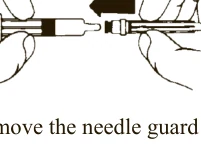
- Place the needle firmly on the tip of the syringe (4).
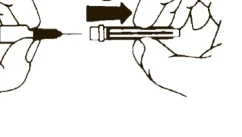
Remove the needle guard from the syringe needle (5).
- To remove air bubbles from the syringe, hold the syringe with the needle pointing up. Tap the syringe gently to bring the bubbles to the top. Push the plunger up slowly to the correct dose. Replace the needle guard and place the syringe in a horizontal position until ready for use.
- Allow the solution to reach room temperature before injection or warm the syringe between your palms.
- Visually inspect the solution prior to administration: do not use if it is discoloured or if particles are present.
You are now ready to inject the dose.
Injecting the solution
- Select the injection site in the abdomen or thigh (except your navel or waistline). Change your injection site each time.
- Clean and disinfect the skin where the injection is to be made with a cleansing swab.
- Wait for the area to dry.
- Remove the needle guard.
- With one hand, pinch a fold of loose skin. With your other hand hold the syringe as you would a pencil.
- Insert the needle all the way into the pinched skin at an angle of 45° to 90° (6).
- Inject the solution by gently pushing the plunger all the way down from the appropriate graduation.
- Pull the needle straight out of the skin.
- Press the injection site with a small bandage or sterile gauze if necessary for several seconds.
Do not massage the injection site. If there is bleeding, cover with an adhesive bandage.
Disposal of the injection materials
The syringe, needle and all injection materials are intended for single use and must be discarded after the injection. Dispose of the syringe and needle safely in a closed container. Ask your doctor, hospital or pharmacist for an appropriate container.