


Patient leaflet - Ondansetron 4 mg / 5 ml oral solution
1. What Ondansetron oral solution is and what it is used for
Important information about some of the ingredients of Ondansetron oral solution
Ondansetron oral solution contains a medicine called ondansetron. This belongs to a group of medicines called anti-emetics, also known as serotonin 5HT3 antagonists.
Ondansetron oral solution is used for:
preventing nausea and vomiting caused by
chemotherapy (in adults and children) or radiotherapy for cancer (adults only)
preventing nausea and vomiting after surgery
(adults only).
2. What you need to know before you take Ondansetron oral solution
Ondansetron oral solution contains 2.1g of sorbitol per 5ml. Sorbitol is a source of fructose. If your doctor has told you that you (or your child) have an intolerance to some sugars or if you have been diagnosed with hereditary fructose intolerance (HFI), a rare genetic disorder in which a person cannot break down fructose, talk to your doctor before you (or your child) take or receive this medicine. Sorbitol may cause gastrointestinal discomfort and mild laxative effect.
Ondansetron oral solution contains 10mg of sodium benzoate per 5ml which may increase jaundice (yellowing of the skin and eyes) in newborn babies (up to 4 weeks old).
Do not take Ondansetron oral solution if:
you are taking apomorphine (used to treat
Parkinson’s disease)
you are allergic (hypersensitive) to ondansetron or
any of the other ingredients in Ondansetron oral solution (listed in Section 6).
Warnings and precautions
Talk to your doctor, nurse or pharmacist before taking Ondansetron oral solution if:
you have or ever had heart problems (e.g.
congestive heart failure which causes shortness of breath and swollen ankles)
- you have an uneven heart beat (arrhythmias)
you are allergic (hypersensitivity) to medicines
similar to ondansetron, such as dolasetron, granisetron or palonosetron
- you have problem with your liver
you have a blockage in your gut or bowel or if you
have consitpation
you know that the levels of potassium, sodium,
magnesium or chloride in your body are very low or very high.
This medicine contains less than 1 mmol (23mg) sodium, that is to say essentially 'sodium-free'.
This medicine contains small amounts of ethanol (alcohol), less than 100 mg per 5 ml.
This medicine contains 0.0003mg of benzyl alcohol per 5ml. Benzyl alcohol may cause allergic reactions. Do not give to your newborn baby (up to 4 weeks old), unless recommended by your doctor. There is an increased risk due to accumulation in young children.
Benzyl alcohol has been linked with the risk of severe side effects including breathing problems (called “gasping syndrome”) in young children.
Do not use for more than a week in young children (less than 3 years old), unless advised by your doctor or pharmacist.
Ask your doctor or pharmacist for advice if you are pregnant or breastfeeding. This is because large amounts of benzyl alcohol can build-up in your body and may cause side effects (called
“metabolic acidosis”).
Other medicines and Ondansetron oral solution
Please tell your doctor or pharmacist if you are taking, have recently taken or might take any other medicines. This includes medicines that you buy without a prescription and herbal medicines. This is because Ondansetron oral solution can affect the way some medicines work. Also some other medicines can affect the way Ondansetron oral solution works.
Make sure your doctor knows if you are taking any of the following medicines:
Carbamazepine and phenytoin used to treat
epilepsy or rifampicin used to treat infections such as tuberculosis (TB): ondansetron may not work as well;
Atenolol to treat high blood pressure or angina
(pains in your chest): use with ondansetron may cause a change to your heart rate;
Antibiotics such as erythromycin to treat bacterial
infections and Antifungals such as ketoconazole to treat fungal infections: use with ondansetron may increase the risk of irregular heartbeats or changes to your heart rate;
Anti-arrhythmics such as amiodarone to control
your heart rate: use with ondansetron may cause a change to your heart rate;
Beta-blocker medicines used to treat certain heart
or eye problems, anxiety or prevent migraines;
Tramadol, a strong pain killer: ondansetron may
stop the tramadol working properly;
Medicines that affect the heart (such as haloperidol
or methadone);
Cardiotoxic drugs such as some cancer medicines
including anthracyclines (e.g. doxorubicin and daunorubicin) and trastuzumab: use with ondansetron may increase the risk of irregular heartbeats or changes to your heart rate;
SSRIs (selective serotonin reuptake inhibitors) used
to treat depression and/or anxiety including fluoxetine, paroxetine, sertraline, fluvoxamine, citalopram, escitalopram;
Ask your doctor or pharmacist for advice if you have a liver or kidney disease. This is because
large amounts of benzyl alcohol can build-up in your body and may cause side effects (called
“metabolic acidosis”).
Ondansetron oral solution also contains 0.1023mg of propylene glycol.
3. How to take Ondansetron oral solution
Always take Ondansetron oral solution exactly as your doctor or pharmacist has told you. You should check with your doctor, nurse or pharmacist if you are not sure. The dose you have been prescribed will depend on the treatment you are having.
Do not mix Ondansetron oral solution with anything (not even water) before swallowing it.
The recommended dose is-Adults and the elderly
During chemotherapy or radiotherapy
- the usual dose is two 5ml spoonfuls (8mg ondansetron);
- this is taken 1 to 2 hours before your therapy starts;
- take two 5ml spoonfuls (8mg ondansetron) 12 hours later;
- take two 5ml spoonfuls (8mg ondansetron) twice a day for up to five days after the day of your chemo- or radiotherapy;
- if your chemotherapy is expected to make you feel, or be, very sick take 6 spoonfuls (24mg ondansetron) before therapy. Your doctor may recommend taking 12mg of dexamethasone at the same time;
- you should not take more than 32mg over a 24 hour period.
Use in children and adolescents (aged 6 months and above)
During chemotherapy or radiotherapy
- The dose depends on the weight or body surface area of the child;
- Your doctor will tell you the actual dose for your child;
Make sure the child takes the medicine as the
doctor says;
A dose range of half a 5ml spoonful (2mg
ondansetron) to two 5ml spoonfuls (8mg ondansetron) every 12 hours for up to five days is permitted.
Patients with moderate or severe liver problems
The total daily dose should not be more than 8 mg (two 5 ml spoonfuls).
Ondansetron oral solution should start to work within one or two hours of taking a dose.
If you are sick (vomit) within one hour of taking a dose
- take the same dose again
otherwise, do not take more ondansetron oral
solution than the label says.
If you continue to feel sick, tell your doctor or nurse.
If you take more Ondansetron oral solution than you should
If you or your child take more Ondansetron oral solution than you should, talk to a doctor or go to a hospital straight away. Take the medicine pack with you. In an event of overdose you may experience constipation, difficulty in seeing, low blood pressure, feeling dizzy, feeling sick, loss of consciousness, abnormal changes to ECG.
If you forget to take Ondansetron oral solution
If you forget to take a dose:
take Ondansetron oral solution as soon as possible,
then
take your next dose at the usual time (as shown on
the label)
do not take a double dose to make up for a
forgotten dose.
If you have any further questions on the use of Ondansetron oral solution, ask your doctor, pharmacist or nurse.
4. Possible side effects
Like all medicines, Ondansetron oral solution can cause side effects, although not everybody gets them. If you have any of the following rare side effects while taking your medicine tell your doctor immediately or go to the hospital straight away:
Severe allergic reaction which may include a red
lumpy skin rash (hives), difficulty with breathing, sudden wheezing, swelling of your face, mouth, lips or eyelids, a high temperature (fever) and feeling faint. If the swelling affects your throat and make breathing and swallowing difficult, go to the hospital straight away;
- Uneven, fast or slow heartbeat (palpitations);
- Chest pain;
- Irregular heartbeat;
Myocardial ischemia
signs include:
- Sudden chest pain
- Chest tightness
Other side effects include:
Very common (may affect more than 1 in 10 people)
- headache.
Common (may affect up to 1 in 10 people)
- flushing or feeling warm
- constipation
Uncommon (may affect up to 1 in 100 people)
- hiccups
low blood pressure, which can make you feel faint
or dizzy
- uneven heart beat
- chest pain
- fits (seizures)
- muscle weakness
problems controlling movement or problems with
the movement of your eyes
changes to liver function test results (if you take
ondansetron oral solution with a medicine called cisplatin).
Rare (may affect up to 1 in 1,000 people)
feeling dizzy or light headed (usually when given by
injection)
changes to your vision such as blurred vision
(usually when given by injection)
disturbance in heart rhythm (sometimes causing a
sudden loss of consciousness)
Very rare (may affect up to 1 in 10,000 people)
poor vision or temporary loss of eyesight, especially
if you are also having chemotherapy (usually when given by injection)
If you need a blood test tell your doctor you are taking this medicine as it may affect the results.
Reporting of side effects
If you get any side effects, talk to your doctor, pharmacist or nurse. This includes any possible side effects not listed in this leaflet. You can also report side effects directly via the Yellow Card Scheme at: www.mhra.gov.uk/yellowcard or search for MHRA Yellow Card in the Google Play or Apple App Store. By reporting side effects, you can help provide more information on the safety of this medicine. By reporting side effects you can help provide more information on the safety of this medicine.
5. How to store Ondansetron oral solution
Keep this medicine out of the sight and reach of children.
Do not use Ondansetron oral solution after the expiry date which is stated on the label and carton after EXP. The expiry date refers to the last day of that month.
Use within 28 days after first opening
Do not refrigerate.
Keep the bottle in the outer carton to protect from light.
Do not throw away any medicines via wastewater or household waste. Ask your pharmacist how to throw away medicines you no longer use. These measures will help protect the environment.
6. Contents of the pack and other information
What Ondansetron oral solution contains
The active substance is ondansetron. Each 5ml Ondansetron oral solution contains 4mg of ondansetron (as hydrochloride dihydrate).
The other ingredients are sorbitol solution (non-crystallising) (E420), sodium benzoate (E211), sodium citrate (E331), citric acid (for pH adjustment) (E330), strawberry flavour (contains ethanol, furaneol, benzyl alcohol, propylene glycol and butyl hydroxyl anisole) and purified water.
What Ondansetron oral solution looks like and contents of the pack
Ondansetron oral solution is a clear, colourless, strawberry flavoured solution.
Amber coloured glass bottles (Type-III) with a tamper-evident child resistant caps (constructed of a white HDPE outer, translucent polypropylene inner and LDPE tamper band) and wad.
The bottles contain 50ml of Ondansetron oral solution.
A 20ml dosing cup (graduated at 2.5ml, 5ml, 10ml, 15ml and 20ml) and a 5ml oral syringe (graduated at 0.25ml) with a bottle adaptor are provided.
Using the dosing cup:
- 1. Place the dosing cup on a flat surface so that when poured, the dose is correct. Holding the cup tipped or at an angle can make you measure the wrong amount.
- 2. Unscrew the bottle cap and pour the oral solution into the dosing cup.
- 3. Use the numbers and liquid lines on the side of the cup to pour the correct dose, as instructed by your doctor or pharmacist.
- 4. Drink the oral solution from the dosing cup
- 5. After use, replace the bottle cap. Wash the dosing
cup in warm water and allow to dry. Store out of reach of children.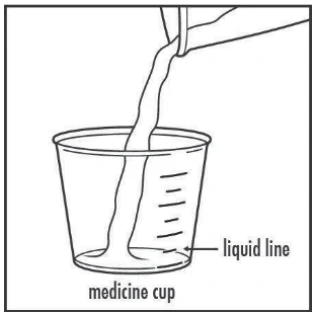
Using the oral syringe:
- 1. When you use this medicine for the first time, place the adaptor in the neck of the bottle.
- 2. Push the syringe firmly into the adaptor in the neck of the bottle.
- 3. To fill the syringe, turn the bottle upside down.While holding the syringe in place, the plunger should be pulled down gently and the medicine drawn to the corrected mark on the syringe. Your doctor will tell you the right dose for you or your child.
- 4. Turn the bottle the right way up, removing the syringe
from the adaptor by gently twisting the syringe.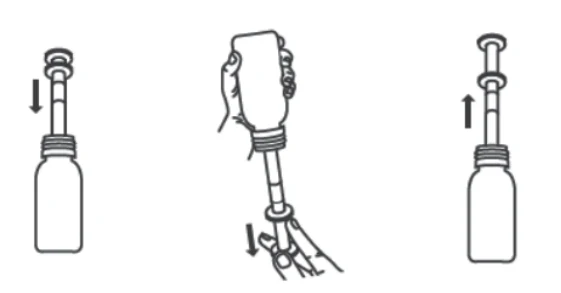
- 5. Place the end of the syringe into your mouth or the child’s mouth and gently press the plunger down to slowly release the medicine
- 6. Repeat steps 2-5, as necessary, to give the full dose.
- 7. After use, replace the bottle cap. Wash the syringe in warm water and allow to dry. Store out of reach of children.
Marketing Authorisation Holder
Somex Pharma, Ilford, Essex, IG3 8BS. UK.
Manufacturer
Kleva Pharmaceuticals SA
189 Parnithos Avenue, 136 75 Acharnai, Athens, Greece.
Other sources of information
To request a copy of this leaflet in braille or large print, please call 020 8590 9399 (UK Only).
This leaflet was last revised in 03/2026.