

Patient leaflet - Nicassist 1 mg / spray Mouth spray
1. What Nicotine mouth spray is and what it is used for
Nicotine mouth spray is a nicotine replacement therapy (NRT).
It is used to relieve and /or prevent withdrawal symptoms and reduce the cravings you get when you try to stop smoking or when cutting down the number of cigarettes you smoke.
Ideally you should always aim to stop smoking. You can use Nicotine mouth spray to achieve this by using it to completely replace all your cigarettes.
However, Nicotine mouth spray can also be used in other ways:
- If you feel unable to stop smoking completely, or wish to replace certain cigarettes, it can help you to cut down the number of cigarettes you smoke.
At those times when you can’t or do not want to smoke. For example:
- Where you don’t want to smoke and avoid harm to others e.g. children or family.
- Smoke free areas e.g. Pub, work, public transport e.g. aeroplanes.
It may also help increase your motivation to quit.
When making a quit attempt a behavioural support programme will increase your chances of success.
What does Nicotine mouth spray do?
When you stop smoking your body misses the nicotine that you have been absorbing. You may experience unpleasant feelings and a strong desire to smoke (craving). This indicates that you were dependent on nicotine.
The nicotine in Nicotine mouth spray passes quickly into your body through the lining of your mouth.
This relieves the craving for nicotine and the unpleasant withdrawal symptoms when you stop smoking, but does not give you the “buzz” you get from smoking a cigarette.
Benefits you can get from using NRT instead of smoking
For the best effect, ensure that you use Nicotine mouth spray correctly – see “How to Use Nicotine mouth spray.”
The benefits of stopping smoking far outweigh any potential risk from using nicotine from NRT. It is the toxins in cigarette smoke such as tar, lead, cyanide and ammonia that cause smoking related diseases and death, not the nicotine.
Although you may feel that smoking helps relieve anxiety and stress, it does not deal with the cause of the stress and leads to a number of serious diseases. In addition, the feeling of relaxation after smoking is temporary, with withdrawal symptoms and cravings soon returning.
NRT can help relieve nicotine withdrawal symptoms such as irritability, low mood, anxiety, restlessness and cravings when used in place of cigarettes.
Use of NRT is safer than smoking tobacco but as soon as you are ready, you should aim to stop smoking completely.
2. What you need to know before you use Nicotine mouth spray
This medicine can be used by adults and children of 12 years and over. However, some people should not use this medicine or should seek the advice of their pharmacist or doctor first.
Do not use Nicotine mouth spray:
- If you are allergic to nicotine or any of the other ingredients of this spray (listed in section 6).
- If you are under 12 years of age.
- If you are not a smoker.
Warnings and precautions
! Talk to your doctor, nurse or pharmacist before using Nicotine mouth spray
If you are pregnant or breast-feeding
- You may be able to use nicotine replacement therapy (NRT) to help you give up smoking but you should try to give up without it. See the “Pregnancy and breast-feeding” section.
- If you have small children around - doses of nicotine tolerated by adult and adolescent smokers can produce severe poisoning in small children that may be fatal. Products containing nicotine should not be left where they may be misused, handled or ingested by children.
If you are in hospital because of heart disease (including heart attack, chest pain, disorders of heart rate or rhythm, or stroke).
In other heart conditions not requiring you to be in hospital, using NRT is better than continuing to smoke.
- If you have a stomach ulcer, duodenal ulcer, inflammation of the stomach or inflammation of the oesophagus (passage between the mouth and stomach).
- If you have liver or kidney disease.
- If you have an overactive thyroid gland or have a phaeochromocytoma (a tumour of the adrenal gland that can affect blood pressure) – your doctor will have told you this.
- If you have diabetes – monitor your blood sugar levels more often when starting to use Nicotine mouth spray as you may find your insulin or medication requirements alter.
- If you tend to suffer from allergic reactions - especially a raised red and itchy rash (urticaria / hives), and/or swelling (puffiness) that can affect the eyes, lips, throat, hands, feet, genitals or other areas of the body (angio-oedema).
- If you have seizures (fits) - patients taking medicines called anticonvulsants, or who have a history of epilepsy, need to take extra caution, as nicotine has been known to cause seizures.
- If you are taking any other medicines such as theophylline, tacrine, clozapine or ropinirole. Stopping smoking may require the dose of these medicines to be adjusted.
If any of these apply, talk to your doctor, nurse or pharmacist.
Other medicines and Nicotine mouth spray
Tell your doctor or pharmacist if you are taking, have recently taken or might take any other medicines. This is especially important if you use other medicines which contain theophylline, tacrine, clozapine, ropinirole, or insulin.
Pregnancy, breast-feeding and fertility
If you are pregnant:
It is very important to stop smoking during pregnancy because it can result in poor growth of your baby. It can also lead to premature births and even stillbirths.
- 1) You should try to give up smoking without NRT. Stopping completely is by far the best option. The earlier and quicker you do this the better it is for you and your baby.
- 2) If you can’t manage this, you can use NRT as a safer alternative to smoking as the risks to your baby are far less than smoking, however you should talk to your doctor, nurse or pharmacist for advice.
Products that are used intermittently, including Nicotine mouth spray may be preferable to nicotine patches. However, patches may be more suitable if you have nausea or sickness. If you do use patches take them off before going to bed at night.
If you are breast-feeding:
- 1) You should try to give up smoking without NRT.
- 2) If you can’t manage this it is best to use NRT products such as Nicotine mouth spray that are taken intermittently (not patches), however you should talk to your doctor, nurse or pharmacist for advice. Breast-feed just before you use Nicotine mouth spray to ensure that the baby gets the smallest amount of nicotine possible.
If you do need to use NRT to help you quit, the amount of nicotine that the baby may receive is considerably smaller and less harmful than the second-hand smoke they would inhale if you smoked. Tobacco smoke produces breathing and other problems in babies and children. If your husband, partner or other family members smoke too, try to get them to give up with you.
Smoking increases the risk of infertility in women and men. The effects of therapeutic nicotine treatment on fertility is unknown.
Driving and using machines
There are no known risks associated with driving or using machinery when the Nicotine mouth spray is used according to the recommended dose.
Nicotine mouth spray contains ethanol (alcohol)
Nicotine mouth spray contains small amounts of ethanol (alcohol), the amount is less than 100 mg per spray.
3. How to use Nicotine mouth spray
Always use this medicine exactly as described in this leaflet or as your doctor, nurse or pharmacist has told you. Check with them if you are not sure.
Follow the instructions and study the picture below to ensure you use Nicotine mouth spray correctly.
Directions for use:
Spray 1-2 times between the cheek and the lower gum / teeth:
- 1. Turn the spray tube to the side.
- 2.
Direct the spray tube between the cheek and the lower gum / teeth, aiming for the inside of the cheek, avoiding the lips.
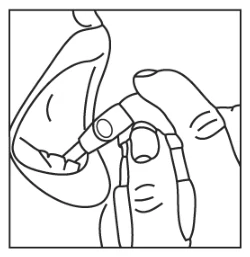
- 3. Spray 1-2 times, alternate between the left and right sides.
Do not inhale while spraying to avoid getting spray down your throat. For best results do not swallow for a few seconds after spraying.
Care should be taken not to spray the eyes whilst administering the mouth spray. If you get spray in your eye(s), rinse thoroughly with water.
Do not eat or drink when administering the mouth spray.
When you use the spray for the first time you must first prime the spray pump. Point the spray nozzle safely away from you, any adults, children or pets near you. Spray 5 times in the air until a fine spray appears. If you do not use the spray for 7 days, this priming procedure will need to be repeated.
When to use Nicotine mouth spray
If you are able to stop smoking you should use Nicotine mouth spray, when needed, in place of cigarettes. As soon you can (this could be after a number of weeks or months) you should reduce the number of sprays until you have stopped using them completely.
If you are unable to stop smoking or do not feel ready to quit at this time, you should replace as many cigarettes as possible with the mouth spray. There are toxins in cigarettes that can cause harm to your body. Nicotine mouth spray provides a safer alternative to smoking, for both you and those around you. Reducing the amount of cigarettes may also help you to become more motivated to stop smoking. As soon as you are ready you should aim to stop smoking completely.
You can also use the mouth spray on those occasions when you can’t or don’t want to smoke e.g. Social situations such as a party, in the pub or when at work.
When making a quit attempt, behavioural therapy, advice and support will normally improve the success rate. If you have quit smoking and want to stop using the mouth spray but are finding this difficult you should contact your doctor, nurse or pharmacist for advice.
Dosage information for Nicotine mouth spray
Children under 12:
Do not give this product to children under 12 years.
Adults and children aged 12 years and over:
It is important to use enough nicotine spray to control cravings.
- Use one spray first when you would normally smoke a cigarette or have cravings to smoke.
- If your cravings do not disappear within a few minutes use a second spray.
- If 2 sprays are required to control cravings, future doses may be delivered as 2 consecutive sprays.
- Most smokers will require 1 - 2 sprays every 30 minutes to 1 hour.
- Do not use more than 2 sprays per dose or 4 sprays every hour. Do not use more than 64 sprays per day – this is equivalent to 4 sprays per hour for 16 hours.
If you use more Nicotine mouth spray than you should
Overdose with nicotine could occur if you use more Nicotine spray than you should or if you smoke simultaneously with using Nicotine mouth spray.
If you have used more than the recommended amount of Nicotine mouth spray or have smoked whilst using Nicotine mouth spray, you may experience nausea (feeling sick), increased salivation, abdominal pain, diarrhoea, sweating, headache, dizziness, hearing disturbance or weakness.
If you do get any of these effects, contact a doctor or the nearest hospital Accident and Emergency department immediately. Take this leaflet and the pack with you.
Contact a doctor or the nearest hospital Accident and Emergency department immediately if a child under 12 years uses or swallows this medicine. Take this leaflet and the pack with you.
Nicotine inhalation or ingestion by a child may result in severe poisoning.
4. Possible side effects
Like all medicines, Nicotine mouth spray can cause side effects, although not everybody gets them.
Nicotine mouth spray may cause side effects similar to those associated with nicotine administered in other forms, including smoking.
Effects related to stopping smoking (nicotine withdrawal)
You may experience unwanted effects because by stopping smoking you have reduced the amount of nicotine you are taking. You may also experience these effects if you under use Nicotine mouth spray before you are ready to reduce your nicotine intake.
These effects include:
- Irritability or aggression
- Feeling impatient or frustrated
- Feeling low
- Anxiety
- Restlessness
- Poor concentration
- Increased appetite or weight gain
- Urges to smoke (craving)
- Night time awakening or sleep disturbance
- Lowering of heart rate
When you stop smoking you may also develop mouth ulcers, cough and/or symptoms of a common cold.
The reason why this happens is unknown.
Side-effects for Nicotine mouth spray
If you notice any the following allergic reactions (swelling of the mouth, lips, throat and tongue, itching of the skin, ulceration and inflammation of the lining of the mouth) stop taking Nicotine mouth spray and contact a doctor immediately.
During the first few days of treatment with NRT, irritation of the mouth and throat may occur, and hiccups can be common. These normally go away after a few days. Sometimes, dizziness, constipation and bleeding gums may also occur, and you may feel faint.
Very common side-effects:
(more than 1 in every 10 people are affected)
- Your sense of taste may alter (dysgeusia).
- Headache
- Hiccups
- Feeling sick (nausea)
- Indigestion
- Mouth pain or tingling/prickling
- Inflammation of the membranes in the mouth (stomatitis)
- Increased saliva
- Burning lips
- Dry mouth or throat
Common side-effects:
(less than 1 in every 10 people are affected)
- Dizziness
- Stomach pain or discomfort
- Vomiting
- Flatulence
- Diarrhoea
- Throat and mouth irritation - Fatigue
- Chest pain and discomfort
- Toothache
Uncommon side-effects:
(less than 1 in every 100 people are affected)
- Pins and needles
- Watery eyes
- Palpitations
- Flushing (erythema)
- Runny nose or blocked nose
- Difficulty breathing
- Tightness of the chest
- Sneezing
- Dry skin
- Sweating
- Inflammation of the gums or tongue
- Raw patches inside the mouth
- Difficulty speaking
- Hypersensitivity (allergy) including rash and/or itching (pruritis, urticaria) of the skin
- Muscle pain
The following side-effects may also occur:
- Blurred vision
- A fast and irregular heartbeat (atrial fibrillation)
Reporting of side effects
If you get any side effects, talk to your doctor, pharmacist or nurse. This includes any possible side effects not listed in this leaflet.
You can also report side effects directly via the Yellow Card Scheme at: www.mhra.gov.uk/yellowcard or search for MHRA Yellow Card in the Google Play or Apple App Store.
By reporting side effects, you can help provide more information on the safety of this medicine.
5. How to store Nicotine mouth spray
Keep this medicine out of the sight and reach of children. The correct dose for adults could seriously poison or even kill small children. It is therefore essential that you keep Nicotine mouth spray out of reach and sight of children at all times.
Do not store above 25°C.
Do not use Nicotine mouth spray after the expiry date which is stated on the carton after Exp. The expiry date refers to the last day of that month.
Dispose of used Nicotine mouth spray sensibly and away from children and animals. Medicines should not be disposed of via wastewater or household waste. Ask your pharmacist how to dispose of medicines no longer required. These measures will help to protect the environment.
7. Contents of the pack and other information
What Nicotine mouth spray contains
The active substance is nicotine. Each spray contains 1 mg nicotine.
The other ingredients in Nicotine mouth spray are: sucralose, peppermint flavour, ethanol, glycerol, potassium dihydrogen phosphate, sodium hydroxide, purified water.
What Nicotine mouth spray looks like and the contents of the pack
Nicotine mouth spray consists of a black plastic (PET) bottle with actuator (polypropylene). The bottle contains a clear solution with a faint scent of peppermint.
Each pack contains 6.8 ml (40 sprays), 17.2 ml (200 sprays) or 2 x 17.2 ml (2 x 200 sprays).
Not all pack sizes may be marketed.
Text revised
Marketing Authorisation Holder and Manufacturer
Marketing Authorisation Holder:
Niconovum AB
P.O. Box 31008
SE-200 49 Malmö
Sweden
Manufacturer:
Apotek Produktion & Laboratorier
Celsiusgatan 43
SE-212 14 Malmö
Sweden