

Patient leaflet - Jext 150 micrograms solution for injection in Pre-filled pen
1. What Jext is and what it is used for
Jext contains a sterile solution of adrenaline within an auto-injector for 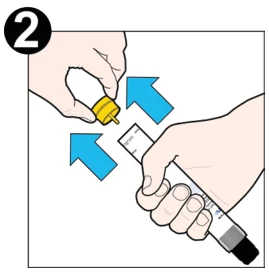 emergency injection of a single dose of adrenaline into the outer part of the thigh muscle (intramuscular injection).
Jext is to be used for the emergency treatment of sudden life threatening allergic reactions (anaphylactic shock) to insect stings or bites, foods or drugs or exercise.
Symptoms that signal the onset of an anaphylactic shock occur within minutes of exposure to the allergen and include: itching of the skin; raised rash (like a nettle rash); flushing; swelling of the lips, throat, tongue, hands and feet; wheezing; hoarseness; shortness of breath; nausea; 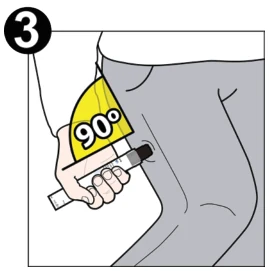 vomiting; stomach cramps and in some cases, loss of consciousness.
2. What you need to know before you use Jext
Jext can always be used during an allergic emergency. If you are allergic (hypersensitive) to sodium metabisulphite or to any of the other ingredients of Jext, your doctor will need to instruct you under which circumstances Jext should be used. For further information on hypersensitivity to sulphites please look in the section: Jext contains sodium metabisulphite and sodium chloride.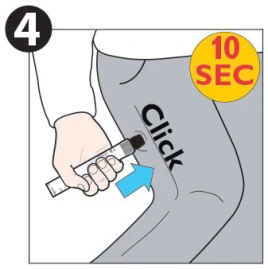 Warnings and precautions
Talk to your doctor when you are prescribed Jext
- if you have heart disease
- if you have an overactive thyroid
- if you have high blood pressure
- if you have diabetes
- if you have a tumour on the adrenal gland (phaeochromocytoma)
- if you have increased pressure in the eye (glaucoma)
- if you have renal or prostate disease
- if you have low potassium levels or high calcium levels in your blood
- and/or if you are elderly, pregnant or the child weighs less than 15 kg as there is a greater risk of getting side effects.
 If you have asthma you may be at increased risk of a severe allergic reaction.
Anyone who has an episode of anaphylaxis should see their doctor about testing for substances they may be allergic to, so these can be strictly avoided in future. It is important to be aware that an allergy to one substance can lead to allergies to a number of related substances.
If you have food allergies it is important to check the ingredients in everything you ingest (including medicines) as even small amounts can cause severe reactions.
You should have been carefully instructed by your doctor or nurse when and how to correctly use Jext.
The instructions for use must be carefully followed in order to avoid accidental injection.
Jext should only be injected intramuscularly into the outer thigh. It should not be injected into the buttock due to the risk of accidental injection into a vein.
Warning
Accidental injection into the hands or feet may result in reduced blood supply to these areas. If there is an accidental injection into these areas, you should go immediately to the nearest hospital emergency department for treatment.
If you have a thick sub-cutaneous fat layer, there is a risk that a single dose of Jext may not be sufficient. A second injection may be needed. Carefully follow the instructions for use given in section 3.
Laceration may occur if the injection is given by someone other than the patient and the patient’s leg is not immobilised during injection. To prevent injuries, the instructions for use given in section 3 must be carefully followed.
Other medicines and Jext
Tell your doctor or pharmacist if you are taking, have recently taken or might take any other medicines.
This is especially important if you take any of the following medicines:
- Antidepressants such as tricyclic antidepressants or monoamine oxidase inhibitors (MAO inhibitors).
- Medicines for treatment of Parkinsons disease such as catechol-O-methyl transferase inhibitors (COMT inhibitors) and levodopa.
- Medicines that may make the heart sensitive to uneven beats (arrhythmias), such as digitalis and quinidine.
- Medicines for thyroid disease (levothyroxine).
- Medicines that make you breathe more easily; used for asthma (theophylline).
- Medicines used in labour (e.g. oxytocin).
- Medicines used to treat allergies such as diphenhydramine, chlorpheniramine (first generation antihistamines).
- Alpha and beta blocking medicines for heart disease.
- Medicines that act on the parasympathetic nervous system which regulates the body´s unconscious functions such as heartbeat and lung function (parasympatholytics, parasympathomimetics).
Diabetic patients should carefully monitor their glucose levels after use of Jext as adrenaline can increase the blood glucose level.
Jext with alcohol
Alcohol can increase the effect of adrenaline.
Pregnancy, breast-feeding and fertility
If you are pregnant or breast feeding, think you may be pregnant or are planning to have a baby, ask your doctor or pharmacist for advice before taking this medicine.
There is limited experience of the use of adrenaline during pregnancy. If you are pregnant, do not hesitate to use Jext in an emergency, since you and your baby’s life may be in danger.
Jext would not be expected to have any effect on the nursing infant.
Driving and using machines
The ability to drive and use machines is unlikely to be affected by the administration of an adrenaline injection, but may be affected by an anaphylactic reaction. If affected, do not drive.
Jext contains sodium metabisulphite and sodium chloride
Jext contains sodium metabisulphite, which may rarely cause severe allergic reactions (hypersensitivity) or breathing difficulty (bronchospasm). Your doctor must instruct you under which circumstances Jext should be used.
Jext contains less than 1 mmol sodium (23 mg) per dose, i.e. essentially sodium free.
3. How to use Jext
What to do in an emergency:
- Use your adrenaline auto-injector immediately if you have any signs of anaphylaxis. If in doubt use. Don’t delay.
- Dial 999 – say anaphylaxis (“ana-fill-axis”) – straight after using your auto-injector.
- Lie down and raise your legs.
- Sit up if you are struggling to breathe but don’t change position suddenly.
- Lie down again as soon as you can.
- Stay lying down even if you are feeling better.
- You must not stand up even if someone encourages you to.
- Use your second auto-injector if you haven’t improved after 5 minutes.
Be prepared:
- Carry two adrenaline auto-injectors with you at all times.
- You must use your auto-injector as soon as you notice any signs of anaphylaxis.
- Make sure you know beforehand what the signs are so you can act swiftly.
- Make sure you know how to use your auto-injector before you need to. Get familiar with it. Get a trainer auto-injector from the manufacturer. Practise. If you change brand, get familiar with the new one. Each one is used differently.
Always use this medicine exactly as your doctor or pharmacist have told you. Make sure you understand in what situations you should use Jext. Check with your doctor or pharmacist if you are not sure.
Dosage
Adults and Children over 30kg – the recommended dose for allergic emergencies is 300 micrograms adrenaline for injection into the outer thigh muscle (intramuscular use).
Children between 15kg and 30kg – the recommended dose for allergic emergencies is 150 micrograms adrenaline for injection into the outer thigh muscle (intramuscular use). Remember: the correct dose of Jext depends on bodyweight. The dose will need to be increased as your child develops and will need to be discussed with your doctor.
If you notice the signs of an acute allergic reaction, use Jext immediately, through your clothing if necessary.
After use some liquid will remain in the auto-injector but this cannot be reused.
Sometimes a single dose of adrenaline may not be sufficient to completely reverse the effects of a serious allergic reaction. For this reason, your doctor is likely to prescribe more than one Jext for you. If your symptoms have not improved or have deteriorated within 5 minutes after the first injection, either you or the person with you should give a second injection. For this reason you should carry more than one Jext with you at all times.
Method of administration
Jext has been designed to inject through the clothes or directly through the skin of the outer thigh.
Jext should be pushed firmly against the outer portion of the thigh into the largest part of the thigh muscle. When you push Jext firmly into your thigh, a spring activated plunger will be released, which pushes the hidden needle through the seal at the end of the black needle shield, into the thigh muscle and injects a dose of adrenaline.
The instructions for use of Jext given below must be carefully followed.
Jext should only be injected into the outer thigh.
It should not be injected into the buttock (your bottom).
Instructions for use
Before you ever need to use it, you should fully familiarise yourself with Jext, when and how it should be used. During instruction in correct use of Jext, your doctor may use a Jext Trainer to ensure that you and any other family members or carers are confident in what to do when an allergic emergency happens.
It is recommended that your family members, carers or teachers are also instructed in the correct use of Jext. If you are a caregiver, you should instruct the patient not to move, and, if needed, immobilise the patient’s leg during injection to minimise the risk of laceration.
The pen is for single use only and cannot be reused.
Follow these directions only when ready to use.
- Never put thumb, feet or hand over the black needle shield as this is where the needle comes out.
- Do not remove the yellow cap until you need to use Jext.
For correct administration, look at the diagrams and follow these steps:
After Use
Before Use
Yellow cap
Window
Coloured plastic rod visible in window after use (white in Jext 300 and blue in Jext 150)
Black Injector Tip
- 1. Grasp the Jext injector in your dominant hand (the one you use to write with) with your thumb closest to the yellow cap.
- 2. Pull off the yellow cap with your other hand.
- 3. Place the black injector tip against your outer thigh, holding the injector at a right angle (approx 90°) to the thigh.
- 4.
Push the black tip firmly into your outer thigh until you hear a ‘click’ confirming the injection has started, then keep it pushed in. Hold the injector firmly in place against the thigh for 10 seconds (a slow count to
- 10) then remove. The black tip will extend automatically and hide the needle.
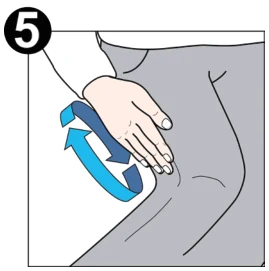
- 5. Massage the injection area for 10 seconds. Seek immediate medical help. Dial 999, ask for ambulance, state anaphylaxis.
Dial 999, ask for ambulance, state anaphylaxis.
Package leaflet: Information for the patient
Jext® 150 micrograms solution for injection in pre-filled pen
adrenaline
Read all of this leaflet carefully before you start using this medicine because it contains important information for you.
- Keep this leaflet. You may need to read it again.
- If you have any further questions, ask your doctor or pharmacist. – This medicine has been prescribed for you only. Do not pass it on to others. It may harm them, even if their signs of illness are the same as yours.
- If you get any side effects talk to your doctor or pharmacist. This includes any possible side effects not listed in this leaflet. See section 4.
The name of your medicine is Jext 150 micrograms solution for injection in pre-filled pen but will be referred to as Jext throughout this leaflet. Please note that the leaflet also contains information about other strengths.
The inspection window in the label is filled by a coloured plastic rod (white in Jext 300 and blue in Jext 150) to confirm that the auto-injector has activated and the adrenaline solution has been injected.
A small air bubble may be present in Jext. It does not affect the way the product works. Even though most of the liquid remains in Jext after use, it cannot be reused.
Jext is designed as emergency treatment. You should always get medical help immediately after using Jext. Dial 999, ask for an ambulance and state ‘anaphylaxis’ even if symptoms appear to be improving. You will need to go to hospital for observation and further treatment as required. This is because the reaction may happen again at some time later.
While waiting for the ambulance you should lie down with your feet raised unless this makes you breathless in which case you should sit up. Ask someone to stay with you until the ambulance arrives in case you feel unwell again.
Unconscious patients should be placed on their side in the recovery position.
Inform the healthcare professional that you have received an intramuscular injection of adrenaline. You can also hand over the used Jext for safe disposal.
If you use more Jext than you should
In case of overdose or accidental injection of the adrenaline, you should always seek immediate medical help. You should see your doctor to replace the used Jext as soon as possible.
Your blood pressure may rise sharply. Overdose may cause a sudden increase in blood pressure, irregular heartbeat, abnormal kidney function, reduced blood flow and accumulation of fluid in the lungs. If you have any further questions on the use of this product, ask your doctor or pharmacist.
4. Possible side effects
Like all medicines this medicine can cause side effects, although not everybody gets them.
The following side effects are based upon experience with the use of adrenaline.
Frequency not known (frequency cannot be estimated from the available data):
- Tremor
- Reactions at the injection site such as bruising, pain and swelling • Dizziness
- Fainting
- Headache
- Tingling feeling or feeling of numbness
- Sensation of fast or irregular heartbeat
- Muscle rigidity
- Nausea
- Vomiting
- Dry mouth
- Decreased blood supply in hands and feet in case of accidental injection into these areas
- Increased blood pressure
- Feeling weak
- Sweating
- Chest discomfort or pain
- Changes in your blood such as increased blood sugar levels, decreased potassium levels and harmful collection of acid in the body
Accidental injection of the adrenaline into fingers or toes has been reported and may result in decreased blood supply to these areas as well as coldness, paleness, feeling of tingling and numbness, bruising, pain, bleeding and swelling at the injection site. In case of accidental injection, always seek immediate medical help. Jext contains sodium metabisulphite which may rarely cause severe hypersensitivity reactions including difficult breathing.
Reporting of side effects
If you get any side effects, talk to your doctor or pharmacist. This includes any possible side effects not listed in this leaflet. You can also report side effects directly via the Yellow Card Scheme Website:
www.mhra.gov.uk/yellowcard or search for MHRA Yellow Card in the Google Play or Apple App Store. By reporting side effects you can help provide more information on the safety of this medicine.
5. How to store Jext
Keep this medicine out of the sight and reach of children.
Do not use this medicine after the expiry date which is stated on the label and carton after EXP. The expiry date refers to the last day of that month. Store below 25 °C.
Do not freeze.
Please remember to check the contents of the glass cartridge in Jext through the window in the label from time to time to make sure the liquid is still clear, colourless, and free from visible particles. Replace Jext by the expiry date or earlier. Do not use this medicine if you notice the solution is discoloured or contains a precipitate (solid particles). You may find it useful to put the expiry date in your calendar or diary to ensure that you replace Jext in time.
If this medicine becomes discoloured or shows any other signs of deterioration, please contact your pharmacist who will advise you on what to do.
Jext is provided in a plastic carry case in order to protect Jext while being carried or during storage. Jext should be removed from the carry case before use and should be removed during inspection of Jext. Return Jext to the carry case after inspection.
Do not throw away any medicines via wastewater or household waste. Ask your pharmacist how to throw away medicines you no longer use. These measures will help protect the environment.
6. Contents of the pack and further information
What Jext contains
The active substance is adrenaline.
1 ml solution contains 1 mg adrenaline (as tartrate).
Jext 150 micrograms injects one single dose of 150 micrograms adrenaline in 0.15 ml solution for injection.
The other ingredients are:
Sodium chloride, Sodium metabisulphite (E223), Hydrochloric acid, Water for injections.
What Jext looks like and contents of the pack
Jext is a solution for injection in a pre-filled pen. It contains a clear and colourless solution, free from visible particles inside a glass cartridge with latex free rubber seals. The pre-filled pen is delivered in a plastic carry case.
Exposed needle length:
Jext 150 micrograms: 13 mm
Pack size: Single pack with 1 pre-filled pen.
Product Licence Holder and Manufacturer
Procured from within the EU by the Product Licence holder Orifarm UK Ltd., Ground Floor Suite A2, Breakspear Park, Breakspear Way, Hemel Hempstead, HP2 4TZ, UK
For any information about this medicine, please contact the Product Licence Holder on
www.orifarm.com/uk
Or phone: (+44) 1923 204333
Repacked by Orifarm Supply s.r.o., Palouky 1366, 253 01 Hostivice, Czech Republic
Manufactured by ALK-Abelló S.A., Miguel Fleta 19, ES-28037 Madrid, Spain
Jext 150 micrograms solution for injection in pre-filled pen PL 45985/1172
POM
Leaflet revision date: 16/03/2026
Other sources of information
Detailed and updated information on this product is available by scanning the QR Code included in the PIL with a smartphone.
The same information is also available on the following URL:
https://itunes.apple.com/gb/app/jext/id608836531?mt=8 https://play.google.com/store/apps/details?id=com.androidapp.alkabello. jext_uk and the www.mhra.gov.uk website.
Blind or partially sighted? Is this leaflet hard to see or read?
Call +45 63 95 27 00 to obtain the leaflet in a format suitable for you.