

Summary of Product Characteristics (SmPC) - Gefitinib 250 mg film-coated tablets
1 NAME OF THE MEDICINAL PRODUCT
Gefitinib 250 mg film-coated tablets
2 QUALITATIVE AND QUANTITATIVE COMPOSITION
Each film-coated tablet contains 250 mg of gefitinib.
Excipient(s) with known effect
Each film-coated tablet contains 163.50 mg of lactose (as monohydrate).
Each film-coated tablet contains 3.869 mg of sodium.
For the full list of excipients, see section 6.1.
3 PHARMACEUTICAL FORM
Film-coated tablet.
Tablets are round, biconvex, brown film coated tablets debossed with ‘C’ on one side and plain on the other side. Diameter: 11.00 mm ± 0.20 mm.
4 CLINICAL PARTICULARS
4.1 Therapeutic indications
Gefitinib is indicated as monotherapy for the treatment of adult patients with locally advanced or metastatic non-small cell lung cancer (NSCLC) with activating mutations of EGFR-TK (see section 4.4).
4.2 Posology and method of administration
Treatment with gefitinib should be initiated and supervised by a physician experienced in the use of anticancer therapies.
Posology
The recommended posology of gefitinib is one 250 mg tablet once a day. If a dose is missed, it should be taken as soon as the patient remembers. If it is less than 12 hours to the next dose, the patient should not take the missed dose. Patients should not take a double dose (two doses at the same time) to make up for a forgotten dose.
Paediatric population
The safety and efficacy of gefitinib in children and adolescents aged less than 18 years have not been established. There is no relevant use of gefitinib in the paediatric population in the indication of NSCLC.
Hepatic impairment
Patients with moderate to severe hepatic impairment (Child-Pugh B or C) due to cirrhosis have increased plasma concentrations of gefitinib. These patients should be closely monitored for adverse events. Plasma concentrations were not increased in patients with elevated aspartate transaminase (AST), alkaline phosphatase or bilirubin due to liver metastases (see section 5.2).
Renal impairment
No dose adjustment is required in patients with impaired renal function at creatinine clearance >20 ml/min. Only limited data are available in patients with creatinine clearance ≤ 20 ml/min and caution is advised in these patients (see section 5.2).
Elderly
No dose adjustment is required on the basis of patient age (see section 5.2).
CYP2D6 poor metabolisers
No specific dose adjustment is recommended in patients with known CYP2D6 poor metaboliser genotype, but these patients should be closely monitored for adverse events (see section 5.2).
Dose adjustment due to toxicity
Patients with poorly tolerated diarrhoea or skin adverse reactions may be successfully managed by providing a brief (up to 14 days) therapy interruption followed by reinstatement of the 250 mg dose (see section 4.8). For patients unable to tolerate treatment after a therapy interruption, gefitinib should be discontinued and an alternative treatment should be considered.
Method of administration
The tablet may be taken orally with or without food, at about the same time each day. The tablet can be swallowed whole with some water or if dosing of whole tablets is not possible, tablets may be administered as a dispersion in water (non-carbonated). No other liquids should be used. Without crushing it, the tablet should be dropped in half a glass of drinking water. The glass should be swirled occasionally, until the tablet is dispersed (this may take up to 20 minutes). The dispersion should be drunk immediately after dispersion is complete (i.e. within 60 minutes). The glass should be rinsed with half a glass of water, which should also be drunk. The dispersion can also be administered through a naso-gastric or gastrostomy tube.
4.3 Contraindications
Hypersensitivity to the active substance or to any of the excipients listed in section 6.1.
Breast-feeding (see section 4.6).
4.4 Special warnings and precautions for use
When considering the use of gefitinib as a treatment for locally advanced or metastatic NSCLC, it is important that EGFR mutation assessment of the tumour tissue is attempted for all patients. If a tumour sample is not evaluable, then circulating tumour DNA (ctDNA) obtained from a blood (plasma) sample may be used.
Only robust, reliable and sensitive test(s) with demonstrated utility for the determination of EGFR mutation status of tumours or ctDNA should be used to avoid false negative or false positive determinations (see section 5.1).
Interstitial lung disease (ILD)
Interstitial lung disease (ILD), which may be acute in onset, has been observed in 1.3 % of patients receiving gefitinib, and some cases have been fatal (see section 4.8). If patients experience worsening of respiratory symptoms such as dyspnoea, cough and fever, gefitinib should be interrupted and the patient should be promptly investigated. If ILD is confirmed, gefitinib should be discontinued and the patient treated appropriately.
In a Japanese pharmacoepidemiological case control study in 3159 patients with NSCLC receiving gefitinib or chemotherapy who were followed up for 12 weeks, the following risk factors for developing ILD (irrespective of whether the patient received gefitinib or chemotherapy) were identified: smoking, poor performance status (PS≥ 2), CT scan evidence of reduced normal lung (≤ 50 %), recent diagnosis of NSCLC (< 6 months), pre-existing ILD, older age (≥ 55 years old) and concurrent cardiac disease. An increased risk of ILD on gefitinib relative to chemotherapy was seen predominantly during the first 4 weeks of treatment (adjusted OR 3.8; 95 % CI 1.9 to 7.7); thereafter the relative risk was lower (adjusted OR 2.5; 95 % CI 1.1 to 5.8). Risk of mortality among patients who developed ILD on gefitinib or chemotherapy was higher in patients with the following risk factors: smoking, CT scan evidence of reduced normal lung (≤ 50 %), pre-existing ILD, older age (≥ 65 years old), and extensive areas adherent to pleura (≥ 50 %).
Hepatotoxicity and liver impairment
Liver function test abnormalities (including increases in alanine aminotransferase, aspartate aminotransferase, bilirubin) have been observed, uncommonly presenting as hepatitis (see section 4.8). There have been isolated reports of hepatic failure which in some cases led to fatal outcomes. Therefore, periodic liver function testing is recommended. Gefitinib should be used cautiously in the presence of mild to moderate changes in liver function. Discontinuation should be considered if changes are severe.
Impaired liver function due to cirrhosis has been shown to lead to increased plasma concentrations of gefitinib (see section 5.2).
Interactions with other medicinal products
CYP3A4 inducers may increase metabolism of gefitinib and decrease gefitinib plasma concentrations. Therefore, concomitant administration of CYP3A4 inducers (e.g. phenytoin, carbamazepine, rifampicin, barbiturates or herbal preparations containing St John's wort/Hypericum perforatum) may reduce efficacy of the treatment and should be avoided (see section 4.5).
In individual patients with CYP2D6 poor metaboliser genotype, treatment with a potent CYP3A4 inhibitor might lead to increased plasma levels of gefitinib. At initiation of treatment with a CYP3A4 inhibitor, patients should be closely monitored for gefitinib adverse reactions (see section 4.5).
International normalised ratio (INR) elevations and/or bleeding events have been reported in some patients taking warfarin together with gefitinib (see section 4.5). Patients taking warfarin and gefitinib concomitantly should be monitored regularly for changes in prothrombin time (PT) or INR.
Medicinal products that cause significant sustained elevation in gastric pH, such as proton-pump inhibitors and h2-antagonists may reduce bioavailability and plasma concentrations of gefitinib and, therefore, may reduce efficacy. Antacids if taken regularly close in time to administration of gefitinib may have a similar effect (see sections 4.5 and 5.2).
Data from phase II clinical trials, where gefitinib and vinorelbine have been used concomitantly, indicate that gefitinib may exacerbate the neutropenic effect of vinorelbine.
Lactose
Gefitinib contains lactose. Patients with rare hereditary problems of galactose intolerance, total lactase deficiency or glucose-galactose malabsorption should not take this medicinal product.
Sodium
This medicine contains less than 1 mmol sodium (23 mg) per tablet, that is to say essentially ‘sodium-free’.
Further precautions for use
Patients should be advised to seek medical advice immediately if they experience severe or persistent diarrhoea, nausea, vomiting or anorexia as these may indirectly lead to dehydration. These symptoms should be managed as clinically indicated (see section 4.8).
Patients presenting with signs and symptoms suggestive of keratitis such as acute or worsening: eye inflammation, lacrimation, light sensitivity, blurred vision, eye pain and/or red eye should be referred promptly to an ophthalmology specialist.
If a diagnosis of ulcerative keratitis is confirmed, treatment with gefitinib should be interrupted, and if symptoms do not resolve, or if symptoms recur on reintroduction of gefitinib, permanent discontinuation should be considered.
In a phase I/II trial studying the use of gefitinib and radiation in paediatric patients, with newly diagnosed brain stem glioma or incompletely resected supratentorial malignant glioma, 4 cases (1 fatal) of Central Nervous System (CNS) haemorrhages were reported from 45 patients enrolled. A further case of CNS haemorrhage has been reported in a child with an ependymoma from a trial with gefitinib alone. An increased risk of cerebral haemorrhage in adult patients with NSCLC receiving gefitinib has not been established.
Gastrointestinal perforation has been reported in patients taking gefitinib. In most cases this is associated with other known risk factors, including concomitant medications such as steroids or NSAIDs, underlying history of GI ulceration, age, smoking or bowel metastases at sites of perforation.
4.5 Interaction with other medicinal products and other forms of interaction
The metabolism of gefitinib is via the cytochrome P450 isoenzyme CYP3A4 (predominantly) and via CYP2D6.
Active substances that may increase gefitinib plasma concentrations
In vitro studies have shown that gefitinib is a substrate of p-glycoprotein (Pgp). Available data do not suggest any clinical consequences to this in vitro finding.
Substances that inhibit CYP3A4 may decrease the clearance of gefitinib. Concomitant administration with potent inhibitors of CYP3A4 activity (e.g. ketoconazole, posaconazole, voriconazole, protease inhibitors, clarithromycin, telithromycin) may increase gefitinib plasma concentrations. The increase may be clinically relevant since adverse reactions are related to dose and exposure. The increase might be higher in individual patients with CYP2D6 poor metaboliser genotype. Pre-treatment with itraconazole (a potent CYP3A4 inhibitor) resulted in an 80 % increase in the mean AUC of gefitinib in healthy volunteers. In situations of concomitant treatment with potent inhibitors of CYP3A4 the patient should be closely monitored for gefitinib adverse reactions.
There are no data on concomitant treatment with an inhibitor of CYP2D6 but potent inhibitors of this enzyme might cause increased plasma concentrations of gefitinib in CYP2D6 extensive metabolisers by about 2-fold (see section 5.2). If concomitant treatment with a potent CYP2D6 inhibitor is initiated, the patient should be closely monitored for adverse reactions.
Active substances that may reduce gefitinib plasma concentrations
Substances that are inducers of CYP3A4 activity may increase metabolism and decrease gefitinib plasma concentrations and thereby reduce the efficacy of gefitinib. Concomitant medicinal products that induce CYP3A4 (e.g. phenytoin, carbamazepine, rifampicin, barbiturates or St John's wort (Hypericum perforatum)), should be avoided. Pre-treatment with rifampicin (a potent CYP3A4 inducer) in healthy volunteers reduced mean gefitinib AUC by 83 % (see section 4.4).
Substances that cause significant sustained elevation in gastric pH may reduce gefitinib plasma concentrations and thereby reduce the efficacy of gefitinib. High doses of short-acting antacids may have a similar effect if taken regularly close in time to administration of gefitinib. Concomitant administration of gefitinib with ranitidine at a dose that caused sustained elevations in gastric pH ≥5 resulted in a reduced mean gefitinib AUC by 47 % in healthy volunteers (see sections 4.4 and 5.2).
Active substances that may have their plasma concentrations altered by gefitinib
In vitro studies have shown that gefitinib has limited potential to inhibit CYP2D6. In a clinical trial in patients, gefitinib was co-administered with metoprolol (a CYP2D6 substrate). This resulted in a 35 % increase in exposure to metoprolol. Such an increase might potentially be relevant for CYP2D6 substrates with narrow therapeutic index. When the use of CYP2D6 substrates are considered in combination with gefitinib, a dose modification of the CYP2D6 substrate should be considered especially for products with a narrow therapeutic window.
Gefitinib inhibits the transporter protein BCRP in vitro, but the clinical relevance of this finding is unknown.
Other potential interactions
INR elevations and/or bleeding events have been reported in some patients concomitantly taking warfarin (see section 4.4).
4.6 Fertility, Pregnancy and lactation
Women of childbearing potential
Women of childbearing potential must be advised not to get pregnant during therapy.
Pregnancy
There are no data from the use of gefitinib in pregnant women. Studies in animals have shown reproductive toxicity (see section 5.3). The potential risk for humans is unknown. Gefitinib should not be used during pregnancy unless clearly necessary.
Breastfeeding
It is not known whether gefitinib is secreted in human milk. Gefitinib and metabolites of gefitinib accumulated in milk of lactating rats (see section 5.3). Gefitinib is contraindicated during breastfeeding and therefore breastfeeding must be discontinued while receiving gefitinib therapy (see section 4.3).
4.7 Effects on ability to drive and use machines
During treatment with gefitinib, asthenia has been reported. Therefore, patients who experience this symptom should be cautious when driving or using machines.
4.8 Undesirable effects
Summary of the safety profile
In the pooled dataset from the ISEL, INTEREST and IPASS phase III clinical trials (2462 gefitinib-treated patients), the most frequently reported adverse drug reactions (ADRs), occurring in more than 20 % of the patients, are diarrhoea and skin reactions (including rash, acne, dry skin and pruritus). ADRs usually occur within the first month of therapy and are generally reversible. Approximately 8 % of patients had a severe ADR (common toxicity criteria, (CTC) grade 3 or 4). Approximately 3 % of patients stopped therapy due to an ADR.
Interstitial lung disease (ILD) has occurred in 1.3 % of patients, often severe (CTC grade 3-4). Cases with fatal outcomes have been reported.
Tabulated list of adverse reactions
The safety profile presented in Table 1 is based on the gefitinib clinical development programme and post-marketed experience. Adverse reactions have been assigned to the frequency categories in Table 1 where possible based on the incidence of comparable adverse event reports in a pooled dataset from the ISEL, INTEREST and IPASS phase III clinical trials (2462 gefitinib-treated patients).
Frequencies of occurrence of undesirable effects are defined as: very common (≥ 1/10); common (≥ 1/100 to < 1/10); uncommon (≥ 1/1,000 to < 1/100); rare (≥ 1/10,000 to < 1/1,000); very rare (< 1/10,000), not known (cannot be estimated from the available data).
Within each frequency grouping, undesirable effects are presented in order of decreasing seriousness.
Table 1 Adverse reactions
| Adverse reactions by system organ class and frequency | ||
| Metabolism and nutrition | Very | Anorexia mild or moderate (CTC grade 1 or |
| disorders | common | 2). |
| Eye disorders | Conjunctivitis, blepharitis, and dry eye*, | |
| Common | ||
| mainly mild (CTC grade 1). | ||
| Corneal erosion, reversible and sometimes in | ||
| Uncommon | association with aberrant eyelash growth. | |
| Keratitis (0.12%) | ||
| Haemorrhage, such as epistaxis and | ||
| Vascular disorders | Common | |
| haematuria. | ||
| Interstitial lung disease (1.3 %), often severe | ||
| Respiratory, thoracic and | ||
| Common | (CTC grade 3-4). Cases with fatal outcomes | |
| mediastinal disorders | ||
| have been reported. | ||
| Gastrointestinal disorders | Diarrhoea, mainly mild or moderate (CTC | |
| grade 1 or 2). | ||
| Vomiting, mainly mild or moderate (CTC | ||
| Very | ||
| grade 1 or 2). | ||
| common | ||
| Nausea, mainly mild (CTC grade 1). | ||
| Stomatitis, predominantly mild in nature | ||
| (CTC grade 1). | ||
| Dehydration, secondary to diarrhoea, nausea, | ||
| vomiting or anorexia. | ||
| Common | ||
| Dry mouth*, predominantly mild (CTC grade | ||
| 1). | ||
| Pancreatitis. | ||
| Uncommon | ||
| Gastrointestinal perforation. | ||
| Hepatobiliary disorders | Very | Elevations in alanine aminotransferase, |
| common | mainly mild to moderate. | |
| Elevations in aspartate aminotransferase, | ||
| mainly mild to moderate. | ||
| Common | ||
| Elevations in total bilirubin, mainly mild to | ||
| moderate. | ||
| Uncommon | Hepatitis** | |
| Skin and subcutaneous tissue | Skin reactions, mainly a mild or moderate | |
| disorders | Very | (CTC grade 1 or 2) pustular rash, sometimes |
| common | itchy with dry skin, including skin fissures, | |
| on an erythematous base. | ||
| Nail disorder | ||
| Alopecia | ||
| Common | ||
| Allergic reactions (1.1%), including | ||
| angioedema and urticaria | ||
| Uncommon | Palmar-plantar erythrodysaesthesia syndrome | |
| Bullous conditions including Toxic | ||
| epidermal necrolysis, Stevens Johnson | ||
| Rare | ||
| syndrome and erythema multiforme | ||
| Cutaneous vasculitis | ||
| Renal and urinary disorders | Asymptomatic laboratory elevations in blood | |
| creatinine | ||
| Common | ||
| Proteinuria | ||
| Cystitis | ||
| Rare | Haemorrhagic cystitis | |
| General disorders and | Very | Asthenia, predominantly mild (CTC grade |
| administration site conditions | common | 1). |
| Common | Pyrexia |
The frequency of adverse drug reactions relating to abnormal laboratory values is based on patients with a change from baseline of 2 or more CTC grades in the relevant laboratory parameters.
* This adverse reaction can occur in association with other dry conditions
(mainly skin reactions) seen with gefitinib.
** This includes isolated reports of hepatic failure which in some cases led to fatal outcomes.
Interstitial lung disease (ILD)
In the INTEREST trial, the incidence of ILD type events was 1.4 % (10) patients in the gefitinib group versus 1.1 % (8) patients in the docetaxel group. One ILD-type event was fatal, and this occurred in a patient receiving gefitinib.
In the ISEL trial, the incidence of ILD-type events in the overall population was approximately 1 % in both treatment arms. The majority of ILD-type events reported was from patients of Asian ethnicity and the ILD incidence among patients of Asian ethnicity receiving gefitinib therapy and placebo was approximately 3 % and 4 % respectively. One ILD-type event was fatal, and this occurred in a patient receiving placebo.
In a post-marketing surveillance study in Japan (3350 patients) the reported rate of ILD-type events in patients receiving gefitinib was 5.8 %. The proportion of ILD-type events with a fatal outcome was 38.6 %.
In a phase III open-label clinical trial (IPASS) in 1217 patients comparing gefitinib to carboplatin/paclitaxel doublet chemotherapy as first-line treatment in selected patients with advanced NSCLC in Asia, the incidence of ILD-type events was 2.6 % on the gefitinib treatment arm versus 1.4 % on the carboplatin/paclitaxel treatment arm.
Reporting of suspected adverse reactions
Reporting suspected adverse reactions after authorisation of the medicinal product is important. It allows continued monitoring of the benefit/risk balance of the medicinal product. Healthcare professionals are asked to report any suspected adverse reactions via the Yellow Card Scheme Website: https://yellowcard.mhra.gov.uk/ or search for MHRA Yellow Card in the Google Play or Apple App Store..
4.9 Overdose
There is no specific treatment in the event of overdose of gefitinib. However, in phase I clinical trials, a limited number of patients were treated with daily doses of up to 1000 mg. An increase of frequency and severity of some adverse reactions was observed, mainly diarrhoea and skin rash. Adverse reactions associated with overdose should be treated symptomatically; in particular severe diarrhoea should be managed as clinically indicated. In one study a limited number of patients were treated weekly with doses from 1500 mg to 3500 mg. In this study gefitinib exposure did not increase with increasing dose, adverse events were mostly mild to moderate in severity, and were consistent with the known safety profile of gefitinib.
SUMMARY OF PRODUCT CHARACTERISTICS
PHARMACOLOGICAL PROPERTIES
Pharmacodynamic properties
Pharmacotherapeutic group: Antineoplastic agents, protein kinase inhibitors.
ATC code: L01EB01.
Mechanism of action and pharmacodynamic effects
The epidermal growth factor (EGF) and its receptor (EGFR [HER1; ErbB1]) have been identified as key drivers in the process of cell growth and proliferation for normal and cancer cells. EGFR activating mutation within a cancer cell is an important factor in promotion of tumour cell growth, blocking of apoptosis, increasing the production of angiogenic factors and facilitating the processes of metastasis.
Gefitinib is a selective small molecule inhibitor of the epidermal growth factor receptor tyrosine kinase and is an effective treatment for patients with tumours with activating mutations of the EGFR tyrosine kinase domain regardless of line of therapy. No clinically relevant activity has been shown in patients with known EGFR mutation-negative tumours.
The common EGFR activating mutations (Exon 19 deletions; L858R) have robust response data supporting sensitivity to gefitinib; for example a progression free survival HR (95% CI) of 0.489 (0.336, 0.710) for gefitinib vs. doublet chemotherapy [WJTOG3405]. Gefitinib response data is more sparse in patients whose tumours contain the less common mutations; the available data indicates that G719X, L861Q and S7681 are sensitising mutations; and T790M alone or exon 20 insertions alone are resistance mechanisms.
Resistance
Most NSCLC tumours with sensitising EGFR kinase mutations eventually develop resistance to gefitinib treatment, with a median time to disease progression of 1 year. In about 60% of cases, resistance is associated with a secondary T790M mutation for which T790M targeted EGFR TKIs may be considered as a next line treatment option. Other potential mechanisms of resistance that have been reported following treatment with EGFR signal blocking agents include: bypass signalling such as HER2 and MET gene amplification and PIK3CA mutations. Phenotypic switch to small cell lung cancer has also been reported in 5-10% of cases.
Circulating Tumour DNA (ctDNA)
In the IFUM trial, mutation status was assessed in tumour and ctDNA samples derived from plasma, using the Therascreen EGFR RGQ PCR kit (Qiagen). Both ctDNA and tumour samples were evaluable for 652 patients out of 1060 screened. The objective response rate (ORR) in those patients who were tumour and ctDNA mutation positive was 77% (95% CI: 66% to 86%) and in those who were tumour only mutation positive 60% (95% CI: 44% to 74%).
Table 2 Summary of baseline mutation status for tumour and ctDNA samples in all screened patients evaluable for both samples
| IFUM rate | IFUM | ||
| Measure | Definition | ||
| % (CI) | N | ||
| Proportion of tumour M+ that are M+ | |||
| Sensitivity | 65.7 (55.8, 74.7) | 105 | |
| by ctDNA | |||
| Proportion of tumour M- that are M- | |||
| Specificity | 99.8 (99.0, 100.0) | 547 | |
| by ctDNA) |
These data are consistent with the pre-planned exploratory Japanese subgroup analysis in IPASS (Goto 2012). In that study ctDNA derived from serum, not plasma was used for EGFR mutation analysis using the EGFR Mutation Test Kit (DxS) (N= 86). In that study, sensitivity was 43.1%, specificity was 100%.
Clinical efficacy and safety
First line treatment
The randomised phase III first line IPASS study was conducted in patients in Asia1 with advanced (stage IIIB or IV) NSCLC of adenocarcinoma histology who were ex-light smokers (ceased smoking ≥ 15 years ago and smoked ≤10 pack years) or never smokers (see Table 3).
1China, Hong Kong, Indonesia, Japan, Malaysia, Philippines, Singapore, Taiwan and Thailand.
Table 3 Efficacy outcomes for gefitinib versus carboplatin/paclitaxel from the IPASS study
| Objective response | ||||
| Primary endpoint | ||||
| rates and 95 % CI | Overall survival a, | |||
| Population | N | Progression free | ||
| for difference | b | |||
| survival (PFS) a, b | ||||
| between treatments a | ||||
| Overall | 1217 | 43.0 % vs 32.2 % | HR 0.74 | HR 0.90 |
| [5.3 %, 16.1 %] | [0.65, 0.85] | [0.79, 1.02] | ||
| 5.7 m vs 5.8 m | 18.8 m vs 17. 4m | |||
| p<0.0001 | p=0.1087 | |||
| EGFR mutation- | 261 | 71.2 % vs 47.3 % | HR 0.48 | HR 1.00 |
| positive | [12.0 %, 34.9 %] | [0.36, 0.64] | [0.76, 1.33] | |
| 9.5 m vs 6.3 m | 21.6 m vs 21.9 m | |||
| p<0.0001 | ||||
| EGFR mutation- | 176 | 1.1 % vs 23.5 % | HR 2.85 | HR 1.18 |
| negative | [-32.5 %, -13.3 %] | [2.05, 3.98] | [0.86, 1.63] | |
| 1.5 m vs 5.5 m | 11.2 m vs 12.7 m | |||
| p<0.0001 | ||||
| EGFR mutation- | 780 | 43.3 % vs 29.2 % | HR 0.68 | HR 0.82 |
| unknown | [7.3 %, 20.6 %] | [0.58 to 0.81] | [0.70 to 0.96] | |
| 6.6 m vs 5.8 m | 18.9 m vs. 17.2 m | |||
| p<0.0001 |
a. Values presented are for gefitinib versus carboplatin/paclitaxel. b. “m” is medians in months. Numbers in square brackets are 95 % confidence intervals for HR
N: Number of patients randomised.
HR: Hazard ratio (hazard ratios <1 favour gefitinib)
Quality of life outcomes differed according to EGFR mutation status. In EGFR mutation-positive patients, significantly more gefitinib-treated patients experienced an improvement in quality of life and lung cancer symptoms vs carboplatin/paclitaxel (see Table 4).
Table 4 Quality of life outcomes for gefitinib versus carboplatin/paclitaxel from the IPASS study
| Population | N | FACT-L QoL | LCS symptom |
| improvement rate a % | improvement rate a % | ||
| Overall | 1151 | (48.0 % vs 40.8 %) | (51.5 % vs 48.5 %) |
| p=0.0148 | p=0.3037 |
| EGFR mutation-positive | 259 | (70.2 % vs 44.5 %) | (75.6 % vs 53.9 %) |
| p<0.0001 | p=0.0003 | ||
| EGFR mutation-negative | 169 | (14.6 % vs 36.3 %) | (20.2 % vs 47.5 %) |
| p=0.0021 | p=0.0002 |
Trial outcome index results were supportive of FACT-L and LCS results a. Values presented are for gefitinib versus carboplatin/paclitaxel. N: Number of patients evaluable for quality of life analyses QoL: Quality of life
FACT-L: Functional assessment of cancer therapy-lung
LCS: Lung cancer subscale
In the IPASS trial, gefitinib demonstrated superior PFS, ORR, QoL and symptom relief with no significant difference in overall survival compared to carboplatin/paclitaxel in previously untreated patients, with locally advanced or metastatic NSCLC, whose tumours harboured activating mutations of the EGFR tyrosine kinase.
Pretreated patients
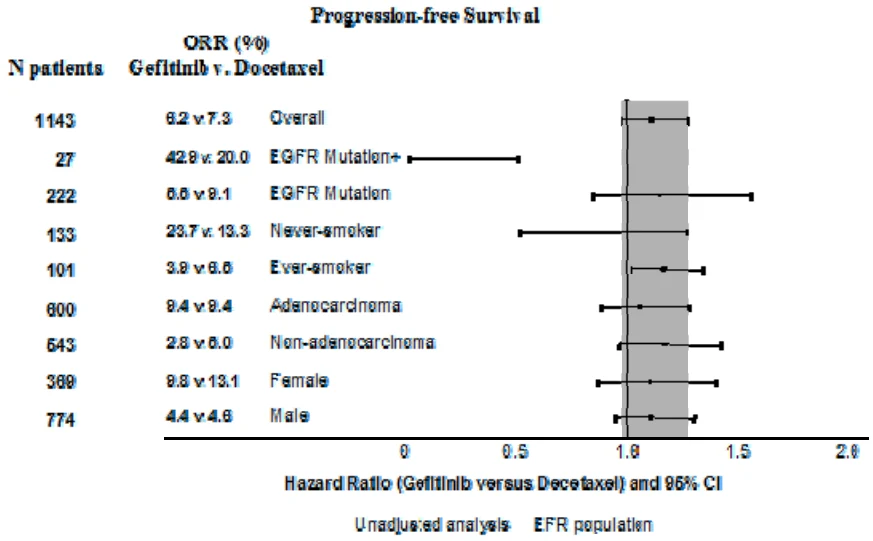
The randomised phase III INTEREST study was conducted in patients with locally advanced or metastatic NSCLC who had previously received platinum-based chemotherapy. In the overall population, no statistically significant difference between gefitinib and docetaxel (75 mg/m2) was observed for overall survival, progression free survival and objective response rates (see Table 5).
Table 5 Efficacy outcomes for gefitinib versus docetaxel from the INTEREST study
| Population | N | Objective response | Progression free | Primary endpoint |
| rates and 95 % CI | survival a, b | overall survival a, b | ||
| for difference | ||||
| between treatments | ||||
| a | ||||
| Overall | 1466 | 9.1 % vs 7.6 % | HR 1.04 | HR 1.020 |
| [-1.5 %, 4.5 %] | [0.93, 1.18] | [0.905, 1.150] c | ||
| 2.2 m vs 2.7 m | 7.6 m vs 8.0 m | |||
| p=0.4658 | p=0.7332 | |||
| EGFR mutation- | 44 | 42.1 % vs 21.1 % | HR 0.16 | HR 0.83 |
| positive | [-8.2 %, 46.0 %] | [0.05, 0.49] | [0.41, 1.67] | |
| 7.0 m vs 4.1 m | 14.2 m vs 16.6 m | |||
| p=0.0012 | p=0.6043 | |||
| EGFR mutation- | 253 | 6.6 % vs 9.8 % | HR 1.24 | HR 1.02 |
| negative | [-10.5 %, 4.4 %] | [0.94, 1.64] | [0.78, 1.33] | |
| 1.7 m vs 2.6 m | 6.4 m vs 6.0 m | |||
| p=0.1353 | p=0.9131 | |||
| Asians c | 323 | 19.7 % vs 8.7 % | HR 0.83 | HR 1.04 |
| [3.1 %, 19.2 %] | [0.64, 1.08] | [0.80, 1.35] | ||
| 2.9 m vs 2.8 m | 10.4 m vs 12.2 m | |||
| p=0.1746 | p=0.7711 | |||
| Non-Asians | 1143 | 6.2 % vs 7.3 % | HR 1.12 | HR 1.01 |
| [-4.3 %, 2.0 %] | [0.98, 1.28] | [0.89, 1.14] | ||
| 2.0 m vs 2.7 m | 6.9 m vs 6.9 m |
| p=0.1041 | p=0.9259 |
a. Values presented are for gefitinib versus docetaxel.
b. “m” is medians in months. Numbers in square brackets are 96 % confidence interval for overall survival HR in the overall population, or otherwise 95 % confidence intervals for HR
c. Confidence interval entirely below non-inferiority margin of 1.154 N: Number of patients randomised.
HR: Hazard ratio (hazard ratios <1 favour gefitinib)
Figures 1 and 2 Efficacy outcomes in subgroups of non-Asian patients in the INTEREST study (N patients = Number of patients randomised) 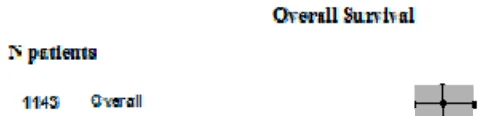

















The randomised phase III ISEL study, was conducted in patients with advanced NSCLC who had received 1 or 2 prior chemotherapy regimens and were refractory or intolerant to their most recent regimen. Gefitinib plus best supportive care was compared to placebo plus best supportive care. Gefitinib did not prolong survival in the overall population. Survival outcomes differed by smoking status and ethnicity (see Table 6).
Table 6 Efficacy outcomes for gefitinib versus placebo from the ISEL study
| Population | N | Objective response | Time to treatment | Primary endpoint |
| rates and 95 % CI | failure a, b | overall survival a, b, | ||
| for difference | c | |||
| between treatments a | ||||
| Overall | 1692 | 8.0 % vs 1.3 % | HR 0.82 | HR 0.89 |
| [4.7 %, 8.8 %] | [0.73, 0.92] | [0.77, 1.02] | ||
| 3.0 m vs 2.6 m | 5.6 m vs 5.1 m | |||
| p=0.0006 | p=0.0871 | |||
| EGFR mutation- | 26 | 37.5 % vs 0 % | HR 0.79 | HR NC |
| positive | [-15.1 %, 61.4 %] | [0.20, 3.12] | NR vs 4.3 m | |
| 10.8 m vs 3.8m | ||||
| p=0.7382 | ||||
| EGFR mutation- | 189 | 2.6 % vs 0 % | HR 1.10 | HR 1.16 |
| negative | [-5.6 %, 7.3 %] | [0.78, 1.56] | [0.79, 1.72] | |
| 2.0 m vs 2.6 m | 3.7 m vs 5.9 m | |||
| p=0.5771 | p=0.4449 | |||
| Never smoker | 375 | 18.1 % vs 0 % | HR 0.55 | HR 0.67 |
| [12.3 %, 24.0 %] | [0.42, 0.72] | [0.49, 0.92] | ||
| 5.6 m vs 2.8 m | 8.9 m vs 6.1 m | |||
| p<0.0001 | p=0.0124 | |||
| Ever smoker | 1317 | 5.3 % vs 1.6 % | HR 0.89 | HR 0.92 |
| [1.4 %, 5.7 %] | [0.78, 1.01] | [0.79, 1.06] | ||
| 2.7 m vs 2.6 m | 5.0 m vs 4.9 m | |||
| p=0.0707 | p=0.2420 | |||
| Asians d | 342 | 12.4 % vs 2.1 % | HR 0.69 | HR 0.66 |
| [4.0 %, 15.8 %] | [0.52, 0.91] | [0.48, 0.91] | ||
| 4.4 m vs 2.2 m | 9.5 m vs 5.5 m | |||
| p=0.0084 | p=0.0100 | |||
| Non-Asians | 1350 | 6.8 % vs 1.0 % | HR 0.86 | HR 0.92 |
| [3.5 %, 7.9 %] | [0.76, 0.98] | [0.80, 1.07] | ||
| 2.9 m vs 2.7 m | 5.2 m vs 5.1 m | |||
| p=0.0197 | p=0.2942 |
a. Values presented are for gefitinib versus placebo.
b. “m” is medians in months. Numbers in square brackets are 95 % confidence intervals for HR
c. Stratified log-rank test for overall; otherwise cox proportional hazards model d. Asian ethnicity excludes patients of Indian origin and refers to the racial origin of a patient group and not necessarily their place of birth
N: Number of patients randomised
NC: Not calculated for overall survival HR as the number of events is too few NR: Not reached
HR: Hazard ratio (hazard ratios <1 favour gefitinib)
The IFUM study was a single-arm, multicentre study conducted in Caucasian patients (n=106) with activating, sensitizing EGFR mutation positive NSCLC to confirm that the activity of gefitinib is similar in Caucasian and Asian populations. The ORR according to investigator review was 70% and the median PFS was 9.7 months. These data are similar to those reported in the IPASS study.
EGFR mutation status and clinical characteristics
Clinical characteristics of never smoker, adenocarcinoma histology, and female gender have been shown to be independent predictors of positive EGFR mutation status in a multivariate analysis of 786 Caucasian patients from gefitinib studies* (see Table 7). Asian patients also have a higher incidence of EGFR mutation-positive tumours.
Table 7 Summary of multivariate logistic regression analysis to identify factors that independently predicted for the presence of EGFR mutations in 786 Caucasian patients*
| Factors that | p-value | Odds of EGFR | Positive predictive value (9.5 % of |
| predicted for | mutation | the overall population are EGFR | |
| presence of | mutation-positive (M+)) | ||
| EGFR mutation | |||
| Smoking status | <0.0001 | 6.5 times higher in | 28/70 (40 %) of never smokers are M+ |
| never smokers than | |||
| ever-smokers | 47/716 (7 %) of ever smokers are M+ | ||
| Histology | <0.0001 | 4.4 times higher in | 63/396 (16 %) of patients with |
| adenocarcinoma than in | adenocarcinoma histology are M+ | ||
| non-adenocarcinoma | |||
| 12/390 (3 %) of patients with non- | |||
| adenocarcinoma histology are M+ | |||
| Gender | 0.0397 | 1.7 times higher in | 40/235 (17 %) of females are M+ |
| females than males | |||
| 35/551 (6 %) of males are M+ |
∗ from the following studies: INTEREST, ISEL, INTACT 1&2, IDEAL 1&2,
INVITE
5.2 Pharmacokinetic properties
Absorption
Following oral administration of gefitinib, absorption is moderately slow and peak plasma concentrations of gefitinib typically occur at 3 to 7 hours after administration. Mean absolute bioavailability is 59 % in cancer patients. Exposure to gefitinib is not significantly altered by food. In a trial in healthy volunteers where gastric pH was maintained above pH 5, gefitinib exposure was reduced by 47 %, likely due to impaired solubility of gefitinib in the stomach (see sections 4.4 and 4.5).
Distribution
Gefitinib has a mean steady-state volume of distribution of 1400 l indicating extensive distribution into tissue. Plasma protein binding is approximately 90 %. Gefitinib binds to serum albumin and alpha 1-acid glycoprotein.
In vitro data indicate that gefitinib is a substrate for the membrane transport protein Pg-p.
Biotransformation
In vitro data indicate that CYP3A4 and CYP2D6 are the major P450 isozyme involved in the oxidative metabolism of gefitinib.
In vitro studies have shown that gefitinib has limited potential to inhibit CYP2D6. Gefitinib shows no enzyme induction effects in animal studies and no significant inhibition (in vitro) of any other cytochrome P450 enzyme.
Gefitinib is extensively metabolised in humans. Five metabolites have been fully identified in excreta and 8 metabolites in plasma. The major metabolite identified was O-desmethyl gefitinib, which is 14-fold less potent than gefitinib at inhibiting EGFR stimulated cell growth and has no inhibitory effect on tumour cell growth in mice. It is therefore considered unlikely that it contributes to the clinical activity of gefitinib.
The formation of O-desmethyl gefitinib has been shown, in vitro, to be via CYP2D6. The role of CYP2D6 in the metabolic clearance of gefitinib has been evaluated in a clinical trial in healthy volunteers genotyped for CYP2D6 status. In poor metabolisers no measurable levels of O-desmethyl gefitinib were produced. The levels of exposure to gefitinib achieved in both the extensive and the poor metaboliser groups were wide and overlapping but the mean exposure to gefitinib was 2-fold higher in the poor metaboliser group. The higher average exposures that could be achieved by individuals with no active CYP2D6 may be clinically relevant since adverse effects are related to dose and exposure.
Elimination
Gefitinib is excreted mainly as metabolites via the faeces, with renal elimination of gefitinib and metabolites accounting for less than 4 % of the administered dose.
Gefitinib total plasma clearance is approximately 500 ml/min and the mean terminal half-life is 41 hours in cancer patients. Administration of gefitinib once daily results in 2- to 8-fold accumulation, with steady-state exposures achieved after 7 to 10 doses. At steady-state, circulating plasma concentrations are typically maintained within a 2- to 3-fold range over the 24-hour dosing interval.
Special populations
From analyses of population pharmacokinetic data in cancer patients, no relationships were identified between predicted steady-state trough concentration and patient age, body weight, gender, ethnicity or creatinine clearance (above 20 ml/min).
Hepatic impairment
In a phase I open-label study of single dose gefitinib 250 mg in patients with mild, moderate or severe hepatic impairment due to cirrhosis (according to Child-Pugh classification), there was an increase in exposure in all groups compared with healthy controls. An average 3.1-fold increase in exposure to gefitinib in patients with moderate and severe hepatic impairment was observed. None of the patients had cancer, all had cirrhosis and some had hepatitis. This increase in exposure may be of clinical relevance since adverse experiences are related to dose and exposure to gefitinib.
Gefitinib has been evaluated in a clinical trial conducted in 41 patients with solid tumours and normal hepatic function, or moderate or severe hepatic impairment (classified according to baseline Common Toxicity Criteria grades for AST, alkaline phosphatase and bilirubin) due to liver metastases. It was shown that following daily administration of 250 mg gefitinib, time to steady-state, total plasma clearance (CmaxSS) and steady-state exposure (AUC24SS) were similar for the groups with normal and moderately impaired hepatic function. Data from 4 patients with severe hepatic impairment due to liver metastases suggested that steady-state exposures in these patients are also similar to those in patients with normal hepatic function.
5.3 Preclinical safety data
Adverse reactions not observed in clinical studies, but seen in animals at exposure levels similar to the clinical exposure levels and with possible relevance to clinical use were as follows:
- Corneal epithelia atrophy and corneal translucencies
- Renal papillary necrosis
- Hepatocellular necrosis and eosinophilic sinusoidal macrophage infiltration
Data from non-clinical (in vitro) studies indicate that gefitinib has the potential to inhibit the cardiac action potential repolarization process (e.g. QT interval). Clinical experience has not shown a causal association between QT prolongation and gefitinib.
A reduction in female fertility was observed in the rat at a dose of 20 mg/kg/day.
Published studies have shown that genetically modified mice, lacking expression of EGFR, exhibit developmental defects, related to epithelial immaturity in a variety of organs including the skin, gastrointestinal tract and lung. When gefitinib was administered to rats during organogenesis, there were no effects on embryofoetal development at the highest dose (30 mg/kg/day). However, in the rabbit, there were reduced foetal weights at 20 mg/kg/day and above.
There were no compound-induced malformations in either species. When administered to the rat throughout gestation and parturition, there was a reduction in pup survival at a dose of 20 mg/kg/day.
Following oral administration of C-14 labelled gefitinib to lactating rats 14 days post-partum, concentrations of radioactivity in milk were 11-19 fold higher than in blood.
Gefitinib showed no genotoxic potential.
A 2-year carcinogenicity study in rats resulted in a small but statistically significant increased incidence of hepatocellular adenomas in both male and female rats and mesenteric lymph node haemangiosarcomas in female rats at the highest dose (10 mg/kg/day) only. The hepatocellular adenomas were also seen in a 2-year carcinogenicity study in mice, which demonstrated a small increased incidence of this finding in male mice at the mid dose, and in both male and female mice at the highest dose. The effects reached statistical significance for the female mice, but not for the males. At no-effect levels in both mice and rats there was no margin in clinical exposure. The clinical relevance of these findings is unknown.
The results of an in vitro phototoxicity study demonstrated that gefitinib may have phototoxicity potential.
6 PHARMACEUTICAL PARTICULARS
6.1 List of excipients
Tablet core
Lactose monohydrate,
Croscarmellose sodium,
Microcrystalline cellulose,
Povidone (E1201),
Sodium lauryl sulfate,
Magnesium stearate (E572).
Tablet coating
Polyvinyl alcohol-part hydrolysed (E1203),
Macrogol (E1521),
Talc,
Titanium dioxide (E171),
Red iron oxide (E172),
Yellow iron oxide (E172).
6.2 Incompatibilities
Not applicable.
6.3 Shelf life
2 years.
6.4 Special precautions for storage
This medicinal product does not require any special storage condition.
6.5 Nature and contents of container
PVC/Aluminium in perforated unidose blister containing 10 tablets or PVC/Aluminium non-perforated blister containing 10 tablets. Three blisters are combined with an aluminium foil laminate over-wrap in a carton. Pack size of 30 film-coated tablets. Not all pack sizes may be marketed.
6.6 Special precautions for disposal
Any unused medicinal product or waste material should be disposed of in accordance with local requirements.
7 MARKETING AUTHORISATION HOLDER
Cipla (EU) Limited
Dixcart House,Addlestone Road,
Bourne Business Park Addlestone
KT15 2LE
United Kingdom.
8 MARKETING AUTHORISATION NUMBER(S)
PLGB 36390/0335
9 DATE OF FIRST AUTHORISATION/RENEWAL OF THE
AUTHORISATION
17/09/2026
10 DATE OF REVISION OF THE TEXT
17/09/2026