

Summary of Product Characteristics (SmPC) - Dexamethasone 2 mg tablets
1 NAME OF THE MEDICINAL PRODUCT
Dexamethasone 2mg Tablets
2 QUALITATIVE AND QUANTITATIVE COMPOSITION
Each tablet contains 2.0 mg dexamethasone.
Contains lactose monohydrate (68.8mg per tablet); for a full list of excipients, see section 6.1.
3 PHARMACEUTICAL FORM
Round white tablet, one side marked DX
2
4 CLINICAL PARTICULARS
4.1 Therapeutic indications
Indicated in a wide variety of disorders amenable to glucocorticoid therapy, as well as an adjunct in the control of cerebral oedema.
Dexamethasone is indicated in the treatment of coronavirus disease 2019 (COVID-19) in adult and adolescent patients (aged 12 years and older with body weight at least 40 kg) who require supplemental oxygen therapy.
4.2 Posology and method of administration
In general, glucocorticoid dosage depends on the severity of the condition and response of the patient. Under certain circumstances, for instance in stress and changed clinical picture, extra dosage adjustments may be necessary. If no favourable response is noted within a couple of days, glucocorticoid therapy should be discontinued.
Adults
Usually, daily oral dosages of 0.5 - 10 mg are sufficient. In some patients higher dosages may be temporarily required to control the disease. Once the disease is under control, the dosage should be reduced or tapered off to the lowest suitable level under continuous monitoring and observation of the patient (See Section 4.4).
For a short dexamethasone suppression test, 1 mg dexamethasone is given at 11 pm and plasma cortisol measured the next morning. Patients who do not show a decrease in cortisol can be exposed to a longer test: 500 micrograms dexamethasone is given at 6 hourly intervals for 48 hours followed by 2 mg every 6 hours for a further 48 hours. Twenty-four hour urine collections are made before, during and at the end of the test for determination of 17-hydroxycorticosteroids.
Children
0.01-0.1 mg/kg of body weight daily.
Dosage of glucocorticoids should be adjusted on the basis of the individual patient's response.
For the treatment of Covid-19
Adult patients 6 mg IV or PO, once a day for up to 10 days.
Paediatric population
Paediatric patients (adolescents aged 12 years and older) are recommended to take 6mg/dose IV or PO once a day for up to 10 days.
Duration of treatment should be guided by clinical response and individual patient requirements.
Elderly, renal impairment, hepatic impairment
No dose adjustment is needed.
4.3 Contraindications
- Systemic infection unless specific anti-infective therapy given.
- Hypersensitivity to the active substance or to any of the excipients listed in section 6.1.
Avoid live vaccines in patients receiving immunosuppressive doses as the serum antibody response is diminished.
In general, no contraindications apply in conditions where use of glucocorticoids may be lifesaving.
4.4 Special warnings and precautions for use
Every patient should receive the patient information leaflet. Patients on long-term dexamethasone treatment should carry a Steroid Treatment Card which gives guidance on minimising risk and provides details of prescriber, drug, dosage and duration of treatment.
In post marketing experience tumour lysis syndrome (TLS) has been reported in patients with haematological malignancies following the use of dexamethasone alone or in combination with other chemotherapeutic agents. Patients at high risk of TLS, such as patients with high proliferative rate, high tumour burden, and high sensitivity to cytotoxic agents, should be monitored closely and appropriate precaution taken.
Patients and/or carers should be warned that potentially severe psychiatric adverse reactions may occur with systemic steroids (see section 4.8). Symptoms typically emerge within a few days or weeks of starting the treatment. Risks may be higher with high doses/systemic exposure (see also section 4.5 for pharmacokinetic interactions that can increase the risk of side effects), although dose levels do not allow prediction of the onset, type, severity or duration of reactions. Most reactions recover after either dose reduction or withdrawal, although specific treatment may be necessary. Patients/carers should be encouraged to seek medical advice if worrying psychological symptoms develop, especially if depressed mood or suicidal ideation is suspected. Patients/carers should also be alert to possible psychiatric disturbances that may occur either during or immediately after dose tapering/withdrawal of systemic steroids, although such reactions have been reported infrequently. Particular care is required when considering the use of systemic corticosteroids in patients with existing or previous history of severe affective disorders in themselves or in their first degree relatives. These would include depressive or manic-depressive illness and previous steroid psychosis.
The results of a randomised, placebo-controlled study suggest an increase in mortality if methylprednisolone therapy starts more than two weeks after the onset of Acute Respiratory Distress Syndrome (ARDS). Therefore, treatment of ARDS with corticosteroids should be initiated within the first two weeks of onset of ARDS (see also section 4.2.).
Adrenal Suppression: Abrupt withdrawal after prolonged therapy with corticosteroids may lead to acute adrenal insufficiency, hypotension or death. During prolonged therapy with corticosteroids, adrenal atrophy develops and may persist for years after stopping. Withdrawal may also be associated with fever, myalgia, arthralgia, rhinitis, conjunctivitis, painful itchy skin nodules and weight loss. To compensate for a diminished adrenocortical response caused by prolonged corticosteroid treatment, any significant intercurrent illness, trauma, or surgical procedure requires a temporary increase in corticosteroid dose, or if already stopped, a temporary re-introduction of corticosteroid treatment. Anaesthetists must therefore know whether a patient is taking or has been taking a corticosteroid, to avoid a precipitous fall in blood pressure during anaesthesia or in the immediate postoperative period. A suitable regimen for corticosteroid replacement, in patients who have taken more than 1.5 mg dexamethasone daily within 3 months of surgery, is:
Minor surgery under general anaesthesia: Usual oral corticosteroid dose on the morning of surgery or hydrocortisone 25–50 mg (usually the sodium succinate) intravenously at induction; the usual oral corticosteroid dose is recommenced after surgery
Moderate or major surgery: Usual oral corticosteroid dose on the morning of surgery and hydrocortisone 25–50 mg intravenously at induction, followed by hydrocortisone 25–50 mg 3 times a day by intravenous injection for 24 hours after moderate surgery or for 48–72 hours after major surgery; the usual pre-operative oral corticosteroid dose is recommenced on stopping hydrocortisone injections.
Infections: Prolonged courses of dexamethasone increase susceptibility to infections and severity of infections; clinical presentation of infections may also be atypical. Serious infections e.g. septicaemia and tuberculosis may reach an advanced stage before being recognised, and amoebiasis or strongyloidiasis may be activated or exacerbated (exclude before initiating dexamethasone in those at risk or with suggestive symptoms). Fungal or viral ocular infections may also be exacerbated. Appropriate anti-microbial therapy should accompany glucocorticoid therapy when necessary e.g. in tuberculosis and viral and fungal infections of the eye.
Chickenpox: Chickenpox is of particular concern since this normally minor illness may be fatal in immunosuppressed patients. Patients (or parents of children) without a definite history of chickenpox should be advised to avoid personal contact with chickenpox or herpes zoster and if exposed, they should seek urgent medical attention. Unless they have had chickenpox, patients receiving oral dexamethasone for purposes other than replacement should be regarded as being at risk of severe chickenpox. Manifestations of fulminant illness include pneumonia, hepatitis and disseminated intravascular coagulation; rash is not necessarily a prominent feature. Passive immunisation with varicella–zoster immunoglobulin (VZIG) is needed byr exposed non-immune patients currently taking dexamethasone tablets or for those who have used them within the previous 3 months; varicella–zoster immunoglobulin should preferably be given within 3 days of exposure and no later than 10 days. Confirmed chickenpox warrants specialist care and urgent treatment. Dexamethasone should not be stopped and dosage may need to be increased.
Measles: Patients taking dexamethasone should be advised to take particular care to avoid exposure to measles and to seek immediate medical advice if exposure occurs. Prophylaxis with intramuscular normal immunoglobulin may be needed.
Visual disturbance
Visual disturbance may be reported with systemic and topical corticosteroid use. If a patient presents with symptoms such as blurred vision or other visual disturbances, the patient should be considered for referral to an ophthalmologist for evaluation of possible causes which may include cataract, glaucoma or rare diseases such as central serous chorioretinopathy (CSCR) which have been reported after use of systemic and topical corticosteroids.
Pheochromocytoma crisis
Pheochromocytoma crisis, which can be fatal, has been reported after administration of systemic corticosteroids. Corticosteroids should only be administered to patients with suspected or identified pheochromocytoma after an appropriate risk/benefit evaluation.
Paediatric population: Corticosteroids cause dose-related growth retardation in infancy, childhood and adolescence, which may be irreversible.
Elderly: Close supervision required particularly on long-term treatment. The common adverse events of systemic corticosteroids may be associated with more serious consequences in old age, especially osteoporosis, hypertension, hypokalaemia, diabetes, susceptibility to infection and thinning of the skin.
Preterm neonates: Available evidence suggests long-term neurodevelopmental adverse events after early treatment (< 96 hours) of premature infants with chronic lung disease at starting doses of 0.25mg/kg twice daily.
Undesirable effects may be minimised by using the lowest effective dose for the minimum period, and by administering the daily requirement as a single morning dose or whenever possible as a single morning dose on alternative days. Frequent patient review is required to appropriately titrate the dose against disease activity.
Close supervision is required to avoid life-threatening reaction. Frequent patient monitoring is required in the following situations:
- History of tuberculosis (or X-ray changes)
- Hypertension
- Congestive heart failure
- Renal insufficiency
- Diabetes mellitus including family history
- Osteoporosis (post-menopausal women at special risk)
- Glaucoma (including family history)
- Corneal perforation
- Severe affective disorders (particularly if history of steroid-induced psychosis)
- Epilepsy
- Peptic ulcer, ulcerative colitis, diverticulitis, recent intestinal anastomoses
- Migraine
- Incomplete natural growth since glucocorticoids on prolonged administration may accelerate epiphyseal closure
- Hypothyroidism
- History of steroid myopathy
- Liver failure
- Myasthenia gravis
- Certain parasitic infestations in particular amoebiasis
Caution should be exercised when using corticosteroids in patients who have recently suffered myocardial infarction as myocardial rupture has been reported.
After administration of glucocorticoids serious anaphylactoid reactions such as glottis oedema, urticaria and bronchospasm have occasionally occurred particularly in patients with a history of allergy.
If such an anaphylactic reaction occurs, the following measures are recommended: immediate slow intravenous injection of 0.1-0.5ml of adrenaline (solution of 1:1000: 0.1-0.5mg adrenaline dependent on body weight), intravenous administration of aminophylline and artificial respiration if necessary.
Withdrawal of dexamethasone: Adrenal cortical atrophy develops during prolonged therapy and may persist for years after stopping treatment. Withdrawal of corticosteroids must therefore always be gradual to avoid adrenal insufficiency, being tapered off over weeks or months according to the dose and duration of treatment. In patients who have received more than physiological doses of systemic corticosteroids (approximately 1 mg of dexamethasone) for greater than 3 weeks, withdrawal should not be abrupt. How dose reduction should be carried out depends largely on whether the disease is likely to relapse as the dose of systemic corticosteroids is reduced. Clinical assessment of disease activity may be needed during withdrawal. If the disease is unlikely to relapse on withdrawal of systemic corticosteroids but there is uncertainty about HPA suppression, the dose of systemic corticosteroid may be reduced rapidly to physiological doses. Once a daily dose of 1 mg dexamethasone is reached, dose reduction should be slower to allow the HPA axis to recover.
Abrupt withdrawal of systemic corticosteroid treatment, which has continued up to 3 weeks is appropriate if it is considered that the disease is unlikely to relapse. Abrupt withdrawal of doses of up to 6mg daily of dexamethasone for 3 weeks is unlikely to lead to clinically relevant HPA-axis suppression in the majority of patients. In the following patient groups, gradual withdrawal of systemic corticosteroid therapy should be considered even after courses lasting 3 weeks or less:
- Patients who have had repeated courses of systemic corticosteroids, particularly if taken for greater than 3 weeks
- When a short course has been prescribed within 1 year of cessation of long-term therapy (months and years)
- Patients who may have reasons for adrenocortical insufficiency other than exogenous corticosteroid therapy
- Patients receiving doses of systemic corticosteroid greater than 6mg daily of dexamethasone.
- Patients repeatedly taking doses in the evening
Systemic corticosteroids may be stopped abruptly in those whose disease is unlikely to relapse and who have received treatment for 3 weeks or less and who are not included in the patient groups described above. During corticosteroid withdrawal the dose may be reduced rapidly down to physiological-equivalent doses – approximately 1 mg dexamethasone daily and then reduced more slowly. Assessment of the disease may be needed during withdrawal to ensure that relapse does not occur.
Covid-19
Systemic corticosteroids should not be stopped for patients who are already treated with systemic (oral) corticosteroids for other reasons (e.g. patients with chronic obstructive pulmonary disease) but not requiring supplemental oxygen.
Excipients
Lactose
Patients with rare heredity problems of galactose intolerance, total lactase deficiency or glucose-galactose malabsorption should not take this medicine.
Sodium
This medicinal product contains less than 1 mmol sodium (23 mg) per tablet, that
is to say essentially ‘sodium-free’.
4.5 Interaction with other medicinal products and other forms of interaction
Dexamethasone may interact with other products as follows:
| Product | Effect |
| Aprepitant | Metabolism of dexamethasone inhibited therefore reduce dose of dexamethasone |
| Caspofungin | Dexamethasone possibly reduces plasma concentration of caspofungin; consider increasing dose of caspofungin |
| Ephedrine | Metabolism of dexamethasone accelerated |
| Indinavir, Lopinavir, Saquinavir | Dexamethasone possibly reduces plasma concentration |
| Ritonavir | Plasma concentration of dexamethasone possibly increased |
| CYP3A inhibitors, including cobicistat-containing products | Co-treatment with CYP3A inhibitors, including cobicistat-containing products, is expected to increase the risk of systemic side-effects. The combination should be avoided unless the benefit outweighs the increased risk of systemic corticosteroid |
side-effects, in which case patients should be monitored for systemic corticosteroid side-effects.
As dexamethasone is a corticosteroid, the following interactions could occur:
| Product | Effect |
| ACE Inhibitors, Adrenergic neurone blockers, Alpha-blockers, Angiotensin-II Receptor Agonists, Beta-blockers, Calcium-channel blockers, (Dihydropyridine calcium-channel blockers include amlodipine, felodipine, isradipine, lacidipine, lercanidipine, nicardipine, nifedipine, nimodipine, and nisoldipine), Clonidine, Diazoxide, Hydralazine, Methyldopa, Minoxidil, Moxonidine, Nitrates, Nitroprusside | Antagonism of hypotensive effect |
| Acetazolamide, Amphotericin*, Carbenoxolone, Cardiac glycosides, Diuretics, Loop diuretics, Thiazides and related Theophylline | Increased risk of hypokalaemia |
| β-Sympathomimetics (high dose) | Monitor plasma K in severe asthma |
| Aminoglutethimide, Barbiturates (eg Phenobarbital)*, Carbamazepine*, Phenytoin*, Primidone*, Rifamycins*, Rifabutin | Metabolism of corticosteroids accelerated (therefore there may be a reduced therapeutic effect) |
| Amphotericin* | Avoid concomitant use unless amphotericin needed to control reactions; close monitoring required – amphotericin nephrotoxic |
| Antidiabetics | Antagonism of hypoglycaemic effect |
| Aspirin NSAIDs | Increased risk of gastro-intestinal bleeding and ulceration |
| Aspirin | Corticosteroids reduce plasma concentration of salicylate Steroid withdrawal may result in salicylate intoxication. |
| Coumarins* | Corticosteroids may enhance or reduce anticoagulant effect of coumarins (high-dose corticosteroids enhance anticoagulant effect) |
| Diuretics | Antagonism of diuretic effect |
| Erythromycin, Ketoconazole | Metabolism of corticosteroids possibly inhibited |
| Methotrexate* | Increased risk of haematological toxicity |
| Mifepristone | Effect of corticosteroids may be reduced for 3–4 days after mifepristone |
| Nephrotoxic/Cytotoxic drugs | Close monitoring required |
| Oestrogens | Plasma concentration of corticosteroids increased by oral contraceptives containing oestrogens; low dose in HRT unlikely to induce interactions |
| Somatropin | Growth-promoting effect of somatropin may be inhibited |
| Vaccines* | High doses of corticosteroids impair immune response to vaccines; avoid concomitant use with live vaccines. Live vaccines should be postponed until at least 3 months after stopping corticosteroids |
| Calcium salts | Corticosteroids reduce absorption of calcium salts |
| Sodium phenylbutyrate | Corticosteroids possibly reduce effects of sodium phenylbutyrate |
| Anticholinesterases | The effects of anticholinesterases are antagonised by corticosteroids in myasthenia gravis. |
| Antacids | Antacids, especially those containing magnesium trisilicate have been reported to impair the gastrointestinal absorption of glucocorticoid steroids. Therefore, doses of one agent should be spaced as far as possible from the other. |
* Potentially hazardous interaction
4.6 Fertility, pregnancy and lactation
Pregnancy
Dexamethasone readily crosses the placenta with minimal inactivation but there is no convincing evidence that systemic corticosteroids increase the incidence of congenital abnormalities such as cleft palate or lip.
Prolonged or repeated administration during pregnancy increases the risk of uterine growth retardation.
Any adrenal suppression in the neonate following prenatal exposure usually resolves spontaneously and is rarely clinically important.
Systemic effects in the infant are unlikely with a maternal dose of dexamethasone up to 6 mg daily (≡ 40 mg prednisolone); the infant’s adrenal function should be monitored with higher doses.
Administration of corticosteroids to pregnant animals can cause abnormalities of foetal development including cleft palate, intrauterine growth retardation and effects on brain growth and development. There is no evidence that corticosteroids result in an increased incidence of congenital abnormalities, such as cleft palate/lip in man. See also section 5.3 of the SmPC.
Breast-feeding
Corticosteroids may be excreted in small amounts in breast milk, although no data are available for dexamethasone. Infants of mothers taking high doses of systemic corticosteroids for prolonged periods may have a degree of adrenal suppression.
4.7 Effects on ability to drive and use machines
Steroids may cause vertigo, vision disorders or muscle weakness. If affected patients should be advised not to drive or operate machinery.
4.8 Undesirable effects
The incidence of predictable undesirable effects, including hypothalamic-pituitary-adrenal suppression correlates with the relative potency of the drug, dosage, timing of administration and the duration of treatment (see section 4.4). The incidence of adverse effects rises steeply if dosage increases much above physiological values, represented by just over 1mg of dexamethasone. Short courses at high doses for emergencies appear to cause fewer side-effects than prolonged courses with lower doses. Thus, adverse effects are minimised by using the lowest effective dose and for the minimum period possible. Psychiatric disorders are common and may occur in both adults and children. In adults, the frequency of severe reactions has been estimated to be 5-6%.
Adverse glucocorticoid effects lead to mobilisation of calcium and phosphorus, with osteoporosis and spontaneous fractures, particularly in the elderly. Hyperglycaemia may precipitate or accentuate diabetes leading to an increase in the insulin requirements of diabetic patients. Suppression of clinical symptoms and signs by the anti-inflammatory, analgesic and antipyretic effects of glucocorticoids may mask an increased susceptibility to infection and increased severity of infection brought about by the immunosuppressive effects. As a number of cases of fatal or near-fatal cases of chickenpox (varicella) have been reported, passive immunisation should be given to non-immune patients receiving corticosteroids. Impaired tissue repair and immune function can lead to delayed wound healing. The negative feedback effects of glucocorticoids on the hypothalmic-pituitary-adrenal axis may lead to adrenal atrophy. This produces secondary adrenal insufficiency which may become manifest following overly rapid withdrawal of treatment or be precipitated by some stress such as infection or trauma.
There are no modern clinical studies available that can be used to determine the frequency of individual undesirable effects. Therefore, all the undesirable effects listed are classed as “frequency unknown”.
Infections and infestations:
Infection susceptibility increased (including septicaemia, tuberculosis, chickenpox, measles, fungal and viral infections).
Blood & lymphatic system disorders:
Coagulation abnormal (increase in coagulability of blood may lead to thromboembolic complications); leukocytosis
Immune system disorders:
Hypersensitivity; anaphylactic reaction.
Endocrine disorders:
Suppression of the hypothalamic-pituitary-adrenal axis; adrenal atrophy; adrenal insufficiency (symptoms include: menstrual disorders; amenorrhoea; hirsutism; weight gain; premature epiphyseal closure, nitrogen balance negative; calcium balance negative; increased appetite); adrenal suppression (of the foetus or neonate following maternal administration); adrenal hyperactivity (Cushingoid symptoms include moon face; hirsutism; buffalo hump; flushing; bruising; ecchymoses; striae; acne); growth suppression in children; steroid withdrawal syndrome (see below).
Withdrawal should be gradual in those who have been treated for any length of time. Too rapid a reduction of corticosteroid dosage following prolonged treatment can lead to acute adrenal insufficiency, hypotension and death (see section 4.4). A 'withdrawal syndrome' may also occur including, fever, myalgia, arthralgia, rhinitis, conjunctivitis, painful itchy skin nodules and weight loss.
Cushingoid symptoms are usually reversible on withdrawal of treatment, but dosage must always be tapered gradually to avoid symptoms of acute adrenal insufficiency.
Metabolism & nutrition disorders:
Fluid and electrolyte disturbance including sodium and water retention, hypertension, potassium loss, hypokalaemic alkalosis.
Psychiatric disorders:
Affective disorders (including irritability, euphoria, depressed and labile mood disorder, suicidal ideation); psychotic disorder (including mania, delusion, hallucination, schizophrenia aggravated); behavioural disorder; anxiety; sleep disturbances; cognitive disorders (including confusional state and amnesia); euphoria; dependence psychological; depression; insomnia; psychosis; schizophrenia aggravated; epilepsy aggravated; paranoid state; depression suicidal (particularly in patients with a history of mental disorder). Reactions are common and may occur in both adults and children. In adults, the frequency of severe reactions has been estimated to be 5-6%. Psychological effects have been reported on withdrawal of corticosteroids; the frequency is unknown.
Nervous system disorders:
Benign intracranial hypertension, increased intra-cranial pressure with papilloedema in children (pseudotumour cerebri) usually after treatment withdrawal; headache; aggravation of epilepsy; psychological dependence.
Eye disorders:
Intraocular pressure increased; glaucoma; papilloedema (may be associated with increased intracranial pressure in children, usually after withdrawal); posterior subcapsular cataracts; corneal thinning; scleral thinning; exacerbation of ophthalmic viral or fungal infections, chorioretinopathy, vision, blurred (see also section 4.4)
Ear & labyrinth disorders:
Vertigo.
Cardiac disorders:
Myocardial rupture (post-infarct); congestive heart failure.
Respiratory disorders:
Hiccups.
Gastrointestinal disorders:
Nausea; vomiting; dyspepsia; abdominal distension; acute pancreatitis; oesophageal ulceration; oesophageal candidiasis; peptic ulcer; peptic ulcer perforation; peptic ulcer haemorrhage.
Skin & subcutaneous tissue disorders:
Skin atrophy; bruising; telangiectasia; hyperhidrosis; petechiae; urticaria, striae, acne.
Musculoskeletal, connective tissue & bone disorders:
Osteoporosis, vertebral and long bone fracture spontaneous; tendon rupture; muscle atrophy; proximal myopathy; avascular necrosis femoral head (at high doses).
General & administration site disorders:
Malaise; vaccination complication (decreased responsiveness to vaccination); skin test abnormal; wound healing delayed.
Reporting of suspected adverse reactions
Reporting suspected adverse reactions after authorisation of the medicinal product is important. It allows continued monitoring of the benefit/risk balance of the medicinal product. Healthcare professionals are asked to report any suspected adverse reactions via the Yellow Card Scheme (Website: www.mhra.gov.uk/yellowcard) or search for MHRA Yellow Card in the Google Play or Apple App Store.
4.9 Overdose
It is difficult to define an excessive dose of a corticosteroid as the therapeutic dose will vary according to indication and patient requirements.
Overdosage or prolonged use may exaggerate glucocorticoid adverse effects. Treatment should be symptomatic and supportive with the dosage of dexamethasone being reduced or slowly withdrawn where possible.
5 PHARMACOLOGICAL PROPERTIES
5.1 Pharmacodynamic properties
Pharmacotherapeutic group: Corticosteroids for systemic use, Glucocorticoids, ATC code: H02AB02
The adrenal cortex synthesises corticosteroids. Corticosteroids are traditionally divided into those with predominantly glucocorticoid actions and those of which the actions are primarily mineralocorticoid. The endogenous glucocorticoids are under regulatory control from the hypothalamus and pituitary via releasing hormones. In return, the glucocorticoids act to inhibit production and release of the releasing hormones by a negative feedback mechanism. Glucocorticoid actions are wide ranging. They have potent anti-inflammatory and immunosuppressive effects, achieved at least partly through inhibition of various cytokines. It is primarily these effects which are made use of clinically. Glucocorticoids also have profound metabolic effects on blood glucose concentration, glycogen deposition, protein breakdown, lipolysis and effects on calcium uptake and excretion. They also have effects on the function of the cardiovascular system, kidneys, skeletal muscle and the CNS.
Dexamethasone is a synthetic glucocorticoid of which the anti-inflammatory potency on a weight for weight basis is 7 times greater than that of prednisolone. Pharmacological doses of corticosteroids/glucocorticoids are used when palliative anti-inflammatory or immunosuppressant effects are required to suppress the clinical manifestations of disease in a wide range of disorders considered to have inflammatory or immunological components.
Lack of mineralocorticoid (water and salt-retaining) properties makes dexamethasone particularly suitable for treating conditions where water retention would be a disadvantage, for example, cerebral oedema. Coupled with its long duration of action, dexamethasone is also indicated for conditions such as congenital adrenal hyperplasia which require suppression of corticotrophin secretion.
The RECOVERY trial (Randomised Evaluation of COVid-19 thERapY,)1 is an investigator-initiated, individually randomised, controlled, open-label, adaptive platform trial to evaluate the effects of potential treatments in patients hospitalised with COVID-19.
The trial was conducted at 176 hospital organizations in the United Kingdom.
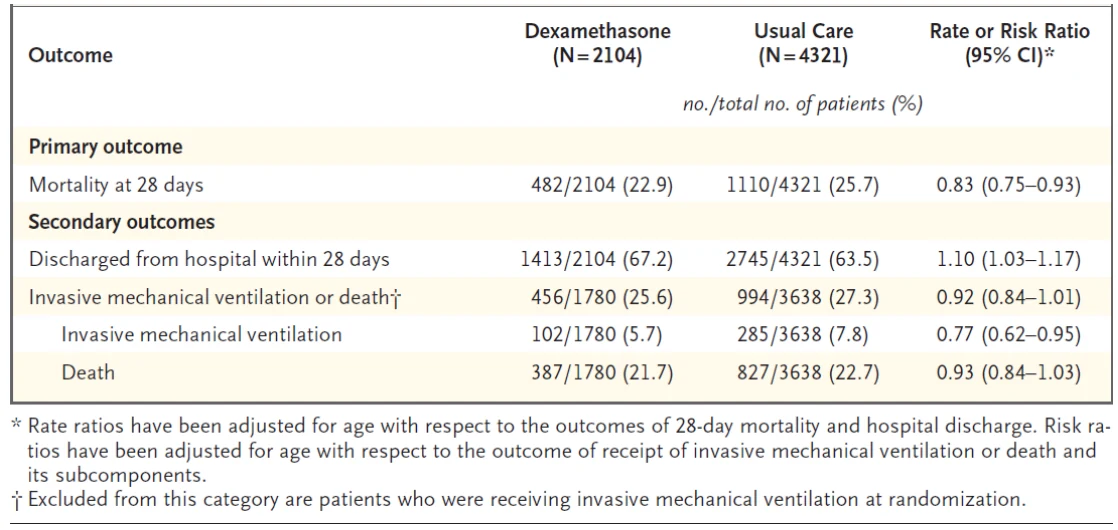
There were 6425 Patients randomised to receive either dexamethasone (2104 patients) or usual care alone (4321 patients). 89% of the patients had laboratory-confirmed SARS-CoV-2 infection.
At randomization, 16% of patients were receiving invasive mechanical ventilation or extracorporeal membrane oxygenation, 60% were receiving oxygen only (with or without non invasive ventilation), and 24% were receiving neither.
The mean age of patients was 66.1+/-15.7 years. 36% of the patients were female. 24% of patients had a history of diabetes, 27% of heart disease and 21% of chronic lung disease.
Primary endpoint
Mortality at 28 days was significantly lower in the dexamethasone group than in the usual care group, with deaths reported in 482 of 2104 patients (22.9%) and in 1110 of 4321 patients (25.7%), respectively (rate ratio, 0.83; 95% confidence interval [CI], 0.75 to 0.93; P<0.001).
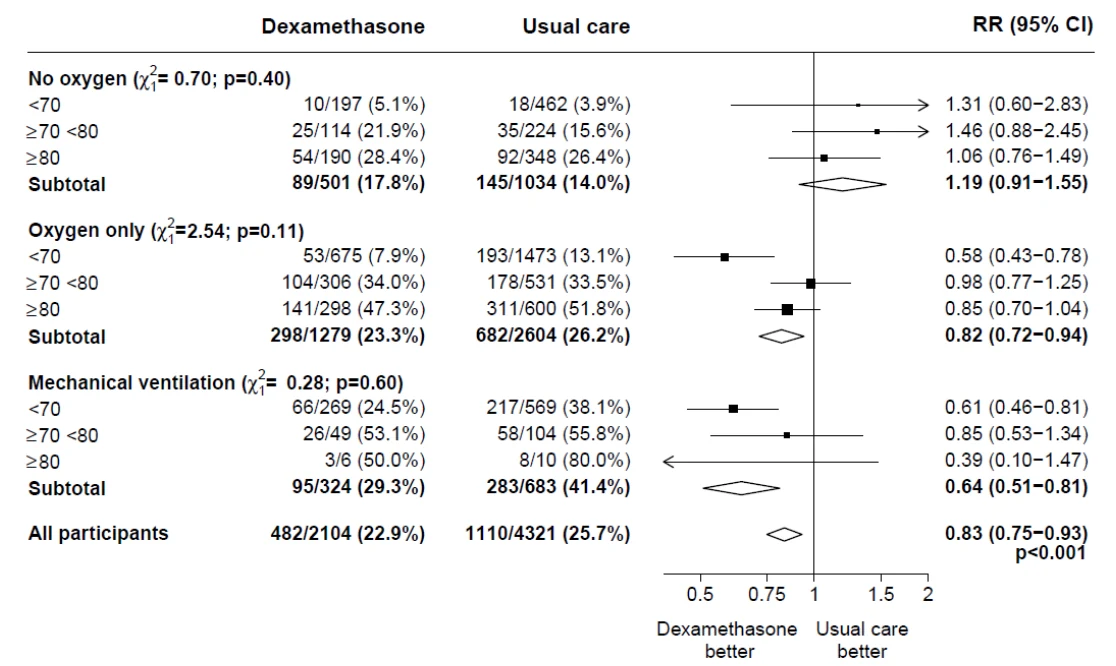
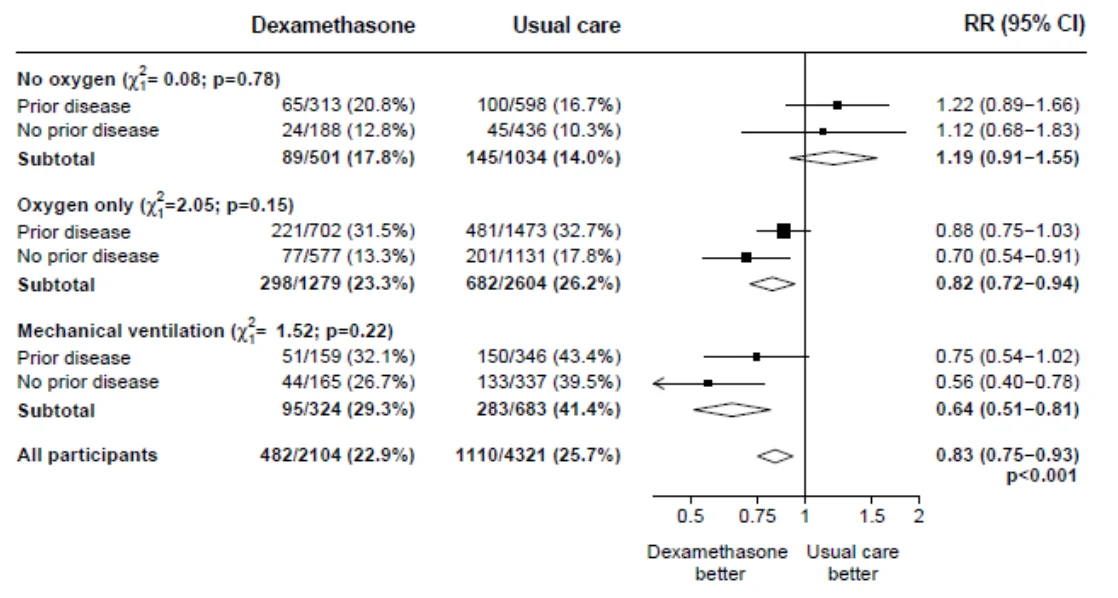
In the dexamethasone group, the incidence of death was lower than that in the usual care group among patients receiving invasive mechanical ventilation (29.3% vs. 41.4%; rate ratio, 0.64; 95% CI, 0.51 to 0.81) and in those receiving supplementary oxygen without invasive mechanical ventilation (23.3% vs. 26.2%; rate ratio, 0.82; 95% CI, 0.72 to 0.94).
There was no clear effect of dexamethasone among patients who were not receiving any respiratory support at randomization (17.8% vs. 14.0%; rate ratio, 1.19; 95% CI, 0.91 to 1.55).
Secondary endpoints
Patients in the dexamethasone group had a shorter duration of hospitalization than those in the usual care group (median, 12 days vs. 13 days) and a greater probability of discharge alive within 28 days (rate ratio, 1.10; 95% CI, 1.03 to 1.17).
In line with the primary endpoint the greatest effect regarding discharge within 28 days was seen among patients who were receiving invasive mechanical ventilation at randomization (rate ratio 1.48; 95% CI 1.16, 1.90), followed by oxygen only (rate ratio, 1.15 ;95% CI 1.06-1.24) with no beneficial effect in patients not receiving oxygen (rate ratio, 0.96 ; 95% CI 0.85-1.08).
1 http://www.recoverytrial.net/
Safety
There were four serious adverse events (SAEs) related to study treatment: two SAEs of hyperglycaemia, one SAE of steroid-induced psychosis and one SAE of an upper gastrointestinal bleed. All events resolved.
Subgroup analyses
Effects of allocation to DEXAMETHASONE on 28−day mortality, by age and respiratory support received at randomisation2
Effects of allocation to DEXAMETHASONE on 28−day mortality, by respiratory support received at randomisation and history of any chronic disease.3
2, 3 (source: Horby P. et al., 2020;
https://www.medrxiv.org/content/10.1101/2020.06.22.20137273v1; doi: https://doi.org/10.1101/2020.06.22.20137273)
5.2 Pharmacokinetic properties
Absorption
Corticosteroids, are, in general, readily absorbed from the gastro-intestinal tract. They are also well absorbed from sites of local application. Water-soluble forms of corticosteroids are given by intravenous injection for a rapid response; more prolonged effects are achieved using lipid-soluble forms of corticosteroids by intramuscular injection.
Distribution
Corticosteroids are rapidly distributed to all body tissues. They cross the placenta and may be excreted in small amounts in breast milk.
Most corticosteroids in the circulation are extensively bound to plasma proteins, mainly to globulin and less so to albumin. The corticosteroid-binding globulin has high affinity but low binding capacity, while the albumin has low affinity but large binding capacity. The synthetic corticosteroids are less extensively protein bound than hydrocortisone (cortisol). They also tend to have longer half-lives.
Biotransformation and Elimination
Corticosteroids are metabolised mainly in the liver but also in the kidney, and are excreted in the urine. The slower metabolism of the synthetic corticosteroids with their lower protein-binding affinity may account for their increased potency compared with the natural corticosteroids.
5.3 Preclinical safety data
In animal studies, cleft palate was observed in rats, mice, hamsters, rabbits, dogs and primates; not in horses and sheep. In some cases these divergences were combined with defects of the central nervous system and of the heart. In primates, effects in the brain were seen after exposure. Moreover, intra-uterine growth can be delayed. All these effects were seen at high dosages.
6 PHARMACEUTICAL PARTICULARS
6.1 List of excipients
Lactose monohydrate
Microcrystalline cellulose
Sodium starch glycolate (type A)
Colloidal anhydrous silica
Magnesium stearate (E470b)
6.2 Incompatibilities
None known
6.3 Shelf life
3 years
6.4 Special precautions for storage
Protect from light
6.5 Nature and contents of container
PVC/Aluminium blister strips of 10 tablets in packs of 50 and 100 tablets. Hospital pack: Polypropylene bottle of 500 tablets with polypropylene Snap-Secure cap.
6.6 Special precautions for disposal
Not applicable.
7 MARKETING AUTHORISATION HOLDER
Teva UK Limited,
Ridings Point,
Whistler Drive,
Castleford,
WF10 5HX,
United Kingdom
8 MARKETING AUTHORISATION NUMBER(S)
PL 00289/2269
9 DATE OF FIRST AUTHORISATION/RENEWAL OF THE
AUTHORISATION
13/08/2026
10 DATE OF REVISION OF THE TEXT
13/08/2026