


Patient leaflet - Dabigatran Etexilate 110 mg hard capsules
1) What Dabigatran Etexilate is and what it is used for
This medicine contains the active substance dabigatran etexilate and belongs to a group of medicines called anticoagulants. It works by blocking a substance in the body which is involved in blood clot formation.
Dabigatran Etexilate is used in adults to:
- prevent the formation of blood clots in the veins after knee or hip replacement surgery.
- prevent blood clots in the brain (stroke) and other blood vessels in the body if you have a form of irregular heart rhythm called nonvalvular atrial fibrillation and at least one additional risk factor.
- treat blood clots in the veins of your legs and lungs and to prevent blood clots from re-occurring in the vein of your legs and lungs.
Dabigatran Etexilate is used in children to:
- treat blood clots and to prevent blood clots from reoccurring.
2) What you need to know before you take Dabigatran Etexilate
Do not take Dabigatran Etexilate
- if you are allergic to dabigatran etexilate or any of the other ingredients of this medicine (listed in section 6).
- if you have severely reduced kidney function.
- if you are currently bleeding.
- if you have a disease in an organ of the body that increases the risk of serious bleeding (e.g. stomach ulcer, injury or bleeding in the brain, recent surgery of the brain or eyes).
- if you have an increased tendency to bleed.This may be inborn, of unknown cause or due to other medicines.
- if you are taking medicines to prevent blood clotting (e.g. warfarin, rivaroxaban, apixaban or heparin), except when changing anticoagulant treatment, while having a venous or arterial line and you get heparin through this line to keep it open or while your heart beat is being restored to normal by a procedure called catheter ablation for atrial fibrillation.
- if you have a severely reduced liver function or liver disease which could possibly cause death.
- if you are taking oral ketoconazole or itraconazole, medicines to treat fungal infections.
- if you are taking oral cyclosporine, a medicine to prevent organ rejection after transplantation.
- if you are taking dronedarone, a medicine used to treat abnormal heart beat.
- if you are taking a combination product of glecaprevir and pibrentasvir, an antiviral medicine used to treat hepatitis C.
- if you have received an artificial heart valve which requires permanent blood thinning.
Warnings and precautions
Talk to your doctor before taking Dabigatran Etexilate.You may also need to talk to your doctor during treatment with Dabigatran Etexilate if you experience symptoms or if you have to undergo surgery.
Tell your doctor if you have or have had any medical conditions or illnesses, in particular any of those included in the following list:
if you have an increased bleeding risk, such as:
- if you have been recently bleeding.
- if you have had a surgical tissue removal (biopsy) in the past month.
- if you have had a serious injury (e.g. a bone fracture, head injury or any injury requiring surgical treatment).
- if you are suffering from an inflammation of the gullet or stomach.
- if you have problems with reflux of gastric juice into the gullet.
- if you are receiving medicines which could increase the risk of bleeding. See ‘Other medicines and Dabigatran Etexilate’ below.
- if you are taking anti-inflammatory medicines such as diclofenac, ibuprofen, piroxicam.
- if you are suffering from an infection of the heart (bacterial endocarditis).
- if you know you have impaired kidney function, or you are suffering from dehydration (symptoms include feeling thirsty and passing reduced amounts of dark-coloured (concentrated) foaming urine).
- if you are older than 75 years.
- if you are an adult and weigh 50 kg or less.
- only if used for children: if the child has an infection around or within the brain.
- if you have had a heart attack or if you have been diagnosed with conditions that increase the risk to develop a heart attack.
- if you have a liver disease that is associated with changes in the blood tests. The use of Dabigatran Etexilate is not recommended in this case.
Take special care with Dabigatran Etexilate
if you need to have an operation:
In this case Dabigatran Etexilate will need to be stopped temporarily due to an increased bleeding risk during and shortly after an operation. It is very important to take Dabigatran Etexilate before and after the operation exactly at the times you have been told by your doctor.
if an operation involves a catheter or injection into your spinal column (e.g. for epidural or spinal anaesthesia or pain reduction):
- it is very important to take Dabigatran Etexilate before and after the operation exactly at the times you have been told by your doctor.
- tell your doctor immediately if you get numbness or weakness of your legs or problems with your bowel or bladder after the end of anaesthesia, because urgent care is necessary.
- if you know that you have a disease called antiphospholipid syndrome (a disorder of the immune system that causes an increased risk of blood clots), tell your doctor who will decide if the treatment may need to be changed.
Other medicines and Dabigatran Etexilate
Tell your doctor or pharmacist if you are taking, have recently taken or might take any other medicines. In particular you should tell your doctor before taking Dabigatran Etexilate, if you are taking one of the medicines listed below:
- Medicines to reduce blood clotting (e.g. warfarin, phenprocoumon, acenocoumarol, heparin, clopidogrel, prasugrel, ticagrelor, rivaroxaban, acetylsalicylic acid)
- Medicines to treat fungal infections (e.g. ketoconazole, itraconazole), unless they are only applied to the skin
- Medicines to treat abnormal heart beats (e.g. amiodarone, dronedarone, quinidine, verapamil). If you are taking amiodarone, quinidine or verapamil containing medicines, your doctor will tell you to use a reduced dose of Dabigatran Etexilate. See also section 3.
- Medicines to prevent organ rejection after transplantation (e.g. tacrolimus, cyclosporine)
- A combination product of glecaprevir and pibrentasvir (an antiviral medicine used to treat hepatitis C)
- Anti-inflammatory and pain reliever medicines (e.g. acetylsalicylic acid, ibuprofen, diclofenac)
- St. John’s wort, a herbal medicine for depression
- Antidepressant medicines called selective serotonin re-uptake inhibitors or serotonin-norepinephrine re-uptake inhibitors
- Rifampicin or clarithromycin (two antibiotics)
- Anti-viral medicines for AIDS (e.g. ritonavir)
- Certain medicines for treatment of epilepsy (e.g. carbamazepine, phenytoin
Pregnancy and breast-feeding
The effects of Dabigatran Etexilate on pregnancy and the unborn child are not known. You should not take Dabigatran Etexilate if you are pregnant unless your doctor advises you that it is safe to do so. If you are a woman of child-bearing age, you should avoid becoming pregnant while you are taking Dabigatran Etexilate.
You should not breast-feed while you are taking Dabigatran Etexilate.
Driving and using machines
Dabigatran Etexilate has no known effects on the ability to drive or use machines.
3) How to take Dabigatran Etexilate
Dabigatran Etexilate can be used in adults and children aged 8 years or older who are able to swallow the capsules whole. There are other age appropriate dose forms for the treatment of children below 8 years.
Always take this medicine exactly as your doctor has told you. Check with your doctor if you are not sure.
Take Dabigatran Etexilate as recommended for the following conditions:
Prevention of blood clot formation after knee or hip replacement surgery
The recommended dose is 220 mg once a day (taken as 2 capsules of 110 mg).
If your kidney function is decreased by more than half or if you are 75 years of age or older, the recommended dose is 150 mg once a day (taken as 2 capsules of 75 mg).
If you are taking amiodarone, quinidine or verapamil containing medicines the recommended dose is 150 mg once a day (taken as 2 capsules of 75 mg).
If you are taking verapamil containing medicines and your kidney function is decreased by more than half, you should be treated with a reduced dose of 75 mg Dabigatran Etexilate because your bleeding risk may be increased.
For both surgery types, treatment should not be started if there is bleeding from the site of operation. If the treatment cannot be started until the day after surgery, dosing should be started with 2 capsules once a day.
After knee replacement surgery
You should start treatment with Dabigatran Etexilate within 1-4 hours after surgery finishes, taking a single capsule. Thereafter two capsules once a day should be taken for a total of 10 days.
After hip replacement surgery
You should start treatment with Dabigatran Etexilate within 1-4 hours after surgery finishes, taking a single capsule. Thereafter two capsules once a day should be taken for a total of 28-35 days.
Prevention of brain or body vessel obstruction by blood clot formation developing after abnormal heart beats and treatment of blood clots in the veins of your legs and lungs including prevention of blood clots from re-occurring in the vein of your legs and lungs
The recommended dose is 300 mg taken as one 150 mg capsule twice a day.
If you are 80 years or older, the recommended dose is 220 mg taken as one 110 mg capsule twice a day.
If you are taking verapamil containing medicines, you should be treated with a reduced Dabigatran Etexilate dose of 220 mg taken as one 110 mg capsule twice a day, because your bleeding risk may be increased.
If you have a potentially higher risk for bleeding, your doctor may decide to prescribe a dose of 220 mg taken as one 110 mg capsule twice a day.
You can continue to take this medicine if your heart beat needs to be restored to normal by a procedure called cardioversion. Take Dabigatran Etexilate as your physician has told you.
If a medical device (stent) has been deployed in a blood vessel to keep it open in a procedure called percutaneous coronary intervention with stenting, you can be treated with Dabigatran Etexilate after your physician has decided that normal control of blood coagulation is achieved. Take Dabigatran Etexilate as your physician has told you.
Treatment of blood clots and prevention of blood clots from reoccurring in children
Dabigatran Etexilate should be taken twice daily, one dose in the morning and one dose in the evening, at approximately the same time every day. The dosing interval should be as close to 12 hours as possible.
The recommended dose depends on age and weight. Your doctor will determine the correct dose. Your doctor may adjust the dose as treatment progresses. Keep using all other medicines unless your doctor tells you to stop using any.
Table 1 shows single and total daily Dabigatran etexilate doses in milligrams (mg).The doses depend on weight in kilograms (kg) and age in years of the patient.
Table 1: Dosing table for Dabigatran etexilate capsules
| Weight/age combinations | Single dose in mg | Total daily dose in mg | |
|---|---|---|---|
| Weight in kg | Age in years | ||
| 11 to less than 13 kg | 8 to less than 9 years | 75 | 150 |
| 13 to less than 16 kg | 8 to less than 11 years | 110 | 220 |
| 16 to less than 21 kg | 8 to less than 14 years | 110 | 220 |
| 21 to less than 26 kg | 8 to less than 16 years | 150 | 300 |
| 26 to less than 31 kg | 8 to less than 18 years | 150 | 300 |
| 31 to less than 41 kg | 8 to less than 18 years | 185 | 370 |
| 41 to less than 51 kg | 8 to less than 18 years | 220 | 440 |
| 51 to less than 61 kg | 8 to less than 18 years | 260 | 520 |
| 61 to less than 71 kg | 8 to less than 18 years | 300 | 600 |
| 71 to less than 81 kg | 8 to less than 18 years | 300 | 600 |
| 81 kg or greater | 10 to less than 18 years | 300 | 600 |
Single doses requiring combinations of more than one capsule:
300 mg:
two 150 mg capsules or four 75 mg capsules
260 mg:
one 110 mg plus one 150 mg capsule or one 110 mg plus two 75 mg capsules
220 mg:
as two 110 mg capsules
185 mg:
as one 75 mg plus one 110 mg capsule
150 mg:
as one 150 mg capsule or two 75 mg capsules
Instruction for opening blisters
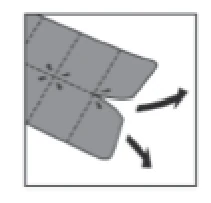
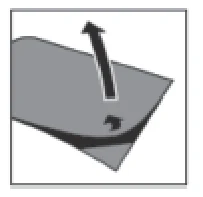
The following pictogram illustrates how to take Dabigatran Etexilate capsules out of the blister
1
Tear off one individual blister from the blister card along the perforated line.
2
Peel off the backing foil and remove the capsule.
- Do not push the capsules through the blister foil.
- Do not peel off the blister foil until a capsule is required.
How to take Dabigatran Etexilate
Dabigatran Etexilate can be taken with or without food. The capsule should be swallowed whole with a glass of water, to ensure delivery to the stomach. Do not break, chew, or empty the pellets from the capsule since this may increase the risk of bleeding.
Change of anticoagulant treatment
Without specific guidance from your doctor do not change your anticoagulant treatment.
If you take more Dabigatran Etexilate than you should
Taking too much Dabigatran Etexilate increases the risk of bleeding. Contact your doctor immediately if you have taken too many Dabigatran Etexilate capsules. Specific treatment options are available.
If you forget to take Dabigatran Etexilate
Prevention of blood clot formation after knee or hip replacement surgery Continue with your remaining daily doses of Dabigatran Etexilate at the same time of the next day.
Do not take a double dose to make up for a forgotten dose.
Read all of this leaflet carefully before you start taking this medicine because it contains important information for you.
- Keep this leaflet. You may need to read it again.
- If you have any further questions, ask your doctor or pharmacist.
- This medicine has been prescribed for you only. Do not pass it on to others. It may harm them, even if their signs of illness are the same as yours.
- If you get any side effects, talk to your doctor or pharmacist. This includes any possible side effects not listed in this leaflet. See section 4.
Use in adults: Prevention of brain or body vessel obstruction by blood clot formation developing after abnormal heart beats and treatment of blood clots in the veins of your legs and lungs including prevention of blood clots from re-occurring in the vein of your legs and lungs
Use in children: Treatment of blood clots and prevention of blood clots from reoccurring
A forgotten dose can still be taken up to 6 hours prior to the next due dose. A missed dose should be omitted if the remaining time is below 6 hours prior to the next due dose.
Do not double a dose to make up for a forgotten dose.
If you stop taking Dabigatran Etexilate
Take Dabigatran Etexilate exactly as prescribed. Do not stop taking Dabigatran Etexilate without talking to your doctor first, because the risk of developing a blood clot could be higher if you stop treatment too early. Contact your doctor if you experience indigestion after taking Dabigatran Etexilate.
If you have any further questions on the use of this medicine, ask your doctor or pharmacist.
4) Possible side effects
Like all medicines, this medicine can cause side effects, although not everybody gets them.
Dabigatran Etexilate affects blood clotting, so most side effects are related to signs such as bruising or bleeding. Major or severe bleeding may occur, these constitute the most serious side effects and, regardless of location, may become disabling, life-threatening or even lead to death. In some cases these bleedings may not be obvious.
If you experience any bleeding event that does not stop by itself or if you experience signs of excessive bleeding (exceptional weakness, tiredness, paleness, dizziness, headache or unexplained swelling) consult your doctor immediately. Your doctor may decide to keep you under closer observation or change your medicine.
Tell your doctor immediately, if you experience a serious allergic reaction which causes difficulty in breathing or dizziness.
Possible side effects are listed below, grouped by how likely they are to happen.
Prevention of blood clot formation after knee or hip replacement surgery
Common (may affect up to 1 in 10 people):
- A fall in the amount of haemoglobin in the blood (the substance in the red blood cells)
- Unusual laboratory test results on liver function
Uncommon (may affect up to 1 in 100 people):
- Bleeding may happen from the nose, into the stomach or bowel, from penis/vagina or urinary tract (incl. blood in the urine that stains the urine pink or red), from piles, from the rectum, under the skin, into a joint, from or after an injury or after an operation
- Haematoma formation or bruising occurring after an operation
- Blood detected in the stools by a laboratory test
- A fall in the number of red cells in the blood
- A decrease in the proportion of red cells in the blood
- Allergic reaction
- Vomiting
- Frequent loose or liquid bowel movements
- Feeling sick
- Wound secretion (liquid exuding from the surgical wound)
- Liver enzymes increased
- Yellowing of the skin or whites of the eyes, caused by liver or blood problems
Rare (may affect up to 1 in 1,000 people):
- Bleeding
- Bleeding may happen in the brain, from a surgical incision, from the site of entry of an injection or from the site of entry of a catheter into a vein
- Blood-stained discharge from the site of entry of a catheter into a vein
- Coughing of blood or blood-stained sputum
- A fall in the number of platelets in the blood
- A fall in the number of red cells in the blood after an operation
- Serious allergic reaction which causes difficulty in breathing or dizziness
- Serious allergic reaction which causes swelling of the face or throat
- Skin rash notable for dark red, raised, itchy bumps caused by an allergic reaction
- Sudden change of the skin which affects its colour and appearance
- Itching
- Ulcer in the stomach or bowel (incl. ulcer in the gullet)
- Inflammation of the gullet and stomach
- Reflux of gastric juice into the gullet
- Belly ache or stomach ache
- Indigestion
- Difficulty in swallowing
- Fluid exiting a wound
- Fluid exiting a wound after an operation
Not known (frequency cannot be estimated from the available data):
- Difficulty in breathing or wheezing
- Decreases in the number or even lack of white blood cells (which help to fight infections)
- Hair loss
Prevention of brain or body vessel obstruction by blood clot formation developing after abnormal heart beats
Common (may affect up to 1 in 10 people):
- Bleeding may happen from the nose, into the stomach or bowel, from penis/vagina or urinary tract (incl. blood in the urine that stains the urine pink or red), or under the skin
- A fall in the number of red cells in the blood
- Belly ache or stomach ache
- Indigestion
- Frequent loose or liquid bowel movements
- Feeling sick
Uncommon (may affect up to 1 in 100 people):
- Bleeding
- Bleeding may happen from piles, from the rectum, or in the brain
- Haematoma formation
- Coughing of blood or blood stained sputum
- A fall in the number of platelets in the blood
- A fall in the amount of haemoglobin in the blood (the substance in the red blood cells)
- Allergic reaction
- Sudden change of the skin which affects its colour and appearance
- Itching
- Ulcer in the stomach or bowel (incl. ulcer in the gullet)
- Inflammation of the gullet and stomach
- Reflux of gastric juice into the gullet
- Vomiting
- Difficulty in swallowing
- Unusual laboratory test results on liver function
Rare (may affect up to 1 in 1,000 people):
- Bleeding may happen into a joint, from a surgical incision, from an injury, from the site of entry of an injection or from the site of entry of a catheter into a vein
- Serious allergic reaction which causes difficulty in breathing or dizziness
- Serious allergic reaction which causes swelling of the face or throat
- Skin rash notable for dark red, raised, itchy bumps caused by an allergic reaction
- A decrease in the proportion of blood cells
- Liver enzymes increased
- Yellowing of the skin or whites of the eyes, caused by liver or blood problems
Not known (frequency cannot be estimated from the available data):
- Difficulty in breathing or wheezing
- Decreases in the number or even lack of white blood cells (which help to fight infections)
- Hair loss
In a clinical trial the rate of heart attacks with Dabigatran Etexilate was numerically higher than with warfarin. The overall occurrence was low.
Treatment of blood clots in the veins of your legs and lungs including prevention of blood clots from re-occurring in the veins of your legs and/or lungs
Common (may affect up to 1 in 10 people):
- Bleeding may happen from the nose, into the stomach or bowel, from the rectum, from penis/vagina or urinary tract (incl. blood in the urine that stains the urine pink or red), or under the skin
indigestion
Uncommon (may affect up to 1 in 100 people):
- Bleeding
- Bleeding may happen into a joint or from an injury
- Bleeding may happen from piles
- A fall in the number of red cells in the blood
- Haematoma formation
- Coughing of blood or blood-stained sputum
- Allergic reaction
- Sudden change of the skin which affects its colour and appearance
- Itching
- Ulcer in the stomach or bowel (incl. ulcer in the gullet)
- Inflammation of the gullet and stomach
- Reflux of gastric juice into the gullet
- Feeling sick
- Vomiting
- Belly ache or stomach ache
- Frequent loose or liquid bowel movements
- Unusual laboratory test results on liver function
- Liver enzymes increased
Rare (may affect up to 1 in 1,000 people):
- Bleeding may happen, from a surgical incision, or from the site of entry of an injection or from the site of entry of a catheter into a vein or from the brain
- A fall in the number of platelets in the blood
- Serious allergic reaction which causes difficulty in breathing or dizziness
- Serious allergic reaction which causes swelling of the face or throat
- Skin rash notable for dark red, raised, itchy bumps caused by an allergic reaction
- Difficulty in swallowing
Not known (frequency cannot be estimated from the available data):
- Difficulty in breathing or wheezing
- A fall in the amount of haemoglobin in the blood (the substance in the red blood cells)
- A decrease in the proportion of blood cells
- Decreases in the number or even lack of white blood cells (which help to fight infections)
- Yellowing of the skin or whites of the eyes, caused by liver or blood problems
- Hair loss
In the trial program the rate of heart attacks with Dabigatran Etexilate was higher than with warfarin. The overall occurrence was low. No imbalance in the rate of heart attacks was observed in patients treated with dabigatran versus patients treated with placebo.
Treatment of blood clots and prevention of blood clots from reoccurring in children
Common (may affect up to 1 in 10 people):
- A fall in the number of red cells in the blood
- A fall in the number of platelets in the blood
- Skin rash notable for dark red, raised, itchy bumps caused by an allergic reaction
- Sudden change of the skin which affects its colour and appearance
- Haematoma formation
- Nosebleed
- Reflux of gastric juice into the gullet
- Vomiting
- Feeling sick
- Frequent loose or liquid bowel movements
- Indigestion
- Hair loss
- Liver enzymes increase
Uncommon (may affect up to 1 in 100 people):
- Decrease in the number of white blood cells (which help to fight infections)
- Bleeding may happen into the stomach or bowel, from the brain, from the rectum, from penis/vagina or urinary tract (incl. blood in the urine that stains the urine pink or red), or under the skin
- A fall in the amount of haemoglobin in the blood (the substance in the red blood cells)
- A decrease in the proportion of blood cells
- Itching
- Coughing of blood or blood-stained sputum
- Belly ache or stomach ache
- Inflammation of the gullet and stomach
- Allergic reaction
- Difficulty in swallowing
- Yellowing of the skin or whites of the eyes, caused by liver or blood problems
Not known (frequency cannot be estimated from the available data):
- Lack of white blood cells (which help to fight infections)
- Serious allergic reaction which causes difficulty in breathing or dizziness
- Serious allergic reaction which causes swelling of the face or throat
- Difficulty in breathing or wheezing
- Bleeding
- Bleeding may happen into a joint or from an injury, from a surgical incision, or from the site of entry of an injection or from the site of entry of a catheter into a vein
- Bleeding may happen from piles
- Ulcer in the stomach or bowel (incl. ulcer in the gullet)
- Unusual laboratory test results on liver function
Reporting of side effects
If you get any side effects, talk to your doctor or pharmacist. This includes any possible side effects not listed in this leaflet. You can also report side effects directly via the Yellow Card Scheme Website: www.mhra.gov.uk/yellowcard or search for MHRA Yellow Card in the Google Play or Apple App Store. By reporting side effects, you can help provide more information on the safety of this medicine.
5) How to store Dabigatran Etexilate
- Keep this medicine out of the sight and reach of children.
- Do not use this medicine after the expiry date which is stated on the carton and blister after “EXP”. The expiry date refers to the last day of that month.
- Do not store above 30°C.
- Store in the original package in order to protect from moisture.
- If the medicine becomes discoloured or show any other signs of deterioration, you should seek the advice of your pharmacist who will tell you what to do.
- Do not throw away any medicines via wastewater or household waste. Ask your pharmacist how to throw away medicines you no longer use. These measures will help protect the environment.
6) Contents of the pack and other information
What Dabigatran Etexilate contains
- The active substance is dabigatran. Each hard capsule contains 110 mg dabigatran etexilate (as mesilate).
- The other ingredients are tartaric acid, acacia, hypromellose, dimeticone 350, talc and hydroxypropylcellulose.
- The capsule shell contains carrageenan, potassium chloride, titanium dioxide (E-171) and Hypromellose and indigo carmine (E-132).
What Dabigatran Etexilate looks like and contents of the pack
Dabigatran Etexilate 110 mg are hard capsules off white to pale yellow-coloured pellets filled in blue hard capsule size 1.
Dabigatran Etexilate is available in packs containing 60 hard capsules in perforated Aluminium/OPA-ALU-PVC blisters.
PL 46420/0677 Dabigatran Etexilate 110 mg hard capsules POM
Who makes and repackages your medicine?
Your medicine is manufactured by Galenicum Health, S.L., Avda. Cornella, 144 7°, 1a Edificio Lekla Esplugues De Llobregat, Barcelona, 08950, Spain or SAG Manufacturing S.L.U., Crta. N-I, Km 36, 28750 San Augustin De Guadalix, Madrid, Spain. Procured from within the EU and repackaged by the Product Licence holder: Suerte Pharma Ltd, 4/5 Northolt Trading Estate, Belvue Road, Northolt, Middlesex, UB5 5QS.
Leaflet Date: 24.06.2026
Blind or partially sighted? Is this leaflet hard to see or read? Call 020 8839 3000 to obtain the leaflet in a format suitable for you