


Patient leaflet - Cystadrops 3.8 mg/ml eye drops solution
What it is used for
It is used to reduce the quantity of cystine crystals in
| the surface of the eye (cornea) in adults and children | ||
from 6 months of age with cystinosis.
What is cystinosis
Cystinosis is a rare hereditary disease in which the bo
| dy is unable to remove excess cystine (an amino acid), | ||
causing cystine crystals to accumulate in various orga
| ns (such as kidney and eyes). Accumulation of crystals | ||
in the eye can lead to increased sensitivity to light (p
| hotophobia), corneal deterioration (keratopathy) and | ||
loss of vision.
2. What you need to know before you us
| e Cystadrops | ||
Do not use Cystadrops
If you are allergic to cysteamine or any of the other i
| ngredients of this medicine (listed in section 6). | ||
Warnings and precautions
Talk to your doctor or pharmacist before using Cysta
| drops. | ||
Other medicines and Cystadrops
Tell your doctor or pharmacist if you are using, have
| recently used or might use any other medicines. | ||
Pregnancy and breast-feeding
Even if the level of Cystadrops in the blood is negligi
| ble, precautions should be taken. | ||
If you are pregnant or breast-feeding, think you may
| be pregnant or are planning to have a baby, ask your | ||
doctor or pharmacist for advice before taking this me
| dicine. | ||
Driving and using machines
You may find that your vision is blurred for a few mi
| nutes just after using Cystadrops. Do not drive or use | ||
machines until your vision is clear.
Cystadrops contains benzalkonium chloride
This medicine contains 5 micrograms benzalkonium c
| hloride in each drop which is equivalent to 0.1 mg/ml. | ||
Benzalkonium chloride may be absorbed by soft con
| tact lenses and may change the colour of the contact | ||
lenses. You should remove contact lenses before using this medicine and put them back 15 minutes 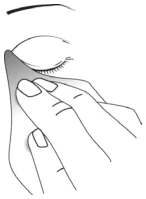
 afterwards.
Benzalkonium chloride may also cause eye irritation, especially if you have dry eyes or disorders of the cornea (the clear layer at the front of the eye). If you feel abnormal eye sensation, stinging or pain in the eye after using this medicine, talk to your doctor.
3. How to use Cystadrops
Always use this medicine exactly as your doctor or pharmacist has told you. Check with your doctor or pharmacist if you are not sure.
Recommended dose
- The recommended dose is 1 drop in each eye, 4 times a day during waking hours.
The recommended interval between each application is 4 hours (for example, you can have your eye drops at 8.00 am, 12.00 am, 4.00 pm and 8.00 pm).
- To avoid sticky eyes in the morning, it is recommended to apply the last drop of the day at least 30 minutes before going to bed.
- The dose may be gradually decreased (to a minimum total daily dose of 1 drop in each eye) by your doctor based on eye examinations.
Only use the drops in your eyes (ocular use).
To use the eye drops, please follow the instructions below carefully.
Those instructions are also available as an animated movie on www.cystadrops.net
Step 1: Before using a vial for the first time
- Cystadrops must be brought back at room temperature before the first administration. It will facilitate the use of the drops.
- Immediately before using a vial for the first time, write the date of opening in the space provided on the
carton box.
| ||
nation by bacteria of the content in the vial.
| ||
the grey stopper.
turn and push to attach small white cap
small white cap dropper dropper vial
vial
➃ ➄
grey stopper ➂ re | ||
move
metal seal ➁ remove green protective cap vial ➀ remove | ||
| ||
he end intended to be attached to the vial, and attach
| it (picture 4) to the vial. Do not remove the dropper | ||
from the vial.
| ||
picture 5) that comes on the top of the dropper.
Step 2: Before using the eye drops
| ||
e carton box. Cystadrops can be used for up to 7 days
from the time of opening.
Step 3: Using the eye drops
| ||
ur thumb and fingers. Move firmly the dropper bottle
| up and down to facilitate the filing of the dropper. | ||
| ||
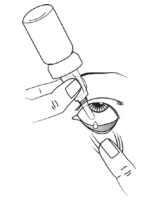
an finger, until there is a “pocket” between the eyelid
and your eye. The drop will go in here (picture 6).
| ||
mirror if it helps.
| ||
as or other surfaces with the dropper. It could infect
the drops.
| ||
ystadrops at a time. Take special care not to touch the
tip of the dropper with your fingers.
| ||
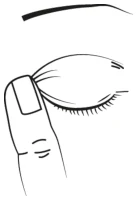
f your eye by the nose (picture 7), then gently massage
| your upper eyelid to spread the eye drops over the e | ||
ye.
| ||
e around the eye with a moist tissue (picture 8).
| ||
ately after use.
➅ ➆ ➇
Step 4: Storing the eye drops after use
- Place the dropper bottle into the carton box.
- Keep Cystadrops at room temperature (it will facilitate the use of the dropper).
- Discard 7 days after opening.
If a drop misses your eye
Try again.
If you use Cystadrops with another eye medicine
Ensure that there is at least a 10 minute gap between using Cystadrops and the other eye medicine. Administer eye ointments last.
If you wear soft contact lenses
Do not use the drops with your lenses in. After using the drops wait 15 minutes before putting your lenses back in.
If you use more Cystadrops than you should
If you put too many drops in your eyes, rinse your eyes out, preferably with saline solution (or if not available with warm water). Do not put in any more drops until it is time for your next regular dose.
If you forget to use Cystadrops
Wait for your next scheduled application and then co
| ntinue with your regular routine. Do not use a double |
dose to make up for a forgotten dose.
If you stop using Cystadrops
Cystadrops must be used every day for the medicine
| to work properly. If you stop using Cystadrops, cystine |
crystals accumulation in the eye (cornea) may increase
| and lead to increased sensitivity to light (photophobia), |
corneal deterioration (keratopathy) and loss of visio
| n. Therefore talk to your doctor before stopping this |
treatment.
If you have any further questions on the use of this m
| edicine, ask your doctor or pharmacist. |
4. Possible side effects
Like all medicines, this medicine can cause side effec
| ts, although not everybody gets them. |
You can usually carry on taking the drops, unless the e
| ffects are serious. If you are worried, talk to your doctor |
or pharmacist. Do not stop using Cystadrops withou
| t speaking to your doctor. |
The following side effects were reported:
Very common side effects (may affect more than 1
| in 10 people) |
- eye pain
- eye redness, eye itching, eye irritation (burning)
- watery eyes
- blurred vision
- discomfort where the drops have been instilled (mai
| nly sticky eyes and sticky eyelashes), medicine deposit |
on the eyelashes, around the eyes
Common side effects (may affect up to 1 in 10 peop
| le) |
- abnormal sensation in eye, a feeling of something i
| n the eye |
- dry eyes
- swollen eyelid
- irritation of eyelid
- visual impairement
- pain where the drops have been instilled
- stye
Reporting of side effects
If you get any side effects, talk to your doctor or ph
| armacist. This includes any possible side effects not |
listed in this leaflet. You can also report side effects d
| irectly via the national reporting system Yellow Card |
Scheme Website: www.mhra.gov.uk/yellowcard or se
| arch for MHRA Yellow Card in the Google Play or Apple |
App Store. By reporting side effects you can help pro
| vide more information on the safety of this medicine. |
5. How to store Cystadrops
Keep this medicine out of the sight and reach of children.
Do not use this medicine after the expiry date which is stated on the vial label and the carton after EXP.
Before opening:
- Store in a refrigerator (2°C - 8°C).
- Keep the vial in the outer carton in order to protect from light.
After first opening:
- Write down the date you opened the vial in the space on the carton.
- Cystadrops can be used for up to 7 days from the time of opening.
- Keep the dropper bottle tightly closed in the outer carton in order to protect from light.
- Store below 25°C.
Do not refrigerate.
- You must throw away the dropper bottle 7 days after you first opened it even if it is not empty. Use a new vial.
Do not throw away any medicines via wastewater or household waste. Ask your pharmacist how to throw away medicines you no longer use. These measures will help protect the environment.
6. Contents of the pack and other information
What Cystadrops contains
- The active substance is cysteamine (mercaptamine), as hydrochloride. One mL of eye drops solution contains 3.8 mg of cysteamine.
- The other ingredients are benzalkonium chloride (see section 2 under ‘Cystadrops contains benzalkonium chloride’), disodium edetate, carmellose sodium, citric acid monohydrate, sodium hydroxide, hydrochloric acid and water for injections.
| What Cystadrops looks like and contents of the p |
ack
Cystadrops is a clear and viscous eye drops solution. Each box contains:
|
tion,
Cystadrops is available in pack containing 1 box or in |
multipack containing 4 boxes.
Not all pack sizes may be marketed in your country Marketing Authorisation Holder/ Manufacturer Recordati Rare Diseases Tour Hekla 52 avenue du Général de Gaulle 92800 Puteaux - France For any information about this medicine, please contact |
the local representative of the Marketing Authorisation
Holder: United Kingdom Recordati Rare Diseases UK Ltd. Tel: +44 (0)1491 414333 This leaflet was last revised in 07/2025 |