

Patient leaflet - Bromfenac 0.9 mg/ml eye drops, solution
What Bromfenac is and what it is used for
This medicine contains the active substance bromfenac and belongs to a group of medicines called non-steroidal anti-inflammatory drugs (NSAIDs). It works by blocking certain substances involved in causing inflammation. Bromfenac is used to reduce eye inflammation following cataract surgery in adults.
What you need to know before you use Bromfenac
Do not use Bromfenac
if you are allergic to bromfenac or to any of
the other ingredients of this medicine (listed in section 6).
if you have experienced asthma, skin allergy
or intense inflammation in your nose when using other NSAIDs. Examples of NSAIDs are: acetylsalicylic acid, ibuprofen, ketoprofen, diclofenac.
Warnings and precautions
Talk to your doctor or pharmacist before using this medicine
if you are using topical steroids (e.g.
cortisone), as this may cause unwanted side effects.
if you have bleeding problems (e.g.
haemophilia) or have had them in the past, or you are taking other medicines which may prolong bleeding time (e.g. warfarin, clopidogrel, acetylsalicylic acid).
if you have eye problems (e.g. dry eye
syndrome, corneal problems).
- if you have diabetes.
- if you have rheumatoid arthritis.
if you had repeated eye surgery within a
short period of time.
Wearing contact lenses is not recommended after cataract surgery. Therefore, do not wear contact lenses whilst using Bromfenac.
Children and adolescents
Bromfenac should not be used in children and adolescents.
Benzalkonium chloride may also cause eye irritation, especially if you have dry eyes or disorders of the cornea (the clear layer at the front of the eye). If you feel abnormal eye sensation, stinging or pain in the eye after using this medicine, talk to your doctor.
How to use Bromfenac
Always use this medicine exactly as your doctor has told you. Check with your doctor or pharmacist if you are not sure.
Dose
The recommended dose is one drop of Bromfenac in the affected eye(s) twice daily (morning and evening). Do not use more than one drop in the affected eye(s) 2 times daily. Start using the drops the next day after your cataract surgery.
Method of administration
Bromfenac is for ocular use.
- Wash your hands before using the eye drops.
- Put yourself in a comfortable and stable position.
- Twist off the bottle cap.
- Hold the bottle, pointing down, between
your thumb and fingers.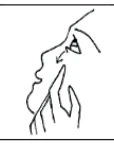 - Tilt your head back.
Pull down your lower eyelid
with a clean finger.
- Bring the bottle tip close to
the eye.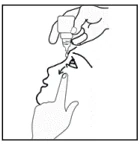 - Do not touch your eye or
eyelid, surrounding areas
or other surfaces with
the dropper.
- Gently squeeze the bottle
to release one drop of 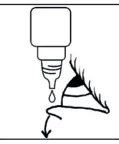 Bromfenac.
Close the bottle cap firmly
immediately after use.
Keep the bottle tightly
closed when not in use.
If you use any other eye drops, wait at least five minutes between using Bromfenac and the other drops.
Other medicines and Bromfenac
Tell your doctor or pharmacist if you are taking, have recently taken or might take any other medicines.
Duration of treatment
Continue the drops through the first 2 weeks after your surgery. Do not use Bromfenac longer than 2 weeks.
Pregnancy, breast-feeding and fertility If you are pregnant or breast-feeding, think you may be pregnant or are planning to have a baby, ask your doctor for advice before you use Bromfenac.
Bromfenac should not be used during the last three months of pregnancy. The doctor may prescribe this medicine during pregnancy if expected benefit to mother outweigh the possible risk to the baby.
Bromfenac may be prescribed to breast-feeding woman and have no important influence on fertility.
Driving and using machines
Your vision may be blurred for a short time after using this eye drops. If you experience blurred vision upon instillation, do not drive or use machines until your vision is clear.
If you use more Bromfenac than you should Rinse out your eye with warm water. Do not put in any more drops until it is time for your next regular dose. If Bromfenac is accidentally swallowed, a glass of water or other fluid should be taken to water down the medicine.
If you forget to use Bromfenac
Use a single dose as soon as you remember. If it is almost time for the next dose, leave out the missed dose. Continue with the next regularly scheduled dose. Do not use a double dose to make up for a forgotten dose.
If you stop using Bromfenac
Do not stop using Bromfenac without speaking to your doctor.
In rare cases upon withdrawal of Bromfenac, a flare-up of the inflammatory response, e.g. in the form of retina swelling, due to the cataract operation has been observed.
If you have any further questions on the use of this medicine, ask your doctor or pharmacist.
Possible side effects
Like all medicines, this medicine can cause side effects, although not everybody gets them. If you experience decreased or blurred vision the week after the end of treatment, contact your doctor immediately.
If you notice any of the following side effects while using the drops, contact your doctor immediately:
Uncommon side effects
(may affect up to 1 in 100 people) Foreign body sensation in the eye, redness and inflammation of the eye, damage and inflammation of the surface of the eye, eye discharge, itching, irritation or pain of the eye, swelling or bleeding of the eyelid, impaired vision due to inflammation, floaters or moving spots before the eyes or diminishing vision that can indicate bleeding or damage of the back of the eye (retina), ocular discomfort, sensitivity to light, reduced or blurred vision, swelling of the face, cough, nosebleeding or runny nose.
Rare side effects
(may affect up to 1 in 1,000 people) Damage of the eye surface, redness of the eye, asthma.
Reporting of side effects
If you get any side effects, talk to your doctor, pharmacist or nurse. This includes any possible side effects not listed in this leaflet. You can also report side effects directly via the Yellow Card Scheme, Website: www.mhra.gov.uk/ yellowcard, or search for MHRA Yellow Card in the Google Play or Apple App Store. By reporting side effects you can help provide more information on the safety of this medicine.
How to store Bromfenac
Keep this medicine out of the sight and reach of children.
Do not use this medicine after the expiry date which is stated on the bottle and outer carton after “EXP”. The expiry date refers to the last day of that month.
Discard the bottle 4 weeks after first opening to prevent infection even if there is solution remaining. Write the date of opening on the carton label in the space provided.
Do not throw away any medicines via wastewater or household waste. Ask your pharmacist how to throw away medicines you no longer use. These measures will help to protect the environment.
Contents of the pack and other information
What Bromfenac contains
- The active substance is bromfenac. One ml of solution contains 0.9mg bromfenac (as sodium sesquihydrate).
- The other ingredients are: boric acid, borax, sodium sulphite anhydrous (E221), benzalkonium chloride (see section 2), tyloxapol, povidone (K-30), disodium edetate, water for injections, sodium hydroxide and hydrochloric acid 1M (to keep acidity levels normal).
What Bromfenac looks like and contents of the pack
Bromfenac is a clear yellow liquid (solution) supplied in a pack containing one 5ml plastic bottle with a screw cap.
Marketing Authorisation Holder Aspire Pharma Limited
Unit 4, Rotherbrook Court
Bedford Road
Petersfield
Hampshire
GU32 3QG
United Kingdom
Manufacturer
RAFARM S.A.
Thesi Pousi Xatzi Agiou Louka
190 02, Paiania
Greece
This leaflet was last revised in
December 2025.
To request a copy of this leaflet in Braille, large print or audio please call 0800 198 5000 (UK only).
Please be ready to give the following information:
Product name: Bromfenac 0.9mg/ml eye drops, solution
Reference number: PL 35533/0274
XXXXXXX - P1.6
Product name: Bromfenac 0.9 mg/ml eye drops, solution Size: 5ml
PL/PA no: PL35533/0274
Type: Leaflet
Reason for request: Initial submission - correct Bromfenac name Version no: 1.6
Date of revision: 9.12.25
Colours: As swatches
Font(s):