

Patient leaflet - Bimatoprost 0.3 mg/ml eye drops, solution in single-dose Container
1. What Bimatoprost 0.3 mg/ml single-dose is and what it is used for
Bimatoprost 0.3 mg/ml single-dose is an antiglaucoma preparation. It belongs to a group of medicines called prostamides.
Bimatoprost 0.3 mg/ml single-dose are used to reduce high pressure in the eye. This medicine may be used on its own or with other drops called beta-blockers which also reduce pressure.
Your eye contains a clear, watery liquid that feeds the inside of the eye. Liquid is constantly being drained out of the eye and new liquid is made to replace this. If the liquid cannot drain out quickly enough, the pressure inside the eye builds up. This medicine works by increasing the amount of liquid that is drained. This reduces the pressure inside the eye. If the high pressure is not reduced, it could lead to a disease called glaucoma and eventually damage your sight.
This medicine does not contain a preservative.
2. What you need to know before you use Bimatoprost 0.3 mg/ml single-dose
Do not use this medicine:
- If you are allergic to bimatoprost or any of the other ingredients of this medicine (listed in section 6).
Warnings and precautions
Talk to you doctor or pharmacist before using Bimatoprost 0.3 mg/ml single-dose. Please tell your doctor or pharmacist, if:
- You have any breathing problems
- You have liver or kidney problems
- You have had a cataract surgery in the past
- You have or have had low blood pressure or low heart rate
- You have had a viral infection or inflammation of the eye
During treatment, Bimatoprost 0.3 mg/ml single-dose may cause a loss of fat around the eye, which may cause your eyelid crease to deepen, your eye to appear sunken (enophthalmos), your upper eyelid to droop (ptosis), the skin around your eye to tighten (involution of dermatochalasis) and the lower white part of your eye to become more visible (inferior scleral show). The changes are typically mild, but if pronounced, they can affect your field of vision. The changes may disappear if you stop taking Bimatoprost 0.3 mg/ml single-dose. Bimatoprost 0.3 mg/mL single-dose may also cause your eyelashes to darken and grow, and cause the skin around the eyelid to darken too. The colour of your iris may also go darker. These changes may be permanent. The change may be more noticeable if you are only treating one eye.
Children and adolescents
Bimatoprost 0.3 mg/ml single-dose has not been tested in children under the age of 18 and therefore should not be used by patients under 18 years.
Other medicines and Bimatoprost 0.3 mg/ml single-dose
Tell your doctor or pharmacist if you are taking, have recently taken, or might take any other medicines.
Pregnancy, breast-feeding and fertility
If you are pregnant or breast-feeding, think you might be pregnant or are planning to have a baby, ask your doctor or pharmacist for advice before taking this medicine. Bimatoprost 0.3 mg/ml single-dose may get into breast milk so you should not breast-feed while you are taking this medicine.
Driving and using machines
Your sight may become blurred for a short time just after using Bimatoprost 0.3 mg/ml single-dose. You should not drive or use machines until your sight is clear again. Bimatoprost 0.3 mg/ml single-dose contains phosphates
This medicine contains 0.95 mg phosphates in each ml of solution which is equivalent to 2.68 mg of sodium phosphate dibasic heptadydrate.
If you suffer from severe damage to the clear layer at the front of the eye (the cornea), phosphates may cause in very rare cases cloudy patches on the cornea due to calcium build-up during treatment.
3. How to use Bimatoprost 0.3 mg/ml single-dose
Always use this medicine exactly as your doctor or pharmacist has told you. Check with your doctor or pharmacist if you are not sure.
The recommended dose is one drop once daily, in the evening, in each eye that needs treatment. Bimatoprost 0.3 mg/ml single-dose should only be applied to the eye. If you use Bimatoprost 0.3 mg/ml single-dose with another eye medicine, wait at least 5 minutes between using Bimatoprost 0.3 mg/ml single-dose and the other eye medicine. Do not use more than once a day as the effectiveness of treatment may be reduced. Instructions for use
Wash your hands before use. Make sure that the single-dose container is intact before use. The solution should be used immediately after opening. To avoid contamination, do not let the open-end of the single-dose container touch your eye or anything else. 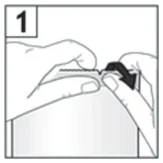
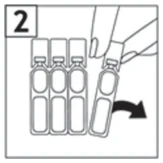
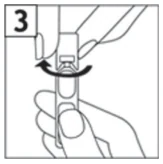
 1, 2, 3. Take one single-dose container from the pouch and hold it upright (with the cap pointing upwards) and twist off the cap.
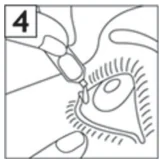
- 4. Gently pull down the lower eyelid to form a pocket. Turn the single-dose container upside down and squeeze it to release 1 drop into the affected eye(s).
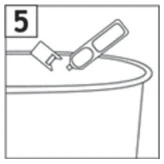
- 5. Throw away the single-dose container after you have used it, even if there is some solution left.
Wipe off any excess that runs down the cheek.
If you wear contact lenses, take your lenses out before using this medicine. Wait 15 minutes after using the drops, and before you put your lenses back in. If you use more Bimatoprost 0.3 mg/ml single-dose than you should
If you use more of this medicine than you should, it is unlikely to cause you any serious harm. Put your next dose in at the usual time. If you are worried, talk to your doctor or pharmacist.
If you forget to use Bimatoprost 0.3 mg/ml single-dose
If you forget to use this medicine, use a single drop as soon as you remember, and then go back to your regular routine. Do not take a double dose to make up for a forgotten dose. If you stop using Bimatoprost 0.3 mg/ml single-dose
Bimatoprost 0.3 mg/ml single-dose should be used every day to work properly. If you stop using Bimatoprost 0.3 mg/ml single-dose the pressure inside your eye may go up, therefore talk to your doctor before stopping this treatment.
If you have any further questions on the use of this product, ask your doctor or pharmacist.
4. Possible side effects
Like all medicines, this medicine can cause side effects, although not everybody gets them. Very common:
May affect more than 1 in 10 people.
Affecting the eye
- Slight redness (up to 24% of people)
- Loss of fat in the eye region which can lead to deepening of your eyelid crease, sunken eye (enophthalmos), drooping eyelid (ptosis), tightening of the skin around your eye (involution of dermatochalasis), and the lower white part of your eye to become more visible (inferior scleral show)
Common:
May affect up to 1 in 10 people.
Affecting the eye
- Small breaks in the surface of the eye, with or without inflammation
- Irritation
- Itchy eyes
- Pain
- Dryness
- A feeling that something is in your eye
- Longer eyelashes
- Darker skin colour around the eye
- Red eyelids
Uncommon:
May affect up to 1 in 100 people.
Affecting the eye
- Tired eyes
- Sensitivity to light
- Darker iris colour
- Itchy and swollen eyelids
- Tears
- Swelling of the see-through layer which covers the surface of the eye
- Blurred vision
Affecting the body
- Headaches
- Hair growth around the eye
Not known (frequency cannot be estimated by available data):
Affecting the eye
- Sticky eyes
- Ocular discomfort
Affecting the body
- Asthma
- Worsening of asthma
- Worsening of the lung disease called chronic obstructive pulmonary disease (COPD)
- Shortness of breath
- Symptoms of allergic reaction (swelling, redness of the eye and rash of the skin)
- Dizziness
- Increased blood pressure
- Skin discoloration (periocular)
In addition to the side effects for Bimatoprost 0.3 mg/ml single-dose, the following side effects have been seen with the preserved multi-dose formulation of Bimatoprost 0.3 mg/ml and may occur in patients taking this medicine:
- Burning sensation in the eye
- An allergic reaction in the eye
- Inflamed eyelids
- Difficulty in seeing clearly
- Worsening vision
- Darker eyelashes
- Retinal bleeding
- Inflammation within the eye
- Cystoid macular oedema (swelling of the retina within the eye leading to worsening vision)
- Iris inflammation
- Eyelid twitching
- Eyelid shrinking, moving away from surface of the eye
- Nausea
- Skin redness around the eye
- Weakness
- An increase in blood-test results that show how your liver is working Other side effects reported with eye drops containing phosphates
In very rare cases, some patients with severe damage to the clear layer at the front of the eye (the cornea) have developed cloudy patches on the cornea due to calcium build-up during treatment.
Reporting side effects
If you get any of the side effects, talk to your doctor or pharmacist. This includes any possible side effects not listed in this leaflet. You can also report side effects directly via the Yellow Card Scheme at: www.mhra.gov.uk/yellowcard or search for MHRA Yellow Card in the Google Play or Apple App Store. By reporting side effects you can help provide more information on the safety of the medicine.
5. How to store Bimatoprost 0.3 mg/ml single-dose
Keep this medicine out of the sight and reach of children.
This medicine is for single use only and does not contain preservatives. Do not keep any unused solution.
Do not use this medicine after the expiry date which is stated on the single-dose container and the carton after the expiry date (EXP). The expiry date refers to the last day of that month.
This medicinal product does not require any special storage condition. However, once the pouch is opened use within 30 days.
Do not throw away any medicines via wastewater or household waste. Ask your pharmacist how to throw away medicines you no longer use. These measures will help to protect the environment.
6. Contents of the pack and other information
What Bimatoprost 0.3 mg/ml single-dose contains
- The active substance is bimatoprost. One ml of solution contains 0.3 mg bimatoprost.
- The other ingredients are sodium chloride, sodium phosphate dibasic heptahydrate (E339), citric acid monohydrate (E330) and water for injection. Small amounts of hydrochloric acid or sodium hydroxide may be added to keep the level of acid (pH levels) normal.
What Bimatoprost 0.3 mg/ml single-dose looks like and contents of the pack
Bimatoprost 0.3 mg/ml single-dose is a clear and colourless aqueous solution supplied in single-dose plastic containers, each containing 0.4 ml of solution.
Pack contains 3 aluminium foil pouches, each containing 10 single-dose containers, for a total of 30 single-dose containers in a carton.
Marketing Authorisation Holder and Manufacturer
Marketing Authorisation Holder
Alissa Healthcare Research Ltd, Unit 5, Fulcrum 1, Solent Way,
Whiteley, Fareham, Hampshire PO15 7FE, United Kingdom
Manufacturer
Laboratorios Salvat, S.A., Gall, 30-36 - 08950,
Esplugues de Llobregat (Barcelona), Spain
This leaflet was last revised in January 2025
P00017