

Summary of Product Characteristics (SmPC) - Zepzelca 4 mg powder for concentrate for solution for infusion
1 NAME OF THE MEDICINAL PRODUCT
ZEPZELCA 4 mg powder for concentrate for solution for infusion
2 QUALITATIVE AND QUANTITATIVE COMPOSITION
ZEPZELCA 4 mg powder for concentrate for solution for infusion
Each vial of powder contains 4 mg of lurbinectedin.
One mL of reconstituted solution contains 0.5 mg of lurbinectedin.
For the full list of excipients, see section 6.1.
3 PHARMACEUTICAL FORM
Powder for concentrate for solution for infusion (powder for concentrate).
White to off-white powder
4 CLINICAL PARTICULARS
4.1 Therapeutic indications
ZEPZELCA, in combination with atezolizumab, is indicated for the maintenance treatment of adult patients with extensive-stage small cell lung cancer (ES-SCLC) whose disease has not progressed after first-line induction therapy with atezolizumab, carboplatin and etoposide.
4.2 Posology and method of administration
ZEPZELCA therapy should be initiated and supervised by health professionals experienced in the use of anticancer products.
Posology
The recommended dose of lurbinectedin is 3.2 mg/m2 every 21 days until disease progression or unacceptable toxicity when it is administered in combination with atezolizumab.
When administering lurbinectedin on the same day, atezolizumab should be administered first (see section 5.1).
For the recommended intravenous or subcutaneous dose of atezolizumab, as well as for recommendations regarding dose modification due to toxicity, refer to their prescribing information.
Treatment with ZEPZELCA should be initiated only if absolute neutrophil count (ANC) is at least 1.5 x 10⁹/L and platelet count is at least 100 x 109/L.
Treatment continuation and treatment delays
Further treatment cycles (i.e., cycle 2 or subsequent) will be administered every 21 days if the patient fulfils all the treatment continuation criteria listed above (see also Table 2 for dose modifications criteria for ZEPZELCA adverse reactions).
If a patient does not meet the requirements for treatment continuation on Day 1 of any cycle after Cycle 1, treatment will be withheld until appropriate recovery, for a maximum of 21 days after the treatment due date. If there is no recovery after a 21-days delay, treatment must be stopped.
In case atezolizumab is discontinued due to an immune-related severe adverse reaction, treatment with lurbinectedin may be continued at its current dose as a single agent. If immune toxicity re-occurs despite discontinuation of atezolizumab, treatment with lurbinectedin should also be discontinued.
Pre-infusion medicinal products
The following pre-infusion medicinal products should be administered for antiemetic prophylaxis:
- Corticosteroids (intravenous dexamethasone 8 mg or equivalent)
- Serotonin antagonists (intravenous ondansetron 8 mg or equivalent)
Post-infusion medicinal products
Primary prophylaxis with granulocyte colony-stimulating factor (G-CSF) is recommended to reduce the risk of severe neutropenia/febrile neutropenia. If needed, post-medication can include administration of extended antiemetic treatment for 2 days:
- Corticosteroids (oral dexamethasone 4 mg or equivalent), or
- Serotonin antagonists (oral ondansetron 8 mg or equivalent) or
- Metoclopramide (intravenous or oral 10 mg or equivalent every 8 hours)
Dose adjustment for adverse reactions
The recommended dose reductions for adverse reactions are listed in Table 1.
Table 1: Dose reduction for ZEPZELCA for adverse reactions
| Recommended starting dose | 1st Dose reduction | 2nd Dose reduction | 3rd Dose reduction |
| 3.2 mg/m2 | 2.6 mg/m2 | 2.0 mg/m2 | Stop |
| 1.6 mg/m2* | 1.3 mg/m2 | 1.0 mg/m2 | Stop |
*Dose reduction schedule applicable to the 50% reduced dose (i.e., 1.6 mg/m2) used in cases of moderated hepatic impairment or co-administration with strong or moderate CYP3A inhibitors.
The recommended dose modifications for adverse reactions are presented in Table 2.
Table 2: Dose modifications criteria for ZEPZELCA for adverse reactions
| Adverse reaction | Severitya | Dose modification ≤ |
| Neutropeniab (see section 4.4) | Grade 4 OR any grade febrile neutropenia OR associated with infection/sepsis at any grade |
|
| Thrombocytopenia (see section 4.4) | Grade 3 with bleeding OR Grade 4 |
|
| Grade 2 |
|
≤
Hepatotoxicity (see section 4.4) and other adverse reactions | ≥ | 1 (for AST and ALT until ≤ 3 ULN), AND
|
| Grade 3 |
| |
| Rhabdomyolysis | Grade 2 ≥ |
|
| Grade 3 |
| |
| Non-haematological toxicity | Grade 2 ≥ |
|
| Grade 3 |
| |
| Tumour Lysis Syndrome | Grade 2 ≥ |
|
| Grade 3 |
| |
Any adverse reaction that requires frequent or prolonged (>2 weeks) dose delays | - |
|
a National Cancer Institute Common Terminology Criteria for Adverse Events (NCI CTCAE) version 5.0.
b Patients with isolated Grade 4 neutropenia (neutrophil count less than 500 cells/mm3) and who had not received G-CSF as primary prophylaxis, may receive G-CSF prophylaxis rather than undergo lurbinectedin dose reduction.
Dose adjustment for co-administration with strong or moderate CYP3A inhibitors Co-administration of lurbinectedin with strong or moderate CYP3A inhibitors should be avoided. If co-administration cannot be avoided, dose of lurbinectedin should be reduced by 50% of the approved dose (see section 4.5). In case of adverse reactions with the reduced initial dose, up to two subsequent dose reductions by 20% each are allowed (see Table 1 in section 4.2).
Special population
Elderly
No dose adjustment is needed in patients aged ≥65 years.
Renal impairment
No dose adjustment is recommended in patients with mild (CrCL 60-89 mL/min) or moderate (CrCL of 30-59 mL/min) renal impairment.
Lurbinectedin has not been evaluated in a sufficient number of patients with severe renal impairment (CrCL < 30 mL/min) or end-stage renal disease to estimate the risk; therefore, it should not be administered to these patients (see section 5.2).
Hepatic impairment
Treatment with lurbinectedin is not recommended in patients with elevated AST or ALT (AST or ALT > 3 × ULN), due to limited clinical experience.
No dose adjustment is recommended for patients with mild hepatic impairment (total bilirubin ≤ ULN and AST > ULN, or total bilirubin 1 to ≤ 1.5 × ULN and any AST).
In patients with moderate hepatic impairment (total bilirubin > 1.5 to ≤ 3 × ULN and any AST), the recommended dose of ZEPZELCA is 1.6 mg/m2 by intravenous infusion over 60 minutes every 21 days until disease progression or unacceptable toxicity (see section 5.2). Patients with moderate hepatic impairment should be monitored for increased adverse reactions. In case of adverse reactions with the reduced initial dose, up to two subsequent dose reductions by 20% each are allowed (see Table 1 in section 4.2).
Administration of ZEPZELCA in patients with severe hepatic impairment (total bilirubin > 3 × ULN) should be avoided. If administration of ZEPZELCA cannot be avoided, the recommended dose is 1.6 mg/m2 by intravenous infusion over 60 minutes every 21 days until disease progression or unacceptable toxicity (see section 5.2). Patients with severe hepatic impairment should be monitored for increased adverse reactions. In case of adverse reactions with the reduced initial dose, up to two subsequent dose reductions by 20% each are allowed (see Table 1 in section 4.2).
Paediatric population
There is no relevant use of ZEPZELCA in the paediatric population in the treatment of SCLC.
Method of administration
ZEPZELCA is for intravenous use only. It must be administered by intravenous infusion over a period of one hour.
Precautions to be taken before handling or administering the medicinal product
ZEPZELCA is to be reconstituted and then further diluted prior to administration.
The use of a central venous catheter should be considered to reduce the risk of extravasation (see section 4.4) and thrombophlebitis, particularly in patients with limited venous access.
For instructions on reconstitution and dilution of the medicinal product before administration, see section 6.6.
4.3 Contraindications
- Hypersensitivity to the active substance or to any of the excipients listed in section 6.1.
- Breastfeeding (see section 4.6).
4.4 Special warnings and precautions for use
Myelosupression
ZEPZELCA can cause severe and life-threatening myelosuppression including febrile neutropenia and sepsis.
ZEPZELCA should not be administered to patients with baseline neutrophil counts of less than 1.5 x 10⁹/L and platelet counts of less than 100 x 109/L.
Full blood counts including differential white blood cells and platelet count should be monitored at baseline and prior to each cycle. Dose modifications may be required (see Table 2 in section 4.2).
In case of neutrophil counts of less than 500/mm3 or any value less than lower limit of normal that is associated with infection/sepsis, the use of G-CSF is recommended.
Hepatotoxicity
ALT and AST increases have been reported with ZEPZELCA (see section 4.8).
Liver tests, including ALT, AST and bilirubin should be monitored prior to initiating ZEPZELCA and periodically during treatment as clinically indicated. Dose modifications may be required (see Table 1 in section 4.2).
Extravasation resulting in tissue necrosis
Extravasation of ZEPZELCA resulting in skin and soft tissue injury, including necrosis requiring debridement, may occur (see section 4.8).
The use of a central venous catheter should be considered to reduce the risk of extravasation, particularly in patients with limited venous access. Patients should be monitored for signs and symptoms of extravasation during the ZEPZELCA infusion.
If extravasation occurs, the infusion should be immediately discontinued, the infusion catheter should be removed, and the patient should be monitored for signs and symptoms of tissue necrosis. The time to onset of necrosis after extravasation may vary. Supportive care should be administered and an appropriate medical specialist should be consulted as needed for management of signs and symptoms of extravasation. Subsequent infusions should be administered at a site that was not affected by extravasation.
Rhabdomyolysis
Rhabdomyolysis has been reported in patients treated with ZEPZELCA (see section 4.8).
Creatine phosphokinase (CPK) should be monitored prior to initiating ZEPZELCA and periodically during treatment as clinically indicated.
If rhabdomyolysis occurs, supportive measures such as parenteral hydration, urine alkalinisation and dialysis should be promptly established, as indicated. Based on severity, ZEPZELCA treatment should be withhold or the dose should be reduced [see Table 2 in section 4.2].
Caution should be taken if medicinal products with known association with rhabdomyolysis (e.g., statins), are administered concomitantly with lurbinectedin, since the risk of rhabdomyolysis may be increased.
Tumour lysis syndrome (TLS)
Tumour lysis syndrome (TLS), which may be fatal, has been reported with ZEPZELCA therapy. Healthcare professionals are advised to closely monitor patients for TLS, especially those with a high tumour burden. Key precautions include preventing dehydration and managing electrolyte imbalances. If TLS develops, it should be treated promptly, and the potential need for interruption or discontinuation of treatment should be considered (see section 4.2).
Co-administration with strong CYP3A inducers
Co-administration of strong CYP3A inducers should be avoided (see section 4.5).
Embryo-foetal toxicity
Lurbinectedin can cause fetal harm when administered to a pregnant woman. Pregnancy testing is recommended in women of childbearing potential prior to starting treatment.
Female patient of childbearing potential should use highly effective contraception during treatment and for 7 months after the last dose.
Male patients with female partners of childbearing potential should use condom during treatment and for 4 months after the last dose. Female partners of childbearing potential should use highly effective contraception for the same period (see section 4.6 and 5.3).
Disease-specific precautions - SCLC
Patients with ECOG performance status ≥ 2; central nervous system (CNS) metastases, a history of autoimmune disease, or administration of systemic immunosuppressive medicinal products within 1 week prior to enrolment were excluded in the pivotal study in SCLC (see section 5.1). In the absence of data, lurbinectedin in combination with atezolizumab should be used with caution in these populations after careful consideration of the potential benefit/risk on an individual basis.
Excipients
This medicinal product contains less than 1 mmol of sodium (23 mg) per vial, that is to say essentially “sodium-free”.
4.5 Interaction with other medicinal products and other forms of interaction
Effect of strong or moderate CYP3A inhibitors on lurbinectedin
In a dedicated drug-drug interaction study (n=8) with itraconazole, a strong CYP3A4 inhibitor, systemic exposure of total lurbinectedin was increased by approximately 2.7-fold (AUC0-∞) and total plasma clearance was reduced by 63%, when lurbinectedin was given concomitantly with itraconazole (total daily dose of 200 mg during 12 days, 4 days before up to 8 days after the lurbinectedin administration).
Co-administration of ZEPZELCA with strong or moderate CYP3A inhibitors should be avoided. If co-administration with strong CYP3A inhibitors (e.g., ketoconazole, itraconazole, posaconazole, voriconazole, clarithromycin, telithromycin, lopinavir, ritonavir, saquinavir, nelfinavir, atazanavir, indinavir, boceprevir, telaprevir) or moderate CYP3A inhibitors (e.g., aprepitant, ciprofloxacin, erythromycin, cyclosporine, fluconazole, diltiazem, verapamil) cannot be avoided, the dose of ZEPZELCA should be reduced by 50% of the approved dose (see section 4.2). In case of adverse reactions with the reduced initial dose, up to two subsequent dose reductions by 20% each are allowed (see Table 1 in section 4.2).
Effect of strong CYP3A inducers on lurbinectedin
In a dedicated drug-drug interaction study (n=8) with bosentan, a moderate CYP3A4 inducer, systemic exposure of total lurbinectedin was decreased by approximately 20% (AUC0-∞) and total plasma clearance was increased by 25% when lurbinectedin was given concomitantly with bosentan (125 mg twice daily during 5 days). Therefore, the magnitude of these changes precludes a clinically relevant effect of co-administration of moderate CYP3A4 inducers (e.g., bosentan, cenobamate, dabrafenib, efavirenz, etravirine, lorlatinib, pexidartinib, phenobarbital, primidone, sotorasib) on lurbinectedin exposure and no dose adjustment is required.
Co-administration of strong CYP3A inducers (e.g., carbamazepine, phenobarbital, phenytoin, rifampicin, rifabutin, rifapentine, St. John’s Wort (Hypericum perforatum)) with ZEPZELCA should be avoided. Consider alternative agents with less CYP3A induction (see section 4.4).
4.6 Fertility, pregnancy and lactation
Women of childbearing potential / Contraception in males and females
Pregnancy testing is recommended in women of childbearing potential prior to starting treatment with lurbinectedin.
Female patients of childbearing potential should use highly effective contraception during treatment and for 7 months after the last dose.
Male patients with female partners of childbearing potential should use condom during treatment and for 4 months after the last dose. Female partners of childbearing potential should use highly effective contraception for the same period (see sections 4.4 and 5.3).
Pregnancy
There are no or limited amount of data from the use of lurbinectedin in pregnant women.
Studies in animals have shown severe embryo-foetal development toxicity (see section 5.3).
Lurbinectedin should not be used during pregnancy unless the clinical condition of the woman requires treatment with lurbinectedin.
Pregnant or non-pregnant women of childbearing potential should be advised of the potential risk to a foetus. If ZEPZELCA is used during pregnancy, or if a patient becomes pregnant while receiving ZEPZELCA, the patient should be apprised of the potential risk to the foetus.
Breastfeeding
It is unknown whether lurbinectedin/metabolites are excreted in human milk.
A risk to the suckling child cannot be excluded.
Lurbinectedin is contraindicated during breastfeeding.
Fertility
Although no specific studies were conducted to assess fertility with lurbinectedin, and no clear signals of toxicity of reproductive organs were observed in toxicity studies, due to the nature of the compound (cytotoxic and mutagenic) it is likely to affect the reproductive capacity.
Advice on conservation of ovules or sperm should be sought prior to treatment because of the possibility of irreversible infertility due to therapy with lurbinectedin. Genetic counselling is also recommended for patients wishing to have children after therapy.
4.7 Effects on ability to drive and use machines
ZEPZELCA has moderate influence on the ability to drive and use machines. Patients experiencing fatigue, dizziness, vertigo and nausea should be advised not to drive and use machines until symptoms abate (see section 4.8)
4.8 Undesirable effects
Summary of the safety profile
The most common adverse reactions were nausea (37.6%), fatigue* (34.3%), anaemia (33.9%), thrombocytopenia (27.7%), and neutropenia (25.2%).
The most frequent grade 3/4 adverse reactions were neutropenia (12.4%), thrombocytopenia (11.2%), anaemia (9.5%) and fatigue* (5.0%).
Serious adverse reactions occurred in 34.3% of patients receiving ZEPZELCA with atezolizumab. The most frequent serious adverse reactions were thrombocytopenia (2.9%), pneumonia (3.7%), respiratory tract infection (2.5%) and dyspnoea (2.1%). Fatal adverse reactions occurred in 5% of patients receiving ZEPZELCA with atezolizumab, in most cases due to pneumonia and other lung infections.
Treatment with ZEPZELCA was permanently discontinued due to adverse reactions in 5.8% of patients who were receiving ZEPZELCA in combination with atezolizumab. The most frequent adverse reaction requiring permanent discontinuation of ZEPZELCA was neutropenia (1.7%).
Adverse reactions leading to interruption of ZEPZELCA in patients who received ZEPZELCA with atezolizumab occurred in 28.9% of patients; the most common adverse reactions leading to interruption were neutropenia (5.4%), anaemia (5.0%), fatigue* (4.6%) and thrombocytopenia (3.3%).
Dose reductions of ZEPZELCA due to an adverse reaction in patients who received ZEPZELCA with atezolizumab occurred in 16.1% of patients. The most frequent adverse reactions requiring dose reductions in patients who received ZEPZELCA with atezolizumab included thrombocytopenia (4.1%), fatigue* (3.3%), nausea (2.1%) and vomiting (2.1%).
* For Preferred Terms merged see footnote in Table 3.
Tabulated list of adverse reactions
Adverse reactions reported in IMforte clinical study are listed by MedDRA System Organ Class and by frequency in Table 3.
The frequencies of adverse reactions are based on all-cause adverse event frequencies identified in 242 patients exposed to lurbinectedin in combination with atezolizumab during a median treatment duration of 4.4 months in the clinical study IMforte (see section 5.1 for information on the main characteristics of participants in this clinical study). Additional adverse reactions were reported post-marketing.
Frequencies are defined as: very common (≥ 1/10); common (≥ 1/100 to < 1/10); uncommon (≥ 1/1 000 to < 1/100); rare (≥ 1/10 000 to <1/1 000); very rare (< 1/10 000); “ not known (cannot be estimated from available data)”. Within each frequency grouping, adverse reactions are presented in the order of decreasing seriousness.
Table 3. Adverse reactions experienced by patients treated with ZEPZELCA in combination with atezolizumab
| Frequency category (any grade) | Adverse reaction by system organ class | Any grade (%) | Grade |
≥
| 3 (%) | |||
| Infections and infestations | |||
| Common | Pneumonia | 5.4 | 3.3 |
| Frequency category (any grade) | Adverse reaction by system organ class | Any grade (%) | Grade |
≥
| 3 (%) | |||
| Urinary tract infectiona | 5.4 | 0.4 | |
| Infection | 3.3 | 1.2 | |
| Skin infectionb | 2.1 | 0.4 | |
| Uncommon | Sepsis | 0.4 | 0.4 |
| Blood and lymphatic system disorders | |||
| Very common | Anaemia | 33.9 | 9.5 |
| Thrombocytopenia | 27.7 | 11.2 | |
| Neutropenia | 25.2 | 12.4 | |
| Leukopenia | 12.4 | 2.9 | |
| Common | Lymphopenia | 5.4 | 2.1 |
| Febrile neutropenia | 1.7 | 1.7 | |
| Uncommon | Pancytopenia | 0.4 | 0.4 |
| Endocrine disorders | |||
| Common | Hypothyroidism | 7.9 | 0 |
| Metabolism and nutrition disorders | |||
| Very common | Decreased appetite | 18.2 | 0.8 |
| Common | Hypomagnesaemia | 5.4 | 0.4 |
| Hypocalcaemia | 4.5 | 0.8 | |
| Very rare | Tumour Lysis Syndromec | frequency not known | - |
| Nervous system disorders | |||
| Common | Neuropathy peripherald | 8.3 | 0.8 |
| Headache | 6.6 | 0 | |
| Dysgeusia | 2.9 | 0 | |
| Vascular disorders | |||
| Common | Phlebitis | 7.0 | 0 |
| Thrombophlebitis | 4.5 | 0.4 | |
| Respiratory, thoracic and mediastinal disorders | |||
| Very common | Dyspnoea | 10.7 | 2.5 |
| Common | Cough | 9.9 | 0 |
| Pneumonitis | 4.5 | 0.8 | |
| Productive cough | 4.1 | 0 | |
| Gastrointestinal disorders | |||
| Very common | Nausea | 37.6 | 2.9 |
| Diarrhoea | 15.7 | 0.4 | |
| Vomiting | 14.9 | 0.8 | |
| Constipation | 12.8 | 0 | |
| Common | Abdominal paine | 9.9 | 0.4 |
| Dyspesia | 4.5 | 0 | |
| Stomatitis | 2.5 | 0 | |
| Skin and subcutaneous tissue disorders | |||
| Common | Pruritus | 7.9 | 0.4 |
| Rash | 5.8 | 0 | |
| Musculoskeletal and connective tissue disorders | |||
| Very common | Musculoskeletal painf | 15.7 | 0.8 |
| Common | Arthralgia | 8.3 | 1.2 |
| Rare | Rhabdomyolysisc | frequency not known | - |
| General disorders and administration site conditions | |||
| Very common | Fatigueg | 34.3 | 5.0 |
| Common | Oedemah | 6.2 | 0.4 |
| Frequency category (any grade) | Adverse reaction by system organ class | Any grade (%) | Grade |
≥
| 3 (%) | |||
| Pyrexia | 5.4 | 0 | |
| Peripheral swelling | 4.5 | 0.4 | |
| Extravasationi | 3.3 | 0 | |
| Mucosal inflammation | 2.5 | 0 | |
| Investigations | |||
| Common | Transaminases increasedj | 9.1 | 2.9 |
| Blood creatinine increased | 5.4 | 0 | |
| Gamma-glutamyltransferase increased | 3.3 | 0.8 | |
| Blood creatine phosphokinase increased | 2.1 | 0.4 | |
| Weight decreased | 3.3 | 0 | |
a including, Urinary tract infection, Cystitis b including Skin infection, Cellulitis c frequency not known (cannot be estimated from available data), reported in port-marketing setting (information related to grade not available). d including Hypoesthesia, Neuropathy peripheral, Paraesthesia, Peripheral sensory neuropathy. e including Abdominal discomfort, Abdominal distension, Abdominal pain, Abdominal pain upper. f including Back pain, Musculoskeletal chest pain, Musculoskeletal pain, Myalgia, Neck pain, Pain in extremity g including Asthenia, Fatigue. h including Oedema, Oedema peripheral i in few cases tissue necrosis was reported j including Alanine aminotransferase increased, Aspartate aminotransferase increased, Transaminases increased | |||
Description of selected adverse reaction
Neutropenia
In IMforte, 25.2% of patients experienced neutropenia (all grades), 12.4% experienced Grade 3/4 neutropenia, and 1.7% experienced febrile neutropenia and 0.4% sepsis. The median time to first onset of neutropenia* (all grade) was 10 (range: 7-29) days. The median duration was 11 (range: 1-196) days. Neutropenia* led to dose reduction or interruption in 1.7% or 5.4% of patients, respectively. Treatment was permanently discontinued in 1.7% of patients.
Hepatotoxicity
In IMforte, ALT increase was reported in 6.6% of patients (2.5% ≥Grade 3), while AST increase was reported in 7.0% of patients (1.2% ≥Grade 3). The median time to first onset of ALT increase (all grade) was 7 (range: 3-22) days. The median duration was 17 (range: 7-21) days. ALT increase led to dose reduction or interruption in 0.4% of patients each, respectively. The median time to first onset of AST increased (all grade) was 4 (range: 3-8) days. The median duration was 9 (range: 6-21) days. AST increased led to dose reduction in 0.8% of patients.
Rhabdomyolysis
Cases of rhabdomyolysis have been reported with post-marketing use of ZEPZELCA. No fatal cases have been reported.
Extravasation
Cases of extravasation with local irritation have been uncommonly reported with post-marketing use of ZEPZELCA. In a few cases, tissue necrosis requiring debridement was reported.
Tumour lysis syndrome
Cases of tumour lysis syndrome have been reported with post-marketing use of ZEPZELCA.
Reporting of suspected adverse reactions
Reporting suspected adverse reactions after authorisation of the medicinal product is important. It allows continued monitoring of the benefit/risk balance of the medicinal product. Healthcare professionals are asked to report any suspected adverse reactions via Yellow Card Scheme Website: www.mhra.gov.uk/yellowcard or search for MHRA Yellow Card in the Google Play or Apple App Store. By reporting side effects you can help provide more information on the safety of this medicine.
4.9 Overdose
If an overdose is suspected, monitor the patient closely for myelosuppression and hepatic enzymes and institute supportive-care measures as appropriate.
There is no known antidote for overdose with lurbinectedin.
Haemodialysis is not expected to enhance the elimination of lurbinectedin because lurbinectedin is highly bound to plasma proteins (99%), and renal excretion is negligible.
5 PHARMACOLOGICAL PROPERTIES
5.1 Pharmacodynamic properties
Pharmacotherapeutic group: Antineoplastic agents, other antineoplastic agents, ATC code: L01XX69
Mechanism of action
Lurbinectedin inhibits the oncogenic transcription process through (i) its binding to CG-rich sequences of DNA, located within promoters of protein-coding genes; (ii) the eviction of oncogenic transcription factors from their binding sites; and (iii) the stalling of elongating RNA polymerase II and its specific degradation by the ubiquitin/proteasome machinery with all these processes leading to subsequent cell cycle arrest and tumour cell apoptosis.
Lurbinectedin suppresses the expression of inflammatory and motility-related genes at non-toxic nanomolar concentrations in vitro, while also inhibiting cell migration and adhesion. At higher concentrations, it induces apoptosis in monocytes and macrophages through caspase-8 activation. In vivo (murine models), antitumour dosing (0.18–0.20 mg/kg) restricts tumour growth, reduces specific immune cell populations, and decreases tumour vascularity.
Pharmacodynamic effects
Cardiac Electrophysiology
The potential for QTc prolongation with lurbinectedin was evaluated in 39 patients with advanced cancer. Large effects (>10 ms) on the QTc interval were not detected with lurbinectedin dosed at 3.2 mg/m² every 21 days.
Clinical efficacy and safety
Extensive-stage small cell lung cancer
The efficacy of maintenance treatment with ZEPZELCA in combination with atezolizumab was investigated in 483 patients with first-line ES-SCLC in IMforte, a randomised, multicentre, open-label study. Participants were eligible for randomisation if they have achieved CR, PR, or SD by RECIST v1.1 based on radiographic assessment within 28 days prior to randomisation after completion of 4 cycles of induction treatment with atezolizumab, carboplatin and etoposide and if they had an ECOG performance status of 0 or 1. Eligible patients were randomised 1:1 to receive maintenance treatment with either lurbinectedin with atezolizumab or atezolizumab alone. Unless contraindicated, primary prophylaxis with G-CSF was given for patients assigned to the lurbinectedin with atezolizumab arm. The study excluded patients with CNS metastases, a history of autoimmune disease, or administration of systemic immunosuppressive medicines within 1 week prior to enrolment. Randomisation was stratified by ECOG performance status (0 vs. 1), lactate dehydrogenase (LDH) (≤ ULN vs. > ULN), presence of liver metastases at enrolment (yes vs. no), and prior receipt of prophylactic cranial irradiation (yes vs. no).
Patients were randomised to one of the following two treatment arms:
- ZEPZELCA 3.2 mg/m2 intravenous with atezolizumab 1200 mg intravenous once every 3 weeks until disease progression or unacceptable toxicity, or
- Atezolizumab 1200 mg intravenous once every 3 weeks until disease progression or unacceptable toxicity.
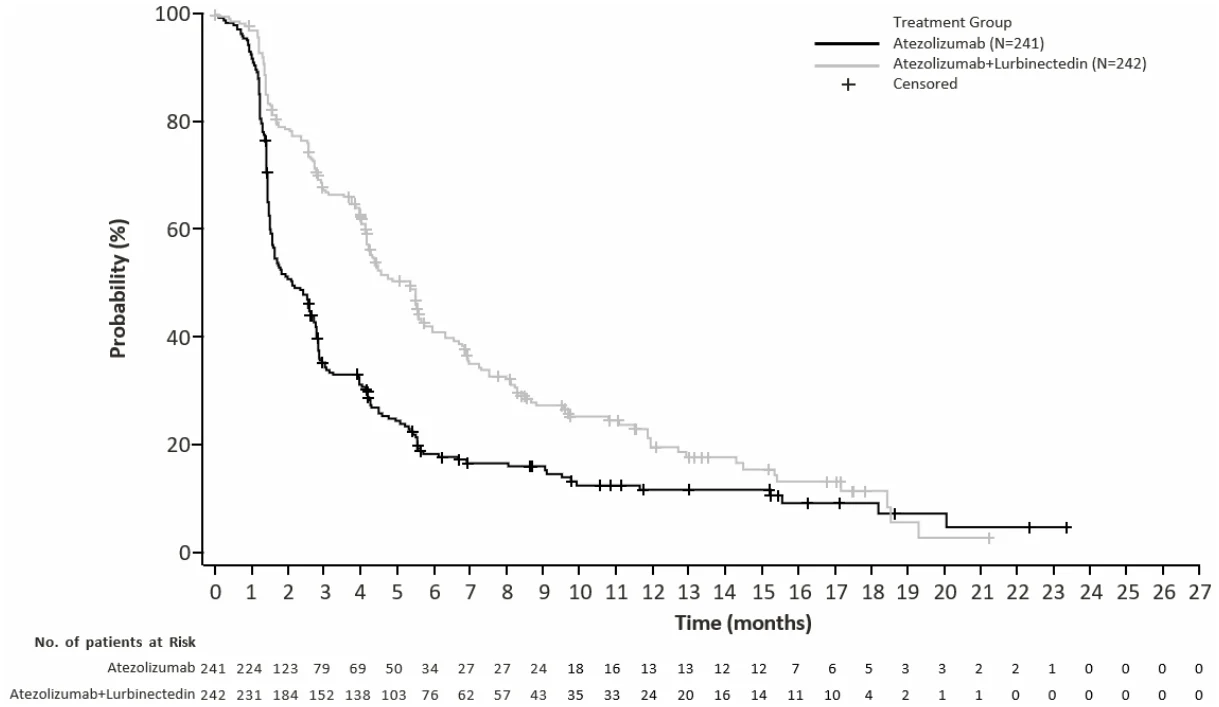
Primary efficacy endpoints were overall survival (OS) and Independent Review Facility (IRF)-assessed progression-free survival (PFS) per the Response Evaluation Criteria in Solid Tumours (RECIST) v1.1 in the randomised population. (see Table 5).
A total of 483 patients were randomised: 242 to the ZEPZELCA with atezolizumab arm and 241 to the atezolizumab arm. The median age was 66 years (range 35 to 85 years, being 13% ≥75 years). The majority of patients were White (81.6%); 12.8% were Asian, 6.6% were Hispanic and <1% were Black or African American. Most patients were male (62.5%) and 97.5% were current or previous smokers. Baseline ECOG performance status was 0 (42.9%) or 1 (57.1%).
Efficacy results are presented in Table 5 and Figures 1 and 2.
Table 4: Efficacy results from IMforte
lurbinectedin with atezolizumab N=242 atezolizumab N=241 | |
| Overall Survival1 | |
| Deaths (%) | 113 (46.7%) 136 (56.4%) |
Median, months (95% CI) Hazard ratio2 (95% CI) p-value3, 6 | 13.2 10.6 (11.9, 16.4) (9.5, 12.2) 0.73 (0.57, 0.95) 0.0174 |
Progression-Free Survival1, 4, 5 Number of events (%) Median, months (95% CI) Hazard ratio2 (95% CI) p-value3, 7 | 174 (71.9%) 202 (83.8%) 5.4 2.1 (4.2, 5.8) (1.6, 2.7) 0.54 (0.43, 0.67) <0.0001 |
Cut-off: 29 July 2024 1Measured from the time of randomisation 2Stratified by ECOG performance status, LDH level, presence of liver metastases and prior receipt of prophylactic cranial irradiation 3Based on the stratified log-rank test 4As determined by IRF 5per RECIST v1.1 6Compared to the allocated alpha of 0.0313 (two-sided) for this interim OS analysis. 7Compared to the allocated alpha of 0.001 (two- sided) for this final PFS analysis. CI=confidence interval | |
Figure 1: Kaplan-Meier plot of overall survival in IMforte
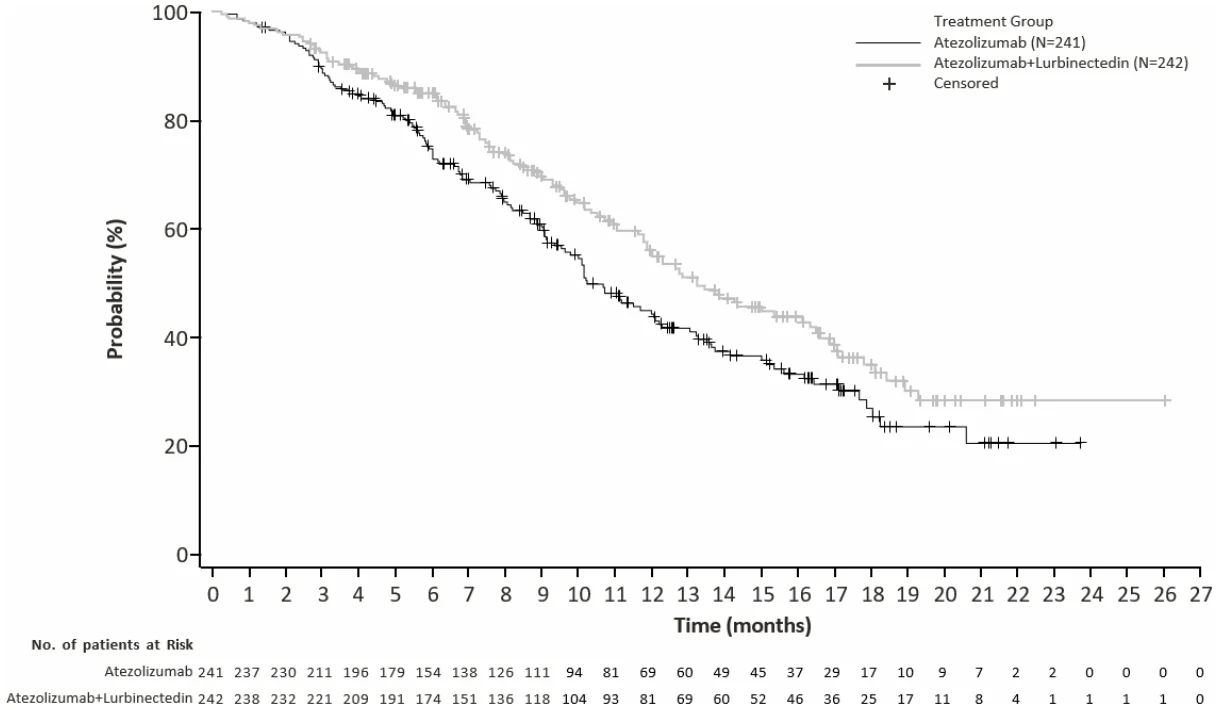
Figure 2: Kaplan-Meier plot of IRF-assessed progression free survival in IMforte
Paediatric population
The Licensing Authority has waived the obligation to submit the results of studies with ZEPZELCA in all subsets of the paediatric population in the treatment of SCLC (see section 4.2 for information on paediatric use).
5.2 Pharmacokinetic properties
After a 3.2 mg/m2 lurbinectedin dose administered as a 1-hour intravenous infusion, geometric means of total plasma Cmax and AUC∞, were 107 μg/L and 551 μg*h/L, respectively. No accumulation of lurbinectedin in plasma is observed upon repeated administrations every 21 days.
Distribution
Typical volume of distribution of lurbinectedin at steady state is 504 L. Binding to plasma proteins is approximately 99%, to both albumin and α-1-acid glycoprotein, with a calculated blood-to-plasma partitioning ratio of 0.68.
Biotransformation
In vitro studies
In vitro studies with human liver microsomes and supersomes indicate that CYP3A4 is the main CYP enzyme responsible for the hepatic metabolism of lurbinectedin.
Cytochrome P450 (CYP) Enzymes: Lurbinectedin is not an inhibitor of CYP1A2, CYP2B6, CYP2C8, CYP2C9, CYP2C19, CYP2D6, CYP2E1, or CYP3A4. Lurbinectedin is not an inducer of CYP1A2 or CYP3A4. The potential of lurbinectedin to induce CYP2B6 is unknown.
Transporter Systems: Lurbinectedin is a substrate of MDR1 (P-gp), but is not a substrate of OATB1P1, OATP1B3, OCT1, or MATE1. In vitro, lurbinectedin showed inhibitory potential towards MDR1, OATP1B1, OATP1B3, and OCT1 however, these findings are not considered clinically relevant. Lurbinectedin is not an inhibitor of BCRP, BSEP, MATE1, OAT1, OAT3, or OCT2.
Elimination
The terminal half-life of lurbinectedin is 51 hours. Total plasma clearance of lurbinectedin is 11 L/h.
The major route of lurbinectedin-related radioactivity excretion was via faeces (89% of dose), with only traces amounts of unchanged lurbinectedin detected in faeces (<0.2% of dose). Excretion in urine was the minor route (6% of dose), mainly as unchanged compound (1% of dose) and one metabolite (up to 1% of dose).
Linearity/non-linearity
Lurbinectedin pharmacokinetics is linear at the dose range of 0.02-6.9 mg/m2.
Special populations
Population pharmacokinetics analyses showed that weight (range: 39-154 kg), age (range: 18-85 years), and gender do not have a clinically meaningful influence on the systemic exposure of lurbinectedin.
Hepatic impairment
A dedicated study was conducted to evaluate the influence of varying degrees of hepatic impairment (HI) on lurbinectedin in patients with advanced solid tumours. Patients were classified according to the National Cancer Institute Organ Dysfunction Working Group (NCI-ODWG) classification as having normal hepatic function or mild (total bilirubin ≤ ULN and AST > ULN, or total bilirubin > 1 to ≤ 1.5 × ULN and AST = any), moderate (total bilirubin > 1.5 to ≤ 3 × ULN and AST = any), or severe (total bilirubin > 3 × ULN) HI. Patients with normal hepatic function and mild HI received lurbinectedin at 3.2 mg/m2 and patients with moderate and severe HI received lurbinectedin at 1.6 mg/m2. No statistically significant differences were observed on total lurbinectedin pharmacokinetics among cohorts. A statistically significant higher dose-normalised M1 AUC metabolite/parent ratio (MPR) was observed in patients with severe HI (ratio: 5.95, 90% CI: 2.54–13.98) and moderate HI (ratio: 8.65, 90% CI: 3.94–19.01) compared to patients with mild HI. No statistically significant differences were observed in M4 MPR according to HI groups.
Based on population pharmacokinetic analysis, no apparent pharmacokinetic difference was observed in 125 patients with mild who received lurbinectedin 3.2 mg/m² every 21 days as compared to 625 patients with normal hepatic function.
Renal impairment
No dedicated studies of lurbinectedin have been conducted in patients with renal impairment. Based on population pharmacokinetic analyses, no apparent pharmacokinetic difference was observed in 165 patients with mild renal impairment (CrCL of 60-89 mL/min), 73 patients with moderate renal impairment (CrCL of 30-59 mL/min), and one patient with severe renal impairment (CrCL of 26 mL/min) who received lurbinectedin 3.2 mg/m² every 21 days as compared to 166 patients with normal renal function. The pharmacokinetic characteristics of lurbinectedin in patients with CrCL < 30 mL/min or patients on dialysis are unknown.
5.3 Preclinical safety data
Toxicology
The primary target for toxicity identified in nonclinical species (rat, dog and NHP) was characterised by severe, reversible and non-cumulative atrophy of bone marrow, which was associated with dose-related leukopenia, as well as thrombocytopenia and anaemia. In addition, lurbinectedin-treated animals experienced liver abnormalities (multiple dark areas or swollen liver, increased liver function markers, bile duct damage with necrosis and/or oedema, and hepatocellular degeneration/apoptosis and periportal hepatocytic hypertrophy). Additional findings were located in the gastro-intestinal tract (mucosal atrophy), kidneys (cortical tubular degeneration and vacuolation), heart (focal, slight to moderate myocardial degeneration and/or necrosis) and injection site (perivascular/vascular inflammatory reactions). A full recovery, after cessation of dosing, was noted for the majority of these alterations.
Genotoxicity
Positive genotoxicity results were obtained in vitro in mammalian cell lines showing dose related toxicity at all concentrations tested (range from 48 to 0.188 ng/mL). Positive genotoxicity findings are expected for lurbinectedin as a DNA-interacting antineoplastic agent (see section 4.6).
Carcinogenic potential
Carcinogenicity testing of lurbinectedin has not been performed.
Reproduction and development
Lurbinectedin induced maternal toxicity at the single dose MTD level of 0.6 mg/m2 administered on Day 10 post-coitum and severe embryo-toxicity, leading to 100% embryo lethality (see section 4.4 and 4.6).
6 PHARMACEUTICAL PARTICULARS
6.1 List of excipients
Sucrose
Lactic acid
Sodium hydroxide (for pH-adjustment)
6.2 Incompatibilities
In the absence of compatibility studies, this medicinal product must not be mixed with other medicinal products.
This medicinal product must not be mixed with other medicinal products except those mentioned in section 6.6.
6.3 Shelf life
Unopened vial
ZEPZELCA 4 mg powder for concentrate for solution for infusion
5 years
Reconstituted and diluted solution
Chemical and physical in-use stability has been demonstrated for 24 hours at either 2 to 8°C or 25 °C.
From a microbiological point of view, the product should be used immediately. If not used immediately, in-use storage times and conditions prior to use are the responsibility of the user and would normally not be longer than 24 hours at 2 to 8°C, unless reconstitution / dilution has taken place in controlled and validated aseptic conditions. If reconstitution / dilution has taken place in controlled and validated aseptic conditions the prepared ready to administer product can be stored up to 24 hours at either +2°C to +8°C or +25 °C.
6.4 Special precautions for storage
Store in a refrigerator (2°C – 8°C).
For storage conditions after reconstitution and dilution of the medicinal product, see section 6.3.
6.5 Nature and contents of container
ZEPZELCA 4 mg powder for concentrate for solution for infusion
30 mL vial (clear type 1 glass) with a stopper (butyl rubber) and blue coloured overseal (aluminium), containing 4 mg lurbinectedin.
Pack size of 1 vial.
6.6 Special precautions for disposal
Appropriate procedures for proper handling and disposal of cytotoxic medicinal products must be followed. You should have received training on the correct techniques to reconstitute and dilute ZEPZELCA and you should wear protective clothing including mask, goggles and gloves during the reconstitution and dilution. Accidental contact with the skin, eyes or mucous membranes must be treated immediately with copious amounts of water. You should not work with this medicine if you are pregnant.
Prepare the solution for infusion using aseptic technique as follows:
- Inject 8 mL (for 4 mg strength) of water for injections into the vial, yielding a solution containing 0.5 mg/mL lurbinectedin. Shake the vial until complete dissolution. The reconstituted solution is a clear, colourless or slightly yellowish solution, essentially free of visible particles. Visually inspect the solution for particulate matter and discoloration.
Calculate the required volume of reconstituted solution as follows:
Volume (mL) = Body Surface Area (m2) x Individual Dose (mg/m2) 0.5 mg/mL
- For administration through a central venous line, withdraw the appropriate amount of reconstituted solution from the vial and add to an infusion container containing at least 100 mL of diluent sodium chloride 9 mg/mL (0.9%) solution for infusion or glucose 50 mg/mL (5%) solution for infusion.
- For administration through a peripheral venous line, withdraw the appropriate amount of reconstituted solution from the vial and add to an infusion container containing at least 250 mL of diluent sodium chloride 9 mg/mL (0.9%) solution for infusion or glucose 50 mg/mL (5%) solution for infusion.
The following materials are compatible with ZEPZELCA diluted solution:
- Polyolefin containers (polyethylene, polypropylene and mixtures).
PVC (non-DEHP-containing), polyurethane and polyolefin infusion sets
(polyethylene, polypropylene and polybutadiene).
- Polyether sulfone in-line filters with pore sizes of 0.22 micron.
- Implantable venous access systems with titanium and plastic resin ports and with polyurethane or silicone intravenous catheters.
ZEPZELCA can be administered with or without an in-line filter.
Infusion lines containing nylon membrane filters should not be used when the reconstituted ZEPZELCA solution is diluted with sodium chloride 9 mg/mL (0.9%) solution for infusion.
Lurbinectedin is a cytotoxic medicinal product. Any unused medicinal product or waste material should be disposed of in accordance with local requirements.
7 MARKETING AUTHORISATION HOLDER
Pharma Mar, S.A.
Avda. de los Reyes 1
Polígono Industrial La Mina
28770 Colmenar Viejo (Madrid)
Spain
Tel: +34 91 846 60 00
Fax: +34 91 846 60 01
8 MARKETING AUTHORISATION NUMBER(S)
PL 15283/0015
9 DATE OF FIRST AUTHORISATION/RENEWAL OF THE
AUTHORISATION
23/09/2026
10 DATE OF REVISION OF THE TEXT
23/09/2026