

Patient leaflet - Vyvgart 1 000 mg solution for injection in Pre-filled syringe
1. What Vyvgart is and what it is used for
What Vyvgart is
Vyvgart contains the active substance efgartigimod alfa. Efgartigimod alfa binds to and blocks a protein in the body called neonatal Fc receptor (FcRn). By blocking FcRn, efgartigimod alfa decreases the level of immunoglobulin G (IgG) autoantibodies which are proteins of the immune system that attack parts of a person’s own body by mistake.
What Vyvgart is used for
Vyvgart is used together with standard therapy to treat adults with
generalised Myasthenia Gravis (gMG), an autoimmune disease that causes muscle weakness. gMG can affect multiple muscle groups throughout the body. The condition can also lead to shortness of breath, extreme fatigue and difficulties swallowing.
In patients with gMG, IgG autoantibodies attack and damage proteins on nerves called acetylcholine receptors. Because of this damage, the nerves are not able to make the muscles contract as well as normal, leading to muscle weakness and difficulty moving. By binding to the FcRn protein and reducing autoantibody levels, Vyvgart can improve
the ability of muscles to contract and reduce the symptoms of the disease and their impact on daily activities.
Vyvgart is also used to treat adults with chronic inflammatory demyelinating polyneuropathy (CIDP), a form of autoimmune disease. CIDP causes muscle weakness and /or numbness mainly in the legs and arms. Vyvgart can protect the nerves from being attacked and reduce the symptoms of the disease and their impact on daily activities.
2. What you need to know before you use Vyvgart
Do not use Vyvgart
‑ if you are allergic to efgartigimod alfa or any of the other
ingredients of this medicine (listed in section 6).
Warnings and precautions
Talk to your doctor before using Vyvgart.
MGFA class V
Your doctor may not prescribe this medicine if you are on a ventilator due to gMG muscle weakness (myasthenic crisis).
Infections
Vyvgart treatment may reduce your natural resistance to infections. Therefore, before starting Vyvgart, inform your doctor if you have any infections.
Injection reactions and allergic reactions
Vyvgart contains a protein that can cause reactions such as rash or itching in some people. Vyvgart may cause anaphylactic reaction (a serious allergic reaction). If you experience allergic reactions
please contact your doctor, pharmacist or nurse for advice.
If you miss a dose of or forget an appointment to receive Vyvgart
Keep track of your next dose. It is important to use Vyvgart exactly as prescribed by your doctor.
If you miss your dose within three days of when you are supposed
to take it, take your dose as soon as you remember and then follow your original dosing schedule.
whichever happens first.
Store in the original package in order to protect from light.
Do not use this medicine if you notice visible particles.
Do not throw away any medicines via wastewater or household waste. Ask your pharmacist how to throw away medicines you no longer use. These measures will help protect the environment.
XXXXXXXXX
such as swelling of the face, lips, throat or tongue which makes it difficult to swallow or breathe, shortness of breath, feeling of loss of
consciousness, or skin rash during or after the injection, then tell your doctor immediately.
Immunisations (vaccinations)
Please inform your doctor if you have received a vaccine in the last 4 weeks, or if you plan to be vaccinated in the near future.
Children and adolescents
Do not give this medicine to children below 18 years of age because the safety and efficacy of Vyvgart have not been established in this population.
I
I
s
Elderly
There are no special precautions needed for the treatment of patients who are older than 65 years of age.
Other medicines and Vyvgart
Tell your doctor if you are using, have recently used or might use any other medicines.
Pregnancy, breast-feeding and fertility
If you are pregnant or breast‑feeding, think you may be pregnant or
I
L
t
are planning to have a baby, ask your doctor or pharmacist for advice before taking this medicine.
Driving and using machines
Vyvgart is not expected to influence the ability to drive or use machines.
Vyvgart contains sodium
This medicinal product contains less than 1 mmol sodium (23 mg) per syringe, that is to say essentially “sodium‑free”.
Vyvgart contains polysorbate
S s t
c
I
This medicine contains 2.1 mg of polysorbate 80 in each syringe which is equivalent to 0.4 mg /mL. Polysorbates may cause allergic reactions. Tell your doctor if you have any known allergies.
3. How to use Vyvgart
Always use this medicine exactly as your doctor or pharmacist has told you. Check with your doctor or pharmacist if you are not sure.
What dose of Vyvgart you will receive and how often
Generalized myasthenia gravis
The recommended dose is 1 000 mg given in cycles of one injection per week for 4 weeks. Your doctor will determine when further treatment cycles are needed.
If you are already on intravenous Vyvgart treatment and wish to transition to Vyvgart subcutaneous, you should receive the subcutaneous injection instead of your intravenous infusion at the start of the next treatment cycle.
Chronic inflammatory demyelinating polyneuropathy
The recommended dose is 1 000 mg, one injection per week. Depending on how you respond to treatment, your doctor may change this to 1 injection every 2 weeks.
Injecting Vyvgart
Vyvgart is given by injection under the skin (subcutaneously). You and your doctor should decide if, after adequate training, you or your caregiver may inject Vyvgart. The first self‑injection should be carried out in front of your healthcare provider. It is important not to try to inject Vyvgart before being trained by a healthcare professional.
I
r
If you or your caregiver inject Vyvgart, you or your caregiver must carefully read and follow the Instructions for administration at the end of this leaflet (see “Important instructions for use”). Talk to your doctor, pharmacist or nurse if you have any questions about giving yourself an injection.
If you use more Vyvgart than you should
Because Vyvgart is given in one single‑use pre‑filled syringe, it is unlikely that you will receive too much. However, if you are worried,
c
S
t
If you miss your dose by more than three days, ask your doctor
when to take your next dose. W
If you forget an appointment, please contact your doctor
immediately for advice.
Do not take a double dose to make up for a forgotten dose.
f you stop using Vyvgart
nterrupting or stopping treatment with Vyvgart may cause your ymptoms to come back. Please speak to your doctor before stopping Vyvgart. Your doctor will discuss the possible side effects and risks with you. Your doctor will also want to monitor you closely.
‑
‑
W
f you have any further questions on the use of this medicine, ask your doctor, pharmacist or nurse.
4. Possible side effects
ike all medicines, this medicine can cause side effects, although not everybody gets them.
Your doctor will discuss the possible side effects with you and explain he risks and benefits of Vyvgart with you prior to treatment.
Tell your doctor straight away if you notice:
V
so a M
ar In 9
B
e‑
igns of a serious allergic reaction (anaphylactic reaction) such as welling of the face, lips, throat or tongue which makes it difficult
o swallow or breathe, shortness of breath, feeling of loss of onsciousness, or skin rash during or after the injection.
f you are not sure what the side effects below are, ask your doctor to explain them to you.
Very common (may affect more than 1 in 10 people)
nose and throat (upper respiratory tract) infections
F
lo Te T
reactions where the injection was given, which may include
redness, itching, pain. These injection site reactions are usually mild to moderate and usually occur within a day after the injection.
Common (may affect up to 1 in 10 people)
pain or a burning sensation during urination, which may be a sign
of a urinary tract infection
- inflammation of the airways in the lungs (bronchitis)
- muscle pain (myalgia)
- nausea.
Not known (frequency cannot be estimated from the available data)
allergic reactions during or after injection
‑ swelling of the face, lips, throat, or tongue which makes it difficult to swallow or breathe, shortness of breath
‑ pale skin, a weak and rapid pulse, or a feeling of loss of consciousness
‑ sudden rash, itching, or hives.
Reporting of side effects
f you get any side effects, talk to your doctor. This includes any possible side effects not listed in this leaflet. You can also eport side effects directly via the Yellow Card Scheme Website: www.mhra.gov.uk /yellowcard or search for MRHA Yellow Card in the Google Play or Apple App Store. By reporting side effects you can help provide more information on the safety of this medicine.
5. How to store Vyvgart
Keep this medicine out of the sight and reach of children.
Do not use this medicine after the expiry date which is stated on the arton and on the label after “EXP”. The expiry date refers to the last day of that month.
tore in a refrigerator (2 °C ‑ 8 °C). Do not freeze.
You can also store the unopened pre‑filled syringe at room emperature in the original carton up to 30 °C for a single period of up 1 month after removing it from the refrigerator. Discard it if it has not been used within the 1 month period or by the expiry date,
6. Contents of the pack and other information hat Vyvgart contains
The active substance is efgartigimod alfa. Each pre‑filled syringe contains 1 000 mg efgartigimod alfa in 5.0 mL. Each mL contains 200 mg of efgartigimod alfa.
The other ingredients are: Recombinant human hyaluronidase (rHuPH20), L‑arginine hydrochloride, L‑histidine, L‑histidine hydrochloride monohydrate, L‑methionine, Polysorbate 80 (E433), Sodium chloride, sucrose, Water for injections. See section 2 “Vyvgart contains sodium”.
hat Vyvgart looks like and contents of the pack yvgart is a ready to use, slightly yellow, clear to slightly cloudy lution, supplied as a solution for subcutaneous injection in pre‑filled syringe.
arketing Authorisation Holder and Manufacturer genx BV dustriepark‑Zwijnaarde 7
052 Gent elgium mail: ukmedinfo @argenx.com or any information about this medicine, please contact the cal representative of the Marketing Authorisation Holder: l. +44 (0) 20 4532 4016 his leaflet was last revised in September 2025.
28 Aug 2025
Important instructions for use
Vyvgart 1 000 mg solution for injection in pre‑filled syringe
efgartigimod alfa
Subcutaneous use
In order to improve the traceability of biological medicinal products, the name and the batch number of the administered product should be clearly recorded. 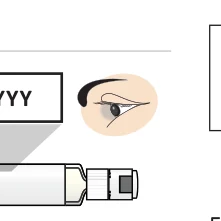 Be sure to read and understand these instructions for use before injecting Vyvgart. If you or your caregiver are willing to administer Vyvgart, you will get training on how to inject Vyvgart by your healthcare professional. Your healthcare professional should show you or your caregiver how to prepare and inject Vyvgart properly before using it for the first time. A demonstration of proper self‑administration under supervision of healthcare professional is considered necessary. It is important that you do not try to inject the medicinal product until you have been trained and you or your caregiver are sure that you understand how to use Vyvgart. Ask your healthcare professional if you have any questions.
Important information you need to know before injecting Vyvgart subcutaneous
- For subcutaneous use only.
- The pre‑filled syringe is for single use only and cannot be reused.
Do not use the pre‑filled syringe if it has been at room temperature for longer
than 1 month.
- Do not use the pre‑filled syringe if the expiry date has passed.
Do not use the pre‑filled syringe if it is cracked, broken, damaged or if the cap is
missing. Report and return these damaged pre‑filled syringes to the pharmacy.
Do not use the pre‑filled syringe if the medicine is discoloured or contains
particles. The medicine should appear clear to light yellow. A little cloudiness is normal.
- Do not shake the pre‑filled syringe.
Storing Vyvgart pre-filled syringe
- Store in a refrigerator (2 °C ‑ 8 °C).
- Do not freeze.
You can also store the unopened pre‑filled syringe at room temperature in the
original carton up to 30 °C for a single period of up 1 month after removing it from the refrigerator. Discard it if it has not been used within the 1 month period or by the expiry date, whichever happens first.
- Store in the original package in order to protect from light.
Keep this medicine out of the sight and reach of children.
Pre-filled syringe parts
Safety needle
(Not provided with syringe)
25G, 5/8” (16 mm) length,
thin wall
Clear needle cap
Needle shield
Needle
Syringe cap
Textured collar
Gray stopper
Finger flange
Plunger
Syringe body
Liquid medicine
Thumb pad
Gathering and checking the supplies
1 Removing the carton from the refrigerator
1.1 Remove the pre‑filled syringe carton from the refrigerator 1.2 Remove 1 pre‑filled syringe from the carton and place any remaining
pre‑filled syringes back into the refrigerator for later use. 1.3 Remove the pre‑filled syringe from the tray.
2 Checking the pre-filled syringe before use
2.1 Check the expiry date on the pre‑filled
syringe.
Do not use the pre‑filled syringe if the
expiry date has passed.
EXP: MM/YYYY
2.2 Check the condition of the pre‑filled syringe and the pre‑filled syringe cap.
Do not use the pre‑filled syringe if it is cracked, broken, damaged, or if the cap is missing.
2.3 Check the appearance of the medicine in the pre‑filled syringe. The medicine
should look clear to light yellow in colour. A little cloudiness is normal.
Do not use the pre‑filled syringe if the medicine is discoloured or contains particles.
Preparing for the injection
- 3. Allowing the pre-filled syringe to warm to room temperature
Place the pre‑filled syringe on a clean flat
surface and let it sit for at least 30 minutes, to
allow it to warm to room temperature.
30Minutes
Do not attempt to warm the pre‑filled syringe in any other way. Do not use the pre‑filled syringe if it has been at room temperature for longer than 1 month.
- 4. Gathering supplies and wash hands
4.1 Gather the following supplies that are not provided with the pre‑filled syringe
Alcohol Swab
xxxxx-xx (1) Swab Pad
Safety needle • Alcohol swab
Sterile gauze and/or bandage
(As needed)
- Sharps container
4.2 Wash hands with soap and water.
- 5. Snap off the pre-filled syringe cap and attach the needle
5.1 Carefully open the needle package,
remove the needle. Throw away the
packaging via the household waste
Peel and remove
5.2 Bend the pre‑filled syringe cap to one side to snap it off and remove it from the pre‑filled syringe.
Throw away the syringe cap in the household waste, and set the pre‑filled syringe on a clean and flat surface.
Do not touch the tip of the pre‑filled syringe after the cap has been removed.
Snap
5.3 Hold the pre‑filled syringe in one hand and attach the needle to the pre‑filled syringe by twisting it on (clockwise/to the right) until you feel resistance.
The needle is now attached to the pre‑filled syringe.
- 6. Choosing and cleaning the injection site on abdomen
6.1 Choose an injection site on the abdomen (belly area) at least 5 cm away from the belly button (navel). Change the injection site for each injection.
Do not inject into skin that is irritated, red, bruised, infected or scarred. Do not inject into a vein. The pre‑filled syringe is for injection (under the skin) only.
6.2 Clean the chosen injection site with an alcohol swab and let it air dry.
Do not blow on or touch the injection site after it has been cleaned.
Choose site on
abdomen
Injecting Vyvgart
- 7. Pulling back the needle shield and removing the needle cap
7.1 Pull the needle shield back. Note: The needle shield will be used after the injection to cover the needle and protect from needle‑stick injuries
7.2 Hold the pre‑filled syringe body and remove the clear needle cap by pulling it straight off of the needle.
Throw away the needle cap into the household waste.
Do not put the needle cap back on the needle.
Pull the cap straight off
- 8. Giving the injection
8.1 Pinch the cleaned injection site. While pinching the skin, insert the needle at a 45 to 90 degree angle into the pinched skin.
Then release the pinched skin.
Do not pinch the skin too tightly as this can cause bruising.
8.2 Slowly press the plunger down all the way until it stops in order to inject the medicine. It will take approximately 20‑30 seconds to inject all of the medicine.
You will feel resistance as you press down. In case of discomfort inject more slowly.
It is ok if you need to pause or change your grip during the injection.
Do not try to force the plunger down quickly as this will make the plunger harder to press.
8.3 After all the liquid medicine is injected, remove the needle from the skin by pulling it straight out without changing the angle.
90° 45°
OK
Inject slow and steady over for approximately
20-30 seconds
Disposing of the used syringe
9 Covering the needle and throwing away the used syringe
9.1 Carefully push the needle shield over the needle until it snaps into place and covers the needle.
This helps to prevent needle‑stick injuries.
Do not put the needle cap back on; only use the needle shield to cover the needle.
9.2 Throw away the used syringe, with the needle still attached, into the sharps container immediately after use.
Do not throw away (dispose of) loose needles and syringes in your household waste.
If you do not have a sharps container, a household container can be used if it:
- Is made of heavy‑duty plastic;
- Can be closed with a tight‑fitting, puncture‑resistant lid, without sharps spilling out;
- Is upright and stable;
- Is leak‑resistant;
- Is appropriately labelled with a warning that hazardous waste is inside the container.
Dispose of the full container as instructed by your doctor, nurse or pharmacist.
10 Treating the injection site
If there is a small amount of blood or liquid at the injection site, press a gauze on it until the bleedings stops. If needed, you may apply a small adhesive bandage.
XXXXXXXXX