

Patient leaflet - Triomel 7 g/l Nitrogen 1140 kcal/l, emulsion for infusion
1. What TRIOMEL 7 g/l nitrogen 1140 kcal/l, emulsion for infusion is and what it is used for
TRIOMEL is an emulsion for infusion. It is presented in a bag with 3 chambers.
One chamber contains a glucose solution, the second one contains a lipid emulsion and the third one contains an amino acid solution.
TRIOMEL is used to provide nutrition to adults and children greater than 2 years of age by a tube into a vein when normal feeding by mouth is not suitable.
TRIOMEL must only be used under medical supervision.
2. What you need to know before TRIOMEL 7 g/l nitrogen 1140 kcal/l, emulsion for infusion is administered
TRIOMEL 7 g/l nitrogen 1140 kcal/l, emulsion for infusion must not be used:
- In premature neonates, infants, and children less than 2 years old.
- If you are hypersensitive (allergic) to egg, soya-bean, peanut proteins, or corn/corn products (see also section “Warnings and precautions” below, or to any other ingredient of this medicine (listed in section 6).
- If your body has problems using certain amino acids.
- If you have an especially high level of fats in your blood.
- If you have hyperglycaemia (too much sugar in your blood).
In all cases, your doctor will base his/her decision on whether you should receive this medicine on factors such as your age, weight, and medical condition, together with the results of any test performed.
Warnings and precautions
Talk to your doctor or nurse before TRIOMEL is administered to you.
If you are given total parenteral nutrition (TPN) solutions too fast this may result in injury or death.
The infusion must be stopped immediately if any abnormal signs or symptoms of an allergic reaction (such as sweating, fever, chills, headache, skin rashes, or difficulty breathing) develop. This medicinal product contains soya-bean oil and egg phospholipids. Soya-bean and egg proteins may cause hypersensitivity reactions. Cross-allergic reactions between soya-bean and peanut proteins have been observed.
TRIOMEL contains glucose derived from corn, which may cause hypersensitivity reactions if you have allergy to corn or corn products products (see section “TRIOMEL emulsion for infusion must not be used” above).
Difficulty breathing could also be a sign that small particles have formed, blocking blood vessels in the lungs (pulmonary vascular precipitates). If you experience any difficulty breathing, tell your doctor or nurse. They will decide a course of action to be taken.
Certain medications and illnesses can increase the risk of developing infection or sepsis (bacteria in the blood). There is a particular risk of infection or sepsis when a tube (intravenous catheter) is placed in your vein. Your doctor will carefully watch you for any signs of infection. Patients who require parenteral nutrition (giving nutrition through a tube in your vein) may be more likely to develop infections from their medical conditions. Using aseptic (“germ-free”) techniques when placing and caring for the catheter and when making the nutritional formula (TPN) can reduce the risk of infection.
If you are severely malnourished such that you need to receive feedings by vein, your doctor should start the treatment slowly. Also, your doctor should monitor you closely to prevent sudden changes in your fluid, vitamin, electrolyte and mineral levels.
The balance of water and salt in your body and metabolic disorders will be corrected before starting the infusion. Your doctor will monitor your condition while you receive this medicine and may change the dosage or give you additional nutrients, such as vitamins, electrolytes, and trace elements, if he/she feels they are appropriate.
Liver disorders including problems with the elimination of bile (cholestasis), fat storage (hepatic steatosis), fibrosis, possibly leading to hepatic failure, as well as cholecystitis and cholelithiasis have been reported in patients who take intravenous nutrition therapy. The cause of these disorders is thought to be due to multiple factors and may differ between patients. If you suffer from symptoms such as nausea, vomiting, abdominal pain, yellowing of the skin or eyes, consult your doctor in order to allow the identification of possible causative and contributory factors, and possible therapeutic and preventive measures.
Your doctor should be aware of:
a severe kidney problem. You also must inform your doctor if you are on dialysis (artificial kidney)
or if you have another form of blood cleaning treatment
- a severe liver problem
- a blood clotting problem
- adrenal glands that are not working properly (adrenal insufficiency). The adrenal glands are triangle-shaped glands located on top of your kidneys.
- heart failure
- lung disease
- a build up of water in your body (hyperhydration)
- not enough water in your body (dehydration)
- high blood sugar (diabetes mellitus) that you are not being treated for
- a heart attack or shock due to a sudden heart failure
- a severe metabolic acidosis (when the blood is too acidic)
- a generalised infection (septicaemia)
- coma.
To check the effectiveness and ongoing safety of the administration, your doctor will perform clinical and laboratory tests while you are receiving this medicine. If you are given this medicine for several weeks, your blood will be monitored on a regular basis.
Reduced ability of the body to remove the fats contained in this medicine may result in a “fat overload syndrome” (See Section 4 – Possible Side Effects).
During the infusion if you notice pain, burning or swelling at the infusion site, or leakage of the infusion, tell your doctor or nurse. The administration will be stopped immediately and restarted in another vein.
If your blood sugar gets too high, your doctor should adjust the rate of TRIOMEL delivery or give you medication to control your blood sugar (insulin).
TRIOMEL may only be administered via a tube (catheter) into a large vein in your chest (central vein).
Children and adolescents
If your child is under 18 years old, special care will be taken to give him/her the correct dosage. Increased precautions will also be taken because of the greater sensitivity of children to the risk of infection. Vitamin and trace element supplementation is always required. Paediatric formulations must be used.
Other medicines and TRIOMEL
Tell your doctor if you are taking or using, have rec medicines.
Simultaneous absorption of other medicinal produc other medicinal products, with or without medical p
ently taken or used or migh
t take or use any other
, generally. If you take orm your doctor in advance
ts is not a contraindication rescription, you should inf
to check compatibility.
TRIOMEL must not be administered simultaneously with blood through the same infusion tubing.
Please tell your doctor if you are taking or receiving any of the following:
- Insulin
- Heparin
Due to the risk of precipitation, TRIOMEL should not be administered through the same infusion line or admixed together with the antibiotic ampicillin or the antiepileptic fosphenytoin.
The olive and soya-bean oils present in TRIOMEL contain vitamin K. This does not normally affect blood thinning medicines (anticoagulants) like coumarin. However, if you take anticoagulant medicines you should tell your doctor.
The lipids contained in this emulsion may interfere with the results of certain laboratory tests if the blood sample is taken before the lipids have been eliminated from your bloodstream (these are generally eliminated after a period of 5 to 6 hours without receiving lipids).
Pregnancy and breast-feeding
If you are pregnant or breast-feeding, think you may be pregnant or are planning to have a baby, ask your doctor for advice before you are given this medicine.
There are no adequate experiences from the use of TRIOMEL in pregnant or breast-feeding women. TRIOMEL may be considered during pregnancy and breastfeeding, if necessary. TRIOMEL should only be given to pregnant or breast-feeding women after careful consideration.
Driving and using machines
Not relevant.
3. How TRIOMEL 7 g/l nitrogen 1140 kcal/l, emulsion for infusion will be used
Dosage
TRIOMEL should only be given in adults and children greater than 2 years of age.
It is an emulsion for infusion, to be administered via a tube (catheter) into a vein in your chest.
TRIOMEL should be at room temperature before use.
TRIOMEL is for single use only.
The infusion of 1 bag usually lasts between 12 and 24 hours.
Dosage – Adults
Your doctor will specify a flow rate corresponding to your needs and clinical condition.
The prescription may be continued for as long as it is needed, depending upon your clinical condition.
Dosage – Children greater than two years of age and adolescents
The doctor will decide the dose and for how long the medication will be given. This will depend on age, weight, height, medical condition and the ability of the body to break down and use the ingredients in TRIOMEL.
If you have been administered more TRIOMEL 7 g/l nitrogen 1140 kcal/l, emulsion for infusion than you should
If the dose given is too high or the infusion is too fast, the amino acid content may make your blood too acidic, and signs of hypervolaemia (increase of circulating blood volume) may occur. The glucose levels in your blood and urine may increase, hyperosmolar syndrome (excessive blood viscosity) may develop, and the lipid content may increase the level of triglycerides in your blood. Receiving An excessively fast infusion or a volume of TRIOMEL that is too large may cause nausea, vomiting, chills, headache, hot flush, excessive sweating (hyperhidrosis) and electrolyte disturbances. In such situations, the infusion must be stopped immediately.
In some severe cases, your doctor may have to give you temporary renal dialysis to help your kidneys eliminate the excess product.
To prevent these events occurring, your doctor will regularly monitor your condition and test your blood parameters.
If you have any further questions on the use of this product, ask your doctor.
4. Possible side effects
Like all medicines, this medicine can cause side effects, although not everybody gets them.
If you notice any changes in the way you feel during or after the treatment, tell your doctor or nurse right away.
The tests your doctor will perform while you are taking the medicine should minimise the risk of side effects.
If any abnormal signs or symptoms of an allergic reaction develop, such as sweating, fever, chills, headache, skin rashes, or breathing difficulties, the infusion should be stopped immediately.
The following side effects have been reported with TRIOMEL:
Frequency - Common: may affect up to 1 in 10 people
- Fast heart rate (tachycardia)
- Decreased appetite
- Increased level of fat in the blood (hypertriglyceridemia)
- Abdominal pain
- Diarrhoea
- Nausea
- Increased blood pressure (hypertension)
Frequency - Not known: frequency cannot be estimated from the available data
- Hypersensitivity reactions including sweating, fever, chills, headache, skin rash (erythematous, papular, pustular, macular, generalised rash), itching, hot flush, breathing difficulties
- Leakage of the infusion to the surrounding tissue (extravasation) which may result at infusion site level in pain, irritation, swelling/oedema, redness (erythema)/warmth, death of the tissue cells (skin necrosis) or blisters/vesicles, inflammation, thickening or constriction of the skin
- Vomiting
The following side effects have been reported with similar parenteral nutrition products: Frequency - Very rare: may affect up to 1 in 10,000 people
Reduced ability to remove the lipids (fat overload syndrome) associated with sudden and abrupt worsening of the patient’s medical condition. The following signs of fat overload syndrome are usually reversible when the lipid emulsion infusion is stopped:
o Fever
o Reduction in red blood cells which can make the skin pale and cause weakness or breathlessness (anaemia)
o Low white blood cell count, which can increase the risk of infection (leukopenia)
o Low platelet count which can increase the risk of bruising and/or bleeding
(thrombocytopenia)
o Coagulation disorders which effect the ability of the blood to clot
o High levels of fats in the blood (hyperlipidaemia)
o Liver fatty infiltration (hepatomegaly)
o Worsening liver function
o Central nervous system manifestations (e.g. Coma).
Frequency - Not known: frequency cannot be estimated from the available data
- Allergic reactions
- Abnormal blood test results for liver function
- Problems with the elimination of bile (cholestasis)
- Increase in the size of the liver (hepatomegaly)
- Parenteral nutrition associated liver disease (see “Warnings and Precautions” in section 2)
- Icterus (jaundice)
- Decrease in the number of platelets (thrombocytopenia)
- Increased nitrogen levels in the blood (azotemia)
- Elevated liver enzymes
- Formation of small particles which may lead to blockage of blood vessels in the lungs (pulmonary vascular precipitates) resulting in pulmonary vascular embolism and difficulty breathing (respiratory distress).
Reporting of side effects
If you get any side effect, talk to your doctor or nur this leaflet. You can also report side effects directly help provide more information on the safety of this
Malta
se. This includes any possi
ble side effect not listed in orting side effects you can
(see details below). By rep medicine.
ADR Reporting
Website: www.medicinesauthority.gov.mt/adrportal
Republic of Ireland:
HPRA Pharmacovigilance, Earlsfort Terrace,
IRE – Dublin 2.
Tel: +353 1 6764971,
Fax: +353 1 6762517,
Website: www.hpra.ie;
E-mail: medsafety@hpra.ie
United Kingdom:
Via the Yellow Card Scheme at: www.mhra.gov.uk/yellowcard
5. How TRIOMEL 7 g/l nitrogen 1140 kcal/l, emulsion for infusion is stored
Keep this medicine out of the sight and reach of children.
Do not use this medicine after the expiry date that is stated on the container and the outer packaging (MM/YYYY). The expiry date refers to the last day of that month.
Do not freeze.
Store in the overpouch.
Do not throw away medicines via wastewater or household waste. Ask your pharmacist how to throw away medicines you no longer use. These measures will help protect the environment.
6. Contents of the pack and other information
What TRIOMEL 7 g/l nitrogen 1140 kcal/l, emulsion for infusion contains
The active substances for each bag of the reconstituted emulsion are 11.1% (corresponding to 11.1 g/100 mL) L-amino acid solution (alanine, arginine, glycine, histidine, isoleucine, leucine, lysine (as lysine acetate), methionine, phenylalanine, proline, serine, threonine, tryptophan, tyrosine, valine, aspartic acid, glutamic acid), 20% (corresponding to 20 g/100 mL) lipid emulsion (refined olive oil and refined soya-bean oil), and 35% (corresponding to 35 g/100 mL) glucose solution (as glucose monohydrate).
The other ingredients are:
Lipid emulsion compartment
Amino a comp
cid solution artment
Glucose solution compartment
Purified egg phospholipids, glycerol, sodium oleate, sodium hydroxide (for pH adjustment),
water for injection
Glacial acet adjustme
inj
ic acid (for pH nt), water for ection
Hydrochloric acid (for pH adjustment), water for injection
What TRIOMEL 7 g/l nitrogen 1140 kcal/l, emulsion for infusion looks like and contents of the pack
TRIOMEL is an emulsion for infusion packaged in a 3-compartment bag. One compartment contains a lipid emulsion, another compartment an amino acid solution and the third compartment a glucose solution. These compartments are separated by nonpermanent seals. Before administration, the content of the compartments need to be mixed by rolling the bag onto itself, starting at the top of the bag until the peal seal is open.
Appearance prior to reconstitution:
- The amino acid and glucose solutions are clear, colourless, or slightly yellow.
- The lipid emulsion is homogenous with a milky appearance.
Appearance after reconstitution: homogeneous milk-like emulsion. The 3-compartment bag is a multilayer plastic bag. The inner (contact) layer of the bag material is designed to be compatible with the constituents and authorised additives.
To prevent contact with oxygen contained in the air, the bag is packaged in an oxygen barrier overpouch with an oxygen absorber sachet.
Pack sizes
1,000 mL bag: 1 carton with 6 bags
1,500 mL bag: 1 carton with 4 bags
2,000 mL bag: 1 carton with 4 bags
1 bag of 1,000 mL, 1,500 mL and 2,000 mL
Not all pack sizes may be marketed.
Marketing Authorisation Holder
United Kingdom:
Baxter Healthcare Limited
Caxton Way, Thetford,
Norfolk, IP24 3SE
United Kingdom
Republic of Ireland and Malta:
Baxter Holding B.V.
Kobaltweg 49,
3542CE Utrecht,
Netherlands
Manufacturer
BAXTER S.A.
BOULEVARD RENE BRANQUART, 80
7860 LESSINES
BELGIUM
This medicinal product is authorised in the Member States of the EEA under the following names:
France, Portugal, Estonia, Poland, Lithuania, Bulgaria, Romania, Latvia, Belgium, Spain, The Netherlands, Luxemburg, Slovenia, Italy, Greece, Cyprus: OLIMEL N7
In some countries it is registered under a different trade name, as described below: Austria: ZentroOLIMEL 4,4 %
Germany: Olimel 4,4%
Denmark, Iceland, Sweden, Norway, Finland: Olimel N7
The United Kingdom, Ireland, Malta: Triomel 7g/l nitrogen 1140 kcal/l
This leaflet was last revised in 01/2020.
For information about TRIOMEL or to request this leaflet in formats such as audio or large print please contact the Marketing Authorisation Holder: Tel: +44 (0)1635 206345
Baxter and Triomel are trademarks of Baxter international Inc.
The following inform healthcare prof | nded for ly: | |||||
| ation is inte | ||||||
| essionals on | ||||||
| TRIOMEL 7 g/l nitrogen 1140 kcal/l, emulsion for infusion | ||||||
| Pharmacotherapeutic group: Solutions for parenteral nutrition/combinations ATC code: B05 BA10. | ||||||
| A. QUALITATIVE AND QUANTITATIVE COMPOSITION | ||||||
TRIOMEL is presented in the form of a 3-compartment bag. Each bag contains a glucose solution, a lipid emulsion and an amino acid solution. Contents per bag 1,000 mL 1,500 mL 2,000 mL | ||||||
35 % Glucose solution (corresponding to 35 g/100 mL) 400 | mL 600 mL | 800 mL | ||||
11.1 % Amino acid solution (corresponding to 11.1 g/100 mL) 400 | mL 600 mL | 800 mL | ||||
20 % Lipid emulsion (corresponding to 20 g/100 mL) 200 | mL 300 mL | 400 mL | ||||
| Composition of the reconstituted emulsion after mixing the contents of the 3 compartments: | ||||||
| Active substances | 1,000 mL 1,500 mL | 2,000 mL | ||||
Refined olive oil+ refined soya-bean oila Alanine Arginine Aspartic acid Glutamic acid Glycine Histidine Isoleucine Leucine Lysine (equivalent to lysine acetate) Methionine Phenylalanine Proline Serine Threonine Tryptophan Tyrosine Valine Glucose (equivalent to glucose monohydrate) | 40.00 g 60.00 g 6.41 g 9.61 g 4.34 g 6.51 g 1.28 g 1.92 g 2.21 g 3.32 g 3.07 g 4.60 g 2.64 g 3.97 g 2.21 g 3.32 g 3.07 g 4.60 g 3.48 g (4.88 g) 5.23 g (7.31 g) 2.21 g 3.32 g 3.07 g 4.60 g 2.64 g 3.97 g 1.75 g 2.62 g 2.21 g 3.32 g 0.74 g 1.10 g 0.11 g 0.17 g 2.83 g 4.25 g 140.00 g (154.00 g) 210.00 g (231.00 g) | 80.00 g 12.82 g 8.68 g 2.56 g 4.42 g 6.14 g 5.29 g 4.42 g 6.14 g 6.97 g (9.75 g) 4.42 g 6.14 g 5.29 g 3.50 g 4.42 g 1.47 g 0.22 g 5.66 g 280.00 g (308.00 g) | ||||
| a: Mixture of refined olive oil (approximately 80%) and refined soya-bean oil (approximately 20%) corresponding to a ratio essential fatty acids/total fatty acids of 20%. | ||||||
The excipients are: Lipid emulsion compartment Amino aci compa Purified egg phospholipids, glycerol, sodium oleate, sodium Glacial ac (for pH adjustm | Glucose solution compartment Hydrochloric acid H adjustment), water for | ||||
| d solution | |||||
rtment etic acid ent), water for (for p | |||||
hydroxide (for pH adjustment), water for injection injec | tion injection | ||||
Nutritional intakes of reconstituted emulsion for each of the bag sizes: 1,000 mL 1,500 mL 2,000 mL | |||||
| Lipids | 40 g 60 g | 80 g | |||
| Amino acids | 44.3 g 66.4 g | 88.6 g | |||
| Nitrogen | 7.0 g 10.5 g | 14.0 g | |||
| Glucose | 140.0 g 210.0 g | 280.0 g | |||
Energy: Total calories approx. Non-protein calories Glucose calories Lipid caloriesa Non-protein calories / nitrogen ratio Glucose /lipid calories ratio Lipid /total calories | 1,140 kcal 1,710 kcal 960 kcal 1,440 kcal 560 kcal 840 kcal 400 kcal 600 kcal 137 kcal/g 137 kcal/g 58/42 58/42 35% 35% | 2,270 kcal 1,920 kcal 1,120 kcal 800 kcal 137 kcal/g 58/42 35% | |||
Electrolytes: Phosphateb Acetate | 3.0 mmol 4.5 mmol 31 mmol 46 mmol | 6.0 mmol 62 mmol | |||
| pH | 6.4 6.4 | 6.4 | |||
| Osmolarity 1 | ,220 mosm/L 1,220 mosm/L | 1,220 mosm/L | |||
| a: Includes calories from purified egg phospholipids b: Includes phosphate provided by the lipid emulsion | |||||
| B. POSOLOGY AND METHOD OF ADMINISTRATION | |||||
Posology TRIOMEL is not recommended for use in children less than 2 years of age due to inadequate composition and volume (see sections 4.4; 5.1 and 5.2 of the SmPC). The maximum daily dose mentioned below should not be exceeded. Due to the static composition of the multi-chamber bag, the ability to simultaneously meet all nutrient needs of the patient may not be possible. Clinical situations may exist where patients require amounts of nutrients varying from the composition of the static bag. In this situation any volume (dose) adjustments must take into consideration the resultant effect this will have on the dosing of all other nutrient components of TRIOMEL. In adults The dosage depends on the patient’s energy expenditure, clinical status, body weight, and the ability to metabolise the constituents of TRIOMEL, as well as additional energy or proteins provided orally/ enterally; therefore, the bag size should be chosen accordingly. The average daily requirements are:
| |||||
For TRIOMEL, the maximal daily dose is defined by of 35 mL/kg, corresponding to 1.5 g/kg amino acids patient, this would be equivalent to 2,450 mL TRIO acids, 343 g glucose, and 98 g lipids (i.e., 2,352 non Normally, the flow rate must be increased graduall into account the dose being administered, the daily | /kg provided in a volume g/kg lipids. For a 70 kg intake of 108 g amino tal kcal). hen be adjusted to take ration of the infusion. | ||||
| total caloric intake, 40 kcal , 4.9 g/kg glucose, and 1.4 MEL per day, resulting in an | |||||
-protein kcal and 2,793 to y during the first hour and t volume intake, and the du | |||||
For TRIOMEL, the maximal infusion rate is 1.7 mL/kg/hour, corresponding to 0.08 g/kg/hour amino acids, 0.24 g/kg/hour glucose, and 0.07 g/kg/hour lipids. In children greater than 2 years of age and adolescents There have been no studies performed in the paediatric population. The dosage depends on the patient’s energy expenditure, clinical status, body weight, and the ability to metabolise constituents of TRIOMEL, as well as additional energy or proteins given orally/enterally; therefore, the bag size should be chosen accordingly. In addition, daily fluid, nitrogen, and energy requirements continuously decrease with age. Two groups, ages 2 to 11 years and 12 to 18 years, are considered. For TRIOMEL 7 g/l nitrogen 1140 kcal/l in the 2 to 11 year age group, amino acid concentration is the limiting factor for daily dose. In this age group, the glucose concentration is the limiting factor for hourly rate. In the 12 to 18 year age group, the glucose concentration is the limiting factor for both daily dose and hourly rate. The resulting intakes are displayed below: | |||||
Constituent 2 to 11 Recommendeda | years 12 to 18 years | ||||
TRIOMEL 7 g/l nitrogen 1140 kcal/l Max Vol Recommendeda | TRIOMEL 7 g/l nitrogen 1140 kcal/l Max Vol | ||||
| Maximum Daily Dose | |||||
| Fluids (mL/kg/d) 60 – 120 | 56 50 – 80 | 41 | |||
| Amino acids (g/kg/d) 1 – 2 (up to 2.5) | 2.5 1 – 2 | 1.8 | |||
| Glucose (g/kg/d) 1.4-8.6 | 7.8 0.7-5.8 | 5.7 | |||
| Lipids (g/kg/d) 0.5 – 3 | 2.2 0.5 – 2 (up to 3) | 1.6 | |||
| Total energy (kcal/kg/d) 30 – 75 | 63.8 20 – 55 | 46.7 | |||
| Maximum Hourly Rate | |||||
| TRIOMEL (mL/kg/h) | 2.6 | 1.7 | |||
| Amino acids (g/kg/h) 0.20 | 0.11 0.12 | 0.08 | |||
| Glucose (g/kg/h) 0.36 | 0.36 0.24 | 0.24 | |||
| Lipids (g/kg/h) 0.13 | 0.10 0.13 | 0.07 | |||
a: Recommended values from 2018 ESPGHAN/ESPEN/ESPR Guidelines Normally, the flow rate must be increased gradually during the first hour and then be adjusted to take into account the dose being administered, the daily volume intake, and the duration of the infusion. In general, it is recommended to start the infusion for small children with low daily dose and gradually increase it up to the maximal dosage (see above). Method and duration of administration For single use only. It is recommended that, after opening the bag, the contents are used immediately and not stored for subsequent infusion. After reconstitution, the mixture is homogenous with a milky appearance. For instructions for preparation and handling of the emulsion for infusion, see section 6.6 of the SmPC. Due to its high osmolarity, TRIOMEL can only be administered through a central vein. The recommended duration of infusion for a parenteral nutrition bag is between 12 and 24 hours. Treatment with parenteral nutrition may be continued for as long as required by the patient’s clinical conditions. | |||||
C. INCOMPATIBILITIES
Do not add other medicinal products or substances to any components of the bag or to the reconstituted emulsion without first confirming their compatibility and the stability of the resulting preparation (in particular, the stability of the lipid emulsion).
Incompatibilities may be produced, for example, by excessive acidity (low pH) or inappropriate content of divalent cations (Ca2+ and Mg2+), which may destabilize the lipid emulsion.
As with any parenteral nutrition admixture, calcium and phosphate ratios must be considered. Excess addition of calcium and phosphate, especially in the form of mineral salts, may result in the formation of calcium phosphate precipitates.
Due to the risk of precipitation, TRIOMEL should not be administered through the same infusion line or admixed together with ampicillin or fosphenytoin.
Check compatibility with solutions administered simultaneously through the same administration set, catheter, or cannula.
Do not administer before, simultaneously with, or after blood through the same equipment because of the risk of pseudoagglutination.
D. SPECIAL PRECAUTIONS FOR DISPOSAL AND OTHER HANDLING
An overview of the preparation steps for the administration of TRIOMEL are provided in Figure 1.
To open
Remove the protective overpouch.
Discard the oxygen absorber sachet.
Confirm the integrity of the bag and of the nonpermanent seals. Use only if the bag is not damaged; if the nonpermanent seals are intact (i.e., no mixture of the contents of the 3 compartments); if the amino acid solution and the glucose solution are clear, colourless, or slightly yellow, and practically free of visible particles; and if the lipid emulsion is a homogeneous liquid with a milky appearance.
Mixing the solutions and the emulsion
Ensure that the product is at room temperature when breaking the nonpermanent seals.
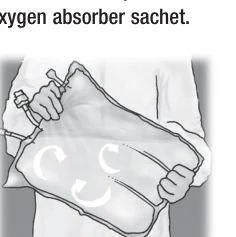
Manually roll the bag onto itself, starting at the top of the bag (hanger end). The nonpermanent seals will disappear from the side near the inlets. Continue to roll the bag until the seals are open along approximately half of their length.
Mix by inverting the bag at least 3 times.
After reconstitution, the mixture is a homogeneous emulsion with a milky appearance.
Additions
The capacity of the bag is sufficient to enable additions such as vitamins, electrolytes, and trace elements.
Any additions (including vitamins) may be made into the reconstituted mixture (after the nonpermanent seals have been opened and after the contents of the 3 compartments have been mixed). Vitamins may also be added into the glucose compartment before the mixture is reconstituted (before opening the nonpermanent seals and before mixing the 3 compartments).
When making additions to formulations containing electrolytes, the amount of electrolytes already present in the bag should be taken into account.
Additions must be performed by qualified personnel under aseptic conditions.
TRIOMEL may be supplemented with electrolytes a Per Included level Sodium 0 mmol | : Maximal total level 150 mmol | ||||
| ccording to the table below | |||||
| 1,000 mL | |||||
Maximal further addition | |||||
| 150 mmol | |||||
| Potassium 0 mmol | 150 mmol | 150 mmol | |||
| Magnesium 0 mmol | 5.6 mmol | 5.6 mmol | |||
| Calcium 0 mmol | 5.0 (3.5a) mmol | 5.0 (3.5a) mmol | |||
| Inorganic Phosphate 0 mmol | 8.0 mmol | 8.0 mmol | |||
| Organic Phosphate 3 mmolb | 22 mmol | 25 mmolb | |||
a: Value corresponding to the addition of inorganic phosphate. b: Including phosphate provided by the lipid emulsion. Trace elements and vitamins: Stability has been demonstrated with commercially-available preparations of vitamins and trace elements (containing up to 1 mg of iron). Compatibility for other additives is available upon request. To perform an addition:
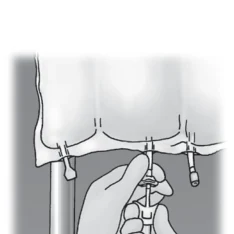
Preparation of the infusion Aseptic conditions must be observed. Suspend the bag. Remove the plastic protector from the administration outlet. Firmly insert the spike of the infusion set into the administration outlet. Figure 1: Preparation steps for the administration of TRIOMEL | |||||
1.
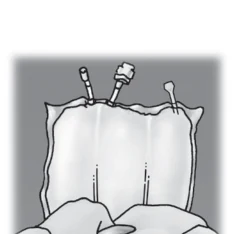
Tear from the top to open the overpouch. Peel the front of the overpouch to reveal the TRIOMEL bag. Discard the overpouch and oxygen absorber sachet. Place the bag flat on a horizontal and clean surface with the handle in front of you. 4. 5. 6. Lift the hanger area to remove solution from the upper bag. Roll the upper part of the bag firmly until peal seals are fully open (approximately half way). Mix by turning the bag upside-down at least 3 times. Hang the bag. Twist off the protector from the administration outlet. Firmly plug the spike connector. | |||||
Administration
For single use only.
Only administer the product after the nonpermanent seals between the 3 compartments have been broken and the contents of the 3 compartments have been mixed.
Ensure that the final emulsion for infusion does not show any evidence of phase separation.
After opening the bag, the contents must be used immediately. The opened bag must never be stored for a subsequent infusion. Do not reconnect any partially used-bag.
Do not connect bags in series in order to avoid the possibility of air embolism due to gas contained in the primary bag.
Any unused product or waste material and all necessary devices must be discarded.
Extravasation
Catheter site should be monitored regularly to identify signs of extravasation.
If extravasation occurs, the administration should be stopped immediately, keeping the inserted catheter or cannula in place for immediate management of the patient. If possible, aspiration should be performed through the inserted catheter/cannula, in order to reduce the amount of fluid present in the tissues before removing the catheter/cannula.
Depending on the extravasated product (including the product(s) being mixed with TRIOMEL, if applicable) and the stage/extend of any injury, appropriate specific measures should be taken. Options for management may include non-pharmacologic, pharmacologic and/or surgical intervention. In case of large extravasation, plastic surgeon advice should be sought within the first 72 hours.
The extravasation site should be monitored at least every 4 hours during the 24 first hours, then once daily.
The infusion should not be restarted in the same central vein.