

Patient leaflet - Tobradex 3 mg / ml/1 mg / ml eye drops suspension
1. What Tobradex is and what it is used for
Tobradex contains dexamethasone a corticosteroid and tobramycin, an antibiotic which is active against a wide range of bacteria that may infect the eye.
It is used to prevent and treat inflammation and prevent possible infection of the eye after cataract surgery in adults and children aged 2 years and older.
2. What you need to know before you use Tobradex
Do not use Tobradex…
- If you have or think that you have any type of infection of the eye. Use of corticosteroids may make infections worse.
- If you have a sticky discharge from your eye.
- If you have a red eye that has not been seen by a doctor.
- If you are allergic to tobramycin or dexamethasone or to any of the other ingredients listed in section 6.
If any of these apply ask your doctor for advice.
Warnings and precautions
If any of these applies to you, talk to your doctor or pharmacist before taking Tobradex.
- If you have a disorder causing a thinning of the eye tissues, such as rheumatoid arthritis, Fuch’s dystrophy or following a corneal transplant. Corticosteroids may cause further thinning and possible perforation, and may delay the healing of your eye wound.
- Topical non-steroidal anti-inflammatory drugs (NSAIDS) are also known to slow or delay wound healing. If you use topical NSAIDS and corticosteroids together, it may increase the potential for healing problems.
- If you experience allergic reactions with Tobradex, discontinue use and consult your doctor. Allergic reactions may vary from localized itching or skin redness to severe allergic reactions (anaphylactic reaction) or serious skin reactions. These allergic reactions may occur with other topical or systemic antibiotics of the same family (aminoglycoside type).
- If your symptoms get worse or suddenly return, please consult your doctor. You may become more susceptible to eye infections with the use of this product.
- If you are diabetic please consult your doctor. The risk of corticosteroid-induced increase intraocular pressure and / or cataract formation is increased in diabetic patients.
- Contact your doctor if you experience blurred vision or other visual disturbances.
- If you are using other antibiotic treatment, including oral, with Tobradex, ask your doctor for advice.
- If you have or if you have ever had conditions such as myasthenia gravis (neuromuscular disorder that causes weakness in the skeletal muscles) or Parkinson’s disease (a progressive nervous system disorder that affects movement), ask your doctor for advice. Antibiotics of this kind may worsen muscle weakness
If you use Tobradex for a long period of time, you may become more susceptible to eye infections, have increased pressure in your eye(s) or develop cataracts.
- Talk to your doctor if you experience swelling and weight gain around the trunk and in the face as these are usually the first manifestations of a syndrome called Cushing’s syndrome. Suppression of the adrenal gland function may develop after stopping a long-term or intensive treatment with Tobradex. Talk to your doctor before stopping the treatment by yourself. These risks are especially important in children and patients treated with a drug called ritonavir or cobicistat.
- Signs and symptoms of adrenal suppression include fatigue; light-headedness upon standing or difficulty standing, muscle weakness, fever, weight loss, anxiety, nausea, vomiting, diarrhoea, headache, sweating, changes in mood or personality, and joint and muscle pains.
You may still be able to use Tobradex, but discuss it with your doctor first.
- Intraocular pressure should be checked frequently, this is especially important in children below 6 years of age receiving dexamethasone-containing products.
- Do not give Tobradex to children below 2 years old because the safety and efficacy in this population has not been established.
Other medicines and Tobradex
Please tell your doctor or pharmacist if you are taking or have recently taken any other medicines, including medicines obtained without a prescription.
Tell your doctor if you are using topical NSAIDs. If you use topical steroids and topical NSAIDs together, it may increase eye healing problems. Tell your doctor if you are using ritonavir or cobicistat, (medicines used in the treatment of HIV) as this may increase the amount of dexamethasone in the blood.
If you are using other eye drops or eye ointments, wait at least 5 minutes between using each one. Eye ointments should be administered last.
Pregnancy and breast-feeding
If you are pregnant or breast-feeding, think you may be pregnant or are planning to have a baby, ask your doctor for advice before taking this medicine. Tobradex is not recommended during pregnancy or breastfeeding.
Driving and using machines
If you experience temporary blurred vision after using Tobradex you should not drive or operate machinery until your vision is clear.
Important information if you wear Contact Lenses
Contact lens wear is not recommended during treatment of an ocular infection or inflammation.
Tobradex contains benzalkonium chloride This medicine contains 0.5mg benzalkonium chloride in each 5 ml, which is equivalent to 0.1 mg/ml.
Benzalkonium chloride may be absorbed by soft contact lenses and may change the colour of the contact lenses. You should remove contact lenses before using this medicine and put them back 15 minutes afterwards.
Benzalkonium chloride may also cause eye irritation, especially if you have dry eyes or disorders of the cornea (the clear layer at the front of the eye). If you feel abnormal eye sensation, stinging or pain in the eye after using this medicine, talk to your doctor.
3. How to use Tobradex
Always use this medicine exactly as your doctor has told you. Check with your doctor or pharmacist if you are not sure. Only use Tobradex for dropping in your eye(s).
The recommended dose
The recommended dose is 1 drop in the affected eye(s) every 4 to 6 hours while you are awake.
During the initial 48 hours, your doctor may increase the dose to 1 drop every 2 hours.
Do not use for more than 24 days.
Use in children
Tobradex may be used in children 2 years of age and older at the same dose as in adults.
L-05-1487-01
How to use
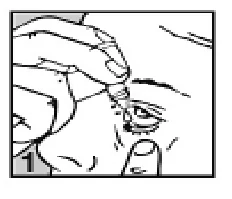
- Wash your hands before you start.
- Shake the bottle well.
- Twist off the bottle cap. Remove the loose collar from the cap when the bottle is first opened.
- Hold the bottle pointing down, between your thumb and fingers.
- Tilt your head back.
Pull down your lower eyelid with a finger, until there is a ‘pocket’ between the eyelid and your eye. The drop will go in
- (picture 1).
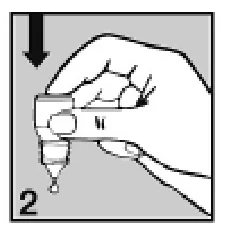
- Bring the bottle tip close to the eye. Do this in front of a mirror if it helps
- Do not touch your eye or eyelid, surrounding areas or other surfaces with the dropper. It could infect the drops.
Gently press on the base of the bottle to release one drop at a time
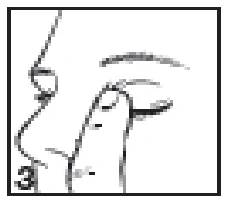
- Do not squeeze the bottle, only a gentle press on the bottom is needed.
After using Tobradex, keep the eyelid closed, while simultaneously applying gentle pressure with a finger to the corner of your eye, by the nose for at least 1 minute (picture 3). This helps
- o the rest of the body.
- If you use drops in both eyes, repeat the steps for your other eye. Put the bottle cap firmly back on immediately after use.
- If a drop misses your eye, try again.
- If you forget to take Tobradex, do not worry, just take it as soon as possible. Do not take a double dose to make up for a forgotten dose.
- If you use more Tobradex than you should it can be washed out with warm water. If you recently had eye surgery, reach out to your doctor for detailed instructions.
If you have any further questions on the use of Tobradex, ask your doctor or pharmacist.
4. Possible side effects
Like all medicines, this medicine can cause side effects, although not everybody gets them.
The following side effects have been seen with Tobradex
If you notice any of the following possible side effects, stop using this medicine and seek urgent medical advice immediately:
- itchy rash or hives
- swelling of the face, lips, tongue or other parts of the body
- shortness of breath/wheezing
- severe skin reactions such as blistering which may be accompanied by sore throat, fever or headache
The following side effects have also occurred with Tobradex:
Uncommon side effects
(may affect up to 1 in 100 people)
- Effects in the eye: increased pressure in your eye (s), eye irritation, eye pain, eye itching, watery eyes, eye discomfort.
- General side effects: headache, runny nose, tightness of the throat.
Rare side effects
(may affect up to 1 in 1000 people)
- Effects in the eye: redness, blurred vision, dry eye, eye allergy, eye surface inflammation.
- General side effects: bad taste.
Not known (frequency cannot be estimated from available data)
- Effects in the eye: increase in pupil size, eyelid redness, eyelid swelling, increased tear production.
- General side effects: dizziness, nausea, abdominal discomfort, rash, swelling of the face, itching. Hormone problems: growth of extra body hair (particularly in women), muscle weakness and wasting, purple stretch marks on body skin, increased blood pressure, irregular or missing periods, changes in the levels of protein and calcium in your body, stunted growth in children and teenagers and swelling and weight gain of the body and face (called ‘Cushing’s syndrome’) (see section 2, “Warnings and precautions”).
If Tobradex is used for more than 24 days, it may cause you to get an infection and the healing of your wound may also be delayed.
Reporting of side effects
If you get any side effects, talk to your doctor, pharmacist or nurse. This includes any possible side effects not listed in this leaflet. You can also report side effects directly via the Yellow Card Scheme. Website: www.mhra.gov.uk/yellowcard or search for MHRA Yellow Card in the Google Play or Apple App Store. By reporting side effects, you can help provide more information on the safety of this medicine.
5. How to store Tobradex
Keep out of the sight and reach of children.
This medicinal product does not require any special temperature storage conditions.
Do not freeze.
Do not use the drops after the expiry date which is stated on the bottle and the carton after ‘Exp:’. The expiry date refers to the last day of that month
Stop using the bottle 4 weeks after first opening, to prevent infection
If your medicine shows any signs of discolouration or deterioration consult your pharmacist for advice.
Medicines should not be disposed of via waste water or household waste. Ask your pharmacist how to dispose of medicines no longer required. These measures will help to protect the environment.
Do not pass this medicine on to others. It may harm them, even if their symptoms are the same as yours.
6. Contents of the pack and other information
What Tobradex contains
Each ml contains 3mg tobramycin and 1mg dexamethasone.
The other ingredients are disodium edetate, tyloxapol, sodium chloride, sodium sulphate, hydroxyethycellulose, benzalkonium chloride, sulphuric acid, and/or sodium hydroxide (to adjust pH) and purified water.
What Tobradex looks like and contents of the pack
White 5ml plastic bottle with dropper applicator, containing white to off-white suspension and a tamper evident screw cap.
PL 20774/1487 - Tobradex 3 mg/ml/1 mg/ml Eye Drops, Suspension
Manufactured by: Alcon Cusi, S.A. c/ Camil Fabra, 58 08320 EI Masnou – Barcelona, Spain. Procured from within the EU. Product Licence Holder: Quadrant Pharmaceuticals Ltd, Lynstock House, Lynstock Way, Lostock, Bolton, BL6 4SA. Repackaged by: Maxearn Ltd, Unit 29, Oakhill Trading Estate, Devonshire Road, Worsley, Manchester, M28 3PT.
Tobradex is a registered trademark of Novartis AG.
Leaflet revision date: 23rd November 2023.
Blind or partially sighted?
Is this leaflet hard to see or read? Contact Quadrant Pharmaceuticals Ltd; 01204 471269
L-05-1487-01
POM