Patient leaflet - Tepadina 200 mg powder and solvent for solution for infusion
1. What TEPADINA is and what it is used for
TEPADINA contains the active substance thiotepa, which belongs to a group of medicines called alkylating agents.
TEPADINA is used to prepare patients for bone marrow transplantation. It works by destroying bone marrow cells. This enables the transplantation of new bone marrow cells (haematopoietic progenitor cells), which in turn enable the body to produce healthy blood cells.
TEPADINA can be used in adults and children and adolescents.
2. What you need to know before you use TEPADINA
Do not use TEPADINA
- if you are allergic to thiotepa,
- if you are pregnant or think you may be pregnant,
- if you are breast-feeding,
- if you are receiving yellow fever vaccination, live virus and bacterial vaccines.
Warning and precautions
You should tell your doctor if you have:
- liver or kidney problems,
- heart or lung problems,
- seizures/fits (epilepsy) or have had them in the past (if treated with phenytoin or fosphenytoin).
Because TEPADINA destroys bone marrow cells responsible for producing blood cells, regular blood tests will be taken during treatment to check your blood cell counts.
In order to prevent and manage infections, you will be given anti-infectives.
TEPADINA may cause another type of cancer in the future. Your doctor will discuss this risk with you.
Other medicines and TEPADINA
Tell your doctor if you are taking, have recently taken or might take any other medicines.
Pregnancy, breast-feeding and fertility
You must tell your doctor if you are pregnant or you think you may be pregnant before you receive TEPADINA. You must not use TEPADINA during pregnancy.
Both women and men using TEPADINA must use effective contraceptive methods during treatment. After cessation of treatment women must use effective contraceptive methods for at least 6 months and men for at least 3 months.
It is not known whether this medicine is excreted in breast milk. As a precautionary measure, women must not breast-feed during treatment with TEPADINA.
TEPADINA can impair male and female fertility. Male patients should seek advice for sperm preservation before therapy is started.
Driving and using machines
It is likely that certain adverse reactions of thiotepa like dizziness, headache and blurred vision could affect your ability to drive and use machines. If you are affected, do not drive or use machines.
TEPADINA contains sodium
This medicine contains 709 mg (30.8 mmol) sodium (main component of cooking/table salt) in each bag. This is equivalent to 35.5% of the recommended maximum daily dietary intake of sodium for an adult.
3. How to use TEPADINA
Your doctor will calculate the dose according to your body surface or weight and your disease.
How TEPADINA is given
TEPADINA is administered by a qualified healthcare professional as an intravenous infusion (drip in a vein) after reconstitution of the individual bag. Each infusion will last 2-4 hours.
Frequency of administration
You will receive your infusions every 12 or 24 hours. The duration of treatment can last up to 5 days. Frequency of administration and duration of treatment depend on your disease.
4. Possible side effects
Like all medicines, this medicine can cause side effects, although not everybody gets them.
| The most serious side effects of TEPADINA therapy or the transplant procedure may include | |
| |
| transplant infusion) | |
| |
| |
| |
| |
| Your doctor will monitor your blood counts and liver enzymes regularly to detect and manage these | |
| events. | |
Side effects of TEPADINA may occur with certain frequencies, which are defined as follows:
Very common side effects (may affect more than 1 in 10 people)
- increased susceptibility to infection
- whole-body inflammatory state (sepsis)
- decreased counts of white blood cells, platelets and red blood cells (anaemia)
- the transplanted cells attack your body (graft versus host disease)
- dizziness, headache, blurred vision
- uncontrolled shaking of the body (convulsion)
- sensation of tingling, pricking or numbness (paraesthesia)
- partial loss of movement
- cardiac arrest
- nausea, vomiting, diarrhoea
- inflammation of the mucosa of the mouth (mucositis)
- irritated stomach, gullet, intestine
- inflammation of the colon
- anorexia, decreased appetite
- high glucose in the blood
- skin rash, itching, shedding
- skin colour disorder (do not confuse with jaundice - see below)
- redness of the skin (erythema)
- hair loss
- back and abdominal pain, pain
- muscle and joint pain
- abnormal electrical activity in the heart (arrhythmia)
- inflammation of lung tissue
- enlarged liver
- altered organ function
- blocking of a liver vein (veno-occlusive disease, VOD)
- yellowing of the skin and eyes (jaundice)
- hearing impaired
- lymphatic obstruction
- high blood pressure
- increased liver, renal and digestive enzymes
- abnormal blood electrolytes
- weight gain
- fever, general weakness, chills
- bleeding (haemorrhage)
- nasal bleeding
- general swelling due to fluid retention (oedema)
- pain or inflammation at the injection site
- eye infection (conjunctivitis)
- decreased sperm cell count
- vaginal bleeding
- absence of menstrual periods (amenorrhea)
- memory loss
- delaying in weight and height increase
- bladder disfunction
- underproduction of testosterone
- insufficient production of thyroid hormone
- deficient activity of the pituitary gland
- confusional state
Common side effects (may affect up to 1 in 10 people)
- anxiety, confusion
- abnormal bulging outward of one of the arteries in the brain (intracranial aneurysm)
- creatinine elevated
- allergic reactions
- occlusion of a blood vessel (embolism)
- heart rhythm disorder
- heart inability
- cardiovascular inability
- oxygen deficiency
- fluid accumulation in the lungs (pulmonary oedema)
- pulmonary bleeding
- respiratory arrest
- blood in the urine (haematuria) and moderate renal insufficiency
- inflammation of the urinary bladder
- discomfort in urination and decrease in urine output (disuria and oliguria)
- increase in the amount of nitrogen components in the blood stream (BUN increase)
- cataract
- inability of the liver
- cerebral haemorrhage
- cough
- constipation and upset stomach
- obstruction of the bowel
- perforation of stomach
- changes in muscle tone
- gross lack of coordination of muscle movements
- bruises due to a low platelet count
- menopausal symptoms
- cancer (second primary malignancies)
- abnormal brain function
- male and female infertility
Uncommon side effects (may affect up to 1 in 100 people)
- inflammation and exfoliation of the skin (erythrodermic psoriasis)
- delirium, nervousness, hallucination, agitation
- gastrointestinal ulcer
- inflammation of the muscular tissue of the heart (myocarditis)
- abnormal heart condition (cardiomyopathy)
Not known (frequency cannot be estimated from the available data)
- increased blood pressure in the arteries (blood vessels) of the lungs (pulmonary arterial hypertension)
- severe skin damage (e.g. severe lesions, bullae, etc.) potentially involving the full body surface which can be even life-threatening
- damage to a component of the brain (the so-called white matter) which can be even life-threatening (leukoencephalopathy).
Reporting of side effects
If you get any side effects, talk to your doctor or nurse. This includes any possible side effects not listed in this leaflet. You can also report side effects directly via the Yellow Card Scheme Website: www.mhra.gov.uk/yellowcard or search for MHRA Yellow Card in the Google Play or Apple App Store. By reporting side effects, you can help provide more information on the safety of this medicine.
5. How to store TEPADINA
Keep this medicine out of the sight and reach of children.
Do not use this medicine after the expiry date which is stated on the carton, label on aluminum wrapper and bag, after EXP. The expiry date refers to the last day of that month.
Store and transport refrigerated (2°C-8°C).
Do not freeze.
Keep the bag in the aluminum wrapper in order to protect from activation.
After the activation and reconstitution of the bag, the product is stable for up to 168 hours when stored at 2 °C -8 °C and for up to 56 hours when stored at 25 °C. From a microbiological point of view, the product should be used immediately.
Do not throw away any medicines via wastewater or household waste. Ask your pharmacist how to throw away medicines you no longer use. These measures will help protect the environment.
6. Contents of the pack and other information
What TEPADINA contains
- The active substance is thiotepa.
One bag contains 200 mg thiotepa.
After reconstitution with the solvent, each mL of solution contains 1 mg of thiotepa.
- The other ingredients are sodium chloride and water for injections (see section 2 “TEPADINA contains sodium”).
What TEPADINA looks like and contents of the pack
TEPADINA is supplied in a dual chamber bag containing 200 mg thiotepa and 200 mL sodium chloride 9 mg/mL (0.9%) solution for injection.
After reconstitution, the bag contains a clear and colourless solution for infusion.
Each bag is packed in an aluminum wrapper.
Each carton contains 1 bag.
Marketing Authorisation Holder and Manufacturer
ADIENNE S.r.l. S.U.
Via Galileo Galilei, 19
20867 Caponago (MB) Italy
Tel: +39 02 40700445
adienne@adienne.com
This leaflet was last revised in 04/2026
The following information is intended for healthcare professionals only.
PREPARATION GUIDE
TEPADINA 200 mg powder and solvent for solution for infusion
Thiotepa
Read this guide prior to the preparation and administration of TEPADINA.
- 1. PRESENTATION
One bag contains 200 mg thiotepa.
After reconstitution with the solvent, each mL of solution contains 1 mg of thiotepa. TEPADINA must be reconstituted prior to administration.
- 2. POSOLOGY AND METHOD OF ADMINISTRATION
Calculation of dose of TEPADINA
TEPADINA is administered at different doses in combination with other chemotherapeutic medicinal products in patients prior to conventional haematopoietic progenitor cell transplantation (HPCT) for haematological diseases or solid tumours.
TEPADINA posology is reported, in adult and paediatric patients, according to the type of HPCT (autologous or allogeneic) and disease.
If necessary, dose adjustment of TEPADINA must be operated as per specific application. In case the calculated dose required is higher than 200 mg but less than a multiple thereof, the user is requested to add the required mg from TEPADINA vials by using a dedicated port (luer port) of TEPADINA 200 mg (Step 5 of the Instruction for Use in the package leaflet). In case the calculated dose required is lower than 200 mg the user is requested to remove the unnecessary mg of fully reconstituted 1 mg/mL solution or to set an infusion pump with the amount of medicinal product to be administered in mL.
Posology in adults
AUTOLOGOUS HPCT
Haematological diseases
The recommended dose in haematological diseases ranges from 125 mg/m2/day (3.38 mg/kg/day) to 300 mg/m2/day (8.10 mg/kg/day) as a single daily infusion, administered from 2 up to 4 consecutive days before autologous HPCT depending on the combination with other chemotherapeutic medicinal products, without exceeding the total maximum cumulative dose of 900 mg/m2 (24.32 mg/kg), during the time of the entire conditioning treatment.
LYMPHOMA
The recommended dose ranges from 125 mg/m2/day (3.38 mg/kg/day) to 300 mg/m2/day (8.10 mg/kg/day) as a single daily infusion, administered from 2 up to 4 consecutive days before autologous HPCT depending on the combination with other chemotherapeutic medicinal products, without exceeding the total maximum cumulative dose of 900 mg/m2 (24.32 mg/kg), during the time of the entire conditioning treatment.
CENTRAL NERVOUS SYSTEM (CNS) LYMPHOMA
The recommended dose is 185 mg/m2/day (5 mg/kg/day) as a single daily infusion, administered for 2 consecutive days before autologous HPCT, without exceeding the total maximum cumulative dose of 370 mg/m2 (10 mg/kg), during the time of the entire conditioning treatment. MULTIPLE MYELOMA
The recommended dose ranges from 150 mg/m2/day (4.05 mg/kg/day) to 250 mg/m2/day (6.76 mg/kg/day) as a single daily infusion, administered for 3 consecutive days before autologous HPCT depending on the combination with other chemotherapeutic medicinal products, without exceeding the total maximum cumulative dose of 750 mg/m2 (20.27 mg/kg), during the time of the entire conditioning treatment.
Solid tumours
The recommended dose in solid tumours ranges from 120 mg/m2/day (3.24 mg/kg/day) to 250 mg/m2/day (6.76 mg/kg/day) divided in one or two daily infusions, administered from 2 up to 5 consecutive days before autologous HPCT depending on the combination with other chemotherapeutic medicinal products, without exceeding the total maximum cumulative dose of 800 mg/m2 (21.62 mg/kg), during the time of the entire conditioning treatment. BREAST CANCER
The recommended dose ranges from 120 mg/m2/day (3.24 mg/kg/day) to 250 mg/m2/day (6.76 mg/kg/day) as a single daily infusion, administered from 3 up to 5 consecutive days before autologous HPCT depending on the combination with other chemotherapeutic medicinal products, without exceeding the total maximum cumulative dose of 800 mg/m2 (21.62 mg/kg), during the time of the entire conditioning treatment.
CNS TUMOURS
The recommended dose ranges from 125 mg/m2/day (3.38 mg/kg/day) to 250 mg/m2/day (6.76 mg/kg/day) divided in one or two daily infusions, administered from 3 up to 4 consecutive days before autologous HPCT depending on the combination with other chemotherapeutic medicinal products, without exceeding the total maximum cumulative dose of 750 mg/m2 (20.27 mg/kg), during the time of the entire conditioning treatment.
OVARIAN CANCER
The recommended dose is 250 mg/m2/day (6.76 mg/kg/day) as a single daily infusion, administered in 2 consecutive days before autologous HPCT, without exceeding the total maximum cumulative dose of 500 mg/m2 (13.51 mg/kg), during the time of the entire conditioning treatment. GERM CELL TUMOURS
The recommended dose ranges from 150 mg/m2/day (4.05 mg/kg/day) to 250 mg/m2/day (6.76 mg/kg/day) as a single daily infusion, administered for 3 consecutive days before autologous HPCT depending on the combination with other chemotherapeutic medicinal products, without exceeding the total maximum cumulative dose of 750 mg/m2 (20.27 mg/kg), during the time of the entire conditioning treatment.
ALLOGENEIC HPCT
Haematological diseases
The recommended dose in haematological diseases ranges from 185 mg/m2/day (5 mg/kg/day) to 481 mg/m2/day (13 mg/kg/day) divided in one or two daily infusions, administered from 1 up to 3 consecutive days before allogeneic HPCT depending on the combination with other chemotherapeutic medicinal products, without exceeding the total maximum cumulative dose of 555 mg/m2 (15 mg/kg), during the time of the entire conditioning treatment. LYMPHOMA
The recommended dose in lymphoma is 370 mg/m2/day (10 mg/kg/day) divided in two daily infusions before allogeneic HPCT, without exceeding the total maximum cumulative dose of 370 mg/m2 (10 mg/kg), during the time of the entire conditioning treatment. MULTIPLE MYELOMA
The recommended dose is 185 mg/m2/day (5 mg/kg/day) as a single daily infusion before allogeneic HPCT, without exceeding the total maximum cumulative dose of 185 mg/m2 (5 mg/kg), during the time of the entire conditioning treatment.
LEUKAEMIA
The recommended dose ranges from 185 mg/m2/day (5 mg/kg/day) to 481 mg/m2/day (13 mg/kg/day) divided in one or two daily infusions, administered from 1 up to 2 consecutive days before allogeneic HPCT depending on the combination with other chemotherapeutic medicinal products, without exceeding the total maximum cumulative dose of 555 mg/m2 (15 mg/kg), during the time of the entire conditioning treatment.
THALASSEMIA
The recommended dose is 370 mg/m2/day (10 mg/kg/day) divided in two daily infusions, administered before allogeneic HPCT, without exceeding the total maximum cumulative dose of 370 mg/m2 (10 mg/kg), during the time of the entire conditioning treatment.
Posology in paediatric patients
AUTOLOGOUS HPCT
Solid tumours
The recommended dose in solid tumours ranges from 150 mg/m2/day (6 mg/kg/day) to 350 mg/m2/day (14 mg/kg/day) as a single daily infusion, administered from 2 up to 3 consecutive days before autologous HPCT depending on the combination with other chemotherapeutic medicinal products, without exceeding the total maximum cumulative dose of 1 050 mg/m2 (42 mg/kg), during the time of the entire conditioning treatment.
CNS TUMOURS
The recommended dose ranges from 250 mg/m2/day (10 mg/kg/day) to 350 mg/m2/day (14 mg/kg/day) as a single daily infusion, administered for 3 consecutive days before autologous HPCT depending on the combination with other chemotherapeutic medicinal products, without exceeding the total maximum cumulative dose of 1 050 mg/m2 (42 mg/kg), during the time of the entire conditioning treatment.
ALLOGENEIC HPCT
Haematological diseases
The recommended dose in haematological diseases ranges from 125 mg/m2/day (5 mg/kg/day) to 250 mg/m2/day (10 mg/kg/day) divided in one or two daily infusions, administered from 1 up to 3 consecutive days before allogeneic HPCT depending on the combination with other chemotherapeutic medicinal products, without exceeding the total maximum cumulative dose of 375 mg/m2 (15 mg/kg), during the time of the entire conditioning treatment. LEUKAEMIA
The recommended dose is 250 mg/m2/day (10 mg/kg/day) divided in two daily infusions, administered before allogeneic HPCT, without exceeding the total maximum cumulative dose of 250 mg/m2 (10 mg/kg), during the time of the entire conditioning treatment.
THALASSEMIA
The recommended dose ranges from 200 mg/m2/day (8 mg/kg/day) to 250 mg/m2/day (10 mg/kg/day) divided in two daily infusions, administered before allogeneic HPCT without exceeding the total maximum cumulative dose of 250 mg/m2 (10 mg/kg), during the time of the entire conditioning treatment.
REFRACTORY CYTOPENIA
The recommended dose is 125 mg/m2/day (5 mg/kg/day) as a single daily infusion, administered for 3 consecutive days before allogeneic HPCT, without exceeding the total maximum cumulative dose of 375 mg/m2 (15 mg/kg), during the time of the entire conditioning treatment. GENETIC DISEASES
The recommended dose is 125 mg/m2/day (5 mg/kg/day) as a single daily infusion, administered for 2 consecutive days before allogeneic HPCT, without exceeding the total maximum cumulative dose of 250 mg/m2 (10 mg/kg), during the time of the entire conditioning treatment. SICKLE CELL ANAEMIA
The recommended dose is 250 mg/m2/day (10 mg/kg/day) divided in two daily infusions, administered before allogeneic HPCT, without exceeding the total maximum cumulative dose of 250 mg/m2 (10 mg/kg), during the time of the entire conditioning treatment.
Activation of the bag and reconstitution
TEPADINA 200 mg must be reconstituted with 200 mL sodium chloride 9 mg/mL (0.9%) solution for injection. The final reconstituted solution is obtained after breaking the peelable seal of the dual chamber bag and mixing the contents (powder and solvent) until complete dissolution of the powder. TEPADINA 200 mg must be reconstituted by applying pressure to mix the contents of the bag and facilitate wettability of all internal surfaces, including corners, port tube and stoppers.
After reconstitution with the solvent, each mL of solution contains 1 mg of thiotepa.
Only colourless solutions, without any particulate matter, must be used.
Do not use this medicine if you notice any visible signs of deterioration.
Administration
TEPADINA infusion solution should be inspected visually for particulate matter prior to administration. Solutions containing a precipitate should be discarded.
The infusion solution must be administered to patients using an infusion set equipped with a 0.2 µm in-line filter. Filtering does not alter solution potency.
TEPADINA should be aseptically administered as a 2-4 hours infusion under room temperature (about 25°C) and normal light conditions.
Prior to and following each infusion, the indwelling catheter line should be flushed with approximately 5 mL sodium chloride 9 mg/mL (0.9%) solution for injection.
- 3. SPECIAL PRECAUTIONS FOR DISPOSAL AND OTHER HANDLING
General
Procedures for proper handling and disposal of anticancer medicinal products should be considered. All transfer procedures require strict adherence to aseptic techniques, preferably employing a vertical laminar flow safety hood.
As with other cytotoxic compounds, caution need to be exercised in handling and preparation of TEPADINA solutions to avoid accidental contact with skin or mucous membranes. Topical reactions associated with accidental exposure to thiotepa may occur. In fact, the use of gloves is recommended in preparing the solution for infusion. If thiotepa solution accidentally contacts the skin, immediately the skin must be thoroughly washed with soap and water. If thiotepa accidentally contacts mucous membranes, they must be flushed thoroughly with water.
Disposal
TEPADINA is for single use only.
Any unused product or waste material should be disposed of in accordance with local requirements.
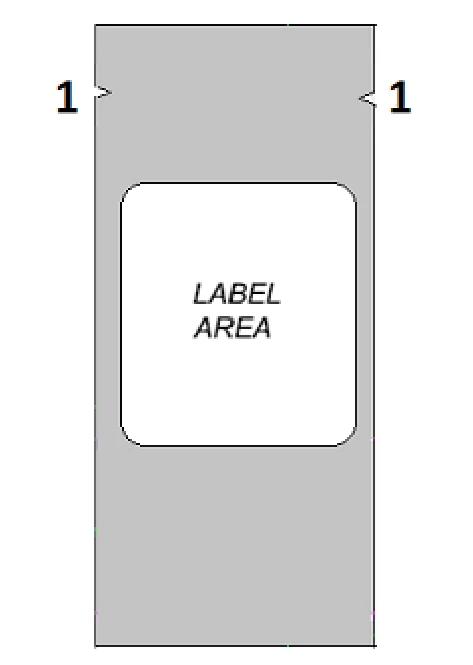
ADIENNE Instructions for use – TEPADINA® 200 mg/bag &@D ~~ ~ ~ PHARMA & B I OTECH | |
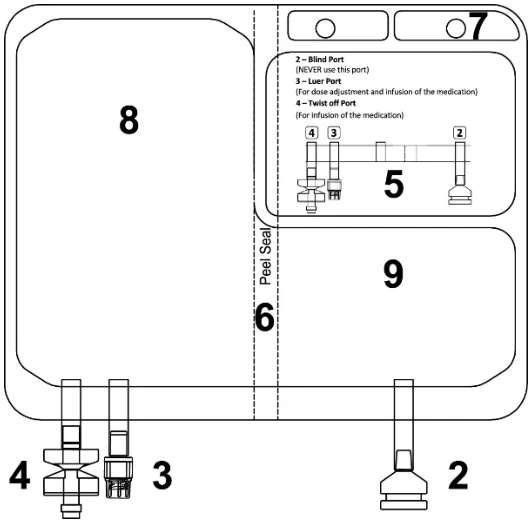
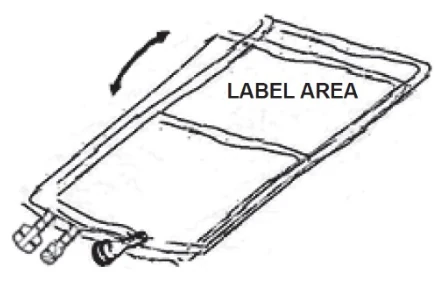
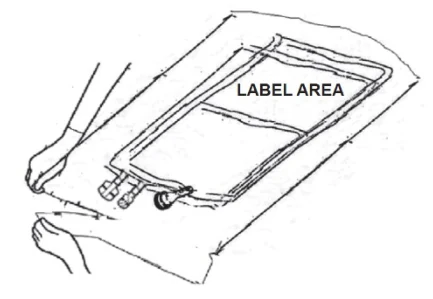
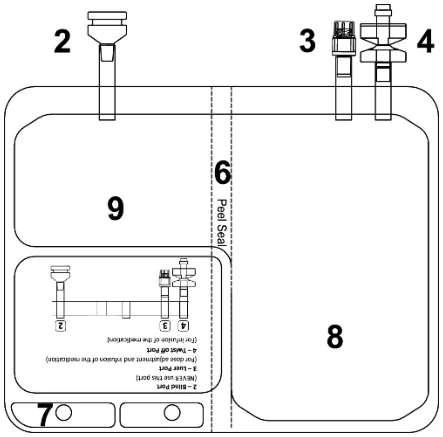
Figure A 1 - Overpouch Notch r \. LABEL AREA | Figure B 2 – Blind Port (NEVER use this port) 3 – Luer Port 4 – Twist off Port 5 – Label Area 6 – Peel Seal (Must break to activate) 7 – Hole (For hanging the bag) 8 – Solvent chamber 9 – Powder chamber 8 4 3 ' ' ' ' ' ' ( o H o7 J [NEYIR.,..thisport) :1:- 1.uerl'on. (Ford<><,tadj1Btnv:n(-lalU<.10nollN~<ll<.allOllf 4-fwkt,MP,c,rt (For1nf11ilorlof1hemedlcaot1ot,) 9 2 |
| 1 – REMOVE OVERPOUCH | |||||
|
| ||||
| 2 - INSPECT BAG PRIOR TO ACTIVATION. | 3 – ACTIVATE THE BAG | ||||
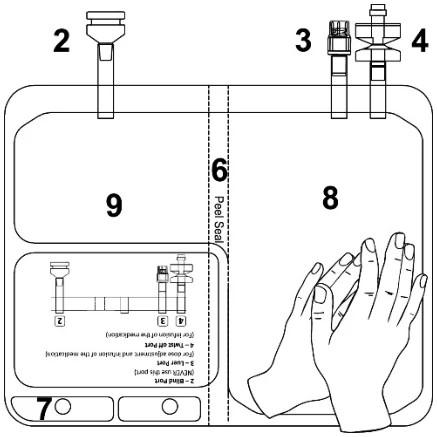
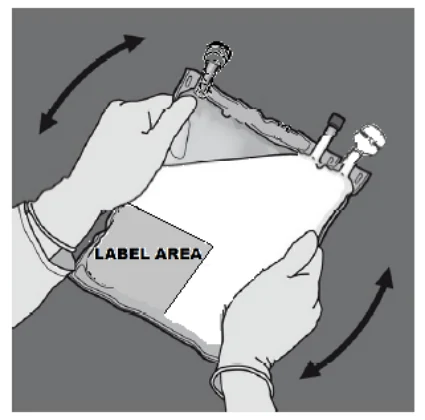
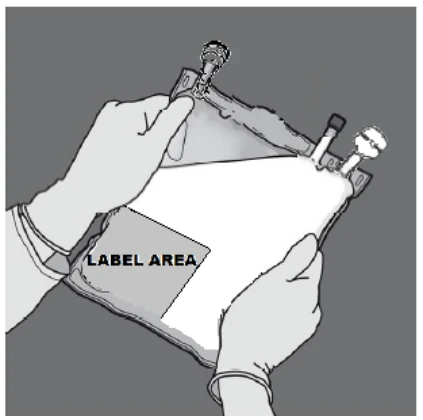
Place bag on a clean, stable surface with text side up and ports pointing away from you, as per Figure E. Check that there are no liquid or product leakages from the connection ports 2, 3, 4 and from the chamber 8, 9. Check the integrity of peel seal 6, verifying the absence of liquid in the chamber 9. Figure E 2 3 4 9 8 (.,.,.,....., ..... ,o...,..,,..~,u••q•r~1:~:=,~ l>JOd~~';".,!,~~M! | Overlap your hands, on the lower portion of chamber 8 (as per Figure F). Press firmly in order to apply uniform pressure until peel seal 6 is completely activated (it may take up to 5 seconds of continued pressure to break the peel seal 6). Figure F 2 1..,,,.,... .... ,,...,,.....,1>,,t ........ ,:.--:,~i 1,...,...,...,111.'J~) ----• : : S:: 7 o I c:::::3D i 3 4 8 | ||||
| BAG BEFORE ACTIVATION | BAG AFTER ACTIVATION | ||||
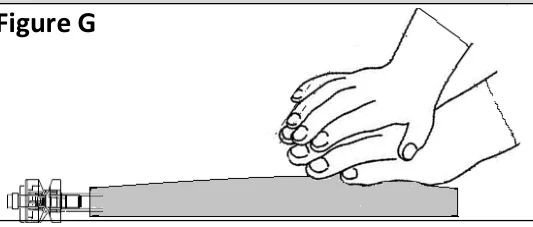
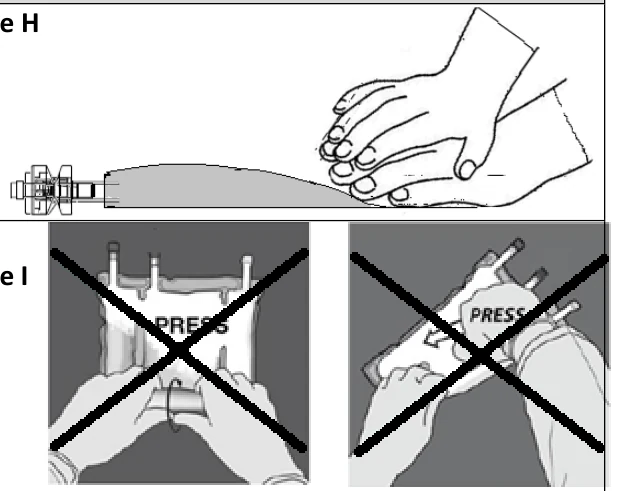
| Figure G | Figure H | ||||
| Do NOT squeeze or press strongly. | Figure I | ||||
| 4 – INSPECT BAG TO CONFIRM ACTIVATION. | |||||
Check the peel seal 6 is now completely activated. Chamber 8 and 9 are merged. Figure J | Mix gently until complete dissolution of product. Figure K | ||||
| 5– DOSE ADJUSTMENT - Please refer to the sections 2. “Posology and method of administration” and | |||||
| |||||
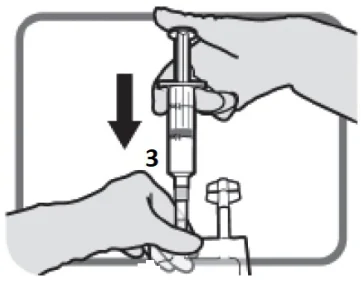
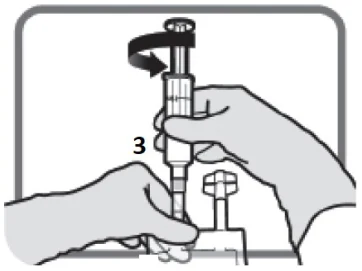
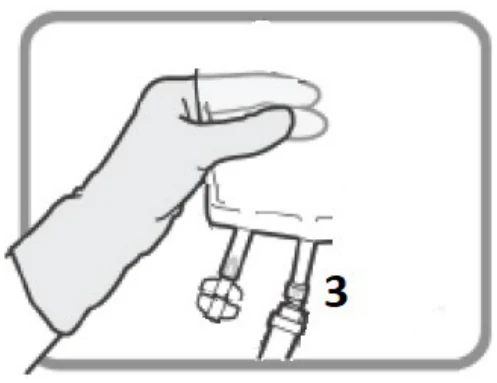
Identify the Luer Port 3 if correcting dose is needed. Remove the plastic cap from Luer Port. Figure L | Screw the luer lock device as per Figure M. Do not use unproper non luer lock devices on port 3. Figure M Ensure that the connection is fully seated and tighten. | Operate dose adjustment as per sections 2 and 3 Figure N Unscrew the device once finished. Put the plastic cap on Luer Port 3 before proceeding with infusion | |||
| 6 – CONNECTION - The infusion set may be connected to the bag through either of the luer connector | |||
| or the spike connector. | |||
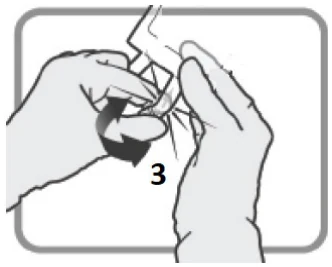
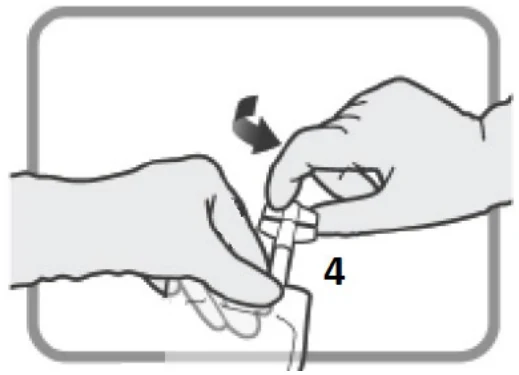
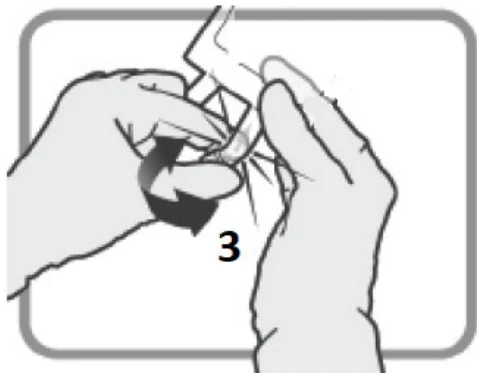
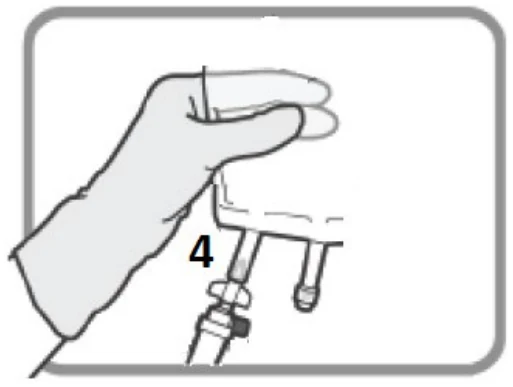
OPTION A – SPIKE CONNECTION Identify Twist off Port 4 in case of spike infusion set. Twist off the plastic cap before inserting the spike. Figure O Insert the spike connector. Figure P | OPTION B– LUER CONNECTION Select luer cap port 3 in case of luer connector infusion set. Remove the plastic cap from Luer Port 3 before connect the luer connector. Figure Q Insert the luer connector. Figure R Ensure that the connection is fully seated and tighten. | ||
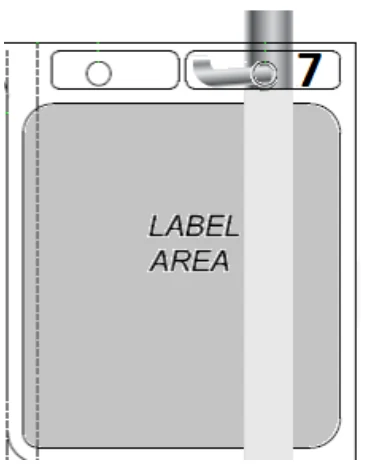
| 7- HANG THE BAG | |||
| Hang the bag by the hole 7. | Figure S . LABEL AREA ~'+---- - - | ||