


Summary of Product Characteristics (SmPC) - Tegomil Fumarate Neuraxpharm 174 mg gastro-resistant hard capsules
1 NAME OF THE MEDICINAL PRODUCT
Tegomil Fumarate Neuraxpharm 174 mg gastro-resistant hard capsules
2 QUALITATIVE AND QUANTITATIVE COMPOSITION
Each gastro-resistant hard capsule contains 174.2 mg tegomil fumarate
(174 mg tegomil fumarate corresponds to 120 mg dimethyl fumarate)
For the full list of excipients, see section 6.1.
3 PHARMACEUTICAL FORM
Gastro-resistant capsule, hard.
Light blue and white gastro-resistant hard gelatin capsules, size 0 with the dimension of approximately 21 mm, printed with ‘174’ in white ink on body, containing pale yellow mini tablets.
4 CLINICAL PARTICULARS
4.1 Therapeutic indications
Tegomil Fumarate is indicated for the treatment of adult and paediatric patients aged 13 years and older with relapsing remitting multiple sclerosis (RRMS).
4.2 Posology and method of administration
Treatment should be initiated under supervision of a physician experienced in the treatment of multiple sclerosis.
Posology
The starting dose is 174 mg twice a day. After 7 days, the dose should be increased to the recommended maintenance dose of 348 mg twice a day (see section 4.4).
If a patient misses a dose, a double dose should not be taken. The patient may take the missed dose only if they leave 4 hours between doses. Otherwise, the patient should wait until the next scheduled dose.
Temporary dose reduction to 174 mg twice a day may reduce the occurrence of flushing and gastrointestinal adverse reactions. Within 1 month, the recommended maintenance dose of 348 mg twice a day should be resumed.
Tegomil fumarate should be taken with food (see section 5.2). For those patients who may experience flushing or gastrointestinal adverse reactions, taking tegomil fumarate with food may improve tolerability (see sections 4.4, 4.5 and 4.8).
Special populations
Elderly
Clinical studies of tegomil fumarate had limited exposure to patients aged 55 years and above, and did not include sufficient numbers of patients aged 65 and over to determine whether they respond differently than younger patients (see section 5.2). Based on the mode of action of the active substance there are no theoretical reasons for any requirement for dose adjustments in the elderly.
Renal and hepatic impairment
Tegomil fumarate has not been studied in patients with renal or hepatic impairment. Based on clinical pharmacology studies, no dose adjustments are needed (see section 5.2). Caution should be used when treating patients with severe renal or severe hepatic impairment (see section 4.4).
Paediatric population
The posology is the same in adults and in paediatric patients aged 13 years and older. Currently available data are described in sections 4.4, 4.8, 5.1, and 5.2.
The safety and efficacy in children aged less than 13 years have not yet been established.
Method of administration
For oral use.
The capsule should be swallowed whole. The capsule or its contents should not be crushed, divided, dissolved, sucked or chewed as the enteric-coating of the minitablets prevents irritant effects on the gut.
4.3 Contraindications
Hypersensitivity to the active substance or to any of the excipients listed in section 6.1.
Suspected or confirmed progressive multifocal leukoencephalopathy (PML).
4.4 Special warnings and precautions for use
Tegomil fumarate and dimethyl fumarate are metabolised to monomethyl fumarate upon oral administration (see section 5.2). The risks associated with tegomil fumarate are expected to be similar to those reported for dimethyl fumarate even though not all the risks listed below have been observed specifically for tegomil fumarate.
Blood/laboratory tests
Renal function
Changes in renal laboratory tests have been seen in clinical trials in patients treated with dimethyl fumarate (see section 4.8). The clinical implications of these changes are unknown. Assessment of renal function (e.g. creatinine, blood urea nitrogen and urinalysis) is recommended prior to treatment initiation, after 3 and 6 months of treatment, every 6 to 12 months thereafter and as clinically indicated.
Hepatic function
Drug-induced liver injury, including liver enzyme increase (≥ 3 times upper limit of normal (ULN)) and elevation of total bilirubin levels (≥ 2 ULN) can result from treatment with dimethyl fumarate. The time to onset can be days, several weeks or longer. Resolution of the adverse reactions has been observed after treatment was discontinued. Assessment of serum aminotransferases (e.g. alanine aminotransferase (ALT), aspartate aminotransferase (AST)) and total bilirubin levels are recommended prior to treatment initiation and during treatment as clinically indicated.
Lymphocytes
Patients treated with tegomil fumarate may develop lymphopenia (see section 4.8). Prior to initiating treatment, a current complete blood count, including lymphocytes, must be performed.
If lymphocyte count is found to be below the normal range, thorough assessment of possible causes should be completed prior to initiation of treatment. Tegomil fumarate has not been studied in patients with pre-existing low lymphocyte counts and caution should be exercised when treating these patients. Tegomil fumarate should not be initiated in patients with severe lymphopenia (lymphocyte counts < 0.5 x 10⁹/L).
After starting therapy, complete blood counts, including lymphocytes, must be performed every 3 months.
Enhanced vigilance due to an increased risk for progressive multifocal leukoencephalopathy (PML) is recommended in patients with lymphopenia as follows:
Treatment should be discontinued in patients with prolonged severe lymphopenia
(lymphocyte counts < 0.5 x 10⁹/L) persisting for more than 6 months
In patients with sustained moderate reductions of absolute lymphocyte counts
≥ 0.5 x 10⁹/L to < 0.8 x 10⁹/L for more than 6 months, the benefit/risk balance of treatment should be re- assessed.
- In patients with lymphocyte counts below lower limit of normal (LLN) as defined by local laboratory reference range, regular monitoring of absolute lymphocyte counts is recommended. Additional factors that might further augment the individual PML risk should be considered (see subsection on PML below).
Lymphocyte counts should be followed until recovery (see section 5.1). Upon recovery and in the absence of alternative treatment options, decisions about whether or not to restart tegomil fumarate after treatment discontinuation should be based on clinical judgement.
Magnetic resonance imaging (MRI)
Before initiating treatment, a baseline MRI should be available (usually within 3 months) as a reference. The need for further MRI scanning should be considered in accordance with national and local recommendations. MRI imaging may be considered as part of increased vigilance in patients considered at increased risk of PML. In case of clinical suspicion of PML, MRI should be performed immediately for diagnostic purposes.
Progressive multifocal leukoencephalopathy (PML)
PML has been reported in patients treated with dimethyl fumarate (see section 4.8). PML is an opportunistic infection caused by John-Cunningham virus (JCV), which may be fatal or result in severe disability.
PML cases have occurred with dimethyl fumarate and other medicinal products containing fumarates in the setting of lymphopenia (lymphocyte counts below LLN). Prolonged moderate to severe lymphopenia appears to increase the risk of PML with dimethyl fumarate, however, risk cannot be excluded in patients with mild lymphopenia.
Additional factors that might contribute to an increased risk for PML in the setting of lymphopenia are:
- duration of tegomil fumarate therapy. Cases of PML have occurred after approximately 1 to 5 years of treatment, although the exact relationship with duration of treatment is unknown.
- profound decreases in CD4+ and especially in CD8+ T cell counts, which are important for immunological defence (see section 4.8), and
- prior immunosuppressive or immunomodulatory therapy (see below).
Physicians should evaluate their patients to determine if the symptoms are indicative of neurological dysfunction and, if so, whether these symptoms are typical of MS or possibly suggestive of PML.
At the first sign or symptom suggestive of PML, tegomil fumarate should be withheld and appropriate diagnostic evaluations, including determination of JCV DNA in cerebrospinal fluid (CSF) by quantitative polymerase chain reaction (PCR) methodology, need to be performed. The symptoms of PML may be similar to an MS relapse. Typical symptoms associated with PML are diverse, progress over days to weeks, and include progressive weakness on one side of the body or clumsiness of limbs, disturbance of vision, and changes in thinking, memory, and orientation leading to confusion and personality changes. Physicians should be particularly alert to symptoms suggestive of PML that the patient may not notice. Patients should also be advised to inform their partner or caregivers about their treatment, since they may notice symptoms that the patient is not aware of.
PML can only occur in the presence of a JCV infection. It should be considered that the influence of lymphopenia on the accuracy of serum anti-JCV antibody testing has not been studied in dimethyl fumarate treated patients. It should also be noted that a negative anti-JCV antibody test (in the presence of normal lymphocyte counts) does not preclude the possibility of subsequent JCV infection.
If a patient develops PML, tegomil fumarate must be permanently discontinued.
Prior treatment with immunosuppressive or immunomodulating therapies
No studies have been performed evaluating the efficacy and safety of tegomil fumarate when switching patients from other disease modifying therapies. The contribution of prior immunosuppressive therapy to the development of PML in tegomil fumarate treated patients is possible.
PML cases have occurred in patients who had previously been treated with natalizumab, for which PML is an established risk. Physicians should be aware that cases of PML occurring following recent discontinuation of natalizumab may not have lymphopenia.
In addition, a majority of confirmed PML cases with dimethyl fumarate occurred in patients with prior immunomodulatory treatment.
When switching patients from another disease modifying therapy to tegomil fumarate, the half-life and mode of action of the other therapy should be considered in order to avoid an additive immune effect while at the same time, reducing the risk of reactivation of MS. A complete blood count is recommended prior to initiating tegomil fumarate and regularly during treatment (see Blood/laboratory tests above).
Severe renal or hepatic impairment
Tegomil fumarate has not been studied in patients with severe renal or severe hepatic impairment. Therefore, caution should be used when considering treatment in these patients (see section 4.2).
Severe active gastrointestinal disease
Tegomil fumarate has not been studied in patients with severe active gastrointestinal disease. Therefore, caution should be used in these patients.
Flushing
In clinical trials, 34% of dimethyl fumarate treated patients experienced flushing. In the majority of patients who experienced flushing, it was mild or moderate in severity. Data from healthy volunteer studies suggest that dimethyl fumarate-associated flushing is likely to be prostaglandin mediated. A short course of treatment with 75 mg non-enteric coated acetylsalicylic acid may be beneficial in patients affected by intolerable flushing (see section 4.5). In two healthy volunteer studies, the occurrence and severity of flushing over the dosing period was reduced.
In clinical trials, 3 patients out of a total of 2 560 patients treated with dimethyl fumarate experienced serious flushing symptoms that were probable hypersensitivity or anaphylactoid reactions. These adverse reactions were not life-threatening, but led to hospitalisation. Prescribers and patients should be alert to this possibility in the event of severe flushing reactions (see sections 4.2, 4.5 and 4.8).
Anaphylactic reactions
Cases of anaphylaxis/anaphylactoid reaction have been reported following dimethyl fumarate administration in the post-marketing setting. Symptoms may include dyspnoea, hypoxia, hypotension, angioedema, rash or urticaria. The mechanism of dimethyl fumarate induced anaphylaxis is unknown.
Reactions generally occur after the first dose, but may also occur at any time during treatment, and may be serious and life threatening. Patients should be instructed to discontinue tegomil fumarate and seek immediate medical care if they experience signs or symptoms of anaphylaxis. Treatment should not be restarted (see section 4.8).
Infections
In phase III placebo-controlled studies with dimethyl fumarate, the incidence of infections (60 % vs 58 %) and serious infections (2 % vs 2 %) was similar in patients treated with dimethyl fumarate or placebo, respectively.
However, due to tegomil fumrate immunomodulatory properties (see section 5.1), if a patient develops a serious infection, suspending treatment with tegomil fumarate should be considered and the benefits and risks should be reassessed prior to re-initiation of therapy. Patients receiving tegomil fumarate should be instructed to report symptoms of infections to a physician. Patients with serious infections should not start treatment with tegomil fumarate until the infection(s) is resolved.
There was no increased incidence of serious infections observed in patients with lymphocyte counts
< 0.8 x 10⁹/L or < 0.5 x 10⁹/L (see section 4.8). If therapy is continued in the presence of moderate to severe prolonged lymphopenia, the risk of an opportunistic infection, including PML, cannot be ruled out (see section 4.4 subsection PML).
Herpes zoster infections
Cases of herpes zoster have occurred with dimethyl fumarate. The majority of cases were non-serious, however, serious cases, including disseminated herpes zoster, herpes zoster ophthalmicus, herpes zoster oticus, herpes zoster infection neurological, herpes zoster meningoencephalitis and herpes zoster meningomyelitis have been reported. These events may occur at any time during treatment. Patients taking dimethyl fumarate should be monitored for signs and symptoms of herpes zoster especially when concurrent lymphocytopenia is reported. If herpes zoster occurs, appropriate treatment for herpes zoster should be administered. Consider withholding treatment in patients with serious infections until the infection has resolved (see section 4.8).
Treatment initiation
Treatment should be started gradually to reduce the occurrence of flushing and gastrointestinal adverse reactions (see section 4.2).
Fanconi syndrome
Cases of Fanconi syndrome have been reported for a medicinal product containing dimethyl fumarate in combination with other fumaric acid esters. Early diagnosis of Fanconi syndrome and discontinuation of tegomil fumarate treatment are important to prevent the onset of renal impairment and osteomalacia, as the syndrome is usually reversible. The most important signs are proteinuria, glucosuria (with normal blood sugar levels), hyperaminoaciduria and phosphaturia (possibly concurrent with hypophosphatemia). Progression might involve symptoms such as polyuria, polydipsia and proximal muscle weakness. In rare cases hypophosphataemic osteomalacia with non- localised bone pain, elevated alkaline phosphatase in serum and stress fractures may occur.
Importantly, Fanconi syndrome can occur without elevated creatinine levels or low glomerular filtration rate. In case of unclear symptoms Fanconi syndrome should be considered and appropriate examinations should be performed.
Paediatric population
The safety profile is qualitatively similar in paediatric patients compared to adults and therefore the warnings and precautions also apply to the paediatric patients. For quantitative differences in the safety profile see section 4.8.
Excipients
This medicinal product contains less than 1 mmol sodium (23 mg) per capsule, that is to say essentially sodium-free.
4.5 Interaction with other medicinal products and other forms of interaction
Anti-neoplastic, immunosuppressive or corticosteroid therapies
Tegomil fumarate has not been studied in combination with anti-neoplastic or immunosuppressive therapies and caution should, therefore, be used during concomitant administration. In multiple sclerosis clinical studies, the concomitant treatment of relapses with a short course of intravenous corticosteroids was not associated with a clinically relevant increase of infection.
Vaccines
Concomitant administration of non-live vaccines according to national vaccination schedules may be considered during tegomil fumarate therapy. In a clinical study involving a total of 71 patients with relapsing remitting multiple sclerosis, patients on dimethyl fumarate 240 mg twice daily for at least 6 months (n=38) or non-pegylated interferon for at least 3 months (n=33), mounted a comparable immune response (defined as ≥ 2-fold increase from pre- to post-vaccination titre) to tetanus toxoid (recall antigen) and a conjugated meningococcal C polysaccharide vaccine (neoantigen), while the immune response to different serotypes of an unconjugated 23-valent pneumococcal polysaccharide vaccine (T-cell independent antigen) varied in both treatment groups. A positive immune response defined as a ≥ 4-fold increase in antibody titre to the three vaccines, was achieved by fewer subjects in both treatment groups. Small numerical differences in the response to tetanus toxoid and pneumococcal serotype 3 polysaccharide were noted in favour of non-pegylated interferon.
No clinical data are available on the efficacy and safety of live attenuated vaccines in patients taking tegomil fumarate. Live vaccines might carry an increased risk of clinical infection and should not be given to patients treated with tegomil fumarate unless, in exceptional cases, this potential risk is considered to be outweighed by the risk to the individual of not vaccinating.
Other fumaric acid derivatives
During treatment, simultaneous use of other fumaric acid derivatives (topical or systemic, e.g. dimethyl fumarate) should be avoided.
In humans, dimethyl fumarate is extensively metabolised by esterases before it reaches the systemic circulation and further metabolism occurs through the tricarboxylic acid cycle, with no involvement of the cytochrome P450 (CYP) system. Potential drug interaction risks were not identified from in vitro CYP-inhibition and induction studies, a p-glycoprotein study, or studies of the protein binding of dimethyl fumarate and monomethyl fumarate (a primary metabolite of tegomil fumarate and dimethyl fumarate).
Effects of other substances on dimethyl fumarate
Commonly used medicinal products in patients with multiple sclerosis, intramuscular interferon
beta-1a and glatiramer acetate, were clinically tested for potential interactions with dimethyl fumarate and did not alter the pharmacokinetic profile of dimethyl fumarate.
Evidence from healthy volunteer studies suggests that dimethyl fumarate-associated flushing is likely to be prostaglandin mediated. In two healthy volunteer studies, the administration of 325 mg (or equivalent) non-enteric coated acetylsalicylic acid, 30 minutes prior to dimethyl fumarate, dosing over 4 days and over 4 weeks, respectively, did not alter the pharmacokinetic profile of dimethyl fumarate. Potential risks associated with acetylsalicylic acid therapy should be considered prior to co-administration with tegomil fumarate in patients with relapsing remitting MS. Long term (> 4 weeks) continuous use of acetylsalicylic acid has not been studied (see sections 4.4 and 4.8).
Concurrent therapy with nephrotoxic medicinal products (such as aminoglycosides, diuretics, non- steroidal anti-inflammatory drugs or lithium) may increase the potential of renal adverse reactions (e.g. proteinuria see section 4.8) in patients taking tegomil fumarate (see section 4.4 Blood/laboratory tests).
Consumption of moderate amounts of alcohol did not alter exposure to dimethyl fumarate and was not associated with an increase in adverse reactions. Consumption of large quantities of strong alcoholic drinks (more than 30% alcohol by volume) should be avoided within an hour of taking dimethyl fumarate, as alcohol may lead to increased frequency of gastrointestinal adverse reactions.
Effects of dimethyl fumarate on other substances
Although not studied with tegomil fumarate, in vitro CYP induction studies did not demonstrate an interaction between dimethyl fumarate and oral contraceptives. In an in vivo study, co-administration of dimethyl fumarate with a combined oral contraceptive (norgestimate and ethinyl estradiol) did not elicit any relevant change in oral contraceptive exposure. No interaction studies have been performed with oral contraceptives containing other progestogens, however an effect of tegomil fumarate on their exposure is not expected.
Paediatric population
Interaction studies with dimethyl fumarate have only been performed in adults.
4.6 Fertility, pregnancy and lactation
Pregnancy
There are no data from the use of tegomil fumarate in pregnant women. A moderate amount of data on pregnant women are available for another substance dimethyl fumarate (between 300-
1 000 pregnancy outcomes), based on a pregnancy registry and post-marketing spontaneous reports. In the pregnancy registry of dimethyl fumarate, 289 prospectively collected pregnancy outcomes were documented in patients with MS who were exposed to dimethyl fumarate. The median duration of exposure to dimethyl fumarate was 4.6 gestational weeks with limited exposure after the sixth gestational week (44 pregnancy outcomes). Exposure to dimethyl fumarate during such early pregnancy indicates no malformative or foeto/neonatal toxicity compared to the general population. The risk of longer dimethyl fumarate exposure or exposure in later stages of pregnancy is not known.
Animal studies with dimethyl fumarate have shown reproductive toxicity (see section 5.3). As a precautionary measure, it is preferable to avoid the use of tegomil fumarate during pregnancy. Tegomil fumarate should be used during pregnancy only if clearly needed and if the potential benefit justifies the potential risk to the foetus.
Breast-feeding
It is unknown whether tegomil fumarate or its metabolites are excreted in human milk. A risk to the newborns/infants cannot be excluded. A decision must be made whether to discontinue breast-feeding or to discontinue tegomil fumarate therapy taking into account the benefit of breast-feeding for the child and the benefit of therapy for the woman should be taken into account.
Fertility
There are no data on the effects of tegomil fumarate on human fertility. Data from preclinical studies with another subtsance dimethyl fumarate do not suggest an increased risk of reduced fertility (see section 5.3).
4.7 Effects on ability to drive and use machines
Tegomil fumarate has no or negligible influence on the ability to drive and use machines.
4.8 Undesirable effects
Upon oral administration, tegomil fumarate and dimethyl fumarate are rapidly metabolised to
monomethyl fumarate before they reach the systemic circulation, adverse reactions are similar once
metabolised.
Summary of the safety profile
The most common adverse reactions are flushing (35%) and gastrointestinal events (i.e. diarrhoea (14%), nausea (12%), abdominal pain (10%), abdominal pain upper (10%)). Flushing and gastrointestinal events tend to begin early in the course of treatment (primarily during the first month) and in patients who experience flushing and gastrointestinal events, these events may continue to occur intermittently throughout treatment with dimethyl fumarate. The most commonly reported adverse reactions leading to discontinuation (incidence > 1%) in patients treated with dimethyl fumarate were flushing (3%) and gastrointestinal events (4%).
In placebo-controlled and uncontrolled clinical studies, a total of 2 513 patients have received dimethyl fumarate for periods of up to 12 years with an overall exposure equivalent to 11 318 person-years. A total of 1 169 patients have received at least 5 years of treatment with dimethyl fumarate, and 426 patients have received at least 10 years of treatment with dimethyl fumarate. The experience in uncontrolled clinical trials is consistent with the experience in the placebo-controlled clinical trials.
Tabulated list of adverse reactions
Adverse reactions arising from clinical studies, post-authorisation safety studies and spontaneous reports, are presented in the table below.
The adverse reactions are presented as MedDRA preferred terms under the MedDRA System Organ Class. The incidence of the adverse reactions below is expressed according to the following categories:
- Very common (≥ 1/10)
- Common (≥ 1/100 to < 1/10)
- Uncommon (≥ 1/1 000 to < 1/100)
- Rare (≥ 1/10 000 to < 1/1 000)
- Very rare (< 1/10 000)
- Not known (frequency cannot be estimated from the available data)
| MedDRA System Organ Class | Adverse reaction | Frequency category |
| Infections and infestations | Gastroenteritis | Common |
| Progressive multifocal leukoencephalopathy (PML) | Not known | |
| Herpes zoster | Not known | |
| Blood and lymphatic system disorders | Lymphopenia | Common |
| Leucopenia | Common | |
| Thrombocytopenia | Uncommon | |
| Immune system disorders | Hypersensitivity | Uncommon |
| Anaphylaxis | Not known | |
| Dyspnoea | Not known | |
| Hypoxia | Not known | |
| Hypotension | Not known | |
| Angioedema | Not known | |
| Nervous system disorders | Burning sensation | Common |
| Vascular disorders | Flushing | Very common |
| Hot flush | Common | |
| Respiratory, thoracic and mediastinal disorders | Rhinorrhoea | Not known |
| Gastrointestinal disorders | Diarrhoea | Very common |
| Nausea | Very common | |
| Abdominal pain upper | Very common | |
| Abdominal pain | Very common | |
| Vomiting | Common | |
| Dyspepsia | Common | |
| Gastritis | Common | |
| Gastrointestinal disorder | Common | |
| Hepatobiliary disorders | Aspartate aminotransferase increased | Common |
| Alanine aminotransferase increased | Common | |
| Drug-induced liver injury | Rare | |
| Skin and subcutaneous tissue disorders | Pruritus | Common |
| Rash | Common | |
| Erythema | Common | |
| Alopecia | Common | |
| Renal and urinary disorders | Proteinuria | Common |
| General disorders and administration site conditions | Feeling hot | Common |
| Investigations | Ketones measured in urine | Very common |
| Albumin urine present | Common | |
| White blood cell count decreased | Common |
Description of selected adverse reactions
Flushing
In the placebo-controlled studies, the incidence of flushing (34% versus 4%) and hot flush
(7% versus 2%) was increased in patients treated with dimethyl fumarate compared to placebo, respectively. Flushing is usually described as flushing or hot flush, but can include other events (e.g. warmth, redness, itching, and burning sensation). Flushing events tend to begin early in the course of treatment (primarily during the first month) and in patients who experience flushing, these events may continue to occur intermittently throughout treatment with dimethyl fumarate. In patients with flushing, the majority had flushing events that were mild or moderate in severity. Overall, 3% of patients treated with dimethyl fumarate discontinued due to flushing. The incidence of serious flushing, which may be characterised by generalised erythema, rash and/or pruritus, was seen in less than 1% of patients treated with dimethyl fumarate (see sections 4.2, 4.4 and 4.5).
Gastrointestinal
The incidence of gastrointestinal events (e.g. diarrhoea [14% versus 10%], nausea [12% versus 9%], upper abdominal pain [10% versus 6%], abdominal pain [9% versus 4%], vomiting [8% versus 5%] and dyspepsia [5% versus 3%]) was increased in patients treated with dimethyl fumarate compared to placebo, respectively. Gastrointestinal adverse reactions tend to begin early in the course of treatment (primarily during the first month) and in patients who experience gastrointestinal events, these events may continue to occur intermittently throughout treatment with dimethyl fumarate. In the majority of patients who experienced gastrointestinal events, it was mild or moderate in severity. Four per cent (4%) of patients treated with dimethyl fumarate discontinued due to gastrointestinal events. The incidence of serious gastrointestinal adverse reactions, including gastroenteritis and gastritis, was seen in 1% of patients treated with dimethyl fumarate (see section 4.2).
Hepatic function
Based on data from placebo-controlled studies, the majority of patients with elevations had hepatic transaminases that were < 3 times the upper limit of normal (ULN). The increased incidence of elevations of hepatic transaminases in patients treated with dimethyl fumarate relative to placebo was primarily seen during the first 6 months of treatment. Elevations of alanine aminotransferase and aspartate aminotransferase ≥ 3 times ULN, respectively, were seen in 5% and 2% of patients treated with placebo and 6% and 2% of patients treated with dimethyl fumarate. Discontinuations due to elevated hepatic transaminases were < 1% and similar in patients treated with dimethyl fumarate or placebo. Elevations in transaminases ≥ 3 times ULN with concomitant elevations in total bilirubin > 2 times ULN, were not observed in placebo-controlled studies.
Increase of liver enzymes and cases of drug-induced liver injury (elevations in transaminases ≥ 3 times ULN with concomitant elevations in total bilirubin > 2 times ULN), have been reported in post marketing experience following dimethyl fumarate administration, which resolved upon treatment discontinuation.
Lymphopenia
In the placebo-controlled studies most patients (> 98%) had normal lymphocyte values prior to initiating treatment. Upon treatment with dimethyl fumarate, mean lymphocyte counts decreased over the first year with a subsequent plateau. On average, lymphocyte counts decreased by approximately 30% of baseline value. Mean and median lymphocyte counts remained within normal limits. Lymphocyte counts < 0.5 x 10⁹/L were observed in < 1% of patients treated with placebo and 6% of patients treated with dimethyl fumarate. A lymphocyte count < 0.2 x 10⁹/L was observed in 1 patient treated with dimethyl fumarate and in no patients treated with placebo.
In clinical studies (both controlled and uncontrolled), 41% of patients treated with dimethyl fumarate had lymphopenia (defined in these studies as < 0.91 x 10⁹/L). Mild lymphopenia (counts ≥ 0.8 x 10⁹/L to < 0.91 x 10⁹/L) was observed in 28% of patients; moderate lymphopenia (counts ≥ 0.5 x 10⁹/L to < 0.8 x 10⁹/L) persisting for at least six months was observed in 11% of patients; severe lymphopenia (counts < 0.5 x 10⁹/L) persisting for at least six months was observed in 2% of patients. In the group with severe lymphopenia, the majority of lymphocyte counts remained < 0.5 x 10⁹/L with continued therapy.
In addition, in an uncontrolled, prospective, post-marketing study, at week 48 of treatment with dimethyl fumarate (n=185) CD4+ T cells were moderately (counts ≥ 0.2 x 10⁹/L to < 0.4 x 10⁹/L) or severely (< 0.2 x 10⁹/L) decreased in up to 37% or 6% of patients, respectively, while CD8+ T cells were more frequently reduced with up to 59% of patients at counts < 0.2 x 10⁹/L and 25% of patients at counts < 0.1 x 10⁹/L. In controlled and uncontrolled clinical studies, patients who discontinued dimethyl fumarate therapy with lymphocyte counts below the lower limit of normal (LLN) were monitored for recovery of lymphocyte count to the LLN (see section 5.1).
Progressive multifocal leukoencephalopathy (PML)
Cases of infections with John Cunningham virus (JCV) causing Progressive Multifocal Leukoencephalopathy (PML) have been reported with dimethyl fumarate (see section 4.4). PML may be fatal or result in severe disability. In one of the clinical trials, one patient taking dimethyl fumarate developed PML in the setting of prolonged severe lymphopenia (lymphocyte counts predominantly < 0.5 x 10⁹/L for 3.5 years), with a fatal outcome. In the post-marketing setting, PML has also occurred in the presence of moderate and mild lymphopenia (> 0.5 x 10⁹/L to < LLN, as defined by local laboratory reference range).
In several PML cases with determination of T cell subsets at the time of diagnosis of PML,
CD8+ T cell counts were found to be decreased to < 0.1 x 10⁹/L, whereas reductions in CD4+ T cells counts were variable (ranging from < 0.05 to 0.5 x 10⁹/L) and correlated more with the overall severity of lymphopenia (< 0.5 x 10⁹/L to < LLN). Consequently, the CD4+/CD8+ ratio was increased in these patients.
Prolonged moderate to severe lymphopenia appears to increase the risk of PML with dimethyl fumarate, however, PML also occurred in patients with mild lymphopenia. Additionally, the majority of PML cases in the post-marketing setting have occurred in patients > 50 years.
Herpes zoster infections
Herpes zoster infections have been reported with dimethyl fumarate use. In an ongoing long-term extension study, in which 1 736 MS patients are treated with dimethyl fumarate, approximately 5 % experienced one or more events of herpes zoster, of which 42 % were mild, 55 % were moderate, and 3 % were severe. The time to onset from first dimethyl fumarate dose ranged from approximately 3 months to 10 years. Four patients experienced serious events, all of which resolved.t Most subjects, including those who experienced a serious herpes zoster infection, had lymphocyte counts above the lower limit of normal. In a majority of subjects with concurrent lymphocyte counts below the LLN, lymphopenia was rated moderate or severe. In the post-marketing setting most cases of herpes zoster infection were non-serious and resolved with treatment. Limited data is available on absolute lymphocyte count (ALC) in patients with herpes zoster infection in the post-marketing setting. However, when reported, most patients experienced moderate (≥ 0.5 x 10⁹/L to < 0.8 x 10⁹/L) or severe (< 0.5 x 10⁹/L to 0.2 x 10⁹/L) lymphopenia (see section 4.4).
Laboratory abnormalities
In the placebo-controlled studies, measurement of urinary ketones (1+ or greater) was higher in patients treated with dimethyl fumarate (45%) compared to placebo (10 %). No untoward clinical consequences were observed in clinical trials.
Levels of 1,25-dihydroxyvitamin D decreased in dimethyl fumarate treated patients relative to placebo (median percentage decrease from baseline at 2 years of 25 % versus 15 %, respectively) and levels of parathyroid hormone (PTH) increased in dimethyl fumarate treated patients relative to placebo (median percentage increase from baseline at 2 years of 29 % versus 15%, respectively). Mean values for both parameters remained within normal range.
A transient increase in mean eosinophil counts was seen during the first 2 months of therapy.
Paediatric population
In a 96 week open label, randomised active controlled trial in paediatric patients with RRMS (n=7 aged 10 to less than 13 years and n=71 aged 13 to less than 18 years) were treated with 120 mg twice a day for 7 days followed by 240 mg twice a day for the remainder of treatment. The safety profile in paediatric patients appeared similar to that previously observed in adult patients.
The paediatric clinical trial design differed from the adult placebo-controlled clinical trials. Therefore, the contribution of clinical trial design to numerical differences in adverse reactions between the paediatric and adult populations, cannot be excluded.
The following adverse events were more frequently reported (≥ 10%) in the paediatric population than in the adult population:
Headache was reported in 28% of patients treated with dimethyl fumarate versus
36% in patients treated with interferon beta-1a.
- Gastrointestinal disorders were reported in 74% of patients treated with dimethyl fumarate versus 31% in patients treated with interferon beta-1a. Among them, abdominal pain and vomiting were the most frequently reported with dimethyl fumarate.
- Respiratory, thoracic and mediastinal disorders were reported in 32 % of patients treated with dimethyl fumarate versus 11% in patients treated with interferon beta-1a. Among them, oropharyngeal pain and cough were the most frequently reported with dimethyl fumarate.
- Dysmenorrhea was reported in 17% of patients treated with dimethyl fumarate versus 7 % of patients treated with interferon beta-1a.
In a small 24 week open-label uncontrolled study in paediatric patients with RRMS aged 13 to 17 years (120 mg twice a day for 7 days followed by 240 mg twice a day for the remainder of treatment; safety population, n=22), followed by a 96 week extension study (240 mg twice per day; safety population n=20), the safety profile appeared similar to that observed in adult patients.
Reporting of suspected adverse reactions
Reporting suspected adverse reactions after authorisation of the medicinal product is important. It allows continued monitoring of the benefit/risk balance of the medicinal product. Healthcare professionals are asked to report any suspected adverse reactions via the Yellow Card Scheme Website: www.mhra.gov.uk/yellowcard or search for MHRA Yellow Card in the Google Play or Apple App Store.
4.9 Overdose
In reported cases of overdose, the symptoms described were consistent with the known adverse reaction profile of the product. There are no known therapeutic interventions to enhance elimination of diroximel fumarate nor is there a known antidote. In the event of overdose, it is recommended that symptomatic supportive treatment be initiated as clinically indicated.
5 PHARMACOLOGICAL PROPERTIES
5.1 Pharmacodynamic properties
Pharmacotherapeutic group: Immunosuppressants, other immunosuppressants, ATC code: L04AX10
Mechanism of action
The mechanism by which tegomil fumarate exerts therapeutic effects in multiple sclerosis is not fully understood. Tegomil fumarate acts via the major active metabolite, monomethyl fumarate. Preclinical studies indicate that monomethyl fumarate pharmacodynamic responses appear to be primarily mediated through activation of the Nuclear factor (erythroid-derived 2)-like 2 (Nrf2) transcriptional pathway. Dimethyl fumarate has been shown to up regulate Nrf2-dependent antioxidant genes in patients (e.g. NAD(P)H dehydrogenase, quinone 1; [NQO1]).
Pharmacodynamic effects
Effects on the immune system
In preclinical and clinical studies, dimethyl fumarate demonstrated anti-inflammatory and immunomodulatory properties. Dimethyl fumarate and monomethyl fumarate (the primary metabolite of dimethyl fumarate and tegomil fumarate), significantly reduced immune cell activation and subsequent release of pro- inflammatory cytokines in response to inflammatory stimuli in preclinical models. In clinical studies with psoriasis patients, dimethyl fumarate affected lymphocyte phenotypes through a down-regulation of pro-inflammatory cytokine profiles (TH1, TH17), and biased towards anti-inflammatory production (TH2). Dimethyl fumarate demonstrated therapeutic activity in multiple models of inflammatory and neuroinflammatory injury. In Phase 3 studies in MS patients (DEFINE, CONFIRM and ENDORSE), upon treatment with dimethyl fumarate mean lymphocyte counts decreased on average by approximately 30% of their baseline value over the first year with a subsequent plateau. In these studies, patients who discontinued dimethyl fumarate therapy with lymphocyte counts below the lower limit of normal (LLN, 910 cells/mm3) were monitored for recovery of lymphocyte counts to the LLN.
Figure 1 shows the proportion of patients estimated to reach the LLN based on the Kaplan-Meier method without prolonged severe lymphopenia. The recovery baseline (RBL) was defined as the last on-treatment ALC prior to dimethyl fumarate discontinuation. The estimated proportion of patients recovering to LLN (ALC ≥ 0.9 x 10⁹/L) at Week 12 and Week 24, who had mild, moderate, or severe lymphopenia at RBL are presented in Table 1, Table 2, and Table 3 with 95 % pointwise confidence intervals. The standard error of the Kaplan-Meier estimator of the survival function is computed using Greenwood’s formula.
Figure 1: Kaplan-Meier Method; Proportion of patients with recovery to ≥ 910 cells/mm3 LLN from the recovery baseline (RBL)
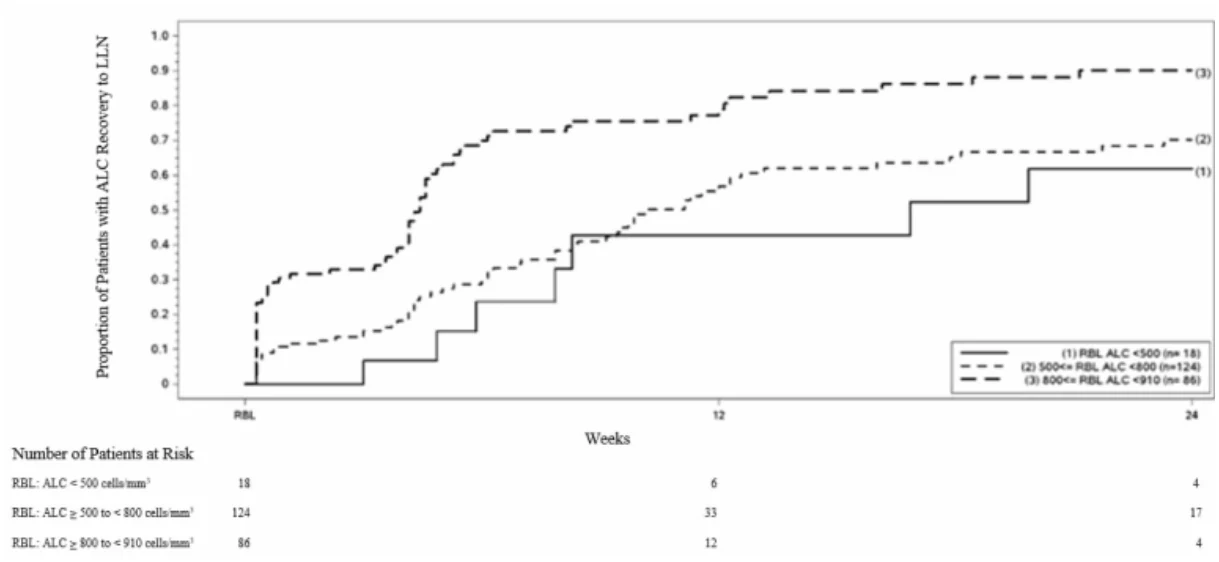
Table 1: Kaplan-Meier Method; Proportion of patients estimated to reach LLN, mild lymphopenia at the recovery baseline (RBL), excluding patients with prolonged severe lymphopenia
| Number of patients with mild lymphopeniaa at risk | Baseline N=86 | Week 12 N=12 | Week 24 N=4 |
| Proportion reaching LLN (95 % CI) | 0.81 (0.71, 0.89) | 0.90 (0.81, 0.96) |
a Patients with ALC < 910 and ≥ 800 cells/mm3 at RBL, excluding patients with prolonged severe lymphopenia.
Table 2: Kaplan-Meier Method; Proportion of patients estimated to reach LLN, moderate lymphopenia at the recovery baseline (RBL), excluding patients with prolonged severe lymphopenia
| Number of patients with moderate lymphopeniaa at risk | Baseline N=124 | Week 12 N=33 | Week 24 N=17 |
| Proportion reaching LLN (95 % CI) | 0.57 (0.46, 0.67) | 0.70 (0.60, 0.80) |
a Patients with ALC < 800 and ≥ 500 cells/mm3 at RBL, excluding patients with prolonged severe lymphopenia.
Table 3: Kaplan-Meier Method; Proportion of patients estimated to reach LLN, severe lymphopenia at the recovery baseline (RBL), excluding patients with prolonged severe lymphopenia
| Number of patients with severe lymphopeniaa at risk | Baseline N=18 | Week 12 N=6 | Week 24 N=4 |
| Proportion reaching LLN (95 % CI) | 0.43 (0.20, 0.75) | 0.62 (0.35, 0.88) |
a Patients with ALC < 500 cells/mm3 at RBL, excluding patients with prolonged severe lymphopenia.
Clinical efficacy and safety
Tegomil fumarate and dimethyl fumarate are rapidly metabolised by esterases before they reach the systemic circulation to the same active metabolite, monomethyl fumarate, upon oral administration. The PK comparability of tegomil fumarate to dimethyl fumarate through the analysis of monomethyl fumarate exposure has been demonstrated (see section 5.2), thus efficacy profiles are expected to be similar. Also, the nature, pattern and frequency of adverse events reported from both pivotal bioequivalence studies was similar for tegomil fumarate and dimethyl fumarate.
Clinical studies with dimethyl fumarate
Two, 2 year, randomised, double-blind, placebo-controlled studies (DEFINE with 1 234 patients and CONFIRM with 1 417 patients) of patients with relapsing-remitting multiple sclerosis (RRMS) were performed. Patients with progressive forms of MS were not included in these studies.
Efficacy (see table 4) and safety were demonstrated in patients with expanded disability status scale (EDSS) scores ranging from 0 to 5 inclusive, who had experienced at least 1 relapse during the year prior to randomisation, or, in the 6 weeks before randomisation had a brain magnetic resonance imaging (MRI) demonstrating at least one gadolinium-enhancing (Gd+) lesion. Study CONFIRM contained a rater-blinded (i.e. study physician/ investigator assessing the response to study treatment was blinded) reference comparator of glatiramer acetate.
In DEFINE, patients had the following median baseline characteristics: age 39 years, disease duration
7.0 years, EDSS score 2.0. In addition, 16% of patients had an EDSS score > 3.5, 28% had
≥ 2 relapses in the prior year and 42 % had previously received other approved MS treatments. In the MRI cohort 36% of patients entering the study had Gd+ lesions at baseline (mean number of
Gd+ lesions 1.4).
In CONFIRM, patients had the following median baseline characteristics: age 37 years, disease duration 6.0 years, EDSS score 2.5. In addition, 17% of patients had an EDSS score > 3.5, 32% had
≥ 2 relapses in the prior year and 30% had previously received other approved MS treatments. In the MRI cohort 45% of patients entering the study had Gd+ lesions at baseline (mean number of Gd+ lesions 2.4).
Compared to placebo, patients treated with dimethyl fumarate had a clinically meaningful and statistically significant reduction on the primary endpoint in study DEFINE, proportion of patients relapsed at 2 years; and the primary endpoint in study CONFIRM, annualised relapse rate (ARR) at 2 years.
The ARR for glatiramer acetate and placebo was 0.286 and 0.401 respectively in study CONFIRM, corresponding to a reduction of 29% (p=0.013), which is consistent with approved prescribing information.
Table 4: Clinical and MRI endpoints for studies DEFINE and CONFIRM
| DEFINE | CONFIRM | ||||
| Placebo | dimethyl fumarate 240 mg twice a day | Placebo | dimethyl fumarate 240 mg twice a day | Glatiramer acetate | |
| Clinical endpointsa | |||||
| No. patients | 408 | 410 | 363 | 359 | 350 |
| Annualised relapse rate | 0.364 | 0.172*** | 0.401 | 0.224*** | 0.286* |
| Rate ratio (95 % CI) | 0.47 (0.37, 0.61) | 0.56 (0.42, 0.74) | 0.71 (0.55, 0.93) | ||
| Proportion relapsed | 0.461 | 0.270*** | 0.410 | 0.291** | 0.321** |
| Hazard ratio (95 % CI) | 0.51 (0.40, 0.66) | 0.66 (0.51, 0.86) | 0.71 (0.55, 0.92) | ||
| Proportion with 12-week confirmed disability progression | 0.271 | 0.164** | 0.169 | 0.128# | 0.156# |
| Hazard ratio (95 % CI) | 0.62 (0.44, 0.87) | 0.79 (0.52, 1.19) | 0.93 (0.63, 1.37) | ||
| Proportion with 24 week confirmed disability progression | 0.169 | 0.128# | 0.125 | 0.078# | 0.108# |
| Hazard ratio (95 % CI) | 0.77 (0.52, 1.14) | 0.62 (0.37, 1.03) | 0.87 (0.55, 1.38) | ||
| MRI endpointsb | |||||
| No. patients | 165 | 152 | 144 | 147 | 161 |
| Mean (median) number of new or newly enlarging T2 lesions over 2 years | 16.5 (7.0) | 3.2 (1.0)*** | 19.9 (11.0) | 5.7 (2.0)*** | 9.6 (3.0)*** |
| Lesion mean ratio (95 % CI) | 0.15 (0.10, 0.23) | 0.29 (0.21, 0.41) | 0.46 (0.33, 0.63) | ||
| Mean (median) number of Gd lesions at 2 years | 1.8 (0) | 0.1 (0)*** | 2.0 (0.0) | 0.5 (0.0)*** | 0.7 (0.0)** |
| Odds ratio (95 % CI) | 0.10 (0.05, 0.22) | 0.26 (0.15, 0.46) | 0.39 (0.24, 0.65) | ||
| Mean (median) number of new T1 hypointense lesions over 2 years | 5.7 (2.0) | 2.0 (1.0)*** | 8.1 (4.0) | 3.8 (1.0)*** | 4.5 (2.0)** |
| Lesion mean ratio (95 % CI) | 0.28 (0.20, 0.39) | 0.43 (0.30, 0.61) | 0.59 (0.42, 0.82) | ||
aAll analyses of clinical endpoints were intent-to-treat; bMRI analysis used MRI cohort
*P-value < 0.05; **P-value < 0.01; ***P-value < 0.0001; #not statistically significant
An open non-controlled 8-year extension study (ENDORSE) enrolled 1 736 eligible RRMS patients from the pivotal studies (DEFINE and CONFIRM). The primary objective of the study was to assess the long-term safety of dimethyl fumarate in patients with RRMS. Of the 1 736 patients, approximately half (909, 52%) were treated for 6 years or longer. 501 patients were continuously treated with dimethyl fumarate 240 mg twice daily across all 3 studies and 249 patients who were previously treated with placebo in studies DEFINE and CONFIRM received treatment 240 mg twice daily in study ENDORSE. Patients who received treatment twice daily continuously were treated for up to 12 years.
During study ENDORSE, more than half of all patients treated with dimethyl fumarate 240 mg twice daily did not have a relapse. For patients continuously treated twice daily across all 3 studies, the adjusted ARR was 0.187 (95% CI: 0.156, 0.224) in studies DEFINE and CONFIRM and
0.141 (95% CI: 0.119, 0.167) in study ENDORSE. For patients previously treated with placebo, the adjusted ARR decreased from 0.330 (95% CI: 0.266, 0.408) in studies DEFINE and
CONFIRM to 0.149 (95% CI: 0.116, 0.190) in study ENDORSE.
In study ENDORSE, the majority of patients (> 75%) did not have confirmed disability progression (measured as 6-month sustained disability progression). Pooled results from the three studies demonstrated dimethyl fumarate treated patients had consistent and low rates of confirmed disability progression with slight increase in mean EDSS scores across ENDORSE. MRI assessments (up to year 6, including 752 patients who had previously been included in the MRI cohort of studies DEFINE and CONFIRM showed that the majority of patients (approximately 90 %) had no Gd-enhancing lesions. Over the 6 years, the annual adjusted mean number of new or newly enlarging T2 and new T1 lesions remained low.
Efficacy in patients with high disease activity:
In studies DEFINE and CONFIRM, consistent treatment effect on relapses in a subgroup of patients with high disease activity was observed, whilst the effect on time to 3-month sustained disability progression was not clearly established. Due to the design of the studies, high disease activity was defined as follows:
- Patients with 2 or more relapses in one year, and with one or more Gd-enhancing lesions on brain MRI (n=42 in DEFINE; n=51 in CONFIRM) or,
- Patients who have failed to respond to a full and adequate course (at least one year of treatment) of beta-interferon, having had at least 1 relapse in the previous year while on therapy, and at least 9 T2-hyperintense lesions in cranial MRI or at least 1 Gd-enhancing lesion, or patients having an unchanged or increased relapse rate in the prior year as compared to the previous 2 years (n=177 in DEFINE; n=141 in CONFIRM).
Paediatric population
The efficacy of tegomil fumarate in paedriatric patients has not been established. However, as bioequivalence of tegomil fumarate and dimethyl fumarate was demonstrated in adults, it is anticipated, based on these results, that equimolar doses of tegomil fumarate will result in similar monomethyl fumarate exposure levels in adolescent RRMS subjects aged 13 to 17 years as observed in this population with dimethyl fumarate.
The safety and effectiveness of dimethyl fumarate in paediatric RRMS was evaluated in a randomised, open- label, active-controlled (interferon beta-1a) parallel group study in patients with RRMS aged 10 to less than 18 years of age. One hundred and fifty patients were randomised to dimethyl fumarate (240 mg twice daily oral) or interferon beta-1a (30 mcg intramuscular once a week) for 96 weeks. The primary endpoint was the proportion of patients free of new or newly enlarging T2 hyperintense lesions on brain MRI scans at week 96. The main secondary endpoint was the number of new or newly enlarging T2 hyperintense lesions on brain MRI scans at week 96. Descriptive statistics are presented as no confirmatory hypothesis was pre-planned for the primary endpoint.
The proportion of patients in the ITT population with no new or newly enlarging T2 MRI lesions at week 96 relative to baseline was 12.8 % for dimethyl fumarate versus 2.8 % in the interferon beta-1a group. The mean number of new or newly enlarging T2 lesions at Week 96 relative to baseline, adjusted for baseline number of T2 lesions and age (ITT population excluding patients without MRI measurements) was 12.4 for dimethyl fumarate and 32.6 for interferon beta-1a.
The probability for clinical relapse was 34 % in the dimethyl fumarate group and 48 % in the interferon beta-1a group by the end of the 96 week open-label study period.
The safety profile in paediatric patients (aged 13 to less than 18 years of age) receiving dimethyl fumarate was qualitatively consistent with that previously observed in adult patients (see section 4.8).
5.2 Pharmacokinetic properties
Clinical studies with tegomil fumarate
The clinical development programme with tegomil fumarate hard capsules comprises four pharmacokinetic studies in healthy adult subjects.
The initial study allowed for the characterisation of a safe tegomil fumarate dose range, the description of human metabolism, and the selection of a final pharmaceutical formulation for the subsequent pivotal bioequivalence studies.
The three pivotal bioequivalence studies were conducted under various kind of meal conditions. All three studies were of similar design and were conducted in similar study populations of healthy male and female subjects.
Orally administered tegomil fumarate undergoes rapid presystemic hydrolysis by esterases and is converted to its primary active metabolite, monomethyl fumarate, and the inactive metabolites. Tegomil fumarate is not quantifiable in plasma following oral administration. Therefore, all bioequivalence assessments with tegomil fumarate were performed with plasma monomethyl fumarate concentrations.
Pharmacokinetic assessment has assessed the exposure of monomethyl fumarate after oral administration of 348 mg tegomil fumarate and 240 mg dimethyl fumarate. Bioequivalence studies were conducted with tegomil fumarate under fasting conditions, low-fat, low-calorie conditions (equivalent to taking a light meal or snack) and under high-fat, high calorie conditions. Tegomil fumarate is expected to provide a similar overall efficacy and safety profile to dimethyl fumarate.
Absorption
As tegomil fumarate gastro-resistant hard capsules contain minitablets, which are protected by an enteric coating, absorption does not commence until they leave the stomach (generally less than 1 hour). The median Tmax of monomethyl fumarate upon administration of tegomil fumarate hard capsules is 2.0 hours (range 0.75 to 5.0 hours), when tegomil fumarate is given in the fasted state, and 4.67 hours (range 0.67 to 9.0 hours), when tegomil fumarate is given in the fed state. Following a 348 mg single dose administered in fasted or fed condition, the mean monomethyl fumarate peak concentration (Cmax) was 2 846.12 ng/ml and 1 443.49 ng/ml, respectively. The total extent of monomethyl fumarate exposure (i.e. AUC0-inf) in fasted or fed condition was 3 693.05 ng/ml*h and 3086.56 ng/ml*h in healthy subjects. Overall, monomethyl fumarate Cmax and AUC increased approximately dose- proportionally in the dose range studied (174.2 mg to 348.4 mg tegomil fumarate single doses).
Tegomil fumarate should be taken with food due to improved tolerability with respect to flushing or gastrointestinal adverse events (see section 4.2).
Distribution
The apparent volume of distribution of monomethyl fumarate following oral administration of 240 mg dimethyl fumarate varies between 60 L and 90 L. Human plasma protein binding of monomethyl fumarate was less than 25 % and was not concentration dependent.
Biotransformation
In humans, tegomil fumarate is extensively metabolised by esterases, which are ubiquitous in the gastrointestinal tract, blood, and tissues, before it reaches the systemic circulation. Esterase metabolism of tegomil fumarate produces monomethyl fumarate, the active metabolite, and tetraethylene glycol as major inactive metabolite. The mean exposure to tetraethylene glycol (TTEG; as measured by AUC0-t) modestly exceeds the mean monomethyl fumarate exposure by about 22%. In humans, the monomethyl-fumaryl-tetraethylene glycol ester of fumaric acid (FA-TTEG-MMF) and fumaryl tetraethylene glycol (FA-TTEG) have been identified as transitory minor metabolites in plasma in the ng/mL range. In vitro data using human liver S9 fractions suggest rapid metabolism to fumaric acid, tetraethylene glycol and monomethylfumarate, respectively.
Further metabolism of monomethyl fumarate occurs through esterases followed by the tricarboxylic acid (TCA) cycle, with no involvement of the cytochrome P450 (CYP) system. Fumaric and citric acid, and glucose are the resulting metabolites of monomethyl fumarate in plasma.
Elimination
Monomethyl fumarate is mainly eliminated as carbon dioxide in the expired air with only trace amounts recovered in urine. The terminal half-life of monomethyl fumarate is short (approximately 1 hour) and no circulating monomethyl fumarate is present at 24 hours in the majority of individuals.
Accumulation of parent drug or monomethyl fumarate is not expected with multiple doses of tegomil fumarate at the therapeutic regimen.
Tetraethylene glycol (TTEG) is eliminated from plasma with a mean±SD terminal half-life of 1.18 ± 0.12 hours. Tetraethylene glycol is mainly eliminated in urine.
Linearity
Monomethyl fumarate exposure increases in an approximately dose proportional manner with tegomil fumarate single doses in the 174.2 mg to 348.4 mg dose range studied, corresponding to a dimethyl fumarate dose range of 120 mg to 240 mg.
Dose linearity with oral dimethyl fumarate formulations demonstrated that the associated monomethyl fumarate exposure increases in an approximately dose proportional manner with single and multiple doses in the 49 mg to 980 mg dose range studied.
Pharmacokinetics in special patient groups
Based on the results of analysis of variance (ANOVA), body weight is the main covariate of monomethyl fumarate exposure (by Cmax and AUC) in RRMS subjects, but did not affect safety and efficacy measures evaluated in the clinical studies.
Gender and age did not have a clinically significant impact on the pharmacokinetics of monomethyl fumarate. The pharmacokinetics in patients aged 65 and over has not been studied.
Paediatric population
The pharmacokinetic profile of monomethyl fumarate after administration of tegomil fumarate has not been studied. The pharmacokinetic profile of 240 mg dimethyl fumarate twice a day was evaluated in a small, open- label, uncontrolled study in patients with RRMS aged 13 to 17 years (n=21). The pharmacokinetics of dimethyl fumarate in these adolescent patients was consistent with that previously observed in adult patients (Cmax: 2.00 ± 1.29 mg/l; AUC0-12hr: 3.62 ± 1.16 h.mg/l, which corresponds to an overall daily AUC of 7.24 h.mg/l).
As bioequivalence of tegomil fumarate and dimethyl fumarate was demonstrated in adults, it is anticipated, based on these results, that equimolar doses of tegomil fumarate will result in similar monomethyl fumarate exposure levels in adolescent RRMS subjects aged 13 to 17 years as observed in this population with dimethyl fumarate.
Renal impairment
Evaluation of pharmacokinetics in individuals with renal impairment was not conducted.
Hepatic impairment
As tegomil fumarate and monomethyl fumarate are metabolised by esterases, without the involvement of the CYP450 system, evaluation of pharmacokinetics in individuals with hepatic impairment was not conducted (see section 4.2 and 4.4).
5.3 Preclinical safety data
Mutagenesis
No genotoxicity studies with tegomil fumarate have been performed.
Dimethyl fumarate and monomethyl fumarate were negative in a battery of in vitro assays (Ames, chromosomal aberration in mammalian cells). Dimethyl fumarate was negative in the in vivo micronucleus assay in rats.
The human metabolite FA-TTEG-MMF was negative in an AMES and an in vivo combined micronucleus and comet assay in the rat.
Published data on the human metabolite TTEG was considered negative in a range of in vitro mutagenicity and cytogenetic studies. In addition two micronucleus assays in mice (i.p.) and rats (p.o.), respectively, showed negative results up to 5 g/kg.
Carcinogenesis
No carcinogenicity studies with tegomil fumarate have been performed.
Carcinogenicity studies of dimethyl fumarate were conducted for up to 2 years in mice and rats. Dimethyl fumarate was administered orally at doses of 25, 75, 200 and 400 mg/kg/day in mice, and at doses of 25, 50, 100, and 150 mg/kg/day in rats.
In mice, the incidence of renal tubular carcinoma was increased at 75 mg/kg/day, at equivalent exposure (AUC) to the recommended human dose. In rats, the incidence of renal tubular carcinoma and testicular Leydig cell adenoma was increased at 100 mg/kg/day, approximately 2 times higher exposure than the recommended human dose. The relevance of these findings to human risk is unknown.
The incidence of squamous cell papilloma and carcinoma in the nonglandular stomach (forestomach) was increased at equivalent exposure to the recommended human dose in mice and below exposure to the recommended human dose in rats (based on AUC). The forestomach in rodents does not have a human counterpart.
No carcinogenicity studies with TTEG have been performed. A published literature review on low-molecular weight ethylene glycols concluded, that the carcinogenicity risk for TTEG is low based on the absence of neoplasms and tumor formation in chronic rodent studies with ethylene glycol and diethylene glycol, respectively.
Toxicology
In a 90-day comparative toxicology study in rats with tegomil fumarate and dimethyl fumarate changes in stomach (focal/multifocal thickening; non-glandular epithelial hyperplasia), kidneys (tubular basophilia/vacuolation) and pancreas (acinar cell apoptosis) were observed in tegomil fumarate and dimethyl fumarate treated animals at similar incidence and severity. All tegomil fumarate related findings were reversible at the end of a 28 days recovery period except for the minimal severity acinar cell apoptosis in pancreas of females of tegomil fumarate and dimethyl fumarate groups. The incidence of acinar cell apoptosis in pancreas at the end of recovery was lower in tegomil fumarate treated animals.
A 28-day intravenous toxicology study with human metabolites FA-TTEG-MMF and FA-TTEG did not show any adverse effects at exposure corresponding 8 – 9.7-fold the Cmax at the MRHD of tegomil fumarate.
Studies with dimethyl fumarate in rodents, rabbits, and monkeys were conducted with a dimethyl fumarate suspension (dimethyl fumarate in 0.8 % hydroxypropyl methylcellulose) administered by oral gavage. The chronic toxicity study in dogs was conducted with oral administration of the dimethyl fumarate capsule.
Kidney changes were observed after repeated oral administration of dimethyl fumarate in mice, rats, dogs, and monkeys. Renal tubular epithelial regeneration, suggestive of injury, was observed in all species. Renal tubular hyperplasia was observed in rats with life time dosing (2-year study). In dogs that received daily oral doses of dimethyl fumarate for 11 months, the margin calculated for cortical atrophy was observed at 3 times the recommended dose based on AUC. In monkeys that received daily oral doses of dimethyl fumarate for 12 months, single cell necrosis was observed at 2 times the recommended dose based on AUC. Interstitial fibrosis and cortical atrophy were observed at 6 times the recommended dose based on AUC. The relevance of these findings to humans is not known.
In the testes, degeneration of the seminiferous epithelium was seen in rats and dogs. The findings were observed at approximately the recommended dose in rats and 3 times the recommended dose in dogs (AUC basis). The relevance of these findings to humans is not known.
Findings in the forestomach of mice and rats consisted of squamous epithelial hyperplasia and hyperkeratosis; inflammation; and squamous cell papilloma and carcinoma in studies of 3 months or longer in duration. The forestomach of mice and rats does not have a human counterpart.
Reproduction toxicity
No reproductive and developmental toxicity studies have been performed with tegomil fumarate.
Oral administration of dimethyl fumarate to male rats at 75, 250, and 375 mg/kg/day prior to and during mating had no effects on male fertility up to the highest dose tested (at least 2 times the recommended dose on an AUC basis). Oral administration of dimethyl fumarate to female rats at
25, 100, and 250 mg/kg/day prior to and during mating, and continuing to Day 7 of gestation, induced reduction in the number of estrous stages per 14 days and increased the number of animals with prolonged diestrus at the highest dose tested (11 times the recommended dose on an AUC basis).
However, these changes did not affect fertility or the number of viable fetuses produced.
Dimethyl fumarate has been shown to cross the placental membrane into foetal blood in rats and rabbits, with ratios of fetal to maternal plasma concentrations of 0.48 to 0.64 and 0.1 respectively. No malformations were observed at any dose of dimethyl fumarate in rats or rabbits. Administration of dimethyl fumarate at oral doses of 25, 100, and 250 mg/kg/day to pregnant rats during the period of organogenesis resulted in maternal adverse effects at 4 times the recommended dose on an AUC basis, and low fetal weight and delayed ossification (metatarsals and hindlimb phalanges) at 11 times the recommended dose on an AUC basis. The lower fetal weight and delayed ossification were considered secondary to maternal toxicity (reduced body weight and food consumption).
Oral administration of dimethyl fumarate at 25, 75, and 150 mg/kg/day to pregnant rabbits during organogenesis had no effect on embryo-fetal development and resulted in reduced maternal body weight at 7 times the recommended dose and increased abortion at 16 times the recommended dose, on an AUC basis.
Oral administration of dimethyl fumarate at 25, 100, and 250 mg/kg/day to rats during pregnancy and lactation resulted in lower body weights in the F1 offspring, and delays in sexual maturation in F1 males at 11 times the recommended dose on an AUC basis. There were no effects on fertility in the F1 offspring. The lower offspring body weight was considered secondary to maternal toxicity.
Toxicity in juvenile animals
No toxicity study in juvenile animals have been performed with tegomil fumarate.
Two toxicity studies in juvenile rats with daily oral administration of dimethyl fumarate from postnatal day (PND) 28 through PND 90 to 93 (equivalent to approximately 3 years and older in humans) revealed similar target organ toxicities in the kidney and forestomach as observed in adult animals. In the first study, dimethyl fumarate did not affect development, neurobehavior or male and female fertility up to the highest dose of 140 mg/kg/day (approximately 4.6 times the recommended human dose based on limited AUC data in paediatric patients). Likewise, no effects on male reproductive and accessory organs were observed up to the highest dimethyl fumarate dose of 375 mg/kg/day in the second study in male juvenile rats (about 15-times the putative AUC at the recommended paediatric dose). However, decreased bone mineral content and density in the femur and lumbar vertebrae were evident in male juvenile rats. Bone densitometry changes were also observed in juvenile rats following oral diroximel fumarate administration, another fumaric ester that is metabolised to the same active metabolite monomethyl fumarate in vivo. The NOAEL for the densitometry changes in juvenile rats is approximately 1.5 times the presumptive AUC at the recommended paediatric dose. A relation of the bone effects to lower body weight is possible, but the involvement of a direct effect cannot be excluded. The bone findings are of limited relevance for adult patients. The relevance for paediatric patients is not known.
6 PHARMACEUTICAL PARTICULARS
6.1 List of excipients
Capsule contents (enteric-coated minitablets)
Microcrystalline cellulose (E460i)
Croscarmellose sodium (E466)
Talc
Silica, colloidal anhydrous
Magnesium stearate (E470b)
Hypromellose (E464)
Hydroxypropylcellulose (E463)
Titanium dioxide (E171)
Triethyl citrate (E1505)
Methacrylic acid – ethyl acrylate copolymer (1:1) dispersion 30%
Poly(vinyl alcohol) (E1203)
Macrogol
Iron oxide, yellow (E172)
Capsule shell
Gelatin (E428)
Titanium dioxide (E171)
Brilliant Blue FCF (E133)
Capsule print (white ink)
Shellac
Potassium hydroxide
Titanium dioxide (E171)
Propylene glycol (E1520)
6.2 Incompatibilities
Not applicable.
6.3 Shelf life
HDPE bottles
30 months.
oPA/Aluminium/PVC-Aluminium blisters
2 years.
6.4 Special precautions for storage
HDPE bottles
This medicinal product does not require any special storage conditions.
oPA/Aluminium/PVC-Aluminium blisters
Do not store above 30 °C.
6.5 Nature and contents of container
HDPE bottles
Bottles with child-resistant polypropylene caps and a desiccant canister.
Bottle of 14 gastro-resistant hard capsules.
Do not swallow the desiccant canister(s).
oPA/Aluminium/PVC-Aluminium blisters
14 gastro-resistant hard capsules.
Not all pack sizes may be marketed.
6.6 Special precautions for disposal
Any unused medicinal product or waste material should be disposed of in accordance with local requirements
7 MARKETING AUTHORISATION HOLDER
Neuraxpharm UK Limited
First Floor, Building 1410, Arlington Business Park, Theale, Reading,
Berkshire RG7 4SA,
United Kingdom
8 MARKETING AUTHORISATION NUMBER(S)
PL 49718/0151
9 DATE OF FIRST AUTHORISATION/RENEWAL OF THE
AUTHORISATION
20/01/2026
10 DATE OF REVISION OF THE TEXT
07/08/2026