

Patient leaflet - Subutex 100 mg prolonged-release solution for injection
1. What Subutex prolonged-release injection is and what it is used for
Subutex prolonged-release injection is used for treatment of persons who are dependent on opioids such as heroin or morphine, and who have agreed to be treated for their opioid addiction. Subutex prolonged-release injection is intended for use in adults and adolescents aged 16 years or over who are also receiving medical, social and psychological support.
Subutex prolonged-release injection contains the active substance buprenorphine, which belongs to a class of medicines called opioids. Buprenorphine binds to mu-opioid receptors in the brain and reduces the withdrawal symptoms for an opioid dependent patient. In addition, it reduces the dependence on opioids.
This medicine has been prescribed to you and should not be given to anyone else.
Opioids can cause addiction and you may get withdrawal symptoms if you stop taking them suddenly. Your prescriber should have explained how long you will be taking it for and when it is appropriate to stop, how to do this safely.
The medicine is given as an injection into the tissue layer between your skin and muscle of your stomach area, known as the abdominal subcutaneous space. It forms a depot (a lump under the skin) which contains buprenorphine which is slowly released over time.
2. What you need to know before you are treated with Subutex prolonged-release injection
You must not be treated with Subutex prolonged-release injection
- If you are allergic to buprenorphine or any of the other ingredients of this medicine (listed in section 6).
- If you have serious breathing problems.
- If you have serious problems with your liver.
- If you are intoxicated due to alcohol or have trembling, sweating, anxiety confusion or hallucinations caused by alcohol abstinence (delirium tremens).
Warnings and precautions
This medicine must only be given by a healthcare professional, as an injection into tissue between your skin and muscle, known as a subcutaneous injection.
This is because the injection forms a solid mass upon contact with body fluids, which could occlude a vein and damage the body tissue.
There is risk of serious harm or death if given into veins (intravenously) or directly into muscle (intramuscularly). Do not attempt to tamper with the medicine once administered by your doctor.
It is important for you to tell your family and friends that you are being treated with Subutex prolonged-release injection and that, in the event of an emergency, they must tell healthcare professionals that you are physically dependent on an opioid and that you are being treated with Subutex prolonged-release injection so that the healthcare professionals can make the right decision about your treatment. This applies for up to 6 months after completion of treatment.
Talk to your doctor, pharmacist or nurse before you start receiving Subutex prolonged-release injection if you have
- seizures, fits or convulsions
- asthma, chronic obstructive pulmonary disease or other breathing problems
- impaired liver function or liver disease such as hepatitis
- low blood pressure
- certain heart rhythm conditions, fainting or palpitations
- recently suffered head injury or brain disease, or had seizures in the past
- problems in your urinary tract (especially linked to enlarged prostate in men or narrowed urethra)
- impaired kidney function
- thyroid problems
- a disease of the adrenal cortex (e.g. Addison’s disease)
- gallbladder problems
- depression or other conditions that are treated with antidepressants. The use of these medicines together with Subutex prolonged-release injection can lead to serotonin syndrome, a potentially life-threatening condition (see "Other medicines and Subutex prolonged-release injection").
Opioids should only be used by those they are prescribed for. Do not give your medicine to anyone else. Taking higher doses or more frequent doses of opioid, may increase the risk of addiction. Overuse and misuse can lead to overdose and/or death.
Important things to be aware of:
Misuse, abuse and diversion
This medicine can be a target for people who abuse prescription medicines and should be kept in a safe place to protect it from theft.
Do not attempt to tamper with the medicine once administered by your doctor.
Breathing problems
Some people have died from respiratory depression (slow or shallow breathing) caused by taking buprenorphine with other central nervous system depressants (substances that slow down some brain activity) such as benzodiazepines, alcohol or other opioids (e.g. methadone and analgesics).
Tolerance, dependence, and addiction
This medicine contains buprenorphine which is an opioid medicine. Repeated use of opioids can result in the drug being less effective (you become accustomed to it, known as tolerance).
Repeated use of buprenorphine can also lead to dependence, abuse, and addiction, which may result in life-threatening overdose.
Dependence or addiction can make you feel that you are no longer in control of how much medicine you need to take or how often you need to take it.
The risk of becoming dependent or addicted varies from person to person. You may have a greater risk of becoming dependent on or addicted to buprenorphine if:
- You or anyone in your family have ever abused or been dependent on alcohol, prescription medicines or illegal drugs (“addiction”).
- You are a smoker.
- You have ever had problems with your mood (depression, anxiety, or a personality disorder) or have been treated by a psychiatrist for other mental illnesses.
If you notice any of the following signs whilst taking buprenorphine, it could be a sign that you have become dependent or addicted:
- You need to take the medicine for longer than advised by your doctor
- You need to take more than the recommended dose
- You are using the medicine for reasons other than prescribed, for instance, ‘to stay calm’ or ‘help you sleep’
- You have made repeated, unsuccessful attempts to quit or control the use of the medicine
- When you stop taking the medicine you feel unwell, and you feel better once taking the medicine again (‘withdrawal effects’)
If you notice any of these signs, speak to your doctor to discuss the best treatment pathway for you, including when it is appropriate to stop and how to stop safely (See section 3, If you stop taking Subutex).
Withdrawal symptoms
Taking this medicine regularly, particularly for a long time, can lead to addiction.
Addiction can cause withdrawal symptoms when you stop taking this medicine. Withdrawal symptoms can include restlessness, difficulty sleeping, irritability, agitation, anxiety, feeling your heartbeat (palpitations), increased blood pressure, feeling or being sick, diarrhoea, loss of appetite, shaking, shivering or sweating.
Buprenorphine can cause withdrawal symptoms in people who are physically dependent on opioids such as heroin, morphine and methadone before the effects of these have disappeared. Before starting treatment with
Subutex prolonged-release injection, you must be treated with another medicine that contains buprenorphine (e.g. sublingual tablets that dissolve beneath the tongue). See also section 3 "How to receive Subutex prolonged-release injection".
Once you have discontinued treatment with this medicine, your doctor may wish to follow-up with you for several months. This is because it takes some time for the medicine to disappear from your body and withdrawal symptoms may appear several months after completion of treatment. See also section 3 "If you stop using Subutex prolonged-release injection".
Liver damage
Liver damage has been reported after taking buprenorphine, especially when the medicine has been misused. Liver damage can also be due to viral infections (chronic C hepatitis), alcohol abuse, undernutrition (inadequate food intake) or use of other medicines which harm your liver (see section 4). Regular blood tests may be conducted by your doctor or nurse to monitor the condition of your liver. Tell your doctor or nurse if you have liver problems before you start treatment with Subutex prolonged-release injection.
Blood pressure
This product may cause your blood pressure to drop suddenly, causing you to feel dizzy if you get up too quickly from sitting or lying down.
Diagnosis of unrelated medical conditions that are not related to opioid addiction
This medicine may mask pain and make it difficult to diagnose some diseases. Do not forget to tell your doctor or nurse that you are being treated with this medicine.
Pain management
If you need treatment for pain while you are being treated with this medicine your doctor will discuss treatment options with you.
The release of buprenorphine from the medicine depot is constant and not significantly affected by massage or temperature.
Children and adolescents
Children and adolescents below the age of 16 must not take Subutex prolonged-release injection. As there is not enough experience with treating adolescents aged 16 to 17, they have to be more closely watched when treated with Subutex prolonged-release injection.
Other medicines and Subutex prolonged-release injection
Tell your doctor or nurse if you are taking, have recently taken or might take any other medicines.
Some medicines may increase the side effects of Subutex prolonged-release injection and may sometimes cause very serious reactions. Do not take any other medicines whilst being treated with Subutex prolonged-release injection without first talking to your doctor or nurse, especially:
- Medicines that contain alcohol as they may increase the drowsiness caused by Subutex prolonged-release injection.
- Benzodiazepines (used to treat anxiety or sleep disorders) such as diazepam, temazepam, alprazolam. Your doctor will prescribe the correct dose for you. Taking the wrong dose of benzodiazepines may cause death due to respiratory failure (inability to breathe).
- Gabapentinoids such as pregabalin and gabapentin (used to treat seizures or nerve and muscle pain, including fibromyalgia). The doctor will prescribe the correct dose for you. A wrong dose of gabapentinoids may result in death due to respiratory depression (inability to breathe).
- Anti-depressants, such as moclobemide, tranylcypromine, citalopram, escitalopram, fluoxetine, fluvoxamine, paroxetine, sertraline, duloxetine, venlafaxine, amitriptyline, doxepine, or trimipramine. These medicines may interact with Subutex prolonged-release injection and you may experience symptoms such as involuntary, rhythmic contractions of muscles, including the muscles, that control movement of the eye, agitation, hallucinations, coma, excessive sweating, tremor, exaggeration of reflexes, increased muscle tension, body temperature above 38°C. Contact your doctor when experiencing such symptoms.
Other medicines that may make you feel drowsy or sleepy and which are used to treat illnesses such as anxiety (nervousness), sleeplessness, convulsions / fits or pain. These types of medicines may make you sleepy or less alert which can slow down your reaction times when you drive or use machines. They may also have a depressive effect on the central nervous system, which is very serious. Below is a list of examples of these types of medicines:
- other opioid containing medicines such as methadone, certain pain killing medicines and cough medicines
- Monoamine oxidase inhibitors (also known as MAOIs, used to treat depression) such as phenelzine, isocarboxazide, iponiazid and tranylcypromine as they may increase the effects of this medicine
- calming (sedative) antihistamines (used to treat allergic reactions) such as diphenhydramine and chlorphenamine
- barbiturates (used to cause sleep or sedation) such as phenobarbital, secobarbital.
- tranquillisers, (except benzodiazepines)
- antipsychotics used for anxiety or sleep disorders.
- Naltrexone and nalmefene (used to treat dependence) as this medicine may prevent Subutex prolonged-release injection from working properly. You should not take them at the same time as this medicine.
- Clonidine (used to treat high blood pressure) may extend the effects of this medicine.
- Antiretrovirals (used to treat viral infections such as HIV) such as ritonavir, nelfinavir, indinavir may increase and prolong the effects of this medicine.
- Medicines used to treat allergies, travel sickness or nausea (antihistamines or antiemetics)
- Muscle relaxants
- Medicines to treat Parkinson’s disease
- Some medicines for treatment of fungal infections such as ketoconazole and itraconazole and certain antibiotics (macrolide) may extend the effects of this medicine.
- Some medicines may decrease the effect of Subutex prolonged-release injection. These include medicines used to treat epilepsy (such as carbamazepine and phenytoin) and medicines used to treat tuberculosis (rifampicin).
To get the greatest benefit from taking Subutex prolonged-release injection you must tell your doctor or nurse about all the medicines you are taking, including alcohol, medicines containing alcohol, illegal drugs and any prescription medicine you are taking that has not been prescribed for you by your doctor.
The use of the above-mentioned medicines together with Subutex prolonged-release injection should be closely monitored and could require in some cases a dose adjustment by your doctor.
These interactions with other medicines also apply to those that have discontinued Subutex prolonged-release injection within that past 6 months.
Subutex prolonged-release injection with alcohol
Do not consume alcohol while being treated with Subutex prolonged-release injection. Alcohol may increase drowsiness and may increase the risk of respiratory depression (inability to breathe).
Pregnancy and breast feeding
If you are pregnant or breast-feeding, think you may be pregnant or are planning to have a baby, ask your doctor for advice before taking this medicine.
Do not take Subutex prolonged-release injection if you are pregnant or think you might be pregnant unless you have discussed this with your prescriber and the benefits of treatment are considered to outweigh the potential harm to the baby.
If you use Subutex prolonged-release injection during pregnancy, your baby may become dependent and experience withdrawal symptoms after the birth which may need to be treated. These symptoms may occur several days after birth.
Before breast-feeding your baby, talk to your doctor: he/she will evaluate your individual risk factors and tell you if you can breast-feed your baby whilst taking this medicine.
Driving and using machines
The medicine can affect your ability to drive as it may make you sleepy or dizzy.
- Do not drive, cycle or use machinery while taking this medicine until you know how it affects you.
- It is an offence to drive if this medicine affects your ability to drive.
However, you would not be committing an offence if:
- The medicine has been prescribed to treat a medical or dental problem and
- You have taken it according to the instructions given by the prescriber or in the information provided with the medicine and
- It was not affecting your ability to drive safely
Talk to your doctor if you are not sure whether it is safe for you to drive while taking this medicine.
3. How to use Subutex prolonged-release injection
Subutex prolonged-release injection must only be given by healthcare professionals. You will be injected with the medicine into the tissue layer between your skin and muscle of your stomach area, known as the abdominal subcutaneous space. Following the injection, a solid mass, a “depot”, is formed that contains buprenorphine which is slowly released over time.
To prevent sudden and intense opioid withdrawal you must have undergone treatment with another medicine that contains buprenorphine before you begin treatment with Subutex prolonged-release injection.
After you start taking a buprenorphine-containing product you will get two initial monthly doses of 300 mg. After this you will receive a 100 mg monthly dose that could be increased to 300 mg as determined by your doctor based on your treatment needs.
Your doctor will say when you should receive your next injection. It is important that you do not miss your scheduled dose. At least 26 days must elapse between the doses.
Your prescriber should discuss your treatment and whether you need to continue receive injections at regular intervals. If you and your prescriber decide to stop taking the medicine, a plan will be put in place to minimise the risk of withdrawal effects.
If you have been on long-term treatment with sublingual tablets that are absorbed via the mucosa of the mouth (sublingual buprenorphine) (8 to 24 mg/day) and your disease symptoms are controlled, you may be directly transitioned to Subutex prolonged-release injection. Based on your previous sublingual buprenorphine dose, the doctor will evaluate the best doses for starting treatment.
The efficacy of the treatment depends on the dose in combination with the simultaneous medical, psychological and social treatment. There is no maximum treatment period, you will receive the medicine for as long as you and your doctor believe that you need it.
You may have a lump for several weeks that will get smaller over time. Do not rub or massage the injection site and be aware of the placement of any belts or clothing waistbands that could cause irritation of the injection site.
Children and adolescents
Subutex prolonged-release injection should not be used in children and adolescents under 16 years of age. If you are aged between 16 and 18 years, you may need to be checked more closely by your doctor.
Elderly patients (over 65 years)
The safety and efficacy of buprenorphine in people aged over 65 years has not been determined. If you are over 65 years of age, you may need to be monitored closely by your doctor.
If you have received more Subutex prolonged-release injection than you should
If you think you are experiencing symptoms of overdose while on Subutex prolonged-release injection, tell your doctor immediately or seek urgent medical attention. An overdose with buprenorphine can cause life-threatening respiratory difficulties. Symptoms of an acute overdose include pinpoint pupils, excess drowsiness, slow breathing rate, hypotension, nausea, vomiting and / or slurring of speech.
If you miss a dose of Subutex prolonged-release injection
It is very important to attend all booked appointments in order to receive Subutex prolonged-release injection. If you cannot keep your appointment with the doctor or if you have missed an appointment make sure you call him/her immediately so another appointment can be made as soon as possible.
If you stop Subutex prolonged-release injection
Do not change the treatment in any way or stop treatment without the agreement of the doctor who is treating you. If you want to stop receiving this medicine, discuss this with your prescriber first. They will tell you how to do this. Withdrawal symptoms such as restlessness, difficulty sleeping, irritability, agitation, anxiety, feeling your heartbeat (palpitations), increased blood pressure, feeling or being sick, diarrhoea, shaking, shivering or sweating may occur.
If you stop receiving injections of Subutex prolonged-release injection you will be monitored for several months for signs and symptoms of withdrawal and your doctor will treat you accordingly.
If you have any further questions on the use of this product, ask your doctor.
4. Possible side effects
Like all medicines, this medicine can cause side effects, although not everybody gets them.
Tell your doctor immediately or seek urgent medical attention if you experience any of the following side effects:
- Sudden wheezing, difficulty breathing, swelling of the eyelids, face, tongue, lips, throat or hands; rash or itching especially those covering your whole body. These may be signs of a life-threatening allergic reaction.
- Breathing more slowly or weakly than expected (respiratory depression).
- Feeling faint, as this may be a sign of low blood pressure.
- Severe fatigue (tiredness), no appetite or if your skin or eyes look yellow. These may be symptoms of liver damage.
Side effects reported with Subutex prolonged-release injection
Very common side effects (may affect more than 1 in 10 people):
difficulty sleeping, headache, nausea (feeling sick), excessive sweating, drug withdrawal syndrome (for example sweating, worry and restlessness), pain
Common side effects (may affect up to 1 in 10 people):
reactions at the injection site (redness, pain, itching, nodule just under the skin), higher levels of liver enzymes in the blood, migraine, weakness/lack of energy, tiredness/drowsiness (including excessive drowsiness), fainting, dizziness, shaking, burning or tingling sensation, abdominal pain, constipation, decreased appetite, dryness of the mouth, dyspepsia (indigestion), flatulence (gases in stomach), diarrhoea, vomiting (being sick), disorders of the gastrointestinal tract, dental disease, pain in your joints, back pain, chest pain, neck pain, muscle- and bone pain, muscle cramps (muscle spasms), increase in muscle tension (hypertonia), feeling your heartbeat (palpitations), dilation of the blood vessels/flushing (vascular dilation), swelling of the arms or legs (peripheral oedema), agitation (excitement), anxiety, depression, hostile behaviour, nervousness, paranoia, thinking abnormal thoughts, bronchitis, infection, influenza, sore throat (pharyngitis), stuffy nose (rhinitis), chills, fever, generally feeling unwell (malaise), cough, difficulty breathing, yawning, swelling of the lymph nodes (lymphadenopathy), disturbances in tear flow (lacrimal disorder), dilation of the pupil, rash, painful periods
Frequency not known (frequency cannot be estimated from the available data):
infection at the injection site, drug dependence and addiction, drug withdrawal syndrome in new-born babies if the mother received this medicine during pregnancy, swelling of face and throat or life-threatening allergic reactions, liver injury with or without jaundice, seizures, hallucinations (sensing and seeing things that are not real), drop in blood pressure on changing position from sitting or lying down to standing, difficulty in urinating, a feeling of dizziness or “spinning”
Drug withdrawal
When you stop taking Subutex prolonged-release injection, you may experience drug withdrawal symptoms, which include restlessness, difficulty sleeping, irritability, agitation, anxiety, feeling your heartbeat (palpitations), increased blood pressure, feeling or being sick, diarrhoea, shaking, shivering or sweating.
Reporting of side effects
If you get any side effects, talk to your doctor. This includes any possible side effects not listed in this leaflet. You can also report side effects directly via the Yellow Card Scheme at: www.mhra.gov.uk/yellowcard or search for MHRA Yellow Card in the Google Play or Apple App Store. By reporting side effects you can help provide more information on the safety of this medicine.
5. How to store Subutex prolonged-release injection
Subutex prolonged-release injection is for administration by healthcare professionals only. Take-home use or self-administration of the product by patients is not allowed.
Keep this medicine out of the sight and reach of children.
Store in a refrigerator (2 °C – 8 °C).
Do not freeze.
Remove Subutex prolonged-release injection from the refrigerator prior to administration. The product requires at least 15 minutes to reach room temperature. Do not open the foil pouch until the patient has arrived for their injection. Once outside the refrigerator this product may be stored in its original packaging at room temperature (below 25°C) for up to 4 weeks prior to administration.
Do not use this medicine after the expiry date which is stated on the carton. The expiry date refers to the last day of that month.
Any unused medicinal product or waste material should be disposed of in accordance with applicable requirements.
6. Contents of the pack and other information
What Subutex prolonged-release injection contains
The active substance is buprenorphine (as buprenorphine base).
Each Subutex prefilled syringe contains either 0.5 mL prolonged-release solution for injection (correspondence to 100 mg buprenorphine) or 1.5 mL prolonged-release solution for injection (correspondence to 300 mg buprenorphine) in the ATRIGEL delivery system.
- The other ingredients are Poly(DL-lactide-co-glycolide) (50:50) and N-methyl-2-pyrrolidone.
What Subutex prolonged-release injection looks like and contents of the pack
Subutex 100 mg prolonged-release solution for injection is supplied in a sterile 1 mL cyclicolefin copolymer syringe with rubber tip cap and stopper, together with a 19 G 16-mm safety needle in a single use pack.
Subutex 300 mg prolonged-release solution for injection is supplied in a sterile 2.25 mL cyclicolefin copolymer syringe with rubber tip cap and stopper, together with a 19 G 16-mm safety needle in a single use pack.
Each assembled syringe with plastic plunger rod is supplied in an aluminium foil-laminate pouch containing an oxygen absorber. The pouch is in a labelled paperboard carton along with a sterile safety needle and labelling.
Marketing Authorisation Holder
Indivior UK Limited
The Chapleo Building, Henry Boot Way, Priory Park
Hull HU4 7DY
United Kingdom
Manufacturer
Indivior Europe Limited
27 Windsor Place
Dublin 2
D02 DK44
Ireland
For any information about this medicine, please contact the Marketing Authorisation Holder:
Telephone 0808 234 9243
PatientSafetyRoW@indivior.com
This leaflet was last revised in
---------------------------------------------------------------------------------------------------------------------------
INFORMATION FOR HEALTHCARE PROFESSIONALS ONLY
The following information is intended for healthcare professionals only and should be read by the medical or healthcare professional in conjunction with the full prescribing information (Summary of Product Characteristics).
Important Information
- For abdominal subcutaneous injection only
- Intravascular (intravenous) and intramuscular administration must be avoided
- To be administered by a healthcare professional only
- Make sure that patient undergoes induction and stabilization by initiating a transmucosal buprenorphine-containing product, delivering the equivalent of 8 mg/day to 24 mg/day of buprenorphine for a minimum of 7 days prior to receiving Subutex prolonged-release injection.
- Should not be given to patients with pre-existing severe hepatic impairment. Caution should be exercised in treating patient with pre-existing moderate hepatic impairment.
- Subutex prolonged-release injection is not interchangeable with other buprenorphine prolonged-release solutions for injection.
- Any attempts to remove the depot should be monitored throughout treatment.
In the event the depot must be removed, it can be surgically excised under local anesthesia within
14 days of injection. Due to the expected polymer degradation, this can be done most easily within about 14 days of injection. Patients who have the depot removed should be monitored for signs and symptoms of withdrawal.
- In the event of overdose, consider the potential role and contribution of buprenorphine, other opioids, and other CNS depressant drugs in a patient’s clinical presentation
Before Administration
- Please read the instructions carefully before handling the product.
- As a universal precaution, always wear gloves.
- Remove Subutex prolonged-release injection from the refrigerator prior to administration.
- The product requires at least 15 minutes to reach room temperature. Do not open the foil pouch until the patient has arrived for his or her injection.
- Discard Subutex prolonged-release injection if left at room temperature for longer than 4 weeks.
- GETTING READY
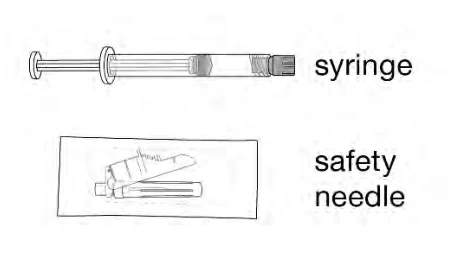
Remove the foil pouch and safety needle from the carton. Open the pouch and remove the syringe. Discard the oxygen absorber pack. It is not needed.
- 2. CHECK THE SOLUTION CLARITY
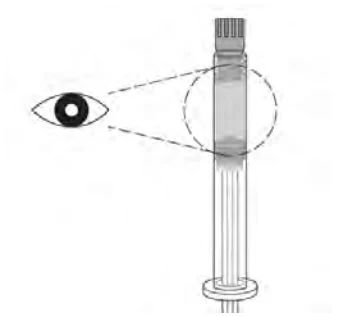
Check that the medication does not contain contaminants or particles. Subutex prolonged-release injection ranges from clear colourless to yellow to amber. Variations of colour within this range do not affect the potency of the product.
Parenteral drug products should be inspected visually for particulate matter and discoloration prior to administration, whenever solution and container permit.
- 3. ATTACH THE SAFETY NEEDLE
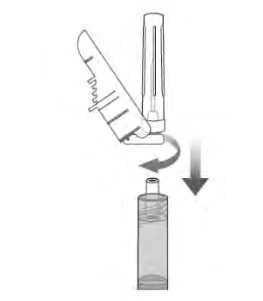
Remove the cap from the syringe and the safety needle from its sterile package.
Gently twist the needle clockwise until it is tight and firmly attached.
Do not remove the plastic cover from the needle.
- 4. PREPARE THE ABDOMINAL INJECTION SITE
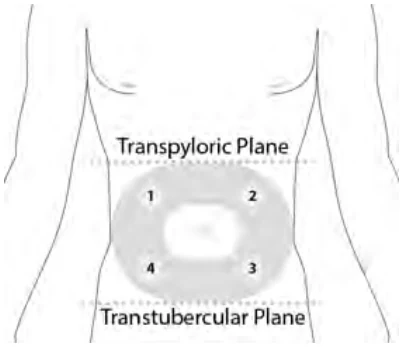
Choose an injection site on the abdomen between the transpyloric and trans-tubercular planes with adequate subcutaneous tissue that is free of skin conditions (e.g. nodules, lesions, excessive pigment). It is recommended that the patient is in the supine position.
Do not inject into an area where the skin is irritated, reddened, bruised, infected or scarred in any way.
Clean the injection site well with an alcohol swab.
To avoid irritation, rotate injection sites following a pattern similar to the illustration.
- 5. REMOVE EXCESS AIR FROM SYRINGE
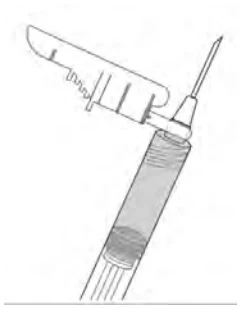
Hold the syringe upright for several seconds to allow air bubbles to rise. Due to the viscous nature of the medication, bubbles will not rise as quickly as those in an aqueous solution.
Remove needle cover and slowly depress the plunger to push out the excess air from the syringe.
- Small bubbles may remain in the medication. Large air gaps, however, can be minimized by pulling back on the plunger rod to pop air bubbles prior to expelling the air very slowly. Air should be expelled very carefully to avoid loss of medication.
If medication is seen at the needle tip, pull back slightly on the plunger to prevent medication spillage.
- 6. PINCH THE INJECTION SITE
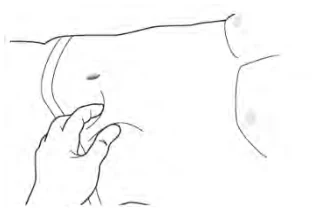
Pinch the skin around the injection area. Be sure to pinch enough skin to accommodate the size of the needle. Lift the adipose tissue from the underlying muscle to prevent accidental intramuscular injection.
- 7. INJECT THE MEDICATION
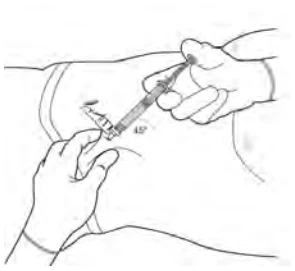
Subutex prolonged-release injection is for subcutaneous injection only. Do not inject intravenously or intramuscularly. This is because the injection forms a solid mass upon contact with body fluids, which could occlude a vein and damage the body tissue.
Insert needle fully into the abdominal subcutaneous tissue. Actual angle of injection will depend on the amount of subcutaneous tissue. Use a slow, steady push to inject the medication. Continue pushing until all of the medication is given.
- 8. WITHDRAW THE NEEDLE
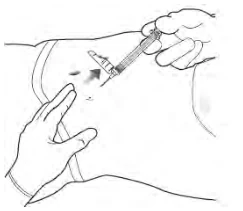
Withdraw the needle at the same angle used for insertion and release the pinched skin.
Do not rub the injection area after the injection. If there is bleeding, apply a gauze pad or bandage but use minimal pressure.
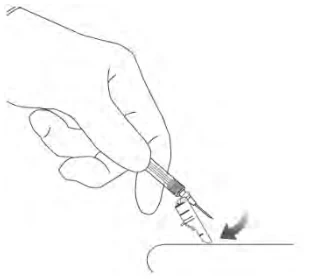
- 9. LOCK THE NEEDLE GUARD AND DISCARD THE SYRINGE
Lock the needle guard into place by pushing it against a hard surface such as a table.
Also, a small amount of Subutex prolonged-release injection will remain in the needle and syringe after administration and should be properly disposed of.
Dispose of all syringe components in a secure sharps disposal container.
- 10. INSTRUCT THE PATIENT
Advise the patient that they may have a lump for several weeks that will decrease in size over time. Instruct the patient not to rub or massage the injection site and to be aware of the placement of any belts or clothing waistbands that could cause irritation of the injection site.