


Patient leaflet - Spiriva Respimat 2.5 micrograms solution for inhalation
1. What Spiriva Respimat is and what it is used for
Spiriva Respimat helps people who have chronic obstructive pulmonary disease (COPD) or asthma to breathe more easily. COPD is a long-term lung disease that causes shortness of breath and coughing. The term COPD is associated with the conditions chronic bronchitis and emphysema. Asthma is a long-term disease characterised by airway inflammation and narrowing of the airways. As COPD and asthma are long-term diseases you should use Spiriva Respimat every day and not only when you have breathing problems or other symptoms. When used to treat asthma you should use Spiriva Respimat in addition to so-called inhaled corticosteroids and long-acting ß2 agonists.
Spiriva Respimat is a long-acting bronchodilator that helps to open your airways and makes it easier to get air in and out of the lungs. Regular use of Spiriva Respimat can also help you when you have on-going shortness of breath related to your disease, and will help to minimise the effects of the disease on your everyday life. Daily use of Spiriva Respimat will also help to prevent any sudden, short-term worsening of your COPD symptoms which may last for several days.
For correct dosing of Spiriva Respimat please see section 3. How to use Spiriva Respimat and the instructions for use provided on the other side of the leaflet.
2. What you need to know before you use Spiriva Respimat
Do not use Spiriva Respimat
- if you are allergic (hypersensitive) to tiotropium or any of the other ingredients of this medicine (listed in section 6).
- if you are allergic (hypersensitive) to atropine or substances related to it, e.g. ipratropium or oxitropium.
Warnings and precautions
Talk to your doctor or pharmacist before using Spiriva Respimat.
Talk to your doctor if you suffer from narrow angle glaucoma, prostate problems or have difficulty passing urine.
If you have problems with your kidneys, please consult your doctor.
When taking Spiriva Respimat take care not to let any spray enter your eyes. This may result in eye pain or discomfort, blurred vision, seeing halos around lights or coloured images in association with red eyes (i.e. narrow angle glaucoma). Eye symptoms may be accompanied by headache, nausea or vomiting. Wash your eyes in warm water, stop using tiotropium bromide and immediately consult your doctor for further advice.
If your breathing has got worse or if you experience rash, swelling or itching directly after using your inhaler, stop using it and tell your doctor immediately.
Dry mouth which has been observed with anti-cholinergic treatment may in the long term be associated with dental caries. Therefore, please remember to pay attention to oral hygiene.
Spiriva Respimat is indicated for the maintenance treatment of your chronic obstructive pulmonary disease or asthma. Do not use this medicine to treat a sudden attack of breathlessness or wheezing. Your doctor should have given you another inhaler (“rescue medication”) for this. Please follow the instructions your doctor has given you.
If you have been prescribed Spiriva Respimat for your asthma it should be added on to your treatments that include an inhaled corticosteroid and long-acting ß2 agonists. Continue taking the inhaled corticosteroid as prescribed by your doctor, even if you feel better.
In case you have suffered from a myocardial infarction during the last 6 months or from any unstable or life threatening irregular heart beat or severe heart failure within the past year, please, inform your doctor. This is important to decide if Spiriva is the right medicine for you to take.
Do not take Spiriva Respimat more frequently than once daily.
You should also contact your doctor if you feel that your breathing is worsening.
If you have cystic fibrosis, tell your doctor because Spiriva Respimat could make your cystic fibrosis symptoms worse.
Children and adolescents
Spiriva Respimat is not recommended for children under 6 years.
Other medicines and Spiriva Respimat
Tell your doctor or pharmacist if you are using, have recently used or might use any other medicines, including medicines obtained without a prescription.
In particular, please tell your doctor or pharmacist if you are using/have used anticholinergic drugs, e.g. ipratropium or oxitropium.
No interaction side effects have been reported when Spiriva Respimat has been used with other products used to treat COPD such as reliever inhalers (e.g. salbutamol), methylxanthines (e.g. theophylline), antihistamines, mucolytics (e.g. ambroxol), leukotriene modifiers (e.g. montelukast), cromones, anti-IgE treatment (e.g. omalizumab) and/or inhaled or oral steroids (e.g. budesonide, prednisolone).
Pregnancy and breast-feeding
If you are pregnant or breast-feeding, think you may be pregnant or are planning to have a baby, ask your doctor for advice before taking this medicine. You should not use this medicine unless specifically recommended by your doctor.
Driving and using machines
No studies on the effects and the ability to drive and use machines have been performed. In case dizziness or blurred vision occurs the ability to drive and use machinery may be influenced.
Spiriva Respimat contains Benzalkonium chloride
This medicine contains 0.0011 mg benzalkonium chloride in each actuation.
Benzalkonium chloride may cause wheezing and breathing difficulties (bronchospasm), especially if you have asthma.
3. How to use Spiriva Respimat
Always use this medicine exactly as your doctor or pharmacist has told you. Check with your doctor or pharmacist if you are not sure.
Spiriva Respimat is for inhalation use only.
The recommended dose for patients 6 years and older is:
Spiriva Respimat is effective for 24 hours so you will need to use Spiriva Respimat only ONCE A DAY, if possible at the same time of the day. Each time you use it take TWO PUFFS.
As COPD and asthma are long-term diseases use Spiriva Respimat every day and not only when you experience breathing problems. Do not use more than the recommended dose.
Spiriva Respimat is not recommended for use in children below 6 years due to lack of data on safety and efficacy.
Make sure that you know how to use your Spiriva Respimat inhaler properly. The instructions for use of the Spiriva Respimat inhaler are provided on the other side of this leaflet.
If you use more Spiriva Respimat than you should
If you use more Spiriva Respimat than two puffs in one day talk to your doctor immediately. You may be at a higher risk of experiencing a side effect such as dry mouth, constipation, difficulties passing urine, increased heart beat or blurred vision.
If you forget to use Spiriva Respimat
If you forget to take a dose (TWO PUFFS ONCE A DAY), take it as soon as you remember but do not take two doses at the same time or on the same day. Then take your next dose as usual.
If you stop using Spiriva Respimat
Before you stop using Spiriva Respimat, you should talk to your doctor or your pharmacist. If you stop using Spiriva Respimat the signs and symptoms of COPD and asthma may worsen.
If you have any further questions on the use of this medicine, ask your doctor or pharmacist.
4. Possible side effects
Like all medicines, this medicine can cause side effects, although not everybody gets them.
Evaluation of the side effects is based on the following frequencies:
Common: may affect up to 1 in 10 people
Uncommon: may affect up to 1 in 100 people
Rare: may affect up to 1 in 1,000 people
Not known: frequency cannot be estimated from the available data
The side effects described below have been experienced by people taking this medicine and they are listed according to frequency as either common, uncommon, rare or not known.
| Side effect | Frequency COPD | Frequency Asthma |
|---|---|---|
| Dry mouth | Common | Uncommon |
| Hoarseness (dysphonia) | Uncommon | Uncommon |
| Cough | Uncommon | Uncommon |
| Headache | Uncommon | Uncommon |
| Inflammation of the throat (pharyngitis) | Uncommon | Uncommon |
| Painful urination (dysuria) | Uncommon | Not known |
| Dizziness | Uncommon | Uncommon |
| Fungal infections of the oral cavity and throat (oropharyngeal candidiasis) | Uncommon | Uncommon |
| Difficulties passing urine (urinary retention) | Uncommon | Not known |
| Constipation | Uncommon | Rare |
| Rash | Uncommon | Uncommon |
| Itching (pruritus) | Uncommon | Rare |
| Increase of the measured eye pressure | Rare | Not known |
| Serious allergic reaction which causes swelling of the mouth and face or throat (angioneurotic oedema) | Rare | Rare |
| Difficulty in sleeping (insomnia) | Rare | Uncommon |
| Irregular heart beat (atrial fibrillation, supraventricular tachycardia) | Rare | Not known |
| Feeling your heartbeat (palpitations) | Rare | Uncommon |
| Nosebleed (epistaxis) | Rare | Rare |
| Inflammation of the tongue (glossitis) | Rare | Not known |
| Faster heart beat (tachycardia) | Rare | Not known |
| Tightness of the chest, associated with coughing, wheezing or breathlessness immediately after inhalation (bronchospasm) | Rare | Uncommon |
| Difficulties swallowing (dysphagia) | Rare | Not known |
| Seeing halos around lights or coloured images in association with red eyes (glaucoma) | Rare | Not known |
| Side effect | Frequency COPD | Frequency Asthma |
|---|---|---|
| Blurred vision | Rare | Not known |
| Inflammation of the larynx (laryngitis) | Rare | Not known |
| Dental caries | Rare | Not known |
| Inflammation of the gums (gingivitis) | Rare | Rare |
| Nettle rash (urticaria) | Rare | Rare |
| Infections or ulcerations of the skin | Rare | Not known |
| Dryness of the skin | Rare | Not known |
| Infections of the urinary tract | Rare | Rare |
| Heart burn (gastrooesophageal reflux disease) | Rare | Not known |
| Hypersensitivity, including immediate reactions | Not known | Rare |
| Inflammation of the mouth (stomatitis) | Not known | Rare |
| Depletion of body water (dehydration) | Not known | Not known |
| Inflammation in sinuses (sinusitis) | Not known | Not known |
| Blockage of intestines or absence of bowel movements (intestinal obstruction, including ileus paralytic) | Not known | Not known |
| Feeling sick (nausea) | Not known | Not known |
| Severe allergic reaction (anaphylactic reaction) | Not known | Not known |
| Swelling of joint | Not known | Not known |
Immediate allergic reactions such as rash, nettle rash (urticaria), swelling of the mouth and face or sudden difficulties in breathing (angioneurotic oedema) or other hypersensitivity reactions (such as sudden reduction of your blood pressure or dizziness) may occur individually or as part of severe allergic reaction (anaphylactic reaction) after administration of Spiriva Respimat.
In addition, in common with all inhaled medicines, some patients may experience an unexpected tightness of the chest, coughing, wheezing or breathlessness immediately after inhalation (bronchospasm).
If any of these occur, please consult your doctor immediately.
Reporting of side effects
If you get any side effects, talk to your doctor or pharmacist. This includes any possible side effects not listed in this leaflet. You can also report side effects directly via the Yellow Card Scheme at: www.mhra.gov.uk/yellowcard or search for MHRA Yellow Card in the Google Play or Apple App Store. By reporting side effects, you can help provide more information on the safety of this medicine.
5. How to store Spiriva Respimat
- • Keep out of the sight and reach of children.
- • Do not freeze.
- • Do not use this medicine after the expiry date which is stated on the carton and on the inhaler label. The expiry date refers to the last day of the month. Spiriva Respimat inhaler should be discarded at the latest 3 months after first use (see Instructions for Use overleaf).
- • Do not throw away any medicines via wastewater or household waste. Ask your pharmacist how to throw away medicines you no longer use. These measures will help protect the environment.
6. Contents of the pack and other information
What Spiriva Respimat contains
- The active substance is tiotropium. The delivered dose is 2.5 microgram tiotropium per puff (2 puffs comprise one medicinal dose) and is equivalent to 3.124 microgram tiotropium bromide monohydrate. The delivered dose is the dose which is available for the patient after passing the mouthpiece.
The other ingredients are: benzalkonium chloride, disodium edetate, purified water, and hydrochloric acid 3.6% for pH adjustment.
What Spiriva Respimat looks like and contents of the pack
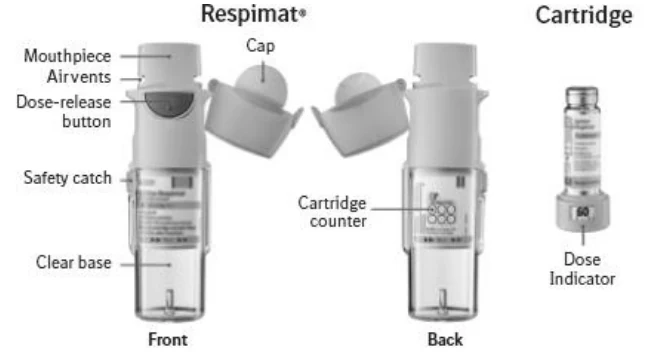
Spiriva Respimat is composed of one cartridge with solution for inhalation and one Respimat inhaler. The cartridge has to be inserted into the inhaler before the first use.
Spiriva Respimat is available as a single pack containing 1 Respimat inhaler and 1 cartridge, providing 60 puffs (30 medicinal doses).
Product Licence holder
Procured from within the EU and repackaged by the Product Licence holder: S&M Medical Ltd., Chemilines House, Alperton Lane, Wembley, HA0 1DX.
Manufacturer
This product is manufactured by Boehringer Ingelheim Pharma Gmbh & Co. KG, Binger Strasse 173, D-55216 Ingelheim am Rhein, Germany.
POM PL: 19488/1673
Leaflet revision date: 11 December 2021
Blind or partially sighted? Is this leaflet hard to see or read? Call 02087997607 to obtain the leaflet in large print, tape, CD or Braille.
Spiriva® and Respimat® are registered trade marks of Boehringer Ingelheim Pharma GmbH & Co. KG, Germany.
S1673 LEAFLET Spiriva Resp 20211211
SPIRIVA® RESPIMAT®
Instructions for Use
Introduction
Read these Instructions for Use before you start using Spiriva Respimat.
Children should use Spiriva Respimat with an adult’s assistance.
You will need to use this inhaler only ONCE A DAY. Each time you use it take TWO PUFFS.
- If not been used for more than 7 days release one puff towards the ground.
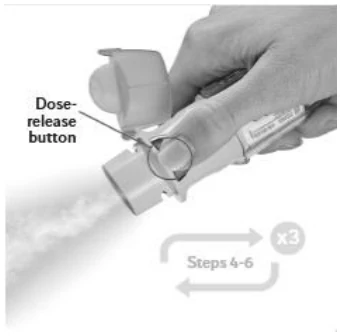
- If not been used for more than 21 days repeat steps 4 to 6 under ‘Prepare for use’ until a cloud is visible. Then repeat steps 4 to 6 three more times.
How to care for your Spiriva Respimat
Clean the mouthpiece including the metal part inside the mouthpiece with a damp cloth or tissue only, at least once a week.
Any minor discoloration in the mouthpiece does not affect your Spiriva Respimat inhaler performance.
If necessary, wipe the outside of your Spiriva Respimat inhaler with a damp cloth.
When to replace the inhaler
When you have used an inhaler with 6 cartridges, get a new Spiriva Respimat pack containing an inhaler.
Prepare for first use
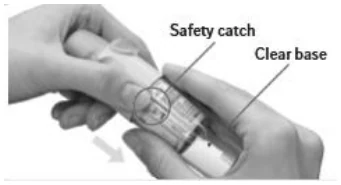
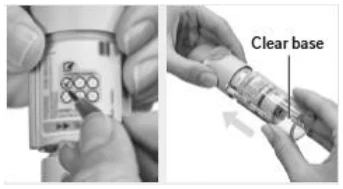
1 Remove clear base
- Keep the cap closed.
Press the safety catch
while pulling off the clear base with your other hand.
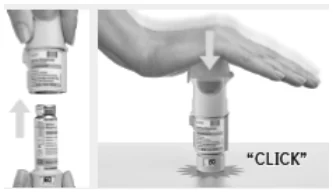
2 Insert cartridge
Insert the cartridge into the
inhaler.
Place the inhaler on a firm
surface and push down firmly until it clicks into place.
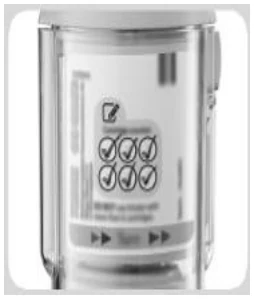
3 Track cartridge
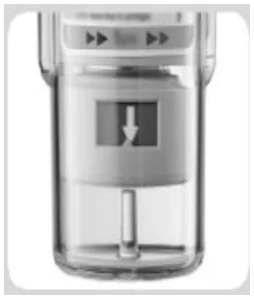
Mark the check-box on
inhaler’s label to track the number of cartridges.
Put the clear base back
into place until it clicks.
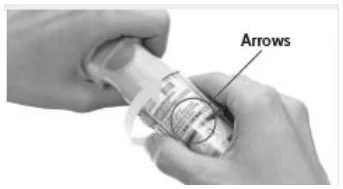
4 Turn
- Keep the cap closed.
Turn the clear base in
the direction of the arrows on the label until it clicks
(half a turn).
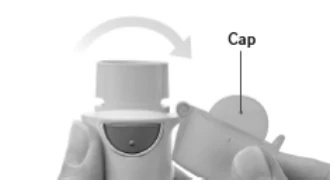
5 Open
Open the cap
until it snaps fully open.
6 Press
Point the inhaler toward
the ground.
Press the dose-release
button.
- Close the cap.
Repeat steps 4-6 until a
cloud is visible.
After a cloud is visible,
repeat steps 4-6 three more times.
Your inhaler is now ready to use and will deliver 60 puffs (30 doses).
S1673 LEAFLET Spiriva Resp 20211211