

Summary of Product Characteristics (SmPC) - Sodium Bicarbonate 84 mg / ml oral solution
1 NAME OF THE MEDICINAL PRODUCT
Sodium Bicarbonate 84mg/ml Oral Solution
2 QUALITATIVE AND QUANTITATIVE COMPOSITION
Each 1 ml of solution contains 84mg of sodium bicarbonate (equivalent to 1mmol/ml sodium bicarbonate).
For the full list of excipients, see section 6.1.
3 PHARMACEUTICAL FORM
Oral solution.
A clear, colourless solution, free of visible particles.
4 CLINICAL PARTICULARS
4.1 Therapeutic indications
Sodium bicarbonate is indicated in adults (including elderly) for:
The treatment of metabolic acidosis arising from a variety of disorders. The dosage must be calculated on an individual basis and is dependent on the acid-base balance and electrolyte status of the patient.
The short-term symptomatic treatment of mild or transient dyspepsia.
4.2 Posology and method of administration
Adults (including elderly):
Metabolic acidosis: dosage is calculated on an individual basis and is dependent on acid-base balance and electrolyte status.
Dyspepsia: Doses of 12–60 mL (approximately 1–5 g sodium bicarbonate) every 4–6 hours as required.
Paediatric population:
The efficacy of sodium bicarbonate in children under 18 years of age has not been established. No data are available.
Method of administration
For oral use. The required dose should be drawn from the container into the graduated syringe using the syringe adaptor
4.3 Contraindications
- Hypersensitivity to the active substance
- Metabolic or respiratory alkalosis
- Hypocalcaemia
- Hypochlorhydria
4.4 Special warnings and precautions for use
Sodium bicarbonate should be used with caution in patients with cirrhosis of the liver and patients on low sodium diets.
Administer with caution to patients suffering from congestive heart failure, hepatic and renal impairment or hypertension.
This medicine can mask the symptoms of stomach cancer or ulcer
Sodium bicarbonate should be given extremely cautiously to patients with eclampsia, aldosteronism or other conditions associated with sodium retention.
Do not exceed the recommended dose as excess or prolonged use may lead to alkalosis.
If symptoms persist consult your doctor.
Caution is recommended in elderly patients (aged from 65 years). Keep all medicines out of the sight and reach of children.
Since the efficacy of sodium bicarbonate in children under 18 years of age has not been established Sodium bicarbonate 84mg/ml oral solution is not recommended in children.
4.5 Interaction with other medicinal products and other forms of interaction
Avoid in patients on salt restricted diets and in patients taking corticosteroids. Sodium bicarbonate increases the excretion of lithium.
The excretion of aspirin and methotrexate is increased and quinidine and ephedrine reduced in alkaline urine.
Antacids reduce the absorption of antibacterials (for example tetracyclines and rifampicin), antifungals (e.g. ketoconazole), dipyridamole, phenothiazines, chloroquine, phenytoin and penicillamine.
4.6 Fertility, pregnancy and lactation
Pregnancy
Animal studies are insufficient with respect to effects on pregnancy, embryonal fetal development, parturition and postnatal development. The potential risk for humans is unknown. Sodium Bicarbonate should not be taken during pregnancy unless advised by a doctor to do so.
Breastfeeding
The effects of sodium administration during breast-feeding are not known. Sodium Bicarbonate should not be taken if breast-feeding unless advised by a doctor to do so.
Fertility
The potential risks of sodium bicarbonate on fertility are not known.
4.7 Effects on ability to drive and use machines
None known.
4.8 Undesirable effects
Stomach pains and flatulence has been reported. Alkalosis on prolonged use. Sodium supplements may increase blood pressure or cause fluid retention and pulmonary oedema in those at risk. Hypokalaemia may be exacerbated.
The following adverse reactions are classified by system organ class and ranked under heading of frequency using the following convention: very common (≥1/10), common (≥1/100 to <1/10), uncommon (≥1/1,000 to <1/100), rare (≥1/10,000 to <1/1,000), very rare (<1/10,000) and not known (cannot be estimated from the available data).
| MedDRA System Organ Class | Adverse reaction |
| Metabolism and nutrition disorders | |
| Frequency not known | Alkalosis on prolonged use, Fluid retention, Hypokalaemia may be |
| exacerbated, Loss of appetite (continuing) | |
| Psychiatric disorders | |
| Frequency not known | Mood or mental changes, Nervousness or restlessness |
| Nervous system disorders | |
| Frequency not known | Headache (continuing) |
| Vascular disorders | |
| Frequency not known | Hypertension, Slow breathing, Breathing difficulties, Fluid on the lungs |
| Respiratory, thoracic and mediastinal disorders | |
| Frequency not know | Pulmonary oedema |
| Gastrointestinal disorders |
| Frequency not known | Pain in the stomach Flatulence Spontaneous stomach rupture Nausea Vomiting Unpleasant taste |
| Skin and subcutaneous tissue disorders | |
| Frequency not known | Swelling of feet or lower legs |
| Renal and urinary disorders | |
| Frequency not known | Frequent urge to urinate |
| General disorders and administration site conditions | |
| Frequency not known | Extreme irritability, unusual tiredness or weakness, muscle spasms or cramps |
Reporting of suspected adverse reactions:
Reporting suspected adverse reactions after authorisation of the medicinal product is important. It allows continued monitoring of the benefit/risk balance of the medicinal product. Healthcare professionals are asked to report any suspected adverse reactions via the Yellow Card Scheme Website at: www.mhra.gov.uk/yellowcard or search for MHRA Yellow Card in the Google Play or Apple App Store.
4.9 Overdose
Excessive amounts of this medicine may cause metabolic alkalosis, especially if renal function is impaired. Shortness of breath, muscle weakness, convulsions and coma has been reported in severe cases. Sodium overload and hyperosmolarity may also occur.
Treatment is supportive with appropriate correction of fluid and electrolyte imbalance using sodium free fluids.
5 PHARMACOLOGICAL PROPERTIES
5.1 Pharmacodynamic properties
Pharmacotherapeutic group: Alimentary tract and metabolism; Drugs for acid related disorders; Antacids; Antacids with sodium bicarbonate, ATC code: A02AH
Sodium bicarbonate is used for a variety of therapeutic purposes including the correction of metabolic acidosis and as an antacid for the treatment of dyspepsia. Sodium bicarbonate causes neutralisation of gastric acid with the production of carbon dioxide.
Sodium bicarbonate therapy increases plasma bicarbonate, buffers excess hydrogen ion concentration, raises blood pH and reverses clinical manifestations of metabolic acidosis.
5.2 Pharmacokinetic properties
Absorption
Sodium bicarbonate is readily absorbed from the gastro-intestinal tract.
Distribution
Sodium bicarbonate is present in all body fluids. Sodium bicarbonate causes neutralization of gastric acid with the production of carbon dioxide.
Biotransformation
Sodium bicarbonate is not significantly metabolized.
Elimination
Any bicarbonate not involved in the gastric acid neutralisation reaction is absorbed and in the absence of a deficit of bicarbonate in the plasma, bicarbonate ions are excreted in the urine. The urine is rendered alkaline and there is an accompanying dieresis.
5.3 Preclinical safety data
No relevant information additional to that contained elsewhere in the SPC.
6 PHARMACEUTICAL PARTICULARS
6.1 List of excipients
Purified water
6.2 Incompatibilities
Not Applicable.
6.3 Shelf life
24 months.
Discard your medicine 7 days after first opening.
6.4 Special precautions for storage
This medicinal product should not be stored in freezer or refrigerator.
6.5 Nature and contents of container
Bottle: Amber polyethylene terephthalate (PET) bottle
Closure: Tamper-evident child-resistant cap. Pack size: 100ml
Dosing Device: 20ml polypropylene (PP) and high-density polyethylene (HDPE) oral syringe with 1ml graduation marks and a LDPE adaptor.
6.6 Special precautions for disposal
Any unused medicinal product or waste material should be disposed of in accordance with local requirements.
How to use the oral dosing syringe
- 1. When you use the medicine for the first time, place the adaptor in the neck of the bottle.
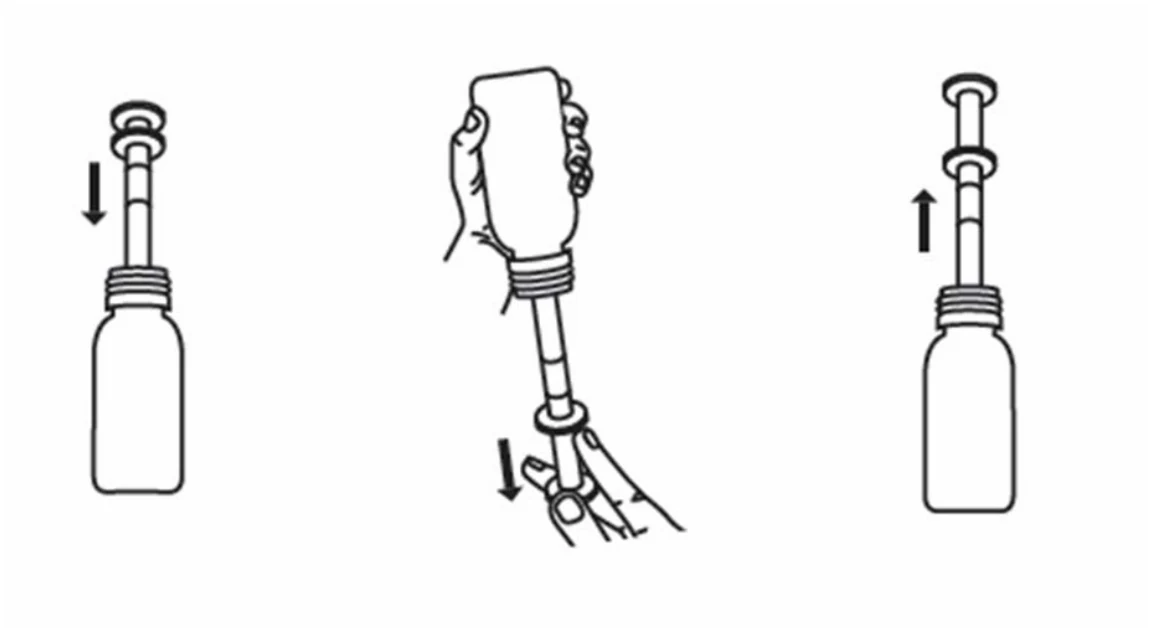
- 2. Push the syringe firmly into the adaptor in the neck of the bottle
- 3. To fill the syringe, turn the bottle upside down. Whilst holding the syringe in place, gently pull the plunger down drawing the medicine to the correct mark on the syringe. Your doctor will tell you the right dose to take.
- 4. Turn the bottle the right way up, remove the syringe from the bottle plug by gently twisting the syringe.
- 5. Place the end of the syringe into your mouth against the cheek and gently press the plunger down slowly to gently release the medicine.
- 6. Repeat steps 2-5 as necessary to take the full dose
- 7. After use replace the bottle cap. Wash the syringe in warm water and allow to dry. Store out of the reach of children.
7 MARKETING AUTHORISATION HOLDER
Roma Pharmaceuticals Ltd
Gibraltar House
Centrum 100
Burton-upon-Trent
DE14 2WE
8 MARKETING AUTHORISATION NUMBER(S)
PL 49578/0010
9 DATE OF FIRST AUTHORISATION/RENEWAL OF THE
AUTHORISATION
22/10/2021
10 DATE OF REVISION OF THE TEXT
22/12/2021