

Patient leaflet - Seretide 250 Accuhaler
1. What Seretide Accuhaler is and what it is used for
Seretide Accuhaler contains two medicines, salmeterol and fluticasone propionate:
- Salmeterol is a long-acting bronchodilator. Bronchodilators help the airways in the lungs to stay open. This makes it easier for air to get in and out. The effects last for at least 12 hours.
- Fluticasone propionate is a corticosteroid which reduces swelling and irritation in the lungs.
The doctor has prescribed this medicine to help prevent breathing problems such as:
- Asthma
- Chronic Obstructive Pulmonary Disease (COPD). Seretide Accuhaler, at a dose of 50/500 micrograms, reduces the number of flare ups of COPD symptoms.
You must use Seretide Accuhaler every day as directed by your doctor. This will make sure that it works properly in controlling your asthma or COPD.
Seretide Accuhaler helps to stop breathlessness and wheeziness coming on. However Seretide Accuhaler should not be used to relieve a sudden attack of breathlessness or wheezing. If this happens you need to use a fast-acting ‘reliever’ (‘rescue’) inhaler, such as salbutamol. You should always have your fast-acting ‘rescue’ inhaler with you.
2. What you need to know before you use Seretide Accuhaler
Do not take Seretide Accuhaler:
If you are allergic to salmeterol xinafoate, fluticasone propionate or to the other ingredient lactose monohydrate.
Warnings and precautions
Talk to your doctor before using Seretide Accuhaler if you have:
- Heart disease, including an irregular or fast heart beat
- Overactive thyroid gland
- High blood pressure
 • Diabetes mellitus (Seretide Accuhaler may increase your blood sugar)
 - Low potassium in your blood
- Tuberculosis (TB) now or in the past, or other lung infections Contact your doctor if you experience blurred vision or other visual disturbances.
Other medicines and Seretide Accuhaler
Tell your doctor or pharmacist if you are taking, have recently taken, or might take any other medicines including medicines for asthma or any medicines obtained without a prescription. This is because Seretide 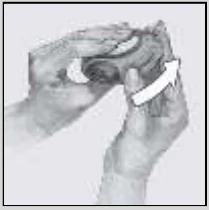 Accuhaler may not be suitable to be taken with some other medicines.
Tell your doctor if you are taking the following medicines, before starting to use Seretide Accuhaler:
- β blockers (such as atenolol, propranolol and sotalol). β blockers are mostly used for high blood pressure or other heart conditions.
- Medicines to treat infections (such as ketoconazole, itraconazole and erythromycin) including some medicines for HIV treatment (such as ritonavir, cobicistat containing products). Some of these medicines may increase the amount of fluticasone propionate or salmeterol in your body.
 This can increase your risk of experiencing side effects with Seretide Accuhaler, including irregular heart beats, or may make side effects worse. Your doctor may wish to monitor you carefully if you are taking these medicines.
 Corticosteroids (by mouth or by injection). If you have had these medicines recently, this might increase the risk of this medicine affecting your adrenal gland.
- Diuretics, also known as ‘water tablets’ used to treat high blood pressure.
- Other bronchodilators (such as salbutamol).
- Xanthine medicines. These are often used to treat asthma.
Pregnancy and breastfeeding
If you are pregnant or breastfeeding, think you may be pregnant or are planning to have a baby, ask your doctor or pharmacist for advice before taking this medicine.
Driving and using machines
Seretide Accuhaler is not likely to affect your ability to drive or use machines.
Seretide Accuhaler contains lactose
Seretide Accuhaler contains up to 12.5 milligrams of lactose in each dose. The amount of lactose in this medicine does not normally cause problems in people who are lactose intolerant. The excipient lactose monohydrate contains small amounts of milk proteins, which may cause allergic reactions.
3. How to use Seretide Accuhaler
Always use this medicine exactly as your doctor or pharmacist has told you. Check with your doctor or pharmacist if you are not sure.
- Use your Seretide Accuhaler every day until your doctor advises you to stop. Do not take more than the recommended dose. Check with your doctor or pharmacist if you are not sure.
- Do not stop taking Seretide Accuhaler or reduce the dose of Seretide Accuhaler without talking to your doctor first.
- Seretide Accuhaler should be inhaled through the mouth into the lungs.
For asthma
Adults and adolescents aged 12 years and over
- Seretide 50/100 Accuhaler - One inhalation twice a day
- Seretide 50/250 Accuhaler - One inhalation twice a day
- Seretide 50/500 Accuhaler - One inhalation twice a day
Children 4 to 12 years of age
- Seretide 50/100 Accuhaler - One inhalation twice a day
- Seretide Accuhaler is not recommended for use in children below 4 years of age.
For adults with Chronic Obstructive Pulmonary Disease (COPD)
- Seretide 50/500 Accuhaler - One inhalation twice a day
Your symptoms may become well controlled using Seretide Accuhaler twice a day. If so, your doctor may decide to reduce your dose to once a day. The dose may change to:
- once at night - if you have night-time symptoms
- once in the morning - if you have daytime symptoms. It is very important to follow your doctor's instructions on how many inhalations to take and how often to take your medicine.
If you are using Seretide Accuhaler for asthma, your doctor will want to regularly check your symptoms.
If your asthma or breathing gets worse tell your doctor straight away. You may find that you feel more wheezy, your chest feels tight more often or you may need to use more of your fast acting ‘reliever’ medicine. If any of these happen, you should continue to take Seretide Accuhaler but do not increase the number of puffs you take. Your chest condition may be getting worse and you could become seriously ill. See your doctor as you may need additional treatment.
Instructions for use
- Your doctor, nurse or pharmacist should show you how to use your inhaler. They should check how you use it from time to time. Not using the Seretide Accuhaler properly or as prescribed may mean that it will not help your asthma or COPD as it should.
- The Accuhaler device holds blisters containing Seretide as a powder.
There is a counter on top of the Accuhaler which tells you how many doses are left. It counts down to 0. The numbers 5 to 0 will appear in red to warn you when there are only a few doses left. Once the counter shows 0, your inhaler is empty.
Using your inhaler
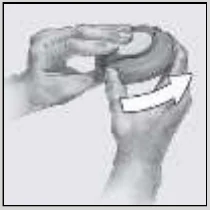
- To open your Accuhaler, hold the outer case in one hand and put the thumb of your other hand on the
thumbgrip. Push your thumb away from
you as far as it will go.
You will hear a click. This will open a small
hole in the mouthpiece.
- 2. Hold your Accuhaler with the
mouthpiece towards you. You can hold it in
either your right or left hand. Slide the lever
away from you as far as it will go. You will
hear a click. This places a dose of your
medicine in the mouthpiece. Every time the
lever is pulled back a blister is opened
inside and the powder made ready for you
to inhale. Do not play with the lever as this
opens the blisters and wastes medicine.
- 3. Hold the Accuhaler away from your
mouth, breathe out as far as is
comfortable. Do not breathe into your
Accuhaler.
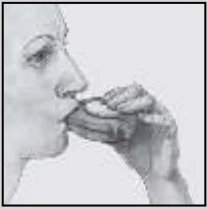
- 4. Put the mouthpiece to your lips; breathe
in steadily and deeply through the
Accuhaler, not through your nose.
Remove the Accuhaler from your mouth.
Hold your breath for about 10 seconds or
for as long as is comfortable.
Breathe out slowly.
Counter
Full Empty 60 0 Thumbgrip
Lever
 POM
POM
- 5. Afterwards, rinse your mouth with water and spit it out, and/or brush your teeth. This may help to stop you getting thrush and becoming hoarse.
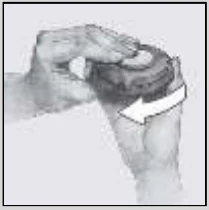
- 6. To close the Accuhaler, slide the
thumbgrip back towards you, as far as it
will go. You will hear a click.
The lever will return to its original position
and is reset.
Your Accuhaler is now ready for you to
use again.
As with all inhalers, caregivers should ensure that children prescribed Seretide Accuhaler use correct inhalation technique, as described above.
Cleaning your inhaler
Wipe the mouthpiece of the Accuhaler with a dry tissue to clean it.
If you use more Seretide Accuhaler than you should
It is important to use the inhaler as instructed. If you accidentally take a larger dose than recommended, talk to your doctor or pharmacist. You may notice your heart beating faster than usual and that you feel shaky. You may also have dizziness, a headache, muscle weakness and aching joints.
If you have used larger doses for a long period of time, you should talk to your doctor or pharmacist for advice. This is because larger doses of Seretide Accuhaler may reduce the amount of steroid hormones produced by the adrenal gland.
If you forget to use Seretide Accuhaler
Do not take a double dose to make up for a forgotten dose. Just take your next dose at the usual time.
If you stop using Seretide Accuhaler
It is very important that you take your Seretide Accuhaler every day as directed. Keep taking it until your doctor tells you to stop. Do not stop or suddenly reduce your dose of Seretide Accuhaler. This could make your breathing worse.
In addition, if you suddenly stop taking Seretide Accuhaler or reduce your dose of Seretide Accuhaler this may (very rarely) cause you to have problems with your adrenal gland (adrenal insufficiency) which sometimes causes side effects.
These side effects may include any of the following:
- Stomach pain
- Tiredness and loss of appetite, feeling sick
- Sickness and diarrhoea
- Weight loss
- Headache or drowsiness
- Low levels of sugar in your blood
- Low blood pressure and seizures (fits)
When your body is under stress such as from fever, trauma (such as a car accident), infection, or surgery, adrenal insufficiency can get worse and you may have any of the side effects listed above. If you get any side effects, talk to your doctor or pharmacist. To prevent these symptoms occurring, your doctor may prescribe extra corticosteroids in tablet form (such as prednisolone).
If you have any further questions on the use of this medicine, ask your doctor, nurse or pharmacist.
4. Possible side effects
Like all medicines, this medicine can cause side effects, although not everybody gets them. To reduce the chance of side effects, your doctor will prescribe the lowest dose of Seretide Accuhaler to control your asthma or COPD.
Allergic reactions: you may notice your breathing suddenly gets worse immediately after using Seretide Accuhaler. You may be very wheezy and cough or be short of breath. You may also notice itching, a rash (hives) and swelling (usually of the face, lips, tongue, or throat), or you may suddenly feel that your heart is beating very fast or you feel faint and light headed (which may lead to collapse or loss of consciousness). If you get any of these effects or if they happen suddenly after using Seretide Accuhaler, stop using Seretide Accuhaler and tell your doctor straight away. Allergic reactions to Seretide Accuhaler are uncommon (they affect less than 1 person in 100).
Pneumonia (infection of the lung) in COPD patients. (Common side effect)
Tell your doctor if you have any of the following while taking Seretide Accuhaler they could be symptoms of a lung infection:
- fever or chills
- increased mucus production, change in mucus colour
- increased cough or increased breathing difficulties
Other side effects are listed below:
Very Common (affects more than 1 person in 10)
- Headache - this usually gets better as treatment continues.
- Increased number of colds have been reported in patients with COPD.
Common (affects less than 1 person in 10)
- Thrush (sore, creamy-yellow, raised patches) in the mouth and throat. Also sore tongue and hoarse voice and throat irritation. Rinsing your mouth out with water and spitting it out immediately and/or brushing your teeth after taking each dose of your medicine may help. Your doctor may prescribe an anti-fungal medication to treat the thrush.
- Aching, swollen joints and muscle pain.
- Muscle cramps.
The following side effects have also been reported in patients with Chronic Obstructive Pulmonary Disease (COPD):
Bruising and fractures.
- Inflammation of sinuses (a feeling of tension or fullness in the nose, cheeks and behind the eyes, sometimes with a throbbing ache).
- A reduction in the amount of potassium in the blood (you may get an uneven heart beat, muscle weakness, cramp).
Uncommon (affects less than 1 person in 100)
- Increases in the amount of sugar (glucose) in your blood (hyperglycaemia). If you have diabetes, more frequent blood sugar monitoring and possibly adjustment of your usual diabetic treatment may be required.
- Cataract (cloudy lens in the eye).
- Very fast heart beat (tachycardia).
- Feeling shaky (tremor) and fast or uneven heart beat (palpitations) - these are usually harmless and get less as treatment continues.
- Chest pain.
- Feeling worried (this effect mainly occurs in children).
- Disturbed sleep.
- Allergic skin rash.
Rare (affects less than 1 person in 1000)
- Breathing difficulties or wheezing that get worse straight after taking Seretide Accuhaler. If this happens stop using your Seretide inhaler. Use your fast-acting ‘reliever’ inhaler to help your breathing and tell your doctor straight away.
Seretide Accuhaler may affect the normal production of steroid hormones in the body, particularly if you have taken high doses for long periods of time. The effects include:
- Slowing of growth in children and adolescents
- Thinning of the bones
- Glaucoma
- Weight gain
- Rounded (moon shaped) face (Cushing’s Syndrome) Your doctor will check you regularly for any of these side effects and make sure you are taking the lowest dose of Seretide Accuhaler to control your asthma.
- Behavioural changes, such as being unusually active and irritable (these effects mainly occur in children).
- Uneven heart beat or heart gives an extra beat (arrhythmias). Tell your doctor, but do not stop taking Seretide Accuhaler unless the doctor tells you to stop.
- A fungal infection in the oesophagus (gullet), which might cause difficulties in swallowing.
Frequency not known, but may also occur:
- Depression or aggression. These effects are more likely to occur in children.
- Blurred vision.
Reporting of side effects
If you get any side effects, talk to your doctor or pharmacist. This includes any possible side effects not listed in this leaflet.
You can also report side effects directly via the Yellow Card Scheme at: www.mhra.gov.uk/yellowcard or search for MHRA Yellow Card in the Google Play or Apple App Store. By reporting side effects you can help provide more information on the safety of this medicine.
5. How to store Seretide Accuhaler
- Do not store above 30°C.
- KEEP OUT OF THE SIGHT AND REACH OF CHILDREN.
- Do not use Seretide Accuhaler after the expiry date which is stated on the label and carton. The expiry date refers to the last day of that month. Medicines should not be disposed of via wastewater or household waste. Ask your pharmacist how to dispose of medicines no longer required. These measures will help to protect the environment.
- If your medicine becomes discoloured or shows any signs of deterioration, you should seek the advice of your pharmacist.
6. Contents of the pack and other information
What Seretide Accuhaler contains
- Each single inhalation provides a delivered dose (the dose leaving the mouthpiece) of 47 micrograms of salmeterol (as salmeterol xinafoate) and 231 micrograms of fluticasone propionate. This corresponds to pre-dispensed dose of 50 micrograms of salmeterol (as salmeterol xinafoate) and 250 micrograms fluticasone propionate. The other ingredient is lactose monohydrate (which contains milk proteins).
What Seretide Accuhaler looks like and contents of the pack
Seretide Accuhaler is a two-tone purple, circular plastic inhaler device containing a foil strip with 60 blisters of white inhalation powder and a dose counter indicating the number of doses remaining. An Accuhaler is an easy to use inhaler which is designed to release a dose of medicine into your lungs when you take a breath in.
Manufacturer:
GLAXO WELLCOME PRODUCTION, Zone Industrielle No. 2, 23 rue Lavoisier, 27000 Evreux, France
Procured from within the EU and repackaged by: Amimed Direct Ltd, Hendon, London, NW9 6AQ. Product Licence holder: Sam Pharma Ltd, Unit 20 Garrick Industrial Estate, Irving Way, Hendon, London, NW9 6AQ.
PL 33902/0019
This leaflet was last approved: 28/06/2018
Seretide™ and Accuhaler™ are trademarks of the GlaxoSmithKline group of companies.
Blind or partially sighted? Is this leaflet hard to see or read? Call 02082033203 to obtain the leaflet in a format suitable for you.
S0019-60-RM-PIL-28.06.2018