

Summary of Product Characteristics (SmPC) - Sapvit-D3 14 400 IU/ml oral drops solution
1 NAME OF THE MEDICINAL PRODUCT
Sapvit-D3 14,400 IU/ml oral drops, solution
2 QUALITATIVE AND QUANTITATIVE COMPOSITION
One ml (= 36 drops) contains:
14,400 IU (360 µg) cholecalciferol (vitamin D3) One drop = 400 IU (10 µg) cholecalciferol (vitamin D3)
For the full list of excipients, see section 6.1.
3 PHARMACEUTICAL FORM
Oral drops, solution
Clear, colourless to slightly yellowish oily solution.
4 CLINICAL PARTICULARS
4.1 Therapeutic indications
- Prevention and treatment of vitamin D deficiency
- Treatment of rickets
As an adjunct to a specific therapy for osteoporosis in patients at risk of vitamin
D deficiency
4.2 Posology and method of administration
Posology
The individual dose is determined by the treating physician. In general, the following dosage guidelines apply:
Prevention of vitamin D deficiency
| Prevention of vitamin D deficiency | Tolerable upper intake level (UL)** | ||
| IU/day | Drops/day | IU/day | |
0-6 months* | 400-800 | 1-2 | 1,000 |
6-12 months* | 400-800 | 1-2 | 1,500 |
1-3 years* | 400-800 | 1-2 | 2,500 |
| 4-8 years | 600-1,000 | 1-3 | 3,000 |
| 9-18 years | 600-1,000 | 1-3 | 4,000 |
| 19-70 years | 600-1,500 | 1-4 | 4,000 |
| 70+ | 800-1,500 | 2-4 | 4,000 |
*The following scheme is a guideline for prevention of vitamin D deficiency: Prophylaxis is generally undertaken from the second week of life, in the first year of life and during the low-sunlight time for the next two years.
Children (1-3 years) at risk during the winter months (low-sunlight time): 2 drops daily (=800 IU). | |||
| ** Increased risk of side effects when exceeded, therefore do not take without medical supervision | |||
Treatment of rickets
The total amount of required vitamin D depends on the severity of the disease.
In existing rickets, treatment is initiated with 200,000 IU. Subsequently, 1,000 to 5,000 IU daily (approximately 2 to 12 drops of Sapvit-D3). For the initial treatment, the use of higher dosed administration forms is recommended.
| Treatment of rickets | ||
| IU/day | Drops/day | |
0-6 mont | Individual therapy! Initial administration of | Higher dosed administration |
| hs | 200,000 IU (“pulse therapy”), followed by 1,000 - 5,000 IU daily. Higher dosed administration forms are recommended for the pulse therapy. | forms are recommended for the pulse therapy. Subsequently: 2-12 |
| 6-12 mont hs | ||
1-3 years | ||
4-8 years | ||
| 9-18 years |
Treatment of vitamin D deficiency
| Treatment of vitamin D deficiency | Tolerable upper intake level (UL)* | ||
| IU/day | Drops/day | IU/day | |
0-6 months | For 6 weeks: 2,000 Then: 400-1,000 | For 6 weeks: 5 Then: 1 - 3 | 1,000 |
6-12 months | 1,500 | ||
| 1-3 years | For 6 weeks: 2,000 Then: 600-1,000 | For 6 weeks: 5 Then: 1 - 3 | 2,500 |
| 4-8 years | 3,000 | ||
| 9-18 years | 4,000 | ||
| 19-70 years | For 8 weeks: 6,000 Then: 1,500-2,000 | For 8 weeks: 15 Then: 3 - 5 | 4,000 |
| 70+ | 4,000 | ||
| * Increased risk of side effects when exceeded, therefore do not take without medical supervision | |||
As an adjunct to a specific therapy for osteoporosis in patients at risk of vitamin D deficiency
As an adjunct to a specific therapy for osteoporosis in patients at risk of vitamin D deficiency:
Tolera ble upper intake level (UL)*
| IU/d ay | Drops/d ay | Drops/we ek | IU/day | |
| Adul ts | 800-1,500 | 2 - 4 | 14-26 | 4,000 |
| * Increased risk of side effects when exceeded, therefore do not take without medical supervision | ||||
Method of administration
Sapvit-D3 oral drops are taken directly. The best way is to add them drop by drop into the mouth or, if necessary, administer with a spoon and some liquid.
4.3 Contraindications
- Hypersensitivity to the active substance or to any of the excipients listed in section 6.1
- Medical conditions resulting in hypercalcaemia or hypercalciuria (patients with impaired renal calcium and phosphate elimination, treatment with benzothiadiazine derivates and immobilised patients)
- Calcium-containing nephroliths
- Hypervitaminosis D
- Severe arteriosclerosis
- Severe renal impairment
4.4 Special warnings and precautions for use
The extent of the vitamin D deficiency can be determined by measuring 25OHD (= 25-hydroxyvitamin D). In adults a 25OHD serum level of 80 ng/ml should not be exceeded. Values above 150 ng/ml constitute a health-threatening overdose.
During long-term treatment with Sapvit-D3, calcium levels in serum and urine should be regularly monitored. If necessary, the dose has to be adjusted according to serum calcium levels.
In case of hypercalcaemia or signs of impaired renal function the dose should be reduced or the treatment discontinued.
Renal function should be monitored during long-term treatment with Sapvit-D3 by measuring serum creatinine. Sapvit-D3 should be used with caution in patients with impairment of renal function and the effect on calcium and phosphate levels should be monitored. The risk of soft tissue calcification should be taken into account.
In case of severe renal insufficiency, cholecalciferol is not utilized. When indicated, other vitamin D preparations should be used.
Cholecalciferol should be prescribed with caution to patients suffering from sarcoidosis (risk of increased metabolism of vitamin D into its active form) and patients with osteoporosis due to immobilisation (increased risk of hypercalcaemia).
Sapvit-D3 should be used with caution in patients on concomitant treatment with cardiac glycosides or thiazide diuretics (see section 4.5).
Additional doses of vitamin D should be taken under close medical supervision. In such cases it is necessary to monitor serum calcium levels and urinary calcium excretion frequently.
Paediatric population
Especially in infants, concomitant use of other vitamin D-containing products should be avoided. If in doubt, the physician decides about additional use of vitamin-enriched foods or baby foods and vitamin-D-containing medicines.
4.5 Interaction with other medicinal products and other forms of interaction
Effect of other medicinal products on cholecalciferol:
Inducers of CYP450 metabolic enzymes such as rifampicin, carbamazepine, phenytoin, barbiturates (e.g. phenobarbital, primidone) and glucocorticoids may reduce the efficacy of vitamin D due to increased inactivation. Concomitant use of these medicinal products can increase the vitamin D requirement.
Isoniazid may reduce the effectiveness of vitamin D3 due to inhibition of the metabolic activation of vitamin D.
Medicinal products leading to fat malabsorption, e.g. orlistat and cholestyramine, may impair the absorption of vitamin D.
Increased parathyroid hormone levels can increase the vitamin D metabolism and thus increase the vitamin D requirement.
Concomitant treatment with cardiac glycosides can increase their toxicity due to hypercalcaemia (risk of arrhythmias). Strict medical supervision is needed and, if necessary monitoring of ECG and serum calcium levels.
Concomitant use of thiazide-type diuretics increases the risk of hypercalcaemia as they reduce the urinary elimination of calcium. In this case, serum calcium levels should be regularly monitored.
Magnesium-containing medicines (e.g. antacids) should not be used during therapy as this may lead to hypermagnesaemia.
Effects of cholecalciferol on other medicinal products:
Vitamin D3 might increase the intestinal absorption of aluminium.
4.6 Fertility, Pregnancy and lactation
Pregnancy
Daily dose up to 400 IU/day
Up to now, no risks are known in the specified dose. Long standing overdoses of vitamin D should be avoided during pregnancy, as a resultant hypercalcaemia may lead to physical and mental retardation, supravalvular aortic stenosis and retinopathy of the child.
Daily dose above 400 IU/day
Sapvit-D3 should be used with caution during pregnancy and only if the expected benefits outweigh the potential risks. Overdoes of vitamin D in pregnancy must be avoided because prolonged hypercalcaemia may lead to physical and mental retardation, supravalvular aortic stenosis and retinopathy of the child.
Breast-feeding
Vitamin D and its metabolites are excreted in human milk. Overdose in infants induced by nursing has not been observed. This fact, however, should be taken into account if the child receives additional vitamin D.
Fertility
No data are available for Sapvit-D3.
4.7 Effects on ability to drive and use machines
Sapvit-D3 has no or negligible influence on the ability to drive and use machines.
4.8 Undesirable effects
Cholecalciferol can cause the following undesirable effects, especially in overdose:
Adverse reactions frequencies are not known (cannot be estimated from the available data).
Metabolism and nutrition disorders:
Hypercalcaemia, hypercaluria.
Gastrointestinal disorders:
Constipation, flatulence, nausea, stomachache, diarrhoea.
Reporting of suspected adverse reactions
Reporting suspected adverse reactions after authorisation of the medicinal product is important. It allows continued monitoring of the benefit/risk balance of the medicinal product. Healthcare professionals are asked to report any suspected adverse reactions via the Yellow Card Scheme at: http://www.mhra.gov.uk/yellowcard.
4.9 Overdose
Overdose can lead to hypervitaminosis and hypercalcaemia. Hypervitaminosis is expressed in uncharacteristic symptoms such as headache, loss of appetite, weakness, weight loss, gastrointestinal disturbances (nausea, vomiting, constipation) and growth disorders.
Persisting hypercalcaemia may lead to polyuria, polydipsia, nausea, vomiting, constipation, muscle weakness, paresis, adynamia, nocturia, proteinuria, anorexia, hypercholesterolaemia, elevated transaminase levels, cardiac arryhthmias, hypertension and radiographically detectable soft tissue calcification.
The vitamin D effect is reversed in severe overdose. Bones are decalcified and calcium levels in blood and urine increase. Calcification can occur in tissue, blood vessels and kidneys. Furthermore, mental changes up to psychosis can occur.
Treatment
Treatment with vitamin D must be discontinued immediately and dehydration corrected in case of an intoxication. Other measures: diet low in calcium, calcitonin, glucocorticoids.
5 PHARMACOLOGICAL PROPERTIES
5.1 Pharmacodynamic properties
Pharmacotherapeutic group: vitamins; vitamin D and analogues; ATC code: A11CC05
Mechanism of action
Vitamin D regulates the calcium- and phosphate balance.
Cholecalciferol and to an even greater extent its hydroxylation products induce the formation of a calcium transport protein in the mucous membrane of the small intestine. This leads to increased absorption of calcium and phosphate from the intestine. In the kidneys vitamin D stimulates the reabsorption of calcium and phosphate.
A vitamin D deficiency leads to rickets in the growing organism and osteomalacia in adults.
The so called vitamin D3 is regarded as a precursor of a steroid hormone according to its production, physiological regulation and mechanism of action. In addition to the physiological production in the skin, cholecalciferol can be supplied with food or as a medicinal product. As the physiological product inhibition of the cutaneous vitamin D synthesis is bypassed in the latter way, overdose and intoxications are possible.
5.2 Pharmacokinetic properties
Absorption
Vitamin D is easily absorbed from the gastrointestinal tract in the presence of bile. In case of reduced fat absorption, the absorption of vitamin D is also reduced.
Distribution
Vitamin D can be stored in adipose- and muscle tissue for a long time. The effect of cholecalciferol starts slowly and is longlasting.
Biotransformation
The active form of vitamin D3 is 1,25-dihydroxycholecalciferol, which is formed by hydroxylation of cholecalciferol in liver and kidneys.
Elimination
Vitamin D and its metabolites are excreted mainly in the bile and faeces. Small amounts appear in the urine.
5.3 Preclinical safety data
Vitamin D has been shown to be teratogenic in high doses in animals. Many offspring of pregnant rabbits that have been treated with large doses of vitamin D have lesions anatomically similar to those of supravalvular aortic stenosis. In addition offspring with no aortic narrowing show vasculotoxicity similar to that of adults following acute vitamin D toxicity.
Cholecalciferol has no potential mutagenic or carcinogenic activity.
6 PHARMACEUTICAL PARTICULARS
6.1 List of excipients
Medium chain triglycerides
6.2 Incompatibilities
Not applicable.
6.3 Shelf life
Shelf life: 2 years.
Shelf life after first opening of the container: 10 months. Residues have to be discarded. Do not store above 25°C after first opening.
6.4 Special precautions for storage
Do not store above 30°C.
Keep the bottle in the outer carton in order to protect from light. For storage conditions after first opening of the medicinal product, see section 6.3.
6.5 Nature and contents of container
15 ml brown glass bottles (type III), containing 12.5 ml or 25 ml brown glass bottles (type III), containing 25 ml, with dropper applicator, screw cap and tamper evident ring made of polyethylene.
Pack size: 1 x 12.5 ml (corresponding to 450 drops) or 1 x 25 ml (corresponding to 900 drops).
6.6 Special precautions for disposal
For withdrawal, hold the bottle vertically and gently tap the bottom of the bottle with your finger until the first drop appears. 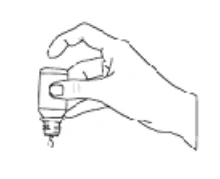
No special requirements for disposal.
7 MARKETING AUTHORISATION HOLDER
Fresenius Kabi Austria GmbH
Hafnerstraße 36
8055 Graz
Austria
8 MARKETING AUTHORISATION NUMBER(S)
PL 05061/0011
9 DATE OF FIRST AUTHORISATION/RENEWAL OF THE
AUTHORISATION
28/12/2016
10 DATE OF REVISION OF THE TEXT
12/07/2021