

Patient leaflet - Rotigotine Luye 4 mg/24 h transdermal patch
1. What Rotigotine Luye is and what it is used for
What Rotigotine Luye is
Rotigotine Luye contains the active substance rotigotine.
It belongs to a group of medicines called ‘dopamine agonists’. Dopamine is a messenger in the brain which is important for movement.
What Rotigotine Luye is used for
Rotigotine Luye is used in adults to treat the signs and symptoms of:
- Parkinson’s disease – Rotigotine Luye can be used on its own or with another medicine called levodopa.
2. What you need to know before you use Rotigotine Luye
Do not use Rotigotine Luye if:
- you are allergic to rotigotine or any of the other ingredients of this medicine (listed in section 6)
- you need to have a magnetic resonance imaging (MRI) scan (diagnostic pictures of the inside of the body, created using magnetic rather than x-ray energy)
- you need ‘cardioversion’ (specific treatment for abnormal heart beat).
You must take your Rotigotine Luye patch off just before undergoing magnetic resonance imaging (MRI) or cardioversion to avoid skin burns because the patch contains aluminium. You can put a new patch on afterwards.
If any of the above apply to you, do not use Rotigotine Luye. If you are not sure about this, talk to your doctor or pharmacist first.
Warnings and precautions
Talk to your doctor or pharmacist before using Rotigotine Luye. This is because:
- your blood pressure needs checking regularly while using Rotigotine Luye, especially at the start of the treatment. Rotigotine Luye may affect your blood pressure.
- your eyes need checking regularly while using Rotigotine Luye. If you notice any problems with your eyesight between checks, talk to your doctor straight away.
- if you have serious liver problems, your doctor may need to change the dose. If your liver problems get worse during treatment, talk to your doctor straight away.
- you may get skin problems caused by the patch – see ‘Skin problems caused by the patch’ in section 4.
- you may feel very sleepy or fall asleep suddenly – see ‘Driving and using machines’ in section 2.
- you may get involuntary muscle contractions causing abnormal, often repetitive movements or postures (dystonia), posture abnormal or sidewards bending of the back (also called pleurothotonus or Pisa Syndrome). If this happens, your doctor may want to adjust your medication. If you experience these symptoms after beginning treatment with Rotigotine Luye contact your doctor.
Medicines used to treat Parkinson’s disease should be reduced or stopped gradually. Tell your doctor if after stopping or reducing your Rotigotine Luye treatment you experience symptoms such as depression, anxiety, fatigue, sweating or pain.
Loss of consciousness can occur
Rotigotine Luye can cause loss of consciousness. This can happen especially when you start using Rotigotine Luye or when your dose is increased. Tell your doctor if you lose consciousness or feel dizzy.
Changes in behaviour and abnormal thinking
Rotigotine Luye can cause side effects that change your behaviour (how you act). You may find it helpful to tell a member of your family or carer that you are using this medicine and ask them to read this leaflet. This is so that your family or carer can tell you, or your doctor, if they are worried about any changes in your behaviour.
These include:
- craving for large doses of Rotigotine Luye or other medicines used to treat Parkinson’s disease
- unusual urges or cravings which you cannot resist and that could harm yourself or others
- abnormal thinking or behaviour
See ‘Changes to your behaviour and abnormal thinking’ in section 4 for more information. Children and adolescents
Do not give this medicine to children below 18 years of age because it is not known if it is safe or effective in this age group.
Other medicines and Rotigotine Luye
Tell your doctor or pharmacist if you are taking, have recently taken or might take any other medicines. This includes medicines obtained without a prescription and herbal medicines. If you are treated with Rotigotine Luye and levodopa at the same time, some side effects may get more serious. This includes seeing or hearing things that are not real (hallucinations), movements you cannot control related to Parkinson’s disease (‘dyskinesia’), and swelling of legs and feet. Do not take the following medicines while using Rotigotine Luye – because they may decrease its effect:
- ‘anti-psychotic’ medicines – used to treat certain mental illnesses
- metoclopramide – used to treat nausea (feeling sick) and vomiting.
Talk to your doctor before using Rotigotine Luye if you are taking:
- sedating medicines such as benzodiazepines or medicines used to treat mental illness or depression.
medicines that lower blood pressure. Rotigotine Luye may decrease blood pressure when you stand up – this effect may be worsened by the medicines used to lower blood pressure. Your doctor will let you know if it is safe to keep taking these medicines while using Rotigotine Luye. Rotigotine Luye with food, drink and alcohol
Because rotigotine enters your bloodstream through your skin, food or drink does not affect the way this medicine is absorbed by the body. You should discuss with your doctor if it is safe for you to drink alcohol while using Rotigotine Luye.
Pregnancy and breast-feeding
Do not use Rotigotine Luye if you are pregnant. This is because the effects of rotigotine on pregnancy and the unborn baby are not known.
Do not breast-feed during treatment with Rotigotine Luye. This is because rotigotine may pass into
your breast milk and affect your baby. It is also likely
to lower the amount of milk you produce.
If you are pregnant or breast-feeding, think you may
be pregnant or are planning to have a baby, ask your
doctor or pharmacist for advice before using this
medicine.
Driving and using machines
Rotigotine Luye may make you feel very sleepy and
you may fall asleep very suddenly. If this happens, do
not drive. In isolated cases, people have fallen asleep
while driving and this has caused accidents.
Also do not use tools or machines if you feel very
sleepy – or do anything else which may put others or
yourself at risk of serious injury.
3. How to use Rotigotine Luye
Always use this medicine exactly as your doctor or pharmacist has told you. Check with your doctor or pharmacist if you are not sure.
Which strength patches to use
The dose of Rotigotine Luye will depend on your illness – see below.
Rotigotine Luye is available in different strength patches which release the medicine over 24 hours. The strengths are 2 mg/24 h, 4 mg/24 h, 6 mg/24 h and 8 mg/24 h for the treatment of Parkinson’s disease.
- You may have to use more than one patch to reach your dose, as prescribed by your doctor.
- For doses higher than 8 mg/24 h (doses prescribed by your doctor above the available strengths), multiple patches must be applied to achieve the final dose. For example a daily dose of 10 mg may be reached by applying one patch of 6 mg/24 h and one patch of 4 mg/24 h.
- The patches should not be cut into pieces.
Treatment of Parkinson’s disease
Patients not taking levodopa – early stage of Parkinson’s disease
- Your starting daily dose will be one 2 mg/24 h patch each day.
- From the second week your daily dose may be increased by 2 mg each week – until you get to the right maintenance dose for you.
- For most patients, the right dose is between 6 mg and 8 mg each day. This is normally reached within 3 to 4 weeks.
- The maximum dose is 8 mg each day.
Patients taking levodopa – advanced stage of Parkinson’s disease
- Your starting daily dose will be one 4 mg/24 h patch each day.
- From the second week your daily dose will be increased by 2 mg each week – until you get to the right maintenance dose for you.
- For most patients, the right dose is between 8 mg and 16 mg each day. This is normally reached within 3 to 7 weeks.
- The maximum dose is 16 mg each day.
If you have to stop taking this medicine, see ‘If you stop using Rotigotine Luye’ in section 3. How to use the Rotigotine Luye patches:
Rotigotine Luye is a patch that is put on the skin.
- Make sure that you take the old patch off before putting on a new one.
- Stick the new patch on a different area of the skin each day.
- Leave the patch on your skin for 24 hours, then take it off and put on a new one.
- Change the patches at about the same time every day.
Do not cut the patches into pieces.
Where to stick the patch
Put the sticky side of the patch onto clean, dry, healthy skin on the following areas as shown in grey on the pictures opposite:
- Shoulder or upper arm
- Belly
- Flank (your side, between the ribs and hips)
- Thigh or hip
To avoid skin irritation
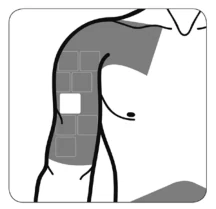
- Stick the patch onto a different area of skin each day. For example, put it on the right side of your body one day, then on the left side of your body the next day. Or on your upper body one day, then on your lower body the day after that.
- Do not stick the patch on the same area of skin twice within 14 days.
- Do not stick the patch on broken or damaged skin – or on skin that is red or irritated.
If you still get problems with your skin because of the patch, please see ‘Skin problems caused by the patch’ in section 4 for more information.
To prevent the patch becoming loose or falling off
- Do not put the patch in an area where it can be rubbed by tight clothing.
- Do not use creams, oils, lotions, powders or other skin products where you will put the patch. Also do not use them on or near a patch you are already wearing.
- If you need to stick the patch to a hairy area of skin, you must shave the area at least 3 days before sticking the patch there.
- If the edges of the patch lift, the patch may be taped down with adhesive medical tape. If the patch falls off, put on a new patch for the rest of the day – then replace the patch at the usual time.
- Do not let the area of the patch get hot – for example too much sunlight, saunas, hot baths, heating pads or hot-water bottles. This is because the medicine may be released faster. If you think that too much heat has been applied, contact your doctor or pharmacist.
- Always check that the patch has not fallen off after activities such as bathing, showering or exercising.
- If the patch has irritated your skin, keep that area protected from direct sunlight. This is because it may change the colour of the skin.
How to use the patch
- Each patch is packed in a separate sachet.
- Before opening the sachet decide where you are going to stick this new patch and check you have removed any old patch.
- Stick the Rotigotine Luye patch onto your skin as soon as you have opened the sachet, removed the cover sheet and the release liner.
- To open the sachet, hold the sachet in both hands.
- Peel apart the foil
- Open the sachet.
Take the patch out of the sachet.
Remove the cover sheet from the top, tan-coloured side of the patch and discard it.
A protective transparent liner (release liner) covers the sticky side of the
patch.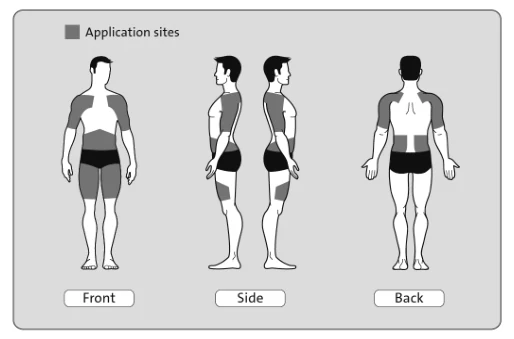
 Package leaflet: Information for the user Rotigotine Luye 4 mg/24 h transdermal patch Rotigotine Luye 6 mg/24 h transdermal patch Rotigotine Luye 8 mg/24 h transdermal patch
Rotigotine
- 5. Hold the patch in both hands with the transparent release liner facing you. Peel off one side of the release liner and do not touch the sticky part of the patch with the fingers.
- 6.
Put the sticky side of the patch on the skin and then peel off the second
side of the release liner.
- 7.
Press the patch down firmly with the palm of your hand.
Keep it pressed for about 30 seconds.
This makes sure the patch is touching the skin and the edges stick down
well.
Wash your hands with soap and water straight after handling the patch.
How to take off a used patch
- Slowly and carefully peel off the used patch.
- Gently wash the area with warm water and mild soap. This will remove any stickiness that stays on your skin. You can also use a little baby oil to remove any stickiness that will not wash off.
- Do not use alcohol or other dissolving liquids – such as nail polish remover. These may irritate your skin.
If you use more Rotigotine Luye than you should
Using higher doses of Rotigotine Luye than your doctor has prescribed may cause side effects such as feeling sick (nausea) or vomiting, low blood pressure, seeing or hearing things that are not real (hallucinations), feeling confused, very sleepy, having involuntary movements and convulsions.
In such cases, contact your doctor or hospital straight away. They will tell you what to do.
If you forget to change the patch at your usual time
- If you have forgotten to change the patch at your usual time, change it as soon as you remember.
- Take off the old patch and use a new one.
- If you have forgotten to stick on a new patch after removing the old one, use a new patch as soon as you remember.
In both cases, use a new patch at the usual time on the following day. Do not use a double dose to make up for a forgotten dose.
If you stop using Rotigotine Luye
Do not stop using Rotigotine Luye without talking to your doctor. A sudden stop could lead to a medical condition called ‘neuroleptic malignant syndrome’ which could be life-threatening. The signs include: loss of muscle movement (akinesia), rigid muscles, fever, unstable blood pressure, increased heart rate (tachycardia), confusion, low level of consciousness (such as a coma).
If your doctor says you should stop Rotigotine Luye, the daily dose should be lowered gradually:
- Parkinson’s disease – lowered by 2 mg every other day.
If you have any further questions on the use of this medicine, ask your doctor, pharmacist or nurse.
4. Possible side effects
Like all medicines, this medicine can cause side effects, although not everybody gets them. Tell your doctor, pharmacist or nurse if you notice any side effects.
Side effects more likely at the start of treatment
You may feel sick (nausea) and vomit at the start of treatment. These effects are usually mild or moderate and only last for a short time. Talk to your doctor if they last for a long time or if you are worried about them.
Skin problems caused by the patch
- You may get redness and itching on the skin where the patch has been – these reactions are usually mild or moderate.
- The reactions normally go away after a few hours – once you remove the patch.
- Talk to your doctor if you have a skin reaction that lasts longer than a few days or is severe. Also do this if it spreads outside the area of skin that was covered by the patch.
- Avoid sunlight and solarium exposure on areas of skin showing any kind of skin reaction caused by the patch.
- To help avoid the skin reactions, you should put the patch on a different area of skin every day, and only use the same area again after 14 days.
Loss of consciousness can occur
Rotigotine Luye can cause loss of consciousness. This can happen especially when you start using Rotigotine Luye or when your dose is increased. Tell your doctor if you lose consciousness or feel dizzy.
Changes in behaviour and abnormal thinking
Tell your doctor if you notice any changes in behaviour, thinking or both, that are listed below. Your doctor will discuss ways of managing or reducing symptoms.
You may find it helpful to tell also a member of your family or carer that you are using this medicine and ask them to read this leaflet. This is so that your family or carer can tell you, or your doctor, if they are worried about any changes in your behaviour. Rotigotine Luye can cause unusual urges or cravings which you cannot resist such as the impulse, drive or temptation to do things that could harm yourself or others.
These may include:
- strong impulse to gamble too much – even if this seriously affects you or your family
altered or increased sexual interest and behaviour which causes significant concern to you or others
- for example, an increased sex drive
- uncontrolled shopping or spending too much
- binge eating (eating large amounts of food in a short period of time) or compulsive eating (eating more food than normal and more than is needed to satisfy your hunger).
Rotigotine Luye may cause other behaviours and abnormal thinking. These may include:
- abnormal thoughts about reality
- delusions and hallucinations (seeing or hearing things that are not real)
- confusion
- disorientation
- aggressive behaviour
- agitation
- delirium
Tell your doctor if you notice any changes in behaviour, thinking or both that are listed above. Your doctor will discuss ways of managing or reducing symptoms.
Allergic reactions
Contact your doctor if you notice signs of an allergic reaction – these can include swelling of the face, tongue or lips.
Side effects when using Rotigotine Luye for Parkinson’s disease
Tell your doctor, pharmacist or nurse if you get any of the following side effects: Very common: may affect more than 1 in 10 people
- headache
- feeling sleepy or dizzy
- feeling sick (nausea), vomiting
- skin reactions under the patch such as redness and itching
Common: may affect up to 1 in 10 people
- falling
- hiccups
- weight loss
- swelling of legs and feet
- feeling weak (fatigue), feeling tired
- feeling of heartbeat (palpitation)
- constipation, dry mouth, heartburn
- redness, increased sweating, itching
- vertigo (sensation of whirling motion)
- seeing or hearing things that are not real (hallucinations)
- low blood pressure when standing up, high blood pressure
- difficulty falling asleep, sleep disorder, difficulty sleeping, nightmare, unusual dreams
- movements you cannot control related to Parkinson’s disease (dyskinesia)
- fainting, feeling dizzy when standing up because of fall in blood pressure
- unable to resist the impulse to perform an action that is harmful involving excessive gambling, repetitive meaningless actions, uncontrolled shopping or spending too much
- binge eating (eating large amount of food in a short period of time), compulsive eating (eating more food than normal and more than needed to satisfy hunger)
Uncommon: may affect up to 1 in 100 people
- blurred vision
- weight increase
- allergic reaction
- low blood pressure
- increased heart rate
- increased sex drive
- abnormal heart beat
- stomach discomfort and pain
- generalised itching, skin irritation
- falling asleep suddenly without warning
- unable to achieve or maintain an erection
- feeling agitated, disorientated, confused or paranoid
- increased or abnormal liver test results
- sight problems such as seeing colours or lights
- increased levels of creatine phosphokinase (CPK) (CPK is an enzyme found mainly in skeletal muscles).
Rare: may affect up to 1 in 1,000 people
- delusion
- delirium
- feeling irritable
- being aggressive
- psychotic disorders
- rash over larger parts of the body
- involuntary muscle spasms (convulsion)
Not known: it is not known how often these happen
- craving large doses of medicines like Rotigotine Luye – more than needed for the illness. This is known as ‘dopamine dysregulation syndrome’ and can lead to use of too much Rotigotine Luye.
- diarrhoea
- dropped head syndrome
- rhabdomyolysis (a rare severe muscle disorder which causes pain, tenderness and weakness of the muscles and may lead to kidney problems)
Tell your doctor, pharmacist or nurse if you notice any of the side effects listed above. Reporting of side effects
If you get any side effects, talk to your doctor or pharmacist. This includes any possible side effects not listed in this leaflet. You can also report side effects directly via the Yellow Card Scheme at www.mhra.gov.uk/yellowcard or search for MHRA Yellow Card in the Google Play or Apple App Store. By reporting side effects you can help provide more information on the safety of this medicine.
5. How to store Rotigotine Luye
Keep this medicine out of the sight and reach of children.
Do not use this medicine after the expiry date which is stated on the label and box. This medicine does not require any special storage conditions.
What to do with the used and unused patches
- Used patches still contain the active substance ‘rotigotine’, which may be harmful to others. Fold the used patch with the sticky side inwards. Put the patch in the original sachet and then throw it away safely, out of the reach of children.
- Do not throw away any medicines via wastewater or household waste. Ask your pharmacist how to throw away medicines you no longer use. These measures will help protect the environment.
6. Contents of the pack and other information
What Rotigotine Luye contains
The active substance is rotigotine.
4 mg/24 h:
Each patch releases 4 mg of rotigotine per 24 hours. Each patch of 18.4 cm2 contains 7.36 mg of rotigotine.
6 mg/24 h:
Each patch releases 6 mg of rotigotine per 24 hours. Each patch of 27.6 cm2 contains 11.04 mg of rotigotine.
8 mg/24 h:
Each patch releases 8 mg of rotigotine per 24 hours. Each patch of 36.8 cm2 contains 14.72 mg of rotigotine.
The other ingredients are:
- Backing film: pigmented polyethylene aluminium vapor coated polyester, orange printing ink
- Matrix layer, containing the active substance: tocopherol, paraffin, povidone K90, silicone adhesive
- Release liner: polyester film, fluorosilicone coated
- Cover sheet: polyester film, fluorosilicone coated
What Rotigotine Luye looks like and contents of the pack
Rotigotine Luye is a transdermal patch. It is a thin, rectangular patch with rounded corners. The outside is tan-coloured and is imprinted with
4 mg/24 h: “Rotigotine 4 mg/24 h”
6 mg/24 h: “Rotigotine 6 mg/24 h”
8 mg/24 h: “Rotigotine 8 mg/24 h”.
Rotigotine Luye is available in the following pack-sizes:
Boxes containing 7, 14, 28, 30 or 84 (multipack containing 3 packs of 28) patches, which are individually sealed in sachets. Not all pack sizes may be marketed.
Marketing Authorisation Holder
Luye Pharma Ltd.
40 Occam Road
Guildford, GU2 7YG
UK
Manufacturer
Luye Pharma AG
Am Windfeld 35
83714 Miesbach
Germany
This leaflet was last revised in August 2024
| Customer | Luye Pharma Ltd. | |
| Product Name | Rotigotine Luye 4-6-8mg/24 h transdermal patch | |
| Market | United Kingdom | |
| Language/s | English | |
| Job ref.: | n/a | |
| n/a | ||
| Manufacturer Code | XXXXXXXX/XX | |
| Our Ref | ||
| Client Ref/ Word doc used: | ||
| Issue | 04 | |
| Date | 17 July 2024 | |
| SPECIFICATION DETAILS | |
| Origination | 21 March 2024 — (as Issue 01) |
| 280 x 480mm | |
| Border | 10 mm |
| n/a | |
| Font details | Main title: Arial - Bold - 20 pt Section titles: Arial - Bold - 9.5 pt Sub-titles: Arial - Bold - 8.5 pt Body copy: Arial - 8.5 pt |
| Black - K | |