


Patient leaflet - Rivastigmine Strides 4.6 mg/24H transdermal patch
1. What rivastigmine Strides transdermal patch is and what it is used for
The active ingredient is rivastigmine.
Rivastigmine belongs to a group of agents called cholinesterase inhibitor. In patients with Alzheimer’s disease, certain nerve cells in the brain die off, resulting in low levels of the neurotransmitter acetylcholine (a substance that enables nerve cells to communicate with each other). Rivastigmine works by blocking the enzymes that break down acetylcholine: acetylcholinesterase and butyryl-cholinesterase. By blocking these enzymes, Rivastigmine Strides transdermal patch causes levels of acetylcholine to be increased in the brain, helping to reduce the symptoms of Alzheimer’s disease.
Rivastigmine is used for the treatment of adult patients with mild to moderately severe Alzheimer’s dementia, a progressive brain disorder that gradually affects memory, intellectual ability and behaviour.
2. What you need to know before you use rivastigmine Stridestransdermal patch
Do not use rivastigmine Strides transdermal patch
- if you are allergic to rivastigmine (the active substance in rivastigmine) or any of the other ingredients of this medicine (listed in section 6).
- if you have ever had an allergic reaction to a similar type of medicine (carbamate derivatives).
- if you have a skin reaction spreading beyond the patch size, if there is a more intense local reaction (such as blistering, increasing skin inflammation, swelling) and if the condition does not improve within 48 hours after removal of the transdermal patch.
If this applies to you, tell your doctor and do not apply Rivastigmine Strides transdermal patches.
Warnings and precautions
Talk to your doctor before taking Rivastigmine Strides transdermal patches:
- if you have, or have ever had, an irregular or slow heartbeat (cardiac arrhythmia).
- if you have, or have ever had, an active stomach ulcer.
- if you have, or have ever had, difficulties in passing urine.
- if you have, or have ever had, seizures.
- if you have, or have ever had, asthma or a severe respiratory disease.
- if you tremble pathologically
- if you have a low body weight.
- if you have gastrointestinal reactions such as nausea, vomiting and diarrhoea. You may be losing too much fluid if vomiting or diarrhoea are prolonged.
- if you have impaired liver function.
- if you have, or have ever had, an irregular or slow heartbeat (cardiac arrhythmia).
If any of these apply to you, your doctor may need to monitor you more closely while you are on this medicine.
If you have interrupted the use of rivastigmine Strides transdermal patches for more than three days, do not start using it again before you have talked to your doctor.
Children and adolescents
There is no relevant benefit of rivastigmine Strides transdermal patches in children and adolescents in the therapeutic area of Alzheimer's dementia.
Other medicines and Rivastigmine Strides transdermal patches
Please tell your doctor or pharmacist if you are taking, have recently taken or plan on taking any other medicines.
Rivastigmine might interfere with anticholinergic medicines; some of which are medicines used to relieve stomach cramps or spasms (e.g. dicyclomine), to treat Parkinson’s disease (e.g. amantadine) or to prevent motion sickness (e.g. diphenhydramine, scopolamine or meclizine).
Rivastigmine should not be used at the same time as metoclopramide (a medicine to relieve or prevent nausea and vomiting). The concurrent use of both medicines can cause problems such as stiff limbs and trembling hands.
If you have to undergo surgery whilst using rivastigmine Strides transdermal patches, tell your doctor that you are using them because the patches may exaggerate the effects of some muscle relaxants during anaesthesia.
Take care when using rivastigmine together with beta-blockers (medicines such as atenolol for the treatment of high blood pressure, angina and other heart conditions). The simultaneous use of both medicines can cause problems such as slowing of the heartbeat (bradycardia), which can lead to fainting or unconsciousness.
Pregnancy, breast-feeding and fertility
If you are pregnant or breast-feeding, think you may be pregnant or are planning to have a baby, ask your doctor or pharmacist for advice before taking this medicine.
If you are pregnant, the benefits of a treatment with rivastigmine must be carefully assessed against the possible effects on your unborn child. Rivastigmine should not be used during pregnancy unless absolutely necessary.
You should not breast-feed during treatment with rivastigmine Strides transdermal patches.
Driving and using machines
Your doctor will tell you whether your disease allows you to drive vehicles and use machines safely. Rivastigmine Strides transdermal patches may cause fainting or severe confusion. If you feel faint or confused do not drive, use machines or perform any other tasks that require your focused attention.
3. How to use Rivastigmine Strides transdermal patches
Always use rivastigmine Strides transdermal patches exactly as your doctor has told you. Check with your doctor or pharmacist if you are not sure.
IMPORTANT:
- Remove the patch from the previous day before putting ONE new patch on.
- Use only one patch per day.
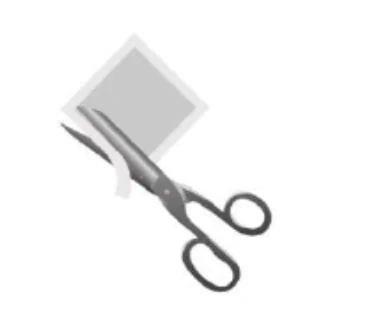
- Do not cut the patch into pieces.
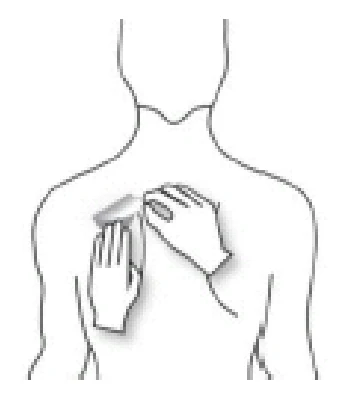
- Press the patch firmly in place for at least 30 seconds using the palm of the hand.
How to start treatment
Your doctor will tell you which strength of rivastigmine Strides transdermal patch is the most suitable for you.
- Treatment usually starts with rivastigmine Strides 4.6 mg/24h.
- The recommended daily dose is rivastigmine Strides 9.5 mg/24h. If well tolerated, the treating physician may consider increasing the dose to 13.3 mg/24h.
- Only wear one rivastigmine patch at a time and replace the patch with a new one after 24 hours.
During the course of the treatment your doctor may adjust the dose to suit your individual needs.
If you have interrupted the use of the patches for more than three days, do not apply the next one before you have talked to your doctor. Transdermal patch treatment can be resumed at the same dose if treatment is not interrupted for more than three days. Otherwise your doctor will restart your treatment on rivastigmine Strides 4.6 mg/24h.
Rivastigmine can be used with food, drink and alcohol.
Where to correctly apply Rivastigmine Strides transdermal patch
- Before you apply a patch, make sure that your skin is clean, dry and hairless, free of any powder, oil, moisturiser or lotion that could keep the patch from sticking to your skin properly, and that it is free of cuts, rashes and/or irritations.
- Carefully remove the existing patch before putting on a new one. Having multiple patches on your body could release an excessive amount of this medicine which could be potentially dangerous.
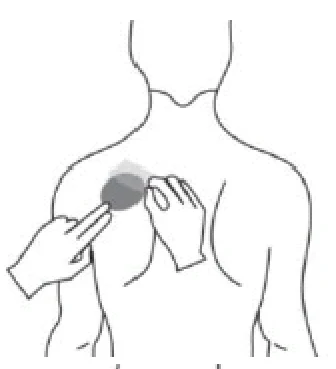
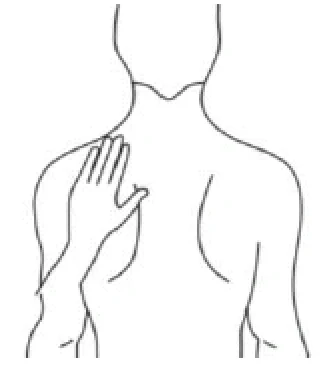
- Apply ONE patch per day to ONLY ONE of the possible areas shown in the following images:
- left upper arm or right upper arm
- left upper chest or right upper chest (but not directly on the breasts)
- left upper back or right upper back
- left lower back or right lower back
| Remove the existing patch every 24 hours before putting ONE new patch on ONLY ONE of the following possible areas. |
|---|
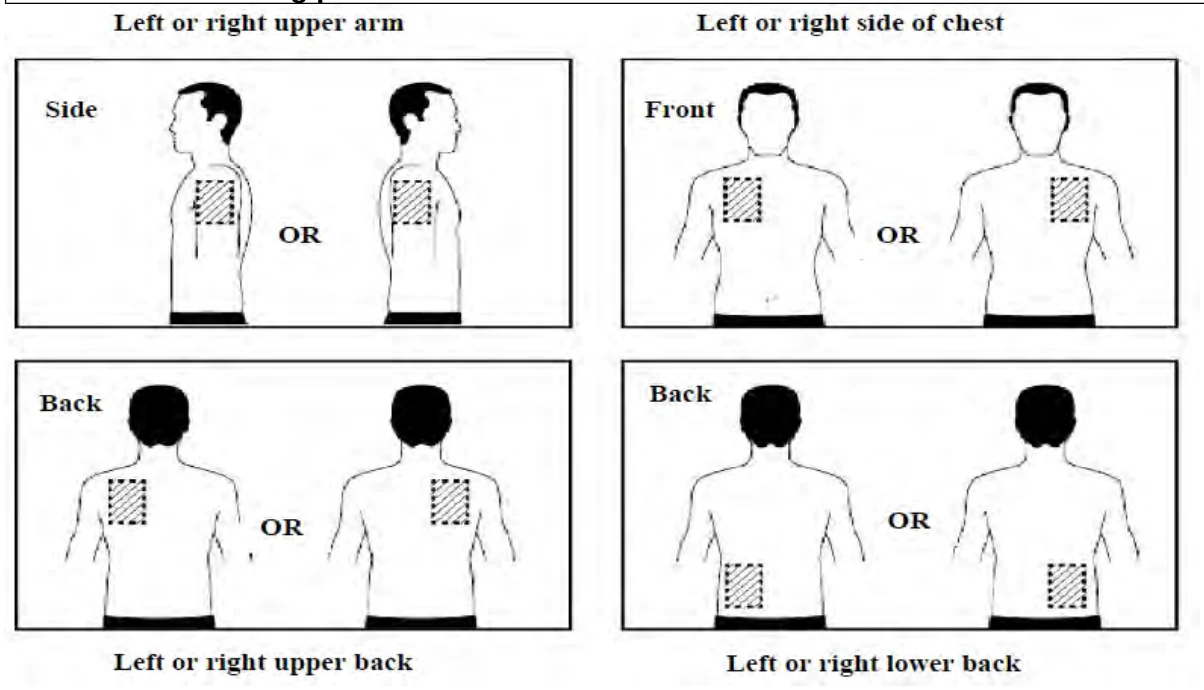
When changing the patch, you must remove the previous day’s patch before you apply the new one to a different location of skin each time (for example on the right side of your body one day, then on the left side the next day, one day on your upper back area, the next day on your lower part etc.). The skin area should only be covered by a patch once every 14 days.
How to correctly apply Rivastigmine Strides transdermal patch
Rivastigmine patches are thin, self-adhesive patches. Each patch is sealed in a sachet. Open the sachet only right before you want to apply a new patch and remove it.
For patients starting treatment for the first time and for patients restarting the treatment again after an interruption, please begin with the second picture.
| Carefully remove the existing patch before putting on a new one. | |
|---|---|
Only open the sachet when you are ready to apply the patch. Cut the sachet along the sealed edge with scissors and remove the patch from the sachet. |
| The patch can most easily be removed when the sachet is cut on two sides. | |
|---|---|
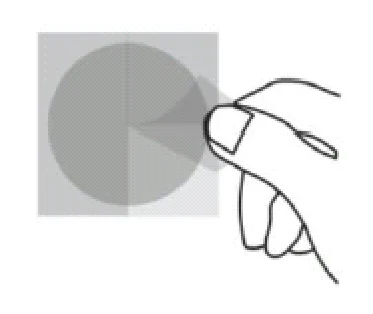
Peel off one half of the protective liner and do not touch the sticky part of the patch with your fingers. | |
| |
| |
| As a reminder you can write the day of the week on the patch with a fine ball point pen for example. |
Wear the patch continuously until it is time to replace it with a new one. It might be useful to experiment with different locations when applying a new patch, to find ones that are most comfortable for you and where clothing will least rub on the patch.
How to remove Rivastigmine Strides transdermal patch
Gently pull at one edge of the patch to remove it slowly from the skin. In case the adhesive residue is left over on your skin, gently soak the area with warm water and mild soap or use baby oil to remove it. Alcohol or other solvents (nail polish remover or other solvents) should not be used.
Wash your hands with soap and water after removing the patch. In case of contact with eyes or if the eyes turn red after handling the patch, rinse immediately with plenty of water and seek medical advice if symptoms do not resolve.
Can you bathe, swim or go out in the sun wearing your Rivastigmine Strides transdermal plasters?
- Bathing, swimming or showering usually do not damage the patch. Make sure the patch does not come loose or off during these activities.
- Do not expose the patch to any external heat sources (e.g. excessive sunlight, saunas, solarium) for long periods of time.
What to do if a patch comes off
If a patch comes off, apply a new one for the rest of the day, then replace it at the usual time the next day.
When and for how long do you need to wear your Rivastigmine Strides transdermal patch
- For the optimal effect of the medicine, you must apply a new patch every day, preferably at the same time of day.
- Only wear one rivastigmine patch at a time and replace the patch with a new one after 24 hours.
If you take more Rivastigmine Strides transdermal patches than you should
If you accidentally apply more than one patch, remove all the patches from your skin, then inform your doctor that you have accidentally applied more than one patch. You may require medical attention. Some people who have accidentally taken too much rivastigmine at once experienced nausea, vomiting, diarrhoea, increased blood pressure and hallucinations. A slowing of the heartbeat and fainting can also occur.
If you forget to use Rivastigmine Strides transdermal patches
If you find you have forgotten to apply a patch, apply one immediately. Apply the next patch at the usual time on the next day. Never apply two patches at once to make up for the one that you missed.
If you stop using Rivastigmine Strides transdermal patches
Tell your doctor or pharmacist if you stop using the patch.
If you have any further questions on the use of this medicine, ask your doctor or pharmacist.
4. Possible side effects
Like all medicines, Rivastigmine Strides transdermal patches can cause side effects, although not everybody gets them.
Side effects may occur more often when you just start your treatment or increase your dose. In most cases, the side effects will slowly subside as your body gets used to the medicine.
Take off your patch and tell your doctor immediately, if you notice any of the following side effects which could become very serious:
Common (may affect up to 1 in 10 treated people)
- Lack of appetite
- Dizziness
- Agitation or sleepiness
- Urinary incontinence (weak bladder)
Uncommon (may affect up to 1 in 100 treated people)
- Cardiac arrhythmias (e.g. heartbeat that is too slow)
- Hallucinations (seeing things that are not really there)
- Stomach ulcer
- Dehydration (losing too much fluid)
- Hyperactivity (high level of activity, restlessness)
- Aggression
Rare (may affect up to 1 in 1,000 treated people)
- Falls
Very rare (may affect up to 1 in 10,000 treated people)
- Stiff arms or legs
- Trembling hands
Not known (frequency cannot be estimated from the available data)
- Allergic reaction at the site where the patch was applied, e.g. blisters or inflamed skin
- Worsening of symptoms of Parkinson's disease, e.g. Tremor, stiffness, shuffling gait
- Inflammation of the pancreas; signs include strong pain in the upper stomach, often together with nausea or vomiting
- Fast or uneven heartbeat
- High blood pressure
- Seizures
- Liver diseases (yellow skin, yellowing of the whites of the eyes, abnormal darkening of the urine or unexplained nausea, vomiting, tiredness and loss of appetite)
- Changes of liver function values
- Restlessness
- Nightmares
If you experience any of these side effects, remove your patch immediately and tell your doctor.
Other side effects that have been observed with Rivastigmine capsules and that may also occur with the transdermal patch:
Common (may affect up to 1 in 10 treated people)
- Increased production of saliva
- Loss of appetite
- Restlessness
- Generally feeling unwell
- Trembling or confusion
- Increased sweating
Uncommon (may affect up to 1 in 100 treated people)
- Irregular heartbeat (e.g. fast heart rate)
- Difficulty sleeping
- Falls
Rare (may affect up to 1 in 1,000 treated people)
- Seizures
- Intestinal ulcer
- Chest pain (can be caused through myocardial spasms)
Very rare (may affect up to 1 in 10,000 treated people)
- High blood pressure
- Inflammation of the pancreas; typical signs are strong pain in the upper stomach, often together with nausea or vomiting
- Intestinal bleeding; recognisable as blood in the stool or vomit
- Hallucinations (seeing things that are not really there)
- In some cases, violent vomiting led to tearing of the oesophagus.
Not known (frequency cannot be estimated from the available data)
- Nightmares
Reporting of side effects
If you get any side effects, talk to your doctor or pharmacist or nurse. This includes any possible side effects not listed in this leaflet. You can also report side effects directly via Yellow Card Scheme Website: www.mhra.gov.uk/yellowcard or search for MHRA Yellow Card in the Google Play or Apple App Store. By reporting side effects you can help provide more information on the safety of this medicine.
5. How to store Rivastigmine Strides transdermal patches
- Keep this medicine out of the sight and reach of children.
- Do not use this medicine after the expiry date which is stated on the outer box and sachet after Expiry date or “EXP”. The expiry date refers to the last day of that month.
- Do not store above 25°C.
- Store the transdermal patches in the sachet until use, in order to protect from light.
- Do not use this medicine if you notice that the patch is damaged or shows signs of tampering.
- After removing a patch, fold it in half with the sticky sides on the inside and press them together. Put the used patch back into its sachet and discard it in such a way that it is out of reach of children. Do not touch your eyes and wash your hands with soap and water after removing the patch. If the household waste in your local authority is incinerated, you can put the patches in the residual waste. Otherwise, return the used patches to the pharmacy, preferably in the original packaging.
6. Contents of the pack and other information
What Rivastigmine Strides transdermal patch contains
The active substance is rivastigmine.
Rivastigmine Strides 4.6 mg/24h transdermal patch
One transdermal patch in the size of 5.25 cm2 contains 9 mg rivastigmine and releases 4.6 mg rivastigmine per 24 hours.
Rivastigmine Strides 9.5 mg/24h transdermal patch
One transdermal patch in the size of 10.5 cm2 contains 18 mg rivastigmine and releases 9.5 mg rivastigmine per 24 hours.
The other excipients are: Poly(ethylen terephthalate), polyacrylate, ammonio methacrylate-copolymer (type B) (Ph.Eur.), poly(ethylen terephthalate) siliconised, black printing ink.
What Rivastigmine Strides transdermal patch looks like and contents of the pack
Each transdermal patch is a thin patch that consists of three layers. The backing layer is translucent and has the following labelling in black colour:
Rivastigmine Strides 4.6 mg/24h transdermal patch
“Rivastigmine Strides” and “4.6 mg/24h”
Rivastigmine Strides 9.5 mg/24h transdermal patch
“Rivastigmine Strides” and “9.5 mg/24h”
A transdermal patch is sealed in a child-proof sachet.
The transdermal patches are available in packs containing 7, 30, 42, 60, 84 or 90 sachets.
Not all pack sizes may be marketed.
Marketing Authorisation Holder
Strides Pharma UK Ltd.
Unit 4, The Metro Centre
Dwight Road, Watford
WD18 9SS
United Kingdom
Manufacturer
AdhexPharma SAS
42-44 rue de Longvic
21300 Chenove
France
This leaflet was last revised in March 2026
 | |
|---|---|
 |
 | |
 | |
 | |
 |