


Patient leaflet - Rekambys 600 mg prolonged-release suspension for injection
1. What REKAMBYS is and what it is used for
REKAMBYS contains the active ingredient rilpivirine. It is one of a group of medicines called non-nucleoside reverse transcriptase inhibitors (NNRTIs) that are used for the treatment of human immunodeficiency virus type 1 (HIV-1) infection.
REKAMBYS works together with other HIV medicines to block the ability of the virus to make more copies of itself. REKAMBYS injections do not cure HIV infection but help reduce the amount of HIV in your body and keeps it at a low level. This holds off damage to the immune system and the development of infections and diseases associated with AIDS.
REKAMBYS is always given with another HIV medicine called cabotegravir injection. They are used together in adults and adolescents (at least 12 years of age and weighing at least 35 kg) whose HIV-1 infection is already under control.
2. What you need to know before you use REKAMBYS
Do not use REKAMBYS if you are allergic to rilpivirine or any of the other ingredients of this medicine (listed in section 6).
Do not use REKAMBYS if you are taking any of the following medicines as they may affect the way REKAMBYS or the other medicine works:
- carbamazepine, oxcarbazepine, phenobarbital, phenytoin (medicines to treat epilepsy and prevent seizures)
- rifabutin, rifampicin, rifapentine (medicines to treat some bacterial infections such as tuberculosis)
- dexamethasone (a corticosteroid used in a variety of conditions such as inflammation and allergic reactions) as a course of treatment by mouth or injection
- products that contain St John’s wort (Hypericum perforatum, a herbal remedy used for depression).
If you are taking any of the above, ask your doctor about alternatives.
Warnings and precautions
Talk to your doctor or pharmacist before using REKAMBYS.
REKAMBYS is not a cure for HIV infection. It is part of a treatment to reduce the amount of virus in the blood.
Tell your doctor about your situation
Check the following points and tell your doctor if any of them apply to you.
- You must attend all the planned visits for injections, do not miss any visits, it is very important for the success of your treatment. If you cannot attend a planned visit, inform your doctor as soon as possible.
- Tell your doctor if you have ever had problems with your liver, including hepatitis B or hepatitis C, or problems with your kidneys. Your doctor may check how well your liver or kidneys work to decide if you can use REKAMBYS. See ‘Uncommon side effects’ in section 4 of this leaflet for signs of liver damage.
- Tell your doctor immediately if you notice any symptoms of infections (for example, fever, chills, sweats). In some patients with HIV, inflammation from previous infections may occur soon after starting HIV treatment. It is believed that these symptoms are due to an improvement in the body’s immune response, enabling the body to fight infections that were present previously but caused no obvious symptoms.
- Also tell your doctor straight away if you notice any symptoms such as muscle weakness, weakness beginning in the hands and feet and moving up towards the trunk of the body, palpitations, tremor or hyperactivity. This is because autoimmune disorders (conditions in which the immune system mistakenly attacks healthy body tissue) may also occur after you start taking medicines for the treatment of your HIV infection. Autoimmune disorders may occur many months after the start of treatment.
- Tell your doctor if you are taking any medicines that you have been told may cause a life-threatening irregular heartbeat (torsade de pointes).
Reactions to Injections
Post-injection reaction symptoms have happened within minutes in some people after receiving their rilpivirine injection. Most symptoms resolved within a few minutes after the injection. Symptoms of post-injection reactions may include: difficulty breathing, stomach cramps, rash, sweating, numbness of your mouth, feeling anxious, feeling warm, feeling lightheaded or feeling like you are going to pass out (faint), blood pressure changes, and pain (e.g., back and chest). Tell your healthcare professional if you experience these symptoms after you receive your injections.
Regular appointments are important
It is important that you attend your planned appointments to receive REKAMBYS, to control your HIV infection and to stop your illness from getting worse. Do not miss any visits, it is very important for the success of your treatment. If you cannot attend a planned visit, inform your doctor as soon as possible. Talk to your doctor if you are thinking about stopping treatment. If you are late receiving your REKAMBYS injection, or if you stop receiving REKAMBYS, you will need to take other medicines to treat HIV infection and to reduce the risk of the virus becoming resistant as the drug levels in your body will be too low to treat the HIV infection.
Children
REKAMBYS is not for use in children less than 12 years of age or adolescents weighing less than 35 kg, because it has not been studied in these patients.
Other medicines and REKAMBYS
Tell your healthcare provider if you are taking, have recently taken or might take any other medicines. Some medicines may affect the levels of REKAMBYS in the blood if you are taking them while being treated with REKAMBYS, or REKAMBYS may affect how well the other medicine works.
REKAMBYS must not be given with some other medicines (see ‘Do not use REKAMBYS’ in section 2).
The effects of REKAMBYS or other medicines might change if you use REKAMBYS together with any of the following medicines:
- clarithromycin, erythromycin (antibiotics)
- methadone (used to treat narcotic withdrawal and dependence)
If you are taking any of the above, ask your doctor about alternatives.
Pregnancy and breast-feeding
Tell your doctor immediately if you are pregnant or if you plan to become pregnant. Your doctor will consider the benefit and the risk to you and your baby of using REKAMBYS while you are pregnant. If you are planning to have a baby, talk to your doctor in advance, as rilpivirine can remain in your body for up to 4 years after the last injection of REKAMBYS.
Breast-feeding is not recommended in women living with HIV because HIV infection can be passed on to the baby in breast milk.
If you are breast-feeding, or thinking about breast-feeding, you should discuss it with your doctor as soon as possible.
Driving and using machines
Some patients may feel tired, dizzy or drowsy during treatment with REKAMBYS. Do not drive or operate machinery if you have any of these side effects.
REKAMBYS contains sodium
This medicine contains less than 1 mmol sodium (23 mg) per 2 mL injection, that is to say essentially ‘sodium-free’.
3. How REKAMBYS is given
A nurse or doctor will give you REKAMBYS as an injection in the muscle of your buttock (intramuscular, or IM injection).
You will be given your injection either once every month or once every 2 months, together with another injectable medicine called cabotegravir. Your doctor will explain how often the medicine will be given.
When you start treatment with REKAMBYS, you and your doctor may decide to start with daily treatment of one 25 mg rilpivirine tablet with a meal and one 30 mg cabotegravir tablet for one month before your first REKAMBYS injection. This is called the lead-in period - taking the tablets before you receive REKAMBYS and cabotegravir injections will allow your doctor to test how well these medicines suit you.
The other option is that you and your doctor may decide to start directly with REKAMBYS injections.
If you are going to be given REKAMBYS every month, your treatment will be as follows:
| When | |||
|---|---|---|---|
| Medicine | First injection | Second injection onwards, every month | |
| Rilpivirine | single injection of 900 mg | 600 mg by injection every month | |
| Cabotegravir | single injection of 600 mg | 400 mg by injection every month | |
If you are going to be given REKAMBYS every 2 months, your treatment will be as follows:
| When | |||
|---|---|---|---|
| Medicine | First and second injections, one month apart | Third injection onwards, every two months | |
| Rilpivirine | single injection of 900 mg | 900 mg by injection, every 2 months | |
| Cabotegravir | single injection of 600 mg | 600 mg by injection, every 2 months | |
If you miss a REKAMBYS injection
It is important that you keep your regular planned appointments to receive your injection. If you miss an appointment, contact your doctor immediately to make a new appointment.
Talk to your doctor if you think you will not be able to receive your REKAMBYS injection at the usual time. Your doctor may recommend you take tablets instead, until you are able to have a REKAMBYS injection again.
If you are given too much REKAMBYS
A doctor or nurse will give this medicine to you, so it is unlikely that you will be given too much. If you are worried, tell the doctor or nurse.
Don’t stop using REKAMBYS without advice from your doctor.
Use REKAMBYS for as long as your doctor recommends. Don’t stop unless your doctor advises you to.
Low levels of rilpivirine (the active ingredient of REKAMBYS) can remain in your body for up to 4 years after stopping treatment. However, once you received your last REKAMBYS injection, the low levels of rilpivirine that remain will not work well enough against the virus which then can become resistant. To keep your HIV-1 infection under control and to stop the virus becoming resistant, you must start a different HIV treatment by the time your next REKAMBYS injection was planned.
4. Possible side effects
Like all medicines, this medicine can cause side effects, although not everybody gets them.
The following is a list of side effects that have been reported when REKAMBYS is used with cabotegravir injection.
Very common side effects (affects at least 1 in 10 people)
- headache
injection site reactions - these are generally mild to moderate and became less frequent over time. Symptoms may include:
- very common: pain and discomfort, a hardened mass or lump
- common: redness, itching, swelling, warmth or bruising (which may include discolouration or a collection of blood under the skin).
- uncommon: numbness, minor bleeding, an abscess (collection of pus) or cellulitis (heat, swelling or redness).
- feeling hot/feverish (pyrexia), which may occur within one week after injections.
Common side effects (affects less than 1 in 10 people)
- depression
- anxiety
- abnormal dreams
- sleeping difficulty (insomnia)
- dizziness
- feeling sick (nausea)
- vomiting
- belly pain (abdominal pain)
- wind (flatulence)
- diarrhoea
- rash
- muscle pain (myalgia)
- tiredness (fatigue)
- feeling weak (asthenia)
- generally feeling unwell (malaise)
- weight gain
Uncommon side effects (affects less than 1 in 100 people)
- feeling drowsy (somnolence)
- feeling lightheaded, during or after an injection. This may lead to fainting.
- liver damage (signs may include yellowing of the skin and the whites of the eyes loss of appetite, itching, tenderness in the belly, light-coloured stools or unusually dark urine).
- changes in liver blood tests (increase in transaminases)
- an increase in bilirubin (a substance produced by the liver) in the blood.
Other side effects
- Severe abdominal pain caused by inflammation of the pancreas (pancreatitis).
The following side effects that can occur with rilpivirine tablets may also occur with REKAMBYS injection:
Very Common side effects (affects at least 1 in 10 people)
- increase in cholesterol and/or pancreatic amylase in your blood
Common side effects (affects less than 1 in 10 people)
- decreased appetite
- sleep disorders
- depressed mood
- stomach discomfort
- dry mouth
- low white blood cell and/or platelet count, decrease in haemoglobin in your blood, increase in triglycerides and/or lipase in your blood
Uncommon side effects (affects less than 1 in 100 people)
- signs or symptoms of inflammation or infection, for example fever, chills, sweats (immune reactivation syndrome, see section 2 for more details)
Reporting of side effects
If you get any side effects, talk to your doctor or pharmacist. This includes any possible side effects not listed in this leaflet. You can also report side effects directly via the Yellow Card Scheme at: www.mhra.gov.uk/yellowcard or search for MHRA Yellow Card in the Google Play or Apple App Store. By reporting side effects you can help provide more information on the safety of this medicine.
5. How to store REKAMBYS
Keep this medicine out of the sight and reach of children.
Do not use this medicine after the expiry date which is stated on the carton after EXP. The expiry date refers to the last day of that month.
Store in a refrigerator (2°C - 8°C). Do not freeze.
Do not throw away any medicines via wastewater or household waste. Ask your pharmacist how to throw away medicines you no longer use. These measures will help protect the environment.
6. Contents of the pack and other information
What REKAMBYS contains
- The active substance is rilpivirine. Each 2 mL vial contains 600 mg rilpivirine.
- The excipients are poloxamer 338, citric acid monohydrate (E330), glucose monohydrate, sodium dihydrogen phosphate monohydrate, sodium hydroxide (E524) to adjust pH and ensure isotonicity, and water for injections.
What REKAMBYS looks like and contents of the pack
Prolonged-release suspension for injection. REKAMBYS is presented in a glass vial. The pack also contains 1 syringe, 1 vial adaptor, and 1 injection needle.
Marketing Authorisation Holder
Janssen-Cilag Ltd
50-100 Holmers Farm Way
High Wycombe
Buckinghamshire
HP12 4EG
UK
Manufacturer
Janssen Pharmaceutica NV
Turnhoutseweg 30
B-2340 Beerse
Belgium
For information in large print, tape, CD or Braille, telephone 0800 7318450.
This leaflet was last revised in July 2024
The following information is intended for healthcare professionals only:
REKAMBYS 2 mL injection Instructions for Use:
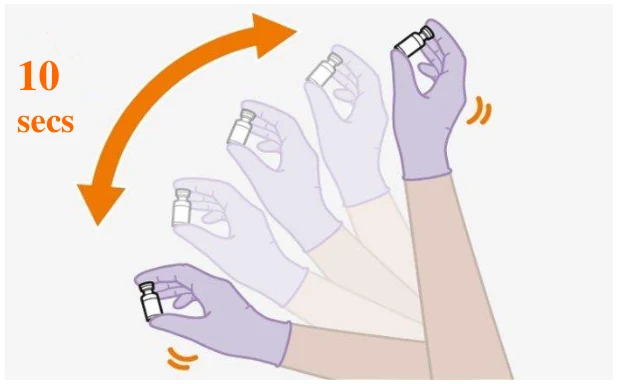
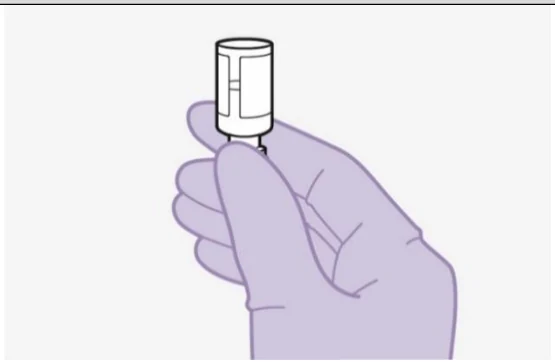
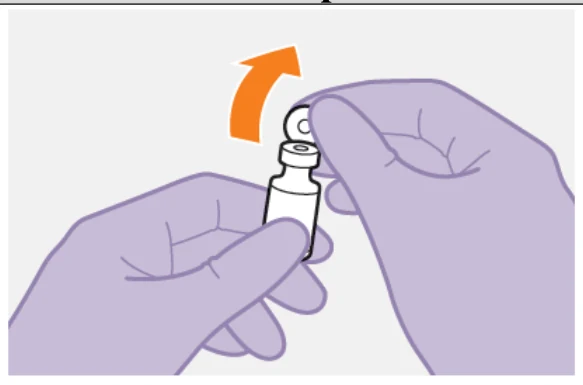
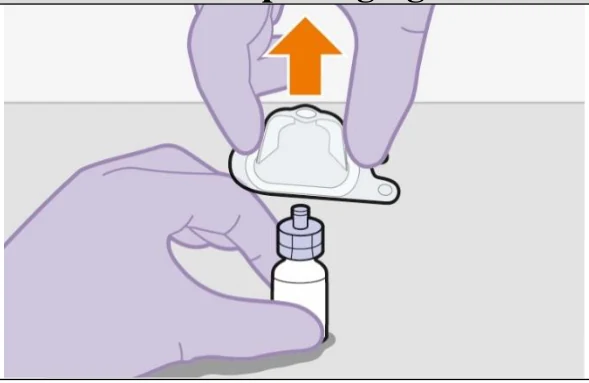
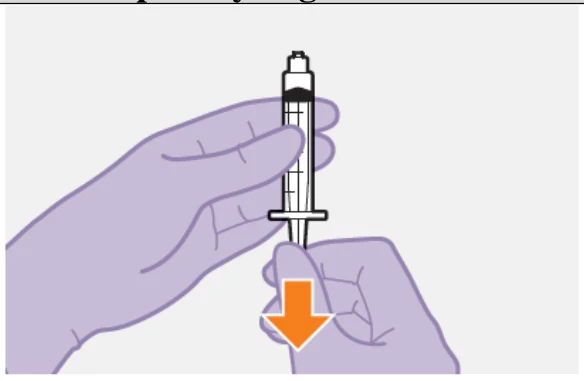
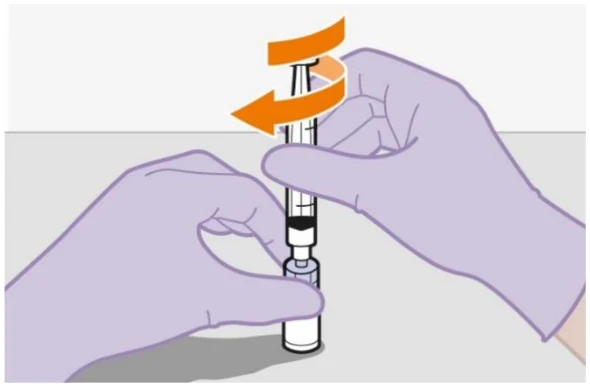
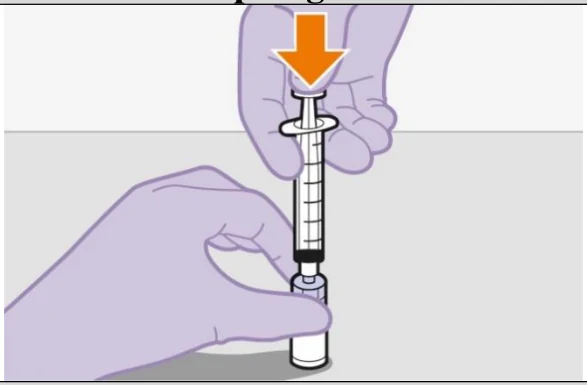
Overview A complete dose requires two injections: 2 mL of cabotegravir and 2 mL of rilpivirine. Cabotegravir and rilpivirine are suspensions that do not need further dilution or reconstitution. The preparation steps for both medicines are the same. Carefully follow these instructions when preparing the suspension for injection to avoid leakage. Cabotegravir and rilpivirine are for intramuscular use only. Both injections must be administered to separate gluteal injection sites. Note: The ventrogluteal site is recommended. The administration order is not important. | |
|---|---|
| Storage information | |
| |
| Do not freeze. |
| Your pack contains |
|---|
|
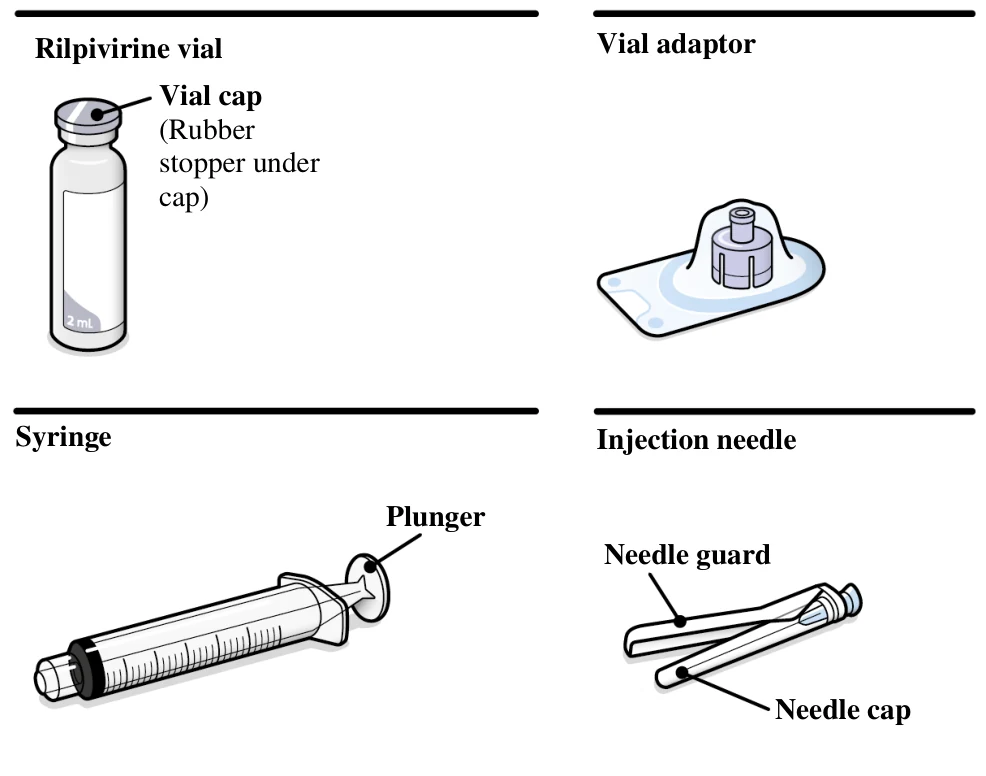 |
| You will also need | |
|---|---|
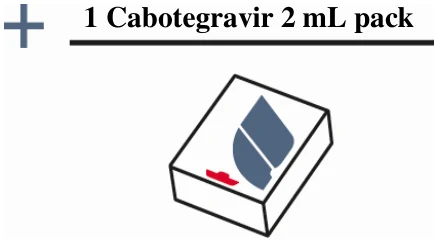 Make sure to have the cabotegravir pack close by before starting. 1 Cabotegravir 2 mL pack | |
| Preparation | |
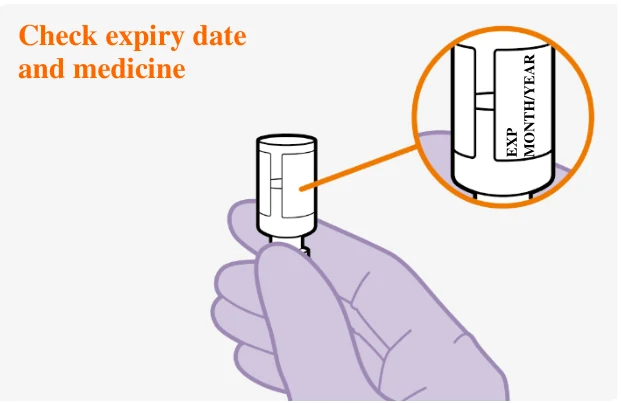 | |
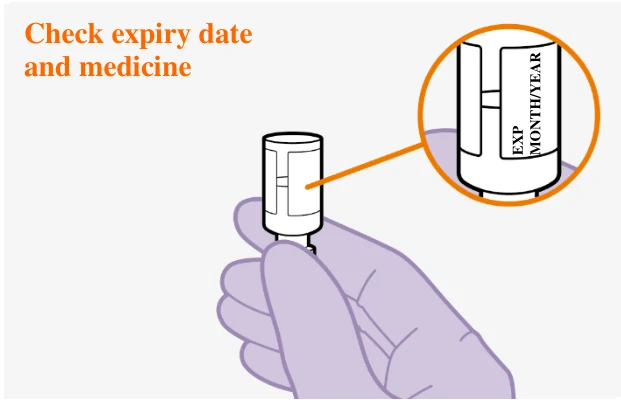 |
|
| |
 |
|
| |
|---|---|
 10 secs |
|
| |
 Note: Vial preparation order is not important. | |
| |
 Do not allow anything to touch the rubber stopper after wiping it. | |
| ||
|---|---|---|
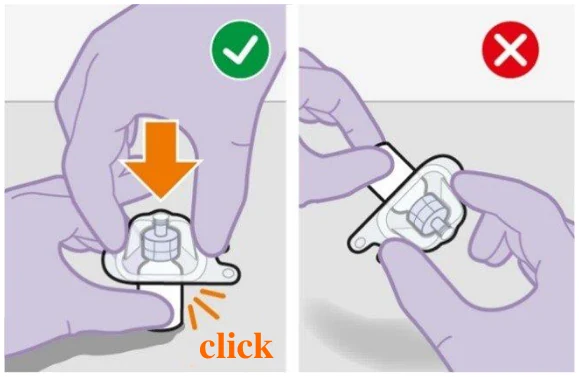
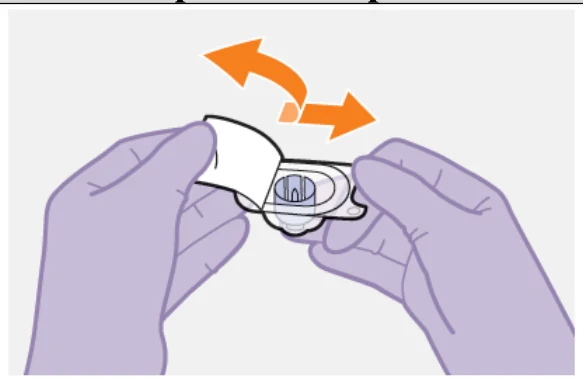
 Note: Do not remove the adaptor from its packaging for the next step. The adaptor will not fall out when the packaging is turned upside down. | ||
| ||
 click |
| |
| ||
| ||
| |
|---|---|
| |
| |
| |
| |
| |
| |
Note: Keep the syringe upright to avoid leakage. | |
| ||
|---|---|---|
 Note: Check that the suspension looks uniform and milky white. | ||
| ||
| ||
| Injection | ||
| ||
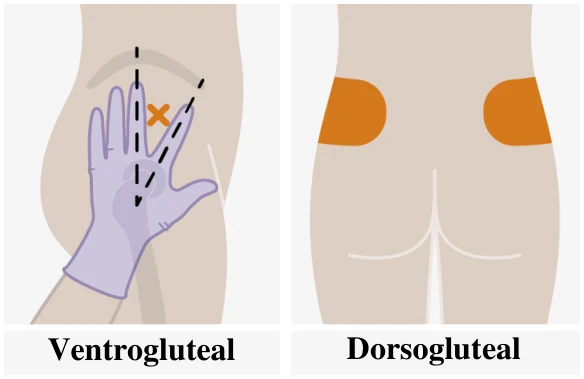 | Injections must be administered to the gluteal sites. Select from the following areas for the injection:
 Note: For gluteal intramuscular use only. Do not inject intravenously. | |
| ||
| ||
| |
|---|---|
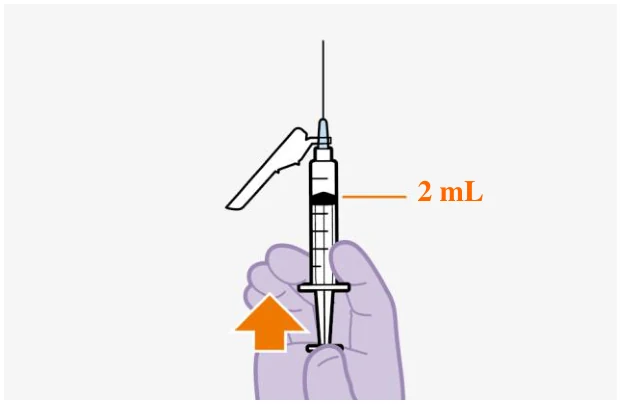 |
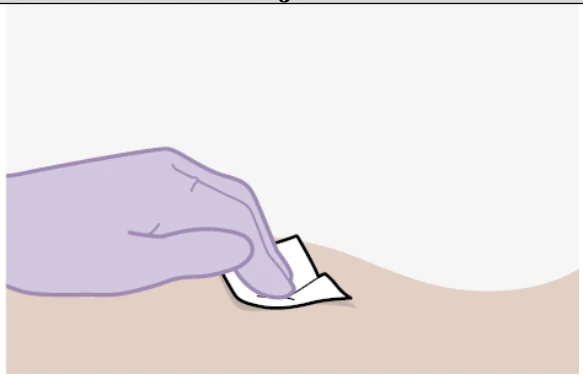
 Note: Clean the injection site with an alcohol swab. Allow the skin to air dry before continuing. |
| |
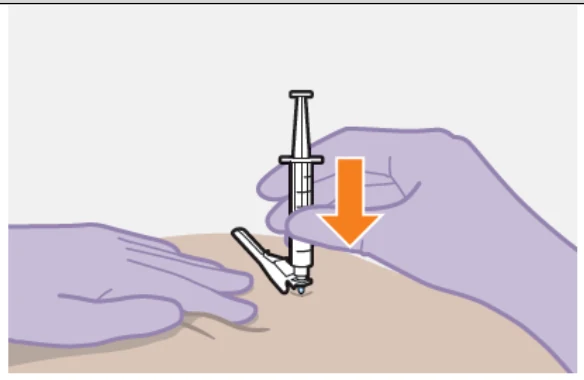
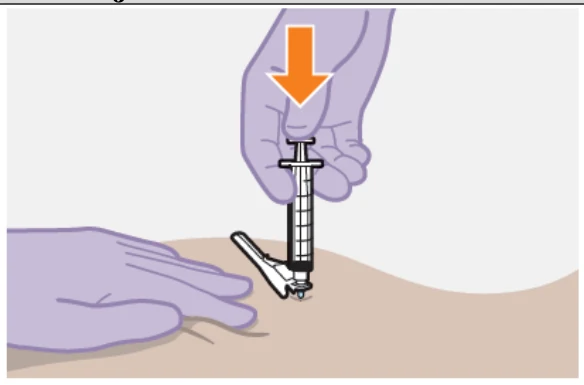
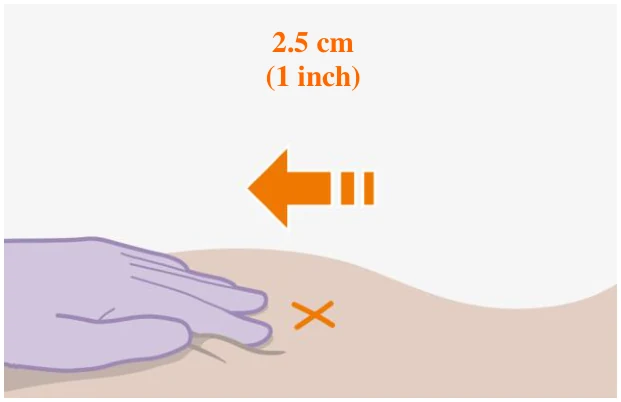 2.5 cm (1 inch) | Use the z-track injection technique to minimise medicine leakage from the injection site.
|
| |
| |
| |
| |
| |
|---|---|
| |
| |
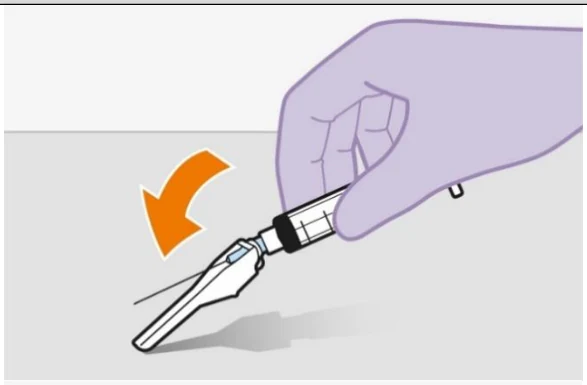 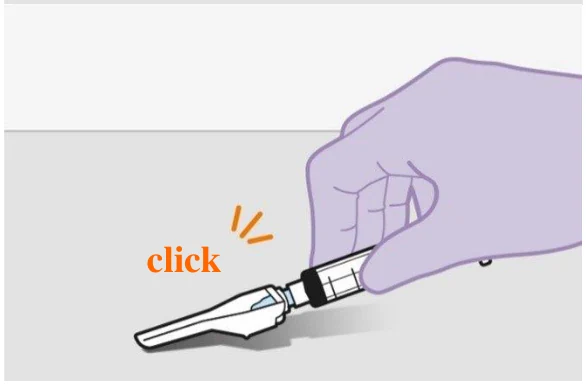 click |
|
| After injection | |
| |
| |
| Repeat for 2nd medicine | |
|---|---|
 Repeat all steps for 2nd medicine | If you have not yet injected cabotegravir follow its own specific instructions for use for preparation and injection of the medicine. |
| Questions and Answers | |
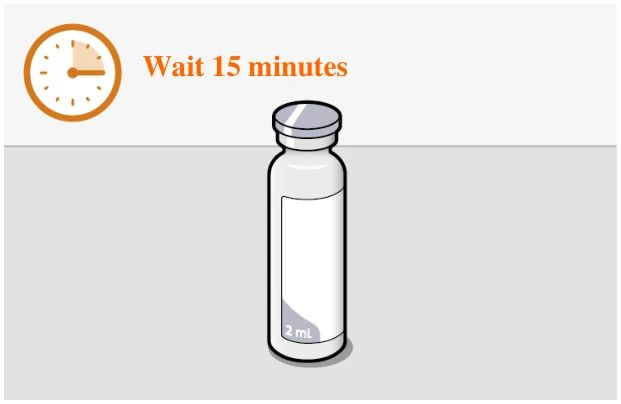
It is best to inject the medicine as soon as it reaches room temperature. However, the vial may sit in the carton at room temperature (maximum temperature of 25°C) for up to 6 hours; do not put back into the refrigerator. If not used within 6 hours, the vial must be discarded.
It is best to inject the (room temperature) medicine as soon as possible after drawing it up. However, the medicine can remain in the syringe for up to 2 hours before injecting. If 2 hours are exceeded, the medicine, syringe and needle must be discarded.
Injecting 1 mL of air into the vial makes it easier to draw up the dose into the syringe. Without the air, some liquid may flow back into the vial unintentionally, leaving less than intended in the syringe.
No, the order is unimportant.
It is best to let the vial come to room temperature naturally. However, you can use the warmth of your hands to speed up the warm up time, but make sure the vial does not get above 25°C. Do not use any other heating methods.
The ventrogluteal approach, into the gluteus medius muscle, is recommended because it is located away from major nerves and blood vessels. A dorsogluteal approach, into the gluteus maximus muscle, is acceptable, if preferred by the healthcare professional. The injection should not be administered in any other site. | |
 | |
|---|---|
 |
 | |
|---|---|
 |
 | |
|---|---|
 | |
 | |
 |
 | |
|---|---|
 | |
 |
 | |
|---|---|
 |
 | |
|---|---|
 |