


Patient leaflet - Ranluspec 10 mg/ml solution for injection
1. What Ranluspec is and what it is used for What Ranluspec is
Ranluspec is a solution which is injected into the eye. Ranluspec belongs to a group of medicines called antineovascularisation agents. It contains the active substance called ranibizumab.
What Ranluspec is used for
Ranluspec is used in adults to treat several eye diseases causing vision impairment.
These diseases result from damage to the retina (light-sensitive layer at the back of the eye) caused by:
- Growth of leaky, abnormal blood vessels. This is observed in diseases such as age-related macular degeneration (AMD) and proliferative diabetic retinopathy (PDR, a disease caused by diabetes). It may also be associated with choroidal neovascularisation (CNV) due to pathologic myopia (PM), angioid streaks, central serous chorioretinopathy or inflammatory CNV.
- Macular oedema (swelling of the centre of the retina). This swelling can be caused by diabetes (a disease called diabetic macular oedema (DME)) or by the blockage of retinal veins of the retina (a disease called retinal vein occlusion (RVO)).
How Ranluspec works
Ranluspec specifically recognises and binds to a protein called human vascular endothelial growth factor A (VEGF-A) present in the eye. In excess, VEGF-A causes abnormal blood vessel growth and swelling in the eye which can lead to impairment of vision in diseases like AMD, DME, PDR, RVO, PM and CNV. By binding to VEGF-A, Ranluspec can block its actions and prevent this abnormal growth and swelling.
In these diseases, Ranluspec can help to stabilise and in many cases improve your vision.
2. What you need to know before you are given Ranluspec
You must not receive Ranluspec
- If you are allergic to ranibizumab or any of the other ingredients of this medicine (listed in section 6).
- If you have an infection in or around your eye.
- If you have pain or redness (severe intraocular inflammation) in your eye.
Warnings and precautions
Talk to your doctor before you are given Ranluspec.
- Ranluspec is given as an injection into the eye. Occasionally, an infection in the internal portion of the eye, pain or redness (inflammation), detachment or tear of one of the layers in the back of the eye (retinal detachment or tear and retinal pigment epithelial detachment or tear), or clouding of the lens (cataract) may occur after Ranluspec treatment. It is important to identify and treat such an infection or retinal detachment as soon as possible. Please tell your doctor immediately if you develop signs such as eye pain or increased discomfort, worsening eye redness, blurred or decreased vision, an increased number of small particles in your vision or increased sensitivity to light.
- In some patients the eye pressure may increase for a short period directly after the injection. This is something you may not notice, therefore your doctor may monitor this after each injection.
- Inform your doctor if you have a prior history of eye conditions or eye treatments, or if you have had a stroke or experienced transient signs of stroke (weakness or paralysis of limbs or face, difficulty speaking or understanding). This information will be taken into account to evaluate if Ranluspec is the appropriate treatment for you.
Please see section 4 (“Possible side effects”) for more detailed information on side effects that could occur during Ranluspec therapy.
Children and adolescents (below 18 years of age)
The use of Ranluspec in children and adolescents has not been established and is therefore not recommended.
Other medicines and Ranluspec
Tell your doctor if you are using, have recently used or might use any other medicines.
Pregnancy and breast-feeding
- Women who could become pregnant must use effective contraception during treatment and for at least three further months after the last injection of Ranluspec.
- There is no experience of using Ranluspec in pregnant women. Ranluspec should not be used during pregnancy unless the potential benefit outweighs the potential risk to the unborn child. If you are pregnant, think you may be pregnant or planning to become pregnant, discuss this with your doctor before treatment with Ranluspec.
- Small amounts of Ranluspec may pass into breast milk, therefore Ranluspec is not recommended during breast-feeding. Ask your doctor or pharmacist for advice before Ranluspec treatment.
Driving and using machines
After Ranluspec treatment you may experience some temporary vision blurring. If this happens, do not drive or use machines until this resolves.
This medicine contains polysorbate 20
This medicine contains 0.005 mg of polysorbate 20 in each dose of 0.05 ml which is equivalent to 0.1 mg/ml. Polysorbates may cause allergic reactions. Tell your doctor if you have any known allergies.
3. How Ranluspec is given
Ranluspec is administered as a single injection into your eye by your eye doctor under a local anaesthetic. The usual dose of an injection is 0.05 ml (which contains 0.5 mg of ranibizumab). The interval between two doses injected into the same eye should be at least four weeks. All injections will be administered by your eye doctor.
Before the injection, your doctor will wash your eye carefully to prevent infection. Your doctor will also give you a local anaesthetic to reduce or prevent any pain you might have with the injection.
The treatment is started with one injection of Ranluspec per month. Your doctor will monitor the condition of your eye and, depending on how you respond to the treatment, will decide if and when you need to receive further treatment. Detailed instructions for use are given at the end of the leaflet under “How to prepare and administer Ranluspec”.
Elderly (age 65 years and over)
Ranluspec can be used for people of 65 years of age and over without dose adjustment.
Before stopping Ranluspec treatment
If you are considering stopping Ranluspec treatment, please go to your next appointment and discuss this with your doctor. Your doctor will advise you and decide how long you should be treated with Ranluspec.
If you have any further questions on the use of this medicine, ask your doctor.
4. Possible side effects
Like all medicines, this medicine can cause side effects, although not everybody gets them.
The side effects associated with the administration of Ranluspec are either due to the medicine itself or the injection procedure and mostly affect the eye.
The most serious side effects are described below:
Common serious side effects (may affect up to 1 in 10 people): Detachment or tear of the layer in the back of the eye (retinal detachment or tear), resulting in flashes of light with floaters progressing to a temporary loss of sight, or a clouding of the lens (cataract).
Uncommon serious side effects (may affect up to 1 in 100 people): Blindness, infection of the eyeball (endophthalmitis) with inflammation of the inside of the eye.
The symptoms you might experience are pain or increased discomfort in your eye, worsening eye redness, blurred or decreased vision, an increased number of small particles in your vision or increased sensitivity to light. Please tell your doctor immediately if you develop any of these side effects.
The most frequently reported side effects are described below:
Very common side effects (may affect more than 1 in 10 people)
Visual side effects include: Inflammation of the eye, bleeding in the back of the eye (retinal bleeding), visual disturbances, eye pain, small particles or spots in your vision (floaters), bloodshot eye, eye irritation, a feeling of having something in the eye, increased tear production, inflammation or infection of the eyelid margins, dry eye, redness or itching of the eye and increased eye pressure. Non-visual side effects include: Sore throat, nasal congestion, runny nose, headache and joint pain.
Other side effects which may occur following Ranluspec treatment are described below:
Common side effects
Visual side effects include: Decreased sharpness of vision, swelling of a section of the eye (uvea, cornea), inflammation of the cornea (front part of eye), small marks on the surface of the eye, blurred vision, bleeding at the site of injection, bleeding in the eye, discharge from the eye with itching, redness and swelling (conjunctivitis), light sensitivity, eye discomfort, swelling of the eyelid, eyelidpain.
Non-visual side effects include: Urinary tract infection, low red blood cells count (with symptoms such as tiredness, breathlessness, dizziness, pale skin), anxiety, cough, nausea, allergic reactions like rash, hives, itching and skin reddening.
Uncommon side effects
Visual side effects include: Inflammation and bleeding in the front part of the eye, sac of pus on the eye, changes of the central part of the eye surface, pain or irritation at the site of injection, abnormal sensation in the eye, irritation of the eyelid.
Reporting of side effects
If you get any side effects, talk to your doctor. This includes any possible side effects not listed in this leaflet. You can also report side effects directly via the Yellow Card Scheme at: www.mhra.gov.uk/yellowcard or search for MHRA Yellow Card in the Google Play or Apple App Store. By reporting side effects you can help provide more information on the safety of this medicine.
5. How to store Ranluspec
- Keep this medicine out of the sight and reach of children.
- Do not use this medicine after the expiry date which is stated on the carton and vial label after EXP. The expiry date refers to the last day of that month.
- Store in a refrigerator (2 °C – 8 °C). Do not freeze.
- Prior to use, the unopened vial may be kept at room temperature (25 °C) for up to 24 hours.
- Keep the vial in the outer carton in order to protect from light.
- Do not use any pack that is damaged.
6. Contents of the pack and other information
What Ranluspec contains
- The active substance is ranibizumab. Each ml contains 10 mg ranibizumab. Each vial contains 2.3 mg ranibizumab in 0.23 ml solution. This provides a suitable amount to deliver a single dose of 0.05 ml containing 0.5 mg ranibizumab.
- The other ingredients are α,α-trehalose dihydrate; histidine hydrochloride, monohydrate; histidine; polysorbate 20; water for injections.
What Ranluspec looks like and contents of the pack
Ranluspec is a solution for injection in a vial (0.23 ml). The solution is clear to slightly opalescent, colourless to pale brownish and aqueous.
| Market/Customer : | UK | Location : | Nagpur Plant II | |||
| Prepared On : | 18/06/2026 | Tracking No. : | 07 | |||
| Product Name : | LEAFLET RANLUSPEC INJ VIAL PACK-UK | |||||
| NA | ||||||
| 284224 | ||||||
| Code -128 | ||||||
| Pack Insert | ||||||
| 12 & 13 PT | ||||||
| Yes | ||||||
| NA | ||||||
Unicorn Creation D/Lupin/Regulatory/UK/RANLUSPEC Injection/ | ||||||
Ranluspec is available as a pack containing one glass vial of ranibizumab with chlorobutyl rubber stopper. The vial is for single use 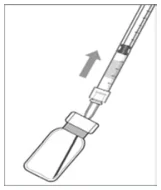 only.
Marketing Authorisation Holder
Lupin Healthcare (UK) Ltd.
The Urban Building, 2nd floor
3-9 Albert Street, Slough,
Berkshire SL1 2BE,
United Kingdom
Manufacturer
Hormosan Pharma GmbH
Hanauer Landstraße 139-143
Frankfurt am Main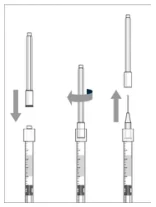
D-60314
Germany
This leaflet was last revised in June 2026
THE FOLLOWING INFORMATION IS INTENDED FOR HEALTHCARE PROFESSIONALS ONLY:
Please also refer to section 3 “How Ranluspec is given”.
Ranluspec must be administered by a qualified ophthalmologist experienced in intravitreal injections.
In wet AMD, in CNV, in PDR and in visual impairment due to DME or to macular oedema secondary to RVO the recommended dose for Ranluspec is 0.5 mg given as a single intravitreal injection. This corresponds to an injection volume of 0.05 ml. The interval 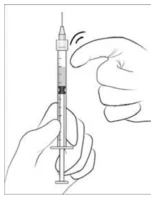 between two doses injected into the same eye should be at least four weeks.
Treatment is initiated with one injection per month until maximum visual acuity is achieved and/or there are no signs of disease activity i.e. no change in visual acuity and in other signs and symptoms of the disease under continued treatment. In patients with wet AMD, DME, PDR and RVO, initially, three or more consecutive, monthly injections may be needed. Thereafter, monitoring and treatment intervals should be determined by the physician and should be based on disease activity, as assessed by visual acuity and/or anatomical parameters.
If, in the physician's opinion, visual and anatomical parameters indicate that the patient is not benefiting from continued treatment, Ranluspec should be discontinued.
Monitoring for disease activity may include clinical examination, functional testing or imaging techniques (e.g. optical coherence tomography or fluorescein angiography).
If patients are being treated according to a treat-and-extend regimen, once maximum visual acuity is achieved and/or there are no signs of disease activity, the treatment intervals can be extended stepwise until signs of disease activity or visual impairment recur. 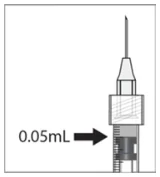 The treatment interval should be extended by no more than two weeks at a time for wet AMD and may be extended by up to one month at a time for DME. For PDR and RVO, treatment intervals may also be gradually extended, however there are insufficient data to conclude on the length of these intervals. If disease activity recurs, the treatment interval should be shortened accordingly. The treatment of visual impairment due to CNV should be determined individually per patient based on disease activity. Some patients may only need one injection during the first 12 months; others may need more frequent treatment, including a monthly injection. For CNV secondary to pathologic myopia (PM), many patients may only need one or two injections during the first year.
Ranluspec and laser photocoagulation in DME and macular oedema secondary to BRVO
There is some experience of Ranluspec administered concomitantly with laser photocoagulation. When given on the same day, Ranluspec should be administered at least 30 minutes after laser photocoagulation. Ranluspec can be administered in patients who have received previous laser photocoagulation.
Ranluspec and verteporfin photodynamic therapy in CNV secondary to PM
There is no experience of concomitant administration of Ranluspec and verteporfin.
Ranluspec should be inspected visually for particulate matter and discoloration prior to administration. The injection procedure should be carried out under aseptic conditions, which includes the use of surgical hand disinfection, sterile gloves, a sterile drape and a sterile eyelid speculum (or equivalent) and the availability of sterile paracentesis (if required). The patient's medical history for hypersensitivity reactions should be carefully evaluated prior to performing the intravitreal procedure. Adequate anaesthesia and a broad-spectrum topical microbicide to disinfect the periocular skin, eyelid and ocular surface should be administered prior to the injection, in accordance with local practice.
The vial is for single use only. After injection any unused product must be discarded. Any vial showing signs of damage or tampering must not be used. The sterility cannot be guaranteed unless the packaging seal remains intact. For preparation and intravitreal injection the following medical devices for single use are needed:
- a 5 µm filter needle (18G × 1½″, 1.2 mm x 40 mm)
- a 1 ml sterile syringe (including a 0.05 ml mark)
- an injection needle (30G × ½″).
These medical devices are not included within the Ranluspec pack.
To prepare Ranluspec for intravitreal administration to adult patients, please adhere to the following instructions:
The injection needle should be inserted 3.5-4.0 mm posterior to the limbus into the vitreous cavity, avoiding the horizontal meridian and aiming towards the centre of the globe. The injection volume of 0.05 ml is then delivered; a different scleral site should be used for subsequent injections.
After injection, do not recap the needle or detach it from the syringe. Dispose of the used syringe together with the needle in a sharps disposal container or in accordance with local requirements.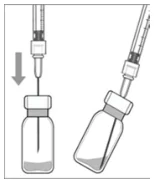
440 mm
Code No. MH/DRUGS/25-ND/59 ID#: 284224 How to prepare and administer Ranluspec
Single-use vial for intravitreal use only
Before withdrawal, disinfect the outer part of the rubber stopper of the vial. Place a 5-micron filter needle (18-gauge × 1-1/2 inch) onto a 1 ml Luer lock syringe using aseptic technique.
Push the filter needle into the center of the vial stopper until the needle touches the bottom edge of the vial.
Withdraw all the liquid from the vial, keeping the vial in an upright position, slightly inclined to ease complete withdrawal
Ensure that the plunger rod is drawn sufficiently back when emptying the vial in order to completely empty the filter needle. The filter needle should be discarded after withdrawal of the vial contents and must not be used for the intravitreal injection. | |
Attach a 30-gauge × 1/2-inch sterile injection needle firmly onto the syringe by screwing it tightly onto the Luer lock. Carefully remove the needle cap by pulling it straight off. Do not wipe the needle at any time. Note: Grip at the hub of the injection needle while removing the cap. | |
Hold the syringe with the needle pointing up. If there are any air bubbles, gently tap the syringe with your finger until the bubbles rise to the top. Note: Do not wipe the injection needle. Do not pull back on the plunger. | |
| Hold the syringe at eye level, and carefully push the plunger rod until the plunger tip is aligned with the line that marks 0.05 ml on the syringe. |
| Market/Customer : | UK | Location : | Nagpur Plant II | |||
| Prepared On : | 18/06/2026 | Tracking No. : | 07 | |||
| Product Name : | LEAFLET RANLUSPEC INJ VIAL PACK-UK | |||||
| NA | ||||||
| 284224 | ||||||
| Code -128 | ||||||
| Pack Insert | ||||||
| 12 & 13 PT | ||||||
| Yes | ||||||
| NA | ||||||
Unicorn Creation D/Lupin/Regulatory/UK/RANLUSPEC Injection/ | ||||||