

Patient leaflet - Prostap SR DCS
1. WHAT PROSTAP SR IS AND WHAT IT IS USED FOR
Prostap SR is a synthetic hormone which can be used to reduce the levels of testosterone and estrogen (sex steroids) circulating in the body.
Use in adults:
Prostap SR is used to treat prostate cancer in men and to treat hormone responsive early stage breast cancer in pre and perimenopausal women at higher risk of recurrence and hormone responsive advanced breast cancer in pre and perimenopausal women. It can also be used in women to reduce the thickness of the lining (endometrium) of the womb (uterus) in preparation for surgery and to treat endometriosis and uterine fibroids. Prostap SR can additionally be used to preserve ovarian function in pre-menopausal women with cancer who are having chemotherapy.
Use in children:
Prostap SR is used to treat premature puberty which is caused by a release of certain hormones from the pituitary gland (central precocious puberty) in girls under 9 years of age and boys under 10 years of age.
Your doctor will make a precise diagnosis of central precocious puberty.
2. WHAT YOU NEED TO KNOW BEFORE YOU ARE GIVEN PROSTAP SR
Do not use Prostap SR:
- If you are allergic (hypersensitive) to leuprorelin or any of the other ingredients of Prostap SR (listed in section 6).
- If you are allergic (hypersensitive) to similar medicines to leuprorelin (such as goserelin, triptorelin) or medicines/products related to a natural hormone called gonadotrophin releasing hormone (GnRH).
- If you are pregnant, planning to become pregnant or are breastfeeding.
- If you have abnormal vaginal bleeding which you have not discussed with your doctor (see ‘Warnings and Precautions’ section below).
In pre and perimenopausal women receiving Prostap SR for the treatment of breast cancer:
- your estrogen levels must have been adequately suppressed with Prostap SR before you start treatment with an aromatase inhibitor such as exemestane and should be checked every three months during combination treatment with Prostap SR and an aromatase inhibitor (see Warnings and precautions section below for more information).
In girls with central precocious puberty:
- if the girl to be treated is pregnant or breast-feeding.
- if the girl has abnormal vaginal bleeding which has not been discussed with her doctor (see Warnings and Precautions section below).
Warnings and precautions:
When you or your child begin treatment with Prostap SR, existing symptoms may initially get worse as a result of levels of sex steroids in the body increasing. These worsening symptoms usually subside with continued use of Prostap SR (see section 4 for further information).
Severe skin rashes including Stevens-Johnson syndrome, Toxic Epidermal Necrolysis (SJS/TEN) have been reported in association with leuprorelin. Stop using leuprorelin and seek medical attention immediately if you notice any of the symptoms related to these serious skin reactions described in section 4.
Talk to your doctor or nurse before being given Prostap SR:
Men, women and children:
- If you or your child have a seizure (fit), tell your doctor. There have been reports of seizures in patients receiving Prostap SR. These occurred in patients with or without epilepsy or other reasons that increase the risk of having seizures.
- If you or your child develop depressed mood, tell your doctor. There have been reports of depression in patients receiving Prostap SR, which may be severe.
- If you (or your child) suffer from a bad or recurrent headache, problems with your eyesight and ringing or buzzing in the ears contact your doctor immediately.
- If you have a fatty liver.
Both men and women:
Prostap SR may cause changes in blood pressure, blood fats (lipids or cholesterol) or blood glucose levels, similar to that seen when sex steroid levels naturally decrease (e.g. in women post menopause).
- o Your doctor may monitor you during treatment, as these changes may increase the risk of developing heart problems or changes in blood sugar control.
o You should tell your doctor before receiving Prostap SR, as you may need more frequent monitoring, if you have:
- Heart problems.
- Diabetes.
- If you have diabetes, tell your doctor. Prostap SR can cause changes in blood glucose levels and your blood sugar levels may need to be monitored more frequently. If during treatment with Prostap SR you develop signs of diabetes, which include feeling very tired, losing weight, feeling very thirsty or needing the toilet more frequently than usual, tell your doctor. Your doctor may need to monitor your blood sugar levels.
- If you have heart problems, tell your doctor. Prostap SR may cause changes in blood pressure or blood fats (lipids or cholesterol) and may increase the risk of developing heart problems. Your doctor may monitor you during treatment or monitor you more frequently.
- If during treatment with Prostap SR you develop signs of heart problems, which include having chest pain, irregular heartbeat, nausea, fatigue or severe headache, tell your doctor. Your doctor may monitor you.
If you are at an increased risk of thinning of the bones (osteoporosis) you should tell your doctor before you are given Prostap SR. Prostap SR may cause thinning of the bones. Risk factors include:
- o If you or any of your close family have thinning of the bones.
o If you drink excessive amounts of alcohol, and/or smoke heavily.
- o If you take medicines over a long period of time that may cause thinning of the bones, for example medicines for epilepsy or steroids (such as hydrocortisone or prednisolone).
Women only:
- If you have abnormal vaginal bleeding, tell your doctor before receiving Prostap SR. Your doctor should confirm why you are bleeding before you are given this medicine to make sure that it is suitable for you.
- If you are a woman with submucous fibroids (benign tumours in the muscle underneath the lining of the womb), Prostap SR can cause severe bleeding when the fibroids break-down. Contact your doctor immediately if you experience severe or unusual bleeding or pain.
- If you are a woman and continue to have periods (menstruate) after starting treatment with Prostap SR, you should tell your doctor.
- If you are a woman of child-bearing age, you should use non-hormonal contraception whilst receiving Prostap SR. Although Prostap SR causes periods to stop, it is not itself a contraceptive. Once your treatment with Prostap SR has ended you should continue to use non-hormonal contraception until your periods start again. If you are unsure about this talk to your doctor.
If you are being given Prostap SR for the treatment of breast cancer:
o Your doctor may assess your bone density and ovarian function before you start treatment with Prostap SR and monitor your bone density and ovarian function throughout treatment.
- o Prostap SR must be started at least 6-8 weeks before you start treatment with an aromatase inhibitor and should continue throughout treatment with the aromatase inhibitor.
- o If you have had chemotherapy, Prostap SR treatment should only commence once you have completed chemotherapy and pre-menopausal status has been confirmed.
- o The recommended duration of treatment with Prostap SR in combination with other hormone treatments for breast cancer is up to 5 years.
- o If you are being given Prostap SR in combination with an aromatase inhibitor, your doctor may monitor your blood pressure, heart function and blood glucose levels during treatment. If you have depression or a history of depression, please inform your doctor so that they can additionally monitor your symptoms of depression during treatment with Prostap SR.
- o If you are unsure about this, speak to your doctor.
Men only:
- In the rare event of an abscess occurring at the injection site your doctor may measure your testosterone levels as there could be reduced absorption of leuprorelin from the injection site.
- If you are a man with urinary obstruction or spinal cord compression due to your prostate cancer spreading, your doctor will supervise you closely for the first few weeks of treatment. If you experience difficulty passing urine, bone pain, weakness of lower limbs or pins and needles you should tell your doctor.
- If you are a man with prostate cancer, and have had injections of a synthetic hormone in the past that has not worked, or you have had an operation to remove your testicles you should tell your doctor.
- Please tell your doctor if you have any heart or blood vessel conditions, including heart rhythm problems (arrhythmia), or are being treated with medicines for these conditions. The risk of heart rhythm problems may be increased when using Prostap SR.
In children:
- In the event of a sterile abscess at the injection site (mostly reported after injection into the muscle) your doctor will monitor hormone levels as there could be reduced absorption of leuprorelin from the injection site.
- Often sterile abscesses at the injection site occurred when Prostap SR is administered in higher dosages than recommended and when it is administered into the muscle. Your doctor will therefore administer the medicinal product under the skin of e.g. abdomen, bottom or thigh.
- If a child has progressive brain tumour, the doctor will decide if treatment with leuprorelin is appropriate.
- Bone density may decrease during treatment of central precocious puberty with Prostap SR. However, after treatment is stopped, subsequent bone mass growth is preserved and peak bone mass in late adolescence does not seem to be affected by treatment.
In girls with central precocious puberty:
- After the first injection vaginal bleeding (spotting) and discharge may occur as a sign of hormone withdrawal. Vaginal bleeding beyond the first/second month of treatment needs to be investigated.
- Discontinuation of treatment may lead to a slipping of the growth plate of the thigh bone. A possible cause could be a weakness of the growth plate due to a lower concentration of female sexual hormones during treatment.
Other medicines and Prostap SR
Please tell your doctor or pharmacist if you are taking or have recently taken any other medicines, including medicines obtained without a prescription.
Prostap SR might interfere with some medicines used to treat heart rhythm problems (e.g. quinidine, procainamide, amiodarone and sotalol) or might increase the risk of heart rhythm problems when used with some other drugs (e.g. methadone (used for pain relief and part of drug addiction detoxification), moxifloxacin (an antibiotic), antipsychotics used for serious mental illnesses).
Pregnancy and breastfeeding
Prostap SR must not be given to pregnant or breast-feeding women or girls (see also section ‘Do not use Prostap SR’).
Driving and using machines
Do not drive or operate machinery if you experience tiredness, dizziness or visual disturbances whilst being treated with Prostap SR.
Prostap SR contains sodium
This medicine contains less than 1mmol sodium (23mg) per injection, that is to say it is essentially ‘sodium-free’.
3. HOW TO USE PROSTAP SR
Prostap SR should only be administered by your doctor or a nurse who will also take care of the preparation of the product.
The doctor or nurse will give you an injection of Prostap SR. The injection should be given immediately after it has been prepared. The injection will normally be given in your arm, thigh or abdomen. The injection site should be varied at regular intervals.
You will normally be given an injection once a month. If you are to be given Prostap SR to reduce the thickness of the lining of the womb (in preparation for surgery) you will receive a single injection 5-6 weeks before your surgery with treatment given during the first three to five days of the menstrual cycle.
If you have early breast cancer, you will be given Prostap SR once a month in combination with tamoxifen or an aromatase inhibitor. A minimum of two injections of Prostap SR with one month between each injection should be given before you start treatment with an aromatase inhibitor or tamoxifen.
If you have advanced breast cancer, you will be given Prostap SR once a month as an add-on to your other breast cancer treatment.
If you have endometriosis you will be given an injection of Prostap SR for a period of up to 6 months only and treatment will be initiated during the first five days of the menstrual cycle.
If you have uterine fibroids you will be given an injection of Prostap SR once a month usually for 3-4 months before surgery.
If you are being given Prostap SR to preserve ovarian function whilst receiving chemotherapy, you will normally be given one injection of Prostap SR two weeks before starting chemotherapy and then every month for the duration of your chemotherapy treatment.
Use in children
Treatment of children should be under the overall supervision of the paediatric endocrinologist.
The dosing scheme needs to be adapted individually.
The recommended starting dose is dependent on the body weight:
- a) Children with a body weight 20kg or more
Unless prescribed otherwise, 1ml Prostap SR (3.75mg leuprorelin acetate) is administered once a month under the skin of e.g. abdomen, bottom or thigh as a single injection.
- b) Children with a body weight less than 20kg
Taking into account the clinical activity of the central precocious puberty in these rare cases, the following applies:
Unless prescribed otherwise, 0.5ml Prostap SR (1.88mg leuprorelin acetate) is administered once a month under the skin of e.g. abdomen, bottom or thigh as a single injection. The remainder of the suspension will be discarded. Your doctor will monitor the child’s weight gain.
Depending on the central precocious puberty activity, your doctor may increase the dosage in the presence of inadequate suppression (e.g. vaginal bleeding). Your doctor will determine the minimal effective dose with the help of a blood test.
The duration of treatment depends on the clinical signs at the start of treatment or during the course of treatment and is decided by your doctor together with the legal guardian and, if appropriate, the treated child. Your doctor will determine the bone age of the child in regular intervals.
In girls with bone maturation of older than 12 years and boys with bone maturation of older than 13 years your doctor will consider discontinuing the treatment, depending on the clinical effects in your child.
In girls, pregnancy should be excluded before the start of treatment. The occurrence of pregnancy during treatment cannot be generally excluded. In such cases, please talk to your doctor.
The therapy is a long-term treatment, adjusted individually. Please arrange with your doctor that Prostap SR is administered as precisely as possible in regular monthly periods. An exceptional delay of the injection date for a few days (30 ± 2 days) does not influence the result of the therapy.
If you miss an injection
As soon as you realise you have missed an injection, contact your doctor who will be able to give you your next injection.
Women only:
If a Prostap SR injection is missed, breakthrough bleeding or ovulation may occur with the potential for you to become pregnant. If you think you may be pregnant you should stop using Prostap SR and contact your doctor immediately.
If you stop using Prostap SR
If you are being given Prostap SR for the treatment of advanced or early breast cancer, you must not stop your treatment with Prostap SR whilst you are taking an aromatase inhibitor. If you are going to discontinue treatment with Prostap SR, your aromatase inhibitor treatment must also be discontinued within 1 month of your last Prostap SR injection.
4. POSSIBLE SIDE EFFECTS
Like all medicines, Prostap SR can cause side effects, although not everybody gets them.
Contact your doctor immediately or go to hospital:
- If you develop a severe rash, itching or shortness of breath or difficulty breathing. These could be symptoms of a severe allergic reaction.
- If you have severe difficulty breathing, you are coughing up blood or your heart is beating very fast. These could be signs of a pulmonary embolism.
Tell your doctor:
- If you get a severe headache which does not get better when you take painkillers.
- If you suffer from any unexplained bruising or bleeding or feel generally unwell whilst taking Prostap SR. Although rare, these could be symptoms of changes in the number of red or white blood cells.
If any of the following side effects get serious, or if you notice any side effects not listed in this leaflet, speak to your doctor or pharmacist:
Men:
- When men with prostate cancer first start treatment with Prostap SR, levels of testosterone can increase and in some people this may cause a temporary increase in urinary symptoms. In men with spinal cord compression, you may additionally experience bone pain, weakness in your lower limbs or pins and needles. In some cases, to prevent this from happening, your doctor may give you another type of drug such as cyproterone acetate or flutamide before and just after your first Prostap SR injection. If you do get worsening pain, weakness or loss of feeling in your legs or difficulty passing urine, contact your doctor immediately.
- If you have an existing pituitary lesion, there may be an increased risk of loss of blood to the area, which may cause permanent damage. This is very rare (may affect more than 1 in 10,000 people).
- Blood sugar levels may be altered during treatment with Prostap SR, which may affect control in diabetic patients and require more frequent monitoring.
- If you have a blood test your doctor may notice a change in blood fat (lipids or cholesterol) levels or in values for tests on how the liver is working. These changes do not usually cause any symptoms.
Very common (may affect more than 1 in 10 people)
Weight changes, hot flushes, sweating, muscle weakness, bone pain, loss of interest in sexual intercourse, inability to have an erection, a reduction in size and function of the testes, tiredness or skin reactions at the injection site (these include skin hardening, redness, pain, abscesses, swelling, nodules, ulcers and skin damage).
Common (may affect up to 1 in 10 people)
Loss of appetite, difficulty sleeping, depression, mood changes (with long-term use), headache, nausea, abnormalities in liver function or liver blood tests, joint pain, swelling of the breast tissue or swelling in your ankles or hands.
Uncommon (may affect up to 1 in 100 people)
Fatty liver, mood changes (with short-term use), dizziness, tingling in the hands or feet, diarrhoea, vomiting, muscle ache or weakness in the legs.
Very rare (may affect up to 1 in 10,000 people):
In patients with existing tumours of the pituitary gland, bleeding of the pituitary gland may occur.
Not known (frequency cannot be estimated from the available data)
Blood tests may show anaemia (low red cell counts), low counts in white cells or platelets, allergic reactions (may include symptoms of rash, itching, wheals or a serious allergic reaction which causes difficulty breathing or dizziness), changes in blood fats (lipids or cholesterol) or blood sugar, paralysis, seizure, altered vision, pounding heartbeats, changes in ECG (QT prolongation), blood clots in lungs, high or low blood pressure, jaundice, fracture of the spine, thinning of bone, difficulty passing urine, fever, chills, inflammation of lungs or lung disease, idiopathic intracranial hypertension (increased intracranial pressure around the brain characterised by headache, double vision and other visual symptoms and ringing or buzzing in one or both ears). If you experience reddish non-elevated, target-like or circular patches on the trunk, often with central blisters, skin peeling, ulcers of mouth, throat, nose, genitals and eyes. These serious skin rashes can be preceded by fever and flu-like symptoms (Stevens-Johnson syndrome/Toxic Epidermal Necrolysis).
Skin redness and itchy rash. (Toxic skin eruption)
A skin reaction that causes red spots or patches on the skin, that may look like a target or ‘bulls-eye’ with a dark red centre surrounded by paler red rings (Erythema Multiforme).
Women:
- When women first start treatment with Prostap SR, levels of sex steroids can increase and in some people this may cause a temporary increase in symptoms. These symptoms will stop with continued treatment.
- Many of the side effects of Prostap SR are related to the decrease in estrogen level. Estrogen level returns to normal after treatment is stopped. Common side effects include hot flushes, mood swings, depression and vaginal dryness. As can happen naturally when women reach the menopause, Prostap SR can cause a small amount of bone thinning. Vaginal bleeding may occur during treatment.
- If you have an existing pituitary lesion, there may be an increased risk of loss of blood to the area, which may cause permanent damage. This is very rare (may affect more than 1 in 10,000 people).
- Blood sugar levels may be altered during treatment with Prostap SR, which may affect control in diabetic patients and require more frequent monitoring.
- If you have a blood test your doctor may notice a change in blood fat (lipid or cholesterol) levels or in values for tests on how the liver is working. These changes do not usually cause any symptoms.
Very common (may affect more than 1 in 10 people)
Difficulty sleeping, headaches, hot flushes or bone pain.
Common (may affect up to 1 in 10 people)
Weight changes, mood changes (with long-term use), depression, tingling in hands or feet, dizziness, nausea, joint pain, muscle weakness, breast tenderness, changes in breast size, vaginal dryness, excessive sweating, swelling in ankles or hands or skin reactions at the injection site (these include skin hardening, redness, pain, abscesses, swelling, nodules, ulcers and skin damage)
Uncommon (may affect up to 1 in 100 people)
Fatty liver, loss of appetite, mood changes (with short-term use), changes in blood fats (lipids or cholesterol), altered vision, pounding heartbeats, diarrhoea, vomiting, abnormalities in liver blood tests, hair loss, muscle aches, fever or tiredness
Very rare (may affect up to 1 in 10,000 people):
In patients with existing tumours of the pituitary gland, bleeding of the pituitary gland may occur.
Not known (frequency cannot be estimated from the available data)
Blood tests may show anaemia (low red cell counts), low counts in white cells or platelets, allergic reactions (may include symptoms of rash, itching, wheals or a serious allergic reaction causing difficulty breathing or dizziness), changes in blood sugar, paralysis, blood clots in the lungs, high or low blood pressure, jaundice, abnormalities in liver function, fracture of the spine, seizure, thinning of bone or vaginal bleeding, inflammation or infection of the vagina (which can cause itching, discomfort and discharge), reduced sex drive, chills, inflammation of lungs or lung disease, idiopathic intracranial hypertension (increased intracranial pressure around the brain characterised by headache, double vision and other visual symptoms and ringing or buzzing in one or both ears). If you experience reddish non-elevated, target-like or circular patches on the trunk, often with central blisters, skin peeling, ulcers of mouth, throat, nose, genitals and eyes. These serious skin rashes can be preceded by fever and flu- like symptoms (Stevens-Johnson syndrome/Toxic Epidermal Necrolysis).
Skin redness and itchy rash. (Toxic skin eruption)
A skin reaction that causes red spots or patches on the skin, that may look like a target or ‘bulls-eye’ with a dark red centre surrounded by paler red rings (Erythema Multiforme).
Side effects when used for breast cancer in combination with either tamoxifen or an aromatase inhibitor
The following side effects have been seen when a similar class of medicine called GnRH analogues (Gonadotrophin Releasing Hormone analogues) has been used for breast cancer in combination with either tamoxifen or an aromatase inhibitor:
Very common (may affect more than 1 in 10 people)
Nausea, feeling very tired, joint and muscle pain, osteoporosis, hot flushes, excessive sweating, difficulty in sleeping, depression, decreased libido, dryness of the vagina, pain during or after sexual intercourse, urinary incontinence, increased blood pressure.
Common (may affect up to 1 in 10 people)
Diabetes, high blood sugar (hyperglycaemia), pain, bruising, redness and swelling at injection site, allergic reaction, bone fractures, blood clot in a blood vessel.
Uncommon (may affect up to 1 in 100 people)
Bleed in the brain, lack of blood supply to the brain or the heart.
Rare (may affect up to 1 in 1000 people)
Change in ECG (QT prolongation)
Children
In the initial phase of treatment, a short-term rise in the sex hormone levels occurs, followed by a fall to values within the prepuberty range. Due to this effect, side effects may occur particularly at the start of treatment.
Common (may affect up to 1 in 10 people):
Mood swings, depression,
headache,
abdominal pain/abdominal cramps,
feeling sick/vomiting, acne,
vaginal bleeding,
vaginal spotting,
vaginal discharge,
injection site reactions (these include hardening, redness, pain, abscesses, swelling, nodules, ulcers and skin damage)
Uncommon (may affect up to 1 in 100 people):
Fatty liver
Muscle ache
Very rare (may affect up to 1 in 10,000 people):
General allergic reactions (symptoms include fever, rash, itching, wheals or chills). If your child has, a serious allergic reaction causing difficulty breathing or dizziness, contact your doctor immediately or go to the hospital. In patients with existing tumours of the pituitary gland, bleeding of the pituitary gland may occur.
Not known (frequency cannot be estimated from the available data):
Seizure, inflammation of lungs or lung disease, idiopathic intracranial hypertension (increased intracranial pressure around the brain characterised by headache, double vision and other visual symptoms and ringing or buzzing in one or both ears). If you experience reddish non-elevated, target-like or circular patches on the trunk, often with central blisters, skin peeling, ulcers of mouth, throat, nose, genitals and eyes. These serious skin rashes can be preceded by fever and flu- like symptoms (Stevens-Johnson syndrome/Toxic Epidermal Necrolysis).
Skin redness and itchy rash. (Toxic skin eruption)
A skin reaction that causes red spots or patches on the skin, that may look like a target or ‘bulls-eye’ with a dark red centre surrounded by paler red rings (Erythema Multiforme).
Notes:
In general, if vaginal bleeding (spotting) occurs with continued treatment (after possible withdrawal bleeding in the first month of treatment), this may be a sign of potential underdosage. Please tell your doctor if vaginal bleeding occurs.
Reporting of side effects
If you get any side effects, talk to your doctor or pharmacist. This includes any possible side effects not listed in this leaflet. You can also report side effects directly via the Yellow Card Scheme at: www.mhra.gov.uk/yellowcard or search for MHRA Yellow Card in the Google Play or Apple App Store.
By reporting side effects, you can help provide more information on the safety of this medicine.
5. HOW TO STORE PROSTAP SR
Keep out of the sight and reach of children.
Do not store above 25ºC.
Do not refrigerate or freeze.
Keep the pre-filled syringe in outer carton in order to protect from light.
Once mixed with the sterile solvent, the suspension must be used immediately.
If the pack has been opened or damaged, return it to your pharmacist.
Do not use medicine after the expiry date which is stated on the carton and blister labels after 'Exp'. The expiry date refers to the last day of that month.
If the medicine becomes discoloured or shows any signs of deterioration, seek the advice of your pharmacist.
Remember if your doctor tells you to stop taking this medicine, return any unused medicine to your pharmacist for safe disposal. Only keep this medicine if your doctor tells you to.
Medicines should not be disposed of via wastewater or household waste. Ask your pharmacist how to dispose of medicines no longer required. These measures will help to protect the environment.
6. CONTENTS OF THE PACK AND OTHER INFORMATION
What Prostap SR contains
The active ingredient in the Prostap SR is leuprorelin acetate.
Each syringe contains 3.75mg leuprorelin acetate.
When reconstituted with the solvent, the solution contains 3.75mg/ml of leuprorelin acetate.
The other ingredients are: gelatin, copolymer (DL-lactic acid/glycolic acid 75:25) and mannitol (E421).
Sterile solvent: carmellose sodium, mannitol (E421), polysorbate 80, glacial acetic acid and water for injections.
What Prostap SR looks like and contents of the pack
Prostap SR is a dual chamber pre-filled syringe containing sterile white powder in the front chamber and clear sterile solvent in the rear chamber. The syringe contains a syringe plunger and a 23 gauge syringe needle fitted with a safety device.
Each pack contains
- 1 x dual chamber pre-filled syringe containing 3.75mg leuprorelin acetate powder in the front chamber and 1ml sterile solvent in the rear chamber.
- 1 x 23 gauge syringe needle fitted with safety device.
- 1 x syringe plunger.
Manufactured by: DELPHARM NOVARA S.r.l., Via Crosa, 86, 28065 Cerano (NO), Italy.
Procured from within the EU and repackaged by the Product Licence holder: B&S Healthcare, Unit 4, Bradfield Road, Ruislip, Middlesex, HA4 0NU, UK.
Prostap® SR DCS; PL 18799/3077
Leaflet date: 01.09.2025
Prostap is the registered trademark of Takeda Pharmaceutical Company Limited.
Blind or partially sighted?
Is this leaflet hard to see or read?
Call 0208 515 3763 to obtain the leaflet in a format suitable for you.
POM
1 NAME OF THE MEDICINAL PRODUCT
Prostap® SR DCS 3.75mg Powder and Solvent for Prolonged-release Suspension for Injection in Pre-filled Syringe
2 QUALITATIVE AND QUANTITATIVE COMPOSITION
Prostap SR Powder: Each single-dose syringe contains 3.75mg leuprorelin acetate (equivalent to 3.57mg base).
Sterile Solvent: Each ml contains carmellose sodium 5mg, mannitol (E421) 50mg, polysorbate 80 1mg, acetic acid, glacial up to 0.05mg and water for injections.
When reconstituted with Sterile Solvent, the suspension contains 3.75mg/ml leuprorelin acetate.
For the full list of excipients, see section 6.1
3 PHARMACEUTICAL FORM
Powder and solvent for prolonged-release suspension for injection in pre-filled syringe
Powder: A sterile, lyophilised, white, odourless powder.
Solvent: A colourless, odourless, slightly viscous, sterile solvent.
- 4 CLINICAL PARTICULARS
4.1 Therapeutic indications
- (i) Metastatic prostate cancer.
- (ii) Locally advanced prostate cancer, as an alternative to surgical castration.
- (iii) As an adjuvant treatment to radiotherapy in patients with high-risk localised or locally advanced prostate cancer.
- (iv) As an adjuvant treatment to radical prostatectomy in patients with locally advanced prostate cancer at high risk of disease progression.
- (v) As neo-adjuvant treatment prior to radiotherapy in patients with high-risk localised or locally advanced prostate cancer.
- (vi) Management of endometriosis, including pain relief and reduction of endometriotic lesions.
- (vii) Endometrial preparation prior to intrauterine surgical procedures including endometrial ablation or resection.
- (viii) Preoperative management of uterine fibroids to reduce their size and associated bleeding.
- (ix) Preservation of ovarian function in pre-menopausal women with neoplastic disease undergoing chemotherapy treatment that can cause premature ovarian insufficiency. Prostap SR is not a replacement for standard fertility-preservation methods. Treatment with a GnRH analogue should be proposed after careful evaluation, in each case, of the benefit/risk profile.
- (x) As treatment in pre- and perimenopausal women with advanced breast cancer suitable for hormonal manipulation.
- (xi) As adjuvant treatment in combination with tamoxifen or an aromatase inhibitor, of endocrine responsive early stage breast cancer in pre- and perimenopausal women at higher risk of disease recurrence (young age, high grade tumour, lymph node involvement). In women who have received chemotherapy, premenopausal status must be confirmed after completion of chemotherapy.
In children:
Treatment of central precocious puberty (girls under 9 years of age, boys under 10 years of age).
(See Section 5.1)
4.2 Posology and method of administration
Posology
Prostate Cancer:
The recommended dose is 3.75mg presented as a one month depot injection and administered as a single subcutaneous or intramuscular injection every month. The majority of patients will respond to a 3.75mg dose. Prostap SR therapy should not be discontinued when remission or improvement occurs. As with other drugs administered chronically by injection, the injection site should be varied periodically.
Response to Prostap SR therapy should be monitored by clinical parameters and by measuring prostate-specific antigen (PSA) and testosterone serum levels. Clinical studies with leuprorelin acetate have shown that testosterone levels increased during the first 4 days of treatment in the majority of non- orchidectomised patients. They then decreased and reached castrate levels by 2-4 weeks. Once attained, castrate levels were maintained as long as drug therapy continued. If a patient’s response appears to be sub-optimal, then it would be advisable to confirm that serum testosterone levels have reached or are remaining at castrate levels. Transient increases in acid phosphatase levels sometimes occur early in the treatment period but usually return to normal or near normal values by the 4th week of treatment.
In patients treated with GnRH analogues for prostate cancer, treatment is usually continued upon development of castrate-resistant prostate cancer. Reference should be made to relevant guidelines.
Endometriosis:
The recommended dose is 3.75mg administered as a single subcutaneous or intramuscular injection every month for a period up to 6 months only. Treatment should be initiated during the first 5 days of the menstrual cycle.
In women receiving GnRH analogues for the treatment of endometriosis, the addition of hormone replacement therapy (HRT - an estrogen and progestogen) has been shown to reduce bone mineral density loss and vasomotor symptoms. Therefore if appropriate, HRT may be co-administered with Prostap SR taking into account the risks and benefits of each treatment.
Endometrial preparation prior to intrauterine surgery:
A single 3.75mg subcutaneous or intramuscular injection 5-6 weeks prior to surgery. Therapy should be initiated during days 3 to 5 of the menstrual cycle.
Preoperative management of uterine fibroids:
The recommended dose is 3.75mg administered as a single subcutaneous or intramuscular injection every month, usually for 3-4 months but for a maximum of six months.
Preservation of ovarian function:
The recommended dose is 3.75mg administered as a single subcutaneous or intramuscular injection. Patients should receive this dose 2 weeks before starting chemotherapy to allow time to achieve suppression of the sex hormone levels and then continue with monthly administration of Prostap SR for the duration of the chemotherapy treatment.
Advanced breast cancer:
The recommended dose is 3.75mg administered as a single subcutaneous injection every month.
Early breast cancer:
The recommended dose is 3.75mg administered as a single subcutaneous injection every month in combination with tamoxifen or an aromatase inhibitor.
In women receiving chemotherapy, leuprorelin should be commenced after completion of chemotherapy, once pre-menopausal status has been confirmed (see section 4.4).
In pre-menopausal women scheduled to undergo chemotherapy and who may wish to preserve ovarian function, leuprorelin administration is commenced as described for preservation of ovarian function and then is continued for treatment of early breast cancer. In this case, treatment with leuprorelin should be proposed after careful evaluation, in each patient, of the benefit/risk profile.
The recommended treatment duration for adjuvant treatment in combination with other hormonotherapy is up to 5 years. Other forms of leuprorelin administered at longer intervals (e.g. 3 monthly) may be more suitable for long term administration.
In combination with aromatase inhibitor for advanced and early breast cancer:
Treatment with leuprorelin must be initiated at least 6-8 weeks before starting aromatase inhibitor treatment. A minimum of two injections of leuprorelin (with an interval of 1 month between injections) should be administered before commencement of aromatase inhibitor treatment.
Ovarian suppression should be confirmed by low blood concentrations of FSH and estradiol prior to starting aromatase inhibitor treatment and measurements should be repeated every three months during combination therapy with leuprorelin and an aromatase inhibitor (see Section 4.4).
During treatment with an aromatase inhibitor, leuprorelin must not be interrupted to avoid rebound increases in circulating estrogens in premenopausal women.
Elderly: As for adults.
Paediatric population:
The treatment of children with leuprorelin acetate should be under the overall supervision of the paediatric endocrinologist.
The dosing scheme needs to be adapted individually.
The recommended starting dose is dependent on the body weight.
Children with a body weight ≥ 20kg
1ml (3.75mg leuprorelin acetate) suspension of 44.1mg sustained-release microcapsules in 1ml vehicle solution are administered once a month as a single subcutaneous injection.
Children with a body weight < 20kg
In these rare cases the following dosage should be administered according to the clinical activity of the central precocious puberty:
0.5ml (1.88mg leuprorelin acetate) is administered once a month as a single subcutaneous injection.
The remainder of the suspension should be discarded. The child’s weight gain should be monitored.
Depending on the activity of the central precocious puberty, it may be necessary to increase the dosage in the presence of inadequate suppression (clinical evidence e.g. spotting or inadequate gonadotropin suppression in the GnRH test). The minimal effective monthly dose to be administered should then be determined by means of the GnRH test.
Sterile abscesses at the injection site often occurred when leuprorelin acetate was administered intramuscularly at higher than the recommended dosages. Therefore, in such cases, the medicinal product should be administered subcutaneously (see 4.4).
It is recommended to use the lowest volumes possible for injections in children in order to decrease the inconvenience which is associated with the intramuscular/subcutaneous injection.
The duration of treatment depends on the clinical parameters at the start of treatment or during the course of treatment (final height prognosis, growth velocity, bone age and/or bone age acceleration) and is decided by the treating paediatrician together with the legal guardian and, if appropriate, the treated child. The bone age should be monitored during treatment at 6-12 month intervals.
In girls with bone maturation of older than 12 years and boys with bone maturation of older than 13 years discontinuation of treatment should be considered taking into account the clinical parameters.
In girls, pregnancy should be excluded before the start of treatment. The occurrence of pregnancy during treatment cannot be generally excluded. In such cases, medical advice should be sought.
Note:
The administration interval should be 30 ± 2 days in order to prevent the recurrence of precocious puberty symptoms.
Method of Administration
Read this Instructions For Use before injecting.
This product should be prepared, reconstituted and administered only by healthcare professionals who are familiar with these procedures.
Warnings
Wash hands before opening the syringe package.
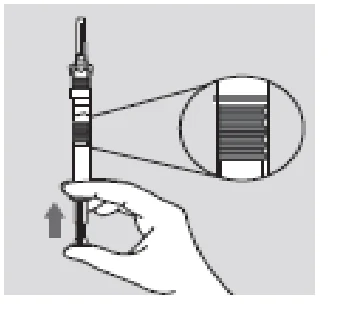
Hold syringe upright (with needle side up) throughout entire preparation to prevent leakage.
Use immediately after mixing as the suspension settles out very quickly following reconstitution.
Check the expiration date printed on the syringe label, and check the powder and diluent in the syringe barrel. The powder should be white and dry, and the diluent should be clear. Inspect the syringe for any damage.
- Do not use the syringe if the expiration date has passed.
- Do not use the syringe if the powder appears clumped or caked.
- Do not use the syringe if powder or diluent appear discoloured.
- Do not use the syringe if any part of it is damaged.
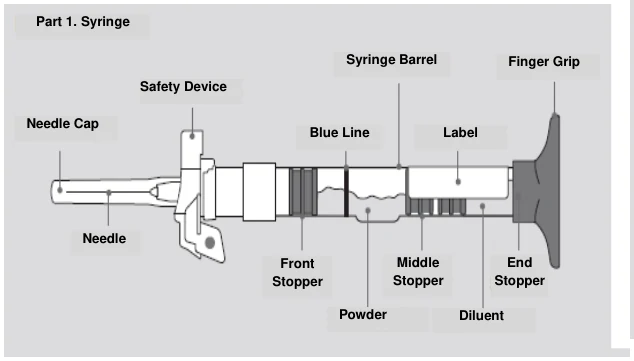
Parts Overview
Step 1. Attach plunger and tighten needle
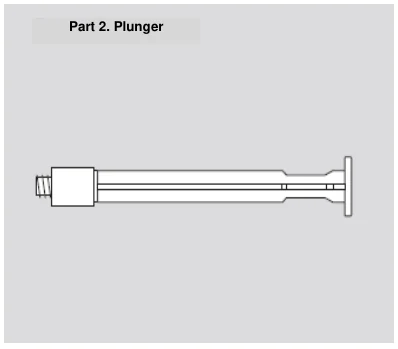
- Remove the plunger (part 2) from the package.
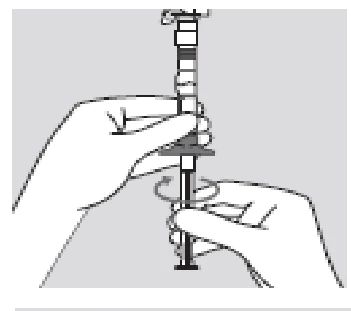
Screw the plunger rod into the bottom of the syringe until the end stopper
begins to rotate. (Figure A)
Do not twist or pull the plunger rod back once it has been attached.
Figure A: Screw in plunger rod
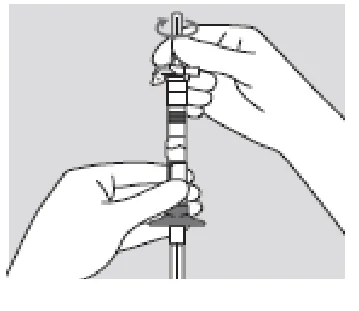
Without removing the needle cap, twist the needle to the right
(clockwise) to ensure it is secured tightly. (Figure B)
Do not remove needle cap until you are ready to inject.
Figure B: Twist needle to tighten
Step 2. Release diluent
Holding the syringe upright, release the diluents by slowly pushing the plunger until the middle stopper reaches the blue line in the middle of the syringe. You should see the diluent flowing into the interior chamber above the blue line. (Figure C)
- Do not push the plunger too quickly or push past the blue line as these actions may cause leaking.
Do not withdraw plunger again.
Figure C: Release diluent
Step 3. Mix suspension
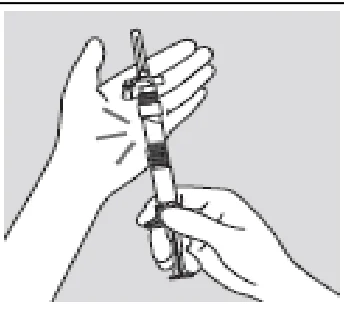
Gently tap the syringe against the palm of your hand to mix the powder and diluent until it forms a uniform suspension. When properly mixed, the suspension should appear milky with no
visible lumps. (Figure D)
Note: If particles stick to the stopper during mixing, dislodge them by
gently tapping the syringe with your finger.
Avoid hard tapping or shaking to prevent the generation of
bubbles.
Use immediately after mixing as the suspension settles out very quickly following reconstitution.
Figure D: Tap syringe against palm to mix
Step 4. Remove needle cap and prime syringe
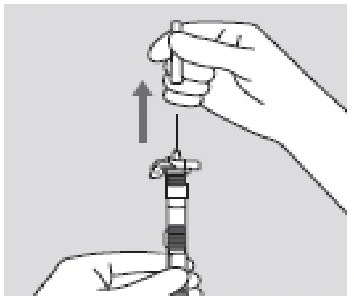
Remove the needle cap by pulling it straight upwards. (Figure E)
- Do not twist the needle cap.
Prime the syringe by pushing the plunger upward until all air has been expelled from the syringe.
Figure E: Pull upwards to remove needle cap
Step 5. Inject
- The syringe is now ready for injection. Use immediately as the suspension settles out very quickly following reconstitution.
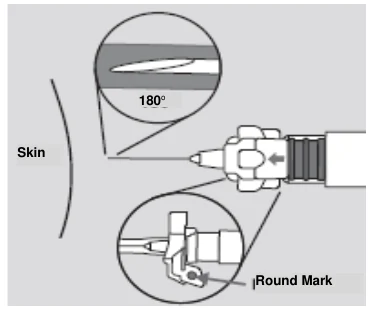
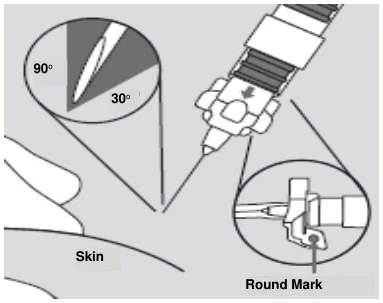
At the time of injection, check the direction of the safety device (with round mark pointing towards you) and inject the entire contents of the syringe subcutaneously (Figure F) or intramuscularly (Figure G) as you would for a normal injection.
Figure F: Subcutaneous Injection. Figure G: Intramuscular Injection.
Ensure correct needle orientation Ensure correct needle orientation
HEALTH PROFESSIONALS’ USER LEAFLET
Prostap® SR DCS
(leuprorelin acetate depot injection 3.75mg)
DCS
Skin
180o
Round Mark
Round Mark
Skin
90o
30o
Syringe Barrel
Finger Grip
Safety Device
Needle Cap
Needle
Powder
Diluent
Blue Line
Front Stopper
Middle Stopper
End Stopper
Label
Part 2. Plunger
Part 1. Syringe
Step 6. Activate safety device
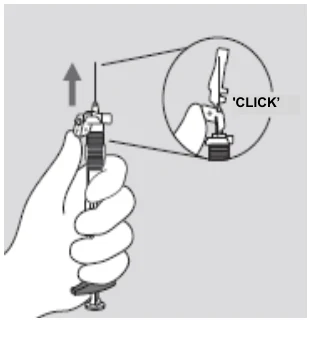
When injection is complete, withdraw the needle from the patient. Immediately activate the safety device by pressing upward from just below the arrow until a ‘CLICK’ is heard or felt and the needle is fully covered. (Figure H)
Figure H: Activate safety device
Step 7. Dispose of syringe
Dispose of the used device in the appropriate sharps container in accordance with your local standard
- procedure.

Detailed and up-to-date information for this product is available by scanning the QR Code, shown on the Health Professionals’ User Leaflet, with a smartphone. The same information is also available on the following URL: https://www.medicines.org.uk/emc/product/4650/video
4.3 Contraindications
Hypersensitivity to leuprorelin, any of the excipients listed in section 6.1 or to other synthetic gonadotrophin releasing hormone (Gn-RH) analogues or Gn-RH derivatives.
Women: Prostap SR is contra-indicated in women who are or may become pregnant while receiving the drug. Prostap SR should not be used in women who are breastfeeding or have undiagnosed abnormal vaginal bleeding. See section 4.4.
In the pre- and perimenopausal breast cancer setting: Initiation of aromatase inhibitor treatment before adequate ovarian suppression with leuprorelin has been achieved (see sections 4.2 and 4.4).
Men: There are no other known contra-indications to the use of Prostap SR in men.
In girls with central precocious puberty:
- Pregnancy and breastfeeding
- Undiagnosed vaginal bleeding.
4.4 Special warnings and precautions for use
Prostap SR injectable suspension must be prepared at the time of use and, after reconstitution, used immediately.
Prostap SR contains sodium. This medicine contains less than 1mmol sodium (23mg) per injection, this is to say it is essentially ‘sodium free’.
Depression: There is an increased risk of incident depression (which may be severe) in patients undergoing treatment with GnRH agonists, such as leuprorelin. Patients should be informed and monitored accordingly and treated as appropriate if symptoms occur.
Seizure: Postmarketing reports of seizures have been observed in patients treated with leuprorelin acetate and these events have been reported in both children and adults, and in those with or without a history of epilepsy, seizure disorders or risk disorders for seizures.
Idiopathic intracranial hypertension
Idiopathic intracranial hypertension (pseudotumor cerebri) has been reported in patients receiving leuprorelin. Patients should be warned for signs and symptoms of idiopathic intracranial hypertension, including severe or recurrent headache, vision disturbances and tinnitus. If idiopathic intracranial hypertension occurs, discontinuation of leuprorelin should be considered.
Severe cutaneous adverse reactions
Severe cutaneous adverse reactions
(SCARs) including Stevens-Johnson syndrome (SJS), and Toxic epidermal necrolysis (TEN) which can be life-threatening or fatal, have been reported in association with leuprorelin treatment. At the time of prescription patients should be advised of the signs and symptoms and monitored closely for severe skin reactions. If signs and symptoms suggestive of these reactions appear, leuprorelin should be withdrawn immediately and an alternative treatment considered (as appropriate).
Metabolic changes associated with GnRH agonist may also include fatty liver disease.
Adults: Epidemiological data have shown that during androgen deprivation therapy in males and estrogen deprivation therapy in females, changes in the metabolic condition (e.g. reduction in glucose tolerance or aggravation of pre-existing diabetes) as well as an increased risk for cardiovascular diseases may occur. However, prospective data did not confirm a link between treatment with GnRH analogues and an increase in cardiovascular mortality. Patients at high risk for metabolic changes or syndrome or cardiovascular diseases should be appropriately monitored. Diabetic patients may require more frequent monitoring of blood glucose during treatment with Prostap SR.
Hepatic dysfunction and jaundice with elevated liver enzyme have been reported. Therefore, close observation should be made and appropriate measures taken if necessary.
Spinal fracture, paralysis and hypotension have been reported.
Bone mineral loss: Long-term estrogen deprivation either by bilateral oophorectomy, ovarian ablation or administration of GnRH analogues, or long-term androgen deprivation either by bilateral orchiectomy or administration of GnRH analogues is associated with increased risk of bone mineral loss which, in patients with additional risk factors, may lead to osteoporosis and an increased risk of bone fracture (see section 4.8).
An induced hypo-estrogenic state results in a loss in bone density over the course of treatment, some of which may not be reversible e.g. the extent of bone demineralisation due to hypo-estrogenaemia is proportional to time. The generally accepted level of bone loss with GnRH analogues such as Prostap SR is 5%. In clinical studies with Prostap SR the levels varied between 2.3% and 15.7% depending on the method of measurement. During one treatment period e.g. six months, this bone loss should not be important.
In patients with major risk factors for decreased bone mineral content such as chronic alcohol and/or tobacco use, strong family history of osteoporosis, or chronic use of drugs that can reduce bone mass such as anticonvulsants or corticosteroids, Prostap SR therapy may pose an additional risk. In these patients, the risks and benefits must be weighed carefully before therapy with Prostap SR is instituted. This is particularly important in women with uterine fibroids where age related bone loss may have already begun to occur.
Men: In the initial stages of therapy, a transient rise in levels of testosterone, dihydrotestosterone and acid phosphatase may occur. In some cases, this may be associated with a ‘flare’ or exacerbation of the tumour growth resulting in temporary deterioration of the patient’s condition. These symptoms usually subside on continuation of therapy. ‘Flare’ may manifest itself as systemic or neurological symptoms in some cases.
In order to reduce the risk of ‘flare’, an anti-androgen may be administered beginning 3 days prior to leuprorelin acetate therapy and continuing for the first two to three weeks of treatment. This has been reported to prevent the sequelae of an initial rise in serum testosterone. If an anti-androgen is used over a prolonged period, due attention should be paid to the contra-indications and precautions associated with its extended use.
In the rare event of an abscess occurring at the injection site, testosterone level should be monitored as there may be inadequate absorption of leuprorelin from the depot formulation.
Patients at risk of or with ureteric obstruction or spinal cord compression due to metastasis, should be considered carefully and closely supervised in the first few weeks of treatment as bone pain, weakness of the lower extremities and paraesthesia (as neurologic symptom) may occur. These patients should be considered for prophylactic treatment with anti-androgens. Should urological/neurological complications occur, these should be treated by appropriate specific measures.
Whilst the development of pituitary adenomas has been noted in chronic toxicity studies at high doses in some animal species, this has not been observed in long term clinical studies with leuprorelin acetate.
Androgen deprivation therapy may prolong the QT interval.
In patients with a history of or risk factors for QT prolongation and in patients receiving concomitant medicinal products that might prolong the QT interval (see section 4.5) physicians should assess risk and benefits including the potential for Torsade de pointes prior to initiating treatment with Prostap SR.
Women:
Uterine fibroid diagnosis
When considering the preoperative treatment of fibroids it is mandatory to confirm the diagnosis of fibroids and exclude an ovarian mass, either visually by laparoscopy or by ultrasonography or other investigative technique, as appropriate, before Prostap SR therapy is instituted.
Initial increase in sex steroids
During the early phase of therapy, sex steroids temporarily rise above baseline because of the physiological effect of the drug. Therefore, an increase in clinical signs and symptoms may be observed during the initial days of therapy, but these will dissipate with continued therapy.
Uterine fibroids
Before using Prostap SR for the preoperative treatment of uterine fibroids, patients with major risk factors for decreased bone mineral content (see above) should have their bone density measured and where results are below the normal (5th percentile by DEXA scan) range, Prostap SR therapy should not be started. In women receiving GnRH analogues for the treatment of uterine fibroids, the duration of administration of leuprorelin acetate should be limited to 6 months, as its use is associated with an increased risk of bone mineral loss (see Bone Mineral loss, section 4.4). If it is necessary to resume administration of leuprorelin acetate, changes in bone parameters should be closely followed.
Endometriosis
In women receiving GnRH analogues for the treatment of endometriosis, the duration of administration of leuprorelin acetate should be limited to 6 months, as its use is associated with an increased risk of bone mineral loss (see Bone Mineral loss, section 4.4). The addition of HRT (an estrogen and progestogen) has been shown to reduce bone mineral density loss and vasomotor symptoms.
Therefore, if appropriate, HRT may be co-administered with leuprorelin acetate, taking into account the risks and benefits of each medicinal product, for up to 6 months if clinically appropriate. If it is necessary to resume administration of leuprorelin acetate, changes in bone parameters should be closely followed.
Abnormal bleeding
In women with submucous fibroids there have been reports of severe vaginal bleeding following the administration of Prostap SR as a consequence of the acute degeneration of the fibroids. Patients should be warned of the possibility of abnormal bleeding or pain in case earlier surgical intervention is required.
Cervical resistance
Prostap SR may cause an increase in uterine cervical resistance, which may result in difficulty in dilating the cervix for intrauterine surgical procedures.
Breast cancer
Advanced and early breast cancer:
In order to ensure adequate ovarian suppression in pre- and perimenopausal women, treatment with leuprorelin should be administered for at least 6-8 weeks prior to commencement of an aromatase inhibitor, and monthly leuprorelin injections should be administered on schedule and without interruption throughout aromatase inhibitor treatment.
Women who are premenopausal at breast cancer diagnosis and who become amenorrhoeic following chemotherapy may or may not have continued estrogen production from the ovaries. Irrespective of menstrual status, premenopausal status should be confirmed following chemotherapy and before commencement of leuprorelin, by blood concentrations of estradiol and FSH within the reference ranges for premenopausal women, in order to avoid unnecessary treatment with leuprorelin in the event of a chemotherapy-induced menopause.
Following commencement of leuprorelin, it is important to confirm adequate ovarian suppression (gonadotrophin analogue- induced menopause) by serial assessment of circulating FSH, and estradiol if this subset of women is to be considered for therapy with an aromatase inhibitor, in accordance with current clinical practice recommendations. Accordingly, ovarian suppression should be confirmed by low blood concentrations of FSH and estradiol prior to starting aromatase inhibitor treatment and measurements should be repeated every three months during combination therapy with leuprorelin and an aromatase inhibitor. This is to avoid aromatase inhibitor-induced rebound increase in circulating estrogen, with consequential implications for the breast cancer. Of note, circulating FSH levels are lowered in response to gonadotrophin analogue-induced ovarian suppression (induced menopause), unlike in a natural menopause where FSH levels are elevated.
Patients who have discontinued leuprorelin treatment should also discontinue aromatase inhibitors within 1 month of the last leuprorelin administration.
Particular attention should also be paid to the prescribing information of co-administered medicinal products, such as aromatase inhibitors, tamoxifen, CDK4/6 inhibitors, for relevant safety information when administered in combination with leuprorelin.
Bone mineral density should be assessed before starting treatment with leuprorelin, particularly in women who have additional risk factors for osteoporosis. These patients should be closely monitored and treatment for, or prophylaxis of, osteoporosis should be initiated when appropriate
The risk of musculoskeletal disorders (including joint or musculoskeletal pain) when a GnRH agonist is used in combination with either an aromatase inhibitor or tamoxifen is approximately 89% with the aromatase inhibitor and approximately 76% with tamoxifen.
Hypertension has been reported as a targeted adverse event at a very common frequency with GnRH agonist in combination with either exemestane or tamoxifen.
Premenopausal women with breast cancer receiving GnRH agonist in combination with either exemestane or tamoxifen should have regular monitoring of cardiovascular risk factors and blood pressure.
Hyperglycaemia and diabetes were reported as targeted adverse events at a common frequency with a GnRH agonist in combination with either exemestane or tamoxifen. Premenopausal women with breast cancer receiving a GnRH agonist in combination with either exemestane or tamoxifen should have regular monitoring of risk factors for diabetes with blood glucose monitoring on a regular basis and appropriate anti-diabetic treatment initiated, if appropriate, according to national guidelines.
Depression has been reported to occur in approximately 50% of patients treated with a GnRH agonist in combination with either tamoxifen or exemestane, but less than 5% of patients had severe depression (grade 3-4). Patients should be informed accordingly and treated as appropriate if symptoms occur. Patients with known depression or depression history should be carefully monitored during therapy.
Treatment of premenopausal women with endocrine responsive early stage breast cancer with leuprorelin in combination with tamoxifen or an aromatase inhibitor should follow a careful individual appraisal of the risks and benefits.
Precautions
Men: Patients with urinary obstruction and patients with metastatic vertebral lesions should begin Prostap SR therapy under close supervision for the first few weeks of treatment.
Women: Before starting treatment with leuprorelin acetate, pregnancy must be excluded (see section 4.3) and undiagnosed abnormal vaginal bleeding must be investigated, diagnosis confirmed and relevant management initiated. During treatment with leuprorelin acetate, patients should be instructed to prevent conception e.g. with the use of non-hormonal methods. Since menstruation should stop with effective doses of Prostap SR, the patient should notify her physician if regular menstruation persists.
Children with central precocious puberty: Before starting treatment with leuprorelin acetate, a precise diagnosis of idiopathic and/or neurogenic central precocious should be made and, in girls, pregnancy must be excluded (see section 4.3).
The therapy is a long-term treatment, adjusted individually. Prostap SR should be administered as precisely as possible in regular monthly periods. An exceptional delay of the injection date for a few days (30 ± 2 days) does not influence the results of the therapy.
In the event of a sterile abscess at the injection site (mostly reported after i.m. injection of higher than the recommended dosage) the absorption of leuprorelin acetate from the depot can be decreased. In this case the hormonal parameters (testosterone, oestradiol) should be monitored at 2-week intervals (see 4.2).
The treatment of children with progressive brain tumours should follow a careful individual appraisal of the risks and benefits.
The occurrence of vaginal bleeding, spotting and discharge after the first injection may occur as a sign of hormone withdrawal in girls. Vaginal bleeding beyond the first/second month of treatment needs to be investigated.
Bone mineral density (BMD) may decrease during GnRH therapy for central precocious puberty. However, after cessation of treatment subsequent bone mass accrual is preserved and peak bone mass in late adolescence does not seem to be affected by treatment.
Slipped femoral epiphysis can be seen after withdrawal of GnRH treatment. The suggested theory is that the low concentrations of estrogen during treatment with GnRH agonists weakens the epiphysial plate. The increase in growth velocity after stopping the treatment subsequently results in a reduction of the shearing force needed for displacement of the epiphysis.
4.5 Interaction with other medicinal products and other forms of interaction
No interaction studies have been performed.
Women and girls: No known interactions.
Since androgen deprivation treatment may prolong the QT interval, the concomitant use of Prostap SR with medicinal products known to prolong the QT interval or associated with Torsade de pointes such as class IA (e.g. quinidine, disopyramide) or class III (e.g. amiodarone, sotalol, dofetilide, ibutilide) antiarrhythmic medicinal products, methadone, moxifloxacin, antipsychotics, etc. should be carefully evaluated (see section 4.4).
4.6 Fertility, pregnancy and lactation
Safe use of leuprorelin acetate in pregnancy has not been established clinically.
Studies in animals have shown reproductive toxicity (see section 5.3). Before starting treatment with Prostap SR, pregnancy must be excluded. There have been reports of foetal malformation when Prostap SR has been given during pregnancy.
Prostap SR must not be used in women who are pregnant or breastfeeding (see section 4.3).
When used monthly at the recommended dose, Prostap SR usually inhibits ovulation and stops menstruation. Contraception is not ensured, however, by taking Prostap SR and therefore patients should use non-hormonal methods of contraception during treatment and after cessation of treatment until the return of menses.
Patients should be advised that if they miss successive doses of Prostap SR, breakthrough bleeding or ovulation may occur with the potential for conception. Patients should be advised to see their physician if they believe they may be pregnant. If a patient becomes pregnant during treatment, the drug must be discontinued. The patient must be apprised of this evidence and the potential for an unknown risk to the foetus.
In girls with central precocious puberty: See section 4.3 Contraindications.
4.7 Effects on ability to drive and use machines
Prostap SR can influence the ability to drive and use machines due to visual disturbances and dizziness.
4.8 Undesirable effects
Adverse reactions seen with Prostap SR are due mainly to the specific pharmacological action, namely increases and decreases in certain hormone levels.
The following tables list adverse reactions with leuprorelin based on experience from clinical trials as well as from post-marketing experience. Adverse reactions are grouped by MedDRA System Organ Classes and frequency classification. Frequencies are defined as: very common (≥1/10); common (≥1/100 to <1/10); uncommon (≥1/1,000 to <1/100); rare (≥1/10,000 to <1/1,000); very rare (<1/10,000); not known (cannot be estimated from the available data).
Men: In cases where a ‘tumour flare’ occurs after Prostap SR therapy, an exacerbation may occur in any symptoms or signs due to disease. Adverse events, which may occur particularly at the beginning of treatment include urinary tract obstruction (as urinary symptoms). In patients with spinal cord compression, bone pain, weakness of the lower extremities and paraesthesia (as neurologic symptom) may also occur (see section 4.4). These symptoms subside on continuation of therapy.
Tabulated list of adverse reactions in Men
| SOC | Very common | Common | Uncommon | Rare | Very rare | Not known |
| Blood and lymphatic system disorders | anaemia (reported in medicinal products of this class), thrombocyt-opaenia, leucopenia |
'CLICK’
| Immune system disorders | hypersensitivity reactions (including rash, pruritus, urticaria, wheezing, fever, chills and anaphylactic reactions) | |||||
| Metabolism and nutrition disorders | weight fluctuation | decreased appetite | Metabolic syndrome (including hypertension, dyslipidemia, insulin resistance, abnormal glucose tolerance) | |||
| Metabolic disorders | Hepatic steatosis | |||||
| Psychiatric disorders | insomnia, depression (see Section 4.4), mood changes (long-term use)** | mood changes (short term use)** | ||||
| Nervous system disorders | headache (occasion-ally severe) | dizziness, parasthesiae | pituitary apoplexy has been reported following initial administra-tion in patients with pituitary adenoma, pituitary haemorrh-age | paralysis (see Section 4.4), seizure, idiopathic intracranial hypertension (pseudotumor cerebri) (see section 4.4) | ||
| Eye disorders | visual impairment | |||||
| Cardiac disorders | palpitations, QT prolongation (see Sections 4.4 and 4.5) | |||||
| Vascular disorders | hot flush | pulmonary embolism, hypertension, hypotension (see Sections 4.4 and 4.5) | ||||
| Gastrointestinal disorders | nausea | diarrhoea, vomiting | ||||
| Hepatobiliary disorders | hepatic function abnormal, hepatic function test abnormal (usually transient) | jaundice | ||||
| Skin and subcutaneous tissue disorders | hyper-hidrosis | Stevens-Johnson syndrome/ Toxic Epidermal Necrolysis (SJS/TEN) (see section 4.4), Toxic Skin Eruption, Erythema Multiforme | ||||
| Musculoskeletal, connective tissue and bone disorders | muscle weakness, bone pain | arthralgia | myalgia, weakness of lower extremities | spinal fracture, reduction in bone mineral density, osteoporosis (including spinal fracture, see Section 4.4) | ||
| Respiratory, thoracic and mediastinal disorders | Interstitial lung disease | |||||
| Renal and urinary disorders | urinary tract obstruction | |||||
| Reproductive system and breast disorders | Libido decreased, erectile dysfunction, testicular atrophy | gynaecoma -stia | ||||
| General disorders and administration site conditions | Fatigue, injection site reaction, e.g., induration, erythema, pain, abscesses, swelling, nodules, ulcers and necrosis | oedema peripheral | Pyrexia |
** mood changes (long term use: frequency of ‘common’ and short term use: frequency of ‘uncommon’)
Women: Those adverse events occurring most frequently with Prostap SR are associated with hypo-estrogenism; the most frequently reported are hot flushes, mood swings including depression (occasionally severe), and vaginal dryness. Estrogen levels return to normal after treatment is discontinued.
The induced hypo-estrogenic state results in a loss in bone density over the course of treatment, some of which may not be reversible (see Section 4.4).
Vaginal haemorrhage may occur during therapy due to acute degeneration of submucous fibroids (see Section 4.4).
Tabulated list of adverse reactions in Women
| SOC | Very common | Common | Uncommo n | Rare | Very rare | Not known |
| Blood and lymphatic system disorders | Anaemia (reported in medicinal products of this class), thrombo-cytopaenia, leucopenia | |||||
| Immune system disorders | hypersensitivity reactions (including rash, pruritus, urticaria, wheezing, fever, chills and anaphylactic reactions) |
| Metabolism and nutrition disorders | weight fluctuation | decreased appetite, lipids abnormal | Metabolic syndrome (including hypertension, dyslipidemia, insulin resistance, abnormal glucose tolerance) | |||
| Psychiatric disorders | insomnia | depression (see Section 4.4), mood changes (long-term use)** | mood changes (short term use)** | |||
| Nervous system disorders | headache (occasionally severe) | parasthesiae, dizziness | pituitary apoplexy has been reported following initial admin-istration in patients with pituitary adenoma, pituitary haemorr-hage | paralysis (see Section 4.4), seizure, idiopathic intracranial hypertension (pseudotumor cerebri) (see section 4.4) | ||
| Eye disorders | visual impairment | |||||
| Cardiac disorders | palpitations | |||||
| Vascular disorders | hot flush | pulmonary embolism, hypertension, hypotension (see Section 4.4) | ||||
| Gastrointestinal disorders | nausea | diarrhoea, vomiting | ||||
| Hepatobiliary disorders | hepatic function test abnormal (usually transient) | hepatic function abnormal (including jaundice) | ||||
| Skin and sub-cutaneous tissue disorders | hyperhidrosis | hair loss | Stevens-Johnson syndrome/Toxic Epidermal Necrolysis (SJS/TEN) (see section 4.4), Toxic Skin Eruption, Erythema Multiforme | |||
| Musculoskeletal, connective tissue and bone disorders | bone pain | arthralgia, muscle weakness | myalgia | reduction in bone mineral density, osteoporosis (including spinal fracture, see Section 4.4) | ||
Respiratory, thoracic and mediastinal disorders | Interstitial lung disease | |||||
| Reproductive system and breast disorders | breast tenderness, breast atrophy, vulvovaginal dryness | vulvovaginitis, libido decreased, vaginal haemorrhage | ||||
| General disorders and administration site conditions | Oedema peripheral, injection site reaction e.g.injection site induration, erythema, pain, abscesses, swelling, nodules, ulcers and necrosis | pyrexia, fatigue |
In women with early breast cancer treated with a GnRH agonist, in combination with tamoxifen or an aromatase inhibitor, the following side effects have been seen:
Very common: Nausea, fatigue, musculoskeletal disorders, osteoporosis, hot flushes, hyperhidrosis, insomnia, depression, libido decreased, vulvovaginal dryness, dyspareunia, urinary incontinence, hypertension.
Common: Diabetes mellitus, hyperglycaemia, injection site reaction, hypersensitivity fracture, embolism.
Uncommon: myocardial ischaemia, cerebral ischaemia, central nervous system haemorrhage.
Rare: QT prolongation.
In Children: In the initial phase of therapy, a short-term increase as flare-up of the sex hormone level occurs, followed by a decrease to values within the pre-pubertal range. Due to this pharmacological effect, adverse events may occur particularly at the beginning of treatment.
Tabulated list of adverse reactions in Children
| SOC | Very common | Common | Uncommon | Rare | Very rare | Not known |
| Immune system disorders | Hyper-sensitivity (rash, pruritus, urticaria, wheezing, fever, chills and anaphylactic reactions) | |||||
| Metabolic disorders | Hepatic steatosis | |||||
| Psychiatric disorders | depression (see Section 4.4), emotional lability | |||||
| Nervous system disorders | headache | pituitary apoplexy has been reported following initial admini-stration in patients with pituitary adenoma, pituitary haemorrhage | seizure, idiopathic intracranial hyper-tension (pseudotumor cerebri) (see section 4.4) |
| Gastrointestinal disorders | abdominal pain / abdominal cramps, nausea/ vomiting | |||||
| Skin and subcutaneous tissue disorders | acne | Stevens-Johnson syndrome/ Toxic Epidermal Necrolysis (SJS/TEN) (see section 4.4), Toxic Skin Eruption, Erythema Multiforme | ||||
Musculoskeletal and connective tissue disorders | Myalgia | |||||
Respiratory, thoracic and mediastinal disorders | Interstitial lung disease | |||||
| Reproductive system and breast disorders | vaginal haemo-rrhage, spotting**, vaginal discharge | |||||
| General disorders and administration site conditions | injection site reactions (e.g. induration, erythema, pain, abscess, swelling, nodules and necrosis) |
** In general, the occurrence of vaginal spotting with continued treatment (subsequent to possible withdrawal bleeding in the first month of treatment) should be assessed as a sign of potential underdosage. The pituitary suppression should then be determined by a gonadotropin releasing hormone (GnRH) stimulating test.
Reporting of suspected adverse reactions
Reporting suspected adverse reactions after authorisation of the medicinal product is important. It allows continued monitoring of the benefit/risk balance of the medicinal product. Healthcare professionals are asked to report any suspected adverse reactions via the Yellow Card Scheme at: www.mhra.gov.uk/yellowcard or search for MHRA Yellow Card in the Google Play or Apple App Store.
4.9 Overdose
No case of overdose has been reported.
In animal studies, doses of up to 500 times the recommended human dose resulted in dyspnoea, decreased activity and local irritation at the injection site. In cases of overdose, the patients should be monitored closely and management should be symptomatic and supportive.
- 5 PHARMACOLOGICAL PROPERTIES
5.1 Pharmacodynamic properties
Pharmacotherapeutic group: Gonadotrophin Releasing Hormone Analogues
ATC code: L02AE 02
Prostap SR contains leuprorelin acetate, a synthetic nonapeptide analogue of naturally occurring GnRH which possesses greater potency than the natural hormone. Leuprorelin acetate is a peptide and therefore unrelated to the steroids. Chronic administration results in an inhibition of gonadotrophin production and subsequent suppression of ovarian and testicular steroid secretion. This effect is reversible on discontinuation of therapy.
Administration of leuprorelin acetate results in an initial increase in circulating levels of gonadotrophins which leads to a transient increase in gonadal steroid levels in both men and women. Continued administration of leuprorelin acetate results in a decrease of gonadotrophin and sex steroid levels. In men serum testosterone levels, initially raised in response to early luteinising hormone (LH) release, fall to castrate levels in about 2-4 weeks. Estradiol levels will decrease to postmenopausal levels in premenopausal women within one month of initiating treatment.
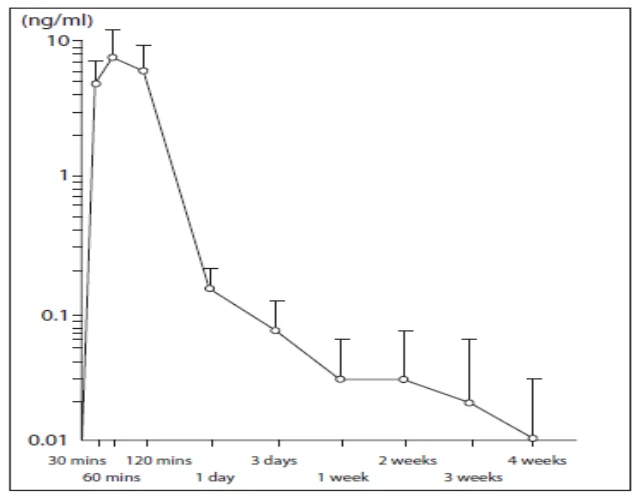
The drug is well absorbed from the subcutaneous or intramuscular route, binds to gonadotropin releasing hormone (GnRH) receptors and is rapidly degraded. In this dose form, an initial high level of leuprorelin acetate in the plasma is achieved within 3 hours followed by a drop over 24-48 hours to maintenance levels of 0.3-0.8ng/ml and a slow decline thereafter. Effective levels persist for 30-40 days after a single dose.
Leuprorelin acetate is inactive when given orally.
Men (prostate cancer):
A randomised, open-label, comparative multi-centre study was performed to compare the efficacy and safety of the 3.75mg and 11.25mg depots of leuprorelin acetate. 48% of patients included had locally advanced disease (T3N0M0), 52% of patients had metastatic disease. Mean serum testosterone level fell below the threshold for chemical castration (0.5ng/ml) at one month of treatment, continuing to decrease thereafter and stabilising at a value below the castration threshold. The decline in serum PSA mirrored that of serum testosterone in both groups.
In an open, prospective clinical trial involving 205 patients receiving 3.75mg leuprorelin acetate on a monthly basis as treatment for metastatic prostate cancer, the long-term efficacy and safety of leuprorelin acetate was assessed. Testosterone levels were maintained below the castrate threshold over the 63-month follow up period. Median survival time exceeded 42.5 months for those receiving monotherapy and 30.9 months for those receiving leuprorelin acetate in combination with anti-androgens (this difference relating to baseline differences between groups)
In a meta-analysis involving primarily patients with metastatic disease, no statistically significant difference in survival was found for patients treated with GnRH analogues compared with patients treated with orchidectomy.
In another randomised, open-label, multi-centre comparative trial, leuprorelin acetate in combination with flutamide has been shown to significantly improve disease-free survival and overall survival when used as an adjuvant therapy to radiotherapy in 88 patients with high-risk localised (T1-T2 and PSA of at least 10ng/mL or a Gleason score of at least 7), or locally advanced (T3-T4) prostate cancer. The optimum duration of adjuvant therapy has not been established. This US study used a higher dose of leuprorelin acetate (7.5mg/month) which is therapeutically equivalent to the European licensed dose.
The use of a GnRH agonist may be considered after prostatectomy in selected patients considered at high risk of disease progression. There are no disease-free survival data or survival data with leuprorelin acetate in this setting.
Neoadjuvant leuprorelin acetate prior to radiotherapy has been shown to reduce prostate volume.
Women (preservation of ovarian function):
In six observational studies monthly leuprorelin administered with chemotherapy appeared to have a protective effect (as assessed by clinical measures and symptoms of premature ovarian insufficiency) on subsequent ovarian function. In a prospective randomised controlled study in young premenopausal women with hormone receptor (HR) positive and HR negative breast cancer undergoing chemotherapy, concurrent treatment with monthly leuprorelin reduced the risk of developing premature ovarian insufficiency. There are no data demonstrating effectiveness of the 3-monthly formulation of leuprorelin for ovarian function preservation in premenopausal women undergoing chemotherapy treatment.
In children:
Reversible suppression of pituitary gonadotropin release occurs, with a subsequent decrease in oestradiol (E2) or testosterone levels to values in the pre-pubertal range.
Initial gonadal stimulation (flare-up) may cause vaginal bleeding in girls who are already post-menarchal at start of treatment. Withdrawal bleeding may occur at the start of treatment. The bleeding normally stops as treatment continues.
The following therapeutic effects can be demonstrated:
- Suppression of basal and stimulated gonadotropin levels to pre-pubertal levels.
- Suppression of prematurely increased sexual hormone levels to pre-pubertal levels and arrest of premature menstruation;
- Arrest/involution of somatic pubertal development (Tanner stages);
- Improvement/normalisation of the ratio of chronological age to bone age;
- Prevention of progressive bone age acceleration;
- Decrease of growth velocity and its normalization;
- Increase in final height.
Treatment result is the suppression of the pathologically, prematurely activated hypothalamic-pituitary-gonadal axis according to pre-pubertal age.
In a long-term clinical trial in children treated with leuprorelin at doses up to 15mg monthly for > 4 years resumption of pubertal progression were observed after cessation of treatment. Follow up of 20 female subjects to adulthood showed normal menstrual cycles in 80% and 12 pregnancies in 7 of the 20 subjects including multiple pregnancies for 4 subjects.
5.2 Pharmacokinetic properties
Studies submitted show that single intramuscular or subcutaneous doses of leuprorelin acetate over the dose range 3.75 to 15mg results in detectable levels of leuprorelin acetate for more than 28 days, good bioavailability, a consistent and predictable pharmacokinetic profile, and biological efficacy at plasma levels of less than 0.5ng/ml. The pharmacokinetic profile is similar to that seen in animal studies using the compound, with an initial high level of drug released from the microcapsules during reconstitution and injection followed by a plateau over a 2-3 week period before levels gradually become undetectable. There appears to be no significant difference between the routes of administration (im vs sc) in biological effectiveness or pharmacokinetics.
The metabolism, distribution and excretion of leuprorelin acetate in humans have not been fully determined.
In children:
In a study with the 1.88mg leuprorelin formulation administered subcutaneously (s.c.) in children with central precocious puberty, leuprorelin serum levels rose rapidly following the first injection declining gradually over the next 3 days, remaining in the range 0.02 to 0.03ng/mL for 3 weeks and declining to
0.01 ng/mL at 4 weeks after administration.
During 4 weekly repeated treatment for 12 months, plasma leuprorelin concentrations before each dose and at 4 weeks after the 12th dose were 0.01 ± 0.02ng/mL indicating sustained release of leuprorelin over the dosing interval and no accumulation.
Figure 1 presents leuprorelin serum levels after a single s.c. administration of leuprorelin acetate depot at a dosage of 30μg/kg body weight. Peak serum levels are reached sixty minutes after administration (7.81 ± 3.59ng/m)l. The AUC0-672 is 105.78 ± 52.40ng x hr/ml.
Figure 1: Leuprorelin serum levels after single s.c. administration of 30μg/kg body weight of leuprorelin acetate as depot formulation (n=6) (Mean ± SD)
5.3 Preclinical safety data
Animal studies have shown that leuprorelin acetate has a high acute safety factor. No major overt toxicological problems have been seen during repeated administration. Whilst the development of pituitary adenomas has been noted in chronic toxicity studies at high doses in some animal species, this has not been observed in long-term clinical studies. No evidence of mutagenicity has been shown. Animal reproductive studies showed increased foetal mortality and decreased foetal weights reflecting the pharmacological effects of this GnRH agonist.
An increased frequency of malformations was also observed in rabbits but not in rats.
6 PHARMACEUTICAL PARTICULARS
6.1 List of excipients
Prostap SR Powder
Gelatin, Copoly (DL lactic acid/glycolic acid) 72:25 mol% , Mannitol (E421)
Sterile Solvent
Carmellose sodium, Mannitol (E421), polysorbate 80, glacial acetic acid and water for injections.
6.2 Incompatibilities
This drug must be injected alone.
6.3 Shelf life
3 years unopened.
Once reconstituted with sterile solvent, the suspension should be administered immediately.
6.4 Special precautions for storage
Do not store above 25oC.
Do not refrigerate or freeze.
Keep the pre-filled syringe in outer carton in order to protect from light.
6.5 Nature and contents of container
1 x dual chamber pre-filled syringe containing 3.75mg leuprorelin acetate powder in the front chamber and 1ml sterile solvent in the rear chamber.
1 x 23 gauge syringe needle fitted with safety device
1 x syringe plunger
6.6 Special precautions for disposal and other handling
Prepare the injectable suspension at the time of use and, after reconstituting, use immediately. Always ensure the safety device to prevent needle-stick injury is deployed after injection. Any unused product or waste material should be disposed of in accordance with local requirements.
7 Procured from within the EU and repackaged by the Product Licence holder:
B&S Healthcare, Unit 4, Bradfield Road, Ruislip, Middlesex, HA4 0NU, UK.
8 PL 18799/3077
9 Leaflet date: 01.09.2025
Prostap is the registered trademark of Takeda Pharmaceutical Company Limited.