

Patient leaflet - Pregabalin Neuraxpharm 20 mg/ml oral solution
1. What Pregabalin Neuraxpharm is and what it is used for
Pregabalin Neuraxpharm belongs to a group of medicines used to treat epilepsy, neuropathic pain and Generalised Anxiety Disorder (GAD) in adults.
Peripheral and central neuropathic pain
Pregabalin Neuraxpharm is used to treat long lasting pain caused by damage to the nerves. A variety of diseases can cause peripheral neuropathic pain, such as diabetes or shingles. Pain sensations may be described as hot, burning, throbbing, shooting, stabbing, sharp, cramping, aching, tingling, numbness, pins and needles. Peripheral and central neuropathic pain may also be associated with mood changes, sleep disturbance, fatigue (tiredness), and can have an impact on physical and social functioning and overall quality of life.
Epilepsy
Pregabalin Neuraxpharm is used to treat a certain form of epilepsy (partial seizures with or without secondary generalisation- epileptic fits starting on one specific part of the brain) in adults. Your doctor will prescribe Pregabalin Neuraxpharm for you to help treat your epilepsy when your current treatment is not controlling your condition. You should take Pregabalin Neuraxpharm in addition to your current treatment. Pregabalin Neuraxpharm is not intended to be used alone, but should always be used in combination with other anti-epileptic treatment.
Generalised Anxiety Disorder
Pregabalin Neuraxpharm is used to treat Generalised Anxiety Disorder (GAD). The symptoms of GAD are prolonged excessive anxiety and worry that are difficult to control. GAD can also cause restlessness or feeling keyed up or on edge, being easily fatigued (tired), having difficulty concentrating or mind going blank, feeling irritable, having muscle tension or sleep disturbance. This is different to the stresses and strains of everyday life.
This medicine has been prescribed for you for Peripheral and central neuropathic pain or Epilepsy or Generalised Anxiety Disorder. It contains pregabalin which belongs to a class of medicines called Gabapentinoids.
This medicine has been prescribed to you and should not be given to anyone else.
Gabapentinoids can cause dependence, tolerance and addiction, and you may get withdrawal symptoms if you stop taking it or reduce the dose suddenly. Your prescriber should have explained how long you will be taking it for and, when it is appropriate to stop, how to do this safely. When your treatment is stopped, it is usually done gradually over a period which is specific to you and may occur over a period of weeks to months.
2. What you need to know before you take Pregabalin Neuraxpharm
Do not take Pregabalin Neuraxpharm
if you are allergic to pregabalin or any of the other ingredients of this medicine (listed in section 6).
Warnings and precautions
Talk to your doctor or pharmacist before taking Pregabalin Neuraxpharm
- Some patients taking pregabalin have reported symptoms suggesting an allergic reaction. These symptoms include swelling of the face, lips, tongue, and throat, as well as diffuse skin rash. Should you experience any of these reactions, you should contact your physician immediately.
- Serious skin rashes including Stevens-Johnson syndrome, toxic epidermal necrolysis have been reported in association with pregabalin. Stop using pregabalin and seek medical attention immediately if you notice any of the symptoms related to these serious skin reactions described in section 4.
- Pregabalin has been associated with dizziness and somnolence, which could increase the occurrence of accidental injury (fall) in elderly patients. Therefore, you should be careful until you are used to any effect the medicine might have.
- Pregabalin Neuraxpharm may cause blurring or loss of vision, or other changes in eyesight, many of which are temporary. You should immediately tell your doctor if you experience any changes in your vision.
- Some patients with diabetes who gain weight while taking pregabalin may need an alteration in their diabetic medicines.
- Certain side effects may be more common, such as sleepiness, because patients with spinal cord injury may be taking other medicines to treat, for example, pain or spasticity, that have similar side effects to pregabalin and the severity of these effects may be increased when taken together.
- There have been reports of heart failure in some patients when taking pregabalin; these patients were mostly elderly with cardiovascular conditions. Before taking this medicine you should tell your doctor if you have a history of heart disease.
- There have been reports of kidney failure in some patients when taking pregabalin. If while taking Pregabalin Neuraxpharm you notice decreased urination, you should tell your doctor as stopping the medicine may improve this.
- Some patients being treated with anti-epileptics such as Pregabalin Neuraxpharm have had thoughts of harming or killing themselves or shown suicidal behaviour. If at any time you have these thoughts or show such behaviour, immediately contact your doctor.
- When pregabalin is taken with other medicines that may cause constipation (such as some types of pain medicines) it is possible that gastrointestinal problems may occur (e.g. constipation, blocked or paralysed bowel). Tell your doctor if you experience constipation, especially if you are prone to this problem.
- Before taking this medicine,tell your doctor if you have ever abused or been dependent on alcohol, prescription medicines or illegal drugs; it may mean you have a greater risk of becoming dependent on pregabalin
- There have been reports of convulsions when taking pregabalin or shortly after stopping pregabalin. If you experience a convulsion, contact your doctor immediately.
- There have been reports of reduction in brain function (encephalopathy) in some patients taking pregabalin when they have other conditions. Tell your doctor if you have a history of any serious medical conditions, including liver or kidney disease.
- There have been reports of breathing difficulties. If you have nervous system disorders, respiratory disorders, renal impairment, or you are older than 65, your doctor may prescribe you a different dosing regimen. Contact your doctor if you experience trouble breathing or shallow breaths.
Dependence
Some people may become dependent on pregabalin (a need to keep taking the medicine). They may have withdrawal effects when they stop using pregabalin (see section 3, “How to take Pregabalin Neuraxpharm” and “If you stop taking Pregabalin Neuraxpharm”). If you have concerns that you may become dependent on pregabalin, it is important that you consult your doctor. If you notice any of the following signs whilst taking pregabalin, it could be a sign that you have become dependent:
- You need to take the medicine for longer than advised by your prescriber
- You feel you need to take more than the recommended dose
- You are using the medicine for reasons other than prescribed
- You have made repeated, unsuccessful attempts to quit or control the use of the medicine
- When you stop taking the medicine you feel unwell, and you feel better once taking the medicine again
If you notice any of these, speak to your doctor to discuss the best treatment pathway for you, including when it is appropriate to stop and how to do this safely.
Talk to your prescriber before taking this medicine if you:
- are or have ever been addicted to opioids, alcohol, prescription medicines, or illegal drugs, or if you have ever had a history of struggling to control your alcohol or drug intake.
- have previously suffered from withdrawal symptoms such as agitation, anxiety, shaking or sweating, when you have stopped taking alcohol or drugs.
- feel you need to take more of Pregabalin Neuraxpharm to get the same level of symptom control, this may mean you are developing tolerance to the effects of this medicine or are becoming addicted to it. Speak to your prescriber who will discuss your treatment and may change your dose or switch you to an alternative medication.
Taking this medicine regularly, particularly for a long time, can lead to physical dependence and addiction. Your prescriber should have explained how long you will be taking it for and, when it is appropriate to stop, how to do this safely. When your treatment is stopped, it is usually done gradually over a period which is specific to you and may occur over a period of weeks to months.
Physical dependence and addiction can cause withdrawal symptoms when you stop taking this medicine. Withdrawal symptoms can include:trouble sleeping, headache, nausea, feeling anxious, diarrhoea, flu-like symptoms, convulsions, nervousness, depression, thoughts of harming or killing yourself, pain, sweating, and dizziness.
Your prescriber will discuss with you how to gradually reduce your dose before stopping the medicine. It is important that you do not stop taking the medicine suddenly as you will be more likely to experience withdrawal symptoms. Your prescriber will ensure that your plan for stopping treatment is tailored to you and can be adapted according to your needs and experience of any withdrawal symptoms.
Gabapentinoids should only be used by those they are prescribed for. Do not give your medicine to anyone else. Taking higher doses or more frequent doses of gabapentinoids, may increase the risk of addiction. Overuse and misuse can lead to overdose and/or death.
Children and adolescents
The safety and efficacy in children and adolescents (under 18 years of age) has not been established and therefore, pregabalin should not be used in this age group.
Other medicines and Pregabalin Neuraxpharm
Tell your doctor or pharmacist if you are taking, have recently taken or might take any other medicines.
Pregabalin Neuraxpharm and certain other medicines may influence each other (interaction). When taken with certain other medicines which have sedative effects (including opioids), Pregabalin Neuraxpharm may potentiate these effects, and could lead to respiratory failure, coma and death. The degree of dizziness, sleepiness and decreased concentration may be increased if Pregabalin Neuraxpharm is taken together with medicines containing: Oxycodone – (used as a pain-killer)
Lorazepam – (used for treating anxiety) Alcohol
Pregabalin Neuraxpharm may be taken with oral contraceptives.
Pregabalin Neuraxpharm with food, drink and alcohol
Pregabalin Neuraxpharm oral solution may be taken with or without food. It is advised not to drink alcohol while taking Pregabalin Neuraxpharm.
Pregnancy and breast-feeding
Pregabalin Neuraxpharm should not be taken during pregnancy or when breast-feeding, unless you are told otherwise by your doctor. Pregabalin use during the first 3 months of pregnancy may cause birth defects in the unborn child that require medical treatment. In a study reviewing data from women in Nordic countries who took pregabalin in the first 3 months of pregnancy, 6 babies in every 100 had such birth defects. This compares to 4 babies in every 100 born to women not treated with pregabalin in the study. Abnormalities of the face (orofacial clefts), the eyes, the nervous system (including the brain), kidneys and genitals have been reported.
Effective contraception must be used by women of childbearing potential. If you are pregnant or breast-feeding, think you may be pregnant or are planning to have a baby, ask your doctor or pharmacist for advice before taking this medicine.
Driving and using machines
Pregabalin Neuraxpharm may produce dizziness, sleepiness and decreased concentration. You should not drive, operate complex machinery or engage in other potentially hazardous activities until you know whether this medicine affects your ability to perform these activities.
Pregabalin Neuraxpharm contains methyl parahydroxybenzoate (E218) and propyl parahydroxybenzoate (E216)
Methyl parahydroxybenzoate (E218) and propyl parahydroxybenzoate (E216) may cause allergic reactions (possibly delayed).
Pregabalin Neuraxpharm contains glucose
If you have been told by your doctor that you have an intolerance to some sugars, contact your doctor before taking this medicine.
Pregabalin Neuraxpharm contains sodium
This medicine contains less than 1 mmol sodium (23 mg) per maximum daily dose of 600 mg (30 ml), that is to say essentially ‘sodium-free’.
3. How to take Pregabalin Neuraxpharm oral solution
Always take this medicine exactly as your doctor has told you. Check with your doctor or pharmacist if you are not sure. Do not take more medicine than prescribed.
Your doctor will determine what dose is appropriate for you.
Peripheral and central neuropathic pain, epilepsy or Generalised Anxiety Disorder
- Take the solution as instructed by your doctor.
- The dose, which has been adjusted for you and your condition, will generally be between 150 mg (7.5 ml) and 600 mg (30 ml) each day.
- Your doctor will tell you to take Pregabalin Neuraxpharm either twice or three times a day. For twice a day take Pregabalin Neuraxpharm once in the morning and once in the evening, at about the same time each day. For three times a day take Pregabalin Neuraxpharm once in the morning, once in the afternoon and once in the evening, at about the same time each day.
If you have the impression that the effect of Pregabalin Neuraxpharm is too strong or too weak, talk to your doctor or pharmacist.
If you are an elderly patient (over 65 years of age), you should take Pregabalin Neuraxpharm normally except if you have problems with your kidneys.
Your doctor may prescribe a different dosing schedule and/or dose if you have problems with your kidneys.
Continue taking Pregabalin Neuraxpharm until your doctor tells you to stop. Administration:
Instructions for use
Pregabalin Neuraxpharm is for oral use only.
- 1. Open the bottle: Press downward on the cap and turn it counter-clockwise (Figure 1).
- 2. First time use only: A Press-In Bottle Adapter (PIBA) is provided with the oral syringe. This is the device that gets inserted into the neck of the bottle to make it easier to withdraw the solution using the oral syringe. If the PIBA is not already in place, remove the PIBA and 5 ml oral syringe from the plastic overwrap. With the bottle on a flat surface, insert the PIBA into the bottle neck while keeping the PIBA’s flat surface facing up and pressing on it (Figure 2).
- 3. Push the syringe plunger to the bottom of the barrel of the syringe (toward its tip) to remove excess air. Attach the syringe to the PIBA with a slight twisting motion (Figure 3).
- 4. Invert the bottle (with the syringe attached) and fill the syringe with the liquid by pulling the syringe plunger down to just beyond the graduation mark corresponding to the quantity in millilitres (ml) prescribed by your doctor (Figure 4). Remove air bubbles from the syringe by pushing the plunger up to the appropriate graduation mark.
- 5. Return the bottle to an upright position with the syringe still in the PIBA/bottle (Figure 5).
- 6. Remove the syringe from the bottle/PIBA (Figure 6).
- 7.
Empty the contents of the syringe directly into mouth by pushing the syringe plunger to the bottom of the syringe barrel (Figure 7).
Note: Steps 4-7 may need to be repeated up to three times to obtain the total dose (Table 1).
[For example, a 150 mg (7.5 ml) dose will require two withdrawals from the bottle to achieve the entire dose. Using the oral syringe, first withdraw 5 ml and empty contents of syringe directly into the mouth, then refill the oral syringe with 2.5 ml and empty the remaining contents into the mouth.]
- 8. Rinse the syringe by drawing water into the syringe and pushing the syringe plunger to the bottom of the syringe barrel, at least three times (Figure 8).
- 9.
Replace the cap on the bottle (leaving the PIBA in place in the bottle neck) (Figure 9).
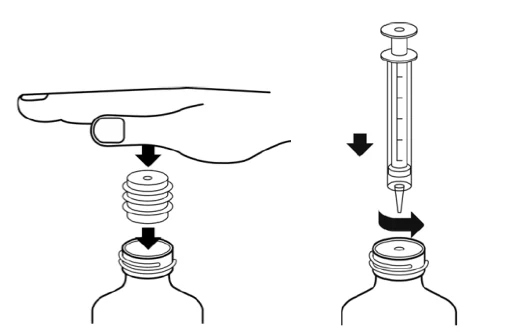
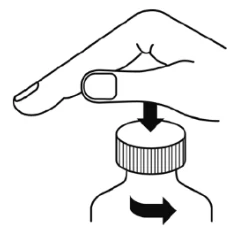
Figure 1 Figure 2 Figure 3
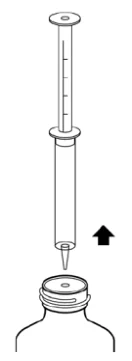
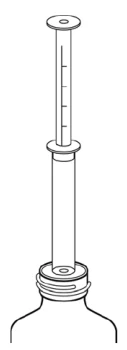
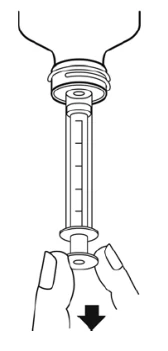
Figure 4 Figure 5 Figure 6
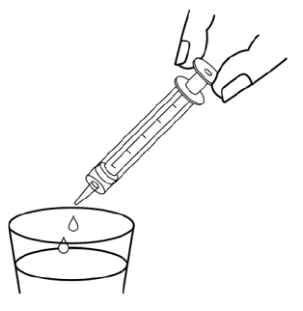
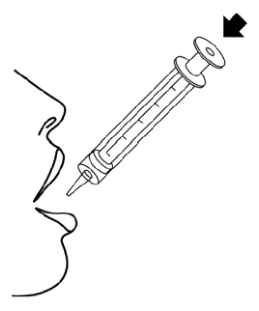
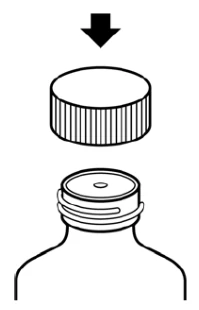
Figure 7 Figure 8 Figure 9
Table 1. Oral syringe withdrawals to deliver prescribed dose of Pregabalin Neuraxpharm
| Pregabalin Neuraxpharm Dose (mg) | Total Solution Volume (ml) | First Syringe Withdrawal (ml) | Second Syringe Withdrawal (ml) | Third Syringe Withdrawal (ml) |
|---|---|---|---|---|
| 25 | 1.25 | 1.25 | Not required | Not required |
| 50 | 2.5 | 2.5 | Not required | Not required |
| 75 | 3.75 | 3.75 | Not required | Not required |
| 100 | 5 | 5 | Not required | Not required |
| 150 | 7.5 | 5 | 2.5 | Not required |
| 200 | 10 | 5 | 5 | Not required |
| 225 | 11.25 | 5 | 5 | 1.25 |
| 300 | 15 | 5 | 5 | 5 |
If you take more Pregabalin Neuraxpharm than you should
Call your doctor or go to the nearest hospital emergency unit immediately. Take your bottle of Pregabalin Neuraxpharm oral solution with you. You may feel sleepy, confused, agitated, or restless as a result of taking more Pregabalin Neuraxpharm than you should. Fits and unconsciousness (coma) have also been reported.
If you forget to take Pregabalin Neuraxpharm
It is important to take your Pregabalin Neuraxpharm oral solution regularly at the same time each day. If you forget to take a dose, take it as soon as you remember unless it is time for your next dose. In that case, just carry on with the next dose as normal. Do not take a double dose to make up for a forgotten dose.
If you stop taking Pregabalin Neuraxpharm
Do not suddenly stop taking Pregabalin Neuraxpharm. If you want to stop taking pregabalin, discuss this with your doctor first. They will tell you how to do this, usually by reducing the dose gradually so that any unpleasant withdrawal effects are kept to a minimum. This may occur over a period of weeks to months. Your prescriber will ensure that your plan for stopping treatment is tailored to you and can be adapted according to your needs and experience of any withdrawal symptoms.
These e f f e c t s include trouble sleeping, headache, nausea, feeling anxious, diarrhoea, flulike symptoms, convulsions, nervousness, depression, thoughts of harming or killing yourself, pain, sweating and dizziness. These symptoms may occur more commonly or severely if you have been taking Pregabalin Neuraxpharm for a longer period of time. If you experience withdrawal effects, you should contact your doctor.
Your prescriber should have discussed with you how long the course of tablets will last. They will arrange a plan for stopping treatment. This will outline how to gradually reduce the dose and stop taking the medicine. Your prescriber will ensure that your plan for stopping treatment is tailored to you and can be adapted according to your needs and experience of any withdrawal symptoms.
If you have any further questions on the use of this medicine, ask your doctor or pharmacist.
4. Possible side effects
Like all medicines, this medicine can cause side effects, although not everybody gets them.
Very common: may affect more than 1 in 10 people
- Dizziness, drowsiness, headache.
Common: may affect up to 1 in 10 people
- Increased appetite.
- Feeling of elation, confusion, disorientation, decrease in sexual interest, irritability.
- Disturbance in attention, clumsiness, memory impairment, loss of memory, tremor, difficulty with speaking, tingling feeling, numbness, sedation, lethargy, insomnia, fatigue, feeling abnormal.
- Blurred vision, double vision.
- Vertigo, problems with balance, falls.
- Dry mouth, constipation, vomiting, flatulence, diarrhoea, nausea, swollen abdomen
- Difficulties with erection.
- Swelling of the body including extremities.
- Feeling drunk, abnormal style of walking.
- Weight gain.
- Muscle cramp, joint pain, back pain, pain in limb.
- Sore throat.
Uncommon: may affect up to 1 in 100 people
- Loss of appetite, weight loss, low blood sugar, high blood sugar.
- Change in perception of self, restlessness, depression, agitation, mood swings, difficulty finding words, hallucinations, abnormal dreams, panic attack, apathy, aggression, elevated mood, mental impairment, difficulty with thinking, increase in sexual interest, problems with sexual functioning including inability to achieve a sexual climax, delayed ejaculation.
- Changes in eyesight, unusual eye movement, changes in vision including tunnel vision, flashes of light, jerky movements, reduced reflexes, increased activity, dizziness on standing, sensitive skin, loss of taste, burning sensation, tremor on movement, decreased consciousness, loss of consciousness, fainting, increased sensitivity to noise, feeling unwell.
- Dry eyes, eye swelling, eye pain, weak eyes, watery eyes, eye irritation.
- Heart rhythm disturbances, increased heart rate, low blood pressure, high blood pressure, changes in heartbeat, heart failure.
- Flushing, hot flushes.
- Difficulty breathing, dry nose, nasal congestion.
- Increased saliva production, heartburn, numb around mouth.
- Sweating, rash, chills, fever.
- Muscle twitching, joint swelling, muscle stiffness, pain including muscle pain, neck pain.
- Breast pain.
- Difficulty with or painful urination, incontinence.
- Weakness, thirst, chest tightness.
- Changes in blood and liver test results (blood creatinine phosphokinase increased, alanine amino transferase increased, aspartate aminotransferase increased, platelet count decreased, neutropaenia, increase in blood creatinine, decrease in blood potassium).
- Hypersensitivity, swollen face, itchiness, hives, runny nose, nose bleed, cough, snoring.
- Painful menstrual periods.
- Coldness of hands and feet.
Rare: may affect up to 1 in 1,000 people
- Abnormal sense of smell, swinging vision, altered perception of depth, visual brightness, vision loss.
- Dilated pupils, cross eyes.
- Cold sweat, tightness of the throat, swollen tongue.
- Inflammation of the pancreas.
- Difficulty in swallowing.
- Slow or reduced movement of the body.
- Difficulty with writing properly.
- Increased fluid in the abdomen.
- Fluid in the lungs.
- Convulsions.
- Changes in the recording of electrical changes (ECG) in the heart which correspond to heart rhythm disturbances.
- Muscle damage.
- Breast discharge, abnormal breast growth, breast growth in males.
- Interrupted menstrual periods.
- Kidney failure, reduced urine volume, urinary retention.
- Decrease in white blood cell count.
- Inappropriate behaviour, suicidal behaviour, suicidal thoughts.
- Allergic reactions which may include difficulty breathing, inflammation of the eyes (keratitis) and a serious skin reaction characterized by reddish non-elevated, target-like or circular patches on the trunk, often with central blisters, skin peeling, ulcers of mouth, throat, nose, genitals and eyes. These serious skin rashes can be preceded by fever and flu- like symptoms (Stevens-Johnson syndrome, toxic epidermal necrolysis).
- Jaundice (yellowing of the skin and eyes).
- Parkinsonism, that is symptoms resembling Parkinson’s disease; such as tremor, bradykinesia (decreased ability to move), and rigidity (muscle stiffness).
Very rare: may affect up to 1 in 10,000 people
- Liver failure.
- Hepatitis (inflammation of the liver).
Not known: frequency cannot be estimated from the available data
- Dependence and addiction (see section “How do I know if I am tolerant or addicted?”).
Drug Withdrawal
When you stop taking Pregabalin Neuraxpharm , you may experience drug withdrawal symptoms, which include: trouble sleeping, headache, nausea, feeling anxious, diarrhoea, flu-like symptoms, convulsions, nervousness, depression, thoughts of harming or killing yourself, pain, sweating, and dizziness.
How do I know if I am tolerant or addicted?
If you notice any of the following signs whilst taking Pregabalin Neuraxpharm , it could be a sign that you have become addicted.
- You need to take the medicine for longer than advised by your prescriber
- You feel you need to use more than the recommended dose
- You are using the medicine for reasons other than prescribed
- When you stop taking the medicine you feel unwell, and you feel better once taking the medicine again
If you notice any of these signs, it is important you talk to your prescriber.
After stopping a short or long-term treatment with Pregabalin Neuraxpharm, you need to know that you may experience certain side effects, so-called withdrawal effects (see “If you stop taking Pregabalin Neuraxpharm”).
If you experience swollen face or tongue or if your skin turns red and starts to blister or peel you should seek immediate medical advice.
Certain side effects may be more common, such as sleepiness, because patients with spinal cord injury may be taking other medicines to treat, for example, pain or spasticity, that have similar side effects to pregabalin and the severity of these effects may be increased when taken together.
The following adverse reaction has been reported in the post-marketing experience: Trouble breathing, shallow breaths.
Reporting of side effects
If you get any side effects, talk to your doctor or pharmacist. This includes any possible side effects not listed in this leaflet. You can also report side effects directly via the Yellow Card Scheme at www.mhra.gov.uk/yellowcard or search for MHRA Yellow Card in the Google Play or Apple App Store.
By reporting side effects you can help provide more information on the safety of this medicine.
5. How to store Pregabalin Neuraxpharm oral solution
Keep this medicine out of the sight and reach of children. This medicine does not require any special storage conditions.
Do not use this medicine if it is more than 60 days after the date the bottle was first opened.
Do not use this medicine after the expiry date which is stated on the carton and bottle after ‘EXP’. The expiry date refers to the last day of that month.
Do not throw away any medicines via wastewater or household waste. Ask your pharmacist how to throw away medicines you no longer use. These measures will help protect the environment.
6. Contents of the pack and other information
What Pregabalin Neuraxpharm oral solution contains
The active substance is pregabalin. Each ml of oral solution contains 20 mg of pregabalin.
The other ingredients are: methyl parahydroxybenzoate (E218), propyl parahydroxybenzoate (E216), sodium dihydrogen phosphate anhydrous, disodium phosphate (E339), sucralose (E955), strawberry flavouring [contains arabic gum (E414), glucose monohydrate, maltodextrin, flavouring substances], purified water.
What Pregabalin Neuraxpharm oral solution looks like and contents of the pack
Pregabalin Neuraxpharm 20 mg/ml oral solution is a clear, colourless solution in a white bottle containing 473 ml of oral solution with a white child-resistant closure, in a cardboard carton. The carton also contains a white 5 ml oral syringe with 1.25 ml graduations and a white press-in bottle adapter (PIBA).
Marketing Authorisation Holder and Manufacturer Marketing Authorisation Holder:
Neuraxpharm UK Limited
First Floor, Building 1410Arlington Business Park
Theale, Reading,
Berkshire RG7 4SA
United Kingdom
Manufacturer:
VIANEX S.A. -Plant A
12 Km National Road Athens-Lamia
144 51 Metamorfossi
Greece
ONE-PHARMA S.A
60th km National Road Athens-Lamia, 320 09 Schimatari, Viotia,
Greece