

Patient leaflet - Phenobarbital Colonis 50 mg/5 ml oral suspension
1. What Phenobarbital oral suspension is and what it is used for
Phenobarbital oral suspension contains the active substance phenobarbital (as phenobarbital sodium). This belongs to a group of medicines called barbiturates. Barbiturates have antiepileptic properties which means they help prevent some types of epileptic seizures. They also have sedative and hypnotic properties which means they can make you feel sleepy. Phenobarbital oral suspension is used in children and adults as an anticonvulsant in the treatment of all forms of epilepsy except absence seizures (daydreaming or lapses in attention).
2. What you need to know before you take Phenobarbital oral suspension
Do not take Phenobarbital oral suspension:
- if you are allergic to phenobarbital or any of the other ingredients of this medicine (listed in section 6).
- if you are allergic to a drug of the same class as phenobarbital (barbiturates).
- if you suffer from severe lack of breath.
- if you have severe liver or kidney disorder.
- if you have porphyria, where chemicals in the body do not break down normally.
if you are taking the following medicines:
o cobicistat or rilpivirine (medicines to treat the AIDS
virus),
o voriconazole (medicine to treat fungi),
o St. John’s wort (plant used to treat depression),
o cholic acid (to treat congenital bile acid deficiency),
o delamanid (to treat tuberculosis),
o telaprevir, daclatasvir, dasabuvir, ombitasvir-paritaprevir,
ledipasvir, sofosbuvir (medicines to treat hepatitis).
- if you are a child who is hyperactive.
IN CASE OF DOUBT, IT IS ESSENTIAL TO SEEK THE ADVICE OF YOUR DOCTOR OR PHARMACIST.
Warnings and precautions
Talk to your doctor or pharmacist before taking Phenobarbital oral suspension if you have:
- existing liver disease
- kidney disease
- shortage of breath
- restricted movement
- or are due to have a flu (influenza) vaccination
- severe or long term pain.
Use during pregnancy and in women of childbearing potential:
Phenobarbital oral suspension may cause serious birth defects in the unborn child and may cause delayed child development when administered during pregnancy. If you are a woman of childbearing age or pregnant, your doctor will not prescribe this medicine, unless no other treatment that is less risky for the unborn child is effective for you. Before starting treatment your doctor will inform you of the risks, make sure you are not pregnant and that you are using effective contraception. Do not abruptly interrupt your treatment, as this could be dangerous for you and your unborn child if you are pregnant (see paragraph "Pregnancy").
This medicine is not effective in some forms of epilepsy, such as in absences and myoclonic seizures. Your doctor will therefore assess the need to prescribe this medicine according to the form of epilepsy you have.
See your doctor immediately if the frequency of your seizures increases or if different types of seizures occur.
Self-harm or suicidal thoughts have been observed in a small number of people treated with antiepileptic drugs such as Phenobarbital oral suspension. If you have these types of thoughts, contact your doctor immediately.
Severe rashes such as Stevens-Johnson syndrome (SJS), toxic epidermal necrolysis (TEN, also known as Lyell’s syndrome), Drug Reaction with Eosinophilia and Systemic Symptoms (DRESS), and acute generalized exanthematous pustulosis (AGEP) have been reported in patients treated with Phenobarbital oral suspension. This risk is greater during the first weeks of treatment.
- Stevens-Johnson syndrome (SJS) and toxic epidermal necrolysis (TEN) can be characterized by blisters, peeling or bleeding on any part of your skin (including your lips, eyes, mouth, nose, genitals, hands or feet) with or without rash. You may also experience flu-like symptoms such as fever, chills or muscle aches.
- Drug Reaction with Eosinophilia and Systemic Symptoms (DRESS) can be characterized by flu-like symptoms and a generalized rash with elevated body temperature and enlarged lymph nodes. Abnormal blood test results may include increased levels of liver enzymes and an increase in one type of white blood cell (eosinophilia).
Acute generalized exanthematous pustulosis (AGEP) appears at initiation of treatment and may be characterized by a generalized red, scaly rash with bubbles under the skin (including skin folds, chest, abdomen (including stomach), back and arms) and blisters accompanied by fever.
If you experience severe skin reactions or any of the reactions listed above, contact your doctor or other healthcare professional immediately and tell them that you are taking this treatment.
Other symptoms to look for are throat ulcers or conjunctivitis (red, irritated eyes).
If you have developed Stevens-Johnson syndrome (SJS) or toxic epidermal necrolysis (TEN) with phenobarbital, you should never take phenobarbital again.
If you need to be hospitalized, you should tell the medical staff that you are taking this medicine.
In case of a generalized allergic reaction or impaired liver function, tell your doctor immediately who will tell you what action to take.
If you are a woman and use hormonal contraception (example: birth control pill), Phenobarbital oral suspension may make this method of contraception ineffective. If the combination is necessary, use another method of contraception (e.g. a condom) and continue two cycles after stopping phenobarbital. You must avoid alcohol while using this medicine. If you are alcoholic, or have a history of alcohol abuse there may be a more appropriate medicine to treat your epilepsy. Tell your doctor or pharmacist if this applies to you.
Prolonged use may lead to dependence. If you are concerned that you are becoming addicted to this medicine, talk to your doctor or pharmacist as soon as possible, but do not stop taking the medicine unless the doctor tells you to as it is important to control your fits.
If you have severe pain, Phenobarbital may not produce a calming action, and may cause wakefulness, excitement and delirium, unless taken with a painkiller.
Your doctor may prescribe additional Vitamin D supplements especially if you have been immobile for a long time, if you don’t get much sunlight or your diet is low in vitamin D or calcium. If you think any of these apply to you talk to your doctor. Young, elderly, depressed, feeble or weak people need to take special care when using this medicine, as they can react differently to it. Talk to your doctor about this if it applies to you, or if you have any concerns about your reaction to the medicine. IF IN DOUBT, DO NOT HESITATE TO ASK YOUR DOCTOR OR PHARMACIST FOR ADVICE.
Other medicines and Phenobarbital oral suspension DO NOT use Phenobarbital oral suspension in combination with
- cobicistat, daclatasvir, dasabuvir, ledipasvir, ombitasvir-paritaprevir, rilpivirine, telaprevir, sofosbuvir, (to treat viral infection),
- cholic acid (to treat congenital bile acid deficiency),
- delamanid (to treat tuberculosis)
- the herbal remedy St John’s Wort (Hypericum perforatum). If you already take St John’s Wort, talk to your doctor before stopping the St John’s Wort preparation,
- voriconazole (to treat fungal infection).
Tell your doctor or pharmacist if you are taking, have recently taken or might take any other medicines. Your doctor may wish to alter your dose of Phenobarbital oral suspension if you are taking any of the following:
- Albendazole (an antiparasitic medicine)
- Alcohol
- Androgenic hormones (androstanolone, norethandrolone, testosterone)
- Antibiotics (e.g. chloramphenicol, doxycycline, metronidazole, telithromycin, cefotaxime)
- Anticoagulants - which are used to thin the blood (e.g. warfarin, dabigatran, apixaban, rivaroxaban, ticagrelor)
- Antihistamine medicines for allergies (e.g. chlorphenamine, promethazine)
- Anti-inflammatory medicines known as corticosteroids (e.g. hydrocortisone, prednisolone, betamethasone)
- Antidepressant medicines (e.g. amfebutamone, bupropion)
- Ciclosporin, tacrolimus, everolimus, sirolimus used in organ and tissue transplants
- Deferasirox (to treat chronic iron overload)
- Diuretic medicines to reduce water in the body (e.g. furosemide, eplerenone, acetazolamide)
- Folic acid used to treat anaemia
- Hormones and related medicines (e.g. oral, transdermal, and nasal estrogens; or non-contraceptive progestogen, tibolone, gestrinone, toremifene, abiraterone)
- Ivacaftor (medicine for the treatment of cystic fibrosis)
- Liothyronine or levothyroxine (used to treat an under-active thyroid gland)
- Lofexidine (to treat opioid overdose)
- Medicines which prevent nausea and vomiting (e.g. tropisetron, aprepitant)
- Medicine to reduce alcohol consumption (baclofen)
- Medicines to treat arthritis or rheumatism (e.g. methotrexate)
- Medicines to treat pulmonary hypertension (e.g. bosentan, macitentan)
- Medicines to treat some cancers, leukaemia or Hodgkin’s disease (e.g. doxorubicin, eribulin, etoposide, ifosfamide, procarbazine, irinotecan, teniposide, cyclophosphamide, gefitinib, axitinib, bosutinib, crizotinib, dabrafenib, dasatinib, erlotinib, imatinib, lapatinib, nilotinib, pazopanib, ruxolitinib, sorafenib, sunitinib, thalidomide, vandetanib, regorafenib, vemurafenib, vismodegib, bortezomib, cabazitaxel, docetaxel)
- Medicines for heart problems, high blood pressure and angina (e.g. propranolol, timolol, metoprolol, felodipine, isradipine, dihydropyridines, bepridil, diltiazem, verapamil, nimodipine, nifedipine, digitoxin, disopyramide, lidocaine, propafenone, dronedarone, hydroquinidine, quinidine, ivabradine)
- Medicines for psychiatric disorders (e.g. chlorpromazine, haloperidol, mesoridazine, thioridazine, aripiprazole, quetiapine)
Medicines used to treat depression (e.g. MAOIs, imipramine, amitriptyline, amitriptylinoxide, paroxetine, SSRIs, fluoxetine, mianserin, bupropion, lithium, sertraline, doxepin, mirtazapine, trimipramine)
- Medicines to treat diabetes (e.g. chlorpropamide, tolbutamide)
- Medicines used to help with asthma or breathing (e.g. theophylline, montelukast, aminophylline)
- Medicines used to treat fungal infections (e.g. griseofulvin, itraconazole, posaconazole)
- Medicines used to treat malaria (e.g. quinine)
- Medicines to treat mood disorders (e.g. divalproate, valpromide)
- Medicines to treat tuberculosis (e.g. bedaquiline, rifampicin)
- Medicines to treat Vitamin B6 deficiency (e.g. pyridoxine)
- Medicines to treat viral infection, including human immunodeficiency virus (HIV) infection or hepatitis C virus (HCV) infection (e.g. indinavir, abacavir, amprenavir, atazanavir, darunavir, boceprevir, fosamprenavir, lopinavir, nelfinavir, saquinavir, etravirine, ritonavir, tipranavir, dolutegravir, simeprevir, maraviroc)
- Medicines which act on Central Nervous System (e.g. tranquilizers, benzodiazepines, barbiturates, anxiolytics other than benzodiazepines (for example, meprobamate), sedating H1 antihistamines, midazolam, medicines to lower blood pressure such as central antihypertensives)
- Memantine (for Alzheimer’s disease)
- Methadone, a medicine used to treat drug dependency
- Methylphenidate, for attention deficit hyperactivity disorder (ADHD)
- Non-steroidal anti-inflammatory drug phenylbutazone (used to treat spondylitis)
- Other medicines to treat epilepsy (e.g. phenytoin, fosphenytoin, cenobamate, carbamazepine, procarbazine, lamotrigine, sodium valproate, clonazepam, diazepam, tiagabine, zonisamide, ethosuximide, oxcarbazepine, felbamate, stiripentol, vigabatrin, perampanel, primidone)
- Painkillers, sedatives or anaesthetics, cough suppressants and substitution treatment (e.g. morphine, dextropropoxyphene, pethidine, fentanyl, methadone, fenoprofen, paracetamol, diazepam, lidocaine)
- Praziquantel (an antiparasitic medicine)
- Ranolazine (medicine to treat angina pectoris)
- Sex hormones (e.g. oestrogens, progestogens)
- Sodium oxybate, for serious daytime sleepiness (narcolepsy)
- Vitamin D, your doctor may advise you to change your daily dose
- Vitamin K antagonists
- Vaccine, flu (influenza) vaccine. Talk to your doctor before having a flu vaccination if taking phenobarbital. IMPORTANT
- Steroid medicines including oral contraceptives or emergency contraceptives (morning after pill) – Using phenobarbital may cause your oral contraceptive to be less effective, and it may not prevent pregnancy. An alternative contraceptive medicine may be more appropriate when taking phenobarbital. You should discuss this with your doctor before taking this medicine.
Phenobarbital oral suspension with drink and alcohol
Alcohol should be avoided whilst taking Phenobarbital oral suspension.
Pregnancy, breast-feeding and fertility
If you are pregnant or breast-feeding, think you may be pregnant or are planning to have a baby, ask your doctor or pharmacist for advice before taking this medicine.
Pregnancy
If phenobarbital is taken during pregnancy, it can cause serious birth defects and may delay the development of the child. Birth defects that have been reported in studies include cleft lip and palate and heart abnormalities. Other birth defects have also been reported, such as malformation of the penis, smaller than normal head size, facial, nail and finger deformities. If you take phenobarbital during pregnancy, you are at a higher risk than other women of having a child with birth defects that require medical treatment. In the general population, the background rate of serious birth defects is 2-3%. This risk is increased about 3 times in women taking phenobarbital.
Babies born from mothers taking phenobarbital during pregnancy may also have an increased risk of being smaller than normal.
Neurodevelopmental disorders (developmental delays due to impaired brain development) have been reported in children exposed to phenobarbital during pregnancy.
The results of studies on the risk of neurodevelopmental disorders remain contradictory.
Phenobarbital should not be used during pregnancy unless no other treatment works for you.
Talk to your doctor immediately if you are pregnant. Your doctor should discuss with you the possible effects of Phenobarbital oral suspension on the unborn child and the risks and benefits of treatment should be considered carefully.
Check with your doctor before taking folic acid supplements as they interact with Phenobarbital, your doctor may need to adjust your dose.
Do not stop taking phenobarbital until you have discussed it with your doctor, as stopping the medicine suddenly may increase the risk of developing seizures, which may harm you and your unborn child.
If you have taken phenobarbital during the last third of the pregnancy, appropriate monitoring should be conducted to detect potential disorders in the newborn, such as seizures, excessive crying, muscle weakness, sucking disorders. Woman of child-bearing potential/Contraception If you are a woman who is able to have a baby you should use effective contraception during treatment with phenobarbital and for two months after treatment. Phenobarbital may affect how hormonal contraceptives, such as the contraceptive pill, work and make them less effective at preventing pregnancy. Talk to your doctor, who will discuss with you the most suitable type of contraception to use while you are taking phenobarbital.
- If you are a woman of childbearing age and are planning a pregnancy, talk to your doctor before you stop contraception and before you become pregnant about switching to other suitable treatments in order to avoid exposing the unborn baby to phenobarbital.
Country
UK
Body text
9pt
Dimensions in mm (H x W x D)
420 x 297
Operator
AD
Version No. Date
07 NOV 2025
PROCESS BLACK
If you find out you are pregnant, think you may be pregnant, or plan to become pregnant:
- Do not suddenly interrupt your treatment and contact your doctor immediately.
Your doctor will consider stopping this treatment or will judge the possible usefulness of continuing it when no other less risky treatment for the unborn child is effective for you, in which case:
o during pregnancy, your doctor will adapt your dose to
obtain the minimum dose that is effective for you and will set up specialist monitoring adapted to your illness and the monitoring of your unborn child. Your doctor may prescribe folic acid supplementation.
o before delivery: your doctor will prescribe certain vitamins
to prevent this medicine from causing bleeding during the first days of life or problems with the formation of your baby’s bones.
o after childbirth: an injection of vitamin K may also be
prescribed for your baby, at birth, to prevent bleeding. If you have taken Phenobarbital oral suspension at the end of pregnancy, appropriate monitoring will be put in place to detect the possible occurrence of disorders in the newborn, such as muscle weakness, feeding difficulties, signs of weaning.
o in children: inform the doctor(s) who will take care of your
child that you were treated with phenobarbital during your pregnancy. They will set up close monitoring of your child’s neurological development in order to provide specialized care as soon as possible, if necessary.
Breast-feeding
You should not breast-feed if you are taking this medicine. Tell your doctor immediately if you are breast-feeding or want to breast-feed. As phenobarbital is released into breast milk this may make your baby sleepy or get too little oxygen and therefore breast-feeding is not advisable.
Fertility
No human data on the effect of phenobarbital on fertility are available.
Driving and using machines
This product may cause drowsiness or affect your concentration. If affected do not drive or operate machinery. Consult your doctor for further information.
Phenobarbital 50 mg/5 ml oral suspension contains sodium benzoate and sodium.
This medicine contains 0.5 mg sodium benzoate in each 1 ml of suspension. Sodium benzoate may increase jaundice (yellowing of the skin and eyes) in newborn babies (up to 4 weeks old). This medicine contains 3.42 mg sodium (main component of cooking/table salt) in each 1 ml of suspension. This is equivalent to 0.17 % of the recommended maximum daily dietary intake of sodium for an adult.
3. How to take Phenobarbital oral suspension
Always take this medicine exactly as your doctor or pharmacist has told you. Check with your doctor or pharmacist if you are not sure.
Dosage
The dosage is strictly individual. It will be determined by your doctor and will be gradually adapted.
Adults
1 single dose per day, in the evening at bedtime. Use in children and adolescents
1 to 2 doses per day. The doctor will prescribe the correct dose for the child depending on their age and weight.
Duration of treatment
The duration of treatment is determined by the doctor. Do not stop taking this medication without medical advice. Method of administration
For oral use.
A 10 ml graduated oral syringe with intermediate graduations of 0.2 ml and a “Press-In” Bottle Adapter (PIBA) are provided with the product.
- 1. Shake the bottle well, before use.
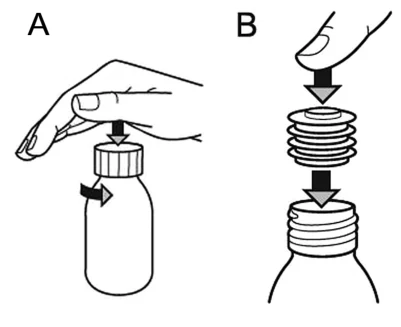 2. Open the bottle and at
first use insert the PIBA
(see pictures A-B). 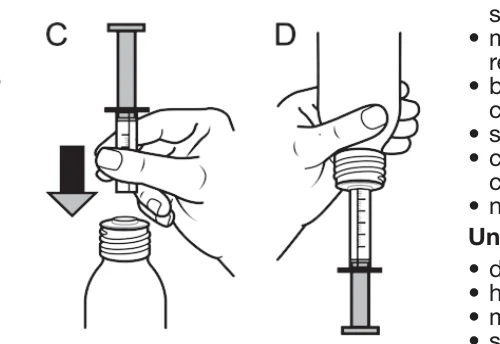 3. Insert the syringe into
the PIBA and draw out
the required volume
from the inverted bottle
(see pictures C-D). 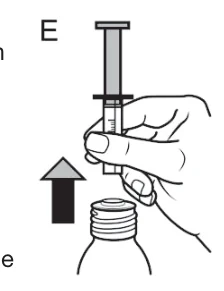
 4. Remove the filled
syringe from the bottle in
the upright position (see
picture E).
- 5. Discharge the syringe
contents into the mouth.
Repeat steps 3 to 5 as
needed to achieve the
required dose.
- 6. Replace the cap on the
bottle (PIBA remains in
place).
- 7.
Rinse the syringe with water and allow to air dry.
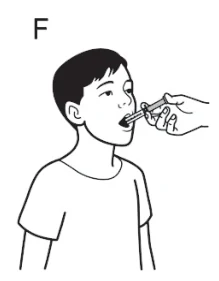
If you are giving Phenobarbital oral suspension to a child:
- Make sure that the child is sitting up or standing.
- Put the syringe into the child’s mouth, placing the barrel-opening in the area between the gums and the inside of the cheek (see picture F).
- Push the plunger slowly, giving the child time to swallow the medicine as it squirts out. Do not push the plunger too quickly as the medicine may come out too quickly and the child may choke.
- Give the child some water to drink in order to ensure that all the medicine is washed down.
Alternative method of administration (with feeding tubes)
This medicine can also be administered via nasogastric (NG) or percutaneous endoscopic gastrostomy (PEG) tubes. If you want to know more, there is information in the Summary of Product Characteristics (SmPC). Ask your doctor, pharmacist or nurse about this.
Compatibility has only been demonstrated with 6 Fr and larger size tubes.
Administering this medicine via NG or PEG tubes
- 1. Ensure the tube is clear before administering the medicine.
- 2. Flush the tube with 10 ml of boiled cooled water.
- 3. Administer the medicine into the tube with a suitable measuring device.
- 4. Immediately flush the tube again with 2 ml of boiled cooled water.
If you take more Phenobarbital oral suspension than you should
If you accidentally take too much oral suspension, contact your doctor or nearest hospital accident and emergency department immediately. Always take the labelled medicine package with you, whether there is any medication left or not. Signs of an overdose include: nausea, vomiting, headache, mental confusion, drowsiness, coma, difficulty in breathing, heart problems and/or attack, low blood pressure, kidney failure, reduced reflex response, absent bowel sounds, low body temperature (with associated raised body temperature during recovery), blistering of the skin, jerky movements, feeling dizzy, depressed mood, skin rashes.
If you forget to take Phenobarbital oral suspension
If you forget to take your oral suspension, take it as soon as you remember, unless it is almost time for your next dose. Do not take a double dose to make up for a forgotten dose. If you stop taking Phenobarbital oral suspension
It is important to keep taking Phenobarbital oral suspension until your doctor tells you to stop, even if you start to feel better. If you stop taking the oral suspension too soon, your condition may get worse. If you have any further questions on the use of this medicine, ask your doctor or pharmacist.
4. Possible side effects
Like all medicines, this medicine can cause side effects, although not everybody gets them.
Serious side effects
Phenobarbital oral suspension may cause serious adverse effects (see section 2, paragraph “Warnings and precautions”), the frequency of which is not known.
Consult your doctor or pharmacist immediately if any of the following side effects occur:
- an allergic reaction (swelling of the lips, face or neck leading to severe difficulty in breathing; skin rash or hives),
- a syndrome called antiepileptic hypersensitivity syndrome. Symptoms of this include fever, rash, yellowing of the eyes and skin (hepatitis), and swollen glands,
- Stevens -Johnson syndrome (SJS) and toxic epidermal necrolysis (TEN) which may be characterized by blistering, peeling or bleeding on any part of your skin (including your lips, eyes, mouth, nose, genitals, hands or feet) with or without a rash. You may also have flu-like symptoms such as fever, chills or muscle aches,
- drug reaction with eosinophilia and systemic symptoms (DRESS) the manifestation of which may be characterized by flu-like symptoms and generalized skin rash with elevated body temperature and enlarged lymph nodes. Abnormal blood test results may include increased levels of liver enzymes and an increase in a type of white blood cell (eosinophilia),
- acute generalized exanthematous pustulosis (AGEP) which may be characterized by a widespread red scaly rash with blisters under the skin (including skin folds, chest, abdomen (including stomach), back and arms) and blisters accompanied by fever, at the initiation of treatment,
- in the liver: abnormal blood tests with an increase in certain enzymes, hepatitis,
- thoughts of harming or killing yourself.
Other side effects
Common side effects (may affect up to 1 in 10 people):
- drowsiness, difficulty waking up with sometimes difficulty in speaking,
- memory problems, difficulty in concentrating, confusion, reasoning disorders,
- behavioral problems, agitation, aggression (particularly in children),
- skin reactions,
- contraction of one or more fingers on the hand (Dupuytren’s contracture),
- nausea, vomiting.
Uncommon side effects (may affect up to 1 in 100 people):
- difficulties in coordinating movements and balance, dizziness,
- headache,
- mood disorders,
- sleep disturbances/insomnia,
- joint pain (shoulder-hand syndrome or rheumatism). Rare side effects (may affect up to 1 in 1,000 people):
- loss of attention.
Side effects whose frequency is not known:
- lack of energy,
- unsteady walking or jerky movements,
- depression,
- dependence if you have taken this medicine for a long time and withdrawal problems when you stop taking it,
- neonatal dependence and withdrawal syndrome,
- neonatal bleeding due to reduced levels of vitamin K,
- problems with general perception in the elderly,
retraction of the aponeurosis of the feet (Ledderhose’s disease),
- induration of the cavernous body of the penis (Peyronie’s disease),
- fibromas (non-cancerous growths),
- softening of the bones (osteomalacia), rickets,
- frozen shoulder,
- bone disorders manifested by weakening of the bones (osteopenia), a decrease in bone mass (osteoporosis) and fractures,
- low number of red blood cells characterised by headaches, weight loss and a sore mouth and tongue (aplastic anaemia, folic acid deficiency anaemia), low number of certain white blood cells in the blood (agranulocytosis, neutropenia and leukopenia), low platelets (thrombocytopenia) or low number of collection of blood cells (pancytopenia),
- uncontrollable movements (dyskinesia), irritability, lethargy, jerky eye movements (nystagmus),
- children may become irritable and hyperactive, behavioural problems in children,
- malformations and other abnormalities in the development of the unborn child,
- reduced levels of folate, Vitamin K, phosphate or calcium in the blood,
- problems with levels of Vitamin D in the body,
- reduced thyroid hormones in the blood,
- skin itching,
- severe skin reaction may occur, which may cause scaly, itchy skin, or red, itchy spots, loss of hair and nails,
- sensitivity to light,
- difficulty breathing (respiratory depression),
- seeing things (hallucinations), restlessness, exaggerated changes in emotions, with uncontrollable laughing or crying, high irritability (paradoxical excitement), hepatitis, abnormal hepatic function, problems with bile (cholestasis),
- jaundice (a yellowing of the skin and whites of the eyes),
- low blood pressure (hypotension),
- fits (Grand Mal convulsion).
Reporting of side effects
If you get any side effects, talk to your doctor or pharmacist. This includes any possible side effects not listed in this leaflet. You can also report side effects directly via the Yellow Card Scheme at www.mhra.gov.uk/yellowcard or search for ‘MHRA Yellow Card’ in the Google Play or Apple App Store. By reporting side effects you can help provide more information on the safety of this medicine.
5. How to store Phenobarbital oral suspension
Keep this medicine out of the sight and reach of children. Do not use this medicine after the expiry date which is stated on the carton and label after EXP. The expiry date refers to the last day of that month.
This medicinal product does not require any special temperature storage conditions.
Store in the original package in order to protect from light. After first opening use within 6 months.
Do not throw away any medicines via wastewater or household waste. Ask your pharmacist how to throw away medicines you no longer use. These measures will help protect the environment.
6. Contents of the pack and other information
What Phenobarbital oral suspension contains
- The active substance is phenobarbital.
- Each 5 ml of Phenobarbital oral suspension contains 50 mg of phenobarbital (as phenobarbital sodium).
- The other ingredients are: glycerol (E422), citric acid (E330), sodium hydroxide (E524), microcrystalline cellulose and carmellose sodium, xanthan gum (E415), lemon flavour (including propylene glycol (E1520)), sucralose (E955), polysorbate 80 (E433), sodium benzoate (E211), simethicone 30% emulsion and purified water.
What Phenobarbital oral suspension looks like and contents of the pack
Phenobarbital oral suspension is a white to off-white homogeneous suspension with characteristic lemon odour. It is supplied in an amber, type III glass bottle, safely closed with a child-resistant screw cap with tamper evident closure. Each bottle contains 150 ml of this medicine.
A 10 ml oral syringe of 0.2 ml graduations along with a press-in bottle adapter (PIBA) are also provided.
Marketing Authorisation Holder and Manufacturer
Marketing Authorisation Holder
Colonis Pharma Limited
25 Bedford Square
Bloomsbury
London
WC1B 3HH
United Kingdom
Manufacturer
Galenica Pharmaceutical Industry S.A.
Asklipiou 4-6,
Kryoneri (Attiki), 14568, Greece
This leaflet was last revised in November 2025.
Country UK Body text 9pt Dimensions in mm (H x W x D) 420 x 297 108847758_403340347 Operator AD Version No. 08 Date 07 NOV 2025 PROCESS BLACK | |||