

Summary of Product Characteristics (SmPC) - Penthrox 99.9% 3 ml inhalation Vapour liquid
1 NAME OF THE MEDICINAL PRODUCT
PENTHROX 99.9%, 3 mL inhalation vapour, liquid
2 QUALITATIVE AND QUANTITATIVE COMPOSITION
Each bottle contains 3 ml of methoxyflurane 99.9%.
Excipients with known effect: Butylated hydroxytoluene (E321) (0.01% w/w)
3 PHARMACEUTICAL FORM
Inhalation vapour, liquid.
Clear, almost colourless, volatile liquid, with a characteristic fruity odour.
4 CLINICAL PARTICULARS
4.1 Therapeutic indications
Emergency relief of moderate to severe pain in conscious patients aged 6 years and older with trauma and associated pain.
4.2 Posology and method of administration
<invented name> should be self-administered under supervision of a person trained in its administration, <and> <or> <physician,> <and> <or> <doctor,> <and> <or> <nurse>, <and> <or> <paramedic>, using the hand held <invented name> Inhaler. It is inhaled through the custom-built <invented name> inhaler.
Posology
Adults and children aged 6 years and older
One bottle of 3 ml <invented name> as a single dose, administered using the device provided. A second bottle should only be used where needed.
The frequency at which <invented name> can be safely used is not established (see section 4.4). The following administration schedule is recommended: no more than 6 ml in a single day, administration on consecutive days is not recommended, and the total dose to a patient in a week should not exceed 15 ml.
In adults the onset of pain relief is rapid and should commence after 6–10 inhalations. In children additional inhalations may be required. Patients should be instructed to inhale intermittently to achieve adequate analgesia. Patients are able to assess their own level of pain and titrate the amount of <invented name> inhaled for adequate pain control. Continuous inhalation of a bottle containing 3 ml provides analgesic relief for up to 25-30 minutes. Intermittent inhalation may provide longer analgesic relief. Patients should be advised to use the lowest possible dose to achieve pain relief (see section 4.4).
Renal impairment
Methoxyflurane may cause renal failure if the recommended dose is exceeded. Caution should be exercised for patients diagnosed with clinical conditions that would pre-dispose to renal injury (see section 4.4).
Hepatic impairment
Cautious clinical judgement should be exercised when <invented name> is to be used more frequently than on one occasion every 3 months (see section 4.4).
Paediatric population
<invented name> should not be used in children aged under 6 years.
Method of administration
For inhalation use.
Instructions on the preparation of the <invented name> Inhaler and correct administration are provided in the Figures below. 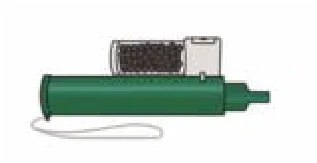
1
Ensure the Activated Carbon (AC) Chamber is
inserted into the dilutor hole on the top of the
<invented name> Inhaler.
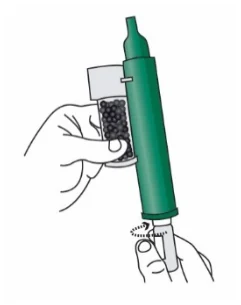
2
Remove the cap of the bottle by hand.
Alternatively, use the base of the <invented name>
Inhaler to loosen the cap with a ½ turn. Separate
the Inhaler from the bottle and remove the cap by
hand.
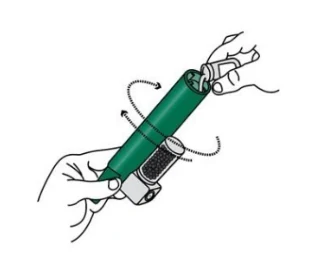
3
Tilt the <invented name> Inhaler to a 45° angle
and pour the total contents of one <invented
name> bottle into the base of the Inhaler whilst
rotating.
4
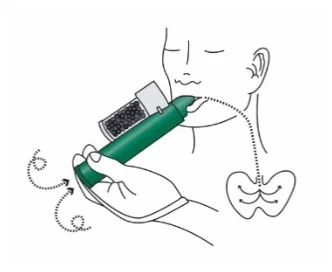
Place wrist loop over patient’s wrist. Patient inhales and exhales <invented name> through the mouthpiece to obtain analgesia. First few breaths should be gentle and then breathe normally through Inhaler.
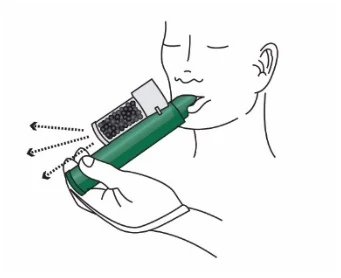
5
Patient exhales into the <invented name> Inhaler. The exhaled vapour passes through the AC Chamber to adsorb any exhaled methoxyflurane.
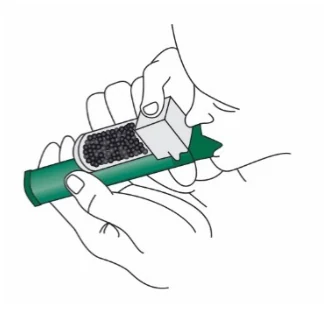
6
If stronger analgesia is required, patient can cover dilutor hole on the AC chamber with finger during use.
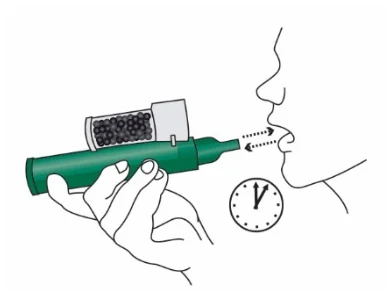
7
If further pain relief is required, after the first bottle has been used use a second bottle if available. Alternatively use a second bottle from a new combination pack. Use in the same way as the first bottle in step 2 and 3. No need to remove the AC Chamber. Put used bottle into the plastic bag provided.
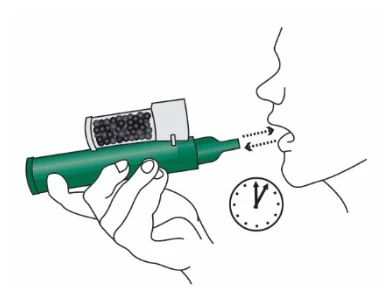
8
Patient should be instructed to inhale intermittently to achieve adequate analgesia. Continuous inhalation will reduce duration of use. Minimum dose to achieve analgesia should be administered.
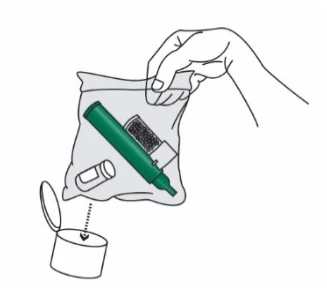 9
Replace cap onto <invented name> bottle. Place used
<invented name> Inhaler and used bottle in sealed
plastic bag and dispose of responsibly (see section
6.6).
The <physician,> <and> <or> <doctor,> <and> <or> <nurse,> <and> <or> <paramedic>
<and> <or> person trained in administering, <invented name> must provide and explain the Package Leaflet to the patient
4.3 Contraindications
Use as an anaesthetic agent.
Hypersensitivity to methoxyflurane, any fluorinated anaesthetic or to any of the excipients listed in section 6.1.
Malignant hyperthermia: patients who are known to be or genetically susceptible to malignant hyperthermia.
Patients or patients with a known family history of severe adverse reactions after being administered with inhaled anaesthetics.
Patients who have a history of showing signs of liver damage after previous methoxyflurane use or halogenated hydrocarbon anaesthesia.
Clinically significant renal impairment.
Altered level of consciousness due to any cause including head injury, drugs, or alcohol.
Clinically evident cardiovascular instability.
Clinically evident respiratory depression.
4.4 Special warnings and precautions for use
Renal disease
To ensure the safe use of <invented name> as an analgesic the following precautions should be observed.
- Use the lowest effective dose to control pain
- Use with caution in the elderly or other patients with known risk factors for renal disease.
- Use with caution in patients diagnosed with clinical conditions which may pre-dispose to renal injury.
Methoxyflurane causes significant nephrotoxicity at high doses. Nephrotoxicity is thought to be associated with inorganic fluoride ions, a metabolic breakdown product. When administered as instructed for the analgesic indication, a single dose of 3 ml methoxyflurane produces serum levels of inorganic fluoride ions below 10 micromol/l. In the past when used as an anaesthetic agent, methoxyflurane at high doses caused significant nephrotoxicity, which was determined to occur at serum levels of inorganic fluoride ions greater than 40 micromol/l. Nephrotoxicity is also related to the rate of metabolism. Therefore factors that increase the rate of metabolism such as drugs that induce hepatic enzymes can increase the risk of toxicity with methoxyflurane as well as sub-groups of people with genetic variations that may result in fast metaboliser status (see section 4.5).
Liver disease
Methoxyflurane is metabolised in the liver, therefore increased exposures in patients with hepatic impairment can cause toxicity. <invented name> must not be used in patients who have a history of showing signs of liver damage after previous methoxyflurane use or halogenated hydrocarbon anaesthesia (see section 4.3). <invented name> should be used with care in patients with underlying hepatic conditions or with risks for hepatic dysfunction (such as enzyme inducers - see also section 4.5).
It has been reported that previous exposure to halogenated hydrocarbon anaesthetics (including methoxyflurane when used in the past as an anaesthetic agent), especially if the interval is less than 3 months, may increase the potential for hepatic injury.
Cautious clinical judgement should be exercised when <invented name> is to be used more frequently than on one occasion every 3 months.
Cardiovascular system depression / use in elderly
Potential effects on blood pressure and heart rate are known class-effects of high dose methoxyflurane used in anaesthesia and other anaesthetics. They do not appear to be significant at the analgesic doses. There is no particular pattern to the patients’ systolic blood pressure levels after methoxyflurane administration as an analgesic across age groups. However, as the risk may potentially be increased for older people with hypotension and bradycardia, caution should be exercised in the elderly due to possible reduction in blood pressure.
Central nervous system (CNS) effects
Secondary pharmacodynamic effects including potential CNS effects such as sedation, euphoria, amnesia, ability to concentrate, altered sensorimotor co-ordination and change in mood are also known class-effects. Self-administration of methoxyflurane in analgesic doses will be limited by occurrence of CNS effects, such as sedation. Whilst the possibility of CNS effects may be seen as risk factor for potential abuse, reports are very rare in post marketing use.
Respiratory depression
Respiratory depression has been reported also from analgesic doses (section 4.8). Respiration should be monitored due to the risk for respiratory depression and hypoxia.
Frequent repeated use
Due to the limitations on the dose of <invented name> (refer to section 4.2) and the duration of pain relief, <invented name> is not appropriate for providing relief of break-through pain/exacerbations in chronic pain conditions. <invented name> is also not appropriate for relief of trauma related pain in closely repeated episodes for the same patient.
Butylated hydroxytoluene
<invented name> contains the excipient, butylated hydroxytoluene (E321), a stabiliser. Butylated hydroxytoluene may cause local skin reactions (e.g. contact dermatitis), or irritation to the eyes and mucous membranes. See section 6.1.
Occupational exposure
Healthcare professionals who are regularly exposed to patients using <invented name> inhalers should be aware of any relevant occupational health and safety guidelines for the use of inhalational agents. To reduce occupational exposure to methoxyflurane, the <invented name> inhaler should always be used with the Activated Carbon (AC) Chamber which adsorbs exhaled methoxyflurane. Patients should be instructed to exhale into the <invented name> Inhaler so the exhaled vapour passes through the AC Chamber which adsorbs exhaled methoxyflurane. Multiple use of <invented name> Inhaler without the AC Chamber creates additional risk. Elevation of liver enzymes, blood urea nitrogen and serum uric acid have been reported in exposed maternity ward staff in delivery wards when methoxyflurane was used in the past in obstetric patients at the time of labour and delivery. There have been reports of non-serious and transient reactions such as dizziness, headache, nausea or malaise, and reports of hypersensitivity reactions to methoxyflurane or other ingredients in healthcare professionals exposed to <invented name>. Measurements of exposure levels to methoxyflurane in hospital staff showed levels significantly lower than those associated with nephrotoxicity.
4.5 Interaction with other medicinal products and other forms of interaction
The metabolism of methoxyflurane is mediated by the CYP 450 enzymes particularly CYP 2E1, CYP 2B6 and to some extent CYP 2A6. It is possible that enzyme inducers (such as alcohol or isoniazid for CYP 2E1 and phenobarbital or rifampicin for CYP 2A6 and carbamazepine, efavirenz, rifampicin or nevirapine for CYP 2B6) which increase the rate of methoxyflurane metabolism might increase its potential toxicity and they should be avoided concomitantly with methoxyflurane.
Concomitant use of methoxyflurane with medicines (e.g. contrast agents and some antibiotics) which are known to have a nephrotoxic effect should be avoided as there may be an additive effect on nephrotoxicity. Antibiotics with known nephrotoxic potential include tetracycline, gentamicin, colistin, polymyxin B and amphotericin B. It is advisable to avoid using sevoflurane anaesthesia following methoxyflurane analgesia, as sevoflurane increases serum fluoride levels and nephrotoxicity of methoxyflurane is associated with raised serum fluoride.
Concomitant use of PENTHROX with CNS depressants, such as opioids, sedatives or hypnotics, general anaesthetics, phenothiazines, tranquillisers, skeletal muscle relaxants, sedating antihistamines and alcohol may produce additive depressant effects. If opioids are given concomitantly with PENTHROX, the patient should be observed closely, as is normal clinical practice with opioids.
When methoxyflurane was used for anaesthesia at the higher doses of 40 – 60 mL, there were reports of:
- a) Drug interaction with hepatic enzyme inducers (e.g. barbiturates) increasing metabolism of methoxyflurane and resulting in a few reported cases of nephrotoxicity. There is insufficient information to show whether enzyme induction affects liver damage after an analgesic dose of methoxyflurane.
- b) Reduction of renal blood flow and hence anticipated enhanced renal effect when used in combination with drugs (e.g. barbiturates) reducing cardiac output.
- c) Class effect on cardiac depression which may be enhanced by other cardiac depressant drugs, e.g. intravenous practolol during cardiac surgery.
4.6 Fertility, pregnancy and lactation
Fertility
No clinical data on effects of methoxyflurane on fertility are available. Limited data from animal studies do not indicate any effects on sperm morphology.
Pregnancy
Studies in animals have shown reproduction toxicity (see section 5.3). Where methoxyflurane has been used for obstetric analgesia in pregnant women, there has been a single report of neonatal respiratory depression associated with a high fetal level of methoxyflurane. However, when low concentrations were administered, or the duration of higher concentrations was kept short, per recommended posology, methoxyflurane was found to have little effect on the foetus. No fetal complications were reported to result from methoxyflurane analgesia in the mother in all the studies completed in obstetric analgesia. As with all medicines care should be exercised when administered during pregnancy especially the first trimester.
Breast-feeding
There is insufficient information on the excretion of methoxyflurane in human milk. Caution should be exercised when methoxyflurane is administered to a nursing mother.
4.7 Effects on ability to drive and use machines
<invented name> may have a minor influence on the ability to drive and use machines. Dizziness, somnolence and drowsiness may occur following the administration of methoxyflurane (see section 4.8). Patients should be advised not to drive or operate machinery if they are feeling drowsy or dizzy.
4.8 Undesirable effects
Summary of safety profile
The common non-serious reactions are CNS type reactions such as dizziness, and somnolence, and are generally easily reversible.
Serious dose-related nephrotoxicity has only been associated with methoxyflurane when used in large doses over prolonged periods during general anaesthesia. Methoxyflurane is therefore no longer used for anaesthesia. See section 4.4 under renal disease. The recommended maximum dose for <invented name> should therefore not be exceeded.
Liver injury or increased hepatic enzymes may occur rarely (less than 1 case per 1,000 patients) with analgesic use of methoxyflurane. See section 4.4 under liver disease.
Tabulated list of adverse reactions
The following table consists of adverse drug reactions:
- observed in <invented name> clinical studies in analgesia
- observed with analgesic use of methoxyflurane following post-marketing experience
- linked to methoxyflurane use in analgesia found in scientific literature
The following frequencies are the basis for assessing undesirable effects:
Very common (≥1/10);
Common (≥1/100 to <1/10);
Uncommon (≥1/1,000 to <1/100);
Rare (≥1/10,000 to <1/1,000);
Very rare (<1/10,000); and
Not known (cannot be estimated from the available data).
MedDRA System Organ Class | Common ≥1/100 to <1/10 | Uncommon ≥1/1,000 to <1/100 | Rare ≥1/10,000 to <1/1000 | Not known |
| Immune system disorders | Hypersensiti vity^ | |||
| Metabolism and nutrition | Increased appetite |
| disorders | ||||
| Psychiatric disorders | Euphoric mood | Confusional state | Affect lability Agitation Anxiety Depression Disturbance in attention Inappropriate affect Verbigeratio n | Dissociation^ Restlessness^ |
| Nervous system disorders | Dizziness Somnolence | Amnesia Dysarthria Dysgeusia Headache | Paraesthesia Peripheral sensory neuropathy | Altered state of consciousnes s^ Nystagmus^ |
Eye disorders | Vision impairment | Eye pain Lacrimation increased | ||
| Vascular disorders | Flushing Hypertension Hypotension | |||
| Respiratory, thoracic and mediastinal disorders | Cough | Hypoxia | Choking^ Respiratory depression^ | |
| Gastrointesti nal disorders | Dry mouth Nausea Oral discomfort Vomiting | Oral pruritus Salivary hypersecretio n | ||
| Hepatobiliar y disorders | Liver injury | Hepatic failure* Hepatitis* Jaundice^ | ||
Skin and subcutaneous tissue disorders | Hyperhidrosi s | |||
Renal and urinary disorders | Renal failure^ | |||
General disorders and administratio n site conditions | Feeling drunk | Fatigue Feeling abnormal | Chills Feeling of relaxation | |
| Investigation s | Hepatic enzyme increased | Blood urea increased^ Blood uric acid increased^, |
Blood creatinine increased^. |
*isolated post-marketing reports that have been observed with analgesic use of methoxyflurane
^Other events linked to methoxyflurane use in analgesia found in post marketing experience and in scientific literature
Paediatric population
The safety profile of <invented name> in a placebo-controlled study in paediatrics (MEOF-002) aged 6 to < 18 years was consistent with the safety profile observed in adults. The majority of events were mild in intensity and non-serious with the most common being dizziness (41.3% in methoxyflurane group vs 12.0% in placebo group) and euphoric mood (12.0% in methoxyflurane group vs 0.0% in placebo group).
Reporting of suspected adverse reactions
Reporting suspected adverse reactions after authorisation of the medicinal product is important. It allows continued monitoring of the benefit/risk balance of the medicinal product. Healthcare professionals are asked to report any suspected adverse reactions via the national reporting system listed in Appendix V.
4.9 Overdose
In the event of overdose, anaesthetic effects may occur with signs of excessive drowsiness (including loss of consciousness), lowering of blood pressure, respiratory depression, pallor and muscle relaxation. After <invented name> discontinuation such overdose effects usually resolve quickly often with no other intervention required but cardiorespiratory supportive measures can be implemented if necessary.
High doses of methoxyflurane cause dose related nephrotoxicity. High output renal failure has occurred several hours or days after the administration of repeated high analgesic or anaesthetic doses of methoxyflurane.
5 PHARMACOLOGICAL PROPERTIES
5.1 Pharmacodynamic properties
Pharmacotherapeutic group: Analgesics, other analgesics and antipyretics
ATC code: N02BG09
Mechanism of action
The mechanism by which methoxyflurane exerts its analgesic activity has not been fully elucidated.
Pharmacodynamic effects
Methoxyflurane belongs to the fluorinated hydrocarbon group of volatile anaesthetic agents and provides analgesia when inhaled at low concentrations in conscious patients. At analgesic therapeutic doses pain relief, some decrease in blood pressure may occur, which may be accompanied by bradycardia, the cardiac rhythm is usually regular, although drowsiness may occur. The myocardium is only minimally sensitised to adrenaline by methoxyflurane.
Clinical efficacy and safety
The efficacy and safety of <invented name> was demonstrated in adults and adolescents aged 12 years and older in a randomised, double-blind, multi-centre, placebo controlled study in the treatment of acute pain in patients with minor trauma presenting to an Emergency Department (MEOF-001). 300 patients were recruited (151 received methoxyflurane and 149 received placebo in a 1:1 ratio), including 95 adolescents aged 12 years and older (47 received methoxyflurane and 48 received placebo). Patients with a pain score of ≥ 4 to ≤ 7 on the Numerical Rating Scale (NRS) were eligible for the study. The mean pain scores (Visual Analogue Scale (VAS)) observed at baseline were similar in the methoxyflurane (64.8) and placebo (64.0) groups. The primary efficacy variable, the estimated mean change in VAS pain from Baseline to 5 min, 10 min, 15 min and 20 min, was greater for the methoxyflurane group (-23.1, -28.9, -34.0 and -35.0 respectively) when compared to the placebo group (-11.3, -14.8, -15.5 and -19.0 respectively). Overall, there was a highly significant difference between the methoxyflurane and placebo group (estimated treatment effect -15.1; 95% CI -19.2 to -11.0; p<0.0001). The greatest treatment effect was seen at 15 minutes (estimated treatment effect of -18.5). An analysis was undertaken where a responder was defined as a patient who experienced at least a 30% improvement from baseline VAS pain score. Results of this analysis indicated that percentage of responders at 5, 10, 15 and 20 mins was significantly greater for the methoxyflurane group (51.0%, 57.7%, 63.8%, 63.8%) when compared to the placebo group (23.5%, 30.9%, 33.6%, 37.6%), with p < 0.0001 at each time-point. A total of 126 patients (84.6%) in the methoxyflurane group experienced their first pain relief after 1-10 inhalations in comparison to 76 patients (51%) in the placebo group.
In exploratory analyses in MEOF-001 a greater estimated mean change in VAS pain from Baseline to 5 min, 10 min, 15 min and 20 min was observed in adolescents for the methoxyflurane group compared to the placebo group at every time point, and the overall (average) estimated treatment effect (-9.9) was statistically significant (p=0.0104), although lower than for adults (-17.4, p<0.0001).
The efficacy and safety of <invented name> was also demonstrated in paediatrics aged 6 to < 18 years of age in a randomised, double-blind, multi-centre, placebo-controlled study in the treatment of acute pain in patients with minor trauma presenting to an Emergency Department (MEOF-002). 249 patients were randomised in a 1:1 ratio of whom 192 patients were treated (92 received methoxyflurane and 100 received placebo). Patients with a pain score of 55 to 85 mm measured using VAS or 6 to 8 using Wong-Baker FACES® (WBF) were eligible for the study. The mean pain scores observed at baseline were similar in the methoxyflurane (71.0 mm) and placebo (69.4 mm) groups. The change in VAS score at 15 min in the 9 to < 18 year old age group (the primary efficacy endpoint), was significantly greater for the methoxyflurane group (20.0 mm) when compared to the placebo group (13.2 mm), (95% CI: -12.5, -1.2) mm; p=0.018. The change in VAS score at 15 min was also greater for the overall 6 to < 18 years age population in the methoxyflurane group (21.9 mm) when compared to the placebo group (14.9 mm), (95% CI: -12.5, -1.5) mm; p=0.013. Overall the greatest treatment effect was seen at 20 minutes (estimated treatment effect of -10.8 [95% CI: -16.7, -4.9] mm; p<0.001). In the overall population a lower proportion of patients in the methoxyflurane group (3.3%) requested rescue medication up to 20 minutes when compared to the placebo group (21.0%) (p<0.001), and at any time following treatment start (methoxyflurane: 9.8%, placebo 30.0%, p<0.001). Overall, a total of 40 patients in the methoxyflurane group (43.5%) experienced their first pain relief after 1-10 inhalations in comparison to 17 patients (17.0%) in the placebo group.
5.2 Pharmacokinetic properties
Absorption
Methoxyflurane has the following partition coefficients:
- a water/gas coefficient of 4.5,
- a blood/gas coefficient of 13 and
- an oil/gas coefficient of 825
Methoxyflurane enters the lungs in the form of a vapour and is rapidly transported into the blood, therefore there is a rapid onset of analgesic action. In a pharmacokinetic (PK) study in healthy volunteers, the mean plasma concentration-time curves showed an extremely rapid rise in methoxyflurane plasma concentrations. Following a single dose of 3 mL methoxyflurane inhaled intermittently over an hour, the arterial profile is demonstrated by a tmax at 0.25 hours (range 0.08 – 0.75 hours), Cmax of 32.39 ug/mL (SD 13.546 ug/mL, CV 41.8%) and the AUC of 28.95 h.ug/mL (range 12.3-52.6 h.ug/mL).
Distribution
Methoxyflurane has a high oil/gas coefficient hence methoxyflurane is highly lipophilic. Methoxyflurane has great propensity to diffuse into fatty tissues where it forms a reservoir from which it is released slowly over days.
Biotransformation
Biotransformation of methoxyflurane occurs in man. Methoxyflurane is metabolised by dechlorination and o-demethylation in the liver, mediated by CYP 450 enzymes particularly CYP 2E1, CYP 2B6 and CYP 2A6. Methoxyflurane is metabolised to free fluoride, oxalic acid, difluoromethoxyacetic acid, and dichloroacetic acid. Both free fluoride and oxalic acid can cause renal damage at concentrations higher than those achievable with single analgesic dose use. Methoxyflurane is more susceptible to metabolism than other halogenated methyl ethyl ethers and has greater propensity to diffuse into fatty tissues. Hence methoxyflurane is released slowly from this reservoir and becomes available for biotransformation for many days.
Elimination
In a PK study in healthy adult volunteers who inhaled 3 mL of methoxyflurane over 1 hour, there was an early peak in methoxyflurane arterial and venous mean plasma concentration-time curves followed by a rapid elimination from the plasma, with methoxyflurane venous concentrations returning to baseline by 24 hours after administration. Arterial and venous concentrations of the metabolite, inorganic fluoride, rose less quickly than methoxyflurane (median tmax of 1.5 hours) and were gradually eliminated from the plasma, with significant concentrations measured in venous plasma 48 hours after methoxyflurane administration. Following a single dose of 3 mL methoxyflurane inhaled intermittently over an hour, the venous median half-life for methoxyflurane is 3.16 hours (range 1.06-7.89 hours), and that for inorganic fluoride is 33.30 hours (range 23.50-51.20 hours). The PK profiles for methoxyflurane and inorganic fluoride exhibited high inter-subject variability. Approximately 60% of methoxyflurane uptake is excreted in the urine as organic fluorine, fluoride and oxalic acid; the remainder is exhaled unaltered or as carbon dioxide. Higher peak blood fluoride levels may be obtained earlier in obese than in non-obese people, and in the elderly.
No pharmacokinetic studies are available for analgesic doses in children.In a study comparing serum fluoride levels in paediatrics (10.2 ± 0.7 years) and adults (47.5 ± 3.5 years) exposed to a low anaesthetic dose of methoxyflurane for 3 hours, arterial blood methoxyflurane concentrations at the end of exposure were 6.0 and 6.8 mg/100 mL in children and adults respectively. Serum fluoride concentrations in children were less than 62% of those in adults at all time points up to 48 hours after the start of exposure and the child/adult ratio tended to decline over time.
5.3 Preclinical safety data
Genotoxicity and carcinogenicity
Methoxyflurane is not considered mutagenic as indicated in an in vitro Ames study and an in vivo micronucleus study in rats. There is no clear evidence that methoxyflurane has carcinogenic properties. Furthermore, the potential risk is reduced by the fact that <invented name> is intended for single administration or short-term intermittent use.
Reproductive and developmental toxicity
Methoxyflurane does not affect sperm cells in mice. In studies in mice and rats, methoxyflurane crossed the placenta but demonstrated no evidence of embryotoxic or teratogenic properties. However, delayed fetal development (reduced fetal body weight and decreased ossification) was observed following repeated dosing over 9 days. The no observed adverse effect level (NOAEL) for embryo-fetal development was 0.006% (104 mg/kg) - 4h/day in mice and close to 0.01% (245 mg/kg) - 8 h/day in rats. The NOAELs in mouse and rat represent a 1- to 2-fold margin on a mg/kg basis and a 0.1- to 0.3-fold margin on a mg/m2 basis versus the proposed maximum clinical dose. As <invented name> is not intended for daily use, the risk of delayed fetal development is considered to be very low.
Published studies in animals (including primates) at doses resulting in light to moderate anaesthesia demonstrate that the use of anaesthetic agents during the period of rapid brain growth or synaptogenesis results in cell loss in the developing brain, that can be associated with prolonged cognitive deficiencies. The clinical significance of these nonclinical findings is not known.
Renal and hepatic effects
Continuous administration of higher anaesthetic doses of methoxyflurane to rats has been associated with renal tubular necrosis and mitochondrial swelling. Repeated intermittent or continuous administration of subanaesthetic concentrations of methoxyflurane has been associated with limited and commonly reversible hepatic changes (fatty metamorphosis, elevated ALT/AST) in several species.
After 6 hours of continuous inhalation of methoxyflurane for 14 consecutive days in rats, kidney findings were limited to minimal vacuolation of cortical tubules and in the liver, there was minimal/ mild centrilobular vacuolation expansion of cytoplasm (centrilobular hepatocytes) lending the cytoplasm a frothy appearance.
After 90 minutes of continuous inhalation of methoxyflurane for 14 consecutive days in dogs, no salient kidney findings were noted and in the liver, there was minimal/ mild centrilobular glycogen accumulation.
NOAELs of 396 mg/kg and 153 mg/kg were reported for the above rat and dog studies respectively. The NOAELs in the rat and dog represent a 0.3-fold exposure margin based on AUC data and a 0.2-fold exposure margin based on Cmax values versus the proposed maximum clinical dose of 6 mL in one day. These renal and hepatic effects were however seen with prolonged and repeat administrations over 14 days therefore the total exposures are in excess of those anticipated through normal clinical use of the product.
A study investigated the potential effect of age on the distribution, metabolism, and excretion profile of methoxyflurane in 6-week, 3-month, 6-month, and 12-month-old male rats following a single whole-body anaesthetic exposure to 5000 ppm (0.5%) methoxyflurane for two hours. At four hours post-anaesthesia, blood concentrations of methoxyflurane were lowest in the 6-week age-group. In nine-month-old animals, the blood concentration-versus-time curve followed a biphasic pattern, initially paralleling the decrease in younger rats but subsequently showing a slower decay, consistent with the existence of a second (storage) compartment. Given the high solubility in fat, this storage compartment most likely represents adipose tissue. Older rats showed an increased serum inorganic fluoride concentration when compared to the younger animals likely due to increased availability of methoxyflurane from its greater storage in fat. Bone sequestration of inorganic fluoride also probably contributes to the decreased serum inorganic fluoride levels in younger rats. Both factors cause significant differences in renal exposure to inorganic fluoride suggesting that the risk of nephrotoxic levels of inorganic fluoride is lower in younger than in older animals.
6 PHARMACEUTICAL PARTICULARS
6.1 List of excipients
Butylated hydroxytoluene E321 (stabiliser).
6.2 Incompatibilities
Not applicable.
6.3 Shelf life
36 months.
6.4 Special precautions for storage
This medicinal product does not require any special storage conditions. For storage, PENTHROX combination pack should be kept in a locked cabinet, and should not be left on an open shelf.
6.5 Nature and contents of container
PENTHROX is supplied in the following presentations:
- One bottle with a tear off tamper-evident seal (packs of 10)
Combination pack with one bottle of 3 ml PENTHROX, one
PENTHROX Inhaler and one Activated Carbon (AC) chamber (packs of 1 or 10).
Not all pack sizes may be marketed.
6.6 Special precautions for disposal
After loading the PENTHROX Inhaler, replace cap onto PENTHROX bottle. After use, place used PENTHROX Inhaler and used bottle in plastic bag provided, seal and dispose of responsibly.
7 MARKETING AUTHORISATION HOLDER
Medical Developments UK Limited
c/o Price Bailey LLP
Causeway House
1 Dane Street, Bishop’s Stortford
Herts CM23 3BT
United Kingdom
8 MARKETING AUTHORISATION NUMBER(S)
PL 42467/0001
9 DATE OF FIRST AUTHORISATION/RENEWAL OF THE
AUTHORISATION
11/11/2025
10 DATE OF REVISION OF THE TEXT
15/06/2026