

Patient leaflet - Otoakut 50 mg/g + 10 mg/g ear drops, solution
1. What OtoAkut is and what it is used for
OtoAkut contains the active substances phenazone and procaine hydrochloride. Phenazone has pain-reducing, fever-reducing and mild anti-inflammatory properties. Procaine hydrochloride has a local numbing effect. OtoAkut is used for the local symptomatic treatment of pain in the external auditory canal, i.e. for external ear infections as well as acute middle ear infections (so-called acute otitis media). Use is only allowed if the eardrum is not injured.
2. What you need to know before you use OtoAkut
Do not use OtoAkut
- if you are allergic to phenazone, procaine hydrochloride or any of the other ingredients of this medicine (listed in section 6)
- if you are allergic to pyrazolone (e.g. medicines containing metamizole, isopropylaminophenazone, propyphenazone or phenazone) or to medicines containing phenylbutazone
- if you have a ruptured eardrum or an inflamed ear canal with injured skin
- if you have certain metabolic diseases (hepatic porphyria, or congenital glucose-6-phosphate dehydrogenase deficiency).
Warnings and precautions
Talk to your doctor or pharmacist before using OtoAkut.
If you have perforated ear drum membrane (even when the ear drum membrane was perforated during surgical manipulation) this medicine may cause side effects in the middle ear. Except ear pain, other common symptoms of perforated ear drum are: vertigo (spinning sensation); hearing change or loss, often with ringing, buzzing, or clicking; fluid or blood draining from the ear. It is recommended that the doctor checks if your tympanic membrane (ear drum) is intact, before prescribing this medicine. Stop using this product and tell your doctor if ear discharge develops during the course of treatment.
If symptoms do not improve within 2 days or worsen rapidly or significantly at any time, consult your doctor, who may decide to change your treatment. Otigo contains lidocaine (a local anaesthetic) used for pain relief as an active ingredient.
Methemoglobinemia (a blood disorder characterized by elevated levels of methemoglobin in the blood, which leads to tissue hypoxia) has been reported following the topical use of local anaesthetics. Otigo should be used with caution in patients who
are susceptible to methemoglobinemia, including infants under 3 months of age and patients with haemoglobinopathies or Glucose-6-phosphate dehydrogenase (G6PD) deficiency.
If in doubt, do not hesitate to seek the advice of your doctor or your pharmacist.
Do not let OtoAkut come into contact with eyes or nose. Immediately flush eyes and nose with plenty of water, if contact occurs.
In the event of accidental oral ingestion, local numbness of the tongue and oral cavity may be caused by the procaine hydrochloride contained in the medicine.
This may lead to swallowing difficulties. In this case, the oral cavity should be rinsed out immediately with plenty of water and the doctor should be informed.
Children
A medical examination is required before using this medicine in children under the age of 3 years.
Other medicines and OtoAkut
Tell your doctor or pharmacist if you are using, have recently used or might use any other medicines.
Concomitant use with sulfonamides and benzylpenicillin should be avoided because of the potential for interactions.
Pregnancy, breast-feeding and fertility
If you are pregnant or breast-feeding, think you may be pregnant or are planning to have a baby, ask your doctor or pharmacist for advice before using this medicine.
There is no experience with the use of OtoAkut in pregnant women and there are no animal studies on the possible effects of this combination of active substances on pregnancy and on child development. Therefore, you should not use OtoAkut during pregnancy unless your doctor deems it absolutely necessary. In this case you should only use OtoAkut for a short time and at the lowest dose.
OtoAkut should not be used during breast-feeding since it is not known whether OtoAkut is excreted in human milk.
Driving and using machines
OtoAkut has no or negligible influence on the ability to drive and use machines.
Because the ear canal is sealed with cotton wool after this medicine has been applied as intended, you have to be careful in driving
a vehicle. The cotton wool can affect hearing and thus the ability to react in traffic, operate machines or work without a secure hold.
OtoAkut contains Butylated hydroxyanisole (E 320)
Butylated hydroxyanisole (E 320) may cause local skin reactions (e.g. contact dermatitis) or irritation to the eyes and mucous membranes.
3. How to use OtoAkut
Always use this medicine exactly as described in this leaflet or as your doctor or pharmacist has told you. Check with your doctor or pharmacist if you are not sure.
The recommended dose is:
| Age | Single dose | Overall daily dose |
| Toddlers, infants and children up to 14 years | 2–3 drops | 3–4 times 2–3 drops (every 6 to 8 hours) |
| Adolescents from 15 years and adults | 5 drops | 3–4 times 5 drops (every 6 to 8 hours) |
Method of administration
OtoAkut is intended only for use in the ear.
Bring OtoAkut to body heat (e.g. by holding the bottle in your hand to warm up the contents. Do not heat it!). Lie down on your side, with the affected ear upwards and drip OtoAkut into the auditory canal by lightly squeezing the bottle to release one drop at a time.
Refer to Figures 1 and 2 for how to apply the medicine. The bottle must be closed immediately after use. Remain lying on your side for about 15 minutes so that the ear drops can take effect. Then close the ear by packing it loosely with cotton wool, which should be removed at the end of treatment.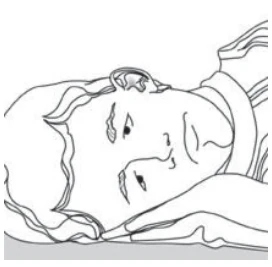
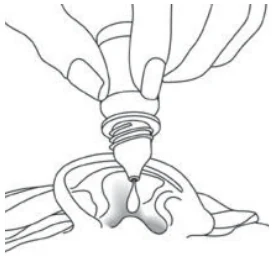 Figure 1 Figure 2
Duration of treatment
The use of OtoAkut is only intended for short-term symptomatic pain relief. If the pain does not start improving during the first 2 days of treatment, a doctor must be consulted, as earache can have a variety of causes. The same applies if the symptoms get worse during the treatment.
The usual duration of treatment is 5 days.
The duration of treatment is unlimited under the supervision of a doctor. If you use more OtoAkut than you should
When used locally on the ear, an overdose or poisoning is unlikely. If in doubt, contact your doctor.
If you forget to use OtoAkut
Do not take a double dose to make up for a forgotten dose. Use the specified single dose for the next application.
If you stop using OtoAkut
Earache may recur because the underlying disease may not have healed. If you have any further questions on the use of this medicine, ask your doctor or pharmacist.
4. Possible side effects
Like all medicines, this medicine can cause side effects, although not everybody gets them.
Significant side effects or signs to look out for and what to do if you are affected:
If you or your child experience any of the following side effects, stop using OtoAkut and contact your doctor as soon as possible.
Very rare (may affect up to 1 in 10,000 people):
Hypersensitivity reactions such as skin lesions or nettle rash in the form of itching or swelling of the tissue.
Reporting of side effects
If you get any side effects, talk to your doctor or pharmacist. This includes any possible side effects not listed in this leaflet. You can also report side effects directly via the Yellow Card Scheme. Website: www.mhra.gov.uk/yellowcard or search for MHRA Yellow Card in the Google Play or Apple App Store. By reporting side effects you can help provide more information on the safety of this medicine.
5. How to store OtoAkut
Keep this medicine out of the sight and reach of children. Do not use this medicine after the expiry date which is stated on the label and carton after EXP. The expiry date refers to the last day of that month. Do not store above 25 °C. Store in the original package, in order to protect from light.
After first opening of the dropper container, the contents can be used for 3 months.
Do not throw away any medicines via wastewater or household waste. Ask your pharmacist how to throw away medicines you no longer use. These measures will help protect the environment.
6. Contents of the pack and other information
What OtoAkut contains
- The active substances are phenazone and procaine hydrochloride.
- 1 g of solution contains 50 mg phenazone and 10 mg procaine hydrochloride.
- 1 drop of solution contains 2 mg phenazone and 0.4 mg procaine hydrochloride.
- The other ingredients are butylated hydroxyanisole (E 320) and glycerol. What OtoAkut looks like and contents of the pack
Ear drops, solution
OtoAkut is a clear, viscous, colourless to brownish solution. OtoAkut is available in a dropper container with screw cap containing 10 g solution.
Marketing Authorisation Holder and Manufacturer
INFECTOPHARM Arzneimittel und Consilium GmbH
Von-Humboldt-Str. 1
64646 Heppenheim
Germany
This leaflet was last revised in June 2024.
2545300411GM02
XXXXXX/XX