

Patient leaflet - Optiray 320 mg Iodine/ml solution for injection or infusion
1. What Optiray is and what it is used for
Optiray is used in adults for several types of X-ray procedures including:
- imaging of vessels, both arteries and veins
- kidneys
- CT scans
Optiray is an X-ray contrast medium containing iodine. The iodine blocks the X-rays, allowing vessels and the inner organs supplied with blood to be seen.
2. What you need to know before you use Optiray
Do not use Optiray
- if you are allergic to contrast media substances containing iodine or to any of the other ingredients of this medicine (listed in section 6)
- if you have an overactive thyroid gland
Warnings and precautions
Talk to your doctor before using Optiray if you have
- asthma or previously had allergic reactions such as nausea, vomiting, low blood pressure, skin symptoms
- heart failure, high blood pressure, circulation disorders, or had a stroke, and if you are very elderly
- diabetes
- kidney or liver disease
- brain disorders
- problems with bone marrow, such as certain blood cancers known as paraproteinaemia, multiple myeloma
- certain red blood cell abnormalities, known as sickle cell anaemia
- a tumour of the adrenal gland, which affects your blood pressure, known as phaeochromocytoma
- increased homocysteine amino acid level, due to abnormal metabolism
- recent gall bladder investigation with contrast media • a planned thyroid gland investigation using a substance containing iodine This should be postponed as Optiray may influence results for up to 16 days.
Signs of an allergic reaction to this medicine, including breathing problems and chest pain, have been reported with Optiray. Tell your doctor immediately if you notice any of these signs.
Serious skin reactions including drug reaction with eosinophilia and systemic symptoms (DRESS), Stevens-Johnson syndrome (SJS), toxic epidermal necrolysis (Lyell’s syndrome or TEN) and acute exanthematous pustulosis (AGEP), which can be life-threatening, have been reported with the use of Optiray.
During or shortly after the imaging procedure you may experience a short-term brain disorder called encephalopathy. Tell your doctor straight away if you notice any of the symptoms related to this condition described in section 4.
Children younger than 18 years
Optiray 320 is not recommended in this age group. In case of exposure (direct exposure or newborns whose mothers have received a iodinated contrast medium during pregnancy), thyroid function should be evaluated at birth and in all paediatric patients younger than 3 years, within one month following exposure.
Other medicines and Optiray
Tell your doctor or X-ray specialist if you are using, have recently used or might use any other medicines.
The following medicines can influence or be influenced by Optiray
- metformin: a medicine to treat diabetes Your doctor will measure your kidney function before and after Optiray use. Metformin should be stopped before the investigation. It should not be re-started for at least 48 hours after the investigation and only when your kidney function has returned to its previous level.
- interleukin: medicines to treat certain tumours
- certain medicines to increase blood pressure due to narrowing of blood vessels To prevent any risk of nervous disorders, Optiray should never be used while using these medicines.
- general anaesthetics A higher frequency of side effects has been reported.
diuretics: medicines that increase urine production and lower blood pressure
In case of dehydration caused by the use of diuretics, the use of iodinated contrast media may increase the risk of acute kidney failure.
Optiray with food and drink
Limit your food intake prior to the examination. Please, ask your doctor for advice. If you have kidney disease, do not limit your liquid intake as this may further reduce kidney function.
Pregnancy and breast-feeding
- Pregnancy Tell your doctor if you are pregnant or think you could be. Your doctor will only administer Optiray during pregnancy if it is absolutely necessary, as it could harm the unborn child.
- Breast-feeding Discontinue breast-feeding for one day after the injection, as insufficient information exists concerning safety. Discuss this with your doctor or X-ray specialist.
Driving and using machines
Driving or operating machines is not advisable for up to 1 hour after injection.
In addition, symptoms such as dizziness, drowsiness, fatigue and visual disturbances have been reported. If this affects you, do not attempt any activities which require concentration and the ability to react appropriately.
Optiray contains sodium
This medicine contains less than 1 mmol sodium (23 mg) per 100 ml, that is to say essentially “sodium-free”.
3. How to use Optiray
Optiray investigations will only be performed by a doctor or X-ray specialist, who will also decide the dose.
Optiray is injected into a blood vessel and distributed throughout the body by the blood stream. It will be warmed to body temperature before use, then injected once or more during the X-ray procedure.
The dose depends on the specific procedure you are having and other factors such as your health and age.
The lowest dose possible will be used to produce adequate X-ray images.
If more Optiray is given than it should
Overdoses are potentially dangerous and may affect the breathing, heart and circulation system. Inform your doctor or X-ray specialist immediately if you notice any of these symptoms after receiving Optiray.
If you have any further questions on the use of this medicine, ask your doctor or X-ray specialist.
4. Possible side effects
Like all medicines, this medicine can cause side effects, although not everybody gets them. Side effects associated with Optiray are generally independent of the dose given. In the majority of cases they are mild or moderate and very rarely serious or life-threatening.
Contact a doctor immediately if you develop any of the following signs of serious side effects:
- heart or breathing arrest
- heart vessel spasms or blood clots
- stroke, blue lips, fainting
- loss of memory
- speech disorders
- sudden movements
- temporary blindness
- acute kidney failure
- skin rash, redness or blisters, which may develop into life-threatening skin reactions including extensive peeling of the skin (toxic epidermal necrolysis), or a drug reaction that causes rash, fever, inflammation of internal organs, hematologic abnormalities and systemic illness (DRESS)
signs of allergic reactions, such as
- allergic shock
- tightened airways
- swelling of the voice box, throat, tongue
- breathing difficulties
- cough, sneezing
- reddening and/or swelling of the face and eyes
- itching, rash and hives
Side effects can occur with the following frequencies:
very common, occurs in more than 1 of 10 users
- feeling hot
common, occurs in 1 to 10 per 100 users
- pain
- nausea
uncommon, occurs in 1 to 10 per 1,000 users
- hives
- skin redness, itching
- dizziness
- headache
- taste disturbance
- abnormal sensation, such as pricking, tingling
- vomiting
- sneezing
- high blood pressure
rare, occurs in 1 to 10 per 10,000 users
- fainting
- vertigo
- blurred vision
- racing pulse
- low blood pressure
- flushing
- larynx spasms
- swelling and narrowing of airways, including throat tightness, wheezing
- difficult breathing
- inflammation inside the nose which causes sneezing and blocked nose
- cough, throat irritation
- dry mouth
- rash
- urgent urination
- swelling of the face including eyes
- chills
- uncontrollable shaking
- feeling cold
very rare, occurs in fewer than 1 per 10,000 users
- severe allergic reaction
- confusion, anxiety, restlessness
- loss of consciousness, numbness
- paralysis
- drowsiness
- stupor
- speech disorders
- language disorders
- reduced sense of touch or sensation
- allergic eye inflammation causing red, watery and itchy eyes
- ringing or buzzing in the ears
- irregular heartbeats, slow pulse
- chest pain
- heart activity changes measured using ECG
- disease which disturbs blood flow through the brain
- high blood pressure • vein inflammation, blood vessel dilation
- fluid accumulation in the lung
- sore throat
- low oxygen in the blood
- abdominal pain
- salivary gland inflammation, swelling of the tongue
- difficulty in swallowing, increased salivation
- mostly painful severe swelling of deep skin layers, mainly in the face
- increased sweating
- muscle spasms
- acute kidney failure or abnormal kidney function
- urinary incontinence, blood in urine, low urination
- tissue swelling caused by excess fluid
- injection site reactions including pain, reddening, bleeding or degeneration of cells
- feeling unwell or abnormal, tiredness, sluggishness
not known: frequency cannot be estimated from the available data
- severe allergic shock reaction
- temporarily underactive thyroid
- fits
- short term brain disorders (encephalopathy) which can cause confusion, hallucination, visual disturbance, blindness, seizures loss of coordination, loss of movement in one side of the body, problems with speech and loss of consciousness
- movement disorder
- loss of memory
- temporary blindness
- heart arrest, life-threatening irregular heartbeat
- extra heartbeat
- heart artery cramps, pounding of the heart
- blue skin colouration due to low oxygen in the blood
- shock
- blood clot or spasm in a blood vessel
- paleness
- breathing arrest, asthma, tightened airways
- reduced ability to produce voice sounds using the vocal organs
- diarrhoea
- severe reaction affecting the skin, blood and internal organs (drug reaction with eosinophilia and systemic symptoms also known as DRESS or drug hypersensitivity syndrome)
- red, scaly widespread rash with bumps under the skin and blisters accompanied by fever at the initiation of treatment (Acute Generalized Exanthematous Pustulosis)
- red pimples (macular or papular eruptions)
- life-threatening reaction with flu-like symptoms and painful rash / blistering affecting the skin, mouth, eyes and genitals (Steven-Johnson Syndrome / Toxic Epidermal Necrolysis)
- absent or painful/difficult urination
- underactive thyroid in newborns
- fever
Reporting of side effects
If you get any side effects, talk to your doctor or X-ray specialist. This includes any side effects not listed in this leaflet.
You can also report side effects directly via Yellow Card Scheme, Website: www.mhra.gov.uk/yellowcard or search for MHRA Yellow Card in the Google Play or Apple App Store. By reporting side effects you can help provide more information on the safety of this medicine.
5. How to store Optiray
Keep this medicine out of sight and reach of children.
Do not use this medicine after the expiry date which is stated on the label. The expiry date refers to the last day of that month.
Keep the container in the outer carton in order to protect from light. Protect from X-rays. Do not store above 30°C. Optiray 320 can be stored for one month at 37°C in a contrast media warmer with circulating air.
Do not use this medicine if you notice discolouration or particulate matter.
6. Contents of the pack and other information
What Optiray contains
- The active substance is Ioversol. One millilitre of Optiray contains 678 mg Ioversol, which is equal to 320 mg of organically bound iodine.
- The other ingredients are sodium calcium edetate (stabiliser), trometamol and trometamol hydrochloride (buffer), and water for injections. Sodium hydroxide and hydrochloric acid may be used for adjustment pH of 6.0 to 7.4.
What Optiray looks like and contents of the pack
Optiray is packaged in uncoloured bottles. Bottles are fitted with either 20 mm or 32 mm bromobutyl rubber closures and aluminium cap seals.
20, 50, 75 ml (box of 1 and 10)
100, 200 ml (box of 1, 10 and 12)
Optiray is also supplied in prefilled hand-held syringes and power injector syringes made of polypropylene. Syringe tip cap and piston are made of natural rubber.
Prefilled hand-held syringes:
50 ml (box of 1, 10 and 20)
Power injector syringes: 50, 100, 125 ml (box of 1, 10 and 20)
Not all pack sizes and box sizes may be marketed in all countries.
Marketing Authorisation Holder and Manufacturer
- Marketing Authorisation Holder Guerbet, BP 57400, 95943 Roissy CdG Cedex, France
- Manufacturer Guerbet, BP 57400, 95943 Roissy CdG Cedex, France located at 16-24 rue Jean Chaptal, 93600 Aulnay sous Bois, France
This leaflet was last revised in May 2026.
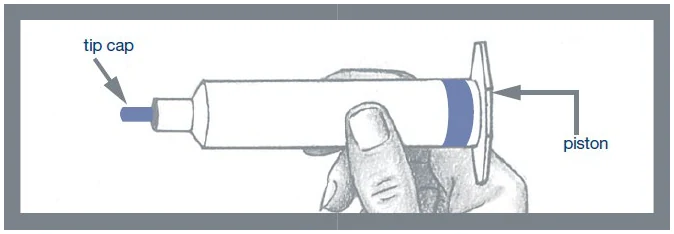
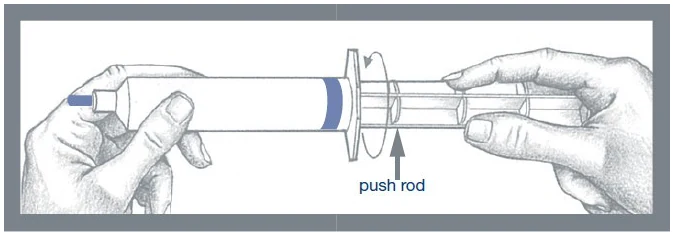
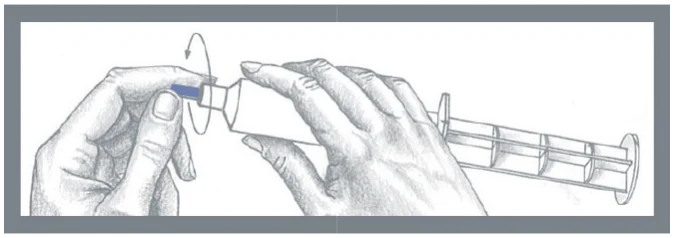
Optiray Prefilled Syringe Hand-Held
Assembly and Inspection:
Note: Exterior of syringe is not sterile. Contents of syringe and area under blue tip cap and piston ribs are sterile and should be treated accordingly.
| Remove syringe from support and inspect the area around the tip cap and outside of piston for signs of leakage. Do not use if leakage is observed. | |
|---|---|
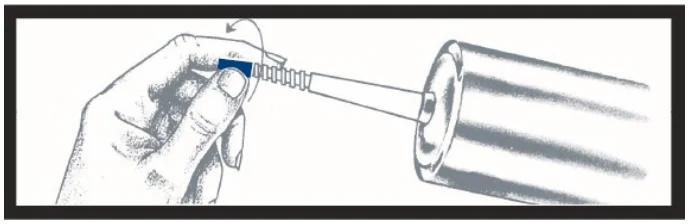
| After screwing the push rod into the syringe piston, it is important to turn the push rod an additional 1/2 turn so that the blue piston rotates freely. | |
| Prior to using the syringe, twist off blue tip cap and discard. The area under the tip cap is sterile, caution should now be used when handling. Syringe is now ready for needle or infusion tubing attachment. |
Discard syringe and unused portion of medium after use.
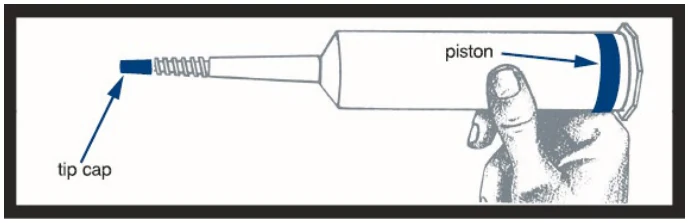
Optiray Prefilled Syringe Power Injector
Assembly and Inspection:
Note: Exterior of syringe is not sterile. Contents of syringe and area under blue tip cap and piston ribs are sterile and should be treated accordingly.
| Remove syringe from support and inspect the area around the tip cap and outside of piston for signs of leakage. Do not use if leakage is observed. Load syringe into pressure jacket. | |
|---|---|
| To remove blue tip cap from syringe, push in and twist off, then discard. The area under the cap is sterile. Caution should now be used when handling. | |
| Next remove cap from luer locknut dust cover by twisting to break tamper evident seal. Discard cap. | |
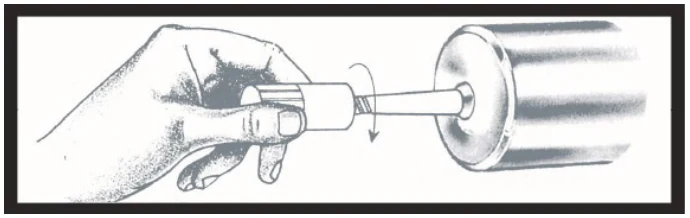
| Attach luer locknut to syringe by holding dust cover and screwing to the stop. Remove and discard dust cover when ready to attach sterile connector tubing. |

Discard syringe and unused portion of medium after use.