

Patient leaflet - Olopatadine 1 mg / ml eye drops solution
1. WHAT OLOPATADINE IS AND WHAT IT IS USED FOR
Olopatadine is used for the treatment of signs and symptoms of seasonal allergic conjunctivitis.
Allergic conjunctivitis. Some materials (allergens) like pollens, house dust or animal fur may cause allergic reactions resulting in itching, redness as well as swelling of the surface of your eye.
Olopatadine is a medicine for treatment of allergic conditions of the eye. It works by reducing the intensity of the allergic reaction.
2. WHAT YOU NEED TO KNOW BEFORE YOU USE OLOPATADINE
Do not use Olopatadine:
If you are allergic (hypersensitive) to olopatadine or any of the other ingredients of this medicine (listed in section 6). You should not use Olopatadine if you are breast-feeding.
Warnings and precautions
Talk to your doctor or pharmacist before using Olopatadine.
You should remove contact lenses that are in your eyes before using Olopatadine. Children
Do not use Olopatadine in children under the age of 3 years. Do not give this medicine to children under the ages of 3 years because there is no data to indicate that it is safe and work in children under 3 years.
Other medicines and Olopatadine
Tell your doctor or pharmacist if you are taking, have recently taken or might take any other medicines. If you are using other eye drops or eye ointment medicines, leave at least 5 minutes between each medicine. Eye ointments should be administered last.
Pregnancy, breast-feeding and fertility
If you are pregnant or breast-feeding, think you may be pregnant or are planning to have a baby, ask your doctor or pharmacist for advice before using this medicine.
You should not use Olopatadine if you are breast-feeding, ask your doctor for advice before using this medicine.
Driving and using machines
You may find that your vision is blurred for a time just after you use Olopatadine. Do not drive or use machines until this has worn off. Olopatadine contains Benzalkonium chloride
This medicine contains 0.5 mg benzalkonium chloride in each 5 ml which is equivalent to 0.1 mg/ml.
The preservative in Olopatadine, benzalkonium chloride, may be absorbed by soft contact lenses and may change the colour of the contact lenses. You should remove contact lenses before using this medicine and put them back 15 minutes afterwards.
Benzalkonium chloride may also cause eye irritation, especially if you have dry eyes or disorders of the cornea (the clear layer at the front of the eye). If you feel abnormal eye sensation, stinging or pain in the eye after using this medicine, talk to your doctor.
Olopatadine contains disodium phosphates anhydrous. This medicine contains 16.75 mg phosphates (in 25 mg disodium phosphate anhydrous) in each bottle of 5 ml which is equivalent to 3.35 mg/ml. If you suffer from severe damage to the clear layer at the front of the eye (the cornea), phosphates may cause in very rare cases cloudy patches on the cornea due to calcium build-up during treatment.
3. HOW TO USE OLOPATADINE
Always use this medicine exactly as your doctor or pharmacist has told you. Check with your doctor or pharmacist if you are not sure. The recommended dose is one drop in the eye or eyes twice a day - in the morning and in the evening.
Use this much unless your doctor tells you to do differently. Only use Olopatadine in both eyes if your doctor told you to do so. Use it for as long as your doctor told you to.
Olopatadine should only be used as eye drops. How to use Olopatadine
Immediately before using a bottle for the first time, write the date of opening on the label in the space provided.
Get the Olopatadine bottle and a mirror. Wash your hands.
Take the bottle and twist off the cap.
After cap is removed, if the tamper evident ring is loose, remove it before using the medicine.
Hold the bottle, pointing down, between your thumb and the middle finger.
Tilt your head back. Pull down your eyelid with a clean finger, until there is a ‘pocket’ between the eyelid and your eye. The drop will go in here (picture 1).
Bring the bottle tip close to the eye. Use the mirror if it helps.
Don’t touch your eye or eyelid, the surrounding areas or other surfaces with the dropper. It could infect the drops left in the bottle.
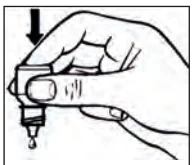
Gently press on the base of the bottle to release one drop of Olopatadine at a time. Don’t squeeze the bottle, it is designed so that just a gentle press on the bottom is needed (picture 2).
If you use drops in both eyes, repeat the steps for your other eye.
Put the bottle cap back on firmly immediately after use.
If a drop misses your eye, try again.
If you use more Olopatadine than you should
Rinse it all out with warm water. Do not put in any more drops until it’s time for your next regular dose.
If you forget to use Olopatadine
Use a single drop as soon as you remember, and then go back to your regular dosing routine. However, if it is almost time for your next dose, skip the missed dose before going back to your regular dosing routine. Do not use a double dose to make up for the one missed.
If you stop using Olopatadine
Do not stop using this medicine without first speaking to your doctor.
If you have any further questions on the use of this medicine, ask your doctor or pharmacist.
4. POSSIBLE SIDE EFFECTS
Like all medicines, this medicine can cause side effects, although not everybody gets them. The following side effects have been seen with Olopatadine:
Common (may affect up to 1 in 10 people)
Effects in the eye:
Eye pain, eye irritation, dry eye, abnormal eye sensation, eye discomfort.
General side effects
Headache, fatigue, dry nose, bad taste. Uncommon (may affect up to 1 in 100 people)
Effects in the eye:
Blurred, reduced, or abnormal vision, corneal disorder, eye surface inflammation with or without surface damage, inflammation or infection of the conjunctiva, eye discharge, sensitivity to light, increased tear production, itchy eye, redness of the eye, eyelid abnormality, itching, redness, swelling, or crusting of the eyelid
General side effects
Abnormal or decreased sensation, dizziness, runny nose, dry skin, skin inflammation. Not known (frequency cannot be estimated from the available data)
Effects in the eye:
Eye swelling, corneal swelling, change in pupil size.
General side effects
Shortness of breath, increased allergic symptoms, facial swelling, drowsiness, generalized weakness, nausea, vomiting, sinus infection, skin redness and itching.
In very rare cases, some patients with severe damage to the clear layer at the front of the eye (the cornea) have developed cloudy patches on the cornea due to calcium build-up during treatment.
Reporting of side effects
If you get any side effects, talk to your doctor, pharmacist or nurse. This includes any possible side effects not listed in this leaflet. You can also report side effects directly via the Yellow Card Scheme at: www.mhra.gov.uk/yellowcard or search for MHRA Yellow Card in the Google Play or Apple App Store.
By reporting side effects you can help provide more information on the safety of this medicine.
5. HOW TO STORE OLOPATADINE
Keep this medicine out of the sight and reach of children.
Do not use this medicine after the expiry date, which is, stated on the box after ‘EXP’. The expiry date refers to the last day of the month. This medicine does not require any special storage conditions. Do not freeze. Store below 25 °C after the first opening.
You should throw away the bottle 28 days after you first opened it to prevent infections and use a new bottle. Write down the date you opened it in the space on each bottle’s label and box. Do not throw away medicines via wastewater or household waste. Ask your pharmacist how to throw away medicines you no longer use. These measures will help protect the environment.
6. CONTENTS OF THE PACK AND OTHER INFORMATION
What Olopatadine contains
The active substance is olopatadine. Each ml of solution contains 1 mg of olopatadine (as hydrochloride).
The other ingredients are benzalkonium chloride, sodium chloride, disodium phosphate anhydrous (E339), hydrochloric acid (E507) (for pH adjustment) and/or sodium hydroxide (E524) (for pH adjustment) and water for injections.
What Olopatadine looks like and contents of the pack
Olopatadine is a clear and colourless liquid (a solution) supplied in a pack containing either one bottle with 5 mL solution or three plastic bottles with 5 mL solution each, with screw caps. Not all pack sizes may be marketed.
(Continued overleaf)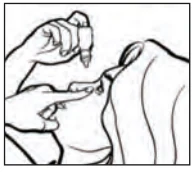
 picture 1. picture. 2.
Olopatadine 1 mg/ml
Package leaflet
135 x 550 mm
TBA
TW242791 (MAT) UK
All
NA
TBA
9 points (Reg text)
TW239388 04/12/2025
Black C
Marketing Authorisation Holder
Tillomed Laboratories Limited 220 Butterfield, Great Marlings Luton, LU2 8DL, United Kingdom Manufacturer
RAFARM S.A.
Thesi Pousi Xatzi Agiou Louka, Paiania,
190 02
Greece
Other formats
To request a copy of this leaflet in Braille, large print or audio, please call 0800 970 6115.
This leaflet was last revised in December 2025