

Patient leaflet - Ogluo 0.5 mg solution for injection in Pre-filled pen
1. What Ogluo is and what it is used for
Ogluo contains the active substance glucagon, which belongs to a group of medicines called glycogenolytic hormones.
It is used to treat severe hypoglycaemia (very low blood sugar) in people with diabetes. It is for use in adults, adolescents, and children aged 2 years or older.
Ogluo is a ready-to-use, pre-filled pen that contains a single dose of the active substance, glucagon. It is a subcutaneous injection, meaning that the medicine is administered under the skin using a needle.
Glucagon is a natural hormone produced by the pancreas, which has the opposite effect of insulin in the human body. It helps the liver to convert stored sugar in the liver called ‘glycogen’ into glucose (sugar). Glucose is then released into the blood stream, which makes the blood sugar level rise, reducing the effects of hypoglycaemia. OGLEGB/01-05 A090630076263
Information on hypoglycaemia
Early symptoms of hypoglycaemia (low blood sugar) include:
- sweating • depressed mood
- drowsiness • tingling in the hands, feet, lips, or tongue • dizziness • irritability
- sleep disturbances • light-headedness
- palpitation • abnormal behaviour
- anxiety • inability to concentrate
- tremor • unsteady movement
- blurred vision • headache
- hunger • personality changes
- slurred speech
If not treated, the patient may progress to severe hypoglycemia which can include:
- confusion
- seizures
- unconsciousness
- death
2. What you need to know before you use Ogluo
Important information
Make sure that you, your family members, people you work with, and close friends
know about Ogluo. Tell them that if you show any signs of severe hypoglyecaemia, including confusion, seizures, or unconciousness (pass out) they should use Ogluo straight away. You should always carry Ogluo with you.
It is important that you or those around you know how to use Ogluo before you
need it. Show your family members and others where you keep Ogluo and how to use it. They must act quickly if you become unconscious because if this happens for a period of time, it may be harmful. You, or the person administering Ogluo to you, should follow the instructions in Section 3 of this leaflet: ‘How to use Ogluo’. • It is important that you store Ogluo correctly to make sure that it can be used
straight away if you need it. See Section 5 for more information on how to store this medicine properly.
Do not use Ogluo if:
You are allergic to glucagon or any of the other ingredients in this medicine (listed in
- You have a tumour in your adrenal gland (pheochromocytoma).
Warnings and precautions
Talk to your doctor, pharmacist, or nurse before using Ogluo.
Ogluo may not work properly if:
- You have been fasting or have had low blood sugar levels for a long time • You have low levels of adrenaline
You have low blood sugar caused by drinking too much alcohol • You have a tumour that releases glucagon or insulin
If any of these apply to you, talk to your doctor or pharmacist.
Please take into account that approximately 15% of patients achieved glucose recovery after 20 minutes or more in the pivotal trial.
After using Ogluo, eat as soon as possible to prevent the recurrence of low blood sugar. Take a fast-acting source of sugar, such as fruit juice or a sugar-containing carbonated drink.
Children
Ogluo is not recommended for children under 2 years of age because it has not been studied in this age group.
Other medicines and Ogluo
Tell your doctor if you are taking, have recently taken, or might take any other medicines.
The following medicines can affect the way that Ogluo works: • Insulin – used to treat diabetes. Insulin has the opposite effect of glucagon on blood sugar.
- Indomethacin – used to treat joint pain and stiffness. Indomethacin reduces the effect of glucagon.
Ogluo can affect the way that the following medicines work:
- Warfarin – used to prevent blood clots. Ogluo may increase the bloodthinning effect of warfarin.
- Beta-blockers – used to treat high blood pressure and irregular heart beat. Ogluo may increase your blood pressure and pulse but this will only last a short time.
If any of the above apply to you (or you are not sure), talk to your doctor or pharmacist before taking Ogluo.
Pregnancy, breast-feeding and fertility
If you experience very low blood sugar when you are pregnant or breast-feeding, think you may be pregnant, or are planning to have a baby, you can use Ogluo. Ask your doctor or pharmacist for advice before taking any medicine if you are pregnant.
Driving and using machines
After a severe hypoglycaemic event your ability to concentrate and react may be reduced, you should wait until the effects of very low blood sugar have worn off, and you feel better, before driving or using any tools or machines.
3. How to use Ogluo
Always use (or give) this medicine exactly as described in this leaflet or as your doctor has told you. Check with your doctor or pharmacist if you are not sure. Ogluo is given as an injection under the skin (subcutaneous injection). It is supplied in a pen. The injector pen contains a measured amount of medicine, so if you follow these instructions, the whole dose is administered.
Prepare
Check the expiry date printed on the pouch.
Important:
Do not use this medicine if the expiry date has passed. If this medicine is expired, throw it away in accordance with local requirements and use a new one. Tear open the pouch at the dotted line and remove the pen (see Figure 1).
Figure 1
Inspect the solution
Look at the liquid medicine through the viewing window. It must be clear and colourless, or a pale yellow (see Figure 2).
Important:
Do not use this medicine or inject if the liquid is
discoloured, contains lumps, flakes, or particles.
Do not inject if solution is not visible in the
viewing window.
After injection, call for emergency medical help
right away.
Each pen contains a single dose of glucagon
and cannot be reused.
Figure 2
Printed Colours:
- CYAN
- MAGENTA
- YELLOW
BLACK
Design area
Folding lines
Panels visible after folding
440mm
150mm 150mm 140mm Pull the red needle cap straight off of
the device (see Figure 3).
Important:
Do not put your thumb, fingers, or hand
on or near the needle guard or needle
opening to help prevent accidental
needle sticks.
Inject
Choose injection site and expose bare skin.
Choose the lower abdomen, outer thigh, or outer upper arm for your injection site (see Figure 4).
Remove any clothing covering the injection site (see Figure 5). The injection must be performed straight into the skin.
Important:
Do not inject through clothing.
Push and hold this medicine straight down against the injection site. Listen for a “click”. Continue to hold the device down and count slowly to 5 (see Figure 6). When the injection is complete, the viewing window will be red (see Figure 7).
Important:
Do not lift up this medicine until the injection is complete.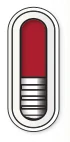


Lift the pen straight up from the
injection site (see Figure 8).
The yellow needle guard will lock
over the needle.
Assist
Turn patient onto side.
When an unconscious person wakes up, he or she may be sick (vomit). If the patient is unconscious, turn them on their side to prevent choking (see Figure 9).
Call for emergency medical help right after Ogluo has been injected. When the patient has responded to the treatment, give him/her a fast-acting source of sugar, such as fruit juice or a sugar-containing carbonated drink to prevent the recurrence of low blood sugar. If the patient does not respond within 15 minutes, an additional dose of Ogluo from a new device may be administered while waiting for emergency assistance.
How much to use
This medicine contains either 0.5 mg or 1 mg of the active substance in a fixed dose of medicine. You will be prescribed the correct strength (dose) of medicine for your own personal use.
The recommended dose for adults, adolescents, and children is shown in the table below. For children under 6 years, the recommended dose will depend on how much they weigh
After using this medicine, eat as soon as possible to prevent the recurrence of low blood sugar. Take a fast-acting source of sugar, such as fruit juice or a sugar-containing carbonated drink.
If you use more Ogluo than you should
Too much medicine may make you feel sick (nausea) or cause you to be sick (vomit). Specific treatment is not usually necessary.
4. Possible side effects
Like all medicines, this medicine can cause side effects, although not everybody gets them.
Contact your doctor or a healthcare professional immediately if you notice any of the following serious side effects:
Very rare (may affect up to 1 in 10,000 people)
allergic reaction – signs may include wheezing, sweating, rapid heartbeat, rash,
swollen face (i.e, swelling of the face, lips, tongue, and throat which may cause difficulty in swallowing or breathing), or collapse. Allergic reaction has not been reported with Ogluo, but has been seen in other injectable glucagon medicines. You should seek help urgently if you experience symptoms of an allergic reaction.
Other side effects may include:
Very common (may affect more than 1 in 10 people)
- feeling sick (nausea)
- being sick (vomiting)
Figure 3
Figure 4 Figure 5
Expose skin of injection site Frontview Backview
Figure 6 Figure 7
Hold down
for 5seconds
“Click”
Push
and hold
Figure 8
Yellow needle guard locks over needle
Lift away from skin
Figure 9 Roll Onto Side
Age Weight Recommended dose of Ogluo
Children, ages 2 years to
under 6 years Less than 25 kg 0.5 mg
Children, ages 2 years to
under 6 years
More than or
equal to 25 kg 1 mg
Adults and adolescents,
6 years and over Not Applicable 1 mg
Common (may affect up to 1 in 10 people)
- headache
- fast heartbeat (tachycardia)
- discomfort or a reaction at the site of injection
- injection site oedema (swelling)
- diarrhoea
Uncommon (may affect up to 1 in 100 people)
- abdominal pain
- injection site bruising
- injection site erythema (redness)
Additional side effects in children
Common (may affect up to 1 in 10 people)
- hyperglycaemia
- abdominal pain
- urticaria (swelling/redness)
- head injury
- dizziness
Reporting of side effects.
If you get any side effects, talk to your doctor. This includes any possible side effects not listed in this leaflet. You can also report side effects directly via Yellow Card Scheme; Website; www.mhra.gov.uk/yellowcard or search for MHRA Yellow Card in the Google Play or Apple App Store.
By reporting side effects you can help provide more information on the safety of this medicine.
5. How to store Ogluo
Do not use this medicine after the expiry date which is stated on the pen, pouch, and carton. The expiry date refers to the last day of that month.
Keep this medicine out of the sight and reach of children.
This medicine should not be stored above 25°C.
Do not refrigerate or freeze. Do not store below 15°C.
Store in the foil pouch before use to protect from light and moisture. Do not use this medicine if you notice the solution is discoloured or contains particulate matter. Do not throw away any medicines via household waste. Ask your pharmacist how to throw away medicines you no longer use. These measures will help protect the environment.
6. Contents of the pack and other information
What Ogluo contains
The active substance in Ogluo is glucagon.
Ogluo 0.5 mg solution for injection in pre-filled pen
Each pre-filled pen contains 0.5 mg glucagon in 0.1 mL.
Ogluo 1 mg solution for injection in pre-filled pen
Each pre-filled pen contains 1 mg glucagon in 0.2 mL.
- The other ingredients are trehalose dihydrate, dimethyl sulfoxide (DMSO), sulfuric acid, and water for injections.
What Ogluo looks like and the contents of the pack
Ogluo is a clear, colourless to pale yellow solution. It is produced in a ready-to-use, pre-filled, single-dose pen, containing either 0.5 mg or 1 mg of glucagon. Each medicine is indivudally packaged in a foil pouch. A full list of the available Ogluo medicines is provided below.
- Ogluo 0.5 mg solution for injection in pre-filled pen, pack of 1 or 2 single-dose pre-filled pens. • Ogluo 1 mg solution for injection in pre-filled pen, pack of 1 or 2 single-dose pre-filled pens. Not all pack sizes may be marketed.
Marketing Authorisation Holder:
Strongbridge Dublin Limited, Suite 206, Fitzwilliam
Hall, Fitzwilliam Place, Dublin 2, D02 T292, Ireland
Manufacturer:
AcertiPharma B.V.
Boschstraat 51, 4811 GC, Breda, Netherlands.
This leaflet was last revised in August 2025
Printed Colours:
- CYAN
- MAGENTA
- YELLOW
BLACK
Further Information and administration video: Scan the QR code.
Design area
Folding lines
440mm
150mm 150mm
140mm