

Summary of Product Characteristics (SmPC) - Ofloxacin 400 mg tablets
1 NAME OF THE MEDICINAL PRODUCT
Ofloxacin 400 mg Tablets
2 QUALITATIVE AND QUANTITATIVE COMPOSITION
Each film-coated tablet contains 400 mg of ofloxacin.
Excipient(s) with known effect
This product contains lactose monohydrate
For the full list of excipients, see section 6.1.
3 PHARMACEUTICAL FORM
Film-coated tablets
White, oval, film-coated tablets, marked “FXN 400” on one side and scored on the other side.
4 CLINICAL PARTICULARS
4.1 Therapeutic indications
Ofloxacin is indicated for the treatment of the following infections when caused by sensitive organisms (see section 5.1):
- upper and lower urinary tract infections;
- lower respiratory tract infections such as acute exacerbation of chronic bronchitis or pneumonia if caused by Gram-negative bacteria. Ofloxacin is not the treatment of choice for community acquired pneumonia;
- uncomplicated urethral and cervical gonorrhoea;
- non-gonococcal urethritis and cervicitis.
Consideration should be given to official guidance on the appropriate use of anti-bacterial agents.
4.2 Posology and method of administration
Posology
General dosage recommendations:
The dose of ofloxacin should be determined by the type and severity of the infection.
The dosage range for adults is 200 mg to 800 mg daily. Up to 400 mg may be given as a single dose, preferably in the morning.
In individual cases it may be necessary to increase the dose to 600 mg (or even to a maximum total dose of 800 mg daily) for treatment of severe infections or in overweight patients. Daily doses of more than 400 mg must be divided into two separate doses and be given at approximately equal intervals.
| Indications | Single and daily doses | Usual duration of therapy |
| Uncomplicated lower urinary tract infections | 200–400 mg daily | 3 days |
| Complicated infections of the kidneys and urinary tract | 400 mg daily, increasing if necessary, to 400 mg twice a day | 7-10 days |
| Lower respiratory tract infections | 400 mg daily, increasing, if necessary, to 400 mg twice a day | 7-10 days |
| Uncomplicated gonorrhoea | 400 mg | Single dose |
| Non-gonococcal urethritis and cervicitis | 400 mg daily | 7-10 days |
Renal impairment:
In patients with impaired renal function, the following oral or I.V. dosages are recommended:
| Creatinine clearance | Unit dose mg* | Number /24 hours | Intervals hours |
| 50 - 20 ml/min | 100 – 200 | 1 | 24 |
< 20 ml/min** or haemodialysis or peritoneal dialysis | 100 or 200 | 1 1 | 24 48 |
* According to indication or dose interval
** The serum concentration of ofloxacin should be monitored in patients with severe renal impairment and dialysis patients
When creatinine clearance cannot be measured, it can be estimated with reference to the serum creatinine level using the following Cockcroft's formula for adults:
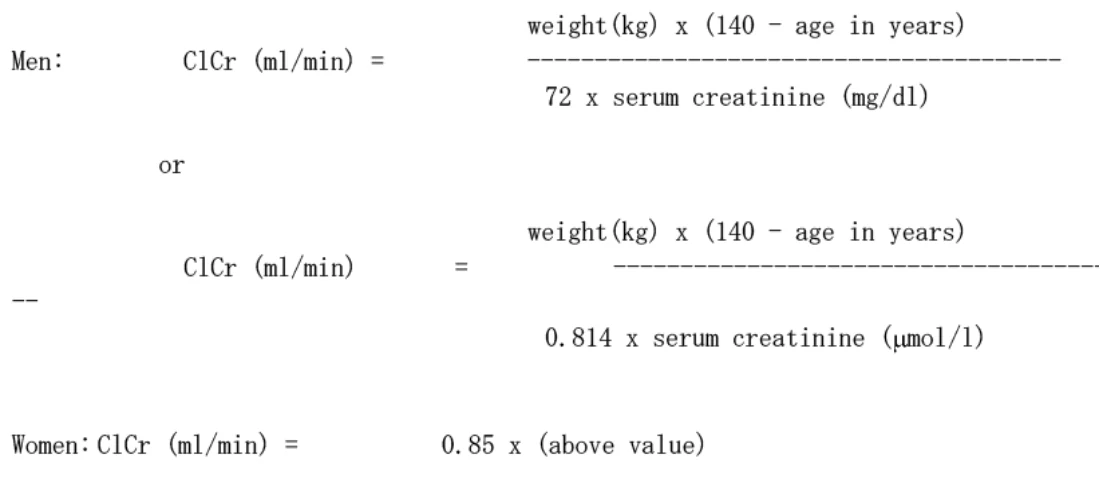
Hepatic impairment (e.g. cirrhosis with ascites):
It is recommended that a maximum daily dose of 400 mg of ofloxacin be not exceeded, because of possible reduction of excretion.
Elderly:
Age in itself does not impose to adapt the dosage of ofloxacin. However, special attention to renal and liver function should be paid in elderly patients, and the dosage should be adapted accordingly. (See section 4.4).
Paediatric population:
Ofloxacin is not indicated for use in children or growing adolescents.
Type and duration of treatment
A daily dose of up to 400mg ofloxacin may be given as a single dose. In this case, it is preferable to administer ofloxacin in the morning.
Daily doses of more than 400mg must be divided into two separate doses and be given at approximately equal intervals.
Duration of treatment is dependent on the severity of the infection and the response to treatment.
The usual durations of treatment are stated in the table.
As with antibiotic therapy in general, administration of ofloxacin should be continued for a minimum of 48 to 72 hours after the patient has become afebrile or evidence of bacterial eradication has been obtained.
In some instances, a minimum of 5 days treatment may be sufficient.
Treatment should not exceed 2 months duration.
Method of administration:
Ofloxacin Tablets should be swallowed with sufficient amount of liquids They may be taken on an empty stomach or with meals. Concomitant administration with antacids should be avoided (see section 4.5).
4.3 Contraindications
Ofloxacin must not be used
- in patients with known hypersensitivity to ofloxacin, to other 4-quinolone antibacterials or to any of the excipients listed in section 6.1
- in patients with a history of tendon disorders related to fluoroquinolone administration
- In patients with epilepsy
- in children or adolescents in the growth phase*
- during pregnancy*
- in breast-feeding women*
* because, judging from animal experiments, a risk of damage to the growth-plate cartilage in the growing organism cannot be entirely excluded.
4.4 Special warnings and precautions for use
The use of ofloxacin should be avoided in patients who have experienced serious adverse reactions in the past when using quinolone or fluoroquinolone containing products (see section 4.8). Treatment of these patients with ofloxacin should only be initiated in the absence of alternative treatment options and after careful benefit/risk assessment (see also section 4.3).
Ofloxacin is not the drug of first choice for pneumonia caused by Pneumococci or Mycoplama, or angina tonsillaris caused by β-haemolytic Streptococci.
Prolonged, disabling and potentially irreversible serious adverse drug reactions
Very rare cases of prolonged (continuing months or years), disabling and potentially irreversible serious adverse drug reactions affecting different, sometimes multiple, body systems (musculoskeletal, nervous, psychiatric and senses) have been reported in patients receiving quinolones and fluoroquinolones irrespective of their age and pre-existing risk factors. Ofloxacin should be discontinued immediately at the first signs or symptoms of any serious adverse reaction and patients should be advised to contact their prescriber for advice.
Methicillin-resistant S. aureus are very likely to possess co-resistance to fluoroquinolones, including ofloxacin. Therefore, ofloxacin is not recommended for the treatment of known or suspected MRSA infections unless laboratory results have confirmed susceptibility of the organism to ofloxacin (and commonly recommended antibacterial agents for the treatment of MRSA-infections are considered inappropriate).
Resistance to fluoroquinolones of E. coli – the most common pathogen involved in urinary tract infections – varies across the European Union. Prescribers are advised to take into account the local prevalence of resistance in E. coli to fluoroquinolones.
Severe bullous reactions:
Cases of severe bullous skin reactions such as Stevens-Johnson syndrome or toxic epidermal necrolysis have been reported with ofloxacin (see section 4.8). Patients should be advised to contact their doctor immediately prior to continuing treatment if skin and/or mucosal reactions occur.
Hypersensitivity and allergic reactions have been reported for fluoroquinolones after first administration. Anaphylactic and anaphylactoid reactions can progress to life-threatening shock, even after the first administration. In these cases, ofloxacin should be discontinued and suitable treatment (e.g. treatment for shock) should be initiated.
Clostridium difficile-associated disease
Diarrhea, particularly if severe, persistent and/or bloody, during or after treatment with ofloxacin (including several weeks after treatment), may be symptomatic of pseudo-membranous colitis (CDAD). CDAD may range in severity from mild to life threatening, the most severe form of which is pseudomembranous colitis (see section 4.8). It is therefore important to consider this diagnosis in patients who develop serious diarrhoea during or after treatment with ofloxacin. If pseudo-membranous colitis is suspected, ofloxacin must be stopped immediately. Appropriate specific antibiotic therapy must be started without delay (e.g. oral vancomycin, oral teicoplanin or metronidazole). Products inhibiting the peristalsis are contraindicated in this clinical situation.
Patients predisposed to seizures
Quinolones may lower the seizure threshold and may trigger seizures. Ofloxacin is contraindicated in patients with a history of epilepsy (see section 4.3) and, as with other quinolones, ofloxacin should be used with extreme caution in patients predisposed to seizures.
Such patients may be patients with pre-existing central nervous system lesions, concomitant treatment with fenbufen and similar non-steroidal anti-inflammatory drugs or with drugs which lower the cerebral seizure threshold, such as theophylline. (See section 4.5)
In case of convulsive seizures, treatment with ofloxacin should be discontinued.
Tendonitis and tendon rupture
Tendonitis, rarely observed with quinolones, may occasionally lead to rupture involving Achilles tendon in particular. Tendonitis and tendon rupture, sometimes bilateral, may occur within 48 hours of starting treatment with ofloxacin and have been reported up to several months after discontinuation of treatment. The risk of tendonitis and tendon rupture is increased in patients aged over 60 years and in patients using corticosteroids. The daily dose should be adjusted in elderly patients based on creatinine clearance (see section 4.2). Close monitoring of these patients is therefore necessary if they are prescribed ofloxacin. All patients should consult their physician if they experience symptoms of tendonitis. If tendonitis is suspected, treatment with ofloxacin must be halted immediately, and appropriate treatment (e.g. immobilisation) must be initiated for the affected tendon (see sections 4.3 and 4.8).
Patients with renal impairment
Since ofloxacin is mainly excreted by the kidneys, the dose of ofloxacin should be adjusted in patients with renal impairment (see section 4.2).
Patients with history of psychotic disorder
Psychotic reactions have been reported in patients receiving fluoroquinolones including ofloxacin. In some cases, these have progressed to suicidal thoughts or self-endangering behavior including suicide attempt, sometimes after a single dose of ofloxacin (see section 4.8). In the event that a patient develops these reactions, ofloxacin should be discontinued and appropriate measures instituted. Ofloxacin should be used with caution in patients with a history of psychotic disorder or in patients with psychiatric disease.
Patients with hepatic impairment
Ofloxacin should be used with caution in patients with impaired liver function, as liver damage may occur. Cases of fulminant hepatitis potentially leading to liver failure (including fatal cases) have been reported with fluoroquinolones. Patients should be advised to stop treatment and contact their doctor if signs and symptoms of hepatic disease develop such as anorexia, jaundice, dark urine, pruritis or tender abdomen (see section 4.8).
Patients treated with vitamin K antagonists
Due to possible increase in coagulation tests (PT/INR) and/or bleeding in patients treated with fluoroquinolones, including ofloxacin, in combination with a vitamin K antagonist (e.g. warfarin), coagulation tests should be monitored when these drugs are given concomitantly (see section 4.5).
Myasthenia gravis
Fluoroquinolones, including ofloxacin, have neuromuscular blocking activity and may exacerbate muscle weakness in patients with myasthenia gravis. Postmarketing serious adverse reactions, including deaths and the requirement for respiratory support, have been associated with fluoroquinolone use in patients with myasthenia gravis. Ofloxacin is not recommended in patients with a known history of myasthenia gravis.
Prevention of photosensitisation
Photosensitisation has been reported with ofloxacin (see section 4.8). It is recommended that patients should not expose themselves unnecessarily to strong sunlight or to artificial UV rays (e.g. sunray lamp, solarium), during treatment and for 48 hours following treatment discontinuation in order to prevent photosensitisation.
Superinfection
As with other antibiotics, the use of ofloxacin, especially if prolonged, may result in overgrowth of non-susceptible organisms. Repeated evaluation of the patient's condition is essential. If secondary infection occurs during therapy, appropriate measures should be taken.
QT interval prolongation
Very rare cases of QT interval prolongation have been reported in patients taking fluoroquinolones.
Caution should be taken when using fluoroquinolones, including ofloxacin, in patients with known risk factors for prolongation of the QT interval such as, for example:
- elderly patients and women may be more sensitive to QTc-prolonging medications. Therefore, caution should be taken when using fluoroquinolones, including ofloxacin, in these populations.
- uncorrected electrolyte imbalance (e.g. hypokalemia, hypomagnesemia)
- congenital long QT syndrome
- cardiac disease (e.g. heart failure, myocardial infarction, bradycardia)
- concomitant use of drugs that are known to prolong the QT interval (e.g. class IA and III antiarrhythmics, tricyclic antidepressants, macrolides, antipsychotics).
(See also section 4.2 section 4.5, section 4.8 and section 4.9.)
Aortic aneurysm and dissection, and heart valve regurgitation/incompetence
Epidemiologic studies report an increased risk of aortic aneurysm and dissection, particularly in elderly patients, and of aortic and mitral valve regurgitation after intake of fluoroquinolones. Cases of aortic aneurysm and dissection, sometimes complicated by rupture (including fatal ones), and of regurgitation/incompetence of any of the heart valves have been reported in patients receiving fluoroquinolones (see section 4.8).
Therefore, fluoroquinolones should only be used after a careful benefit-risk assessment and after consideration of other therapeutic options in patients with positive family history of aneurysm disease or congenital heart valve disease, or in patients diagnosed with pre-existing aortic aneurysm and/or aortic dissection or heart valve disease or in presence of other risk factors or conditions predisposing.
- for both aortic aneurysm and dissection and heart valve regurgitation/incompetence (e.g. connective tissue disorders such as Marfan syndrome or Ehlers-Danlos syndrome, Turner syndrome, Behcet’s disease, hypertension, rheumatoid arthritis) or additionally
- for aortic aneurysm and dissection (e.g. vascular disorders such as Takayasu arteritis or giant cell arteritis, or known atherosclerosis, or Sjögren’s syndrome) or additionally
- for heart valve regurgitation/incompetence (e.g. infective endocarditis).
The risk of aortic aneurysm and dissection, and their rupture may also be increased in patients treated concurrently with systemic corticosteroids
In case of sudden abdominal, chest or back pain, patients should be advised to immediately consult a physician in an emergency department.
Patients should be advised to seek immediate medical attention in case of acute dyspnoea, new onset of heart palpitations, or development of oedema of the abdomen or lower extremities.
Dysglycaemia
As with all quinolones, disturbances in blood glucose, including both hypoglycaemia and hyperglycaemia have been reported, usually in diabetic patients receiving concomitant treatment with an oral hypoglycaemic agent (e.g., glibenclamide) or with insulin. Cases of hypoglycaemic coma have been reported. In these diabetic patients, careful monitoring of blood glucose is recommended. (see section 4.8)
Peripheral neuropathy
Sensory or sensorimotor peripheral neuropathy has been reported in patients receiving fluoroquinolones, including ofloxacin, which can be rapid in its onset. Ofloxacin should be discontinued if the patient experiences symptoms of neuropathy. This would minimize the possible risk of developing an irreversible condition (see section 4.8).
Patients with glucose-6-phosphate-dehydrogenase deficiency
Patients with a latent or diagnosed glucose-6-phosphate-dehydrogenase deficiency may be predisposed to haemolytic reactions if they are treated with quinolones. Therefore, if ofloxacin has to be used in these patients, potential occurrence of haemolysis should be monitored.
Vision disorders
If vision becomes impaired or any effects on the eyes are experienced, an eye specialist should be consulted immediately (see sections 4.7 and 4.8).
Interference with laboratory tests
In patients treated with ofloxacin, determination of opiates in urine may give false-positive results. It may be necessary to confirm positive opiate screens by more specific method.
Excipients
Lactose
Patients with rare hereditary disorders of galactose intolerance, the Lapp lactase deficiency or glucose-galactose malabsorption should not take this medicine.
Sodium
This medicine contains less than 1 mmol sodium (23 mg) per tablet, that is to say essentially ‘sodium-free’.
4.5 Interaction with other medicinal products and other forms of interaction
Antacids, sucralfate, metal cations
Antacids containing aluminium (including sucralfate) and magnesium hydroxides, aluminium phosphate, zinc, iron, are liable to reduce the absorption of ofloxacin tablets. Ofloxacin should be administered approximately 2 hours apart from antacids.
Theophylline, fenbufen or similar non-steroidal anti-inflammatory drugs
No pharmacokinetic interactions of ofloxacin were found with theophylline in a clinical study. However, a pronounced lowering of the cerebral seizure threshold may occur when quinolones are given concurrently with theophylline, nonsteroidal anti-inflammatory drugs, or other agents, which lower the seizure threshold.
Drugs known to prolong QT interval
Ofloxacin, like other fluoroquinolones, should be used with caution in patients receiving drugs known to prolong the QT interval (e.g. class IA and III antiarrhythmics, tricyclic antidepressants, macrolides, antipsychotics). (See section 4.4).
Vitamin K antagonists
Increased coagulation tests (PT/INR) and/or bleeding, which may be severe, have been reported in patients treated with ofloxacin in combination with a vitamin K antagonist (e.g. warfarin). Coagulation tests, therefore, should be monitored in patients treated with vitamin K antagonists (see section 4.4).
Glibenclamide
Ofloxacin may cause a slight increase in serum concentrations of glibenclamide administered concurrently; it is therefore recommended that patients treated concomitantly with ofloxacin and glibenclamide be monitored particularly closely.
Probenecid, cimetidine, furosemide, or methotrexate
Probenecid decreased the total clearance of ofloxacin by 24%, and increased AUC by 16%. The proposed mechanism is a competition or inhibition for active transport at the renal tubular excretion. Caution should be exercised when ofloxacin is co-administered with drugs that affect the tubular renal secretion such as probenecid, cimetidine, furosemide or methotrexate.
4.6 Fertility, pregnancy and breast-feeding
Pregnancy
Based on a limited amount of human data, the use of fluoroquinolones in the first trimester of pregnancy has not been associated with an increased risk of major malformations or other adverse effects on pregnancy outcome. Animal studies have shown damage to the joint cartilage in immature animals but no teratogenic effects. Therefore, ofloxacin should not be used during pregnancy (see section 4.3).
Breast-feeding
Ofloxacin is excreted into human breast milk in small amounts. Because of the potential for arthropathy and other serious toxicity in the nursing infant, breast feeding should be discontinued during treatment with ofloxacin (see section 4.3).
4.7 Effects on ability to drive and use machines
Some adverse reactions (e.g. dizziness/vertigo, drowsiness, visual disturbances) may impair the patient’s ability to concentrate and react, and therefore may constitute a risk in situations where these abilities are of special importance (e.g. driving a car or operating machinery).
4.8 Undesirable effects
The information given below is based on data from clinical studies and on extensive post marketing experience.
| System organ class | Common (≥1/100 to <1/10 ) | Uncommon (≥1/1,000 to <1/100) | Rare (≥1/10,000 to <1/1,000) | Very rare (< 1/10,000) | Not known (cannot be estimated from available data)a |
|---|---|---|---|---|---|
| Infections and infestations | Fungal infection, Pathogen resistance | ||||
| Blood and the lymphatic system disorders | Anaemia Haemolytic anaemia, Leukopenia, Eosinophilia, Thrombo-cytopenia | Agranulocytosis Bone marrow failure, Bone marrow failure may lead to pancytopenia | |||
| System organ class | Common (≥1/100 to <1/10 ) | Uncommon (≥1/1,000 to <1/100) | Rare (≥1/10,000 to <1/1,000) | Very rare (< 1/10,000) | Not known (cannot be estimated from available data)a |
| Immune system disorders | Anaphylactic reactiona, Anaphylactoid reactiona, Angioedema* | Anaphylactic shocka, Anaphylactoid shocka | |||
| Endocrine disorder | Syndrome of inappropriate antidiuretic hormone secretion (SIADH) | ||||
| Metabolism and Nutrition disordersa | Anorexia | Hypoglycaemia in diabetics treated with Hypoglycaemic agents (see section 4.4) Hyperglycaemia Hypoglycaemic coma (see section 4.4) | |||
| Psychiatric disorders* | Agitation, Sleep disorder, Insomnia | Psychotic disorder (for e.g. hallucination), Anxiety, Confusional state, Nightmares, Depression Delirium | Psychotic disorder and depression with self-endangering behaviour including suicidal ideation or suicide attempt (see section 4.4) Nervousness | ||
| Nervous system disorders* | Dizziness, Headache | Somnolence, Paraesthesia, Dysgeusia, Parosmia | Peripheral sensory neuropathya Peripheral sensory motor neuropathya Convulsiona, Extra-pyramidal symptoms or other disorders of muscular coordination | Tremor, Dyskinesia, Ageusia, Syncope | |
| Eye disorders* | Eye irritation | Visual disturbance | Uveitis | ||
| Ear and labyrinth disorders* | Vertigo | Tinnitus, Hearing loss | Hearing impaired | ||
| System organ class | Common (≥1/100 to <1/10 ) | Uncommon (≥1/1,000 to <1/100) | Rare (≥1/10,000 to <1/1,000) | Very rare (< 1/10,000) | Not known (cannot be estimated from available data)a |
| Cardiac disorders** | Tachycardia | Ventricular arrhythmias, torsades de pointes (reported predominantly in patients with risk factors for QT prolongation), ECG QT prolonged (see section 4.4 and 4.9) | |||
| Vascular disorders** | Hypotension | ||||
| Respiratory, thoracic and mediastinal disorders | Cough, Naso- pharyngitis | Dyspnoea, Bronchospasm | Allergic pneumonitis, Severe dyspnoea | ||
| Gastro- intestinal disorders | Abdominal pain, Diarrhoea, Nausea, Vomiting | Enterocolitis, sometimes haemorrhagic | Pseudo- membranous colitisa Jaundice cholestatic | Dyspepsia Flatulence Constipation Pancreatitis | |
| Hepato-biliary disorders | Hepatic enzymes increased (ALAT, ASAT, LDH, gamma-GT and/or alkaline phosphatase) Blood bilirubin increased | Hepatitis, which may be severea, Severe liver injury, including cases with acute liver failure, sometimes fatal, have been reported with ofloxacin, primarily in patients with underlying liver disorders (see section 4.4). | |||
| System organ class | Common (≥1/100 to <1/10 ) | Uncommon (≥1/1,000 to <1/100) | Rare (≥1/10,000 to <1/1,000) | Very rare (< 1/10,000) | Not known (cannot be estimated from available data)a |
| Skin and subcutaneous tissue disorders | Pruritus, Rash | Urticaria, Hot flushes, Hyperhidrosis Pustular rash | Erythema multiforme, Toxic epidermal necrolysis, Photo-sensitivity reactiona , Drug eruption Vascular purpura, Vasculitis, which can lead in exceptional cases to skin necrosis | Stevens-Johnson syndrome; Acute generalized exanthemous pustulosis; drug rash Stomatitis; Exfoliative dermatitis | |
| Musculoskeletal and Connective tissue disorders* | Tendonitis | Arthralgia, Myalgia, Tendon rupture (e.g. Achilles tendon) which may occur within 48 hours of treatment start and may be bilateral. | Rhabdomyolysis and/or Myopathy, Muscular weakness, Muscle tear, muscle rupture Ligament rupture Arthritis | ||
| Renal and Urinary disorders | Serum creatinine increased | Acute renal failure | Acute interstitial nephritis | ||
Congenital and familial/ genetic disorders | Attacks of porphyria in patients with porphyria | ||||
| General disorders and administration site conditions* | Asthenia Pyrexia Pain (including pain in back, chest, and extremities) |
a postmarketing experience
* Very rare cases of prolonged (up to months or years), disabling and potentially irreversible serious drug reactions affecting several, sometimes multiple, system organ classes and senses (including reactions such as tendonitis, tendon rupture, arthralgia, pain in extremities, gait disturbance, neuropathies associated with paraesthesia and neuralgia, fatigue, psychiatric symptoms (including sleep disorders, anxiety, panic attacks, depression and suicidal ideation), memory and concentration impairment, and impairment of hearing, vision, taste and smell) have been reported in association with the use of quinolones and fluoroquinolones in some cases irrespective of pre-existing risk factors (see section 4.4).
** Cases of aortic aneurysm and dissection, sometimes complicated by rupture (including fatal ones), and of regurgitation/incompetence of any of the heart valves have been reported in patients receiving fluoroquinolones (see section 4.4)
Except in very rare instances (e.g. exceptional cases of smell, taste and hearing disorders) the adverse effects observed subsided after discontinuation of ofloxacin.
Reporting of suspected adverse reactions
Reporting suspected adverse reactions after authorisation of the medicinal product is important. It allows continued monitoring of the benefit/risk balance of the medicinal product. Healthcare professionals are asked to report any suspected adverse reactions via the Yellow Card Scheme at: www.mhra.gov.uk/yellowcard or search for MHRA Yellow Card in the Google Play or Apple App Store.
4.9 Overdose
Symptoms of overdose
The most important signs to be expected following acute overdosage are CNS symptoms such as confusion, dizziness, impairment of consciousness and seizures increases in QT interval as well as gastrointestinal reactions such as nausea and mucosal erosions.
CNS effects including confusional state, convulsion, hallucination, and tremor have been observed in post marketing experience.
Treatment of overdose
In the event of overdose symptomatic treatment should be implemented. ECG monitoring should be undertaken because of the possibility of QT-interval prolongation. Antacids may be used for protection of gastric mucosa. A fraction of ofloxacin may be removed from the body with haemodialysis. Peritoneal dialysis and CAPD are not effective in removing ofloxacin from the body. No specific antidote exists.
5 PHARMACOLOGICAL PROPERTIES
5.1 Pharmacodynamic properties
Pharmacotherapeutic group: fluoroquinolones
ATC code: J01 MA 01
Mechanism of action
Ofloxacin inhibits bacterial DNA replication in a range of gram-positive and gram-negative pathogenic bacteria by inhibiting bacterial topoisomerases, particularly DNA gyrase and topoisomerase IV.
The NCCLS MIC breakpoint recommendations are as follows:
S ≤ 2 mg/l and R ≥ 8 mg/l
Intermediate susceptibility at 4 mg/l
Haemophilus influenzae and Neisseria gonorrhoea are exceptions with breakpoints at S ≤ 0.25 mg/l and R ≥ 1 mg/l
The BSAC general recommendations are S ≤ 2 mg/l and R ≥ 4 mg/l
According to DIN 58 940, the following limits apply for ofloxacin:
S ≤ 1 mg/L, I =2 mg/L, R ≥ 4 mg/L.
The prevalence of resistance may vary geographically and with time for selected species and local information on resistance is desirable, particularly when treating severe infections. This information gives only an approximate guidance on probabilities whether micro-organisms will be susceptible to ofloxacin or not.
The prevalence of acquired resistance may vary geographically and with time for selected species and local information on resistance is desirable, particularly when treating severe infections. As necessary, expert advice should be sought when the local prevalence of resistance is such that the utility of the agent in at least some types of infections is questionable.
| European range of acquired bacterial resistance to ofloxacin | |
|---|---|
| Commonly susceptible species | |
| Aerobic Gram-positive microorganisms | |
| Providentia* | 17.1% |
| S. aureus – methicillin-sensitive | 0.3-12.6% |
| S. pneumoniae* | 70% |
| S. pyogenes | 2-5% |
| Aerobic Gram-negative microorganisms | |
| Acinetobacter spp | 0.3-7.3% |
| Citrobacter spp | 3-15% |
| E. Faecalis* | |
| Enterobacter spp | 2-13% |
| E.coli | 1-8% |
| H. influenzae | 1% |
| Klebsiella spp | 1-10% |
| Morazella spp | 0-0.2% |
| N. gonorrhoeae | 25% |
| P. aeruginosa* | 20-30% |
| Proteus spp | 1-15% |
| Serratia marcescens | 2-2.4% |
| Serratia spp* | 20-40% |
| Stenotrophomonas maltophilia* | 5.1-11% |
| Others | |
| Chlamydia spp | |
| L. pneumophila | |
| Mycoplasma spp* | 0-5.3% |
| Ureaplasma spp* | 0-2.1% |
| Inherently resistant organisms | |
| Anaerobic bacteria | |
| S. aureus – methicillin-resistant | 69.2-85.7% |
| T. pallidum |
*These species show natural intermediate susceptibility (in the absence of acquired mechanisms of resistance) to Ofloxacin.
The main mechanism of bacterial resistance to ofloxacin involves one or more mutations in the target enzymes, which generally confer resistance to other active substances in the class. Efflux pump and impermeability mechanisms of resistance have also been described and may confer variable resistance to active substances in other classes.
5.2 Pharmacokinetic properties
Absorption:
Ofloxacin is absorbed rapidly and almost completely when administered to fasting volunteers. The mean peak plasma concentration following a single oral dose of 200 mg is 2.6 µg/ml and is achieved within an hour. The plasma concentration does not increase significantly with multiple dosing (accumulation factor with twice daily dosage: 1.5).
Distribution:
The apparent volume of distribution is 120 litres. Plasma protein binding is approximately 25%.
Biotransformation:
Ofloxacin is less than 5% biotransformed. The two principal metabolites found in the urine are N-desmethyl-ofloxacin and ofloxacin-N-oxide. Ofloxacin is found as the glucuronide in the bile.
Elimination:
Elimination is primarily by the renal route in that 80 to 90 % of the dose is excreted unchanged in the urine. The plasma elimination half-life is 5.7 to 7.0 hours, irrespective of dose.
Patients with renal impairment:
The plasma elimination half-life is prolonged in individuals with impaired renal function; total and renal clearance decrease in accordance with creatinine clearance.
5.3 Preclinical safety data
Ofloxacin exhibits a neurotoxic potential and causes reversible testicular alterations at high doses. Aside from this, preclinical studies with single and repeated use in adult animals as well as safety pharmacological investigations, yielded no indications of further specific risks in connection with the administration of ofloxacin.
Like other gyrase inhibitors, ofloxacin can also cause damage to large weight-bearing joints of juvenile animals during the growth period. The extent of the cartilage damage caused is dependent on age, species, and dose. In addition, stress relief of the joints considerably reduces cartilage damage.
Ofloxacin has no influence on fertility or perinatal and postnatal development and has no teratogenic or other embryotoxic effects in animal experiments, if administered at therapeutic doses.
Ofloxacin has not been evaluated in long-term carcinogenicity studies. In-vitro and in-vivo studies showed that ofloxacin is not mutagenic. Phototoxicity, photomutagenicity, and photocarcinogenicity data of ofloxacin indicate only slight photomutagenic and phototumorigenic effects in vitro and/or in vivo, as compared to other fluoroquinolones.
There are no indications of cataractogenic or co-cataractogenic effects following exposure to ofloxacin.
Preclinical investigations performed with ofloxacin have, to date, demonstrated only a slight QT-prolonging potential.
6 PHARMACEUTICAL PARTICULARS
6.1 List of excipients
Lactose monohydrate
Pregelatinised starch
Hypromellose
Croscarmellose sodium
Colloidal anhydrous silica
Magnesium stearate
Titanium dioxide E171
Macrogol 3000
Triacetin.
6.2 Incompatibilities
Not applicable
6.3 Shelf life
3 years
6.4 Special precautions for storage
Keep blisters in the outer carton in order to protect the tablets from light. Store in the original package.
6.5 Nature and contents of container
Transparent PVC/PVdC-aluminium blisters
Blister packs of 5 and 10 tablets
6.6 Special precautions for disposal and other handling
No special requirements
7 MARKETING AUTHORISATION HOLDER
Suerte Pharma Ltd,
4/5 Northolt Trading Estate,
Belvue Road, Northolt,
Middlesex,
UB5 5QS.
8 MARKETING AUTHORISATION NUMBER(S)
PL 46420/0021
9 DATE OF FIRST AUTHORISATION/RENEWAL OF THE AUTHORISATION
11/03/2018
10 DATE OF REVISION OF THE TEXT
22/04/2026