

Patient leaflet - Novomix 30 FlexPen 100 units/ml suspension for injection in a Pre-filled pen
1. What NovoMix 30 is and what it is used for
NovoMix 30 is a modern insulin (insulin analogue) with both a rapid-acting and an intermediate-acting effect, in the ratio 30/70. Modern insulin products are improved versions of human insulin.
NovoMix 30 is used to reduce the high blood sugar level in adults, adolescents and children aged 10 years and above with diabetes mellitus (diabetes). Diabetes is a disease where your body does not produce enough insulin to control the level of your blood sugar.
NovoMix 30 will start to lower your blood sugar 10-20 minutes after you inject it, the maximum effect occurs between 1 and 4 hours after the injection, and the effect lasts for up to 24 hours.
In treatment of type 2 diabetes mellitus, NovoMix 30 may be used in combination with tablets for diabetes and/or with injectable antidiabetic products.
2. What you need to know before you use NovoMix 30
Do not use NovoMix 30
If you are allergic to insulin aspart or any of
the other ingredients in this medicine (see section 6, Contents of the pack and other information).
If you suspect hypoglycaemia (low blood
sugar) is starting, see a) Summary of serious and very common side effects in section 4.
- In insulin infusion pumps.
- If FlexPen is dropped, damaged or crushed.
If it has not been stored correctly or if it has
been frozen, see section 5, How to store NovoMix 30.
If the resuspended insulin does not appear
uniformly white, cloudy and aqueous.
If after resuspension, clumps of material are
present or if solid white particles stick to the bottom or the wall of the cartridge.
If any of these apply, do not use NovoMix 30. Talk to your doctor, nurse or pharmacist for advice.
Before using NovoMix 30
Check the label to make sure it is the right
type of insulin.
Always use a new needle for each injection to
prevent contamination.
Needles and NovoMix 30 FlexPen must not
be shared.
NovoMix 30 FlexPen is only suitable for
injecting under the skin. Speak to your doctor if you need to inject your insulin by another method.
Warnings and precautions
Some conditions and activities can affect your need for insulin. Consult your doctor:
If you have trouble with your kidneys or liver,
or with your adrenal, pituitary or thyroid glands.
If you exercise more than usual or if you want
to change your usual diet, as this may affect your blood sugar level.
If you are ill, carry on taking your insulin and
consult your doctor.
If you are going abroad, travelling over time
zones may affect your insulin needs and the timing hereof.
Skin changes at the injection site
The injection site should be rotated to help prevent changes to the fatty tissue under the skin, such as skin thickening, skin shrinking or lumps under the skin. The insulin may not work very well if you inject into a lumpy, shrunken or thickened area (see section 3, How to use NovoMix 30). Tell your doctor if you notice any skin changes at the injection site. Tell your doctor if you are currently injecting into these affected areas before you start injecting in a different area. Your doctor may tell you to check your blood sugar more closely, and to adjust your insulin or your other antidiabetic medications dose.
Children and adolescents
NovoMix 30 can be used in adolescents and
children aged 10 years and above.
There is limited experience with NovoMix 30
in children aged 6–9 years.
No data are available for NovoMix 30 in
children below 6 years of age.
Other medicines and NovoMix 30 Tell your doctor, nurse or pharmacist if you are taking, have recently taken or might take any other medicines. Some medicines affect your blood sugar level and this may mean that your insulin dose has to change. Listed below are the most common medicines which may affect your insulin treatment.
Your blood sugar level may fall
(hypoglycaemia) if you take:
- Other medicines for the treatment of diabetes
Monoamine oxidase inhibitors (MAOI) (used
to treat depression)
Beta-blockers (used to treat high blood
pressure)
Angiotensin converting enzyme (ACE)
inhibitors (used to treat certain heart conditions or high blood pressure)
Salicylates (used to relieve pain and lower
fever)
- Anabolic steroids (such as testosterone)
- Sulfonamides (used to treat infections).
Your blood sugar level may rise
(hyperglycaemia) if you take:
- Oral contraceptives (birth control pills)
Thiazides (used to treat high blood pressure
or excessive fluid retention)
Glucocorticoids (such as ‘cortisone’ used to
treat inflammation)
Thyroid hormones (used to treat thyroid gland
disorders)
Sympathomimetics (such as epinephrine
[adrenaline], salbutamol or terbutaline used to treat asthma)
Growth hormone (medicine for stimulation of
skeletal and somatic growth and pronounced influence on the body’s metabolic processes)
- Danazol (medicine acting on ovulation).
Octreotide and lanreotide (used for treatment of acromegaly, a rare hormonal disorder that usually occurs in middle-aged adults, caused by the pituitary gland producing excess growth hormone) may either increase or decrease your blood sugar level.
Beta-blockers (used to treat high blood pressure) may weaken or suppress entirely the first warning symptoms which help you to recognise low blood sugar.
Pioglitazone (tablets used for the treatment of type 2 diabetes)
Some patients with long-standing type 2 diabetes and heart disease or previous stroke who were treated with pioglitazone and insulin experienced the development of heart failure. Inform your doctor as soon as possible if you experience signs of heart failure such as unusual shortness of breath or rapid increase in weight or localised swelling (oedema).
If you have taken any of the medicines listed here, tell your doctor, nurse or pharmacist.
Drinking alcohol and taking NovoMix 30
► If you drink alcohol, your need for insulin may
change as your blood sugar level may either rise or fall. Careful monitoring is
recommended.
Pregnancy and breast-feeding
► If you are pregnant, think you may be
pregnant or are planning to have a baby, ask your doctor for advice before taking this medicine. There is limited clinical experience with insulin aspart in pregnancy. Your insulin dose may need to be changed during pregnancy and after delivery. Careful control of your diabetes, particularly prevention of hypoglycaemia, is important for the health of your baby.
► There are no restrictions on treatment with
NovoMix 30 during breast–feeding.
Ask your doctor, nurse or pharmacist for advice before taking any medicine while pregnant or breast–feeding.
Driving and using machines
► Please ask your doctor whether you can drive
a car or operate a machine:
- If you have frequent hypoglycaemia.
If you find it hard to recognise
hypoglycaemia.
If your blood sugar is low or high, it might affect your concentration and ability to react and therefore also your ability to drive or operate a machine. Bear in mind that you could endanger yourself or others.
Important information about some of the ingredients in NovoMix 30
NovoMix 30 contains less than 1 mmol sodium (23 mg) per dose, i.e. NovoMix 30 is essentially ‘sodium-free’.
3. How to use NovoMix 30
Dose and when to take your insulin
Always use your insulin and adjust your dose exactly as your doctor has told you. Check with your doctor, nurse or pharmacist if you are not sure. NovoMix 30 is generally taken immediately before a meal. Eat a meal or snack within 10 minutes of the injection to avoid low blood sugar. When necessary, NovoMix 30 can be given soon after a meal. See How and where to inject, below for information.
Do not change your insulin unless your doctor tells you to. If your doctor has switched you from one type or brand of insulin to another, your dose may have to be adjusted by your doctor.
When NovoMix 30 is used in combination with tablets for diabetes and/or with injectable antidiabetic products your dose may have to be adjusted by your doctor.
Use in children and adolescents
NovoMix 30 can be used in adolescents and children aged 10 years and above when premixed insulin is preferred. Limited clinical data exists for children aged 6–9 years. No data are available for NovoMix 30 in children below 6 years of age.
Use in special patient groups
If you have reduced kidney or liver function, or if you are above 65 years of age, you need to check your blood sugar more regularly and discuss changes in your insulin dose with your doctor.
How and where to inject
NovoMix 30 is for injection under the skin (subcutaneously). Never inject your insulin directly into a vein (intravenously) or muscle (intramuscularly). NovoMix 30 FlexPen is only suitable for injecting under the skin. Speak to your doctor if you need to inject your insulin by another method.
With each injection, change the injection site within the particular area of skin that you use. This may reduce the risk of developing lumps or skin pitting (see section 4, Possible side effects). The best places to give yourself an injection are: the front of your waist (abdomen); your buttocks; the front of your thighs or upper arms. The insulin will work more quickly if you inject around the waist. You should always measure your blood sugar regularly.
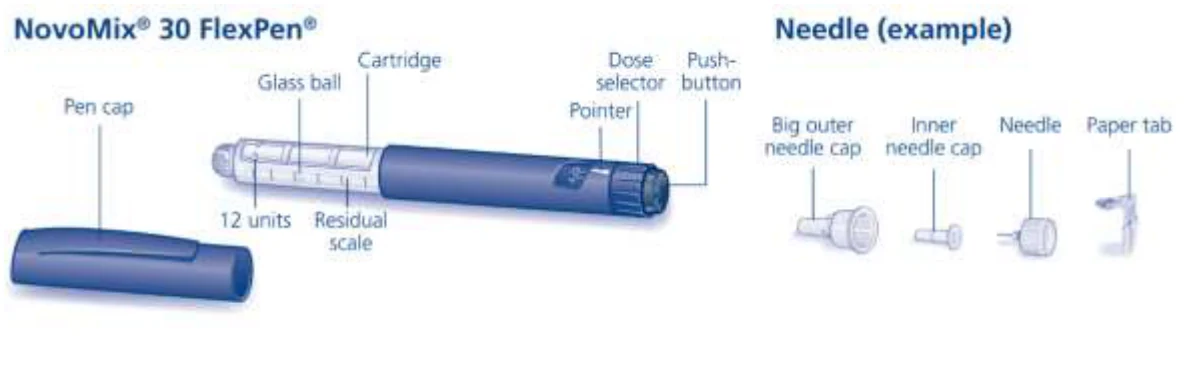
How to handle NovoMix 30 FlexPen NovoMix 30 FlexPen is a pre-filled, colour–coded, disposable pen containing a mixture of rapid–acting and intermediate–acting insulin aspart in the ratio 30/70.
Read carefully the instructions for use included in this package leaflet. You must use the pen as described in the Instructions for use.
Always ensure you use the correct pen before you inject your insulin.
If you take more insulin than you should If you take too much insulin, your blood sugar gets too low (hypoglycaemia). See a) Summary of serious and very common side effects in section 4.
If you forget to take your insulin If you forget to take your insulin, your blood sugar may get too high (hyperglycaemia). See c) Effects from diabetes in section 4.
If you stop taking your insulin
Do not stop taking your insulin without speaking with a doctor, who will tell you what needs to be done. This could lead to very high blood sugar (severe hyperglycaemia) and ketoacidosis. See c) Effects from diabetes in section 4.
If you have any further questions on the use of this medicine, ask your doctor, nurse or pharmacist.
4. Possible side effects
Like all medicines, this medicine can cause side effects, although not everybody gets them.
- a) Summary of serious and very common side effects
Low blood sugar (hypoglycaemia) is a very common side effect. It may affect more than 1 in 10 people.
Low blood sugar may occur if you:
- Inject too much insulin.
- Eat too little or miss a meal.
- Exercise more than usual.
Drink alcohol (see Drinking alcohol and
taking NovoMix 30 in section 2).
Signs of low blood sugar: Cold sweat; cool pale skin; headache; rapid heartbeat; feeling sick; feeling very hungry; temporary changes in vision; drowsiness; unusual tiredness and weakness; nervousness or tremor; feeling anxious; feeling confused; difficulty in concentrating.
Severe low blood sugar can lead to
unconsciousness. If prolonged severe low blood sugar is not treated, it can cause brain damage (temporary or permanent) and even death. You may recover more quickly from unconsciousness with an injection of the hormone glucagon given by someone who knows how to use it. If you are given glucagon, you will need glucose or a sugar snack as soon as you are conscious. If you do not respond to glucagon treatment, you will have to be treated in a hospital.
What to do if you experience low blood sugar:
► If you experience low blood sugar, eat
glucose tablets or another high sugar snack (e.g. sweets, biscuits, fruit juice). Measure your blood sugar if possible and rest. Always carry glucose tablets or high sugar snacks with you, just in case.
► When the symptoms of low blood sugar have
disappeared or when your blood sugar level is stabilised, continue insulin treatment as usual. ► If you have such low blood sugar that it
makes you pass out, if you have had the need for an injection of glucagon, or if you have experienced many incidents of low blood sugar, talk to a doctor. The amount or timing of insulin, food or exercise may need to be adjusted.
Tell relevant people that you have diabetes and what the consequences may be, including the risk of passing out (becoming unconscious) due to low blood sugar. Let them know that if you pass out, they must turn you on your side and get medical help straight away. They must not give you any food or drink because you may choke.
Serious allergic reactions to NovoMix 30 or one of its ingredients (called a systemic allergic reaction) is a very rare side effect, but it can potentially be life-threatening. It may affect less than 1 in 10,000 people.
Seek medical advice immediately:
- If signs of allergy spread to other parts of your body.
- If you suddenly feel unwell, and you: start sweating; start being sick (vomiting); have difficulty in breathing; have a rapid heartbeat; feel dizzy.
► If you notice any of these signs, seek medical advice immediately.
Skin changes at the injection site: If you inject insulin at the same place, the fatty tissue may shrink (lipoatrophy) or thicken (lipohypertrophy) (may affect less than 1 in 100 people). Lumps under the skin may also be caused by build-up of a protein called amyloid (cutaneous amyloidosis; how often this occurs is not known). The insulin may not work very well if you inject into a lumpy, shrunken or thickened area. Change the injection site with each injection to help prevent these skin changes.
- b) List of other side effects
Uncommon side effects
May affect less than 1 in 100 people.
Signs of allergy: Local allergic reactions (pain, redness, hives, inflammation, bruising, swelling and itching) at the injection site may occur. These usually disappear after a few weeks of taking your insulin. If they do not disappear, see your doctor.
Vision problems: When you first start your insulin treatment, it may disturb your vision, but the disturbance is usually temporary.
Swollen joints: When you start taking insulin, water retention may cause swelling around your ankles and other joints. Normally, this soon disappears. If not, contact your doctor.
Diabetic retinopathy (an eye disease related to diabetes which can lead to loss of vision): If you have diabetic retinopathy and your blood sugar level improves very fast, the retinopathy may get worse. Ask your doctor about this.
Rare side effects
May affect less than 1 in 1,000 people.
Painful neuropathy (pain due to nerve damage): If your blood sugar level improves very fast, you may get nerve related pain. This is called acute painful neuropathy and is usually transient.
Reporting of side effects
If you get any side effects, talk to your doctor, pharmacist or nurse. This includes any possible side effects not listed in this leaflet. You can also report side effects directly via the Yellow Card Scheme at:
www.mhra.gov.uk/yellowcard or search for MHRA Yellow Card in the Google Play or Apple App Store.
By reporting side effects, you can help provide more information on the safety of this medicine.
- c) Effects from diabetes
High blood sugar (hyperglycaemia)
High blood sugar may occur if you:
- Have not injected enough insulin.
- Forget to take your insulin or stop taking insulin.
- Repeatedly take less insulin than you need.
- Get an infection and/or a fever.
- Eat more than usual.
- Exercise less than usual.
Warning signs of high blood sugar:
The warning signs appear gradually. They include: increased urination; feeling thirsty; losing your appetite; feeling sick (nausea or vomiting); feeling drowsy or tired; flushed; dry skin; dry mouth and a fruity (acetone) smell of the breath.
What to do if you experience high blood sugar:
► If you get any of the above signs: test your
blood sugar level, test your urine for ketones if you can, then seek medical advice immediately.
► These may be signs of a very serious
condition called diabetic ketoacidosis (build-up of acid in the blood because the body is breaking down fat instead of sugar). If you do not treat it, this could lead to diabetic coma and eventually death.
5. How to store NovoMix 30
Keep this medicine out of the sight and reach of children.
Do not use this medicine after the expiry date, which is stated on the FlexPen label and carton after ‘EXP’. The expiry date refers to the last day of that month.
Always keep the pen cap on your FlexPen when you are not using it, in order to protect it from light.
NovoMix 30 must be protected from excessive heat and light.
Before opening: NovoMix 30 FlexPen that is not being used must be stored in the refrigerator at 2°C to 8°C, away from the cooling element. Do not freeze.
Before you use NovoMix 30 FlexPen, remove it from the refrigerator. It is recommended to resuspend the insulin as instructed every time you use a new pen. See Instructions for use.
During use or when carried as a spare:
NovoMix 30 FlexPen that is being used or carried as a spare should not be kept in the refrigerator. You can carry it with you and keep it at room temperature (below 30°C) for up to 4 weeks.
If your medicine becomes discoloured or shows any signs of deterioration, consult your pharmacist who will advise you what to do.
Do not throw away any medicines via wastewater or household waste. Ask your pharmacist how to throw away medicines you no longer use. These measures will help protect the environment.
6. Contents of the pack and other information
What NovoMix 30 contains
The active substance is insulin aspart.
NovoMix 30 is a mixture consisting of 30% soluble insulin aspart and 70% insulin aspart crystallised with protamine. 1 ml contains 100 units of insulin aspart. Each pre-filled pen contains 300 units of insulin aspart in 3 ml suspension for injection.
The other ingredients are glycerol, phenol,
metacresol, zinc chloride, disodium phosphate dihydrate, sodium chloride, protamine sulfate, hydrochloric acid, sodium hydroxide and water for injections.
What NovoMix 30 looks like and contents of the pack
NovoMix 30 is presented as a suspension for injection in a pre-filled pen. The cartridge contains a glass ball to facilitate resuspension. After resuspension, the liquid should appear uniformly white, cloudy and aqueous. Do not use the insulin, if it does not look uniformly white, cloudy and aqueous after resuspension.
Pack sizes of 5 (without needles) pre-filled pens of 3 ml.
The suspension is cloudy, white and aqueous.
Manufacturer
The manufacturer can be identified by the batch number printed on the slip of the carton and on the label:
If the second and third characters are S6,
P5, K7, R7, VG, FG or ZF, the manufacturer is
Novo Nordisk A/S, Novo Allé,
DK-2880 Bagsværd, Denmark.
If the second and third characters are H7 or
T6, the manufacturer is
Novo Nordisk Production SAS, 45 Avenue d’Orléans,
F-28000 Chartres, France.
Procured from within the EU.
Repackaged by the Product Licence Holder: Cross Healthcare Ltd.,
Unit 2A, Bandeath Industrial Estate, Throsk,
Stirling,
FK7 7NP,
United Kingdom.
See separate sheet for information on how to use your FlexPen.
This leaflet was last revised 26/06/2026
NovoMix® 30, FlexPen®, NovoFine® and NovoTwist® are the trademarks owned by Novo Nordisk A/S, Denmark.
PL: 20504/0659
NovoMix® 30 FlexPen® 100 units/ml suspension for injection in a pre-filled pen
Blind or partially sighted?
Is this leaflet hard to see or read?
Call 01786-817707 (Regulatory
Department), to obtain the leaflet in a format suitable for you.
LFNOV0659_26/06/2026_R01 POM
Resuspending your insulin
Check the name and coloured label of your
pen to make sure that it
contains the correct type of
insulin. This is especially
important if you take more
than one type of insulin. If
you take the wrong type of
insulin, your blood sugar
level may get too high or
too low.
Every time you use a new pen
Let the insulin reach room
temperature before you
use it. This makes it easier
to resuspend.
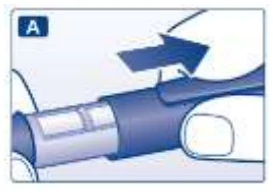
Pull off the pen cap.
Before your first injection with a new FlexPen, you must resuspend the
insulin:
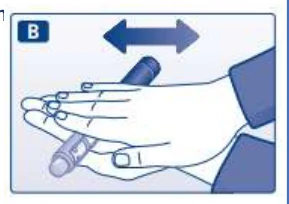
Roll the pen between your
palms 10 times – it is
important that the pen is
kept horizontal (level with
the ground).
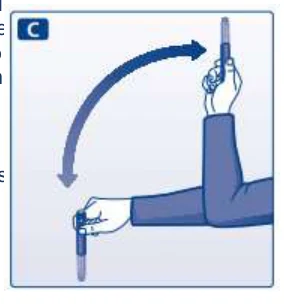
Then move the pen up and
down 10 times between the
two positions as shown, so
the glass ball moves from
one end of the cartridge to
the other.
Repeat rolling and moving
the pen until the liquid does
appear uniformly white,
cloudy and aqueous.
For every following injection
Move the pen up and down
between the two positions
at least 10 times until the
liquid does appear
uniformly white, cloudy and
aqueous.
Making the injection
Insert the needle into your skin. Use the injection technique shown by your doctor or nurse.
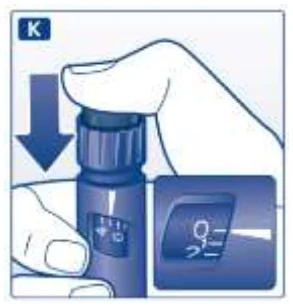
Inject the dose by pressing the push-button all the way in until 0 lines up with the pointer. Be careful only to push the push-button when injecting.
Turning the dose selector will not inject insulin.
► Keep the push-button fully depressed and let the needle remain under the skin for at least 6 seconds.
This will make sure you get the full dose.
► Withdraw the needle from the skin, then release the pressure on the push-button.
► Always make sure that the dose selector returns to 0 after the injection. If the dose selector stops before it returns to 0, the full dose has not been delivered, which may result in too high blood sugar level.
Lead the needle into the big outer needle cap without touching it.
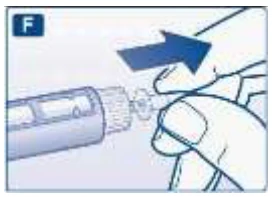
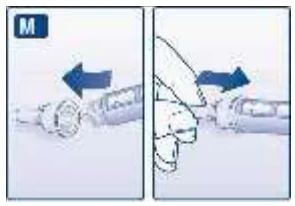
When the needle is covered, carefully push the big outer needle cap completely on and then unscrew the needle.
Dispose of it carefully and put the pen cap back on your FlexPen.
Attaching a needle
Instruction on how to use NovoMix® 30 suspension for injection in FlexPen®.
Read the following instructions carefully before using your FlexPen. If you do not follow the instructions carefully, you may get too little or too much insulin, which can lead to too high or too low blood sugar level. Your FlexPen is a pre-filled dial-a-dose insulin pen. ► You can select doses from 1 to 60 units in increments of 1 unit.
► FlexPen is designed to be used with NovoFine or NovoTwist disposable needles up to a length of 8 mm. ► Always carry a spare insulin delivery device in case your FlexPen is lost or damaged.
Checking the insulin flow
Prior to each injection, small amounts of air may collect in the cartridge during normal use. To avoid injection of air and ensure proper dosing:
Selecting your dose
Check that the dose selector is set at 0.
Always check there are at least 12 units of insulin left in the cartridge to allow resuspension. If there are less than 12 units left, use a new FlexPen®. 12 units are marked on the residual scale. See the big picture on top of this instruction.
Do not use the pen if the resuspended insulin does not look uniformly white, cloudy and aqueous.
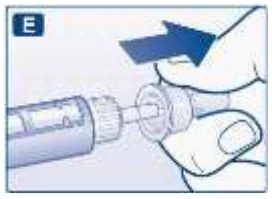
Take a new needle and tear off the paper tab.
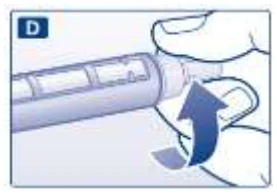
Screw the needle straight and tightly onto your FlexPen.
Pull off the big outer needle cap and keep it for later.
Pull off the inner needle cap and dispose of it. Never try to put the inner needle cap back on the needle.
You may stick yourself with the needle.
Always use a new needle for each injection. This reduces the risk of contamination, infection, leakage of insulin, blocked needles and inaccurate dosing.
Be careful not to bend or damage the needle before use.
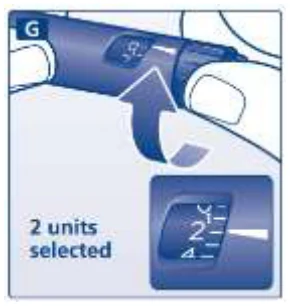
Turn the dose selector to
select 2 units.
Hold your FlexPen with
the needle pointing
upwards and tap the
cartridge gently with your
finger a few times to
make any air bubbles
collect at the top of the
cartridge.
Keeping the needle
upwards, press the
push-button all the way
in. The dose selector
returns to 0.
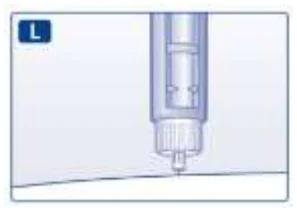
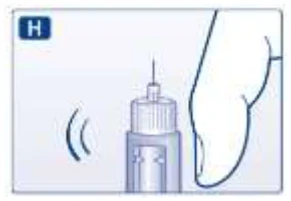
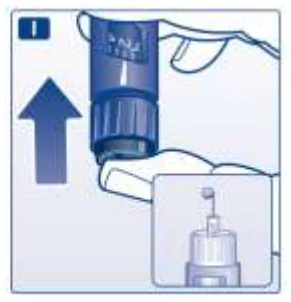
A drop of insulin should
appear at the needle tip.
If not, change the needle
and repeat the
procedure no more than
6 times.
If a drop of insulin still
does not appear, the pen
is defective, and you
must use a new one.
Always make sure that a drop appears at the needle tip before you inject. This makes sure that the insulin flows. If no drop appears you will not inject any insulin, even though the dose selector may move. This may indicate a blocked or damaged needle.
Always check the flow before you inject. If you do not check the flow, you may get too little insulin or no insulin at all. This may lead to too high blood sugar level.
Further important information
Caregivers must be very careful when handling used needles to reduce the risk of needle sticks and cross-infection.
Dispose of the used FlexPen carefully without the needle attached.
Never share your pen or your needles with other people. It might lead to cross-infection.
Never share your pen with other people. Your medicine might be harmful to their health.
Always keep your pen and needles out of sight and reach of others, especially children.
Caring for your pen
►Your FlexPen must be handled with care. If it is dropped, damaged or crushed, there is a risk of insulin leakage. This may cause inaccurate dosing, which can lead to too high or too low blood sugar level.
► You can clean the exterior of your FlexPen by wiping it with a medicinal swab. Do not soak, wash or lubricate it as it may damage the pen.
► Do not refill your FlexPen.
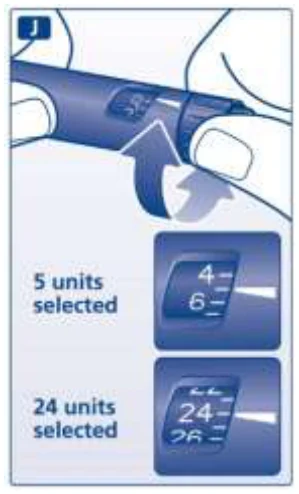
Turn the dose selector
to select the number of
units you need to
inject.
The dose can be
corrected either up or
down by turning the
dose selector in either
direction until the
correct dose lines up
with the pointer. When
turning the dose
selector, be careful not
to push the push-
button as insulin will
come out.
You cannot select a
dose larger than the
number of units left in
the cartridge.
Always remove the needle after each injection and store your FlexPen without the needle attached. This reduces the risk of contamination, infection, leakage of insulin, blocked needles and inaccurate dosing.
► Always make sure that you have resuspended the
insulin prior to each injection. This reduces the risk of too high or too low blood sugar level. After you have resuspended the insulin, complete all the following steps of injection without delay.
Always use the dose selector and the pointer to see how many units you have selected before injecting the insulin.
Do not count the pen clicks. If you select and inject the wrong dose, your blood sugar level may get too high or too low. Do not use the residual scale, it only shows approximately how much insulin is left in your pen.
UMNOVMIXFP_26/06/2026-R01