

Summary of Product Characteristics (SmPC) - Novoeight 500 IU powder and solvent for solution for injection
1 NAME OF THE MEDICINAL PRODUCT
NovoEight 500 IU powder and solvent for solution for injection
2 QUALITATIVE AND QUANTITATIVE COMPOSITION
NovoEight 500 IU powder and solvent for solution for injection.
Each powder vial contains nominally 500 IU human coagulation factor VIII (rDNA), turoctocog alfa.
After reconstitution NovoEight contains approximately 125 IU/ml of human coagulation factor VIII (rDNA), turoctocog alfa.
The potency (IU) is determined using the European Pharmacopoeia (Ph. Eur) chromogenic assay. The specific activity of NovoEight is approximately 8,300 IU/mg protein.
Turoctocog alfa (human coagulation factor VIII (rDNA)) is a purified protein that has 1,445 amino acids with an approximate molecular mass of 166 kDA. It is produced by recombinant DNA technology in Chinese hamster ovary (CHO) cells, and prepared without the addition of any human or animal derived protein in the cell culture process, purification or final formulation.
Turoctocog alfa is a B-domain truncated recombinant human coagulation factor VIII (B-domain consists of 21 amino acids of the wild type B-domain) without any other modifications in the amino acid sequence.
Excipient with known effect
The medicinal product contains 30.5 mg sodium per reconstituted vial.
For the full list of excipients, see section 6.1.
3 PHARMACEUTICAL FORM
Powder and solvent for solution for injection.
White or slightly yellow powder or friable mass.
Clear and colourless solution for injection.
4 CLINICAL PARTICULARS
4.1 Therapeutic indications
Treatment and prophylaxis of bleeding in patients with haemophilia A (congenital factor VIII deficiency).
NovoEight can be used for all age groups.
4.2 Posology and method of administration
Treatment should be under the supervision of a doctor experienced in the treatment of haemophilia.
Treatment monitoring
During the course of treatment, appropriate determination of factor VIII levels is advised to guide the dose to be administered and the frequency of repeated injections. Individual patients may vary in their response to factor VIII, demonstrating different half-lives and recoveries. Dose based on bodyweight may require adjustment in underweight or overweight patients. In a single dose pharmacokinetic study in adult patients the maximum exposure (Cmax) and the total exposure (AUC) increased with increasing body mass index (BMI) indicating that dose adjustments may be required. An increase in dose may be required for underweight patients (BMI <18.5 kg/m2) and a decrease in dose may be required for obese patients (BMI ≥30 kg/m2), but there is insufficient data to recommend specific dose adjustments, see section 5.2.
In the case of major surgical interventions in particular, precise monitoring of the substitution therapy by means of coagulation analysis (plasma factor VIII activity) is indispensable.
When using an in vitro thromboplastin time (aPTT)-based one stage clotting assay for determining factor VIII activity in patients’ blood samples, plasma factor VIII activity results can be significantly affected by both the type of aPTT reagent and the reference standard used in the assay. Also there can be significant discrepancies between assay results obtained by aPTT-based one stage clotting assay and the chromogenic assay according to Ph. Eur. This is of importance particularly when changing the laboratory and/or reagents used in the assay.
Posology
The dose and duration of the substitution therapy depend on the severity of the factor VIII deficiency, on the location and extent of the bleeding and the patient’s clinical condition.
The number of units of factor VIII administered is expressed in International Units (IU), which are related to the current WHO standard for factor VIII products. The activity of factor VIII in plasma is expressed either as percentage (relative to normal level human plasma) or in International Units (relative to an International Standard for factor VIII in plasma).
One International Unit (IU) of factor VIII activity is equivalent to that quantity of factor VIII in one ml normal human plasma.
On-demand treatment
The calculation of the required dose of factor VIII is based on the empirical finding that 1 International Unit (IU) factor VIII per kg body weight raises the plasma factor VIII activity by 2 IU/dl. The required dose is determined using the following formula:
Required units = body weight (kg) x desired factor VIII rise (%) (IU/dl) x 0.5 (IU/kg per IU/dl).
The amount to be administered and the frequency of administration should always be oriented to the clinical effectiveness in the individual case.
In the case of the following haemorrhagic events, the factor VIII activity should not fall below the given plasma activity level (in % of normal or IU/dl) in the corresponding period. The following table can be used to guide dosing in bleeding episodes and surgery:
Table 1 Guide for dosing in bleeding episodes and surgery
Degree of
haemorrhage/Type of
surgical procedure
FVIII level required (%) (IU/dl)
Frequency of doses (hours)/Duration of therapy (days)
Haemorrhage
Early haemarthrosis,
muscle bleeding or oral
bleeding
20–40
Repeat every 12 to 24 hours, at least 1 day, until the bleeding
episode as indicated by pain is resolved or healing achieved
More extensive
haemarthrosis, muscle
bleeding or haematoma
30–60
Repeat infusion every 12–24 hours for 3–4 days or more until pain and acute disability are resolved
Life threatening
haemorrhages
60–100
Repeat infusion every 8 to 24 hours until threat is resolved
Surgery
Minor surgery including
tooth extraction
30–60 Every 24 hours, at least
1 day, until healing is achieved
Major surgery 80–100
(pre- and
postoperative)
Repeat infusion every 8–24 hours until
adequate wound
healing, then therapy for at least another 7 days to maintain a factor VIII activity of 30% to 60% (IU/dl)
Prophylaxis
For long term prophylaxis against bleeding in patients with severe haemophilia A. The usual recommended doses are 20–40 IU of factor VIII per kg body weight every second day or 20–50 IU of factor VIII per kg body weight 3 times weekly. In adults and adolesents (>12 years) a less frequent regimen (40-60 IU/kg every third day or twice weekly) may be applicable. In some cases, especially in younger patients, shorter dosage intervals or higher doses may be necessary.
Surgery
There is limited experience of surgery in paediatric patients.
Elderly
There is no experience in patients >65 years.
Paediatric population
For long term prophylaxis against bleeding in patients below the age of 12, doses of 25–50 IU of factor VIII per kg body weight every second day or 25–60 IU of factor VIII per kg body weight 3 times weekly are recommended. For paediatric patients above the age of 12 the dose recommendations are the same as for adults.
Method of administration
Intravenous use.
The recommended infusion rate for NovoEight is 1–2 ml/min. The rate should be determined by the patient’s comfort level.
For instructions on reconstitution of the medicinal product before administration, see section 6.6.
4.3 Contraindications
Hypersensitivity to the active substance or to any of the excipients listed in section 6.1.
Known allergic reaction to hamster proteins.
4.4 Special warnings and precautions for use
Traceability
In order to improve traceability of biological medicinal products, the name and the batch number of the administered product should be clearly recorded.
Hypersensitivity
Allergic type hypersensitivity reactions are possible with NovoEight. The product contains traces of hamster proteins, which in some patients may cause allergic reactions. If symptoms of hypersensitivity occur, patients should be advised to discontinue use of the medicinal product immediately and contact their physician. Patients should be informed of the early signs of hypersensitivity reactions including hives, generalised urticaria, tightness of the chest, wheezing, hypotension and anaphylaxis.
In case of shock, standard medical treatment for shock should be implemented.
Inhibitors
The formation of neutralising antibodies (inhibitors) to factor VIII is a known complication in the management of individuals with haemophilia A. These inhibitors are usually IgG immunoglobulins directed against the factor VIII procoagulant activity, which are quantified in Bethesda Units (BU) per ml of plasma using the modified assay. The risk of developing inhibitors is correlated to the severity of the disease as well as the exposure to factor VIII, this risk being highest within the first 50 exposure days but continues throughout life although the risk is uncommon.
The clinical relevance of inhibitor development will depend on the titre of the inhibitor, with low titre posing less of a risk of insufficient clinical response than high titre inhibitors.
In general, all patients treated with coagulation factor VIII products should be carefully monitored for the development of inhibitors by appropriate clinical observation and laboratory test. If the expected factor VIII activity plasma levels are not attained, or if bleeding is not controlled with an appropriate dose, testing for factor VIII inhibitor presence should be performed. In patients with high levels of inhibitor, factor VIII therapy may not be effective and other therapeutic options should be considered. Management of such patients should be directed by physicians with experience in the care of haemophilia and factor VIII inhibitors.
Cardiovascular event
In patients with existing cardiovascular risk factors, substitiution therapy with FVIII may increase the cardiovascular risk.
Catheter-related complications
If a central venous access device (CVAD) is required, risk of CVAD-related complications including local infections, bacteraemia and catheter site thrombosis should be considered.
It is strongly recommended that every time that NovoEight is administered to a patient, the name and batch number of the product are recorded in order to maintain a link between the patient and the batch of the medicinal product.
Paediatric population
The listed warnings and precautions apply both to adults and children.
Excipient related considerations
The medicinal product contains 30.5 mg sodium per reconstituted vial, equivalent to 1.5% of the WHO recommended maximum daily intake of 2 g sodium for an adult.
4.5 Interaction with other medicinal products and other forms of interaction
No interactions of human coagulation factor VIII (rDNA) products with other medicinal products have been reported
4.6 Fertility, pregnancy and lactation
Animal reproduction studies have not been conducted with NovoEight. Based on the rare occurrence of haemophilia A in women, experience regarding the use of factor VIII during pregnancy and breastfeeding is not available. Therefore, factor VIII should be used during pregnancy and lactation only if clearly indicated.
4.7 Effects on ability to drive and use machines
NovoEight has no influence on the ability to drive and use machines.
4.8 Undesirable effects
Summary of the safety profile
Hypersensitivity or allergic reactions (which may include angioedema, burning and stinging at the infusion site, chills, flushing, generalised urticaria, headache, hives, hypotension, lethargy, nausea, restlessness, tachycardia, tightness of the chest, tingling, vomiting, wheezing) have been observed rarely and may in some cases progress to severe anaphylaxis (including shock).
Very rarely development of antibodies to hamster protein with related hypersensitivity reactions has been observed.
Development of neutralising antibodies (inhibitors) may occur in patients with haemophilia A treated with factor VIII, including with NovoEight. If such inhibitors occur, the condition will manifest itself as an insufficient clinical response. In such cases, it is recommended that a specialised haemophilia centre is contacted.
Tabulated list of adverse reactions
The table presented below is according to the MedDRA system organ classification (SOC and Preferred Term Level).
Frequencies have been evaluated according to the following convention: very common (≥1/10), common (≥1/100 to <1/10), uncommon (≥1/1,000 to <1/100), rare (≥1/10,000 to <1/1,000), very rare (<1/10,000), and not known (cannot be estimated from the available data).
Within each frequency grouping, adverse reactions are presented in order of decreasing seriousness.
Table 2 Frequency of adverse drug reactions in clinical trials
| System Organ Class | Frequencya in PTPs | Frequencya in PUPs | Adverse reaction |
| Blood and lymphatic system disorders | Uncommonb | Very commonb | FVIII inhibition |
| Psychiatric disorders | Uncommon | Insomnia | |
| Nervous system disorders | Uncommon | Headache, dizziness, burning sensation | |
| Cardiac disorders | Uncommon | Sinus tachycardia, acute myocardial infarction | |
| Vascular disorders | Uncommon | Hypertension, lymphoedema, hyperaemia | |
| Common | Flushing, Thrombophlebitis superficial | ||
| Skin and subcutaneous tissue disorders | Common | Rash, rash erythematous | |
| Uncommon | Rash, lichenoid keratosis, skin burning sensation | ||
| Musculoskeletal and connective tissue disorders | Uncommon | Musculoskeletal stiffness, arthropathy, pain in extremity, musculoskeletal pain | |
| Common | Haemarthrosis, Muscle haemorrhage |
| Respiratory, thoracic and mediastinal disorders | Common | Cough | |
| General disorders and administration site conditions | Common | Injection site reactionsc | |
| Common | Pyrexia, catheter site erythema | ||
| Uncommon | Fatigue, feeling hot, oedema peripheral, pyrexia | ||
| Investigations | Common | Hepatic enzymes increasedd | |
| Common | Anti factor VIII antibody positive | ||
| Uncommon | Heart rate increased | ||
| Gastrointestinal disorders | Common | Vomiting | |
Injury, poisoning and procedural complications | Common | Incorrect dose administered | |
| Common | Infusion related reaction | ||
| Uncommon | Contusion | ||
| Product issues | Common | Thrombosis in device |
a Calculated based on total number of unique patients in all clinical trials (301), of which 242 were previously treated patients (PTPs) and 60 were previously untreated patients (PUPs).
b Frequency is based on studies with all FVIII products which included patients with severe haemophilia A.
c Injection site reactions include injection site erythema, injection site extravasation and injection site pruritus.
d Hepatic enzymes increased include alanine aminotransferase, aspartate aminotransferase, gamma-glutamyltransferase and bilirubin.
Description of selected adverse reactions
During all clinical studies with NovoEight in previously treated patients, a total of 35 adverse reactions were reported in 23 of 242 patients exposed to NovoEight. The most frequently reported adverse reactions were injection site reactions, incorrect dose administered and hepatic enzymes increased. Of the 35 adverse reactions, 2 were reported in 1 out of 31 patients below 6 years of age, none in patients from 6 to ≤12 years of age, 1 event in 1 out of 24 patients (12 to <18 years of age) and 32 were reported in 21 out of 155 adults (≥18 years).
Paediatric population
In clinical trials involving 63 previously treated paediatric patients between 0 and 12 years of age and 24 adolescents between 12 and 18 years of age with severe haemophilia A no difference in the safety profile of NovoEight was observed between paediatric patients and adults.
In the trial with previously untreated patients, between 0 and 6 years of age, a total of 46 adverse reactions were reported in 33 of 60 patients exposed to NovoEight. The most frequently reported adverse reaction was Factor VIII inhibition, see section 4.4. High risk genetic mutations were identified in 92.3% of the overall and 93.8% of the high titre confirmed inhibitors. No other factors were significantly associated with inhibitor development.
Reporting of suspected adverse reactions
Reporting suspected adverse reactions after authorisation of the medicinal product is important. It allows continued monitoring of the benefit/risk balance of the medicinal product. Healthcare professionals are asked to report any suspected adverse reactions via the Yellow Card Scheme, website: www.mhra.gov.uk/yellowcard, or search for MHRA Yellow Card in the Google Play or Apple App Store
4.9 Overdose
No symptoms of overdose with recombinant coagulation factor VIII have been reported.
5 PHARMACOLOGICAL PROPERTIES
5.1 Pharmacodynamic properties
Pharmacotherapeutic group: antihaemorrhagics, blood coagulation factor VIII, ATC code: B02BD02.
Mechanism of action
NovoEight contains turoctocog alfa, a human coagulation factor VIII (rDNA), with a truncated B-domain. This glycoprotein has the same structure as human factor VIII when activated, and post-translational modifications that are similar to those of the plasma-derived molecule. The tyrosine sulphation site present at Tyr1680 (native full length), which is important for the binding to von Willebrand factor, has been found to be fully sulphated in the turoctocog alfa molecule. When infused into a haemophilia patient, factor VIII binds to endogenous von Willebrand Factor in the patient’s circulation. The factor VIII/von Willebrand factor complex consists of two molecules (factor VIII and von Willebrand factor) with different physiological functions. Activated factor VIII acts as a co-factor for activated factor IX, accelerating the conversion of factor X to activated factor X. Activated factor X converts prothrombin into thrombin. Thrombin then converts fibrinogen into fibrin and a clot can be formed. Haemophilia A is a sex-linked hereditary disorder of blood coagulation due to decreased levels of factor VIII:C and results in profuse bleeding into joints, muscles or internal organs, either spontaneously or as a result of accidental or surgical trauma. By replacement therapy the plasma levels of factor VIII are increased, thereby enabling a temporary correction of the factor deficiency and correction of bleeding tendencies.
Of note, annualised bleeding rate (ABR) is not comparable between different factor concentrates and between different clinical studies.
Clinical efficacy
Four multi-centre, open-labelled, non-controlled trials have been conducted to evaluate the safety and efficacy of NovoEight in the prevention and treatment of bleeds and during surgery in patients with severe haemophilia A (FVIII activity ≤1%). Three of these trials were performed in previously treated patients and the fourth in previously untreated patients. The trials included 298 exposed patients; 175 adolescents or adult patients without inhibitors from the age of 12 years (≥150 exposure days), 63 previously treated paediatric patients without inhibitors below 12 years of age (≥50 exposure days) and 60 previously untreated patients below 6 years of age.
188 out of 238 previously treated patients continued into the safety extension trial. Treatment with NovoEight was shown to be safe and had the intended haemostatic and preventive effect.
Of the 3,293 reported bleeds observed in 298 of the patients, 2,902 (88.1%) of the bleeds were resolved with 1-2 infusions of NovoEight.
Table 3 Consumption of NovoEight and haemostatic success rates in previously untreated patients (PUP) and previously treated patients (PTP)
Younger children (0 – <6 years) PUP | Younger children (0 – <6 years) PTP | Older children (6 – <12 years) PTP | Adolescents (12 – <18 years) PTP | Adults (≥18 years) PTP | Total | |
| Number of patients | 60 | 31 | 32 | 24 | 151 | 298 |
Dose used for prevention per patient (IU/kg BW) Mean (SD) Min ; Max | 45.2 (14.4) 4.5 ; 363.8 | 41.5 (8.1) 3.4 ; 196.3. | 38.4 (9.4) 3.2 ; 62.5 | 28.5 (9.3) 17.4 ; 73.9 | 28.5 (8.3) 12.0 ; 97.4 | 32.8 (10.9) 3.2 ; 363.8 |
Dose used for treatment of bleed (IU/kg BW) Mean (SD) Min ; Max | 43.6 (15.2) 11.9 ; 118.9 | 44.0 (12.6) 21.4 ; 193.8 | 40.4 (10.5) 24.0 ; 71.4 | 29.3 (10.3) 12.4 ; 76.8 | 35.0 (12.3) 6.4 ; 104.0 | 37.5 (13.4) 6.4 ; 193.8 |
| Success ratea % | 87.0% | 92.2% | 88.4% | 85.1% | 89.6% | 88.9% |
BW: Body weight, SD: Standard deviation
a Success is defined as either 'Excellent' or 'Good'.
Pre-authorisation clinical data were corroborated by a non-interventional, post-authorisation safety study conducted in order to provide additional documentation of the immunogenicity, and efficacy and safety of NovoEight in routine clinical practice. In total 68 previously treated patients (>150 EDs), of which 14 patients were <12 years and 54 patients were ≥12 years, received either on-demand (N=5) or prophylactic (N=63) treatment for a total of 87.8 patient years and 8967 EDs.
Surgery
A total of 30 surgeries were performed in 25 patients of which 26 were major surgeries and 4 were minor. Haemostasis was successful in all surgeries and no treatment failures were reported.
Data on Immune Tolerance Induction (ITI) has been collected in patients with haemophilia A who had developed inhibitors to factor VIII. During clinical trial in PUPs, 21 patients were treated with ITI and 18 (86%) patients completed ITI with a negative inhibitor test result.
5.2 Pharmacokinetic properties
All pharmacokinetic (PK) studies with NovoEight were conducted after i.v. administration of 50 IU/kg NovoEight in previously treated patients with severe haemophilia A (FVIII ≤1%). The analysis of plasma samples was conducted using both the one-stage clotting assay and the chromogenic assay.
The assay performance of NovoEight in FVIII:C assays was evaluated and compared to a marketed full length recombinant FVIII product. The study showed that comparable and consistent results were obtained for both products and that NovoEight can be reliably measured in plasma without the need of a separate NovoEight standard.
The single dose pharmacokinetic parameters of NovoEight are listed in Table 4 for the one-stage clotting assay and in Table 5 for the chromogenic assay.
Table 4 Single-dose pharmacokinetic parameters of NovoEight (50 IU/kg) by age
- one stage clotting assay - Mean (SD)
| 0 − <6 years | 6 − <12 years |
≥
| Parameter | 12 years | ||
| n=14 | n=14 | n=33 | |
| Incremental recovery (IU/dl)/(IU/kg) | 1.8 (0.7) | 2.0 (0.4) | 2.2 (0.4) |
| AUC ((IU*h)/dl) | 992 (411) | 1109(374) | 1526 (577) |
| CL (ml/h/kg) | 6.21 (3.66) | 5.02 (1.68) | 3.63 (1.09) |
| t½ (h) | 7.65 (1.84) | 8.02 (1.89) | 11.00 (4.65) |
| Vss (ml/kg) | 56.68 (26.43) | 46.82 (10.63) | 47.40 (9.21) |
| Cmax (IU/dl) | 100 (58) | 107 (35) | 123 (41) |
| Mean residence time (h) | 9.63 (2.50) | 9.91 (2.57) | 14.19 (5.08) |
Abbreviations: AUC = area under the factor VIII activity time profile; CL = clearance; t1/2 = terminal half-life; Vss = volume of distribution at steady-state; Cmax = maximum factor VIII activity.
Table 5 Single-dose pharmacokinetic parameters of NovoEight (50 IU/kg) by age
- chromogenic assay - Mean (SD)
| 0 − <6 years | 6 − <12 years |
≥
| Parameter | 12 years | ||
| n=14 | n=14 | n=33 | |
| Incremental recovery (IU/dl)/(IU/kg) | 2.2 (0.6) | 2.5 (0.6) | 2.9 (0.6) |
| AUC ((IU*h)/dl) | 1223 (436) | 1437 (348) | 1963 (773) |
| CL (ml/h/kg) | 4.59 (1.73) | 3.70 (1.00) | 2.86 (0.94) |
| t½ (h) | 9.99 (1.71) | 9.42 (1.52) | 11.22 (6.86) |
| Vss (ml/kg) | 55.46 (23.53) | 41.23 (6.00) | 38.18 (10.24) |
| Cmax (IU/dl) | 112 (31) | 125 (27) | 163 (50) |
| Mean residence time (h) | 12.06 (1.90) | 11.61 (2.32) | 14.54 (5.77) |
Abbreviations: AUC = area under the factor VIII activity time profile; CL = clearance; t1/2 = terminal half-life; Vss = volume of distribution at steady-state; Cmax = maximum factor VIII activity.
The pharmacokinetic parameters were comparable between paediatric patients below 6 years of age and the paediatric patients from 6 to below 12 years of age. Some variation was observed in the pharmacokinetic parameters of NovoEight between paediatric and adult patients. The higher CL and the shorter t½ seen in paediatric patients compared to adult patients with haemophilia A may be due in part to the known higher plasma volume per kilogram body weight in younger patients.
A single dose pharmacokinetic trial (50 IU/kg) was performed in 35 haemophilia patients (≥18 years of age) in different BMI categories. The maximum exposure (Cmax) and the total exposure (AUC) increase with increasing BMI indicating that dose adjustments may be required for underweight (BMI <18.5 kg/m2) and obese patients (BMI ≥30 kg/m2), see section 4.2.
Table 6 Single-dose pharmacokinetic parameters of NovoEight (50 IU/kg) by BMI classesa – One-stage clotting assay - Mean (SD)
| PK parameter | Underweight N=5 | Normal weight N=7 | Overweight N=8 | Obese class I N=7 | Obese class II/III N=7 |
Incremental recovery (IU/dl)/(IU/kg) | 1.7 (0.2) | 2.0 (0.2) | 2.4 (0.4) | 2.3 (0.3)b | 2.6 (0.3) |
| AUC ((IU*h)/dl) | 1510 (360) | 1920 (610) | 1730 (610) | 2030 (840) | 2350 (590) |
| CL (ml/h/kg) | 3.91 (0.94) | 3.20 (1.00) | 3.63 (1.24) | 3.37 (1.79) | 2.51 (0.63) |
| t½ (h) | 11.3 (2.0) | 11.7 (3.5) | 9.4 (2.9) | 11.2 (3.5) | 11.1 (2.7) |
| Vss (ml/kg) | 56.8 (5.4) | 44.8 (6.5) | 39.6 (6.0) | 42.0 (9.0) | 35.0 (4.6) |
| Cmax (IU/dl) | 100 (11) | 121 (10) | 144 (26) | 140 (21) | 161 (32) |
| Mean residence time (h) | 15.1 (3.0) | 15.3 (4.8) | 11.9 (3.7) | 14.4 (4.6) | 14.6 (3.7) |
a BMI groups: Underweight: BMI <18.5 kg/m2, Normal weight: BMI 18.5-24.9 kg/m2, Overweight: BMI 25-29.9 kg/m2, Obese class I: BMI 30-34.9 kg/m2, Obese class II/III: BMI ≥35 kg/m2.
b Based on 6 patients only.
Table 7 Single-dose pharmacokinetic parameters of NovoEight (50 IU/kg) by BMI classesa – Chromogenic assay - Mean (SD)
PK parameter | Underweight N=5 | Normal weight N=7 | Overweight N=9 | Obese class I N=7 | Obese class II/III N=7 |
Incremental recovery (IU/dl)/(IU/kg) | 2.2 (0.4) | 2.9 (0.3) | 3.0 (0.5) | 3.2 (0.5) | 3.5 (0.5) |
AUC ((IU*h)/dl) | 1860 (700) | 2730 (860) | 2310 (1020) | 2780 (1210) | 3050 (730) |
| CL (ml/h/kg) | 3.28 (0.87) | 2.25 (0.73) | 2.84 (1.09) | 2.58 (1.56) | 1.94 (0.52) |
| t½ (h) | 11.7 (2.4) | 11.5 (3.6) | 9.7 (3.4) | 10.4 (3.2) | 10.5 (2.5) |
| Vss (ml/kg) | 49.1 (10.4) | 31.2 (4.5) | 31.6 (5.8) | 28.9 (5.1) | 25.7 (4.0) |
| Cmax (IU/dl) | 138 (29) | 185 (24) | 194 (31) | 200 (33) | 227 (32) |
| Mean residence time (h) | 15.5 (3.2) | 15.2 (4.9) | 12.6 (4.8) | 13.5 (4.6) | 13.9 (3.7) |
a BMI groups: Underweight: BMI <18.5 kg/m2, Normal weight: BMI 18.5-24.9 kg/m2, Overweight: BMI 25-29.9 kg/m2, Obese class I: BMI 30-34.9 kg/m2, Obese class II/III: BMI ≥35 kg/m2.
5.3 Preclinical safety data
Non-clinical data reveal no special concern for humans based on conventional studies of safety pharmacology and repeated dose toxicity.
6 PHARMACEUTICAL PARTICULARS
6.1 List of excipients
Powder:
Sodium chloride
L-histidine
Sucrose
Polysorbate 80
L-methionine
Calcium chloride dihydrate
Sodium hydroxide (for pH adjustment)
Hydrochloric acid (for pH adjustment)
Solvent:
Sodium chloride
Water for injec
6.2 Incompatibilities
In the absence of compatibility studies, this medicinal product must not be mixed with other medicinal products.
6.3 Shelf life
Unopened vial
30 months when stored in a refrigerator (2°C – 8°C).
During the shelf life, the product may be kept at:
- room temperature ( ≤ 30°C) for a single period no longer than 9 months or
- above room temperature (30°C up to 40°C) for a single period no longer than 3 months.
Once the product has been taken out of the refrigerator, the product must not be returned to the refrigerator.
Please record the beginning of storage and the storage temperature on the product carton.
After reconstitution:
Chemical and physical in-use stability have been demonstrated for:
- 24 hours stored at 2°C – 8°C
- 4 hours stored at 30°C, for product which has been kept for a single period no longer than 9 months at room temperature (≤30°C)
- 4 hours stored up to 40°C, for product which has been kept for a single period no longer than 3 months at above room temperature (30°C up to 40°C).
From a microbiological point of view, the medicinal product should be used immediately after reconstitution. If not used immediately, in-use storage times and conditions prior to use are the responsibility of the user and would normally not be longer than as stated above, unless reconstitution has taken place in controlled and validated aseptic conditions.
Any unused reconstituted product stored at room temperature (≤30°C) or up to 40°C for more than 4 hours should be discarded.
6.4 Special precautions for storage
Store in refrigerator (2°C – 8°C).
Do not freeze.
Keep the vial in the outer carton in order to protect from light.
For storage at room temperature (≤30°C) or up to 40°C and storage conditions after reconstitution of the medicinal product, see section 6.3.
6.5 Nature and contents of container
Each pack of NovoEight 250 IU, 500 IU, 1000 IU, 1500 IU, 2000 IU and 3000 IU powder and solvent for solution for injection contains:
- 1 glass vial (type I) with powder and chlorobutyl rubber stopper
- 1 sterile vial adapter for reconstitution
- 1 pre-filled syringe of 4 ml solvent with backstop (polypropylene), a rubber plunger (bromobutyl) and a syringe cap with a stopper (bromobutyl)
- 1 plunger rod (polypropylene).
6.6 Special precautions for disposal and other handling
NovoEight is to be administered intravenously after reconstitution of the powder with the solvent supplied in the syringe. After reconstitution the solution appears as a clear or slightly opalescent solution. Do not use solutions that are cloudy or have deposits.
You will also need an infusion set (tubing and butterfly needle), sterile alcohol swabs, gauze pads and plasters. These devices are not included in the NovoEight package.
Always use an aseptic technique.
Reconstitution
A) 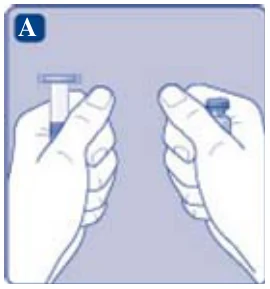
Take the vial, the vial adapter and the pre-filled syringe out of the carton. Leave the plunger rod untouched in the carton. Bring the vial and the pre-filled syringe to room temperature. You can do this by holding them in your hands until they feel as warm as your hands. Do not use any other way to heat the vial and pre-filled syringe.
A
B) 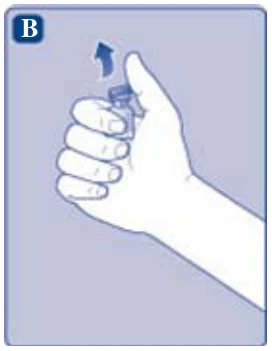
Remove the plastic cap from the vial. If the plastic cap is loose or missing, do not use the vial. Wipe the rubber stopper on the vial with a sterile alcohol swab and allow it to air dry for a few seconds before use.
B
C) 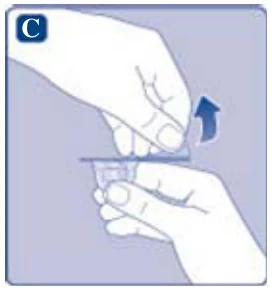
Remove the protective paper from the vial adapter. If the protective paper is not fully sealed or if it is broken, do not use the vial adapter.
Do not take the vial adapter out of the protective cap with your fingers.
C
D) 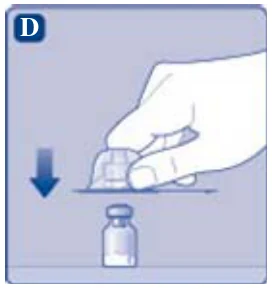
Turn over the protective cap and snap the vial adapter onto the vial. Once attached do not remove the vial adapter from the vial.
D
E) 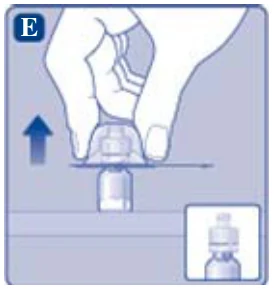
Lightly squeeze the protective cap with your thumb and index finger as shown. Remove the protective cap from the vial adapter.
E
F) 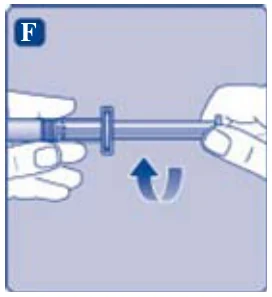
Grasp the plunger rod by the wide top and immediately connect the plunger rod to the syringe by turning it clockwise into the plunger inside the pre-filled syringe until resistance is felt.
F
G) 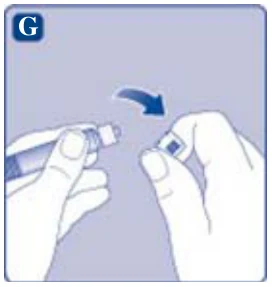
Remove the syringe cap from the pre-filled syringe by bending it down until the perforation breaks. Do not touch the syringe tip under the syringe cap.
G
H) 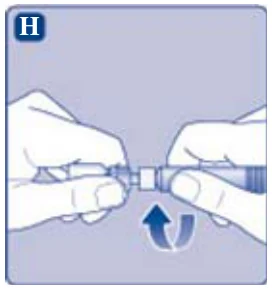
Screw the pre-filled syringe securely onto the vial adapter until resistance is felt.
H
I) 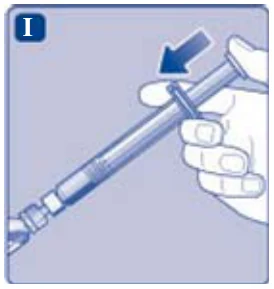
Hold the pre-filled syringe slightly
tilted with the vial pointing
downwards. Push the plunger rod
to inject all the solvent into the vial.
I
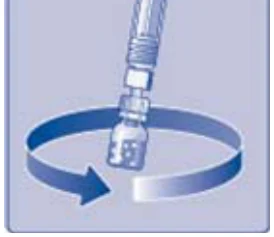
J) 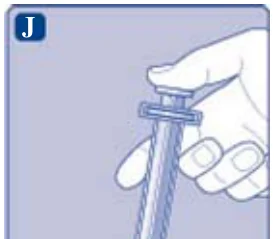
Keep the plunger rod pressed down
and swirl the vial gently until all
the powder is dissolved. Do not
shake the vial as this will cause
foaming.
J
It is recommended to use NovoEight immediately after reconstitution. For storage conditions of the reconstituted medicinal product see section 6.3.
If a larger dose is needed, repeat steps A to J with additional vials, vial adapters and pre-filled syringes.
Administration of the reconstituted solution
K) 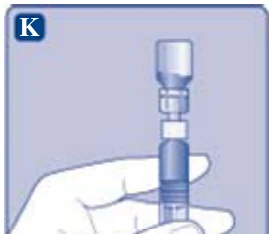
Keep the plunger rod pushed completely in. Turn the syringe with the vial upside down. Stop pushing the plunger rod and let it move back on its own while the reconstituted solution fills the syringe. Pull the plunger rod 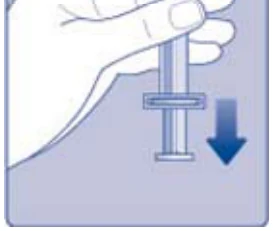 slightly downwards to draw the reconstituted solution into the syringe.
In case you only need part of the entire vial, use the scale on the syringe to see how much
reconstituted solution you
withdraw, as instructed by your doctor or nurse.
While holding the vial upside down, tap the syringe gently to let any air bubbles rise to the top. Push the plunger rod slowly until all air bubbles are gone.
K
L) 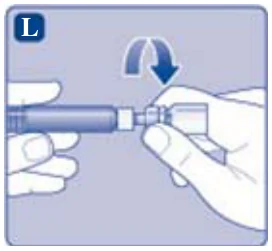
Unscrew the vial adapter with the vial.
NovoEight is now ready for injection. Locate a suitable site and slowly inject NovoEight into the vein over a period of 2-5 minutes.
L
Disposal
After injection, safely dispose of all unused NovoEight solution, the syringe with the infusion set, the vial with the vial adapter and other waste materials as instructed by your pharmacist.
Do not throw it out with the ordinary household waste.
7 MARKETING AUTHORISATION HOLDER
Novo Nordisk A/S
Novo Allé
DK-2880 Bagsværd
Denmark
8 MARKETING AUTHORISATION NUMBER(S)
NovoEight 500 IU
PLGB 04668/0377
9 DATE OF FIRST AUTHORISATION/RENEWAL OF THE
AUTHORISATION
01/01/2021
10 DATE OF REVISION OF THE TEXT
01/01/2021