

Patient leaflet - Nettacin 3 mg / ml eye drops solution
1. What Nettacin is and what it is used for
Nettacin contains the active substance netilmicin, an antibiotic that kills bacteria.
It is indicated in adults for the topical treatment of external infections of the eye and its surrounding area, caused by netilmicin sensitive bacteria.
You must talk to a doctor if you do not feel better or if you feel worse.
2. What you need to know before you use Nettacin
Do not use Nettacin:
- if you are allergic to netilmicin, any aminoglycoside antibiotic (gentamicin, tobramycin, kanamycin, etc.) or any of the other ingredients of this medicine (listed in section 6).
Warnings and precautions
Talk to your doctor or pharmacist before using Nettacin
If you use antibiotics for a long period of time, you may become more susceptible to eye infections.
Aminoglycoside antibiotics may cause serious hearing problems and kidney problems. If you are using other antibiotic treatment, including oral, with Netilmicin, ask your doctor for advice.
Nettacin is not injectable, therefore it must not be injected into the eye or introduced in the front (anterior chamber) of the eye.
In all the above cases or if you experience allergic reactions with this medicine, discontinue use and consult your doctor.
Children and adolescents
The safety and efficacy of Nettacin in children or adolescents have not been established.
Other medicines and Nettacin
Tell your doctor or pharmacist if you are taking, have recently taken or might take any other medicines.
Nettacin can be used with other medicines for ophthalmic use, but it is important to follow the instructions in section 3.
Tell your doctor or pharmacist if you are taking:
- any other antibiotic, in particular polymyxin B, colistin, viomycin, streptomycin, vancomycin or cephaloridine. The simultaneous use of Nettacin with other aminoglycoside antibiotics could increase the risk of kidney problems, hearing problems, or it may affect how well the other antibiotics work;
- cisplatin (used in anti-cancer therapy);
- diuretics (medicines that reduce water retention) as ethacrynic acid and furosemide.
Pregnancy and breast-feeding
If you are pregnant or breast-feeding, think you may be pregnant or are planning to have a baby, ask your doctor for advice before taking this medicine.
Pregnancy
This medicine should be used only if considered appropriate by your doctor.
Breast-feeding
Nettacin is not recommended for use during breast-feeding as this medicine is excreted into breast milk in small amounts.
Driving and using machines
You may experience temporary blurred vision after using Nettacin. Do not drive or operate machinery until your vision is clear again.
Nettacin 3 mg/ml eye drops, solution contains benzalkonium chloride
This medicine contains 0.05 mg benzalkonium chloride in each ml.
Benzalkonium chloride may be absorbed by soft contact lenses and may change the colour of the contact lenses. You should remove contact lenses before using this medicine and put them back 15 minutes afterwards.
Benzalkonium chloride may also cause eye irritation, especially if you have dry eyes or disorders of the cornea (the clear layer at the front of the eye). If you feel abnormal eye sensation, stinging or pain in the eye after using this medicine, talk to your doctor.
3. How to use Nettacin
Always use this medicine exactly as your doctor or pharmacist has told you. Check with your doctor or pharmacist if you are not sure.
The recommended dose is 1 or 2 drops into the affected eye 3 times daily, or as directed by your doctor.
If you wear contact lenses
Contact lens wear is not recommended during treatment of a superficial eye infection. If you wear contact lenses, you should remove them before using Nettacin eye drops. After using this medicine you should wait 15 minutes before putting your contact lenses back in.
Instructions for use
- 1) Wash/cleanse your hands thoroughly.
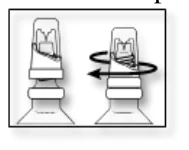
- 2) Screw the cap down tightly in order to pierce the tip of the bottle.
- 3) Unscrew the cap, invert the bottle and squeeze it gently so that a single drop falls into the
affected eye(s). Do not touch your eye, eyelids or any other surface with the tip of the bottle in order to avoid contamination. 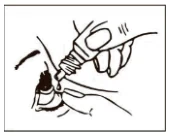
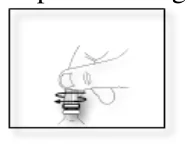
- 4) Replace and tighten the cap on the dropper bottle.
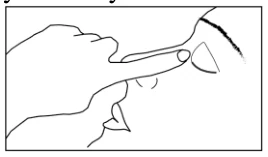
Keep the affected eye closed and press your fingertip against the inside corner of the closed eye, and hold for 1 minute. This is important because it reduces the amount of drug that goes into the rest of your body.
If you use more Nettacin than you should
No cases of overdose have ever been reported with the use of Nettacin.
| If you unintentionally instil more drops than you should, you are unlikely to have any problems. Apply | |
| the next dose as usual. | |
If you forget to use Nettacin.
Do not use a double dose to make up for a forgotten dose.
If you stop using Nettacin
If you have any further questions on the use of this medicine, ask your doctor, pharmacist or nurse.
If you use Nettacin with other eye medicines
If you are using any other eye medicine, you should wait 5 minutes between using each medicine. Eye ointments should be used last.
4. Possible side effects
Like all medicines, this medicine can cause side effects, although not everybody gets them. Most people who are treated with these eye drops do not suffer from any side effects.
The following side effects have occurred with Nettacin. The frequency is not known (cannot be estimated from the available data):
- eye irritation
- redness of the eye
- eyelid rash
- swollen eyelid
- eye itchiness
- allergic reaction
- urticaria
Reporting of side effects
If you get any side effects, talk to your doctor or pharmacist. This includes any possible side effects not listed in this leaflet. You can also report side effects directly via the national reporting system listed in Appendix V. By reporting side effects you can help provide more information on the safety of this medicine.
5. How to store Nettacin
Keep this medicine out of the sight and reach of children.
Do not use this medicine after the expiry date which is stated on the label and on the carton after the letters “EXP”. The expiry date refers to the last day of that month of the unopened and properly stored product.
Nettacin should be used within 28 days after first opening.
Do not store above 25ºC.
Keep the bottle in the outer box in order to protect from light.
Do not throw away any medicines via wastewater or household waste. Ask your pharmacist how to throw away medicines you no longer use. These measures will help protect the environment.
6. Contents of the pack and other information
What Nettacin contains
- The active substance is netilmicin. Each ml of solution contains 3 mg of netilmicin (as netilmicin sulphate).
- The other ingredients are sodium chloride, benzalkonium chloride, sodium hydroxide (for pH adjustment), purified water.
What Nettacin looks like and contents of the pack
Nettacin is a clear and colourless or pale yellow solution contained in 5 ml bottle and packaged inside a carton box.
Marketing Authorisation Holder and Manufacturer
Marketing Authorisation Holder
SIFI Pharmaceuticals Limited
29/30 Fitzroy Square
London W1T 6LQ
United Kingdom
Manufacturer
SIFI, S.P.A.
Via Ercole Patti, 36
I-95025 Aci S. Antonio (Catania)
Italy
This leaflet was last revised in March 2021.
Detailed information on this medicine is available on the website of www.mhra.gov.uk.