

Patient leaflet - Nasacort nasal spray
1. What Nasacort is and what it is used for
Nasacort contains a medicine called triamcinolone acetonide. This belongs to a group of medicines called corticosteroids which means it is a type of steroid. It is given as a spray in the nose to treat the nasal symptoms of allergic rhinitis in adults and children 2 years of age and over.
Nasal symptoms of allergy include sneezing, itching, and having a blocked, stuffy or runny nose. These can be caused by things such as:

- Animal fur or house dust mites. This type of allergy can happen at any time of the year and is called ‘perennial allergic rhinitis’.
- Pollen. This type of allergy, such as hay fever, can be caused by different pollens in different seasons of the year. This is called ‘seasonal allergic rhinitis’.
This medicine only works if used on a regular basis and may not help your symptoms straight away. It helps some people within the first day of treatment, however, for other people it may take 3 to 4 days to feel a relief.
2. What you need to know before you use Nasacort

Do not use Nasacort:

× If you are allergic to triamcinolone acetonide or any of the other
ingredients of this medicine (listed in section 6)
Signs of an allergic reaction to Nasacort include: a rash (hives),

itching, swallowing or breathing problems, swelling of your lips,
face, throat or tongue.
Warning and precautions
Talk to your doctor or pharmacist before using Nasacort:
- If you have any infection of the nose or throat that is not treated. If you get a fungal infection while using Nasacort, stop using the spray until the infection has been treated.
- If you have recently had a nose operation, or had an injury or ulcer in the nose.
- If you are being transferred from steroid injections or tablets to Nasacort spray.
- If you have had glaucoma or cataracts
If you are not sure if any of the above apply to you, talk to your doctor or pharmacist before using this medicine.
Contact your doctor if you experience blurred vision or other visual disturbances.
Children (under 2 years)
This medicine is not recommended for use in children under 2 years of age.

Operations or times of stress
Your doctor may advise you to take a higher than normal dose of this
medicine for medical reasons. If your dose is increased, tell your doctor if you are going to have an operation or are feeling unwell. This is because higher than normal doses of this medicine can lower your body's ability to heal or cope with stress. If this happens, your doctor may decide you need further treatment with another medicine to help.
Other medicines and Nasacort
Tell your doctor or pharmacist if you are taking, have recently taken or might take any other medicines, including medicines obtained without a prescription. This is because Nasacort can affect the way some other medicines work. Also some medicines can affect the way Nasacort works.
Some medicines may increase the effects of Nasacort and your doctor may wish to monitor you carefully if you are taking these medicines (including some medicines for HIV: ritonavir, cobicistat).
Pregnancy, breast-feeding and fertility
If you are pregnant or breast-feeding, think you may be pregnant or are planning to have a baby, ask your doctor or pharmacist for advice before taking this medicine.
Driving and using machines
Nasacort has no or negligible influence on the ability to drive or use machines.
Nasacort contains benzalkonium chloride
This medicine contains 15 micrograms benzalkonium chloride in each spray. Benzalkonium chloride may cause irritation or swelling inside the nose, especially if used for a long time.
Systemic effects
When corticosteroids, including triamcinolone acetonide, are used for long periods of time or at high doses for long periods of time, side effects may occur due to the drug being absorbed in the body (e.g. the normal production of steroidal hormones may be affected). These side effects are much less likely to occur with corticosteroid nasal sprays than with corticosteroids taken orally (e.g. tablets). Talk to your doctor if you experience any side effects.
3. How to use Nasacort Nasacort
NASACORT is for nasal use only.
Always use this medicine exactly as your doctor has told you. Check with your doctor or pharmacist if you are not sure. The medicine only works if it is used regularly. It can take 3 to 4 days before you notice your symptoms getting better.
How much Nasacort to use
Adults and children (over 12 years)
- The usual starting dose is 2 sprays in each nostril each day
- Once the symptoms of allergy are under control, the dose may be lowered to 1 spray in each nostril each day
Children (6 to 12 years)
- The usual dose is 1 spray in each nostril each day
- If the symptoms do not go away, then the dose may be increased to 2 sprays in each nostril each day
- The dose can then be lowered again to 1 spray in each nostril each day
Children (2 to 5 years)
- The usual dose is 1 spray in each nostril each day
Do not use Nasacort for more than 3 months in children under 12 years old.
An adult should help a young child use this medicine.
How to use the spray
Before using your nasal spray, blow your nose gently to
clear your nostrils.
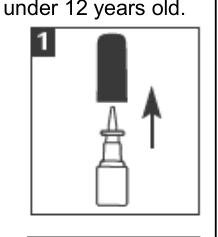
- 1. Preparing the bottle
- • Remove the cap by pulling upward
- • Shake the bottle gently before use
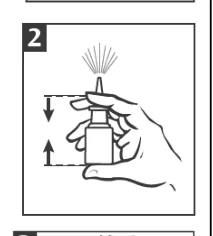
- 2. If you are using the spray for the first time
- • Hold the bottle upright
- • Point the spray away from you while doing this
- • Fill the pump with spray by pressing the nozzle downwards. This is called priming
- • Press and release it 5 times
- • Do this until a fine spray is produced
- • The spray is now ready to use
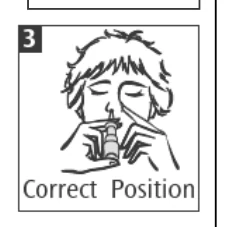
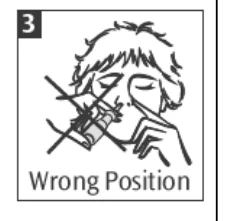
- 3. Using the spray
- • Close one nostril with your finger
- •
Hold the bottle upright and put the nozzle into the
other nostril as far as is comfortable
- •
Breathe in gently through your nose with your
mouth closed
- •
While you are doing this, press the nozzle to
deliver one spray
- 4. Then breath out through your mouth
- 5.
Repeat steps 3 and 4 if you have to spray again in
the same nostril and for the other nostril
- 6. After using the spray
- •
To keep the spray nozzle clean, wipe it carefully
with a clean tissue or handkerchief after each use
- • Replace the cap over the nozzle
If the nasal spray has not been used for more than 2 weeks:
- It needs to be primed again, to fill the nozzle with the spray
- The nozzle should be pointed away from you while you are doing this
- To prime, spray into the air once before use
Always shake the bottle gently before use
Cleaning the spray
If the spray does not work, the nozzle may be blocked.
Never try to unblock it or enlarge the tiny spray hole with
a pin or other sharp objects. This is because it can stop the spray from working.
The nasal spray should be cleaned at least once a week.
It can be cleaned more often if it gets blocked.
Instructions for cleaning the spray:
- 1. Remove the cap
- 2. Gently pull off the spray nozzle only
- 3.
Soak the cap and spray nozzle in warm water for a
few minutes
- 4. Rinse under the cold running tap water
- 5. Shake or tap to remove any water that is left
- 6. Allow to dry in the air
- 7. Re-fit the spray nozzle
- 8. Prime the nasal spray until a fine mist is formed
- 9. Use as normal
If you use more Nasacort than you should
It is important that you take your dose as stated on the
pharmacist's label or as advised by your doctor. You should
use only as much as your doctor recommends; using more
or less may make your symptoms worse.
An overdose is unlikely to cause problems, however, if you
have taken the entire contents of the bottle by mouth you
may have stomach or gut discomfort. Talk to a doctor if you
use more Nasacort than you should.
If you forget to use Nasacort
If you have forgotten to use Nasacort, use it as soon as you remember. Do not use a double dose to make up for a forgotten dose.
If you stop using Nasacort
If you stop using this medicine, your symptoms may return within
a few days.
If you experience any side effects (withdrawal symptoms) after stopping this medicine suddenly after prolonged use, talk to your doctor. See section 4 ‘Possible side effects’ for more information.
If you have any further questions on the use of this medicine, ask your doctor or pharmacist.
4. Possible side effects
Like all medicines, this medicine can cause side effects, although not everybody gets them.
Stop using Nasacort and see a doctor or go to a hospital
straight away if:
- You have an allergic reaction to Nasacort. The signs (frequency not known) may include: a rash (hives), itching, swallowing or breathing problems, swelling of your lips, face, throat or tongue.
Common side effects (may affect up to 1 in 10 people)
- Runny nose, headache, sore throat and/or cough
- Nosebleeds
- Inflammation/irritation of the airways (bronchitis)
- Heartburn or indigestion
- Flu-like symptoms (fever, muscle pain, weakness and/or fatigue)
- Problems with teeth
Other side effects (Not known: frequency cannot be estimated from the available data)
- Irritation and dryness on the inside of your nose
- Sinuses become congested or blocked
- Sneezing
- Changes in the way things taste or smell
- Feeling sick (nausea)
- Sleeping problems, feeling dizzy or tired
- Shortness of breath (dyspnoea)
- A decrease in the levels of cortisol in the blood (lab value)
- Cloudiness of the lens in the eye (cataract), elevated pressure inside the eyeball (glaucoma)
- Blurred vision
- Sudden discontinuation of corticosteroids after prolonged use may result in withdrawal symptoms like joint pain, muscle pain, shaking, weight loss, anxiety, nasal drip and bleeding from the nose. However, these symptoms are extremely rare for corticosteroid nasal sprays, and much less likely to occur with corticosteroid nasal sprays than with corticosteroids taken orally (e.g. tablets).
In some people, Nasacort can cause damage to the middle part of the inside of the nose (called ‘nasal septum’). Discuss any worries you may have about this with your doctor or pharmacist.
Additional side effects in Children
If your child has been using this medicine, it can affect how fast your child grows. This means that your doctor will need to regularly check your child’s height and therefore your doctor may lower the dose. In addition, your doctor may consider referring your child to a paediatric specialist.
Reporting of side effects
If you get any side effects, talk to your doctor, pharmacist or nurse. This includes any possible side effects not listed in this leaflet. You can also report side effects directly via the Yellow Card Scheme at: www.mhra.gov.uk/yellowcard or search for MHRA Yellow Card in the Google Play or Apple App Store.
By reporting side effects, you can help provide more information on the safety of this medicine.
5. How to store Nasacort
- Keep out of the sight and reach of children.
- Do not store above 25ºC. Discard within 2 months after first opening. Use as directed by your doctor.
- Do not use the Spray after the expiry date which is stated on the carton and bottle label after ‘Exp’. The expiry date refers to the last day of that month.
- Remember if your doctor tells you to stop taking this medicine, return any unused medicine to your pharmacist for safe disposal. Only keep this medicine if your doctor tells you to.
- If the nasal spray shows any sign of damage, seek the advice of your pharmacist.
6. Contents of the pack and other information
What Nasacort contains:
Nasacort Nasal Spray contains 9.075mg of the active ingredient triamcinolone acetonide. Nasacort delivers at least 120 actuations after initial priming, each containing 55 micrograms of triamcinolone acetonide.
The inactive ingredients are microcrystalline cellulose, carmellose sodium, polysorbate 80, purified water, glucose anhydrous, benzalkonium chloride (known to discolour soft contact lenses if reaches contact with the eyes), edetate disodium and hydrochloric acid or sodium hydroxide (for adjustment of pH). The active ingredient is an anti-allergic corticosteroid.
What Nasacort looks like and contents of the
pack
Nasacort is a nasal spray suspension. It comes
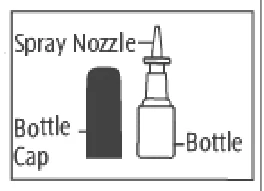
in a white plastic bottle which has a pump to spray Nasacort into your nostril through the spray nozzle. The bottle has a purple protective cap to keep the nozzle clean and to stop it from spraying accidentally.
Nasacort contains 120 sprays (16.5g of suspension which contains 9.075mg triamcinolone acetonide).
Manufactured by: Recipharm HC Limited, London Road, Holmes Chapel, Crewe, Cheshire, CW4 8BE, UK. OR
Sanofi Winthrop Industrie, 30 à 36 avenue Gustave Eiffel, 37100 Tours, France.
Procured from within the EU and repackaged by the Product Licence holder: B&S Healthcare, Unit 4, Bradfield Road, Ruislip, Middlesex,
HA4 0NU, UK.
Nasacort® nasal spray; PL 18799/0074
POM
Leaflet date: 02.05.2023
Nasacort is the registered trademark of Sanofi Mature IP.
Blind or partially sighted?
Is this leaflet hard to see or read?
Call 0208 515 3763 to obtain the leaflet in a format suitable for you.