

Patient leaflet - Mirabegron Astellas 8 mg/ml granules for prolonged-release oral suspension
1. What Mirabegron Astellas is and what it is used 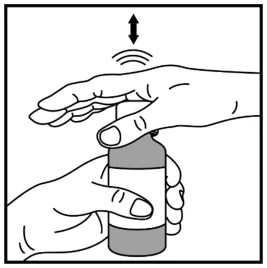 for
for
Mirabegron Astellas contains the active substance mirabegron. It is a bladder muscle relaxant (a so called beta 3-adrenoceptor agonist), which reduces neurogenic detrusor overactivity.
Mirabegron is used to treat a condition called neurogenic detrusor overactivity in children aged 3 to less than 18 years. Neurogenic detrusor overactivity is a condition in which involuntary bladder contractions 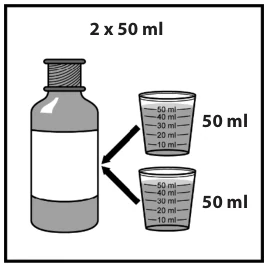 occur due to a condition that you are born with or injury to the nerves, which control the bladder. If left untreated, neurogenic detrusor overactivity may lead to damage to your bladder and/or kidneys. Mirabegron is used to increase the amount of urine your bladder can hold and reduce urine leakage.
2. What you need to know before you take Mirabegron Astellas
Do not take Mirabegron Astellas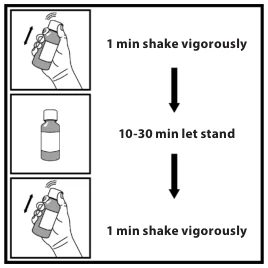 - if you are allergic to mirabegron or any of the other ingredients of this medicine (listed in section 6);
- if you have very high uncontrolled blood pressure. Warnings and precautions
Talk to your doctor or pharmacist before taking Mirabegron Astellas
- if you have trouble emptying your bladder or you have a weak urine stream or if you take other medicines for the treatment of neurogenic detrusor overactivity such as anticholinergic medicines.
 - if you have kidney or liver problems. Your doctor may need to reduce your dose or may tell you not to take Mirabegron Astellas, especially if you are taking other medicines such as itraconazole, ketoconazole (fungal infections), ritonavir (HIV/AIDS) or clarithromycin (bacterial infections). Tell your doctor about the medicines that you take.
 if you have an ECG (heart tracing) abnormality known as QT prolongation or you are taking any medicine known to cause this such as:
 - medicines used for abnormal heart rhythm such as
quinidine, sotalol, procainamide, ibutilide, flecainide, dofetilide, and amiodarone;
- medicines used for allergic rhinitis;
antipsychotic medicines (medicines for mental
illness) such as thioridazine, mesoridazine, haloperidol, and chlorpromazine;
- anti-infectives such as pentamidine, moxifloxacin,
 erythromycin, and clarithromycin. Mirabegron may cause your blood pressure to increase or make your blood pressure worse if you have a history of high blood pressure. It is recommended that your doctor check your blood pressure while you are taking this medicine.
Children and adolescents
Do not give this medicine to children and adolescents under 18 years of age for the treatment of overactive bladder because the safety and efficacy of mirabegron in this age group has not been established.
Mirabegron is not to be used in children under 3 years of age for the treatment of neurogenic detrusor overactivity.
Other medicines and Mirabegron Astellas
Tell your doctor or pharmacist if you are taking, have recently taken or might take any other medicines. Mirabegron may affect the way other medicines work, and other medicines may affect how this medicine works.
- Tell your doctor if you use thioridazine (a medicine for mental illness), propafenone or flecainide (medicines for abnormal heart rhythm), imipramine or desipramine (medicines used for depression). These specific medicines may require dose adjustment by your doctor.
- Tell your doctor if you use digoxin (a medicine for heart failure or abnormal heart rhythm). Blood levels of this medicine are measured by your doctor. If the blood level is out of range, your doctor may adjust the dose of digoxin.
- Tell your doctor if you use dabigatran etexilate (a medicine which is used to reduce the risk of brain or body vessel obstruction by blood clot formation in patients with an abnormal heart beat (atrial fibrillation) and additional risk factors). This medicine may require dose adjustment by your doctor.
Pregnancy and breast-feeding
If you are pregnant, think you may be pregnant or are planning to have a baby, you must not take Mirabegron Astellas.
If you are breast-feeding, ask your doctor or pharmacist for advice before taking this medicine. It is likely that this medicine passes into your breast milk. You and your doctor should decide if you should take Mirabegron Astellas or breast-feed. You should not do both. Driving and using machines
There is no information to suggest that this medicine affects your ability to drive or use machines. Mirabegron Astellas granules for prolonged-release oral suspension contains ethyl
parahydroxybenzoate (E214), methyl parahydroxybenzoate (E218), and sodium
May cause allergic reactions (possibly delayed). This medicine contains less than 1 mmol sodium (23 mg) per 10 ml of oral suspension, that is to say essentially ‘sodium-free’.
3. How to take Mirabegron Astellas
Always take this medicine exactly as your doctor has told you. Check with your doctor or pharmacist if you are not sure.
Take this medicine by mouth once daily. Mirabegron must be taken with food. Your doctor will tell you which dose you/your child should take. Your doctor will calculate the correct dose for a patient depending on his or her body weight. You should carefully follow their instructions.
How to take Mirabegron Astellas using an oral syringe
Reconstitution should be made by a pharmacist except in situations in which pharmacists are unable to do so. For situations in which pharmacists are unable to perform the reconstitution, use the measuring cup that is provided to measure the water volume used for reconstitution.
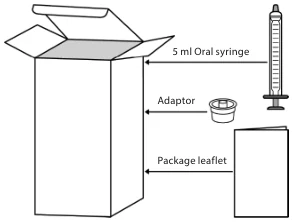
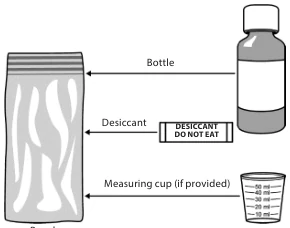
Use the oral syringe and adaptor provided with Mirabegron Astellas granules for prolonged-release oral suspension to measure the correct dose. If you need to take a dose greater than 5 ml per day, then you will need to use the oral syringe twice to administer the total amount of each dose. The items contained in the packaging are below:
Note: Measuring cup (if provided), bottle, and desiccant are included in the pouch. The pouch is included in the carton along with the oral syringe, adaptor, and package leaflet.
Preparation for the first use of a bottle of Mirabegron Astellas granules for prolonged-release oral suspension (with measuring cup)
Note: If a pharmacist has already performed the reconstitution, please skip this section and proceed to the section (Before each oral administration) below.
- 1.
• Open the carton and remove the pouch, syringe, and adaptor.
Keep the bottle in
the unopened pouch until the time of
reconstitution.
- Open the pouch and remove the bottle and measuring cup.
- 2.
• Throw away the empty pouch and desiccant.
Do not swallow the desiccant.
- 3.
• Tap the top of the closed bottle several times to loosen the granules.
- Place the bottle on a flat surface and remove the cap.
- 4.
• Use the measuring cup to measure 50 ml of water and pour it into the bottle.
- Use the cup again to measure another 50 ml of water and pour it into the bottle so that a total of 100 ml of water has been added.
- 5.
• Replace the cap on the bottle.
- Immediately shake vigorously for 1 minute, then let it stand for 10 to 30 minutes.
- Again, shake vigorously for 1 minute.
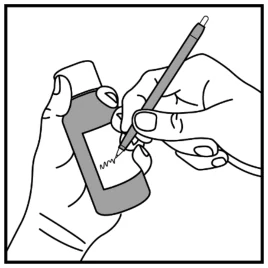
- 6. • Record 28 days from the date of reconstitution on the bottle label.
- 7.
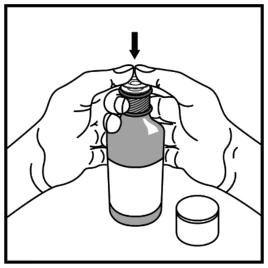
• Place the bottle on a flat surface and remove the cap.
Firmly press the adaptor into the neck of
the bottle.
- Make sure that the top of the adaptor is even with the top of the bottleneck. The adaptor should remain in the neck of the bottle until the end of the 28-day shelf life period.
- Replace the cap on the bottle.
Before each oral administration
Note: Shake the bottle vigorously for 1 minute each day to make sure granules are suspended.
2 x 50 ml
Mirabegron Astellas 8 mg/ml Granules for prolonged-release oral suspension
mirabegron
50 ml
50 ml
10-30 min let stand 1 min shake vigorously
1 min shake vigorously
5 ml Oral syringe Carton Adaptor Package leaflet | Pouch Measuring cup (if provided) Bottle Desiccant DESICCANT DO NOT EAT |
DESICCANT DO NOT EAT
4006641 170272 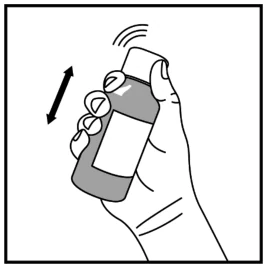
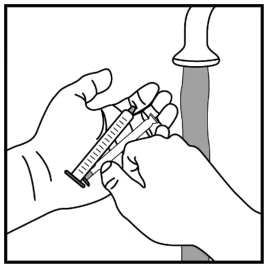 1. • Shake the bottle
vigorously for 1 minute.
- Let it stand until
foam on the surface of the suspension is gone (approximately 1 to 2 minutes).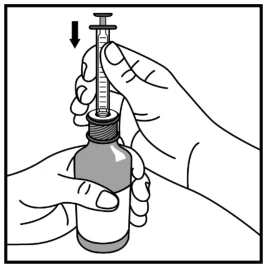 2. • Remove the bottle cap.
- Insert the oral syringe tip into central opening of the bottle adaptor until it is firmly in place.
Do not withdraw the plunger of the syringe.
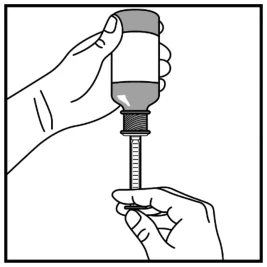 3. • Carefully turn the bottle
and syringe
upside down.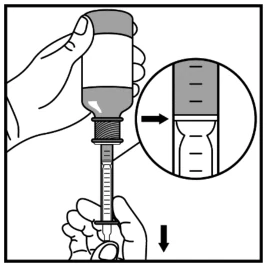 4. • Pull back the plunger
of the syringe slowly to withdraw the amount prescribed by your doctor from the upside-down bottle. The
medicine must be taken within 1 hour of being transferred into the syringe.
- If your doctor prescribed more than 5 ml, the syringe will need to be used twice.
For example, if the dose is 8 ml, withdraw 5 ml first and administer the medicine, then withdraw 3 ml and administer the medicine again.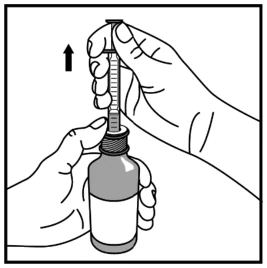 5. • Leave the syringe in
place and turn the bottle upright, making sure the plunger of the syringe does not move.
Gently remove the syringe from the
adaptor.
- After completion of dosing, close the bottle with the cap.
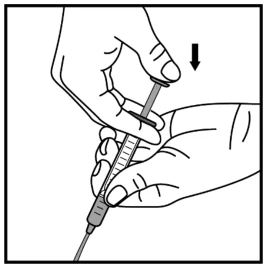 6. • Remove the overage
if too much medicine has been accidently withdrawn.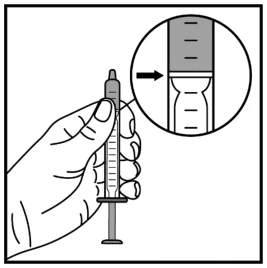 7. • Confirm the correct
amount has been
measured.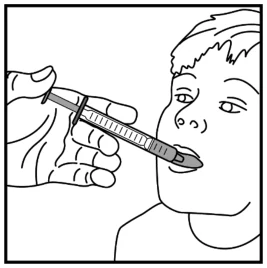 8. • Place the syringe in the
mouth and gently push the plunger down to administer the medicine.
- 9.
• Disassemble the syringe
and rinse with
warm water.
Allow time to dry for
reuse.
This medicine must not be mixed with other medicines. If you take more Mirabegron Astellas than you should
If you have taken too much Mirabegron Astellas, or if someone else has accidentally taken Mirabegron Astellas, contact your doctor, pharmacist or hospital for advice immediately.
Symptoms of overdose may include a forceful beating of the heart, an increased pulse rate or an increased blood pressure.
If you forget to take Mirabegron Astellas
If you forget to take your medicine, take the missed dose unless more than 12 hours have passed since the missed dose. If more than 12 hours have passed, skip the dose and continue to take your medicine at the usual time. Do not take a double dose to make up for a forgotten dose. If you miss several doses, tell your doctor and follow the advice given to you.
If you stop taking Mirabegron Astellas
Do not stop treatment with Mirabegron Astellas if you do not see an immediate effect. Your bladder might need some time to adapt. You should continue taking your medicine. Do not stop taking the medicine when your bladder condition improves. Stopping treatment may result in recurrence of neurogenic detrusor overactivity. Do not stop taking Mirabegron Astellas without talking to your doctor first, as your neurogenic detrusor overactivity may come back.
If you have any further questions on the use of this medicine, ask your doctor or pharmacist.
4. Possible side effects
Like all medicines, this medicine can cause side effects, although not everybody gets them.
The most serious side effects may include irregular heart beat (atrial fibrillation). This is an uncommon side effect (may affect up to 1 in 100 people), but if this side effect occurs, immediately stop taking the medicine and seek urgent medical advice.
If you get headaches, especially sudden, migraine-like (throbbing) headaches, tell your doctor. These may be signs of severely elevated blood pressure.
Other side effects include:
Common (may affect up to 1 in 10 people)
- Infection of the structures that carry urine (urinary tract infection)
- Headache
- Dizziness
- Increased heart rate (tachycardia)
- Feeling sick (nausea)
- Constipation
- Diarrhoea
Uncommon (may affect up to 1 in 100 people)
- Vaginal infection
- Bladder infection (cystitis)
- Feeling your heartbeat (palpitations)
- Heart rhythm problems (atrial fibrillation)
- Indigestion (dyspepsia)
- Infection of the stomach (gastritis)
- Itching, rash or hives (urticaria, rash, rash macular, rash papular, pruritus)
- Swelling of the joints
- Itching of the vulva or vagina (vulvovaginal pruritus)
- Increased blood pressure
- Increase in liver enzymes (GGT, AST and ALT) Rare (may affect up to 1 in 1 000 people)
- Swelling of the eyelid (eyelid oedema)
- Swelling of the lip (lip oedema)
- Inflammation of small blood vessels mainly affecting the skin (leukocytoclastic vasculitis)
- Small purple spots on the skin (purpura)
- Swelling of the deeper layers of the skin caused by a build-up of fluid, which can affect any part of the body including the face, tongue or throat and may cause difficulty in breathing (angioedema)
- Inability to completely empty the bladder (urinary retention)
Very rare (may affect up to 1 in 10 000 people)
Severely high blood pressure (hypertensive crisis)
Not known (frequency cannot be estimated from the available data)
- Insomnia
- Confusion
Mirabegron may increase your chances of not being able to empty your bladder if you have bladder outlet obstruction or if you are taking other medicines to treat overactive bladder. Tell your doctor right away if you are unable to empty your bladder.
Reporting of side effects
If you get any side effects, talk to your doctor or pharmacist. This includes any possible side effects not listed in this leaflet. You can also report side effects directly via the Yellow Card Scheme at: www.mhra.gov.uk/yellowcard or search for MHRA Yellow Card in the Google Play or Apple App Store. By reporting side effects you can help provide more information on the safety of this medicine.
5. How to store Mirabegron Astellas
Keep this medicine out of the sight and reach of children. Do not use this medicine after the expiry date which is stated on the carton, pouch, or bottle after EXP. The expiry date refers to the last day of that month. This medicine does not require any special temperature storage conditions. Store the bottle in the unopened pouch in order to protect from moisture until the time of reconstitution.
Store the oral syringe under clean and dry conditions and protect from sunlight and heat.
Store reconstituted suspension below 25 °C for up to 28 days after the date the suspension is prepared. Do not refrigerate or freeze. Throw away any remaining medicine 28 days after reconstitution.
Do not throw away any medicines via wastewater or household waste. Ask your pharmacist how to throw away medicines you no longer use. These measures will help to protect the environment.
6. Contents of the pack and other information
What Mirabegron Astellas contains
- The active substance is mirabegron. One bottle of granules for prolonged-release oral suspension contains 830 mg of mirabegron. After reconstitution, one bottle contains 105 ml of oral suspension. Each ml of oral suspension contains 8 mg of mirabegron.
- The other ingredients are methyl parahydroxybenzoate (E218); ethyl parahydroxybenzoate (E214); sodium polystyrene sulfonate; hydrochloric acid, dilute; xanthan gum; hypromellose; mannitol (E421); magnesium stearate; acesulfame potassium; simethicone; silica, colloidal hydrated. See section 2 “Mirabegron Astellas granules for prolonged-release oral suspension contains ethyl parahydroxybenzoate (E214), methyl parahydroxybenzoate (E218), and sodium”. What Mirabegron Astellas looks like and contents of the pack
Mirabegron Astellas granules for prolonged-release oral suspension are yellowish white granules. After reconstitution, the oral suspension is pale brownish yellow suspension.
There are two presentations of Mirabegron Astellas granules for prolonged-release oral suspension, and both are supplied as several components for reconstitution. One presentation contains:
- In the carton: pouch, 5 ml oral syringe, adaptor, and package leaflet
- In the pouch: measuring cup, amber polyethylene terephthalate (PET) bottle (118 ml) with polypropylene (PP) screw-cap, and desiccant
The other presentation contains:
- In the carton: pouch, 5 ml oral syringe, adaptor, and package leaflet
- In the pouch: amber polyethylene terephthalate (PET) bottle (118 ml) with polypropylene (PP) screw-cap, and desiccant
Not all pack sizes may be marketed.
Marketing Authorisation Holder
Astellas Pharma Ltd.
300 Dashwood Lang Road
Bourne Business Park
Addlestone
United Kingdom
KT15 2NX
Manufacturer
Delpharm Meppel B.V.
Hogemaat 2
7942 JG Meppel
The Netherlands
This leaflet was last revised in 09/2024.
4006641