


Patient leaflet - Methofill 50 mg / ml solution for injection in Pre-filled syringe
1. What Methofill is and what it is used for
Methofill contains methotrexate as the active substance.
Methotrexate is a substance with the following properties:
- it interferes with the growth of certain cells in the body that reproduce quickly
- it reduces the activity of the immune system (the body’s own defence mechanism)
- it has anti-inflammatory effects.
Methofill is indicated for the treatment of:
- active rheumatoid arthritis in adult patients
- polyarthritic forms of severe, active juvenile idiopathic arthritis, when the response to nonsteroidal anti-inflammatory drugs (NSAIDs) has been inadequate
- severe recalcitrant disabling psoriasis, which is not adequately responsive to other forms of therapy such as phototherapy, PUVA, and retinoids, and severe psoriatic arthritis in adult patients
- mild to moderate Crohn’s Disease in adult patients when adequate treatment with other medicines is not possible.
Rheumatoid arthritis (RA) is a chronic collagen disease, characterised by inflammation of the synovial membranes (joint membranes). These membranes produce a fluid which acts as a lubricant for many joints. The inflammation causes thickening of the membrane and swelling of the joint.
Juvenile arthritis concerns children and adolescents less than 16 years. Polyarthritic forms are indicated if 5 or more joints are affected within the first 6 months of the disease.
Psoriatic arthritis is a kind of arthritis with psoriatric lesions of the skin and nails, especially at the joints of fingers and toes.
Psoriasis is a common chronic skin disease, characterised by red patches covered by thick, dry, silvery, adherent scales.
Methofill modifies and slows down the progression of the disease.
Crohn’s Disease is a type of inflammatory bowel disease that may affect any part of the gastrointestinal tract causing symptoms such as abdominal pain, diarrhoea, vomiting or weight loss.
2. What you need to know before you use Methofill
Do not use Methofill if you:
- are allergic to methotrexate or any of the other ingredients of this medicine (listed in section 6)
- suffer from severe liver or kidney diseases or blood diseases
- regularly drink large amounts of alcohol
- suffer from a severe infection, e.g. tuberculosis, HIV or other immunodeficiency syndromes
- suffer from ulcers in the mouth, stomach ulcers or intestinal ulcers
- receive vaccinations with live vaccines at the same time
- are pregnant or breast-feeding (see section “Pregnancy, breast-feeding and fertility”)
Warnings and precautions
Talk to your doctor or pharmacist before taking Methofill if:
- you are elderly or if you feel generally unwell and weak.
- you have problems with the way your liver works.
- you suffer from dehydration (water loss).
- you have diabetes mellitus and are being treated with insulin.
Acute bleeding from the lungs in patients with underlying rheumatologic disease has been reported with methotrexate. If you experience symptoms of spitting or coughing up blood you should contact your doctor immediately.
Special precautionary measures for treatment with Methofill
Methotrexate temporarily affects sperm and egg production, which is reversible in most cases. Methotrexate can cause miscarriage and severe birth defects. You must avoid becoming pregnant when using methotrexate and for at least six months after treatment has stopped if you are a woman. If you are a man you should avoid fathering a child if you are being given methotrexate at the time and for at least 3 months after the end of your treatment. See also section “Pregnancy, breast-feeding and fertility”.
Recommended follow-up examinations and precautions:
Even if methotrexate is used in low doses, serious side effects can occur. In order to detect them in time, your doctor must perform monitoring examinations and laboratory tests.
Before therapy:
Before you start treatment, your blood will be checked to see if you have enough blood cells. Your blood will also be tested to check your liver function and to find out if you have hepatitis. Furthermore, serum albumin (a protein in the blood), hepatitis (liver infection) status and kidney function will be checked. The doctor may also decide to run other liver tests, some of these may be images of your liver and others may need a small sample of tissue taken from the liver in order to examine it more closely. Your doctor may also check to see if you have tuberculosis and they may X-ray your chest or perform a lung function test.
During the treatment:
Your doctor may perform the following examinations:
- examination of the oral cavity and the pharynx for changes in the mucous membrane such as inflammation or ulceration
- blood tests/ blood count with number of blood cells and measurement of serum methotrexate levels
- blood test to monitor liver function
- imaging tests to monitor liver condition
- small sample of tissue taken from the liver in order to examine it more closely
- blood test to monitor kidney function
- respiratory tract monitoring and, if necessary, lung function test
It is very important that you appear for these scheduled examinations.
If the results of any of these tests are conspicuous, your doctor will adjust your treatment accordingly.
Elderly patients
Elderly patients under treatment with methotrexate should be monitored closely by a physician so that possible side effects can be detected as early as possible.
Age-related impairment of liver and kidney function as well as low body reserves of the vitamin folic acid in old age require a relatively low dosage of methotrexate.
Methotrexate may affect your immune system and vaccination results. It may also affect the result of immunological tests. Inactive, chronic infections (e.g. herpes zoster [shingles], tuberculosis, hepatitis B or C) may flare up. During therapy with Methofill you must not be vaccinated with live vaccines.
Methotrexate may make your skin more sensitive to sunlight. Avoid intense sun and do not use sunbeds or a sun-lamp without medical advice. To protect your skin from intense sun, wear adequate clothing or use a sunscreen with a high protection factor.
Radiation induced dermatitis and sunburn can reappear during methotrexate therapy (recall reactions). Psoriatic lesions can worsen if you are exposed to UV radiation during treatment with methotrexate.
Enlarged lymph nodes (lymphoma) may occur and therapy must then be stopped.
Diarrhoea can be a toxic effect of Methofill and requires an interruption of therapy. If you suffer from diarrhoea please speak to your doctor.
Encephalopathy (a brain disorder)/leukoencephalopathy (a special disorder of the white brain substance) have been reported in cancer patients receiving methotrexate therapy and cannot be excluded for methotrexate therapy in other disease.
If you, your partner or your caregiver notice new onset or worsening of neurological symptoms including general muscle weakness, disturbance of vision, changes in thinking, memory and orientation leading to confusion and personality changes contact your doctor immediately because these may be symptoms of a very rare, serious brain infection called progressive multifocal leukoencephalopathy (PML).
Other medicines and Methofill
Tell your doctor or pharmacist if you are taking, have recently taken or might take any other medicines. Please note that this also applies to medicines that you will take in the future.
The effect of the treatment may be affected if Methofill is administered at the same time as certain other drugs:
Antibiotics (medicines to prevent/fight certain infections) such as: tetracyclines, chloramphenicol, and non-absorbable broad-spectrum antibiotics, penicillins, glycopeptides, sulphonamides, ciprofloxacin and cefalotin (sulphur containing medicines that prevent/fight certain infections)
- Non-steroidal anti-inflammatory drugs or salicylates (medicines against pain and/or inflammation)
- Probenecid (medicine against gout)
- Weak organic acids like loop diuretics (“water tablets”) or some medicines used for treatment of pain and inflammatory diseases (e.g. acetylsalicylic acid, diclofenac and ibuprofen) and pyrazole
- Medicinal products, which may have adverse effects on the bone marrow, e.g. trimethoprim-sulphamethoxazole (an antibiotic) and pyrimethamine
- Other medicines used to treat rheumatoid arthritis such as leflunomide, sulfasalazine and azathioprine
- Cyclosporine (for suppressing the immune system)
- Mercaptopurine (a cytostatic agent)
- Retinoids (medicine against psoriasis and other dermatological diseases)
- Theophylline (medicine against bronchial asthma and other lung diseases)
- Proton-pump inhibitors (medicines against stomach trouble such as omeprazole and pantoprazole)
- Hypoglycaemics (medicines that are used to lower the blood sugar)
It is especially important to tell your doctor if you are using:
- Metamizole (synonyms novaminsulfon and dipyrone) (medicine against severe pain and / or fever)
Vitamins containing folic acid may impair the effect of your treatment and should only be taken when advised by your doctor.
Vaccination with live vaccine must be avoided.
Methofill with food, drink and alcohol
Alcohol as well as large amounts of coffee, caffeine-containing soft drinks and black tea should be avoided during treatment with Methofill.
Pregnancy, breast-feeding and fertility
Pregnancy
Do not use Methofill during pregnancy or if you are trying to become pregnant. Methotrexate can cause birth defects, harm the unborn child or cause miscarriage. It is associated with malformations of the skull, face, heart and blood vessels, brain and limbs. Therefore, it is very important that Methotrexate is not given to pregnant patients or patients planning to become pregnant. In women of child-bearing age any possibility of pregnancy must be excluded with appropriate measures, e.g. a pregnancy test before starting treatment. You must avoid becoming pregnant whilst taking methotrexate and for at least 6 months after treatment is stopped by using reliable contraception throughout this time (see also section “Warnings and precautions”).
If you do become pregnant during treatment or suspect you might be pregnant, speak to your doctor as soon as possible. You should be offered advice regarding the risk of harmful effects on the child through treatment.
If you wish to become pregnant you should consult your doctor, who may refer you for specialist advice before the planned start of treatment.
Male fertility
The available evidence does not indicate an increased risk of malformations or miscarriage if the father takes methotrexate less than 30 mg/week. However, a risk cannot be completely excluded. Methotrexate may be genotoxic. This means that the medicine may cause genetic mutation. Methotrexate can affect sperm production with the potential to cause birth defects. Therefore, you should avoid fathering a child or donating semen whilst taking methotrexate and for at least 3 months after treatment is stopped.
Breast-feeding
Breast-feeding has to be stopped prior to and during treatment with Methofill.
Driving and using machines
Treatment with Methofill may cause adverse reactions affecting the central nervous system, e.g. tiredness and dizziness. Thus the ability to drive a vehicle and/or to operate machines may, in certain cases, be compromised. If you feel tired or drowsy you should not drive or use machines.
Methofill contains sodium
This medicinal product contains less than 1 mmol sodium (23 mg) per dose, that is to say essentially “sodium-free”.
3. How to use Methofill
Always use this medicine exactly as your doctor has told you. Check with your doctor or pharmacist if you are not sure.
Your doctor decides on the dosage, which is adjusted individually. Usually it takes 4 – 8 weeks before there is any effect of the treatment.
Methofill is administered subcutaneously (under the skin) by or under the supervision of a physician or healthcare staff as an injection once a week only. Together with your doctor you decide on a suitable weekday each week on which you receive your injection.
608-7613 L-02-2759-01

Use in children and adolescents
The doctor decides on the appropriate dose in children and adolescents with polyarthritic forms of juvenile idiopathic arthritis.
Methofill is not recommended in children less than 3 years of age due to insufficient experience in this age group.
Method and duration of administration
Methofill is injected once weekly.
The duration of the treatment is determined by the treating physician. Treatment of rheumatoid arthritis, juvenile idiopathic arthritis, psoriasis vulgaris, psoriatic arthritis and Crohn’s disease with Methofill is a long-term treatment.
At the start of your treatment, Methofill may be injected by medical staff. However, your doctor may decide that you can learn how to inject Methofill yourself. You will receive appropriate training for you to do this. Under no circumstances should you attempt to inject yourself, unless you have been trained to do so.
Please refer to the instructions for use at the end of the leaflet.
Please note that all of the contents have to be used.
The manner of handling and disposal must be consistent with that of other cytostatic preparations in accordance with local requirements. Pregnant health care personnel should not handle and/or administer Methofill.
Methotrexate should not come into contact with the surface of the skin or mucosa. In the event of contamination, the affected area must be rinsed immediately with plenty of water.
If you use more Methofill than you should
If you use more Methofill than you should, talk to your doctor immediately.
If you forget to use Methofill
Do not take a double dose to make up for a forgotten dose.
If you stop using Methofill
If you stop using Methofill, talk to your doctor immediately.
If you have the impression that the effect of Methofill is too strong or too weak, you should talk to your doctor or pharmacist.
4. Possible side effects
Like all medicines, this medicine can cause side effects, although not everybody gets them.
The frequency as well as the degree of severity of the side effects depends on the dosage level and the frequency of administration. As severe side effects may occur even at low dosage, it is important that you are monitored regularly by your doctor. Your doctor will do tests to check for abnormalities developing in the blood (such as low white blood cells, low platelets and lymphoma) and changes in the kidneys and the liver.
Tell your doctor immediately if you experience any of the following symptoms, as these may indicate a serious, potentially life-threatening side effect, which require urgent specific treatment:
- persistent dry, non-productive cough, shortness of breath and fever; these may be signs of an inflammation of the lungs [common]
- spitting or coughing blood; these might be signs of bleeding from the lungs [not known]
- symptoms of liver damage such as yellowing of the skin and whites of the eyes; methotrexate can cause chronic liver damage (liver cirrhosis), formation of scar tissue in the liver (liver fibrosis), fatty degeneration of the liver [all uncommon], inflammation of the liver (acute hepatitis) [rare] and liver failure [very rare]
- allergy symptoms such as skin rash including red itchy skin, swelling of the hands, feet, ankles, face, lips, mouth or throat (which may cause difficulty in swallowing or breathing) and feeling you are going to faint; these may be signs of severe allergic reactions or an anaphylactic shock [rare]
- symptoms of kidney damage such as swelling of the hands, ankles or feet or changes in frequency of urination, or decrease (oliguria) or absence of urine (anuria); these may be signs of kidney failure [rare]
symptoms of infections, e.g. fever, chills, achiness, sore throat; methotrexate can make you more susceptible to infections. Severe infections like a certain type of pneumonia (Pneumocystis jirovecii pneumonia) or blood poisoning (sepsis) may occur [rare]
- symptoms such as weakness of one side of the body (stroke) or pain, swelling, redness and unusual warmth in one of your legs (deep vein thrombosis); This may happen when a dislodged blood clot causes a blockage of a blood vessel (thromboembolic event) [rare]
- fever and serious deterioration of your general condition, or sudden fever accompanied by a sore throat or mouth, or urinary problems; methotrexate can cause a sharp fall in certain white blood cells (agranulocytosis) and severe bone marrow suppression [very rare]
- unexpected bleeding, e.g. bleeding gums, blood in the urine, vomiting blood or bruising, these can be signs of a severely reduced number of blood platelets caused by severe courses of bone marrow depression [very rare]
- symptoms such as severe headache often in combination with fever, neck stiffness, feeling sick, vomiting, disorientation and sensitivity to light may indicate an inflammation of the membranes of the brain (acute aseptic meningitis) [very rare]
- certain brain disorders (encephalopathy/ leukoencephalopathy) have been reported in cancer patients receiving methotrexate. Such side effects cannot be excluded when methotrexate therapy is used to treat other diseases. Signs of this kind of brain disorders may be altered mental state, movement disorders (ataxia), visual disturbances or disturbances of memory [not known]
- severe skin rash or blistering of the skin (this can also affect your mouth, eyes and genitals); these may be signs of conditions called Stevens Johnson syndrome or burned skin syndrome (toxic epidermal necrolysis/Lyell’s syndrome) [very rare]
In the following, please find the other side effects that may occur:
Very common (may affect more than 1 in 10 people):
- Inflammation of the mouth lining, indigestion, feeling sick, loss of appetite, abdominal pain
- Abnormal liver function test (ASAT, ALAT, bilirubin, alkaline phosphatase).
Common (may affect up to 1 in 10 people):
- Mouth ulcers, diarrhoea
- Rash, reddening of the skin, itching
- Headache, tiredness, drowsiness
- Reduced blood cell formation with decrease in white and/or red blood cells and/or platelets
Uncommon (may affect up to 1 in 100 people):
- Throat inflammation
- Inflammation of the bowels, vomiting, inflammation of pancreas, black or tarry stools, gastrointestinal ulcers and bleeding
- Sunburn-like reactions due to increased sensitivity of the skin to sunlight, loss of hair, increased number of rheumatic nodules, skin ulcer, shingles, inflammation of blood vessels, herpes-like skin rash, hives
- Onset of diabetes mellitus
- Dizziness, confusion, depression
- Decrease in serum albumin
- Decrease in the number of all blood cells and platelets
- Inflammation and ulcer of the urinary bladder or vagina, reduced kidney function, disturbed urination
- Joint pain, muscle pain, reduction of bone mass
Rare (may affect up to 1 in 1,000 people):
- Inflammation of gum tissue
- Increased skin pigmentation, acne, blue spots on the skin due to vessel bleeding (ecchymosis, petechiae)
- Allergic inflammation of blood vessels
- Decreased number of anti-bodies in the blood
- Infection (incl. reactivation of inactive chronic infection), red eyes (conjunctivitis)
- Mood swings (mood alterations)
- Visual disturbances
- Inflammation of the sac around the heart, accumulation of fluid in the sac around the heart, obstruction of cardiac filling due to fluid in the sac around the heart
- Low blood pressure
- Formation of scar tissue in the lung (pulmonary fibrosis), shortness of breath and bronchial asthma, accumulation of fluid in the sac around the lung
- Stress fracture
- Electrolyte disturbances
- Fever, wound-healing impairment
Very rare (may affect up to 1 in 10,000 people):
- Acute toxic dilatation of the gut (toxic megacolon)
- Increased pigmentation of the nails, inflammation of the cuticles (acute paronychia), deep infection of hair follicles (furunculosis), visible enlargement of small blood vessels
- Local damage (formation of sterile abscess, changes in the fatty tissue) of injection site
- Pain, loss of strength or sensation of numbness or tingling / having less sensitivity to stimulation than normal, changes in taste (metallic taste), convulsions, paralysis, meningism
Impaired vision, non-inflammatory eye disorder (retinopathy)
- Loss of sexual drive, impotence, male breast enlargement, defective sperm formation (oligospermia), menstrual disorder, vaginal discharge
- Enlargement of lymphatic nodes (lymphoma)
- Lymphoproliferative disorders (excessive growth of white blood cells)
Not known (frequency cannot be estimated from the available data):
- Increased number of certain white blood cells
- Nosebleed
- Proteins in urine
- Feeling of weakness
- Bleeding from the lungs
- Bone damage in the jaw (secondary to excessive growth of white blood cells)
- Tissue destruction at injection site
- Redness and shedding of skin
- Swelling
Subcutaneous application of methotrexate is locally well tolerated. Only mild local skin reactions (such as burning sensations, erythema, swelling, discolouration, severe itching, pain) were observed, decreasing during therapy.
Reporting of side effects
If you get any side effects, talk to your doctor, pharmacist or nurse. This includes any possible side effects not listed in this leaflet. You can also report side effects directly via the Yellow Card Scheme at: www.mhra.gov.uk/yellowcard or search for MHRA Yellow Card in the Google Play or Apple App Store. By reporting side effects, you can help provide more information on the safety of this medicine.
5. How to store Methofill
Keep out of the sight and reach of children.
Do not store above 30°C.
Keep the pre-filled syringes in the outer carton in order to protect from light.
Do not use this medicine after the expiry date which is stated on the label/carton after EXP. The expiry date refers to the last day of that month.
Do not use Methofill if you notice sign of colour change or contain visible particles.
If your medicine shows any signs of deterioration or discolouration, consult your doctor or pharmacist for advice. If damaged, please tell your doctor or pharmacist.
Do not throw away any medicines via wastewater or household waste. Ask your pharmacist how to throw away medicines you no longer use. These measures will help protect the environment.
6. Contents of the pack and other information
What Methofill contains
- The active substance is methotrexate. 1 ml of solution contains methotrexate disodium corresponding to 50 mg methotrexate.
- The other ingredients are sodium chloride, sodium hydroxide (for pH adjustment) and water for injections.
What Methofill looks like and contents of the pack
Methofill pre-filled syringes contain a clear, yellow to brown solution. Pre-filled syringe prefixed with needle safety guard. Package containing pre-filled syringe, with blister and an alcohol swab. The blister packs are for individual syringes with prefixed needle safety guard. The following pack sizes are available:
- For 0.15 mL, 0.20 mL, 0.25 mL, 0.30 mL, 0.35 mL 0.40 mL: packs containing 1 pre-filled syringe with fixed needle covered with rigid needle shield and an alcohol swab.
Manufactured by: Accord Healthcare Polska Sp.z.o.o. ul. Lutomierska 50, 95-200 Pabianice, Poland. Procured from within the EU. Product Licence Holder: Quadrant Pharmaceuticals Limited, Lynstock House, Lynstock Way, Lostock, Bolton, BL6 4SA. Repackaged by: Maxearn Limited, Unit 29, Oakhill Trading Estate, Devonshire Road, Worsley, Manchester, M28 3PT.
PL 20774/2759 Methofill 50 mg/ml solution for injection in pre-filled syringe
Leaflet revision date 16th September 2026
Methofill is a registered trademark.
Blind or partially sighted?
Is this leaflet hard to see or read? Contact Quadrant Pharmaceuticals Ltd, Tel: 01204 471269
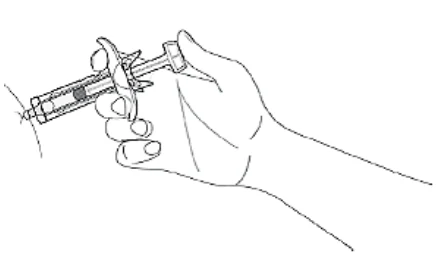
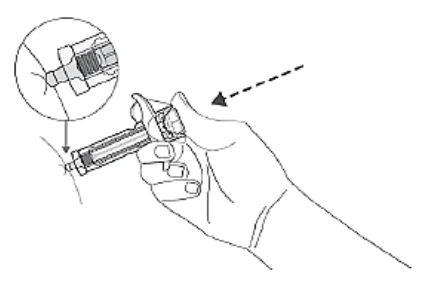
- 6.
Injection
- Place the thumb on the plunger rod head;
Depress the plunger rod and push firmly at the end of the injection to ensure that syringe emptying is
- completed. Hold the skin securely until the injection is completed.
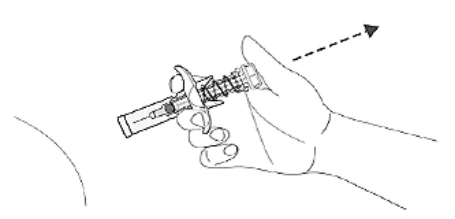
- 7.
Needle stick protection
The safety system will activate once the plunger rod is fully depressed:
- Keep the syringe still and slowly lift your thumb off of the plunger rod head;
The plunger rod will move up with your thumb and the spring retracts the
- needle from the site, into the needle safety guard.
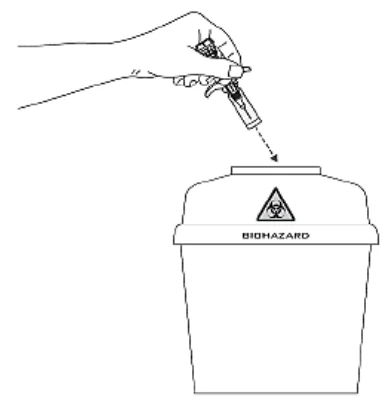
- 8.
Discard the needle safety guard
Once the syringe has been used, immediately discard the needle safety guard into biohazard (sharp) containers. Do not throw away the used needle safety guard syringe in a household trash.
Methotrexate should not come into contact with the surface of the skin or mucosa. In the event of contamination, the affected area must be rinsed immediately with plenty of water.
If you or someone around you is injured by the needle, consult your doctor immediately and do not use this pre-filled syringe.
Disposal and other handling
The manner of handling and throwing away of the medicine and pre-filled syringe must be in consistent with that of other cytostatic preparations in accordance with local requirements. Pregnant healthcare personnel should not handle and/or administer Methofill.
608-7613 L-02-2759-01
Important warning about the dose of Methofill
Use Methofill only once a week for the treatment of Rheumatoid
disease. Using too much of Methofill (methotrexate) may be fatal.