

Patient leaflet - Metformin Hydrochloride 1000 mg/5 ml oral solution
1. What Metformin Oral Solution is and what it is used for
Metformin Oral Solution is, a medicine to treat diabetes. It belongs to a group of medicines called biguanides.
Insulin is a hormone produced by the pancreas that makes your body take in glucose (sugar) from the blood. Your body uses glucose to produce energy or stores it for future use.
If you have diabetes, your pancreas does not make enough insulin or your body is not able to use properly the insulin that it produces. This leads to a high level of glucose in your blood. Metformin Oral Solution helps to lower your blood glucose to as normal a level as possible.
If you are an overweight adult, taking Metformin Oral Solution over a long period of time also helps to lower the risk of complications associat-ed with diabetes. Metformin is associated with either a stable body weight or modest weight loss.
Metformin Oral Solution is used to treat patients with type 2 diabetes (also called 'non-insulin dependent diabetes') when diet and exercise alone have not been enough to control your blood glucose levels. It is used particularly in overweight patients.
Adults can take Metformin Oral Solution on its own or together with other medicines to treat diabetes (medicines taken by mouth or insulin). Children 10 years and over and adolescents can take Metformin Oral Solution on its own or together with insulin.
2. What you need to know before you take Metformin Oral Solution
Do not take Metformin Oral Solution
- if you are allergic to metformin or any of the other ingredients of this medicine (listed in section 6)
- if you have kidney or liver problems or if you have severely reduced kidney function
- if you have uncontrolled diabetes, for example severe hyperglycaemia (high blood glucose), nausea, vomiting, diarrhoea, rapid weight loss, lactic acidosis (see “Risk of lactic acidosis” below) or ketoacidosis. Ketoacidosis is a condition in which substances called 'ketone bodies' accumulate in the blood. and which can lead to diabetic pre-coma. Symptoms include stomach pain, fast and deep breathing, sleepiness or your breath developing an unusual fruity smell.
- if you have lost too much water from your body (dehydration) such as, due to long-lasting or severe diarrhoea, or if you have vomited several times in a row. Dehydration may lead to kidney problems, which can put you at risk of lactic acidosis (see ‘Warnings and Precautions’ below)
- if you have a severe infection, such as an infection affecting your lungsor bronchial system or your kidneys. Severe infections may lead to kidney problems, which can put you at risk of lactic acidosis (see ‘Warnings and Precautions’ below)
- if you are being treated for acute heart failure or have recently had a heart attack, have severe problems with your circulation (such as shock) or have breathing difficulties. This may lead to a lack in oxygen supply to tissue which can put you at risk of lactic acidosis (see ‘Warnings and Precautions’’ below)
- if you drink a lot of alcohol.
If any of the above applies to you, talk to your doctor before you start taking this medicine.
Make sure you ask your doctor for advice if:
- you need to have an examination such as an X-ray or scan, involving the injection of contrast medicines that contain iodine, into your blood-stream.
- you need to have major surgery.
You must stop taking Metformin Oral Solution for a certain period of time before and after the examination or the surgery. Your doctor will decide whether or not you need any other treatment during this period. It is important that you follow your doctor’s instructions precisely.
Warning and precautions:
Risk of lactic acidosis:
Metformin Oral Solution may cause a very rare, but very serious side effect called lactic acidosis, particularly if your kidneys are not working properly. The risk of developing lactic acidosis is also increased with uncontrolled diabetes, serious infections, prolonged fasting or alcohol intake, dehydration (see further information below), liver problems and any medical conditions in which a part of the body has a reduced supply of oxygen (such as acute severe heart disease).
If any of the above apply to you, talk to your doctor for further instructions.
Stop taking Metformin Oral Solution for a short time if you have a condition that may be associated with dehydration (significant loss of body fluids) such as severe vomiting, diarrhoea, fever, exposure to heat or if you drink less fluid than normal. Talk to your doctor for further instructions.
Stop taking Metformin Oral Solution and contact a doctor or the nearest hospital immediately possible if you experience some of the symptoms of lactic acidosis, as this condition may lead to coma.
Symptoms of lactic acidosis include:
- vomiting
- stomach ache (abdominal pain)
- muscle cramps
- a general feeling of not being well with severe tiredness
- difficulty in breathing
- reduced body temperature and heartbeat Lactic acidosis is a medical emergency and must be treated in a hospital.
Talk to your doctor promptly for further instruc-tions if:
- You are known to suffer from a genetically inherited disease affecting mitochondria (the energy-producing components within cells) such as MELAS syndrome (Mitochondrial Encephalopathy, myopathy, Lactic acidosis and Stroke-like episodes) or Maternal inherited diabetes and deafness (MIDD). • You have any of these symptoms after starting metformin: seizure, declined cognitive abilities, difficulty with body movements, symptoms indicating nerve damage (e.g. pain or numbness), migraine and deafness.
If you need to have major surgery you must stop taking Metformin Oral Solution during and for some time after the procedure. Your doctor will decide when you must stop and when you can restart your treatment with Metformin Oral Solution.
During treatment with Metformin Oral Solution, your doctor will check your kidney function at least once a year and more frequently if you are elderly or if you have worsening kidney function.
Metformin Oral Solution on its own does not cause hypoglycaemia (a blood glucose level which is too low). However, if you take Metformin Oral Solution together with other medicines to treat diabetes that can cause hypoglycaemia (such as sulphonylureas, insulin, meglitinides), there is a risk of hypoglycaemia. If you experience symptoms of hypoglycaemia such as weakness, dizziness, increased sweating, fast heartbeat, vision disorders or difficulty in concentration, it usually helps to eat or drink something containing sugar.
Other medicines and Metformin
Oral Solution:
If you need to have an injection of contrast medium that contains iodine into your bloodstream, for example for in the context of an X-ray or scan, you must stop taking Metformin Oral
Solution before or at the time of the injection. Your doctor will decide when you must stop and when to restart your treatment with Metformin Oral Solution.
Tell your doctor if you are taking, have recently taken or might take any other medicines. You may need more frequent blood glucose and kidney function tests or your doctor may need to adjust the dosage of Metformin Oral Solution. It is especially important to mention the following:
- medicines which increase urine production (diuretics)
- medicines used to treat pain and inflammation (NSAID and COX-2-inhibitors, such as ibuprofen and celecoxib)
- certain medicines for the treatment of high blood pressure (ACE inhibitors and angiotensin II receptor antagonists)
- beta-2 agonists such as salbutamol or terbutaline (used to treat asthma).
- corticosteroids (used to treat a variety of conditions, such as severe inflammation of the skin or in asthma).
- medicines that may change the amount of Metformin Oral Solution in your blood, especial-ly if you have reduced kidney function (such as verapamil, rifampicin, cimetidine, dolutegravir, ranolazine, trimethoprime, vandetanib, isavuco-nazole, crizotinib, olaparib).
- other medicines used to treat diabetes
Metformin with alcohol
Avoid excessive alcohol intake while taking Metformin Oral Solution since this may increase the risk of lactic acidosis (see section “Warnings and precautions”).
Pregnancy and breast-feeding
If you are pregnant, think you may be pregnant or are planning to have a baby, speak to your doctor in case any changes will be needed to your treatment or monitoring of your blood glucose levels.
This medicine is not recommended if you are breast-feeding or if you are planning to breast-feed your baby.
Driving and using machines
Metformin Oral Solution on its own does not cause hypoglycaemia (a blood glucose level which is too low). This means that it will not affect your ability to drive or use machines.
However, take special care if you take Metformin Oral Solution together with other medicines to treat diabetes that can cause hypoglycaemia (such as sulphonylureas, insulin, meglitinides). Symptoms of hypoglycaemia include weakness, dizziness, increased sweating, fast heart beat, vision disorders or difficulty in concentration. Do not drive or use machines if you start to feel these symptoms.
Metformin Oral Solution contains Sodium propyl parahydroxybenzoate:
PACKAGE LEAFLET: INFORMATION FOR THE USER Metformin Hydrochloride 1000 mg/5 ml Oral Solution
XXXXXX
Back Final cutting area
Print area
Sodium propyl parahydroxybenzoate may cause allergic reactions (possibly delayed).
Metformin Oral Solution contains Sodium:
This medicine contains less than 1 mmol sodium (23 mg) per 5ml oral solution, that is to say essentially ‘sodium-free’.
3. How to take Metformin Oral Solution
Always take this medicine exactly as your doctor or pharmacist has told you. Check with your doctor or pharmacist if you are not sure. Metformin Oral Solution cannot replace the benefits of a healthy lifestyle. Continue to follow any advice about diet that your doctor has given you and get some regular exercise.
Recommended dose
Children 10 years and over and adolescents usually start with 2.5ml (500mg) or 4.25ml (850mg) of Metformin Oral Solution once a day. The maximum daily dose is 10ml (2g ) taken as 2 or 3 divided doses.
Treatment of children between 10 and 12 years of age is only recommended on specific advice from your doctor, as experience in this age group is limited.
Adults usually start with 2.5ml (500mg) or 4.25ml (850mg) of Metformin Oral Solution two or three times a day. The maximum daily dose is 15ml (3g ) taken as 3 divided doses.
If you have reduced kidney function, your doctor may prescribe a lower dose.
If you take insulin too, your doctor will tell you how to start Metformin Oral Solution.
Monitoring
- your doctor will perform regular blood glucose tests and will adapt your dose of Metformin Oral Solution to your blood glucose levels. Make sure that you talk to your doctor regularly. This is particularly important for children and adoles-cents or if you are an older person
- your doctor will also check at least once a year how well your kidneys work. You may need more frequent checks if you are an older person or if your kidneys are not working normally.
How to take Metformin
- Take Metformin with or after a meal. This will avoid you having side effects affecting your digestion.
- if you take one dose a day, take it in the morning (breakfast)
- if you take two divided doses a day, take them in the morning (breakfast) and evening (dinner)
- if you take three divided doses a day, take them in the morning (breakfast), at noon (lunch) and in the evening (dinner).
If, after some time, you think that the effect of Metformin is too strong or too weak, talk to your doctor or pharmacist.
Route and Method of administration
This medicinal product must be taken orally. Use the measuring syringe provided in the pack to deliver the required dose.
Instructions for the use of syringe:
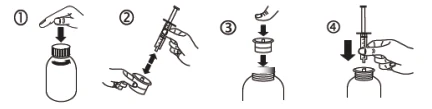
- 1. Open the bottle: press the cap and turn it anticlockwise (figure 1).
- 2. Separate the adaptor from the syringe (figure 2). Insert the adaptor into the bottle neck (figure 3). Ensure it is properly fixed. Take the syringe and put it in the adaptor opening (figure 4).
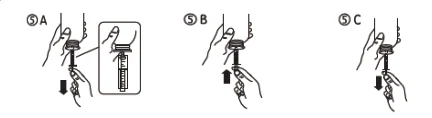
- 3. Turn the bottle upside down. Fill the syringe with a small amount of solution by pulling the piston down (figure 5A), then push the piston upwards in order to remove any possible bubble (figure 5B). Pull the piston down to the gradua-tion mark corresponding to the quantity in millilitres (ml) prescribed by your doctor (figure 5C).
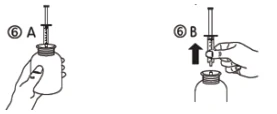
- 4. Turn the bottle the right way up (figure 6A). Remove the syringe from the adaptor (figure 6B) and leave the syringe adaptor in place after first use.
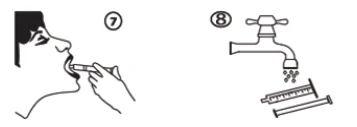
- 5. Empty the contents of the syringe into the patient’s mouth by pushing the piston to the bottom of the syringe (figure 7). Close the bottle with the cap. Wash the syringe with water (figure 8).
If you take more Metformin than you should
If you have taken more Metformin than you should have, you may experience lactic acidosis. Symptoms of lactic acidosis are non-specific such as vomiting, abdominal pain with muscle cramps, a general feeling of not being well with severe tiredness, and difficulty in breathing. Further symptoms are reduced body temperature and heart beat. If you experience some of these symptoms, you should immediately seek medical attention, as lactic acidosis may lead to coma. Stop taking Metformin immediately and contact a doctor or the nearest hospital straight away.
If you forget to take Metformin
Do not take a double dose to make up for a forgotten dose. Take the next dose at the usual time.
If you have any further questions on the use of his medicine, ask your doctor or pharmacist.
4. Possible side effects:
Like all medicines, this medicine can cause side effects, although not everybody gets them. The following side effects may occur:
Lactic acidosis
Metformin may cause a very rare (may affect up to 1 user in 10,000), but very serious side effect called lactic acidosis (see section “Warnings and precautions”). If this happens you must stop taking Metformin and contact a doctor or the nearest hospital immediately, as lactic acidosis may lead to coma.
Digestive problems
Digestive problems, such as feeling sick (nausea), being sick (vomiting), diarrhoea, abdominal pain and loss of appetite are very common side effects (may affect more than 1 in 10 people). These side effects most often happen at the beginning of the treatment with Metformin. It helps if you spread the doses over the day and if you take Metformin Oral Solution with or straight after a meal. If symptoms continue, stop taking Metformin Oral Solution and talk to your doctor.
Common side effects (in less than 1 in 10 people)
- changes in taste.
- decreased or low vitamin B12 levels in the blood (symptoms may include extreme tiredness (fatigue), a sore and red tongue (glossitis), pins and needles (paraesthesia) or pale or yellow skin). Your doctor may arrange some tests to find out the cause of your symptoms because some of these may also be caused by diabetes or due to other unrelated health problems.
Very rare side effects (in less than 1 in 10,000 people)
- lactic acidosis. This is a very rare but serious complication particularly if your
- kidneys are not working properly.
Symptoms of lactic acidosis are non-specific (see section ‘Warning and precautions’)
- abnormalities in liver function tests or hepatitis (inflammation of the liver; this may cause tiredness, loss of appetite, weight loss, with or without yellowing of the skin or whites of the eyes). If this happens to you, stop taking Metformin Oral Solution and talk to your doctor.
- skin reactions such as redness of the skin (erythema), itching or an itchy rash (hives)
Children and adolescents
Limited data in children and adolescents showed that side effects were similar in nature and severity to those reported in adults.
Reporting of side effects
If you get any side effects, talk to your doctor or pharmacist. This includes any possible side effects not listed in this leaflet. You can also report side effects directly via the Yellow Card Scheme at www.mhra.gov.uk/yellowcard. By reporting side effects you can help provide more information on the safety of this medicine.
5. How to store Metformin Oral Solution
Keep this medicine out of the sight and reach of children. If this medicine is intended for use in a child, administration of the medicine should be supervised by an adult.
Do not use this medicine after the expiry date which is stated on the bottle label and carton after Exp. The expiry date refers to the last day of that month.
Do not store above 25°C.
After first opening, use within 2 months (60 days).
Do not use this medicine if you notice that the appearance or smell of your medicine has changed. Seek the advice of your pharmacist. Do not throw away any medicines via wastewater or household waste. Ask your pharmacist how to throw away medicines you no longer use. These measures will help protect the environment.
6. Contents of the pack and other information
What Metformin Oral Solution contains
The active substance is metformin hydrochloride. Each 5ml of solution contains 1000 mg of metformin hydrochloride. Each 1 ml of Oral solution contains 200 mg metformin hydrochlo-ride.
The other ingredients are Sodium propyl parahydroxybenzoate (E217), Sodium dihydro-gen phosphate mono hydrate, Disodium phosphate anhydrous (E339), Sucralose, Peach flavour (contains propylene glycol acetic acid, natural flavouring substances and nature-identical flavouring substances), Sodium hydroxide (for pH adjustment) and Purified water.
What Metformin Oral Solution looks like and contents of the pack
Metformin Oral Solution is a clear colourless solution with peach odour supplied in an 150ml amber glass bottle, with a child resistant screw-cap, along with a dosing syringe with an adaptor.
Bottle: Ph.Eur Type III Amber glass bottle. Closure: Child-resistant, tamper-evident screw cap made of polypropylene.
Dosing Device: 5ml dosing syringe with adapter. Oral dosing syringe assembly consists of an outer polypropylene and inner low density polyethylene with 0.5ml graduation mark. Adapter made of polypropylene.
POM
Marketing Authorisation Holder
Lyrus Life Sciences Limited
C/O Thakur-Chabert 7a Vine Street
Uxbridge
United Kingdom
UB8 1QE
Manufacturer
Wave Pharma Limited
Ground floor, Cavendish House,
369 Burnt Oak Broadway,
Edgware, HA8 5AW,
United Kingdom.
This leaflet was last revised in August 2025.
XXXXXX