

Patient leaflet - Melonap 1 mg/ml oral solution
1. What Melonap is and what it is used for
Melonap contains the active substance melatonin, which is a hormone produced naturally by the body. This hormone helps regulate the body’s day and night rhythm.
Melonap is used for:
- Short-term treatment of jet lag in adults only. Jet lag refers to the symptoms caused by the time difference when travelling across several time zones.
- Insomnia in children and adolescents aged 6 to 17 years old with attention-deficit hyperactivity disorder (ADHD) where other sleep routine measures have not been sufficient.
- Treatment of delayed sleep wake phase disorder (DSWPD) (disruption of the body’s day and night rhythm) in children and adolescents aged 6 to 17 years old and adults up to 25 years of age, where healthy sleeping routines have not worked well enough.
- Sedation of children and adolescents aged 1 to 18 years old who are having a medical procedure called an electroencephalogram (EEG) in hospital.
2. What you need to know before you take Melonap
Do not take Melonap
- if you are allergic to melatonin or any of the other ingredients of this medicine (listed in section 6). Warnings and precautions
Talk to your doctor or pharmacist before taking Melonap:
- if you have epilepsy. Melonap may increase seizure frequency in patients with epilepsy - if you have diabetes or impaired glucose tolerance, as this medicine may increase the level of glucose in your blood (see section 3)
- if you have an autoimmune disease (where the body is 'attacked' by its own immune system) - if you have impaired liver function or kidney function
- if you smoke. Smoking may reduce the effect of Melonap as components of tobacco smoke can increase the breakdown of melatonin by the liver
- if you are elderly
- if you are a woman of childbearing potential. Contraceptives should be used during treatment with Melonap. This medicinal product may however be affected by certain contraceptives, see the section “Other medicines and Melonap” for more information
Care should be exercised when changing between different formulations/ products, as changing formulations may increase the risk of drowsiness.
Children and adolescents
- Jet lag: Do not give this medicine to children or adolescents under 18 years of age as its safety and efficacy are unknown for this indication.
- Insomnia and delayed sleep wake phase disorder: Do not give this medicine to children below 6 years of age as its safety and efficacy are unknown for this indication.
- Sedation: Do not give this medicine to children below 1 year as its safety and efficacy are unknown for this indication.
Other medicines and Melonap
Tell your doctor or pharmacist if you or your child are taking, have recently taken or might take any other medicines.
Some medicines may increase the effect of melatonin. These include:
- Fluvoxamine (used for the treatment of depression and obsessive-compulsive disorder) - Psoralens (used for the treatment of skin disorders such as psoriasis)
- Cimetidine (used for the treatment of stomach problems such as ulcers)
Estrogens (used in contraceptives or hormone replacement preparations)
- Quinolones (used in the treatment of bacterial infections)
- Caffeine (stimulant)
Some medicines may decrease the effect of melatonin. These include:
- Rifampicin (used in the treatment of bacterial infections)
- Carbamazepine (used in the treatment of epilepsy)
Melatonin can increase the sedative effect of some medicines:
- Benzodiazepines and non-benzodiazepine hypnotics (medicines used to induce sleep, such as midazolam, temazepam, and zaleplon, zolpidem, zopiclone) as melatonin may enhance the sedative effect of such drugs, and may enhance certain side effects of zolpidem (morning sleepiness, nausea, confusion)
Melatonin may influence the effect of:
- Warfarin (anticoagulants, used to prevent blood cloting)
Melonap with food, drink and alcohol
This medicine should not be taken with food (see section 3). As alcohol can impair sleep and potentially worsen certain symptoms of jet lag (such as headache, morning fatigue, concentration) it is recommended that alcohol is not consumed while taking this medicine.
Pregnancy, breast-feeding and fertility
If you are pregnant or breast-feeding, think you may be pregnant or are planning to have a baby, ask your doctor or pharmacist for advice before taking this medicine.
- Pregnancy: Melonap is not recommended if you are pregnant. Melatonin crosses the placenta and there is insufficient information on the risk this may pose to the unborn child.
- Breast-feeding: Melonap is not recommended if you or your child are breast-feeding. Melatonin is excreted in human milk, and a risk to the breast-fed child cannot be excluded. - Fertility: Melonap is not recommended in women and men planning to have a baby as there is insufficient information on the effects of melatonin on female and male fertility. - Women of childbearing potential: You must use contraception when taking Melonap if you are a woman of childbearing potential. Because some contraceptives may increase melatonin levels in the body, the choice of contraceptive should be discussed with a doctor (see “Other medicines and Melonap”).
Driving and using machines
Melonap may cause drowsiness and may decrease alertness for several hours after intake. Do not drive or operate machinery just after you have taken melatonin.
Important information about some of the ingredients of Melonap
This medicine contains 53 mg propylene glycol in each ml. If your baby is less than 4 weeks old, talk to your doctor or pharmacist before giving them this medicine, in particular if the baby is given other medicines that contain propylene glycol or alcohol.
This medicine contains methylparaben and propylparaben which may cause allergic reactions (possibly delayed).
This medicine contains less than 1 mmol sodium (23 mg) per maximum 6 ml dose, that is to say essentially ‘sodium-free’.
3. How to take Melonap
Always take this medicine exactly as your doctor or pharmacist has told you. Check with your doctor or pharmacist if you are not sure.
Jet lag (sleep disorder after a long flight) in adults:
The recommended dose for adults and elderly is 1 to 5 ml (equivalent to 1 to 5 mg) daily for a maximum of 5 days.
The recommended starting dose is 3 ml (equivalent to 3 mg).
When the effect of Melonap is inadequate, 6 ml (equivalent to 6 mg) can be taken. The first dose should be taken on arrival at destination at your usual bed-time. Intake on the following days should also be at your usual bed-time. The oral solution should not be taken before 8 pm or after 4 am. Melonap may be taken for a maximum of 16 treatment periods per year.
Insomnia (sleeplessness) in children and adolescents with ADHD:
The recommended starting dose is 1 to 2 ml (equivalent to 1 to 2 mg) 30-60 minutes before bedtime. If there is no improvement in you or your child’s symptoms your doctor may increase the dose of Melonap to find the most suitable dose for you or your child. The maximum daily dose that you or your child will receive is 5 ml (equivalent to 5 mg).
Delayed sleep wake phase disorder:
The recommended dose is 1 to 5 ml (equivalent to 1 to 5 mg) per day, 1 to 2 hours before going to bed. The maximum daily dose is 5 ml (equivalent to 5 mg). Your doctor will likely start you at a low dose (equivalent to 1 to 2 mg) and adjust it depending on your response.
For both insomnia and DSWPD, you or your child should be followed up regularly by a doctor (at least every 6 months is recommended) to see if it is still appropriate. Treatment should be interrupted once a year to see if treatment is still needed. For some patients, treatment can be continued past the usual age ranges if the doctor considers it appropriate.
Sedation:
Melonap will be given 30 to 45 minutes before the start of the procedure. The dose will be determined by your doctor depending on your child’s weight. A ‘top-up’ dose may be given if sleep is not achieved 45 minutes after the first dose – this will usually be half the first dose. Only one melatonin-assisted EEG should be performed per 24 hour period.
Directions for use
Melonap is for oral use only.
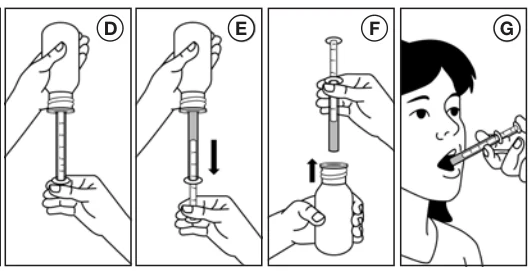
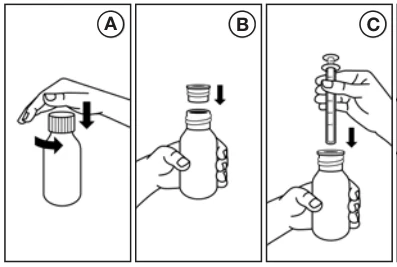
Food should not be consumed 2 hours before or 2 hours after intake of Melonap. A 5 ml graduated oral syringe with intermediate graduations of 0.1 ml and a “Press-In” Bottle Adaptor are provided with the product.
- 1. Open the bottle (A) and at first use insert the “Press-In” Bottle adaptor into the bottle neck (B). 2. Insert the syringe into the adaptor (C).
- 3. Invert the bottle (D) and draw out the required volume from the inverted bottle (E). 4. Return the bottle to the upright position and remove the filled syringe from the adaptor (F). 5. Slowly push the contents of the syringe into the mouth and swallow the medicine (G). 6. Replace the cap on the bottle (adaptor remains in place).
- 7. Rinse the syringe in water and allow to air-dry.
If you take more Melonap than you should
If you or your child have taken more Melonap than recommended and you do not feel well, please contact your doctor, hospital or pharmacy. The most common symptoms of overdose are drowsiness, headache, dizziness, and nausea.
If you forget to take Melonap
If you or your child forget to take your dose at bedtime and wake during the night you may take the forgotten dose but at no later than 4 am in the morning hours.
Do not take a double dose to make up for a missed dose.
If you stop taking Melonap
If you stop taking Melonap, it will not have any harmful effects or withdrawal symptoms. If you have any further questions on the use of this medicine, ask your doctor or pharmacist.
4. Possible side effects
Like all medicines, this medicine can cause side effects, although not everybody gets them. Serious side effects
If you or your child experience any of the following serious side effects stop taking this medicine and contact your doctor immediately:
- hypersensitivity reaction (allergy like reactions such as difficulty to breathe, itching) - swelling of deeper layers of skin (angioedema)
- swelling in mouth and tongue (oedema)
The following side effects have also been reported
Common: (may affect up to 1 in 10 people)
- headache
- sleepiness
Uncommon: (may affect up to 1 in 100 people)
- irritability, nervousness, restlessness, insomnia
- abnormal dreams, nightmares, night sweats, anxiety, anxious restlessness, lack of energy and enthusiasm
- migraine
- dizziness
- high blood pressure
- abdominal pain, mouth ulcers, dry mouth, nausea
- skin disorders (dermatitis, pruritus, rash, dry skin)
- pain in arms and legs
- menopausal symptoms
chest pain, feeling of weakness
- excretion of glucose in the urine, excess protein in the urine
- changes in the composition of your blood which can cause yellowing of the skin and eyes - abnormal liver function tests
- weight gain
Rare: (may affect up to 1 in 1000 people)
- shingles (herpes zoster)
- reduced number of white blood cells in the blood
- reduced number of blood platelets
- high levels of blood fats
- changes in mood, aggression, agitation, crying, stress symptoms, feeling confused (disorientation), early morning awakening, increased sex drive (increased libido), depressed mood, depression - fainting, memory impairment, disturbance in attention, dreamy state, uncomfortable sensation in legs (restless legs syndrome), poor quality sleep, tiredness (fatigue)
- visual impairment, blurred vision, increase tearing
- a feeling of dizziness or spinning (vertigo), dizziness when standing or sitting - faster heartbeats, angina pectoris
- acid reflux, gastrointestinal disorder, diarrhoea, blistering in the mouth, tongue ulceration, stomach upset, vomiting, abnormal bowel sounds, increased salivation, bad breath, wind, abdominal discomfort, inflammation of the stomach lining
- abnormal skin sensations (paresthesia), skin disorders (eczema, erythema, psoriasis), nail disorder, sudden feeling of heat (hot flush)
- pain, arthritis, muscle spasms, neck pain, night cramps
- passing large volumes of urine, presence of red blood cells in the urine, need to urinate at night - prolonged erection (priapism), swelling of the prostate (prostatitis)
- thirst
- increased liver enzymes, abnormal blood electrolytes, abnormal laboratory tests Not known: (frequency cannot be estimated from available data)
- spontaneous flow of milk from the breasts (also in men)
- high blood sugar
- hypothermia
Additional side effects in children and adolescents
A low frequency of generally mild side effects has been reported. The most common adverse effects were headache, hyperactivity, a feeling of dizziness or “spinning” (vertigo) and abdominal pain. No serious side effects have been observed.
Reporting of side effects
If you get any side effects, talk to your doctor or pharmacist. This includes any possible side effects not listed in this leaflet. You can also report side effects directly via Yellow Card Scheme, Website: www.mhra.gov.uk/yellowcard or search for MHRA Yellow Card in the Google Play or Apple App Store. By reporting side effects you can help provide more information on the safety of this medicine.
5. How to store Melonap
Keep this medicine out of the sight and reach of children.
Do not use this medicine after the expiry date which is stated on the carton and label after EXP. The expiry date refers to the last day of that month.
This medicinal product does not require any special storage conditions. Use within 2 months after first opening. Do not throw away any medicines via wastewater or household waste. Ask your pharmacist how to throw away medicines you no longer use. These measures will help protect the environment.
6. Contents of the pack and other information
What Melonap contains
- The active substance is melatonin. Each 1 ml of Melonap contains 1 mg of melatonin. - The other ingredients are propylene glycol (E1520), glycerol (E422), methylparaben (E218), propylparaben (E216), sucralose (E955), strawberry flavour, sodium citrate (E331), purified water. What Melonap looks like and contents of the pack
Melonap is a clear, colourless to yellowish solution with characteristic strawberry odour. It is supplied in a 200 ml, amber plastic bottle or amber type III glass bottle safely closed with an HDPE child-resistant, tamper-evident screw cap with an EPE liner. An LDPE, CE marked 5 ml graduated oral syringe with intermediate graduations of 0.1 ml and an LDPE, CE marked “press-in” syringe/bottle adaptor are also provided.
Marketing Authorisation Holder
SERB SA
Avenue Louise 480
1050 Brussels
Belgium
If you have any medical enquiry,
email medinfo.uk1@serb.eu for help.
Manufacturer
STERLING PHARMACEUTICALS Ltd
288 Upper Balsall Heath Road
Birmingham
B12 9DR, United Kingdom
What is in this leaflet
- 1. What Melonap is and what it is used for
- 2. What you need to know before you take Melonap
- 3.
- 4. Possible side effects
- 5. How to store Melonap
- 6.
This leaflet was last revised in March 2026.
FRONT
292 mm
REAR
292 mm
| Iteration No.: | 03 | |||||
| 100% 95% 50% 5% | ||||||
Product Name Market No. of Colours Profile Production No. Packaging supp. Component No. Date Melonap 1 mg/mL Oral Solution GB Leaflet 1 (One) N/A 292 x 230 mm N/A N/A FPXXXXXXXX_20251_NO N/A FPXXXXXXXX_20251_NO 26 November 2025 | ||||||
| Smallest Body Text Used 8pt | ||||||
FONTS USED Heading Helvetica Neue LT Std 75 Bold Main Body Helvetica Neue LT Std 55 Roman Proofreader Site Packaging Regulatory Client Approval Signature Box | ||||||
V4 - 10.2025