

Summary of Product Characteristics (SmPC) - Livmarli 9.5 mg/ml oral solution
1 NAME OF THE MEDICINAL PRODUCT
Livmarli 9.5 mg/mL oral solution
2 QUALITATIVE AND QUANTITATIVE COMPOSITION
Each mL of solution contains maralixibat chloride equivalent to 9.5 mg maralixibat.
Excipient with known effect
Each mL of oral solution contains 364.5 mg propylene glycol (E1520)
For the full list of excipients, see section 6.1.
3 PHARMACEUTICAL FORM
Oral solution.
Clear, colourless to light-yellow liquid.
4 CLINICAL PARTICULARS
4.1 Therapeutic indications
Livmarli is indicated for the treatment of:
- Cholestatic pruritus in patients with Alagille syndrome (ALGS) 2 months of age and older,
- Progressive familial intrahepatic cholestasis (PFIC) in patients 3 months of age and older.
4.2 Posology and method of administration
Treatment with Livmarli should be initiated under the supervision of a physician experienced in the management of patients with cholestatic liver diseases.
Alagille syndrome (ALGS)
The recommended target dose is 380 mcg/kg once daily. The starting dose is 190 mcg/kg once daily and should be increased to 380 mcg/kg once daily after one week. Table 1 provides the dose in mL of solution to be given for each weight range. In case of poor tolerability, dose reduction from 380 mcg/kg/day to 190 mcg/kg/day, or treatment interruption should be considered. Renewed dose-escalation can be attempted as tolerated. The maximum recommended daily dose volume for patients above 70 kg is 3 mL (28.5 mg).
Table 1: Individual dose volume by patient weight: ALGS
Patient weight (kg) | Days 1 to 7 (190 mcg/kg once daily) | From day 8 and after (380 mcg/kg once daily) | ||
Volume once daily (mL) | Oral syringe size (mL) | Volume once daily (mL) | Oral syringe size (mL) | |
| 5-6 | 0.1 | 0.5 | 0.2 | 0.5 |
| 7-9 | 0.15 | 0.3 | ||
| 10-12 | 0.2 | 0.45 | ||
| 13-15 | 0.3 | 0.6 | 1 | |
| 16-19 | 0.35 | 0.7 | ||
| 20-24 | 0.45 | 0.9 | ||
| 25-29 | 0.5 | 1 | ||
| 30-34 | 0.6 | 1 | 1.25 | 3 |
| 35-39 | 0.7 | 1.5 | ||
| 40-49 | 0.9 | 1.75 | ||
| 50-59 | 1 | 2.25 | ||
| 60-69 | 1.25 | 3 | 2.5 | |
| 70 or higher | 1.5 | 3 | ||
Progressive familial intrahepatic cholestasis (PFIC)
The starting dose is 285 mcg/kg once daily (QD) and may be increased after 1-2 weeks to 285 mcg/kg twice daily (BID, morning and evening). After 1-2 weeks, the dose can be increased to 570 mcg/kg twice daily if clinically indicated, as tolerated. Table 2 provides the dose in mL of solution to be given for each weight range. In case of poor tolerability, dose reduction or treatment interruption should be considered. Renewed dose-escalation can be attempted as tolerated. The maximum daily dose volume for patients above 50 kg is 6 mL (57 mg).
Table 2: Individual dose volume by patient weight: PFIC
Patient Weight (kg) | 285 mcg/kg | 570 mcg/kg | ||
Volume QD or BID (mL) | Dosing dispenser size (mL) | Volume BID (mL) | Dosing dispenser size (mL) | |
| 3 | 0.1 | 0.5 | 0.2 | 0.5 |
| 4 | 0.1 | 0.25 | ||
| 5 | 0.15 | 0.3 | ||
| 6 to 7 | 0.2 | 0.4 | ||
| 8 to 9 | 0.25 | 0.5 | ||
| 10 to 12 | 0.35 | 0.6 | 1 | |
| 13 to 15 | 0.4 | 0.8 | ||
| 16 to 19 | 0.5 | 1 | ||
| 20 to 24 | 0.6 | 1 | 1.25 | 3 |
| 25 to 29 | 0.8 | 1.5 | ||
| 30 to 34 | 0.9 | 2 | ||
| 35 to 39 | 1.25 | 3 | 2.25 | |
| 40 to 49 | 1.25 | 2.75 | ||
| 50 to 59 | 1.5 | 3 | ||
| 60 to 69 | 2 | 3 | ||
| 70 to 79 | 2.25 | 3 | ||
| 80 or higher | 2.5 | 3 | ||
Alternative treatment should be considered in patients for whom no treatment benefit can be established following 3 months of continuous daily treatment with maralixibat.
Missed dose
If a dose is missed, the dose should be omitted, and the original dose schedule resumed with the next scheduled intake.
Special populations
Renal impairment
Maralixibat has not been studied in patients with renal impairment or end-stage renal disease (ESRD) requiring haemodialysis. Maralixibat has minimal plasma concentrations and negligible renal excretion (see section 5.2).
ALGS: No dose adjustment is required.
PFIC: The maximum recommended dose of Livmarli in patients with moderate renal impairment (creatinine clearance CrCl ≥30 and < 60 ml/min) is 285 mcg/kg BID, due to propylene glycol content. Livmarli should not be used in patients with PFIC and severe renal impairment (creatinine clearance CrCl < 30 ml/min; see sections 4.3 and 4.4)
Hepatic impairment
Maralixibat has not been sufficiently studied in patients with liver impairment. ALGS: Due to minimal absorption of maralixibat, no dose adjustment is required for patients with hepatic impairment. Close monitoring is, however, advised for patients with end-stage liver disease or progression to decompensation.
PFIC: The maximum recommended dose of Livmarli in patients with moderate hepatic impairment is 285 mcg/kg BID, due to propylene glycol content. Livmarli should not be used in patients with PFIC and severe hepatic impairment (see sections 4.3 and 4.4).
Paediatric population
The safety and efficacy of Livmarli in infants less than 2 months of age in ALGS, or less than 3 months of age in PFIC, have not been established. Currently available data are described in sections 4.8, 5.1, and 5.2, and no recommendation on a posology can be made in these age groups.
ALGS (≥ 2 months of age): No dose adjustment is required.
PFIC (≥ 3 months of age): The maximum recommended dose of Livmarli in PFIC patients below 5 years of age is 285 mcg/kg BID, due to propylene glycol content (see section 4.4).
Special attention should be paid to accurate calculation of the Livmarli dose and clear communication of dosing instructions to caregivers and patients to minimise the risk of erroneous dosing and overdose.
Method of administration
Livmarli is administered orally via an oral syringe by a caregiver or the patient, before (up to 30 minutes) or with a meal, in the morning for once daily dosing, or in the morning and evening for twice daily dosing.
Mixing Livmarli oral solution directly into food or drink prior to administration has not been studied and should be avoided.
Three sizes of oral syringe (0.5 mL, 1 mL and 3 mL) are provided with each bottle of Livmarli. Tables 1 and 2 provide the correct oral syringe size for each weight range.
4.3 Contraindications
Hypersensitivity to the active substance or to any of the excipients listed in section 6.1.
Patients with PFIC who have severe hepatic and/or renal impairment due to the potential risk of toxicity from the excipient propylene glycol (see section 4.4).
4.4 Special warnings and precautions for use
Maralixibat acts by inhibiting the ileal bile acid transporter (IBAT) and disrupting enterohepatic circulation of bile acids. Therefore, conditions, medicinal products or surgical procedures that impair either gastrointestinal motility or enterohepatic circulation of bile acids, including bile salt transport to biliary canaliculi, have the potential to reduce the efficacy of maralixibat.
For this reason, patients with PFIC2 who have a complete absence or lack of function of Bile Salt Export Pump (BSEP) protein (i.e., patients with BSEP3 subtype of PFIC2) are not expected to respond to maralixibat.
Diarrhoea has been reported as a very common adverse reaction when taking maralixibat (section 4.8). Diarrhoea may lead to dehydration. Patients should be monitored regularly to ensure adequate hydration during episodes of diarrhoea.
Patients with chronic diarrhoea requiring intravenous fluid or nutritional intervention were not studied in clinical trials.
ALT and AST elevation was observed in some patients receiving maralixibat (section 4.8). Liver function tests should be monitored in patients prior to start and during treatment with maralixibat.
Assessment of fat-soluble vitamin (FSV) levels (Vitamins A, D, E) and international normalised ratio (INR) are recommended for all patients prior to initiating Livmarli, with monitoring per standard clinical practice. If FSV deficiency is diagnosed, supplemental therapy should be prescribed.
PFIC patients with impaired ability to metabolise and/or eliminate propylene glycol (e.g., those with hepatic and/or renal impairment, patients <5 years of age) are at increased risk of developing propylene glycol toxicity when receiving high doses of Livmarli. Reduced dose of Livmarli is recommended in such patients (see section 4.2 and section 4.4 “Propylene glycol and potential risk of toxicity”); PFIC patients with severe hepatic and/or renal impairment should not be treated with Livmarli (see section 4.3).
Excipients with known effect
Propylene glycol and potential risk of toxicity
This medicinal product contains 364.5 mg propylene glycol (E1520) in each mL of oral solution.
ALGS: administration of 380 mcg/kg QD dose of Livmarli will result in exposure up to 17 mg/kg/day propylene glycol.
PFIC: Administration of 285 mcg/kg BID dose of Livmarli will result in exposure up to 26 mg/kg/day propylene glycol and 570 mcg/kg BID dose of Livmarli will result in exposure up to 50 mg/kg/day propylene glycol.
Total amounts of propylene glycol from all medicines and food supplements, including Livmarli oral solution, should be taken into account when assessing the potential risk of toxicity from propylene glycol, especially in patients with limited ability to metabolise or excrete propylene glycol (e.g., patients below 5 years of age, or those with reduced renal, or hepatic function) (see sections 4.2 and 4.3). Co-administration with any substrate for alcohol dehydrogenase such as ethanol may increase risk of toxicity from propylene glycol.
Adverse events related to potential propylene glycol toxicity include: e.g., hyperosmolality (with or without lactic acidosis), renal dysfunction (acute tubular necrosis), acute renal failure; cardiotoxicity (arrhythmia, hypotension); central nervous system depression (depression, coma, seizures), respiratory depression, dyspnoea; liver dysfunction; haemolytic reaction (intravascular haemolysis) and haemoglobinuria; or multisystem organ dysfunction. Patients should be monitored for signs and symptoms of possible propylene glycol toxicity.
Sodium
This medicinal product contains less than 1 mmol sodium (23 mg) per dose, that is to say essentially ‘sodium-free’.
4.5 Interaction with other medicinal products and other forms of interaction
Maralixibat is an OATP2B1 inhibitor based on in vitro studies. A decrease in the oral absorption of OATP2B1 substrates (e.g. fluvastatin or rosuvastatin) due to OATP2B1 inhibition in the gastrointestinal tract cannot be ruled out. Consider monitoring the effects of OATP2B1 substrates as needed.
Maralixibat is also an inhibitor of CYP3A4 based on in-vitro studies. An increase of plasma levels of CYP3A4 substrates (e.g., midazolam, simvastatin) can therefore not be excluded and caution is advised when administering such compounds concomitantly.
Maralixibat, being an inhibitor of bile acid absorption, has not been fully evaluated with regard to the interaction potential with the bile acid ursodeoxycholic acid (UDCA).
Maralixibat is minimally absorbed, is not significantly metabolised, and is not a substrate of active substance transporters; therefore, other concomitant medicinal products are not known to effect the disposition of maralixibat.
Maralixibat is not known to inhibit or induce other cytochrome P450 in patients; therefore, maralixibat is not predicted to affect the disposition of concomitant medicinal products through those mechanisms.
4.6 Fertility, pregnancy and lactation
Pregnancy
There are no data from the use of maralixibat in pregnant women. Animal studies do not indicate direct or indirect harmful effects with respect to reproductive toxicity (see section 5.3). No effects on the foetus during pregnancy are anticipated, since systemic exposure to maralixibat is negligible. As a precautionary measure, it is preferable to avoid the use of Livmarli during pregnancy.
Breast-feeding
No effects on the breastfed newborn/infant are anticipated since the systemic exposure of the breast-feeding woman to maralixibat is negligible. Due to the propylene glycol content, as a precautionary measure, it is preferable to avoid the use of Livmarli during breastfeeding.
Fertility
There are no clinical data on the effect of maralixibat on fertility. Animal studies do not indicate any direct or indirect effects on fertility or reproduction (see section 5.3).
4.7 Effects on ability to drive and use machines
Livmarli has no or negligible influence on the ability to drive and use machines.
4.8 Undesirable effects
Summary of the safety profile
Over 280 patients with cholestatic liver diseases aged 1 month to 24 years have been treated with maralixibat in blinded and open-label clinical studies, including 94 patients with ALGS treated for up to 5 years, and 134 patients with PFIC treated for up to 7 years.
The safety profile of maralixibat is consistent across all indications and age groups. The most frequently occurring adverse reactions in ALGS patients older than 12 months of age were diarrhoea (36.0%) followed by abdominal pain (29.1%). Similarly, diarrhoea (27.7%) and abdominal pain (6.4%) were the most common adverse reactions in PFIC patients older than 12 months of age. The most frequently occurring adverse reaction in ALGS patients younger than 12 months of age was diarrhoea (20.0%). Similarly, diarrhoea (23.5%) was the most common adverse reaction in PFIC patients younger than 12 months of age.
Tabulated list of adverse reactions
For ALGS, the safety profile of maralixibat is based on a pooled analysis of data from a review of 5 clinical studies in patients (n=86) aged between 1 and 17 (median of 5 years); median duration of exposure was 2.5 years (range: 1 day to 5.5 years). For PFIC, the safety profile is primarily based upon analysis of the double-blind placebo-controlled data in the pivotal PFIC trial and the open label extension study (n=93, with 88 patients treated with the recommended dose of maralixibat). Patients treated with maralixibat were aged between 1 and 17 years old (median of 4 years); median duration of exposure was 83.5 weeks (range: 1.7 to 177.1 weeks). Additional evidence on long-term safety was collected on lower dose of maralixibat (≥266 mcg/kg/day) in a phase 2 clinical study (LUM001-501) and an open-label long-term follow-up study (MRX-800; total duration of exposure up-to 7 years). In the age group younger than 1 year of age 17 patients with ALGS and 10 patients with PFIC have been treated with recommended doses of maralixibat (see section 5.1).
Table 3 presents the adverse reactions reported from these analyses.
Adverse reactions in patients treated with maralixibat are listed below by MedDRA system organ class and frequency grouping. Frequencies are defined as follows: very common (≥1/10), common (≥1/100 to <1/10), uncommon (≥1/1 000 to <1/100), rare (≥1/10 000 to <1/1 000), not known (cannot be estimated from the available data).
Table 3: Adverse reactions reported in patients with ALGS and PFIC
| System organ class | Frequency | Adverse reactions |
| Gastrointestinal disorders | Very common | Diarrhoea |
| Abdominal pain | ||
| Hepatobiliary disorders | Common | ALT and AST increased |
Description of selected adverse reactions
All reported events of diarrhoea were mild to moderate in severity; a severe adverse reaction of abdominal pain was reported in 1 ALGS patient. No adverse reactions of diarrhoea or abdominal pain were serious. The time to onset for diarrhoea and abdominal pain in the majority of cases was within the first month of treatment. For both ALGS and PFIC, the median duration for diarrhoea and abdominal pain episodes was less than 1 week. No dose response relationship was observed for diarrhoea or abdominal pain. Treatment was interrupted or dose was reduced due to adverse gastrointestinal reactions in 4 (4.7%) of ALGS patients and 3 (6.4%) of PFIC patients, and led to improvement or resolution of the adverse reactions. One PFIC patient (2.1%) with mild diarrhoea discontinued treatment; otherwise, no patients discontinued Livmarli due to gastrointestinal adverse reactions.
If diarrhoea and/or abdominal pain persist and no other etiologies are found, reducing the dose or interrupting treatment should be considered. Dehydration should be monitored and treated promptly. If dosing with Livmarli is interrupted, Livmarli can be restarted as tolerated when diarrhoea or abdominal pain improve (section 4.2). Elevations in ALT and AST, partly accompanied with increase in bilirubin were mostly transitory and mild or moderate in intensity.
Reporting of suspected adverse reactions
Reporting suspected adverse reactions after authorisation of the medicinal product is important. It allows continued monitoring of the benefit/risk balance of the medicinal product. Healthcare professionals are asked to report any suspected adverse reactions via the Yellow Card Scheme, Website: www.mhra.gov.uk/yellowcard or search for MHRA Yellow Card in the Google Play or Apple App Store
4.9 Overdose
Maralixibat is minimally absorbed from the gastrointestinal tract and overdose is not expected to result in high plasma levels of the active substance. Single doses of up to 500 mg, approximately 18-fold higher than the recommended dose, have been administered in healthy adults without any adverse consequences. Livmarli contains propylene glycol; overdose could result in overdose of propylene glycol (see section 4.4).
In the event of an overdose, general supportive measures should be followed and the patient should be monitored for signs and symptoms of propylene glycol toxicity (see section 4.4). In the event of overdose, propylene glycol can be removed from the body through dialysis.
5 PHARMACOLOGICAL PROPERTIES
5.1 Pharmacodynamic properties
Pharmacotherapeutic group: Bile and liver therapy, other drugs for bile therapy. ATC code: A05AX04
Mechanism of action
Maralixibat is a minimally absorbed, reversible, potent, selective inhibitor of the ileal bile acid transporter (IBAT).
Maralixibat acts locally in the distal ileum to decrease the reuptake of bile acids and increase the clearance of bile acids through the colon, reducing the concentration of bile acids in the serum.
Clinical efficacy in ALGS
The efficacy of maralixibat in ALGS patients was assessed in a 48-week trial which included an 18-week open-label active substance run-in period, a 4-week double-blind randomised withdrawal period and a long-term, open-label extension period.
Thirty-one ALGS paediatric patients with cholestasis and pruritus were enrolled, with 90.3% of patients receiving at least one medication to treat pruritus at trial entry (74.2% and 80.6% of patients receiving rifampicin and ursodeoxycholic acid, respectively). Concomitant use of these medications was allowed during the trial, but dose adjustments were prohibited during the first 22 weeks. All patients had ALGS due to JAGGED1 mutation.
Exclusion criteria included surgical interruption of the enterohepatic circulation, history or presence of any condition known to interfere with the absorption, distribution, metabolism or excretion of drugs, including bile salt metabolism in the intestine, and chronic diarrhoea requiring intravenous fluid or nutritional intervention.
After an initial 5-week dose-escalation period, patients were administered open-label treatment with maralixibat 380 mcg/kg once daily for 13 weeks; two patients discontinued treatment during this first 18 weeks of open-label run-in treatment. The 29 patients who completed the open-label run-in phase were then randomised to either continue treatment with maralixibat or receive matching placebo (n=16 placebo, n=13 maralixibat) during the 4-week double-blind randomised withdrawal period at weeks 19-22. All 29 patients completed the blinded randomised withdrawal period; subsequently, all patients received open-label maralixibat at 380 mcg/kg once daily dose for up to 48 weeks. Patients who were switched from placebo went through a dose escalation schedule similar to the initial escalation.
Randomised patients had a median age of 5 years (range: 1 to 15 years) and 66% were male. The baseline mean (standard deviation [SD]) of liver test parameters were as follows: serum bile acid (sBA) levels 280 (213) µmol/L, aspartate aminotransferase (AST) 158 (68) U/L, alanine transaminase (ALT) 179 (112) U/L, gamma glutamyl transferase (GGT) 498 (399) U/L, and total bilirubin (TB) 5.6 (5.4) mg/dL.
Serum bile acids (sBA)
A statistically significant mean (SD) reduction in sBA versus baseline of 88 (120) and 96 (166.6) μmol/L was observed at week 18 and week 48 when patients were administered maralixibat. At the end of the placebo-controlled period, a statistically significant least squares mean (SE) difference was demonstrated between maralixibat and placebo in change in sBA from week 18 to week 22
(-114 [48.0] µmol/L; p=0.025). When the placebo group resumed treatment with maralixibat at the end of the withdrawal period, sBA reduced to levels previously observed with maralixibat treatment (see Figure 1).
Figure 1: Mean (± SE) change from baseline sBA, through week 48, all patients
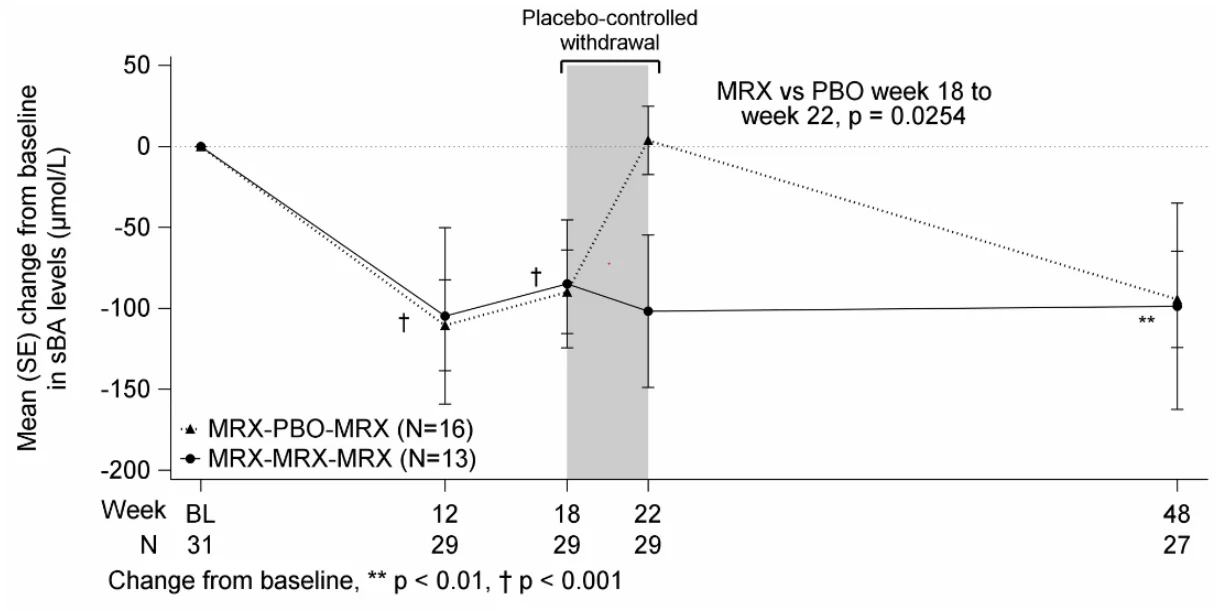
MRX = maralixibat; PBO = placebo; SE = standard error; BL = baseline
Pruritus
Pruritus severity was evaluated in the overall population (n=31), measured by Itch Reported Outcome Observer (ItchRO[Obs]) score. The ItchRO score is a validated 0-4 scale completed by caregivers (0=none to 4=very severe), where changes ≥1.0 have been shown to be clinically meaningful. Changes in pruritus severity between participants treated with maralixibat and those treated with placebo during the randomised withdrawal period and changes from baseline to week 18 and to week 48 were measured. The mean ItchRO(Obs) score at baseline was 2.9.
Patients administered maralixibat demonstrated a clinically meaningful change and statistically significant reductions of ItchRO(Obs) of -1.7 and -1.6 points from baseline at week 18 and week 48, respectively.
During the placebo-controlled randomised withdrawal period, patients administered maralixibat maintained pruritus reduction, whereas those in the placebo group returned to baseline pruritus scores. The difference between maralixibat and placebo in least squares mean (SE) change in pruritus from week 18 to week 22 (-1.5 [0.3]; 95% CI: -2.1 to -0.8; p<0.0001; see Figure 2) was statistically significant. After resuming maralixibat, patients from the placebo group regained improvement in pruritus by week 28. Patients administered maralixibat demonstrated sustained pruritus reduction up to 48 weeks.
Figure 2: ItchRO(Obs) weekly average morning severity score change from baseline by randomised treatment group over time, through week 48, all patients
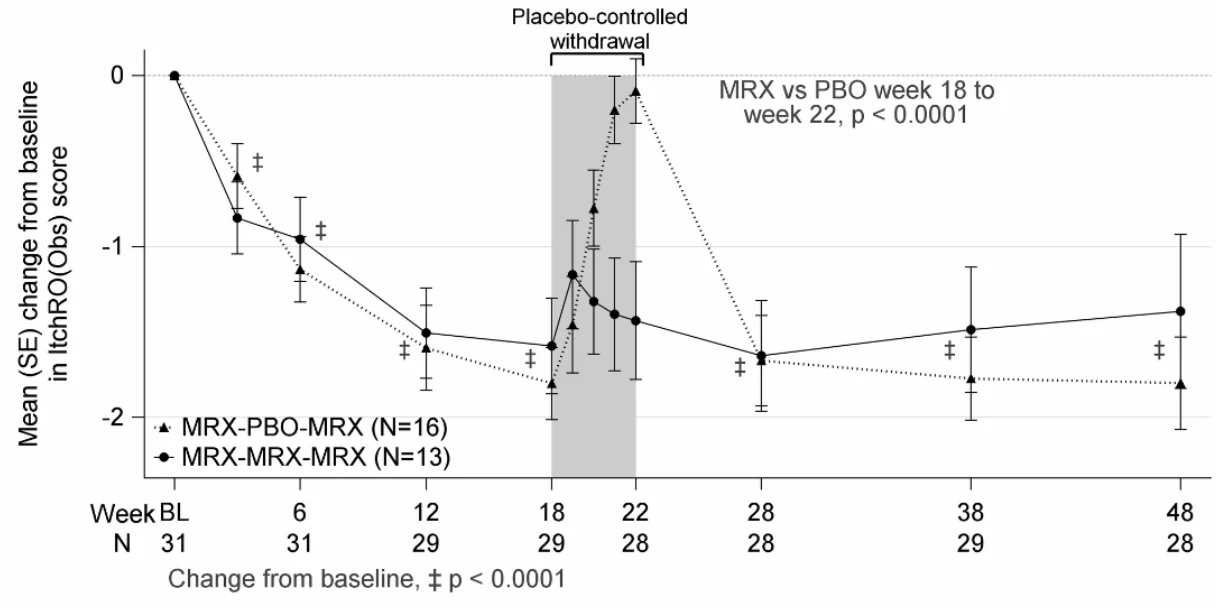
MRX = maralixibat; PBO = placebo; SE = standard error; BL = baseline
Improvements of variable degree in cholesterol and xanthoma severity were observed during treatment with maralixibat.
The mechanism of action of maralixibat to prevent reuptake of bile acids is expected to be similar across all age groups. Evidence of efficacy in patients younger than 12 months of age with ALGS is limited. In an open-label, single-arm study in 8 patients of 2 to 10 months of age with ALGS change in pruritus as assessed with Clinician Scratch Scale (where 0=none and 4=cutaneous mutilation, haemorrhage and scarring evident) at week 13 was mean (SD; median; range) -0.2 (1.91; -1.0; -3.0 to 3.0) and in sBA mean (SD; median; range) -88.91 µmol/L (113.348; -53.65; -306.1 to 14.4). Two patients experienced improvement in both pruritus and sBA.
Clinical efficacy in PFIC
The efficacy of maralixibat was assessed in a 26-week randomized, double-blind placebo-controlled trial (MRX-502). Ninety-three patients with diagnosis of PFIC based on documentation of intrahepatic cholestasis with persistent pruritus, abnormal tests for liver function and/or evidence of progressive liver disease aged >12 months and <18 years were included. Patients underwent genotyping for confirmation of PFIC type. Persistent pruritus was defined as > 6 months with average pruritus score on ItchRO[Obs] equal or greater than 1.5 in the 4 weeks prior to baseline.
Patients with decompensated cirrhosis, history or presence of any condition known to interfere with the absorption, distribution, metabolism or excretion of drugs, including bile salt metabolism in the intestine, and chronic diarrhoea requiring intravenous fluid or nutritional intervention were excluded.
Patients were randomized 1:1 to receive maralixibat 570 mcg/kg (n=47) or placebo orally (n=46) twice daily for 26 weeks with an initial 4–6-week dose escalation period, starting with 142 mcg/kg twice daily. The 26-week study period was completed by 92.5% of patients (44/47 maralixibat and 42/46 placebo), with 7 discontinuing from the study (4 withdrawal of consent, 1 AE for mild diarrhoea, 1 liver transplantation, and 1 disease progression). Patients completing the pivotal trial were eligible to enrol in an open-label extension trial (MRX-503).
Efficacy endpoints for the pivotal trial included changes in pruritus severity, serum bile acid levels, liver function tests and growth.
Efficacy endpoints were evaluated in patients with genetic testing results consistent with biallelic PFIC-causing variants (n=64): ABCB11/BSEP (PFIC2) n=31; ATP8B1/FIC1 (PFIC1) n=13; ABCB4/MDR3 (PFIC3) n=9; TJP2 (PFIC4) n=7; MYO5B (PFIC 6) n=4. There were more females (53.1%) and the mean age was 4.6 years with a range of 1 to 15 years. Most patients were on stable ursodeoxycholic acid (89.1%) or rifampicin (51.6%) therapy at baseline. The baseline mean (standard deviation [SD]) of liver test parameters were as follows: serum bile acid levels 263 (143) μmol/L, AST 113 (82) U/L, ALT 107 (87) U/L, and TB 69.8 (70.1) µmol/L, DB 50.6 (52.4) µmol/L. The mean (SD) of the average baseline morning ItchRO[Obs] pruritus severity score was 2.8 (0.87). There were no meaningful differences observed between treatment groups across baseline characteristics or disease parameters.
Serum bile acids (sBA)
The mean change in total serum bile acid level between maralixibat and placebo treatment groups from baseline to average of weeks 18, 22, and 26 was statistically significant with a LS mean change from placebo of -160 µmol/L (95% CI: -220.8, -100.0) (Figure 3).
Figure 3: Observed average serum bile acids levels over time in PFIC 1, 2, 3,
4, and 6 (Study MRX-502)
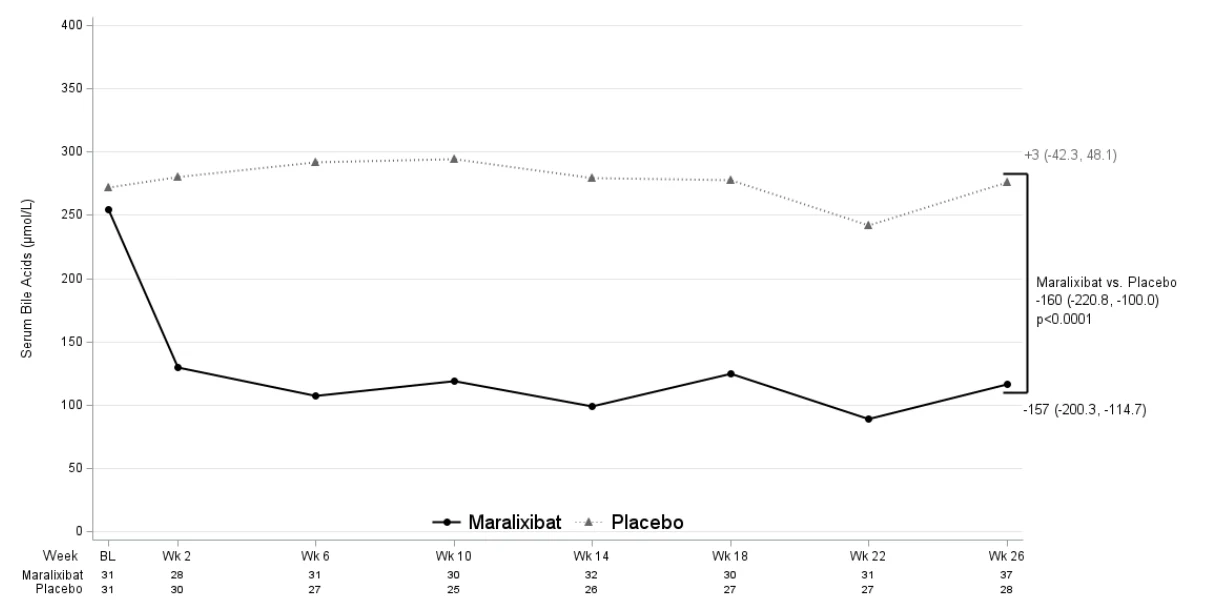
BL=Baseline; Wk=Week. Observed values are displayed. Statistics shown are averages of weeks 18, 22, and 26 using an equally weighted average of the 3 individual visit-specific estimates obtained from a mixed model for repeated measures (MMRM) with change from baseline as the dependent variable and fixed categorical effects of treatment group, PFIC type, analysis visit and treatment-by-visit interaction as well as the continuous fixed covariates of baseline score and baseline score-by-visit interaction. The least-squares mean estimate and 95% confidence interval are presented.
The percentage of serum bile acid responders was 45.5% for maralixibat and 6.5% for placebo participants, difference (95% CI): 39.0% (16.5%, 58.2%). Serum bile acid responders were defined as a participant having an average sBA level of <102 µmol/L (applies only if baseline sBA level was ≥102 µmol/L) OR ≥75% average reduction from baseline. For the purpose of determining response, the average sBA value from weeks 18, 22, and 26 values were used.
Pruritus
Maralixibat demonstrated difference between maralixibat and placebo treatment groups for the average change in morning ItchRO(Obs) severity score between baseline and weeks 15–26, with a LS mean change from placebo -1.200 (95% CI: -1.727, -0.674; Figure 4).
Figure 4: Observed weekly average of the morning daily pruritus score over
time in PFIC 1, 2, 3, 4, and 6 (Study MRX-502) 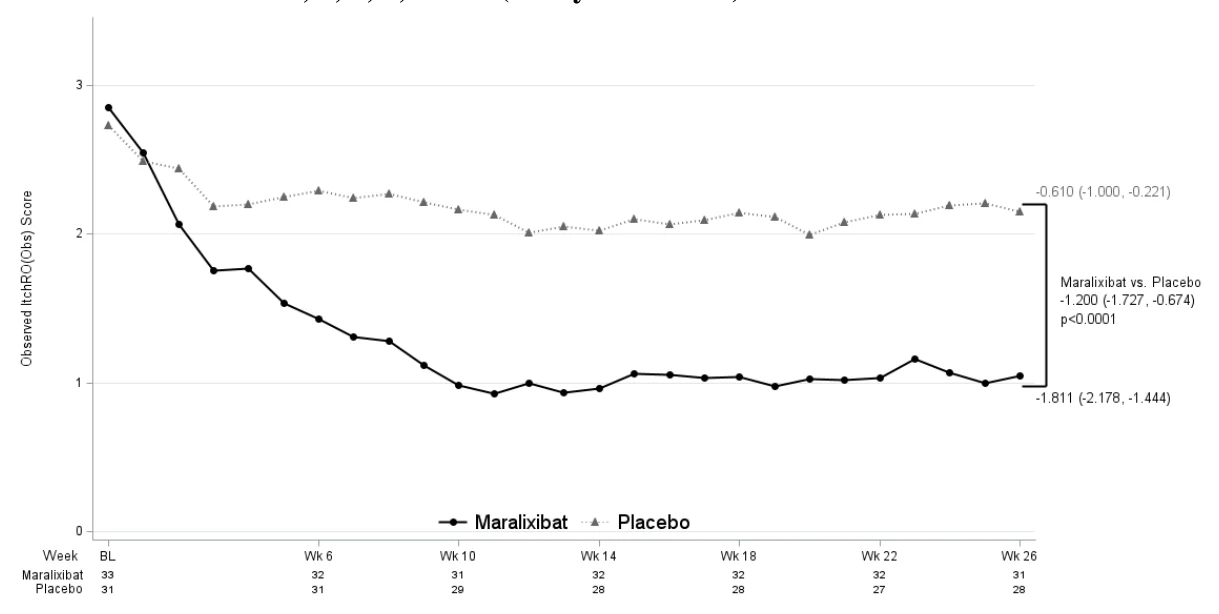
BL=Baseline; Wk=Week. Observed values are displayed. Statistics shown are averages of time periods weeks 15-18, 19-22, and 23-26 using an equally weighted average of the 3 individual visit-specific estimates obtained from a mixed model for repeated measures (MMRM) with change from baseline as the dependent variable and fixed categorical effects of treatment group, PFIC type, analysis visit and treatment-by-visit interaction as well as the continuous fixed covariates of baseline score and baseline score-by-visit interaction. The least-squares mean estimate and 95% confidence interval are presented.
Table 4 presents the results of the comparison of the ItchRO(Obs) results between maralixibat and placebo.
Table 4: Proportion of pruritus responders (Study MRX-502)
Responder Type
Category
Maralixibat
(n=33)
Placebo (n=31)
ItchRO(Obs) responders; average score ≤1 OR
change from baseline of ≤-1.0
Responder (%) 63.6 25.8 p-value vs. placebo difference (95% CI) 0.0023 37.8 (11.3,
59.4) p-values comparing maralixibat to placebo treatment groups are calculated using a Barnard’s exact test. Exact 95% confidence intervals are based on a score statistic.
Exploratory analyses showed more pronounced reduction (improvement) in the mean sleep disturbance scores in the maralixibat treatment group compared with placebo. Exploratory analyses showed improvements in bilirubin during treatment with maralixibat (Table 5). Abnormal total bilirubin levels at baseline normalised by week 26 in 40% (10/25) of patients on maralixibat vs. 0% (0/18) on placebo. More pronounced increase (improvement) in weight z-score was observed in the maralixibat treatment group compared with placebo (LS mean change from placebo of 0.227 (95% CI: 0.012, 0.442; Table 5)).
Table 5: Liver function tests and growth parameters for maralixibat vs.
placebo over the 26-week treatment period in participants with PFIC in the pivotal trial (MRX-502 exploratory analyses).
| Efficacy endpoint | Placebo (n=31) | Maralixibat (n=33) | ||||||
| Alanine aminotransferase (U/L) | ||||||||
| Baseline (mean [SE]) | 127.3 (18.68) | 87.8 (10.77) | ||||||
| LS mean change from BL [SE] to weeks 18-26 | -7.0 (11.13) | 9.7 (10.36) | ||||||
| LS mean difference vs. placebo (95% CI); | 16.6 (-13.31, 46.60) | |||||||
| Aspartate aminotransferase (U/L) | ||||||||
| Baseline (mean [SE]) | 129.8 (18.12) | 96.9 (9.57) | ||||||
| LS mean change from BL [SE] to weeks 18-26 | -0.4 (14.91) | 13.6 (14.05) | ||||||
| LS mean difference vs. placebo (95% CI); | 14.1 (-26.57, 54.69) | |||||||
| Total bilirubin (μmol/L) | ||||||||
| Baseline (mean [SE]) | 69.1 (13.69) | 70.4 (11.32) | ||||||
| LS mean change from BL [SE] to weeks 18-26 | 15.9 (12.37) | -18.3 (11.65) | ||||||
| LS mean difference vs. placebo (95% CI); | -34.3 (-68.06, -0.46) | |||||||
| Direct bilirubin (μmol/L) | ||||||||
| Baseline (mean [SE]) | 50.2 (10.28) | 50.9 (8.40) | ||||||
| LS mean change from BL [SE] to weeks 18-26 | 13.5 (9.52) | -12.9 (8.97) | ||||||
| LS mean difference vs. placebo (95% CI); | -26.4 (-52.46, -0.26) | |||||||
| Height z-score | ||||||||
| Baseline (mean [SE]) | -2.06 (0.27) | -2.08 (0.23) | ||||||
| LS mean change from BL [SE] to weeks 18-26 | -0.13 (0.09) | 0.08 (0.09) | ||||||
| LS mean difference vs. placebo (95% CI); | 0.21 (-0.04, 0.5) | |||||||
| Weight z-score | ||||||||
| Baseline (mean [SE]) | -1.28 (0.24) | -1.75 (0.23) | ||||||
| LS mean change from BL [SE] to weeks 18-26 | 0.12 (0.08) | 0.35 (0.07) | ||||||
| LS mean difference vs. placebo (95% CI); | 0.23 (0.01, 0.4) | |||||||
SE=standard error; LS = least-squares; CI=confidence interval; BL=baseline. Baseline values are observed values. LS mean values are averages of weeks 18, 22, and 26 using an equally weighted average of the 3 individual visit-specific estimates obtained from a mixed model for repeated measures (MMRM) with change from baseline as the dependent variable and fixed categorical effects of treatment group, PFIC type, analysis visit and treatment-by-visit interaction as well as the continuous fixed covariates of baseline score and baseline score-by-visit interaction.
Of the 64 patients from the pivotal trial (MRX-502) with genetic testing results consistent with biallelic PFIC-causing variants, 57 were included in an interim analysis from the ongoing open-label extension trial (MRX-503). Their median treatment duration with maralixibat was 47.3 weeks (range: 4.1 weeks – 119.4 weeks). Maralixibat showed maintenance of treatment effect on serum bile acid and bilirubin levels as well as pruritus. Height and weight z-scores were further improved.
In an open-label, single-arm safety study (MRX-801) in 10 patients of 1 to 11 months of age with PFIC (no requirement for active pruritus), decrease at week 13 in sBA, total bilirubin and direct bilirubin was observed in some patients. Two patients also experienced improvement in pruritus.
Paediatric population
The European Medicines Agency has deferred the obligation to submit the results of studies with Livmarli in one or more subsets of the paediatric population in patients with ALGS (see section 4.2 for information on paediatric use).
Exceptional circumstances
This medicinal product has been authorised under ‘exceptional circumstances’. This means that due to the rarity of the disease it has not been possible to obtain complete information on this medicinal product. The European Medicines Agency will review any new information which may become available every year and this SmPC will be updated as necessary.
5.2 Pharmacokinetic properties
Absorption
The target of maralixibat is in the lumen of the small intestine, such that plasma levels of maralixibat are not required and not relevant to its efficacy. Maralixibat is minimally absorbed, and plasma concentrations are often below the limit of detection (0.25 ng/mL) after single or multiple doses at therapeutic dose levels. The absolute bioavailability is estimated to be <1%.
Effect of food
Maralixibat absorption is relatively higher when administered in the fasted state, and no dose adjustment for food effects is necessary. Maralixibat can be taken before (up to 30 minutes) or with a meal (see section 4.2).
Distribution
Maralixibat shows high binding (91%) to human plasma in vitro.
In a clinical ADME trial dosing [14C] maralixibat, circulating radioactivity was below the limit of detection at all time points. There is no apparent accumulation of maralixibat.
Biotransformation
No metabolites have been detected in plasma, and maralixibat also undergoes minimal metabolism in the gastrointestinal tract.
Elimination
Maralixibat is primarily eliminated in the faeces as unmetabolised parent compound, with 0.066% of the administered dose excreted in the urine.
Special populations
No clinically significant differences in the pharmacokinetics of maralixibat were observed based on age, sex, or race.
Hepatic impairment
Clinical studies of maralixibat included ALGS and PFIC patients with some level of liver impairment. The majority of patients presented with some degree of hepatic impairment according to the NCI-ODWG classification due to the disease. Whether this classification is, however, appropriate in cholestatic disease to predict the influence on PK of the compound is currently unclear. Maralixibat is minimally absorbed, and animal data indicate that the very low plasma levels are due to low absorption and not a first pass effect in the liver, and plasma levels of maralixibat were not increased in patients with liver impairment according to the NCI-ODWG. However, the PK of maralixibat have not been systematically investigated in patients classified according to the Child-Pugh classification (patients with cirrhosis and signs of decompensation).
Renal impairment
The pharmacokinetics of maralixibat were not studied in patients with impaired renal function, including those with ESRD or those on haemodialysis. However, renal impairment is not expected to impact maralixibat PK due to the low systemic exposure and lack of urinary excretion.
5.3 Preclinical safety data
Non-clinical data reveal no specific hazard for humans based on studies of safety pharmacology, secondary pharmacology, repeated-dose toxicity, genotoxicity, carcinogenicity, fertility, toxicity to reproduction and development, and juvenile animal toxicity.
6 PHARMACEUTICAL PARTICULARS
6.1 List of excipients
Propylene glycol (E1520)
Disodium edetate
Sucralose
Grape flavour
Purified water
6.2 Incompatibilities
Not applicable.
6.3 Shelf life
30 months.
After first opening
After the first opening of the bottle, the medicinal product must be used within 130 days stored below 30°C. Then the bottle and its contents have to be discarded, even if not empty.
6.4 Special precautions for storage
This medicinal product does not require any special temperature storage conditions. Store in the original package in order to protect from light.
For storage conditions after first opening of the medicinal product, see section 6.3.
6.5 Nature and contents of container
30 mL amber-coloured PET bottle with a preinstalled LDPE adapter and a HDPE child-resistant closure with a foam liner, containing 30 mL oral solution.
Pack size:
Each pack contains one 30 mL bottle and is co-packaged with three oral repeated-use syringes (0.5 mL, 1 mL and 3 mL) with the following graduations:
- 0.5 mL polypropylene syringe with a white plunger: numbers for each 0.1 mL, major hash marks for 0.05 mL increments, and minor hash marks for 0.01 mL increments.
- 1 mL polypropylene syringe with a white plunger: numbers for each 0.1 mL increment.
- 3 mL polypropylene syringe with a white plunger: numbers for each 0.5 mL increment, and hash marks for each 0.25 mL increment between 0.5 mL and 3 mL.
6.6 Special precautions for disposal and other handling
The oral syringes may be rinsed with water, air dried and reused for 130 days.
Any unused medicinal product or waste material should be disposed of in accordance with local requirements.
7 MARKETING AUTHORISATION HOLDER
Mirum Pharmaceuticals International B.V.
Kingsfordweg 151
1043 GR Amsterdam,
Netherlands
8 MARKETING AUTHORISATION NUMBER(S)
PLGB 56642/0001
9 DATE OF FIRST AUTHORISATION/RENEWAL OF THE
AUTHORISATION
10/02/2023
10 DATE OF REVISION OF THE TEXT
08/01/2026