

Summary of Product Characteristics (SmPC) - Lidocaine Hydrochloride/phenylephrine Hydrochloride 6.5 mg/0.65 mg per actuation nasal/pharyngeal S
1 NAME OF THE MEDICINAL PRODUCT
Lidocaine hydrochloride/phenylephrine hydrochloride 6.5 mg/0.65 mg per actuation nasal/pharyngeal spray
2 QUALITATIVE AND QUANTITATIVE COMPOSITION
Lidocaine Hydrochloride Monohydrate 5 % w/v
Phenylephrine Hydrochloride 0.5 % w/v
Each actuation (spray) contains 6.5 mg lidocaine hydrochloride monohydrate and 0.65 mg phenylephrine hydrochloride.
For the full list of excipients, see section 6.1.
3 PHARMACEUTICAL FORM
Nasal/pharyngeal spray for application to mucous membranes in nasal and pharyngeal areas.
Note: The solution is sterile; however, the pump components are non-sterile.
Clear colourless solution.
4 CLINICAL PARTICULARS
4.1 Therapeutic indications
This medicinal product is indicated in adults and children 12 years of age and older for the following:
- Preparation of the nasal mucosa for surgery.
- Aid in removal of foreign bodies from the nose.
- Topical anaesthesia of the pharynx prior to direct or indirect laryngoscopy.
- Topical anaesthesia and local vasoconstriction prior to endoscopy of the upper airways.
Note: The solution is sterile; however, the pump components are non-sterile. Therefore, the spray is not recommended for use prior to procedures that require aseptic techniques.
4.2 Posology and method of administration
The product is for use by Healthcare Professionals (HCPs) in a clinical setting.
Each vial contains approximately 2.5 ml of solution to be used as a spray; equivalent to 125 mg of Lidocaine hydrochloride monohydrate and 12.5 mg of Phenylephrine hydrochloride.
Each spray measures 130 microlitres.
Posology
Adults and children 12 years and older:
The recommended dose is up to a maximum of 8 sprays in total as 4 sprays per nostril or 8 sprays to the throat.
Wait 10 minutes after administration before inserting an endoscope or conducting a procedure.
Children aged under 12 years:
Not recommended.
Route of administration: nasal or pharyngeal.
For instructions on preparation of the medicinal product before and after administration see section 6.6.
4.3 Contraindications
This medicinal product is contraindicated in:
- Hypersensitivity to the active substances or to any of the excipients listed in section 6.1
- Hypersensitivity to other local anaesthetics of the amide type and to other sympathomimetic agents
- Pregnancy and breast-feeding
- Children under the age of 12 years
- Hypovolaemia, hypertension, acute ischaemic heart disease and complete heart block
- Thyrotoxicosis
- Glaucoma
- Urinary retention
4.4 Special warnings and precautions for use
Eating and drinking: the use of topical anaesthetic agents in the oral cavity and upper airway tissues may interfere with swallowing and thus enhance the danger of aspiration of food and drink. For this reason, food or drink should not be ingested within 2 hours of using local anaesthetics in the mouth area. Numbness of the tongue or buccal mucosa may increase the risk of trauma from hot drinks or biting.
Patients with cardiovascular diseases. This medicinal product should be given with caution to patients with cardiovascular disease, especially those suffering from hypertension, severe bradycardia, conduction disturbances or severe digitalis intoxication. There is a small but transient increase in pulse (up to 12 beats per minute) and blood pressure (average 8.2mmHg systolic and 7.5mmHg diastolic) lasting for 10 minutes after the administration of this medication to healthy individuals. This must be taken into account if this medication is given to hypertensive patients.
Patients with impaired kidney and liver function. Lidocaine is metabolised in the liver and must be given with caution to patients with hepatic insufficiency. Metabolites of lidocaine may accumulate in patients with renal impairment.
General precautions: genetic predisposition to malignant hyperthermia and pre-existing abnormal neurological conditions.
Lidocaine and phenylephrine should be administered with caution to patients taking β
-adrenergic blocking agents (see section below headed ‘Interaction with other medicinal products and other forms of interaction’) and those with cardiovascular disease, diabetes mellitus, hypertension or hyperthyroidism, hypoxia, hypercapnia and porphyria.
Lidocaine and phenylephrine should be used with caution in patients with traumatized mucosa and/or sepsis in the region of the proposed application.
Lidocaine and phenylephrine should also be used with caution in patients with epilepsy, impaired cardiac conduction, bradycardia, impaired hepatic function and in severe shock.
The physician or pharmacist should check that sympathomimetic containing preparations are not simultaneously administered by several routes i.e. orally and topically (nasal, aural and eye preparations).
Sympathomimetic-containing products should be used with great care in patients suffering from angina.
Mydriasis (prolonged dilation of the pupils of the eye) has been reported with phenylephrine. Patients should be advised to notify their physician if they have a history of glaucoma or a history of increased intraocular pressure (see section 4.8).
Special precaution should be taken to avoid spraying in the eye.
4.5 Interaction with other medicinal products and other forms of interaction
Propranolol or cimetidine:
May reduce the clearance of lidocaine so that patients given these drugs together may show signs of lidocaine toxicity.
Antiarrhythmic drugs:
Lidocaine can have additive effects or antagonistic effects.
Phenytoin:
Lidocaine and phenytoin have additive cardiac depressant effects.
Antidepressants:
May interact with phenylephrine.
Monoamine Oxidase Inhibitors (MAOIs):
Phenylephrine is metabolised by MAOs in the gut. Irreversible MAOIs may therefore increase the effect of oral phenylephrine resulting in a dangerous hypertensive crisis. This effect has not been reported with MAOIs and phenylephrine given by nasal spray. In view of this risk however this product should not be used on patients taking irreversible MAOIs or within three weeks of their discontinuation.
Antihypertensive agents, antiarrhythmics and cardiac glycosides:
Anti-hypertensive agents such as β
-adrenergic blocking agents may have their effects reversed by the co-administration of phenylephrine with possible fatal reactions.
Hypertensive reactions have been reported in a patient stabilised on debrisoquine when given phenylephrine by mouth, in patients receiving reserpine or guanethidine when given phenylephrine eye drops, and a fatal reaction occurred in a patient receiving propranolol and hydrochlorothiazide also after the installation of phenylephrine eye drops.
Products that contain phenylephrine should be used with caution in patients receiving guanethidine, reserpine, digitalis and methyldopa.
Lidocaine may cause an increased risk of myocardial depression: increased risk of lidocaine toxicity with propranolol.
Lidocaine should be used with caution in patients receiving antiarrhythmic drugs, such as tocainide, since the toxic effects are additive.
Antimicrobials:
Increased risk of ventricular arrhythmias with quinupristin/dalfopristin.
Concomitant use should be avoided.
Diuretics:
Effects of lidocaine antagonised by hypokalaemia with acetazolamide, loop diuretics and thiazides.
Antidepressants:
Lidocaine should be used with caution if patients are being treated with reboxetine.
Sympathomimetic-containing products should be used with great care in patients receiving phenothiazines or tricyclic antidepressants.
Muscle Relaxants:
The action of suxamethonium may be prolonged by lidocaine.
Phenylephrine may cause hypertension when used concomitantly with doxapram or oxytocin.
There is an increased risk of ergotism when phenylephrine and ergot alkaloids are taken concomitantly.
Halogenated anaesthetic agents:
Concurrent use with halogenated anaesthetic agents such as chloroform, cyclopropane, halothane, enflurane or isoflurane may provoke or worsen ventricular arrhythmias.
4.6 Fertility, pregnancy and lactation
Pregnancy or Breast-feeding
This medicinal product should not be used during pregnancy or lactation (see section 4.3).
Fertility
There are no human data on the effect of combination of lidocaine and phenylephrine on fertility.
4.7 Effects on ability to drive and use machines
This medicinal product has no or negligible influence on the ability to drive and use machines.
4.8 Undesirable effects
Adverse effects have been ranked under headings of frequency using the following convention: very common (≥
1/10); common (≥
1/100; <1/10); uncommon (≥
1/1 000; <1/100); rare (≥
1/10 000; <1/1 000); very rare (<1/10 000); frequency not known (cannot be estimated from the available data).
Psychiatric disorders:
Not known: Nervousness, disorientation.
Nervous system disorders:
Not known: Tremor, numbness.
Eye disorders:
Not known: Mydriasis.
Ear and labyrinth disorders:
Not known: Tinnitus.
Cardiac disorders:
Not known: Palpitations, dizziness.
Vascular disorders:
Not known: Hypertension.
Gastrointestinal disorders:
Common: Transient bitter taste in mouth (lasting one to two minutes), nausea, vomiting.
Local anaesthetics (e.g. lidocaine) and sympathomimetics (e.g. phenylephrine) may produce systemic adverse effects as a result of the raised plasma concentrations which ensue when the rate of absorption into the circulation exceeds the rate of breakdown, for example, by absorption of large amounts through mucous membranes or damaged skin or from highly vascular areas.
Possible Systemic Effects due to Lidocaine
The systemic toxicity of local anaesthetics mainly involves the central nervous system (CNS) and the cardiovascular system. Excitation of the CNS may be manifested by restlessness, excitement, nervousness, dizziness, tinnitus, blurred vision, nausea and vomiting, muscle twitching and tremors and convulsions. Numbness of the tongue and perioral region may appear as an early sign of systemic toxicity. Excitation may be transient and followed by depression with drowsiness, respiratory failure and coma. There may be simultaneous effects on the cardiovascular system with myocardial depression and peripheral vasodilation resulting in hypotension and bradycardia: arrhythmias and cardiac arrest may occur.
Some local anaesthetics cause methaemoglobinaemia.
Possible Systemic Effects due to Phenylephrine
Sympathomimetics may produce a wide range of adverse effects, most of which mimic the results of excessive stimulation of the sympathetic nervous system. These effects are mediated via the various types of adrenergic receptor and the adverse effects of an individual drug depend to some extent upon its relative agonist activity on these different types of receptor at a given dose.
Central effects of sympathomimetic agents include fear, anxiety, nervousness, restlessness, tremors, insomnia, confusion, irritability, psychotic states and epileptiform convulsions. Appetite may be reduced, and nausea and vomiting may occur.
Effects on the cardiovascular system are complex. Stimulation of alpha-adrenergic receptors produced vasoconstriction with resultant hypertension. This vasoconstriction is sometimes sufficiently severe to produce gangrene when sympathomimetics are infiltrated into the digits. The rise of blood pressure may produce cerebral haemorrhage and pulmonary oedema. There may also be a reflex bradycardia but stimulation of β
1-adrenergic receptors of the heart may produce tachycardia and cardiac arrhythmias, angina pain, palpitations and cardiac arrest: hypotension with dizziness and fainting and flushing may occur. An increased incidence of sudden death, sometimes attributed to the induction of ventricular arrhythmias has been associated with the excessive use of sympathomimetic agents in aerosol form; although the association has been questioned by some authorities, it is important to avoid excessive doses.
Other effects that may occur with sympathomimetic agents include difficulty in micturition, particularly in the case of prostatic hypertrophy, and urinary retention, dyspnoea, weakness, altered metabolism, sweating, hyperpyrexia and hypersalivation. Headache is also common.
Prolonged mydriasis (pupillary dilatation) can result from systemic absorption of phenylephrine. Mydriasis may precipitate acute angle closure glaucoma in patients with narrow angles; this is a medical emergency characterised by eye pain and blurred vision that can lead to central retinal vein thrombosis. The product is contraindicated in patients with glaucoma and should be used with caution in patients with a history of elevated intraocular pressure even if there is no accompanying visual field defect signifying glaucoma (see sections 4.3 and 4.4).
Reporting of suspected adverse reactions
Reporting suspected adverse reactions after authorisation of the medicinal product is important. It allows continued monitoring of the benefit/risk balance of the medicinal product. Healthcare professionals are asked to report any suspected adverse reactions via the Yellow Card Scheme at www.mhra.gov.uk/yellowcard or search for MHRA Yellow Card in the Google Play or Apple App Store.
4.9 Overdose
Symptoms
Systemic toxicity is manifested by central nervous system excitation such as restlessness, excitement, blurred vision, nausea and vomiting, muscle twitching and in more severe cases convulsions. Toxicity due to alpha adrenergic over stimulation may result in tachycardia and arrhythmia.
Treatment
Treatment consists of ensuring adequate ventilation and arresting convulsions with intravenous diazepam if required. Cardiac resuscitation may be required to reverse pathologic arrhythmias.
Because a severe toxic reaction to phenylephrine is of rapid onset and short duration, treatment is primarily supportive. Prompt injection of a rapidly acting alpha-adrenergic blocking agent such as phentolamine (dose 5 to 10 mg i.v.) has been recommended.
5 PHARMACOLOGICAL PROPERTIES
5.1 Pharmacodynamic properties
Pharmacotherapeutic group: lidocaine, combinations, ATC code: N01BB52
Lidocaine hydrochloride: this is a local anaesthetic which stabilises the neuronal membrane and prevents initiation and transmission of nerve impulses, thereby effecting local anaesthetic action.
Phenylephrine hydrochloride is a sympathomimetic vasoconstrictor with mainly direct effects on the alpha adrenoreceptors. A local vasoconstrictor effect may prolong the local anaesthetic action of lidocaine by impairing its systemic absorption. Vasoconstriction in the nasal mucosa has decongestant properties that can facilitate passage of an endoscope via the nasal cavity.
5.2 Pharmacokinetic properties
Lidocaine:
Onset of action is rapid and may last for 1 hour. It does not produce irritation to mucous membranes due to its non-ester structure and it is not detoxified by circulating plasma esterases. The liver is the chief site of biotransformation of lidocaine and both free and conjugated forms of the drug are excreted in the urine.
Absorption
Lidocaine is readily absorbed from mucous membranes and through damaged skin.
Absorption through intact skin is poor.
Lidocaine is rapidly absorbed from the upper airway, tracheobronchial tree and alveoli into the bloodstream. It is also well-absorbed from the gastrointestinal tract, but oral bioavailability is only 35% due to extensive first-pass metabolism. When injected into tissues, lidocaine is rapidly absorbed. The absorption rate is related to vascularity and the presence of tissue and fat capable of binding lidocaine of the particular tissues. Thus, the absorption rate from the site of injection decreases in the order intercostal > paracervical >lumbar epidural > brachial > spinal > subcutaneous. Addition of a vasoconstrictor, e.g. epinephrine, to the solution reduces the rate of absorption by limiting the local blood flow, and therefore, the local anaesthetic effect is prolonged.
Distribution
When lidocaine is administered intravenously, it is rapidly distributed into highly perfused tissues, which achieve fast equilibration, followed by redistribution into skeletal muscle and adipose tissue, which reach equilibration slower. Thus, lidocaine plasma concentrations decline rapidly after an intravenous dose, with an initial half-life of less than 30 min. The elimination half-life (t½) is 1-2 h. The t½ may be prolonged if lidocaine is administered with an infusion lasting longer than 24 h, or if hepatic blood flow is reduced.
Lidocaine has a steady-state volume of distribution (Vss) in the range of 50-160 litres.
Elimination
Lidocaine is eliminated mainly metabolically, with less than 5% of the dose excreted unchanged in urine. Like the volume of distribution, the clearance of lidocaine varies markedly in healthy volunteers; estimates for plasma clearance range from 0.54 to 1.44 l/min.
Lidocaine is a drug with a medium to high extraction ratio (0.65), and therefore, its clearance is significantly dependent on liver blood flow. Consequently, an inverse relationship exists between lidocaine levels and estimated hepatic blood flow.
Elimination half-life is usually 1.5 – 2 hours. This can be prolonged significantly in patients with liver disease. Renal dysfunction does not affect lidocaine kinetics but can increase the accumulation of metabolites.
Metabolism
The metabolism has been shown to be complex, and different results have been obtained from in vitro and in vivo studies. The principal metabolic pathway of lidocaine is oxidative N-deethylation to MEGX, which is further de-ethylated to 2,6-xylidine and glycinexylidide (GX). 2,6-xylidine is hydrolysed to 4-hydroxy-xylidine, which is the major metabolite found in urine. Based on in vitro studies, this hydroxylation is catalysed by CYP2A6. Although 4-hydroxy-xylidine appears to be formed mainly from MEGX, evidence has emerged that some 4-hydroxy-xylidine is formed via direct hydrolysis of lidocaine. A minor metabolic pathway of lidocaine is hydroxylation of the aromatic ring to form 3-OH-lidocaine. All hydroxylated metabolites are prone to subsequent phase II conjugation reactions.
Lidocaine crosses the blood-brain barrier as well as the placental barrier.
Phenylephrine:
Following topical application phenylephrine is absorbed through the mucosa and topical use can therefore give rise to systemic effects. Phenylephrine is extensively metabolised in the gut wall and the liver. The principal routes of metabolism are sulphonation and glucuronidation, sulphate conjugates are formed from the metabolites. Excretion is via the kidneys.
Metabolism
Phenylephrine undergoes extensive pre-systemic metabolism, with the majority of the metabolism taking place within the enterocytes of the gastrointestinal tract. Phenylephrine is metabolized by Phase I and Phase II enzyme systems, mainly monoamine oxidase and sulfotransferase, respectively. The ratios of the metabolites differ depending on the route of administration.
The metabolism of Phenylephrine after oral and inhalation administration using a gas chromatographic/mass spectrometric ion monitoring method with deuterated internal standards. After oral administration of a dose equivalent to approximately 24 mg of PE to 3 healthy human volunteers, four main metabolites were excreted in urine, reported as percent of dose:
(1) unconjugated m-hydroxymandelic acid (30%)
(2) sulfate conjugate of m-hydroxyphenylglycol,
(3) sulfate conjugate of PE (47%)
(4) glucuronide conjugate of PE (12%).
The amounts of the same metabolites after inhalation of PE were 24, 6, 56 and 5%, respectively.
Distribution
Phenylephrine undergoes rapid distribution into peripheral tissues; it may be stored in certain organ compartments. Pharmacologic effects are terminated at least partially by uptake into tissues.
Penetration into the brain appears to be minimal.
Not known if phenylephrine crosses the placenta.
Does not appear to be distributed to any great extent into breast milk.
Elimination
Undergoes extensive metabolism in the intestinal wall (first-pass) and in the liver.
Principal routes of metabolism involve sulfate conjugation (principally in the intestinal wall) and oxidative deamination (by the enzyme MAO); glucuronidation also occurs to a lesser extent.
It is excreted in urine (80–86%) mainly as metabolites; unchanged drug accounts for 2.6 or 16% of an oral or IV dose, respectively.
Half-life
2–3 hours following oral or IV administration.
Clinical data regarding effects of renal or hepatic impairment on phenylephrine pharmacokinetics are limited.
5.3 Preclinical safety data
There are no pre-clinical safety data of relevance to the prescriber which are additional to that already included in other sections of the SPC.
6 PHARMACEUTICAL PARTICULARS
6.1 List of excipients
Hydrochloric acid (for pH adjustment)
Water for injections
6.2 Incompatibilities
Not applicable.
6.3 Shelf life
36 months.
6.4 Special precautions for storage
Store below 25°C. Keep in the original container.
6.5 Nature and contents of container
6ml type 1 clear glass vial with a rubber stopper and polybutylene terephthalate screw cap, and a two - piece dosing device (spray pump with plastic and stainless steel materials and actuator of polypropylene contained in a transparent plastic bag) included in an outer carton. Each vial contains 2.5ml that can give up to 8 actuations (after the 5 actuations used to prime the pump dispenser). One vial per carton.
6.6 Special precautions for disposal
This medicinal product requires preparation before use.
Check tamper-evident seal on the sterile solution is intact before use. Remove plastic screw cap and rubber stopper; screw on pump spray attachment and push on actuator. The pump spray and actuator are non-sterile. Before use, 5 pumps are required to activate, this solution should be discarded. The pump is then ready to use.
Directions for use:
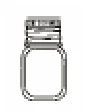

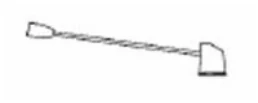
Bottle Pump Actuator
Instructions For Assembly
Attaching the pump and actuator to bottle. 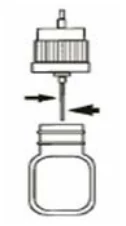
- 1. Immediately before use: remove the
screw cap and rubber stopper from the bottle.
- 2. Screw the pump onto the bottle.
- 3.
Push the actuator onto the top of the
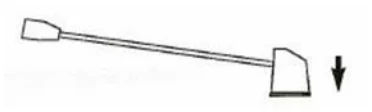
pump.
Priming the Pump 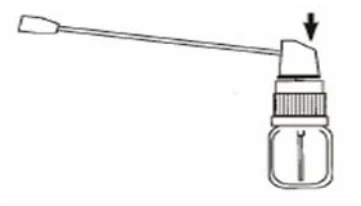
- 4.
Hold the bottle upright and press down
on the pump-actuator 5 times to prime
the pump before use.
- 5. The pump spray is now ready for use.
For single use only. Discard any remaining solution. Do not re-use any parts.
Any unused medicinal product or waste material should be disposed of in accordance with local requirements.
7 MARKETING AUTHORISATION HOLDER
Pemberton Laboratories (UK) Limited
5 The Heights, Weybridge, KT13 0NY, United Kingdom
8 MARKETING AUTHORISATION NUMBER(S)
PL 55469/0001
9 DATE OF FIRST AUTHORISATION/RENEWAL OF THE
AUTHORISATION
22/01/2026
10 DATE OF REVISION OF THE TEXT
22/01/2026